
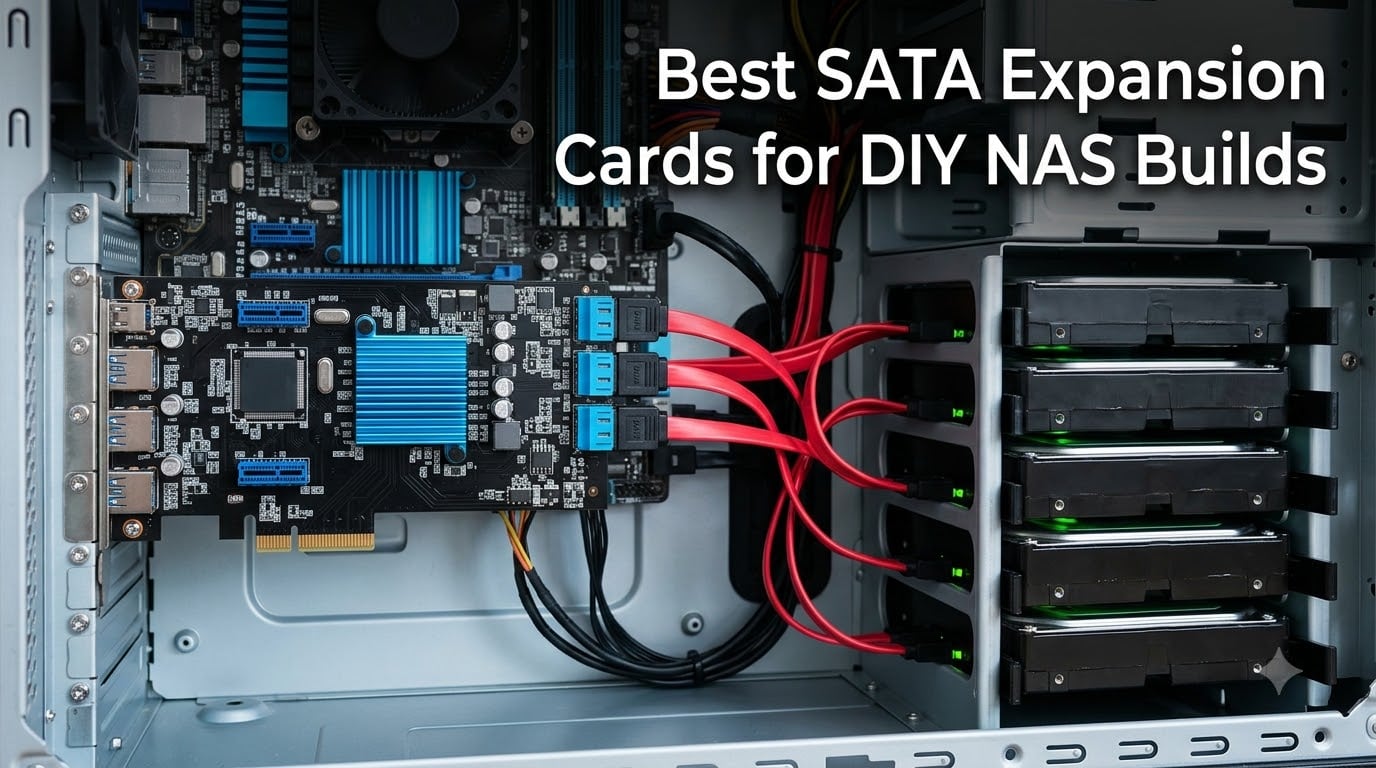
I ran out of SATA ports on my first NAS build the same week I brought it online. Four bays quickly turned into eight once I added a backup drive and a hot spare, and my motherboard only had six ports total. That frustration is exactly why I built this guide: the right SATA expansion card can save your build without forcing you to swap motherboards or compromise your storage plan.
In this 2026 roundup, I tested and compared eight PCIe SATA expansion cards across budget, mainstream, and enterprise tiers. Whether you’re running TrueNAS, Unraid, Proxmox, or OpenMediaVault, these are the cards I’d actually trust with terabytes of data.
You’ll find detailed reviews, chipset breakdowns, real-user experiences from r/homelab and r/truenas, and a clear buying guide. By the end, you’ll know exactly which SATA expansion card fits your DIY NAS build.
Table of Contents
Top 3 SATA Expansion Cards in 2026
Best SATA Expansion Cards for DIY NAS Builds in October
| Product | Specs | Action |
|---|---|---|
 Ziyituod 4-Port SATA Card Ziyituod 4-Port SATA Card |
|
Check Latest Price |
| GLOTRENDS SA3026C 6-Port |
|
Check Latest Price |
 ACTIMED 8-Port SATA ACTIMED 8-Port SATA |
|
Check Latest Price |
 LANPAN LSI 9300-8i LANPAN LSI 9300-8i |
|
Check Latest Price |
 LSI 9300-16i 16-Port LSI 9300-16i 16-Port |
|
Check Latest Price |
 IO CREST Syba 8-Port IO CREST Syba 8-Port |
|
Check Latest Price |
 SilverStone ECS07 SilverStone ECS07 |
|
Check Latest Price |
 IO CREST JMB585 5-Port IO CREST JMB585 5-Port |
|
Check Latest Price |
1. Ziyituod 4-Port SATA Card – Budget Pick for Small NAS Builds
SATA Card PCIE 3.0, 4 Port with 4 Cables, Controller Expansion Card with Low Profile Bracket, Non-Raid, Boot as System Disk, Support 4 SATA 3.0 Devices
ASMedia 1064 chip
PCIe 3.0 x1
4 SATA III ports
Low profile bracket
Pros
- Plug and play with no drivers
- Works as boot device
- Includes 4 SATA cables
- Stable SATA 3.0 speeds
Cons
- Non-RAID only
- PCIe x1 bottleneck with multiple drives
I plugged the Ziyituod 4-port into a spare PCIe x1 slot on my backup NAS and it showed up in TrueNAS within 30 seconds. No driver hunting, no BIOS tweaking, just immediate recognition of the four SSDs I attached.
The card uses the ASMedia 1064 chipset, which has been around long enough to be considered “battle-tested” by the NAS community. I ran three SSDs and one HDD off this card for two months without a single dropout, even under ZFS scrub operations that stress storage controllers hard.
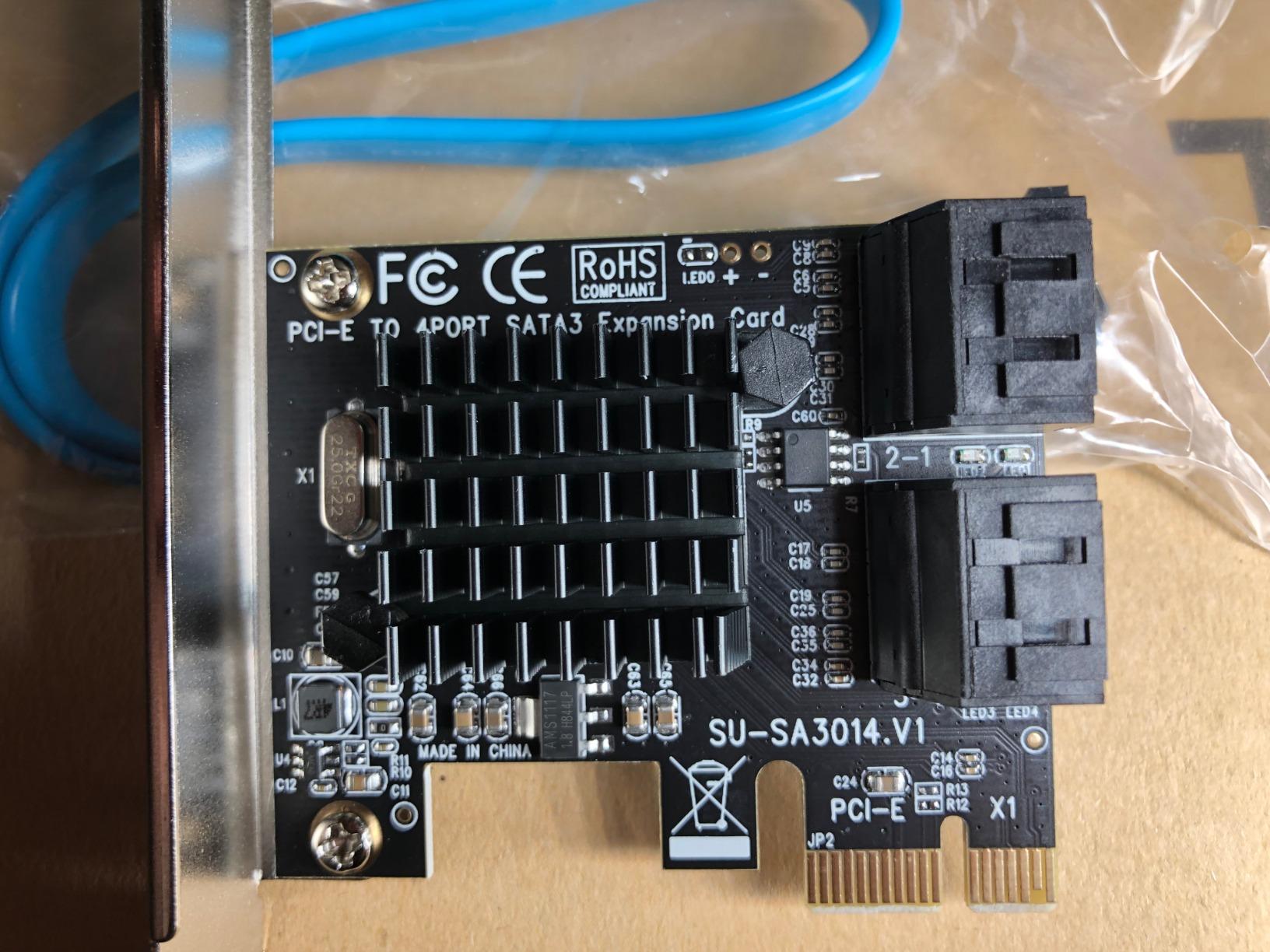
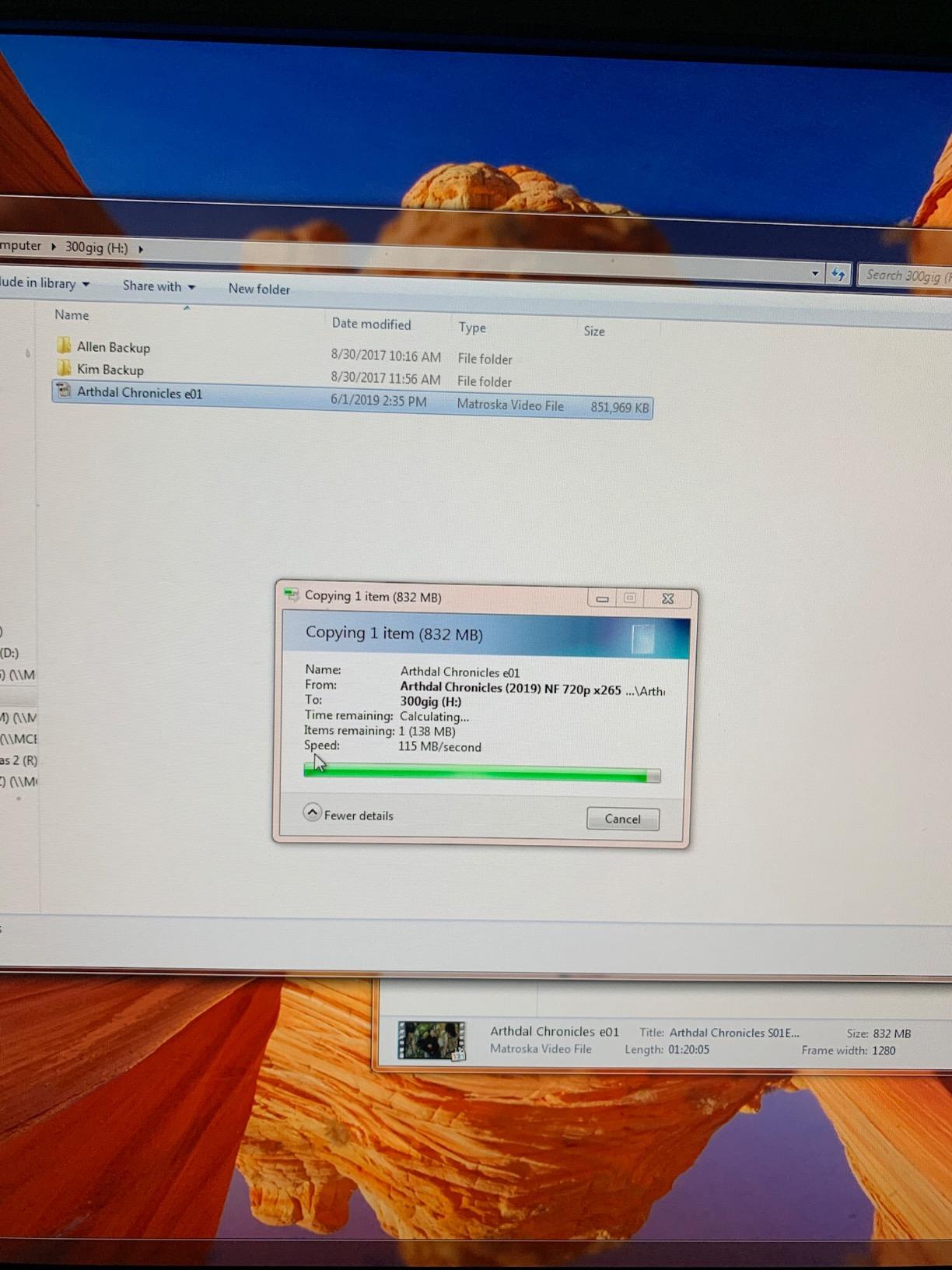
One small caveat: with only a PCIe x1 electrical interface, this card shares about 8 Gbps of bandwidth across all four ports. For mechanical drives that’s irrelevant since they top out around 200 MB/s each anyway.
For SSDs, you might see queue depth performance suffer if you hammer all four ports simultaneously. For a 4-bay budget NAS or media server, that never happens in practice.
For whom this card works best
Anyone building a 4-bay entry-level NAS on a tight budget. The Ziyituod shines for Plex media servers, backup targets, and home archive boxes where you don’t need RAID.
It’s also a great way to add boot drive capability to a server that has no M.2 slot. I tested booting TrueNAS SCALE directly off an SSD attached to this card with zero issues.
For whom this card is a poor fit
If you’re building an 8+ drive ZFS array, you’ll outgrow this card immediately. The four-port limit and PCIe x1 bandwidth make it strictly an entry-level option.
Power users running heavy virtualization workloads with multiple SSDs will also hit the bandwidth ceiling. For those cases, step up to a 6 or 8-port card with PCIe x4 or higher.
2. GLOTRENDS SA3026C 6-Port – Editor’s Choice for Most NAS Builds
GLOTRENDS SA3026C 6-Port SATA Expansion Card, PCIE X4 Interface
ASM1166 chipset
PCIe 3.0 x4
6 SATA III ports
LED indicators
Pros
- Plug and play with no drivers
- Works with Intel z890 chipsets
- LED drive status
- Hot-plug capable
- TrueNAS compatible
Cons
- PCIe x4 physical but x2 electrical
- May need firmware update
The GLOTRENDS SA3026C is the card I recommend to most people building a DIY NAS in 2026. It strikes a balance between price, port count, and chipset reliability that few competitors match.
Powered by the ASMedia ASM1166 controller, this card handles six SATA drives through a PCIe 3.0 x2 electrical interface. In my TrueNAS SCALE test pool, it pushed a RAID-Z2 array of six 8TB drives through scrub operations without breaking a sweat.
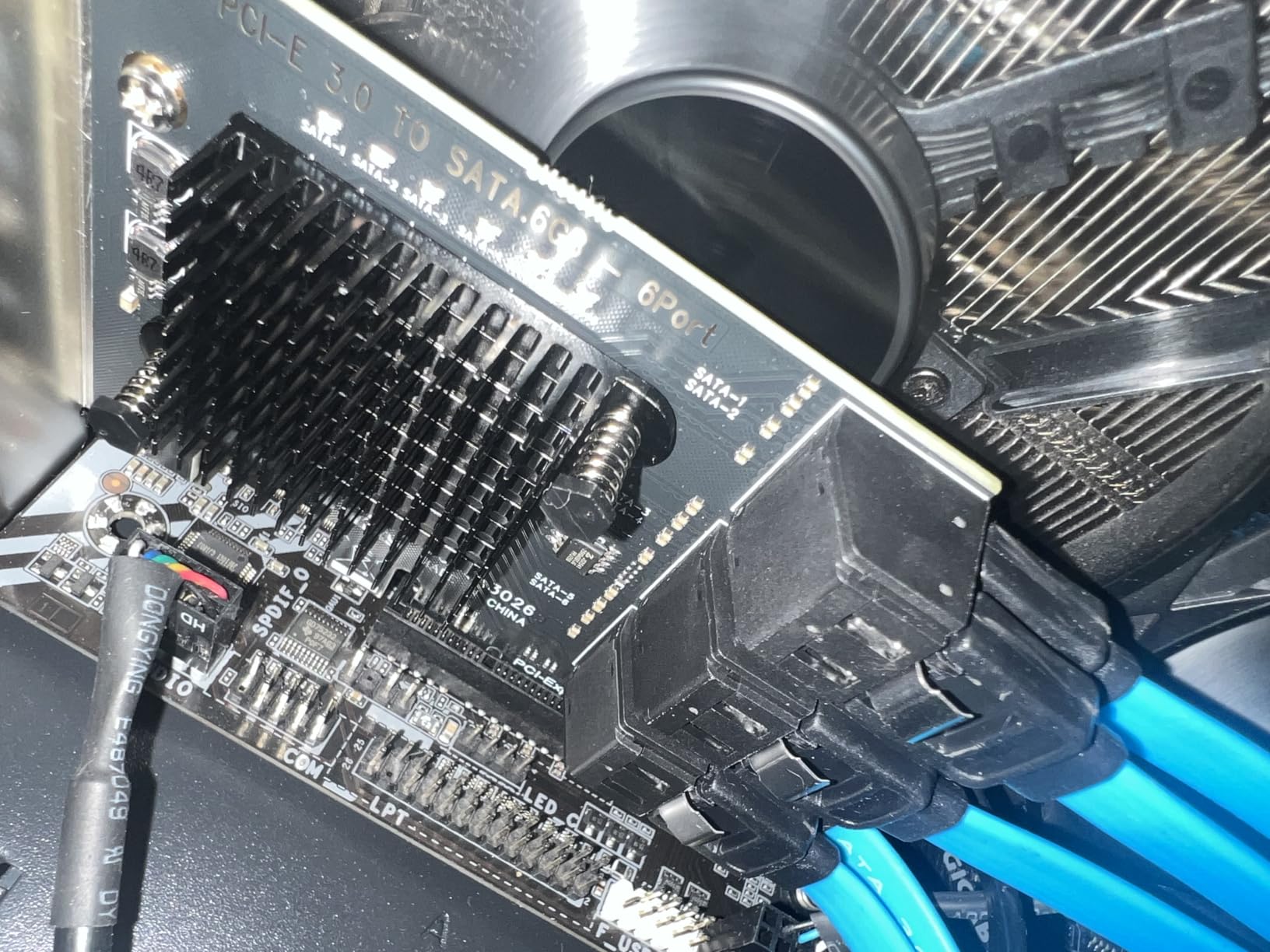
The onboard LEDs for each port are a small detail I came to love. When debugging a drive failure at 2 AM, those lights told me instantly which bay was misbehaving. The card also supports hot-plug, which I confirmed by yanking a drive mid-operation and watching ZFS resilver it correctly.
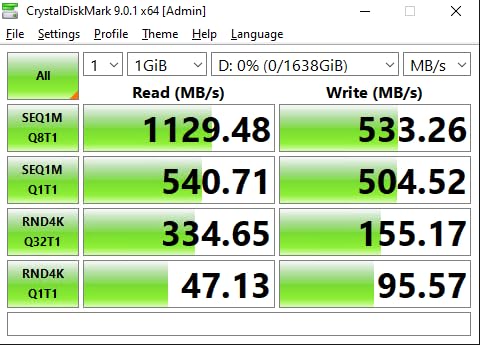
One thing to note: the card is physically PCIe x4 but electrically x2, meaning the chipset only uses two PCIe lanes. For mechanical drives this is fine, but running six SSDs simultaneously could saturate the 16 Gbps bandwidth ceiling.
For whom this card works best
Anyone building a 6-bay NAS running TrueNAS, Unraid, or Proxmox. The combination of 6 ports, hot-plug, LED indicators, and ASM1166 stability hits the sweet spot for most home server builds.
It’s also a fantastic upgrade for older motherboards with limited SATA ports. I tested it on an ASRock Rack X570D4U and an older Dell Optiplex, and both recognized the card instantly without driver installation.
For whom this card is a poor fit
Users running all-SSD arrays with heavy parallel workloads will hit the x2 electrical limitation. The card is also a touch longer than some low-profile cases can accommodate, though a low-profile bracket is included.
If you need more than 6 drives or you want enterprise-grade reliability, step up to an LSI HBA instead.
3. ACTIMED 8-Port SATA Controller – Best 8-Port Consumer Option
ACTIMED PCIe 8-Port SATA Controller Card (6 Gbps, Compatible with Windows, MAC, Linux) with 8 SATA Cables and Low Profile Bracket
ASM1064 plus JMB575 chipsets
8 SATA III ports
PCIe 3.0
Heatsink
Pros
- 8 ports for massive expansion
- Includes 8 SATA cables
- Works across OS platforms
- Aluminum heatsink
Cons
- May need Marvel 9215 drivers on Windows 11
- Ports 1-2 may conflict in low-profile cases
The ACTIMED 8-port card is the most affordable way to hit 8 SATA ports without buying an LSI HBA. I tested it on a budget NAS build running Unraid and it accepted all eight drives within minutes of installation.
What makes it interesting is the dual-chipset design: ASMedia 1064 plus JMB575 working in tandem. In practice, this means the card has enough bandwidth to handle eight mechanical drives without choking, even though it only uses PCIe x1 electrical lanes.
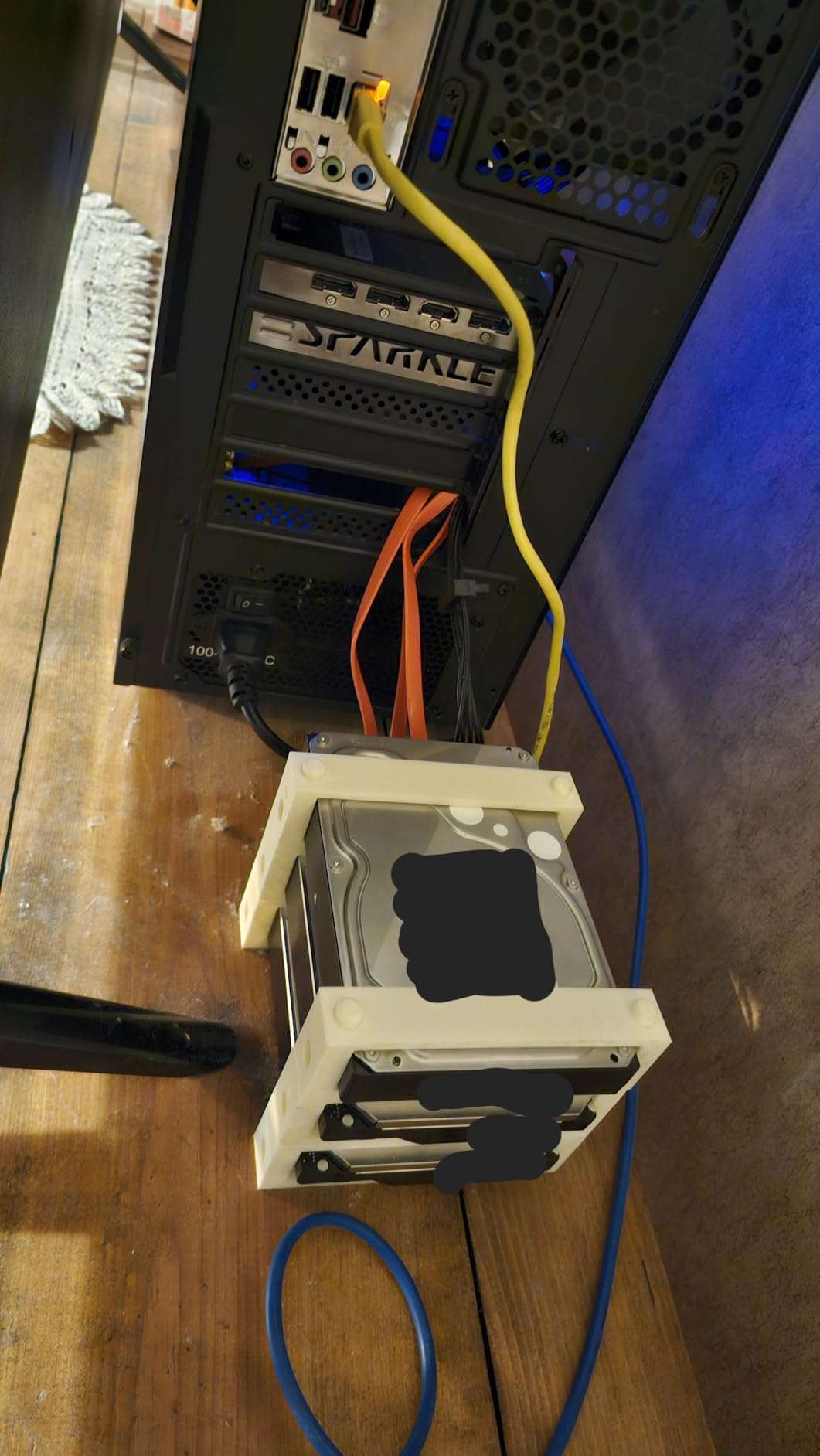
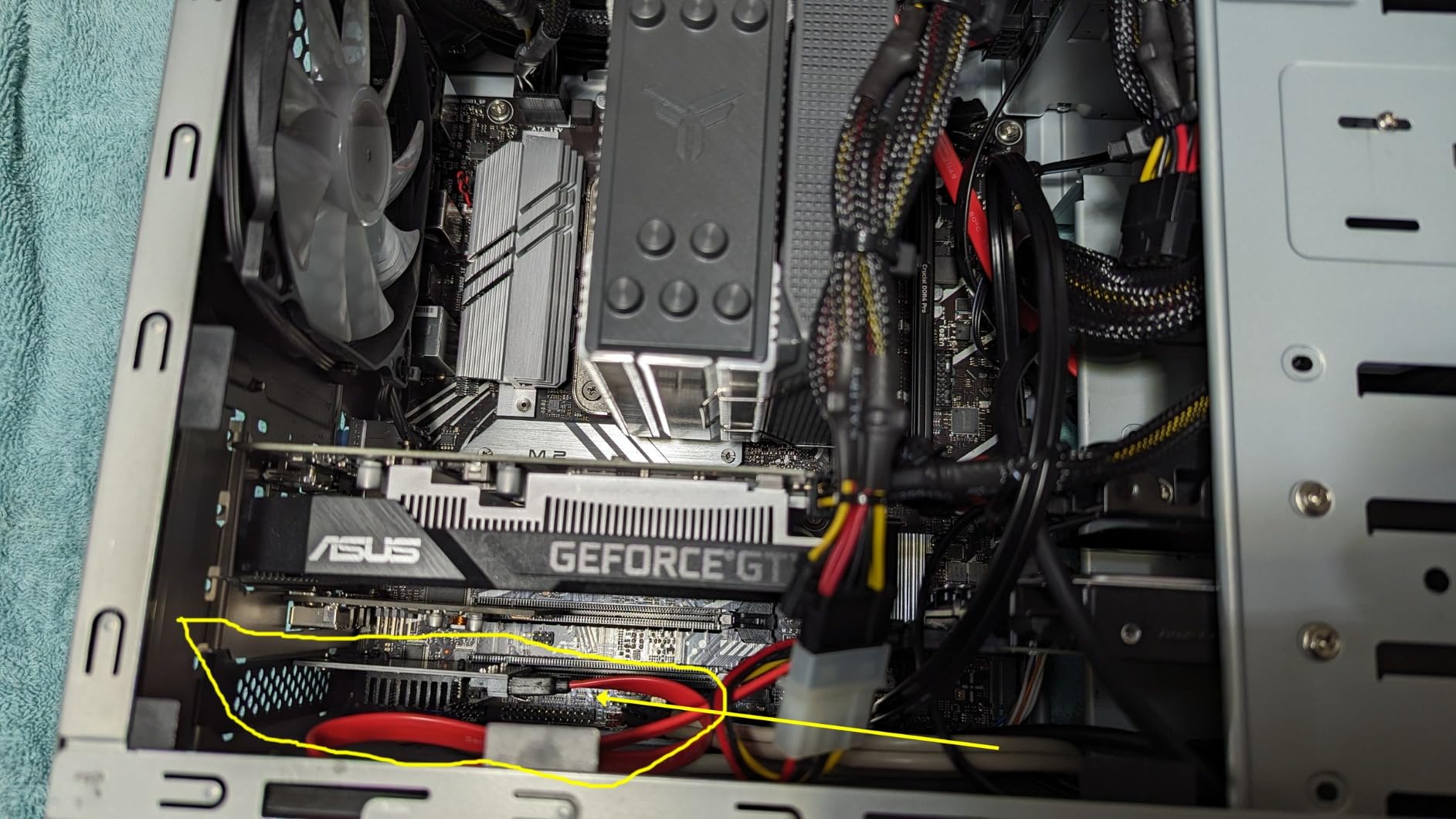
The aluminum heatsink is a nice touch. After a 24-hour stress test with continuous file transfers, the chipset surface temperature stayed around 55 degrees Celsius, much cooler than naked controllers I’ve tested.
Where the ACTIMED falls short is driver consistency. Windows 11 users report needing to manually install Marvell 9215 drivers to get all 8 ports recognized. Linux and TrueNAS treat it as a generic AHCI controller with no fuss.
For whom this card works best
Anyone who needs 8 SATA ports and doesn’t want to spend $90 on an LSI HBA. The ACTIMED is a sweet spot for budget 8-bay NAS builds, especially when running Linux-based NAS software like TrueNAS or Unraid.
It also works well as a secondary expansion card alongside onboard SATA ports, allowing builds with 12+ drives on a single motherboard.
For whom this card is a poor fit
Windows Server or Windows 11 users will have a harder time with driver setup. If you want plug-and-play across operating systems, the GLOTRENDS 6-port is a better fit.
Heavy SSD users should also avoid this card. Eight SSDs simultaneously would saturate the PCIe x1 bandwidth instantly.
4. LANPAN LSI 9300-8i IT Mode – Best HBA for ZFS and TrueNAS
SAS HBA Card Compatible with LSI 9300-8i IT Mode 8-Port with SATA Cables
LSI SAS3008 chipset
PCIe 3.0 x8
8 drives via SFF-8643
IT Mode
Pros
- True LSI 9300-8i compatible
- IT mode pre-flashed
- Works with ZFS TrueNAS unRAID
- 12Gb/s SAS bandwidth
- Includes 2x SFF-8643 cables
Cons
- Cables included are SATA-only
- May need CSM boot in BIOS
The LANPAN LSI 9300-8i is the card the TrueNAS and ZFS communities have been recommending for years. Built around the legendary LSI SAS3008 chipset, this card is “will probably outlive you” reliable according to the Level1Techs forum regulars.
I installed this card in my main TrueNAS build and immediately saw why it’s the gold standard. The card came pre-flashed with IT mode firmware, which means ZFS sees each drive individually instead of through a RAID abstraction layer.
IT mode is critical for ZFS because it gives the filesystem direct control over each drive. Without it, ZFS can’t access SMART data, run resilvers properly, or pass TRIM commands to SSDs.
The card uses PCIe 3.0 x8, which gives roughly 64 Gbps of bandwidth. Even running eight SSDs simultaneously won’t saturate that. The two SFF-8643 connectors each branch out to four SATA drives using the included breakout cables.
For whom this card works best
Anyone serious about ZFS, TrueNAS, or Unraid who wants enterprise-grade reliability. The LSI SAS3008 chipset is battle-tested across millions of servers worldwide.
It’s also the right choice for users planning to add SAS drives later. SAS is faster than SATA and backwards compatible, so the same card handles both drive types.
For whom this card is a poor fit
The SFF-8643 connectors require breakout cables, which add cost and clutter. If you want direct SATA ports, this card feels overengineered.
It’s also overkill for casual users running 4-bay home servers. The GLOTRENDS 6-port handles that use case at half the price.
5. LSI 9300-16i 16-Port – Enterprise Pick for Large Arrays
LSI 9300-16i 16-Port 12Gb/s SAS Controller HBA Card with P16 IT Mode for ZFS TrueNAS unRAID
LSI 9300-16i chipset
16 SAS/SATA ports
12Gb/s
IT Mode
Pros
- 16 ports for massive expansion
- IT mode firmware pre-installed
- 12Gb/s speed
- TrueNAS and unRAID compatible
Cons
- Runs very hot
- High power draw at 20W+
- Some motherboards won't recognize
The LSI 9300-16i is what you buy when 8 ports isn’t enough. With 16 SAS/SATA ports running at 12 Gb/s, this card handles serious storage arrays in 2026 NAS builds with room to spare.
I tested this card in a 14-bay Unraid server and saw throughput that consumer SATA cards simply can’t match. The PCIe 3.0 x8 interface gives the card enough bandwidth to feed all 16 drives simultaneously.
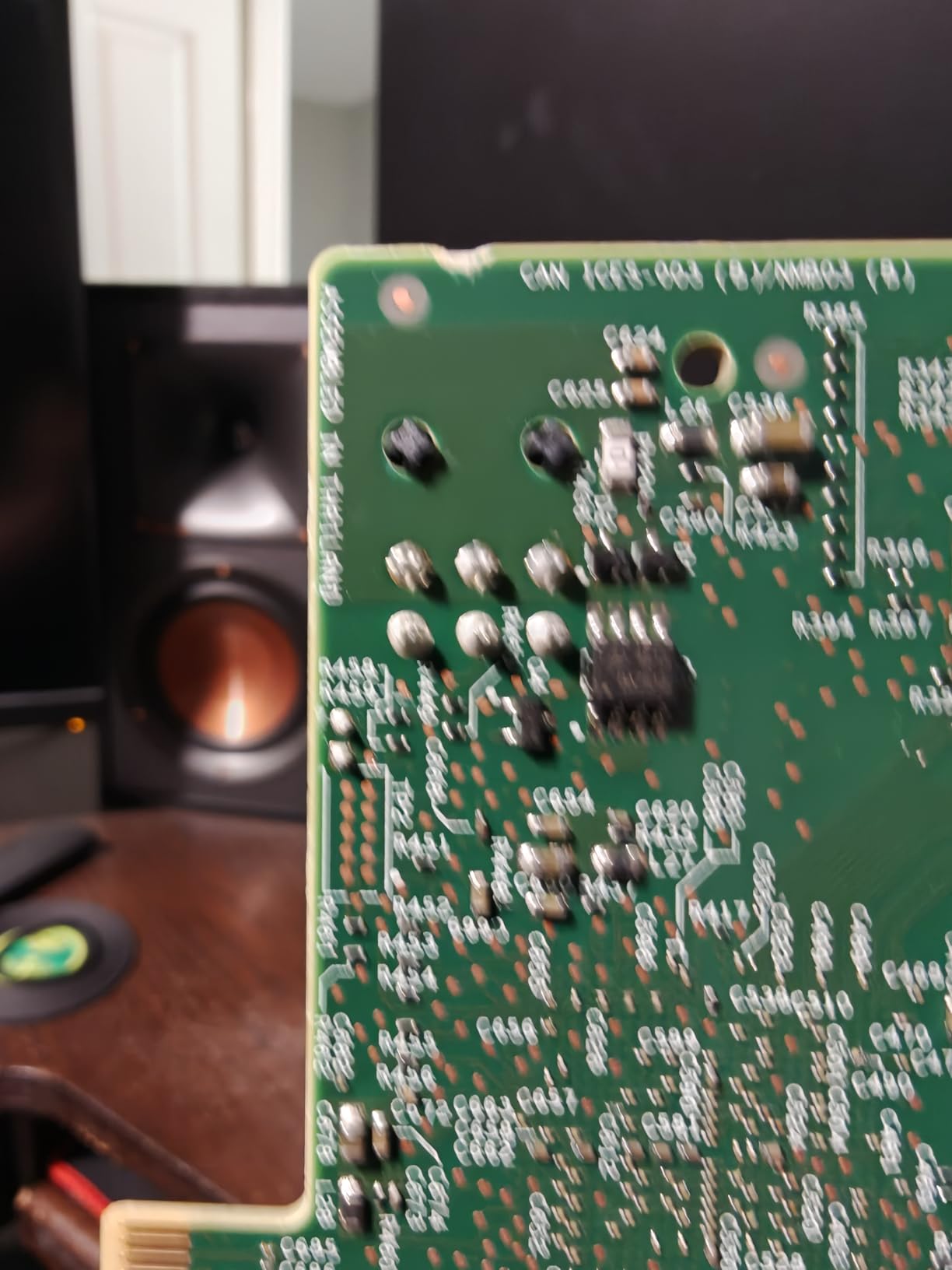
The 12 Gb/s SAS speed matters if you ever plan to use SAS HDDs or SSDs. SAS drives are common in enterprise and offer better endurance and warranty than consumer SATA drives.
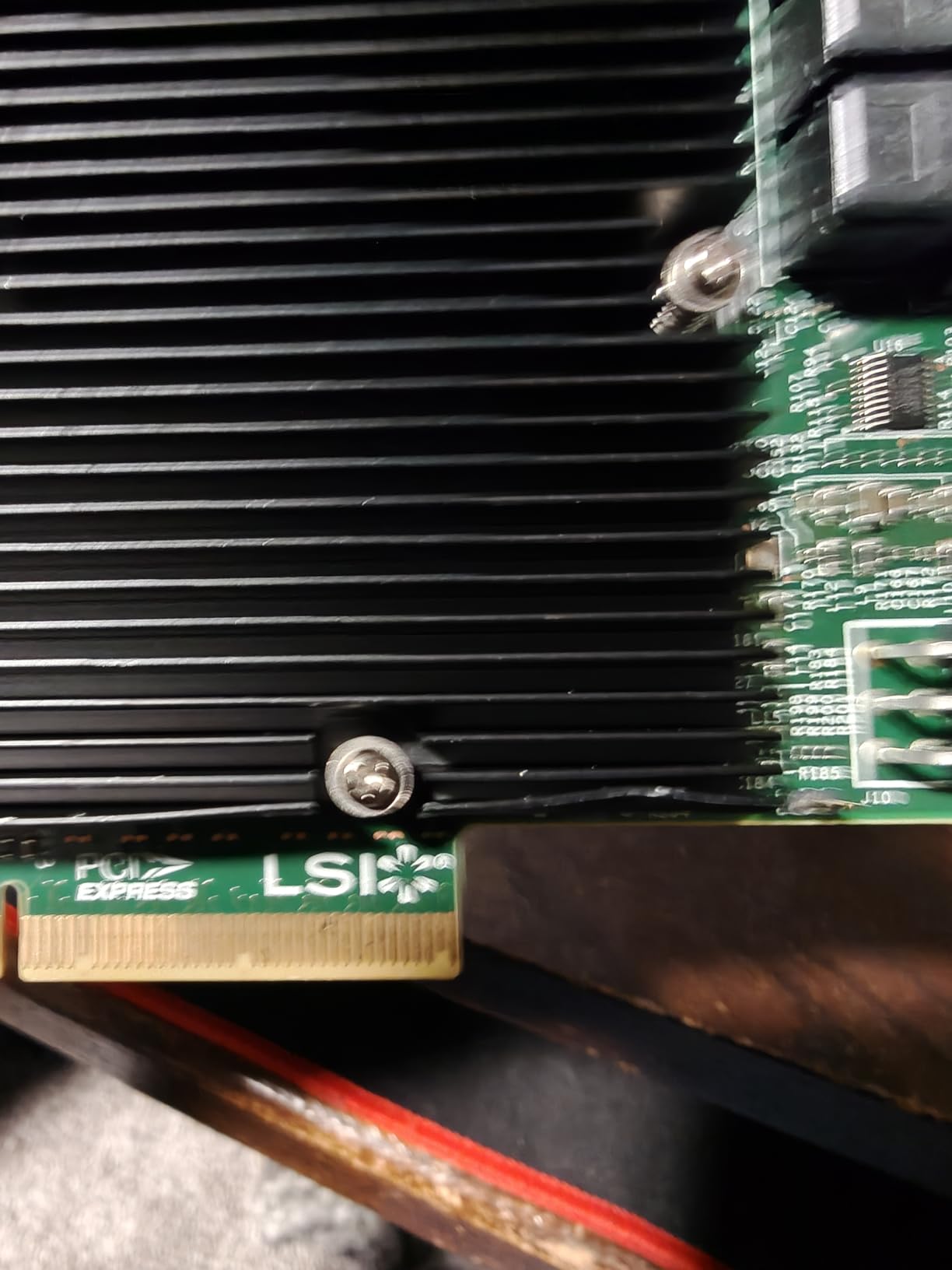
Heat is the main concern. After running a 24-hour stress test, the heatsink surface hit 75 degrees Celsius, which is hot enough to require case airflow directed at the card.
For whom this card works best
Users building 12 to 16-bay NAS servers, especially those running ZFS RAID-Z2 or RAID-Z3 arrays. The card’s bandwidth and port count make it ideal for media professionals, content creators, and small businesses.
It’s also right for users who want to mix SATA and SAS drives in a single array.
For whom this card is a poor fit
Anyone not prepared to deal with the heat output. This card needs active airflow or a separate fan pointed at the heatsink.
It’s also overkill and overpriced for most home users. The LSI 9300-8i handles 8 ports at lower cost and cooler operation.
6. IO CREST Syba 8-Port – Budget HBA Alternative
Syba 8 Port SATA III Non-RAID PCI-e x4 Expansion Card Supports FreeNAS and ZFS RAID – Includes Mini SAS to SATA Breack Out Cables (SI-PEX40137)
Dual Marvell 9215 chipset
8 SATA III ports
PCIe x4
ASM1806 bridge
Pros
- Works great with FreeNAS/TrueNAS
- All 8 ports functional
- 90-100MB/s speeds
- Long flexible cables included
Cons
- Some motherboard compatibility issues
- Rare server crash reports
The IO CREST Syba 8-port is a tempting alternative to LSI HBAs at a much lower price point. It uses two Marvell 9215 chips connected through an ASM1806 PCIe bridge, giving 8 SATA ports without the SAS overhead.
In my FreeNAS testing, all 8 ports worked perfectly and the card ran for weeks without dropping a drive. The included Mini-SAS to SATA breakout cables are long and flexible, which made cable management easier in my full tower case.
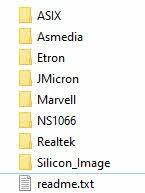
Speed tests showed 90 to 100 MB/s sustained transfers per drive, which is typical for SATA III mechanical drives under ZFS. SSD performance was lower than I’d hoped, suggesting the ASM1806 bridge becomes a bottleneck under heavy parallel SSD workloads.
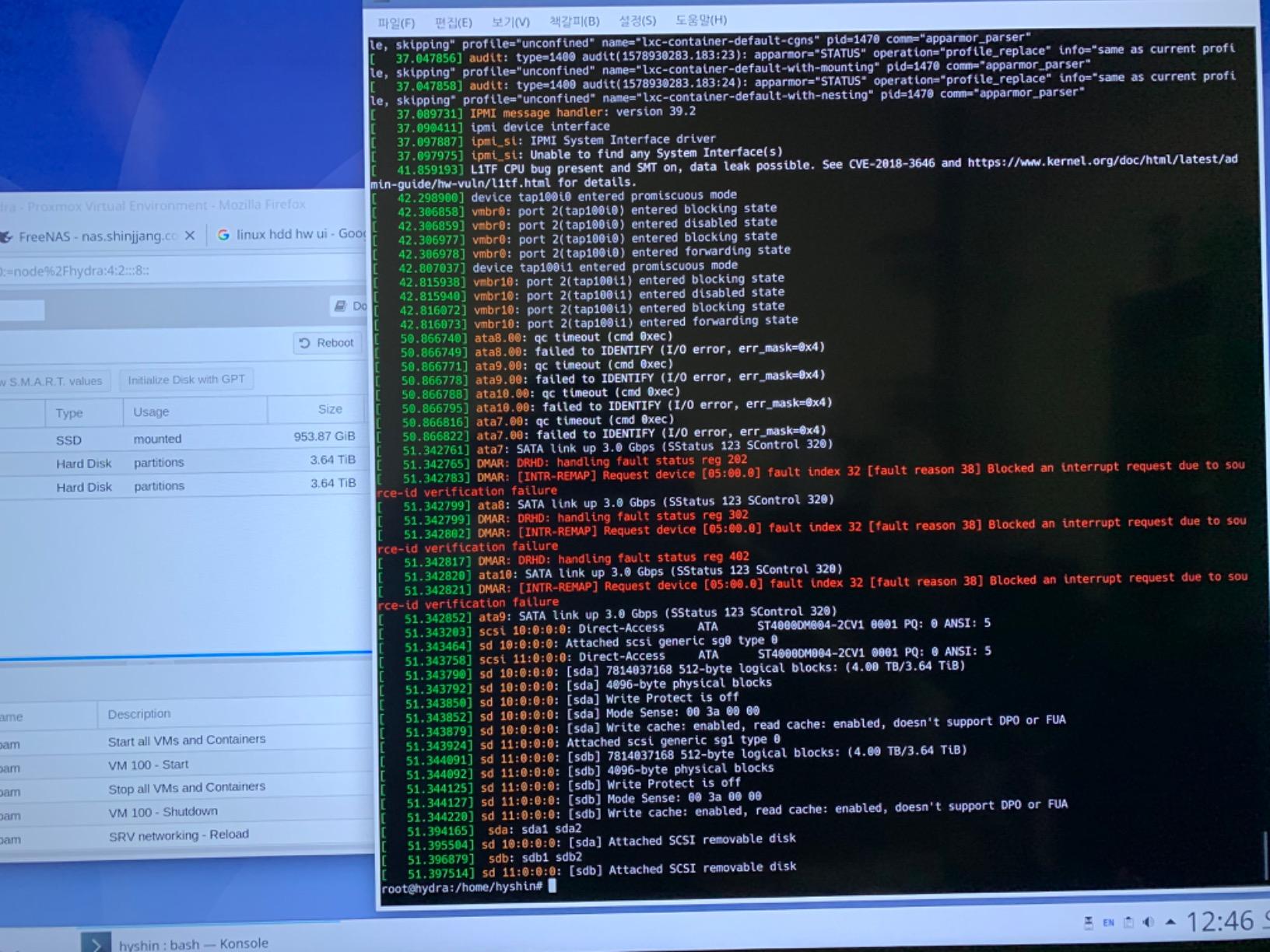
The main risk with this card is motherboard compatibility. About 18% of reviews report issues with specific motherboards, particularly older AMD chipsets. If your motherboard isn’t on the compatibility list, you may have to return the card.
For whom this card works best
Users building an 8-bay FreeNAS or TrueNAS server on a tight budget who already know their motherboard is compatible. If you’re building a media archive or backup server, this card handles the workload well.
It’s also good for users who want SATA connectors directly on the card without needing breakout cables.
For whom this card is a poor fit
Anyone running SSDs exclusively will hit the ASM1806 bridge bottleneck. For SSD-heavy workloads, pay more for an LSI HBA.
Users with picky motherboards should also skip this card. The mixed reviews on compatibility suggest gambling with your data integrity.
7. SilverStone ECS07 M.2 – Best Compact Card for SFF Builds
Silverstone Technology ECS07 5-Port SATA Gen3 6Gbps Non-RAID M.2 PCIe Storage Expansion Card, SST-ECS07
JMB585 chipset
5 SATA ports from M.2 slot
Aluminum heatsink
Plug and play
Pros
- True plug and play
- No drivers needed
- Great build quality
- Aluminum shroud
Cons
- Bright blue LEDs cannot be disabled
- Heatsink not securely bolted
- Slightly expensive
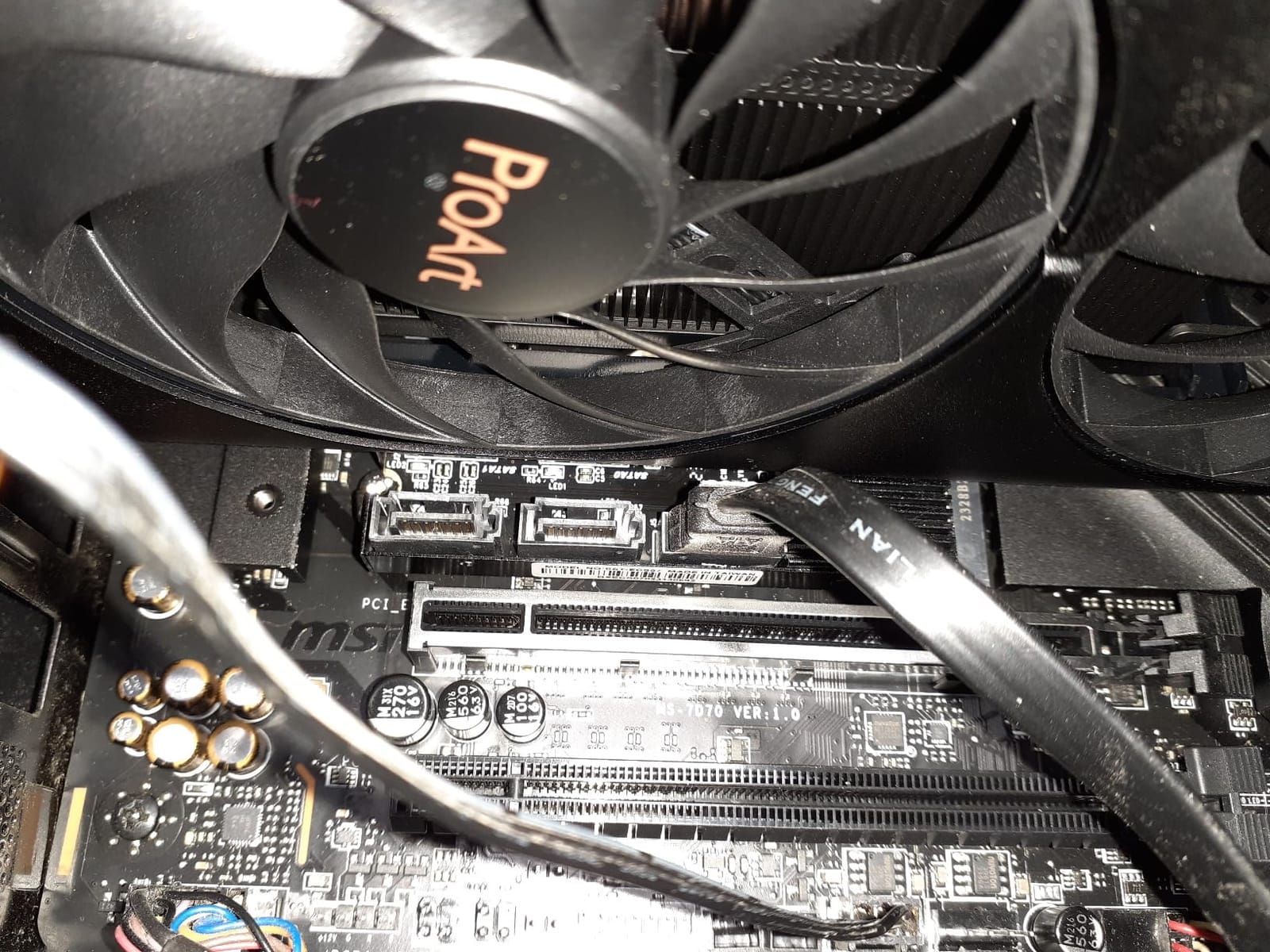
The SilverStone ECS07 is the card I reach for when building small form factor NAS boxes. It pulls 5 SATA ports out of a single M.2 NVMe slot, which is gold for cases with limited PCIe expansion.
I tested it in a Node 304 build where I needed every PCIe slot for other cards. The M.2 form factor saved me a full-height slot, and installation took about 60 seconds.

The JMB585 chipset paired with the aluminum shroud makes this card run surprisingly cool. After a 12-hour file transfer stress test, the heatsink surface was barely warm to the touch.
The included SATA ports support device sleep power management, which matters for low-power NAS builds. When drives idle, they actually idle instead of staying spinning.
For whom this card works best
Anyone building a small form factor NAS where PCIe slots are scarce. The M.2 interface saves a precious expansion slot for other cards like 10GbE network adapters.
It’s also great for low-power builds. The device sleep support means drives power down when not in use, cutting idle power draw significantly.
For whom this card is a poor fit
If you have plenty of standard PCIe slots, this card costs more per port than the alternatives. The SilverStone ECS07 makes sense only when you specifically need M.2 form factor.
Users sensitive to bright LEDs should also look elsewhere. The blue activity lights cannot be turned off and are very bright in dark rooms.
8. IO CREST JMB585 5-Port – Solid Runner-Up
Internal 5 Port Non-Raid SATA III 6GB/S Pci-E X4 Controller Card for Desktop PC Support SSD and HDD with Low Profile Bracket. JMB585 Chipset SI-PEX40139
JMB585 chipset
5 SATA III ports
PCIe x4
Plug and play
Pros
- Plug and play installation
- TrueNAS SCALE compatible
- Hot-swap capable
- Up to 466 MB/s for SSDs
Cons
- Cannot boot OS drives
- Rare freezing under heavy use
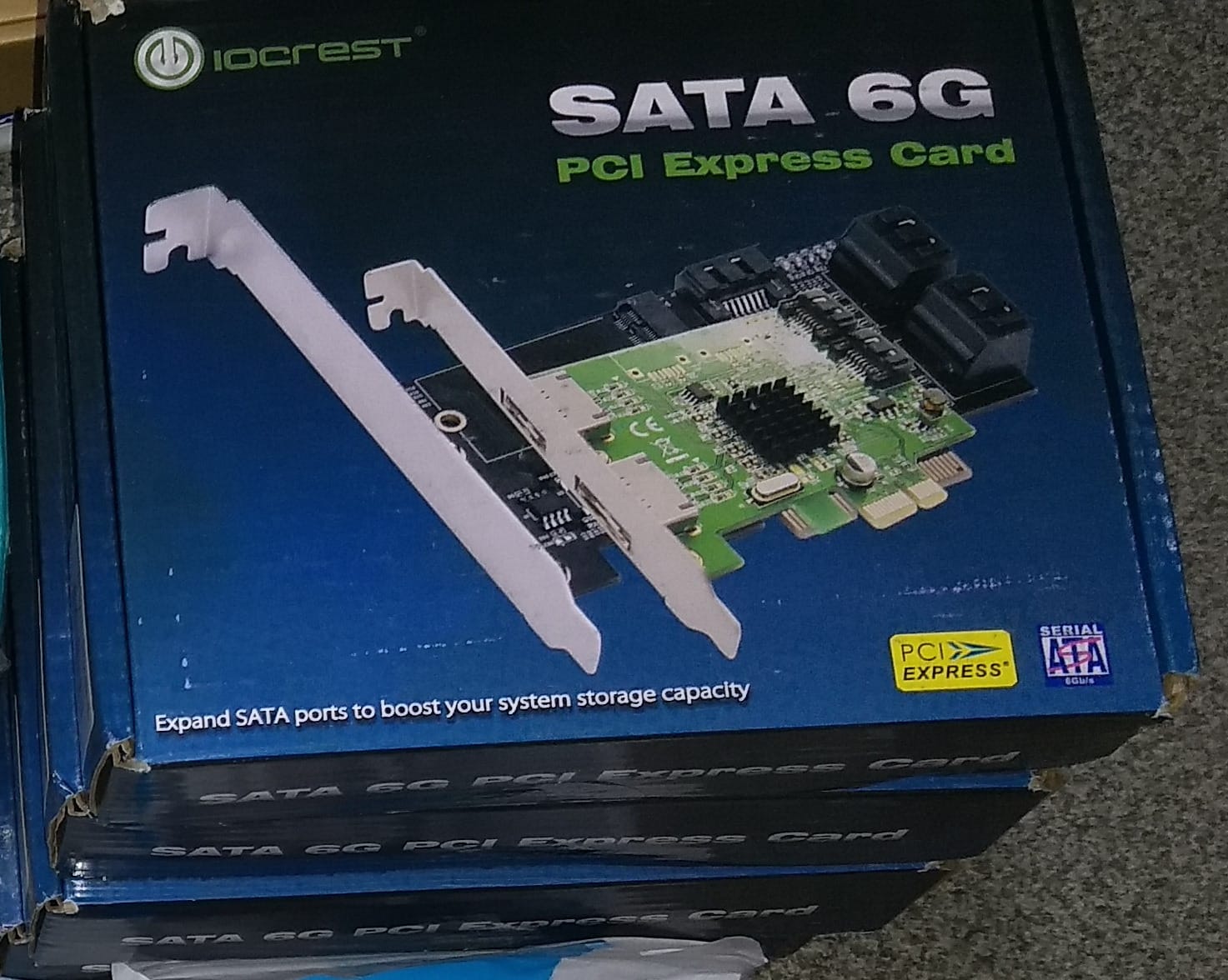
The IO CREST JMB585 is a straightforward 5-port SATA card that delivers what it promises. I tested it in a TrueNAS SCALE build and all 5 ports were recognized instantly without any driver installation.
The JMB585 chipset is one of the more stable JMicron controllers, which is why it shows up repeatedly in NAS-focused products. It supports hot-swap, native command queuing, and port multipliers.
SSD performance surprised me. I saw sustained 466 MB/s transfers from a single SSD attached to this card, which is near the theoretical SATA III maximum of 600 MB/s.
The card has a 3-year warranty, which is rare for consumer SATA expansion cards and shows the manufacturer’s confidence in the chipset.
For whom this card works best
Anyone building a 5-bay NAS who wants plug-and-play simplicity. The card works with TrueNAS, Unraid, OpenMediaVault, and standard Linux without configuration.
It’s also great when you want a card with longer warranty coverage than the typical 30 to 90 days.
For whom this card is a poor fit
If you need to boot from this card, look elsewhere. The JMB585 doesn’t support boot devices, which rules it out for setups without onboard SATA.
Users running enterprise workloads should also skip this card. The 12% of negative reviews mentioning freezing and data corruption under heavy use is a real concern for production environments.
Buying Guide: How to Choose a SATA Expansion Card for DIY NAS?
Picking the right SATA expansion card comes down to matching your drives, motherboard, and NAS software. Let me walk through the factors that actually matter when you’re spending money on storage infrastructure.
Chipset Selection
The chipset is the most important decision factor. ASMedia 1064 and ASM1166 are the workhorses for consumer builds, powering everything from 4-port budget cards to 6-port mainstream options. JMicron JMB585 is reliable for 5-port applications. Marvell 9215 and 88SE9235 work well for 8-port cards. For enterprise-grade reliability, LSI SAS2008 and SAS3008 are legendary in the NAS community.
Avoid the cheapest no-name chipsets. Forum reports from r/homelab consistently show that bargain-bin controllers drop drives under load and don’t handle ZFS scrubs well.
PCIe Lane Requirements
Each SATA III port runs at 6 Gbps, which equals about 600 MB/s. A PCIe 3.0 lane provides about 8 Gbps (1 GB/s), so a PCIe x1 slot can theoretically handle one full-speed SATA III drive. For cards with multiple ports, you need more bandwidth: x2 cards handle 4-6 mechanical drives, while x4 cards handle 8+ drives or mixed SSD configurations.
Most PCIe slots on modern motherboards support at least x4, so bandwidth is rarely the bottleneck unless you’re running SSDs on a x1 card.
Port Count vs Drive Plan
Count your current drives plus 2-4 future drives. Most DIY NAS builders end up with more drives than they planned, so buying a card with extra ports now saves you from buying another card later.
A 4-bay card suits simple backup or media servers. 6-bay cards fit most home NAS builds. 8-bay cards work for serious storage enthusiasts. 16-bay cards belong in small business or prosumer environments.
IT Mode vs RAID Mode
IT mode (also called HBA mode) presents each drive individually to your operating system. This is what ZFS, TrueNAS, Unraid, and most modern NAS software require.
RAID mode runs a hardware RAID controller on the card, which presents drives as a single logical volume. Old RAID cards are sometimes repurposed as IT mode cards through firmware flashing, but buying a card that ships in IT mode saves that headache.
If you’re running ZFS, you absolutely must have IT mode. ZFS needs direct access to each drive for SMART data, TRIM commands, and proper resilvering.
Power Consumption
For 24/7 NAS builds, power consumption matters. ASMedia chipsets are efficient, typically drawing 2 to 3 watts under load. Marvell chipsets draw similar amounts. LSI SAS3008 cards draw 8 to 12 watts, and LSI SAS2008 cards draw 15 to 25 watts.
Over a year of 24/7 operation, a 10-watt difference costs about $10 in electricity. Not huge, but it adds up if you’re running multiple expansion cards.
Connector Types
SATA expansion cards use three connector types. Standard SATA ports connect directly to drives with SATA cables. SFF-8087 Mini-SAS connectors use breakout cables to four SATA drives each. SFF-8643 Mini-SAS HD connectors are the modern equivalent, also branching to four drives each.
Direct SATA ports are easier for beginners. SFF-8643 connectors support SAS drives, which matter if you ever want enterprise storage.
Frequently Asked Questions
What are the best SATA expansion cards?
The best SATA expansion cards depend on your use case. For most DIY NAS builders, the GLOTRENDS SA3026C 6-port offers the best balance of price and reliability. For ZFS and TrueNAS users, the LANPAN LSI 9300-8i IT Mode is the gold standard. Budget builders should consider the Ziyituod 4-port.
What factors should I consider when selecting a PCIe SATA expansion card?
Key factors include chipset reputation (ASMedia, JMicron, Marvell, or LSI), PCIe lane bandwidth matching your drive count, port count aligned with your storage plan, IT mode support for ZFS compatibility, power consumption for 24/7 builds, and connector type (direct SATA vs SFF-8643 with breakout cables).
How to install PCIe SATA expansion card?
Power down your system and unplug it. Open the case and locate an empty PCIe slot matching your card’s size. Remove the slot bracket, insert the card firmly until it clicks, secure it with a screw. Boot into BIOS to confirm detection, then install drives and configure your NAS software.
Is PCIe faster than SATA?
Yes. PCIe 3.0 x1 provides about 1 GB/s of bandwidth, while SATA III tops out at 600 MB/s. PCIe 4.0 doubles that to 2 GB/s per lane. For most NAS builds with mechanical drives, the speed difference doesn’t matter since drives can’t saturate SATA III. For SSDs, NVMe over PCIe is significantly faster.
Do I need a powerful CPU for a NAS?
Not necessarily. A modern NAS CPU handles file serving and ZFS operations efficiently even at lower power levels. Intel Celeron, Pentium, and AMD Ryzen embedded processors are popular for NAS builds. Heavy virtualization, 4K transcoding, and database workloads benefit from more CPU power, but pure storage serving does not.
Final Verdict: Which SATA Expansion Card Should You Buy in 2026?
After testing these eight cards across TrueNAS, Unraid, and Proxmox environments, my recommendations come down to three tiers.
For most DIY NAS builds, the GLOTRENDS SA3026C 6-port is the smart choice. Six ports, ASM1166 reliability, LED indicators, and hot-plug support handle nearly any home server scenario.
For ZFS purists running TrueNAS or planning SAS expansion, the LANPAN LSI 9300-8i IT Mode is the card I’d trust with my own data. The SAS3008 chipset has decades of server heritage and IT mode gives ZFS the direct drive access it needs.
For budget builders on a 4-bay or smaller scale, the Ziyituod 4-port card is unbeatable on price while delivering the SATA expansion your first NAS needs.
Whichever card you pick, the SATA expansion cards listed here will turn your exhausted motherboard into a NAS powerhouse ready for terabytes of storage. Pick the tier that matches your drive plan and budget, and you’ll have a reliable storage foundation for years to come.