
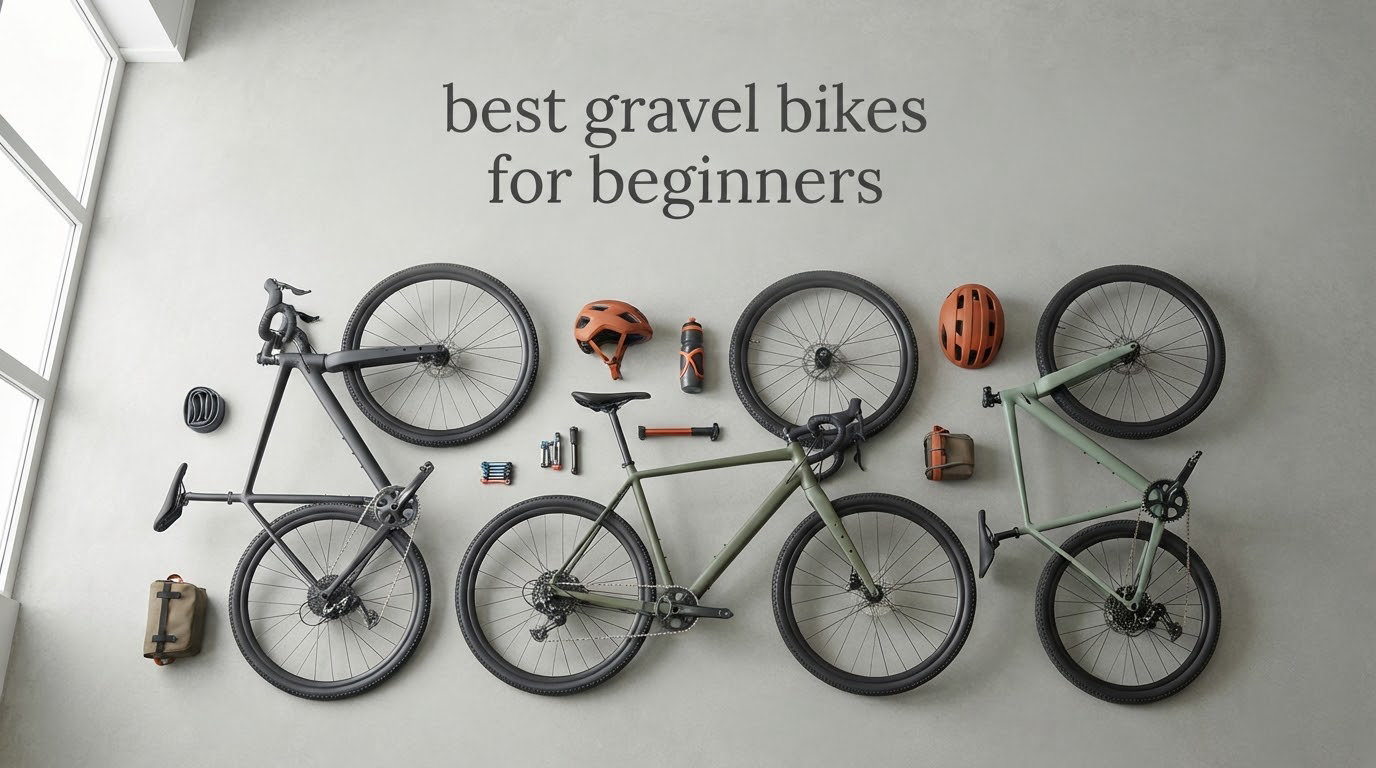
The short answer: for your first gravel bike, start in the aluminium, wide-tyre, Shimano-equipped tier rather than a carbon race machine. Among the bikes we looked at, the Tommaso Sentiero is the one we would put a new rider on, the Tommaso Siena costs the least while still running a full Shimano drivetrain, and the SAVADECK GRX400 is the smarter step up if you know you will keep riding.
That guidance matters because the gravel category is not a ladder. It runs from aluminium bikes with triple chainrings and flat handlebars up to carbon frames with integrated cockpits and 22-speed road groupsets, and a first-time buyer has no way to tell which end of that range suits them. Every ranking page we read assumes the decision to buy a gravel bike has already been made.
This guide starts one step earlier. We cover whether a gravel bike is right for a first bike at all, what each spec term actually means to a new rider, where to spend if your budget is limited, and then review seven complete bikes against that framework. It was written and updated for 2026, and every bike below ships as a complete machine rather than a frameset or a parts bundle.
If your riding is mostly short trips around town rather than weekend miles on dirt, our guides to electric bikes for commuting and electric cargo bikes for families cover the cases where an assisted bike is the more honest first purchase.
Table of Contents
Is a gravel bike right for your first bike?
Gravel bikes suit new cyclists who ride a mix of paved roads and gravel roads, farm roads, hardpack dirt and canal paths. They are less suitable if you ride exclusively on smooth road, if you want to race, or if you are not ready to learn how drop bars or brake levers work.
The honest comparison looks like this. A flat-bar hybrid is the easiest first bike to learn on, with upright posture and simple controls, but it cannot run wide tyres and it feels nervous on loose surfaces. A hardtail mountain bike handles singletrack well but is heavy and slow on pavement. A used cyclocross bike is a legitimate cheap route into drop bars, though you will need servicing and you will rarely find one in your size locally.
A gravel bike is the one frame that covers commuting, weekend fitness riding, gravel roads and short bikepacking trips without a second purchase. Forum consensus on this point is consistent: riders repeatedly tell beginners to go to a shop, state a budget and describe how they want to ride, and try bikes in person before committing. If you cannot do that, buying a complete bike that arrives needing assembly and tuning is a real extra cost in time.
One forum line we keep coming back to comes from the Riding Gravel community: ride as many bikes as you can and buy the most expensive one you can afford. That advice is about not underspending on fit, and it does not mean starting with carbon. It means spending your budget well.
Top 3 Picks for the Best Gravel Bikes for Beginners in 2026
Tommaso Sentiero
- Full Shimano drivetrain
- 700x40c tyres with disc brakes
- Compact upright geometry for new riders
- Lifetime warranty replacement promise
Tommaso Siena
- 21-speed Shimano Tourney drivetrain
- Triple chainring for very low climbing gears
- Avid BB5 disc brakes
- 700x40c tyres

SAVADECK GRX400
- Shimano GRX400 gravel groupset
- 10.4 kg carbon frame and fork
- RX400 hydraulic disc brakes
- Internal cable routing
The 7 Best Gravel Bikes for Beginners at a Glance in October
Every bike below is a complete bicycle. The table is ordered as we would rank them for a first-time gravel rider, not by specification count.
| Product | Specs | Action |
|---|---|---|
| Tommaso Sentiero |
|
Check Latest Price |
| Tommaso Siena |
|
Check Latest Price |
 Tommaso Sterrata Tommaso Sterrata |
|
Check Latest Price |
 SAVADECK U6000 SAVADECK U6000 |
|
Check Latest Price |
| SAVADECK GRX400 |
|
Check Latest Price |
 KABON Sora 18-Speed KABON Sora 18-Speed |
|
Check Latest Price |
 KABON 105 22-Speed KABON 105 22-Speed |
|
Check Latest Price |
How we chose these bikes
We compared complete bicycles only. Framesets, forks, wheelsets and tyres were excluded, because a beginner buying a bare frame faces a build cost and a skill requirement that changes the maths entirely. We read every listing specification, then cross-checked them against the pattern of praise and complaint in the owner reviews.
Three filters did most of the work. First, gearing: a first gravel bike needs a genuinely low climbing gear, which means either a triple chainring or a wide-range cassette. Second, brakes and tyres, because a bike that cannot be stopped in the rain or steered on loose gravel is not a beginner bike. Third, service reality, which means noting plainly which machines arrive needing professional assembly.
One limitation is worth stating. Two of the brands here are newer to the market and carry small review bases, so their ratings are promising rather than conclusive. Where that is the case, we have said so in the review rather than presenting the average as settled.
1. Tommaso Sentiero: the easiest first gravel bike to actually ride
Tommaso Sentiero Sport Performance Aluminum Gravel Bike – Shimano Claris 24 Speeds – Road Bicycle for Men & Women – Small 53cm
Aluminium frame
Full Shimano 24-speed drivetrain
700x40c tyres
Disc brakes
Upright compact geometry
Pros
- Complete Shimano drivetrain instead of mixed off-brand parts
- Lifetime warranty replacement promise
- 700x40c tyres and disc brakes handle mixed terrain
- Compact upright geometry suits new riders
Cons
- Professional assembly and tuning needed before the warranty applies
- Flat handlebars make it less efficient on pure road work
- Only one frame size listed
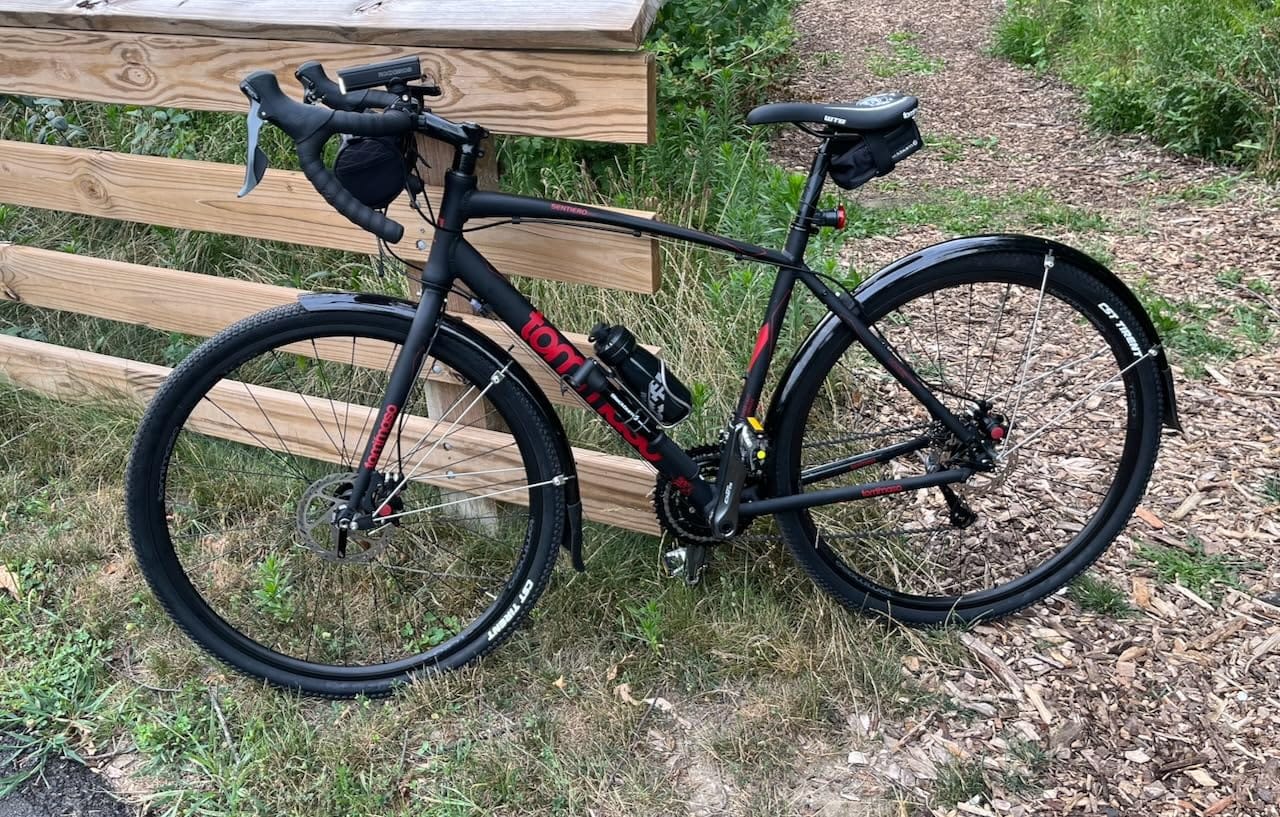
This is the bike we would hand a rider who has never been on a gravel bike and might be intimidated by the category. The Sentiero is built around an aluminium performance frame with a compact, upright geometry, and it does not put the rider low or stretched out. That single decision removes most of the first-week discomfort beginners report.
What stands out at this level is the drivetrain. The entire gear system is Shimano with rapid fire shifting, and 69 owners have rated the bike at an average of 4.2 out of 5. That is a large review base for a complete bike in this category, and it matters, because many competing listings here have fewer than 30 reviews.
Tyre and brake choice is the other strength. It comes on 700x40c all-terrain tyres with disc brakes, which is a genuinely useful combination for gravel roads, hardpack and mixed pavement rather than a road tyre pretending otherwise. The Italian-designed Tommaso brand has been building since 1985 and backs the frame with a lifetime warranty replacement promise.
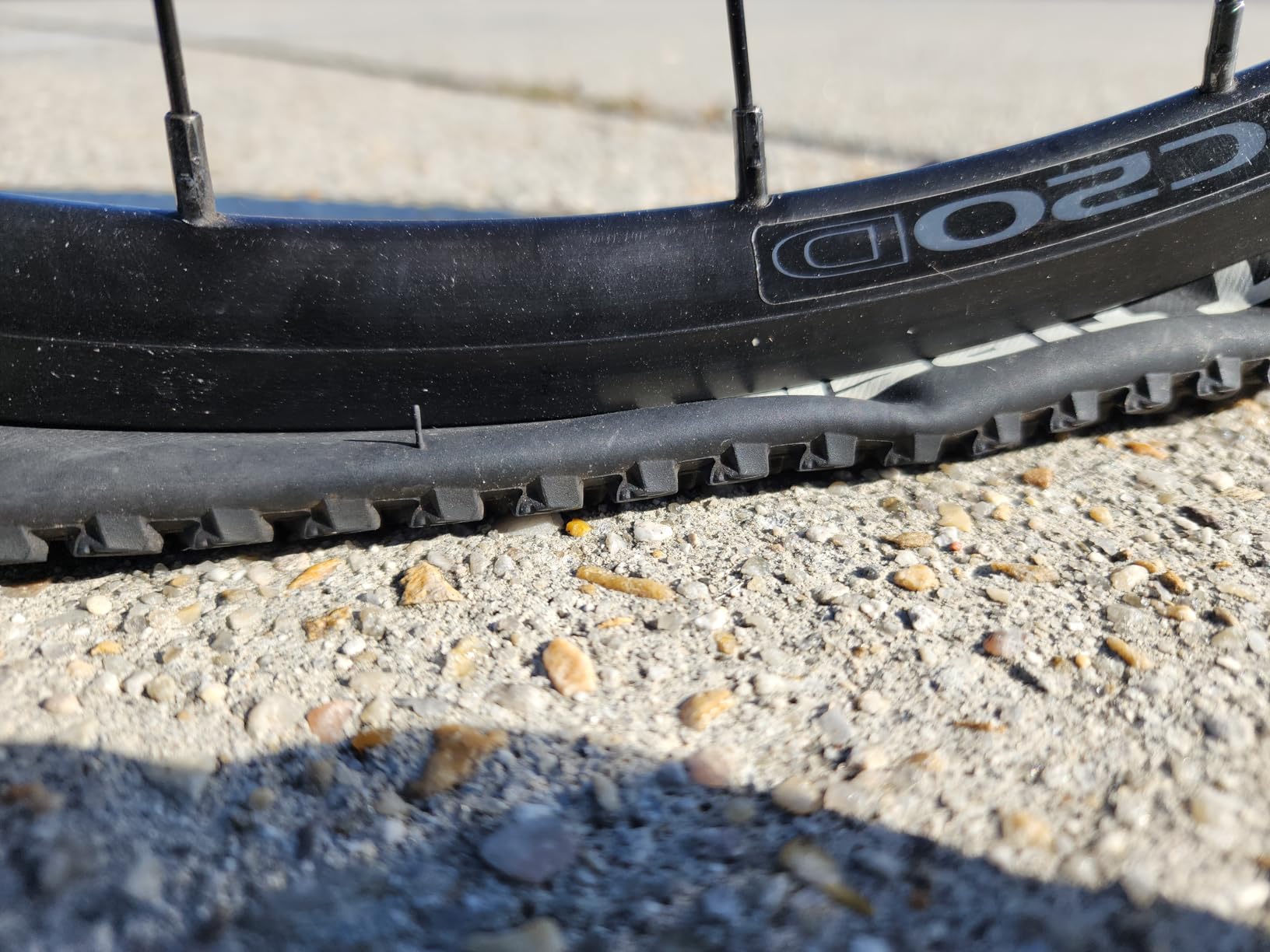
Owners consistently describe it as sturdy and versatile across pavement and gravel, and the aluminium frame is the kind of material that tolerates a knock from a kerb without the anxiety a new rider brings to a carbon bike. The 700x40c footprint also means you can go narrower for speed or wider for grip later without changing wheels.
The friction point is consistent enough that you should plan around it. The bike arrives un-tuned, and the brand requires professional assembly before the warranty applies. Most riders report that the work takes under an hour with basic tools, but if you have never adjusted a brake caliper, budget for a shop visit rather than discovering it in your driveway.
How the sizing and bar setup affect a new rider
Two things about this bike matter more than its spec sheet. First, the listed variant covers the S size for riders around 5 foot 6 to 5 foot 8, so if you are taller or shorter, confirm the frame you are actually ordering before you commit to it.
Second, the flat handlebars are a genuine advantage for a first gravel bike, not a compromise. The rider sits upright, has a clear view of traffic, and can brake with one finger on a lever they can see. Riders coming from a hybrid will find the transition close to seamless.
What to expect after the first month
Expect to spend the first session getting used to wide tyres and the slightly heavier steering they bring. The tyres damp road buzz well, so a long ride on chipseal or rough tarmac is far more comfortable than a road bike on the same surface.
Expect the maintenance to be ordinary bicycle maintenance. A full Shimano drivetrain means cables, chain and cassette are all familiar parts that any shop stocks, which is a practical advantage over an unfamiliar groupset when something needs replacing.
2. Tommaso Siena: the lowest-cost way into wide-tyre riding
Tommaso Siena – Shimano Tourney Gravel Adventure Bike with Disc Brakes Perfect for Road Or Dirt Touring, Matte Black – Small
Aluminium frame
21-speed Shimano Tourney
Triple chainring
Avid BB5 disc brakes
700x40c tyres
Pros
- Full Shimano Tourney drivetrain that shifts reliably once tuned
- 700x40c tyres and disc brakes work on wet gravel
- Triple chainring gives very low climbing gears
- Arrives mostly assembled
- Lifetime warranty from a brand operating since 1985
Cons
- Arrives un-tuned with no instructions
- 130mm rear dropout is a dated standard
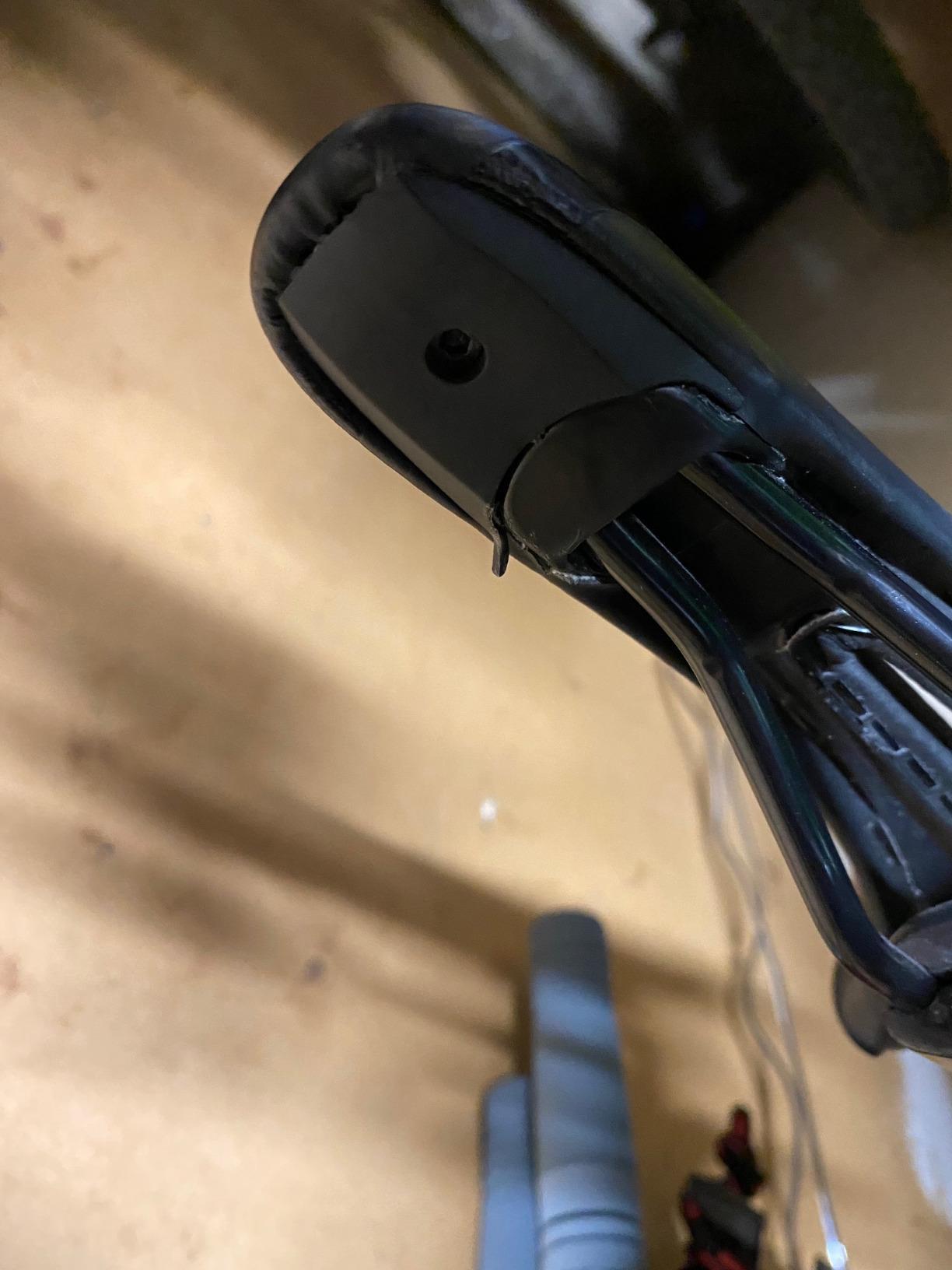
- Slim stock saddle is uncomfortable on longer rides
The Siena is the cheapest way into this whole category and it is not a token entry. Owners regularly describe it as the best value and most versatile bike they own, and at 53 reviews the owner base is large enough to draw real conclusions from. The 4.1 out of 5 average reflects complaints about assembly rather than about riding.
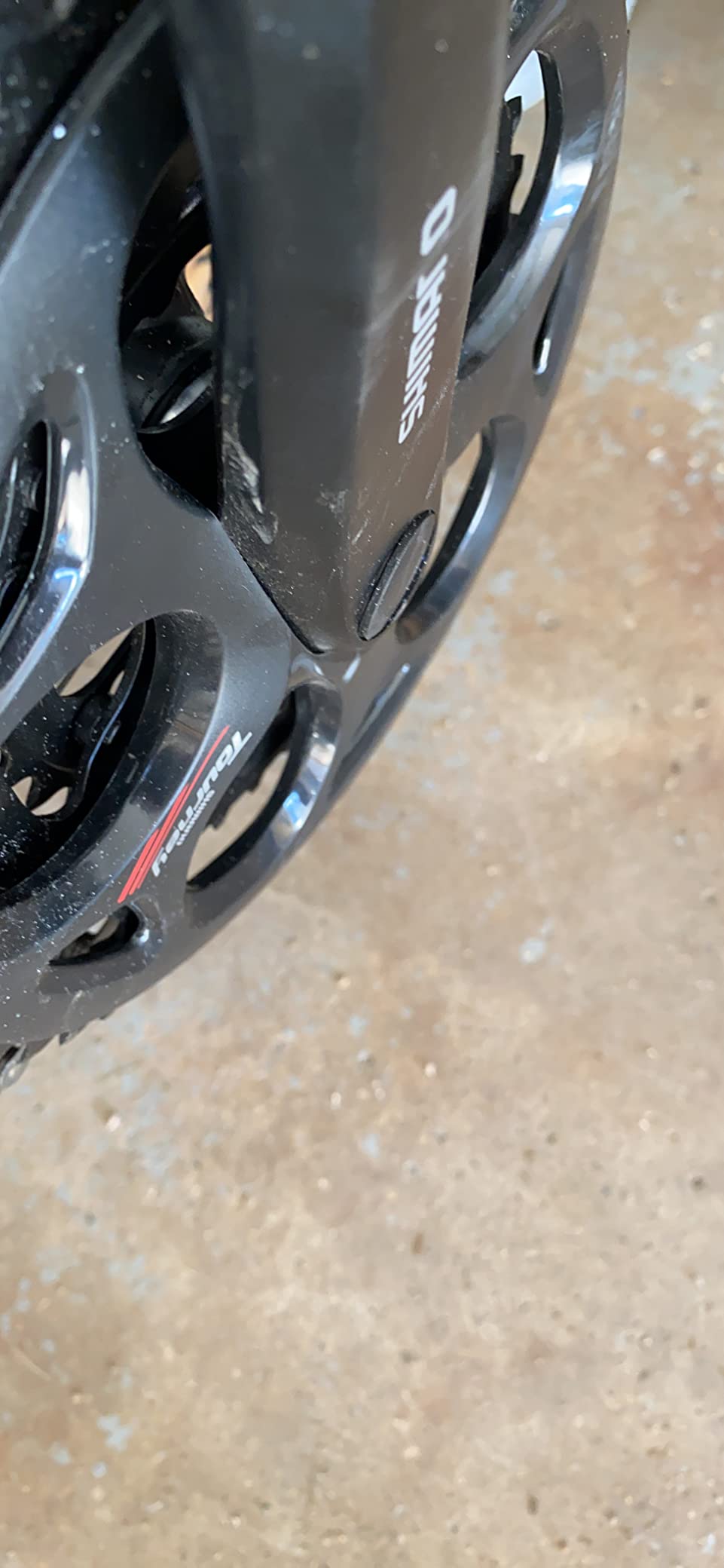
The mechanical that sets it apart for a beginner is gearing. The 21-speed Shimano Tourney drivetrain uses a triple chainring, which produces a climbing gear lower than almost anything else in this group. On a steep unpaved climb with a loaded pannier, that is the difference between grinding and getting up the hill.
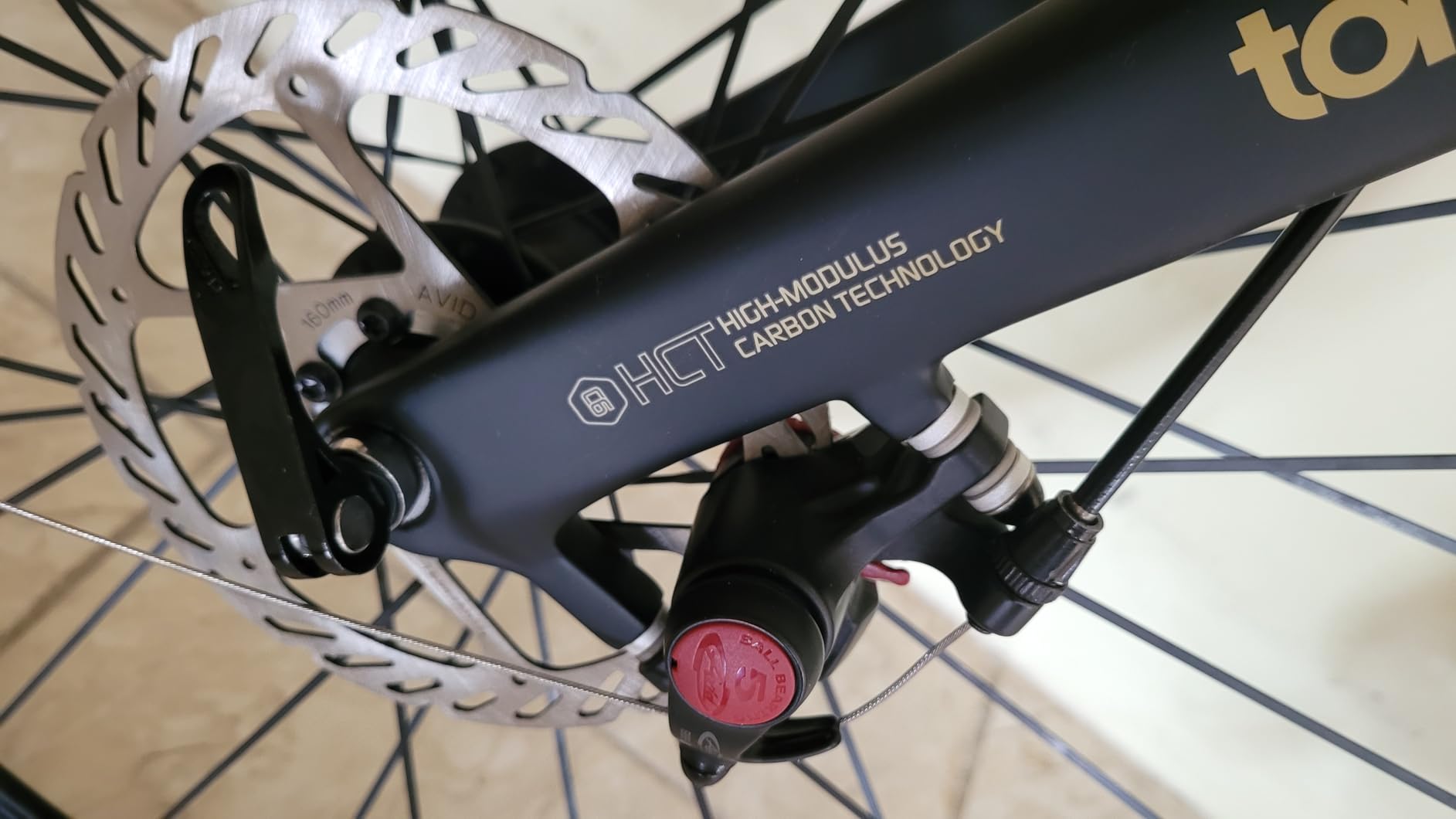
The other half of the bargain is braking. Avid BB5 mechanical disc brakes give consistent stopping on gravel and in wet conditions, which is exactly the situation a new rider is least confident about. The bike sits on 700x40c tyres on TC-20D rims with 28 spokes.
Be realistic about the arrival condition. The bike comes un-tuned with no instructions, and the front derailleur and brake caliper alignment need attention before it feels right. That is not unusual for a complete bike at this level, but it is work, and it is why we recommend budget for a shop tune.
There is also a specific spec issue worth flagging. Some reviewers report that the 40c tyres the bike arrives with sit outside the rim manufacturer’s recommended width range. It is not a widespread failure, but if you plan to run at low pressure it is worth asking the shop to check the fit against the rim spec before you ride it.
Whether the 130mm dropout matters to you
The rear dropout standard is 130mm, which is dated compared with the modern thru-axle. For most beginners it never becomes a problem, because you will not be replacing wheels. It matters if you later want to fit a different wheel set, since older standard wheelsets are the ones that will fit this frame.
The practical implication is that this bike is a closed system in a way the others are not. Plan to run it as a complete bike, add a rack and bags, and upgrade tyres or saddle, rather than planning a future wheelset swap.
How the triple chainring feels on real terrain
Most riders describe the front shifting as slow, and one owner reported a pedal shearing after roughly 20 miles, which reads as a setup issue rather than a design fault. Budget for a proper tune rather than rushing the first ride.
The slim saddle that comes with the bike is the other common complaint, and it shows up on longer rides. Swapping the saddle is inexpensive and one of the first upgrades we would make on this bike.
3. Tommaso Sterrata: a carbon fork that takes the edge off rough roads
Tommaso Sterrata Sport Performance Aluminum Gravel Bike – Carbon Frame, Shimano Claris 24 Speeds, Men’s Road Bike, 56cm
Aluminium frame with carbon fork
24-speed Shimano Claris drivetrain
Triple chainring
700x40c tyres
Avid BB5 disc brakes
Pros
- Entire Shimano drivetrain
- which is unusual at this level
- Carbon fork absorbs vibration better than the steel-fork Siena
- Triple front ring makes loaded climbing easier
- Owners report 1000+ miles without parts replacement
Cons
- Arrives un-tuned with no instructions and may need cable ends cut
- Inconsistent quality control on some arrivals
- One buyer received the wrong frame size
- Stock reflectors do not fit properly
The Sterrata is the same basic platform as the Siena with one meaningful change: a carbon fibre fork replacing the steel one. That single component does more for ride comfort on rough surfaces than most riders expect, because a carbon fork flexes slightly under load and takes the edge off chatter and small bumps.
Underneath, the drivetrain is a full 24-speed Shimano set with a triple chainring, and owners repeatedly single out the fact that the whole gear system is Shimano at this price. Replacement parts are ordinary and available, and shifts are predictable once tuned.
At 53 reviews and a 4.1 out of 5 average, the owner record looks very similar to the Siena’s. That pattern is informative: both bikes are liked for the same reasons, and both draw the same complaints about how they arrive.
Quality control is the thing to inspect on arrival. Reports include finger smudges on the frame, missing hardware and non-spinning pedals. None of those are serious, but all of them are exactly the kind of thing that makes a first purchase feel like a mistake, so check the bike over in the shop or in your first hour.
One owner received the wrong frame size in an otherwise correct box. This bike is listed in two sizes, which is better than the Sentiero’s single listing, but confirm the size on the frame label rather than trusting the box.
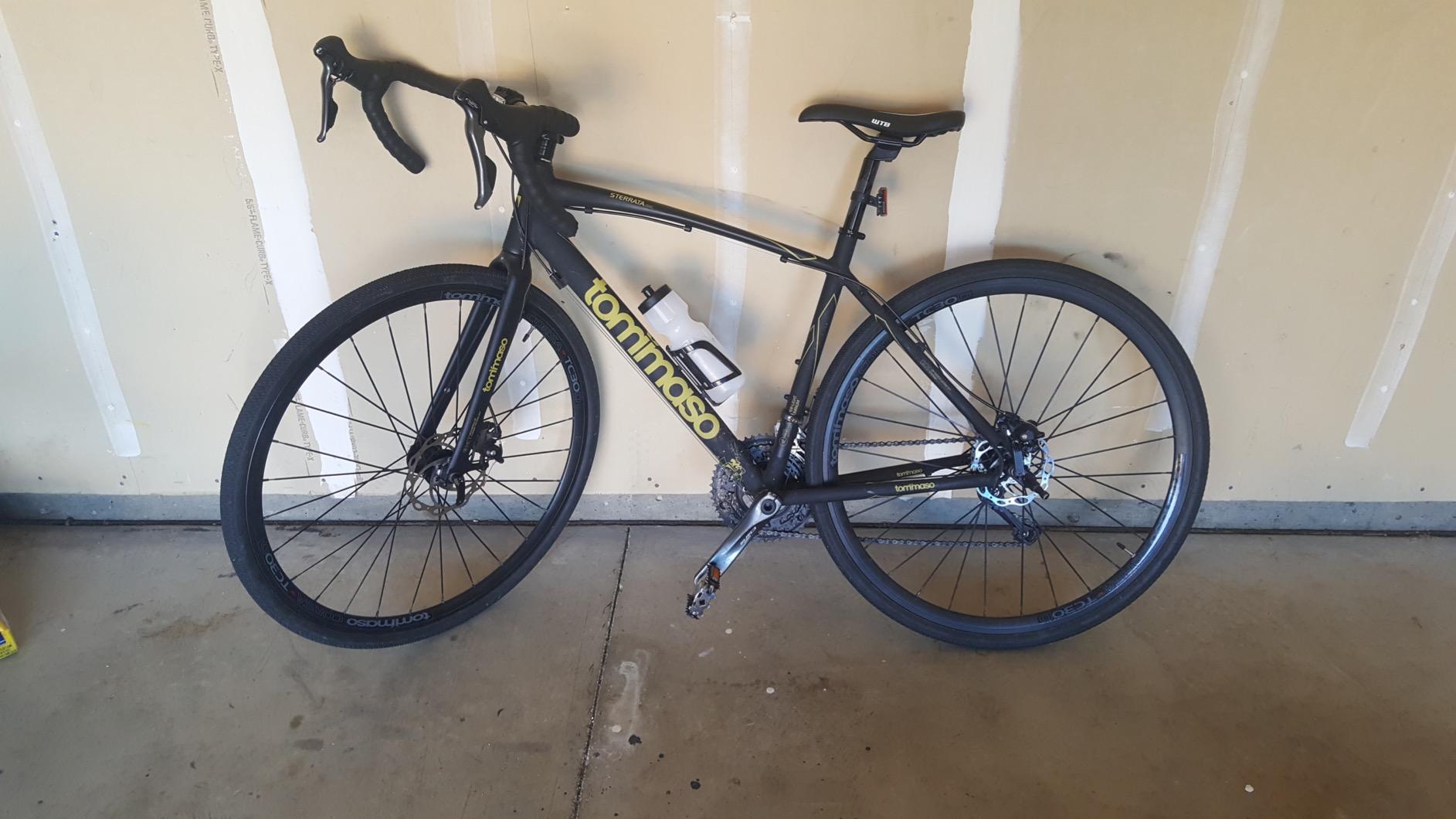
Whether a carbon fork is worth the extra spend
If your riding is mostly smooth gravel roads, the fork makes less difference and you could put the same money into a better saddle, pedals or tyres. If you ride chipseal, broken tarmac, farm roads or rail trails, the compliance is noticeable within the first hour.
The aluminium frame keeps the bike stiff and predictable under load, which is a sensible pairing with a compliant fork. You get comfort where the road is rough and direct steering where you need to place the front wheel on a loose corner.
What the shifter and drivetrain behaviour is like in practice
The large shifter lever requires a lot of hand pressure to reach the biggest gear, which is a frequent complaint. It is a reach problem, not a fault, and it becomes manageable once you find your brake hood position and stop riding with your hands pinned to the bar tops.
Chain rub in the lower gears and reflectors that do not fit properly are the other recurring notes. Owners who reported 1000 or more miles without needing parts suggest those are setup items rather than a durability ceiling.
4. SAVADECK U6000: the best value if you will upgrade the drivetrain later
SAVADECK Carbon Gravel Bike – T800 Carbon Frame & Fork | Shimano U6000 11-Speed Groupset | Hydraulic Disc Brakes | 700CX40mm All-Terrain Tires | Men & Women Road/Off-Road Bicycle (Black, 51cm)
T800 carbon frame and fork
10.4 kg total weight
Shimano U6000 11-speed
Hydraulic disc brakes
700x40c tyres
Pros
- T800 carbon frame and fork below big-brand carbon pricing
- Light 10.4 kg complete build
- Hydraulic disc brakes give consistent stopping in mixed conditions
- Wide range of frame sizes and four colorways
Cons
- Newer brand with a small review base
- U6000 11-speed sits a step below GRX for the same money
- Ships un-tuned so setup is still required
This is the bike to look at if your plan is to ride for a year, learn what you actually need, and then change the parts that matter to you. The SAVADECK U6000 gives you a T800 carbon frame and fork weighing 10.4 kg, and the frame is the part you cannot easily replace later.
The drivetrain is a Shimano U6000 11-speed with an LG400 cassette, which is a sensible, widely serviced entry groupset. Brakes are the real headline here: hydraulic discs with internal cable routing, which is a step up in braking confidence from the mechanical units on several other bikes here.
The bike arrives 90% pre-assembled with a tool kit included, so the setup job is shorter than a full build. It is listed with a tapered head tube and a two-year limited warranty, and it is offered across a wide range of frame sizes and four colorways.
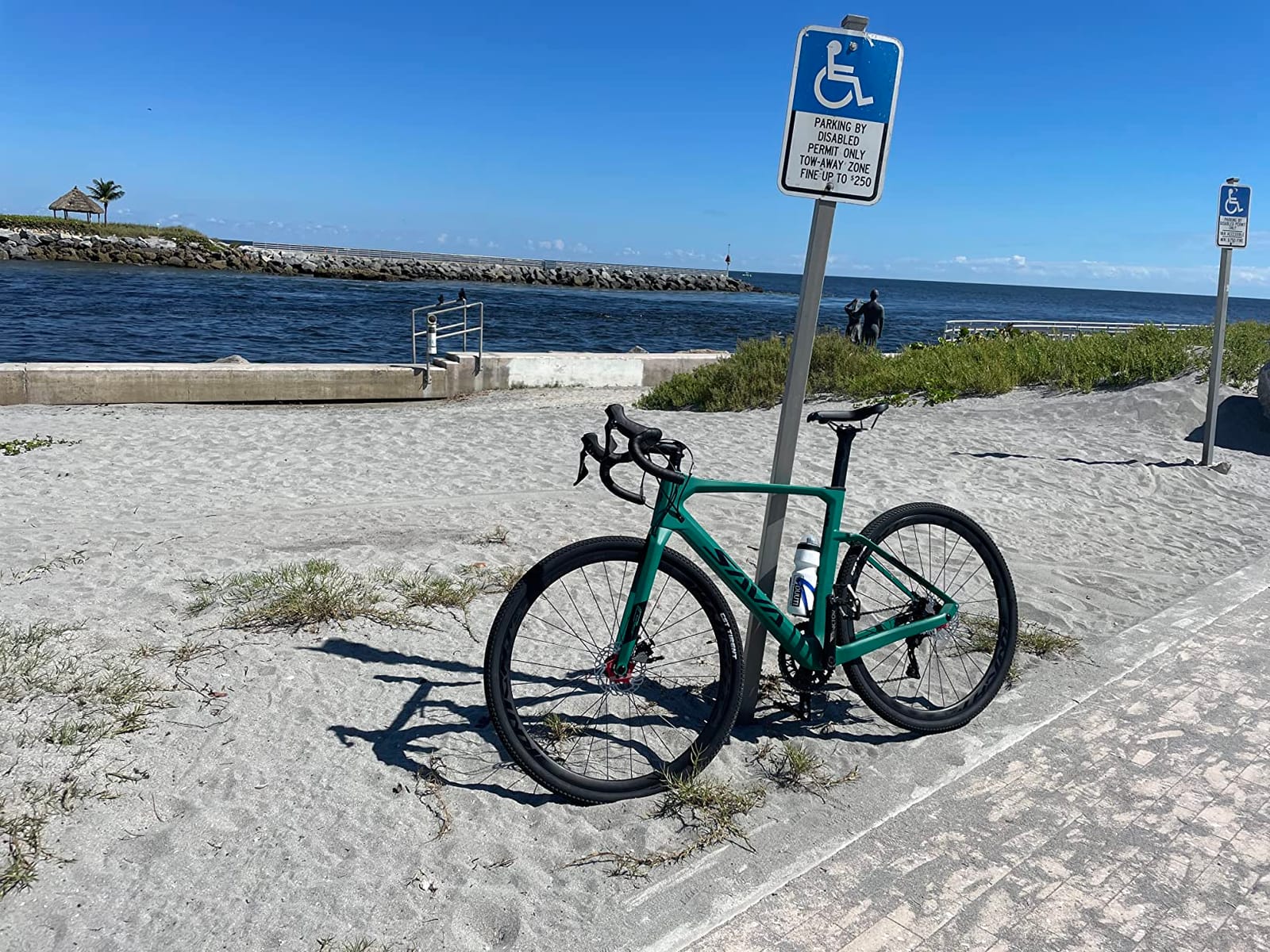
Owners rate this one highly, but the honest read is that the 5.0 average comes from 28 reviews that are entirely five-star. That is a small, entirely positive sample, and it is more useful as a signal of low complaint rate than as proof of long-term durability. A brand this new has not yet been tested by thousands of owners through several seasons.
Our practical advice is to treat the carbon frame as a long-term choice and the Shimano U6000 as a temporary one. Shimano drivetrains are the easiest thing on any bike to upgrade later, and doing it yourself or at a shop is routine work.
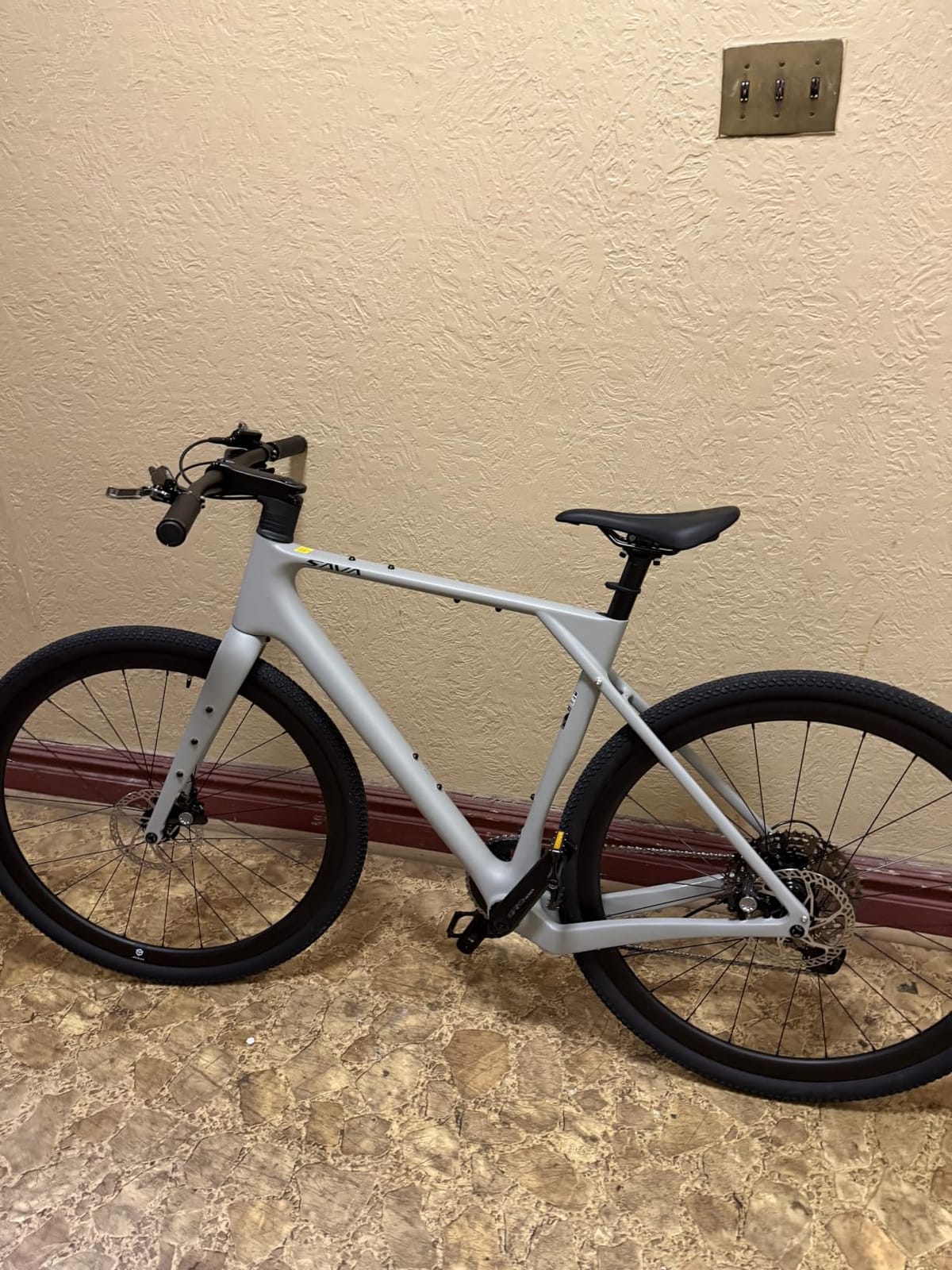
How the frame size range affects your decision
The listing covers a wide range of sizes and four colorways, which is a genuine advantage over the single-size listings in this roundup. More sizes means a better chance of buying one you can actually stand over comfortably, and it makes this a more realistic candidate for shorter riders or anyone above typical height.
Even so, measure your standover clearance in person if you can. A frame that fits on paper can still leave you rocking on the tops when you stop, and that discomfort is what turns a first bike into a bike that lives on a wall.
What hydraulic brakes change on a first bike
Hydraulic discs require much less hand effort than mechanical discs, and they stay consistent in the wet. For a new rider, that removes a genuine anxiety: on gravel roads after rain, on descents you did not plan, or simply when your hands are tired on a long ride.
The trade-off is servicing. Hydraulic systems need bleeding when they lose bite, and a first-time owner should learn which lever the bike uses and how the system feels when it is healthy before something goes wrong.
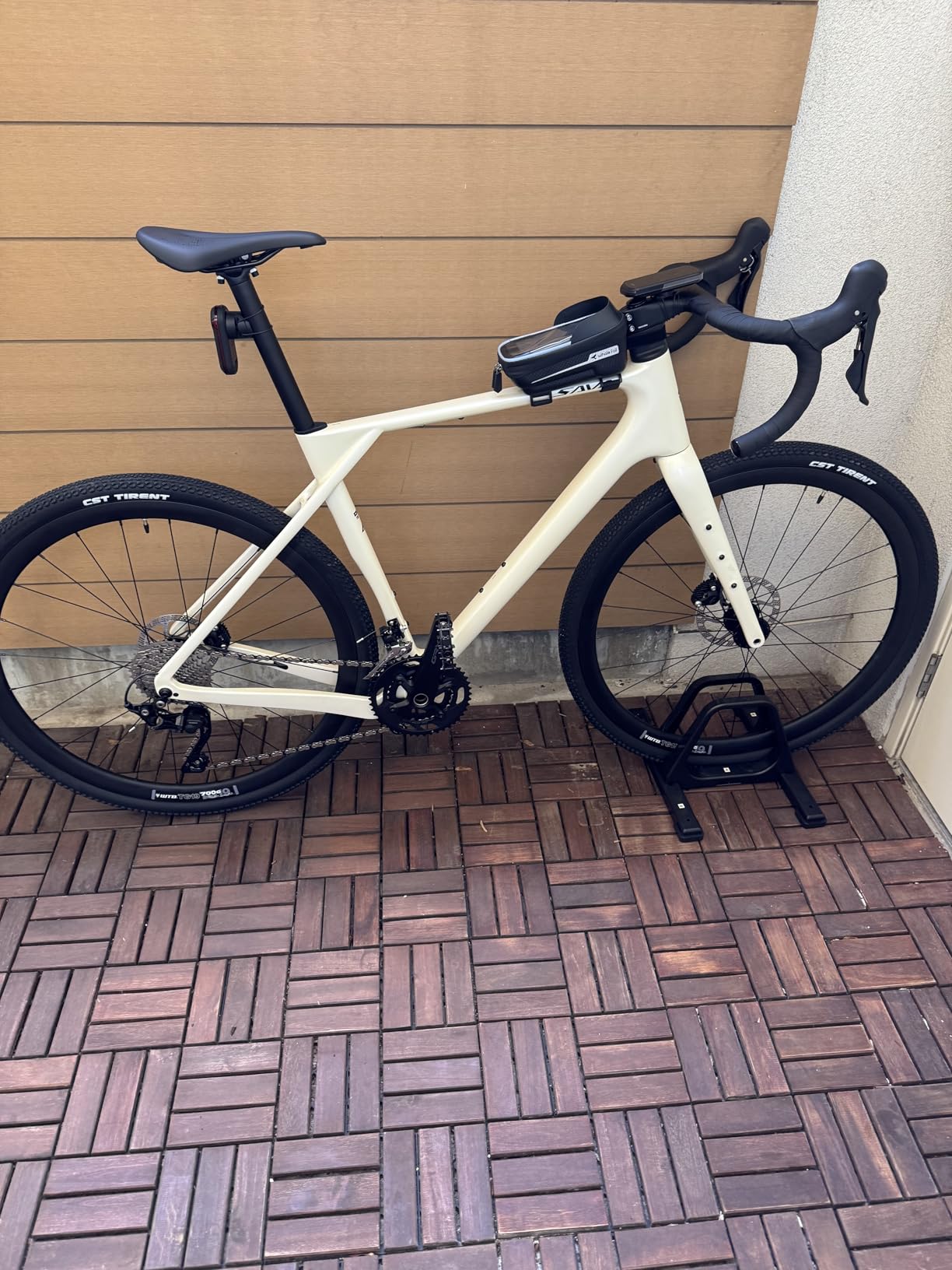
5. SAVADECK GRX400: the gravel-specific groupset in a light carbon frame
SAVADECK Carbon Gravel Bike – T800 Carbon Frame & Fork, Shimano GRX400 20-Speed Groupset, Hydraulic Disc Brakes, 700C x 40mm Tires – Lightweight Design for Road & Off-Road Adventures(51cm, White)
T800 carbon frame and fork
10.4 kg total weight
Shimano GRX400 20-speed
RX400 hydraulic disc brakes
Internal cable routing
Pros
- Genuine Shimano GRX400 gravel groupset
- RX400 hydraulic brakes deliver consistent stopping
- 10.4 kg carbon build is light for a gravel bike
- Internal routing keeps cables clean
Cons
- Small review base from a newer brand
- Highest price in this roundup with a 2-year frame warranty
- Upright geometry favours comfort over efficiency
GRX is Shimano’s gravel-specific tier, and this is the only bike in the group wearing it. That matters for a beginner in a specific way: the shifting is designed for wide-range gravel riding, with clutch-equipped derailleurs that stay quiet on rough surfaces, where a road-oriented groupset rattles and makes noise that unsettles new riders.
You also get Shimano RX400 hydraulic disc brakes and a Shimano RX600 crankset, so the drivetrain and braking are from the same family and any part can be replaced with an identical or near-identical component. The frame and fork are T800 R21 carbon at 10.4 kg, with fully internal cable routing.
At 29 reviews and 4.6 out of 5, this is the second-highest average in the roundup, and a portion of the reviews land at three stars, usually around fit and finishing detail. That is a reasonable spread for a new brand.
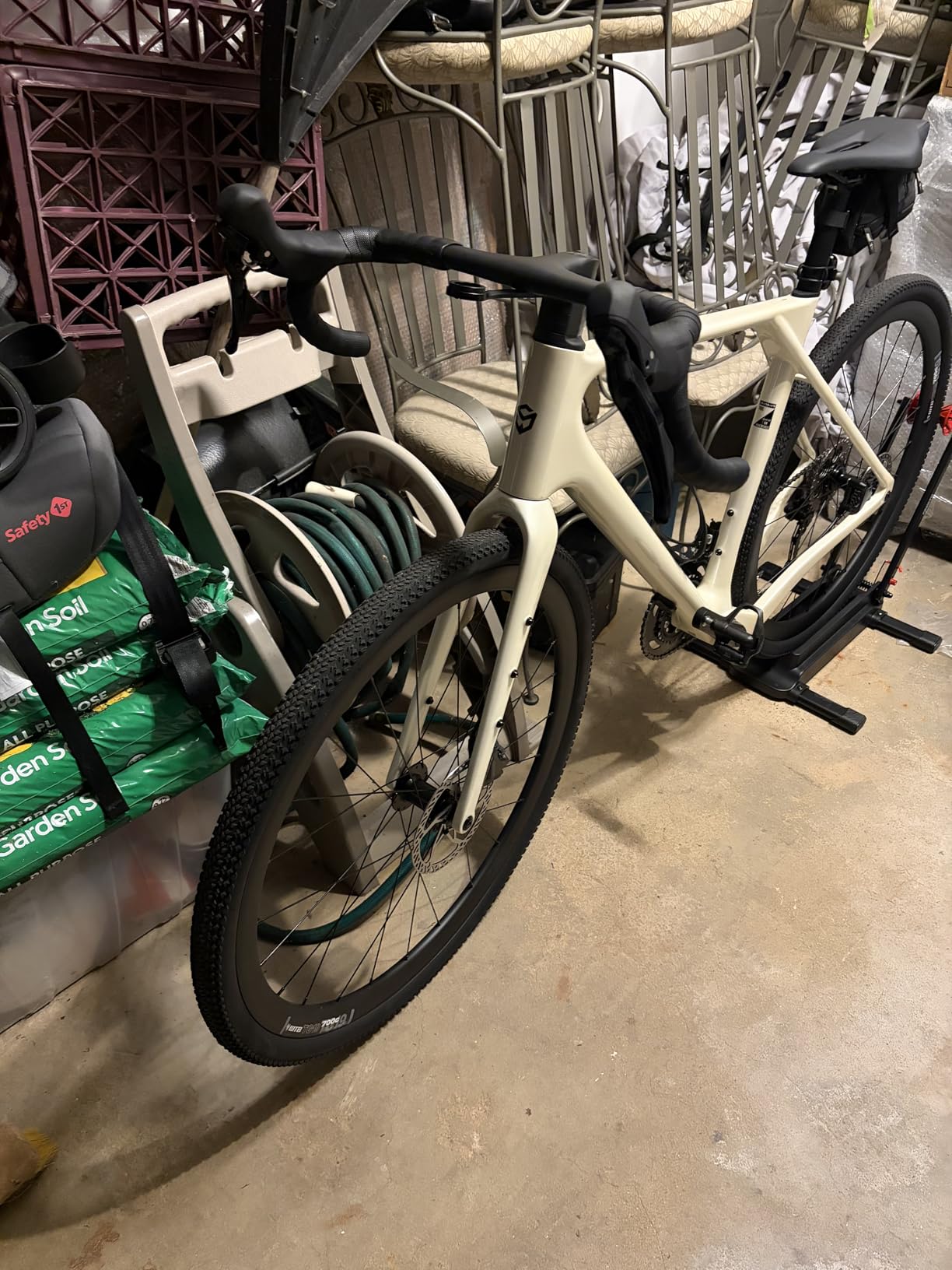
Internal cable routing is worth a line of its own. On a bike that will see gravel roads, mud from farm tracks and rain, routed cables inside the frame stay cleaner and protected from the abrasive stuff that shortens cable life. It is a small feature that pays off over years rather than weeks.
The frame geometry is upright and prioritises comfort over an aggressive, efficient position. For a beginner that is the right trade. A low, stretched position on a bike with 40c tyres asks a lot of a rider with no core strength yet, and holding it for a two-hour ride is genuinely tiring.
Whether the price step up is justified
Compare this to the U6000 version and the extra spend buys you a real gravel groupset, hydraulic brakes and a carbon frame. If you expect to keep the bike for several seasons and ride it on genuinely rough surfaces, the step is defensible. If you are buying to try the sport and might sell or step up in a year, the U6000 is the better use of money.
One caution is warranty length. Two years on the frame is shorter than the five years offered on the KABON 105 below, so ask the shop exactly what the two years covers and what labour is included.
How the gearing behaves on steep loose climbs
A 20-speed double chainring with a wide-range cassette gives a fine, even gear progression. That is easier for a new rider to use than a triple, because you are not shifting across a front ring while managing chain rub at the same time.
Clutch derailleurs also matter more than beginners expect. They reduce chain slap on rough ground, which is both quieter and safer, since a jumping chain is a chain that can drop.
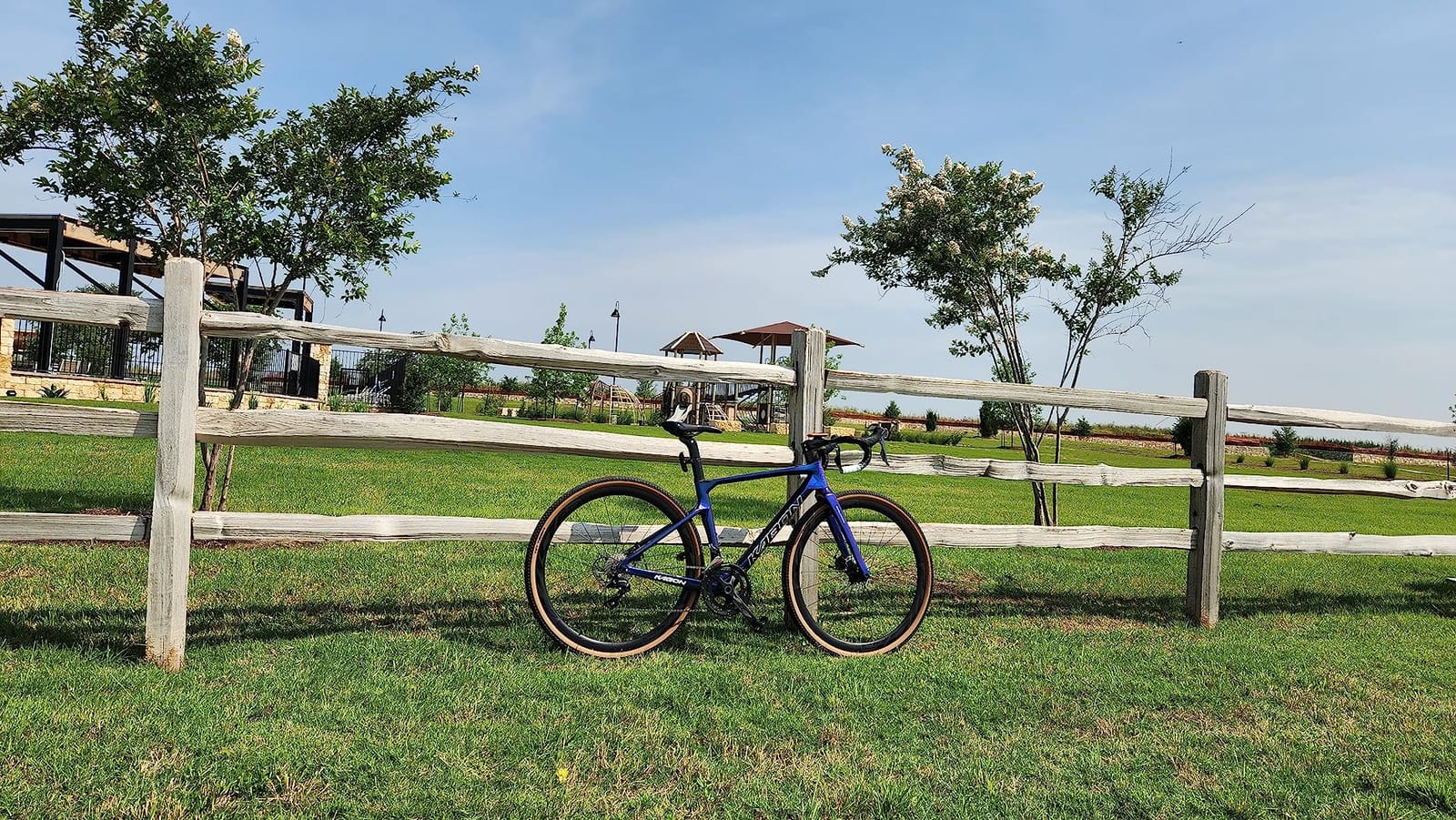
6. KABON Sora 18-Speed: the lightest complete build in the group
KABON Carbon Gravel Road Bike, T800 Carbon Fiber Frame 700C Road Bike with 18 Speeds Drivetrain, Integrated Carbon Handlebar, Disc Brakes Racing Bicycle for Adult Unisex (Black, 53cm)
Full carbon build at 8.7 kg
Shimano Sora 2x9 18-speed
Integrated carbon bar and seatpost
Mechanical disc brakes
50 to 58 cm sizing
Pros
- Full carbon frame
- fork
- handlebar and seatpost at 8.7 kg
- Shimano Sora R3000 is a credible named-brand drivetrain
- Integrated carbon cockpit and seatpost dampen vibration
- Size range from 50 cm to 58 cm
Cons
- Mechanical disc brakes need more hand effort
- 18-speed is a step below 20- and 22-speed rivals
- Small review base with little long-term data
- Final assembly still required
At 8.7 kg for the complete build, this is the lightest published weight in our group, and it is a bike where every component is carbon: frame, fork, integrated handlebar and seatpost. For a rider moving up from a heavier aluminium bike, the difference is immediate and tiring-in-a-good-way.
The drivetrain is a Shimano Sora R3000 2×9 system with 18 speeds, front and rear derailleurs. Sora is an older road-oriented tier, and the honest read is that it is a step below the 20- and 22-speed rivals here, but it is a named-brand Shimano system that any shop can service.
The integrated carbon handlebar and seatpost do real work on rough surfaces. Stiff carbon components transmit vibration, and routing everything through one moulded cockpit and a carbon post is one way to soften the ride without giving up the low weight.
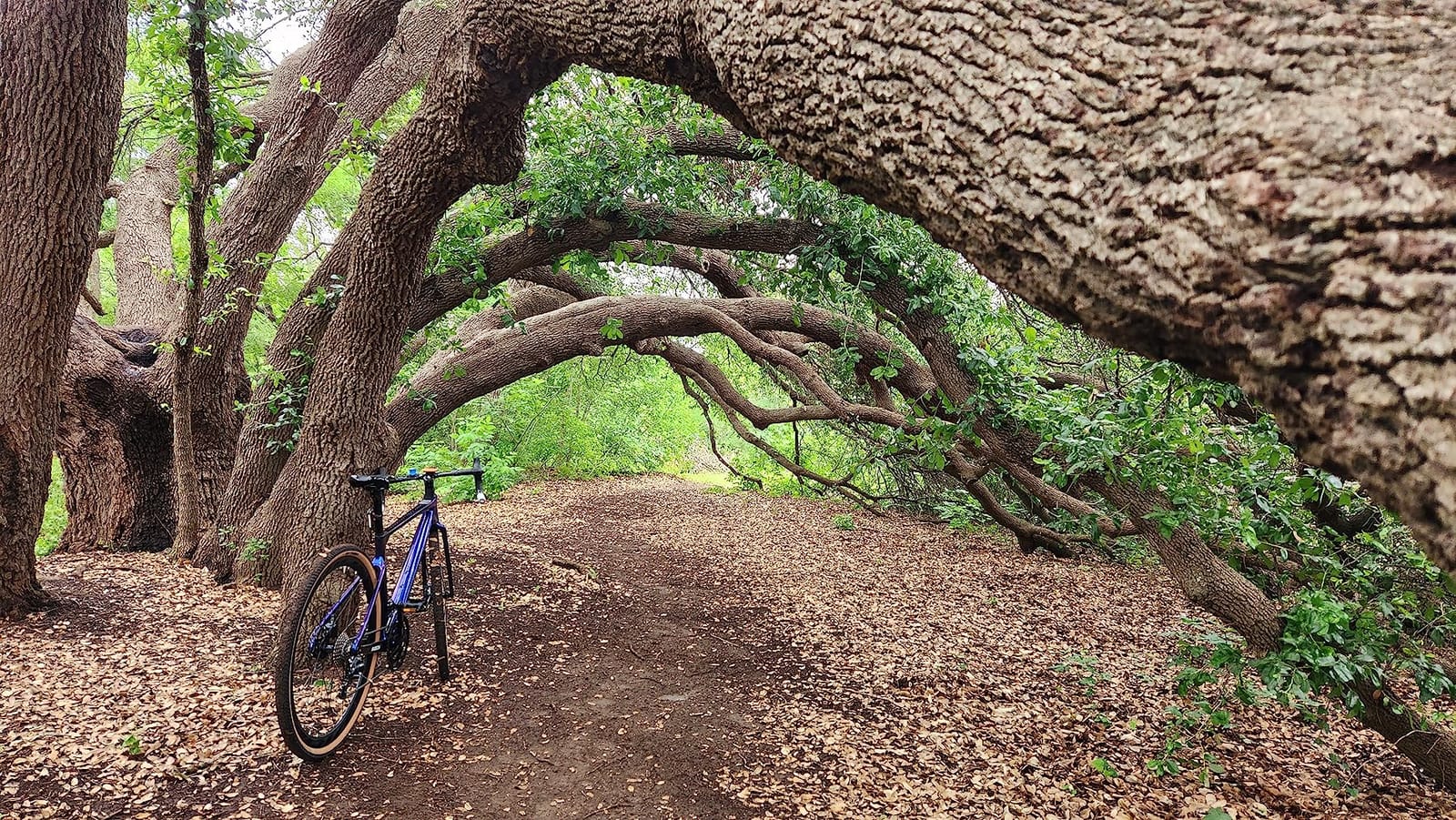
This bike is marked as beginner skill level, which is unusual labelling from a brand and worth noting in its favour. The listed size range spans 50, 53, 56 and 58 cm, giving more sizing choice than most complete bikes in this category.
The reservations are mechanical disc brakes and the 18-speed count. Mechanical discs need more hand effort than hydraulics, and on a bike this light the brakes are the one part that does not match the rest of the specification. If you are tall enough to reach the levers easily, the saving may be worth it.
How the full carbon spec affects long-term ownership
Light weight is not a vanity number for a beginner. A bike that weighs under 20 lb is noticeably easier to lift onto a rack, to carry up stairs at home, and to manoeuvre while learning to ride alongside someone. It also means less effort on every ride, and beginners ride further when rides are less tiring.
Against that, an all-carbon build is less forgiving of curbs and clumsy handling than aluminium. Riders who expect to drop the bike, load it onto a car awkwardly, or lean on it should know that a dent or crack is a much bigger deal than a scraped alloy frame.
What the 3-year frame warranty covers
The frame carries a three-year warranty, with a separate half-year warranty on accessories. That is a reasonable middle ground and longer than the two years offered on the SAVADECK frames, though the accessory term is short enough that you should expect to replace small fittings at around six months.
Check what the warranty excludes before you rely on it. Damage from crashes, frame damage caused by a front-wheel puncture, and wear items are normally outside it, and you need to keep your purchase documentation.
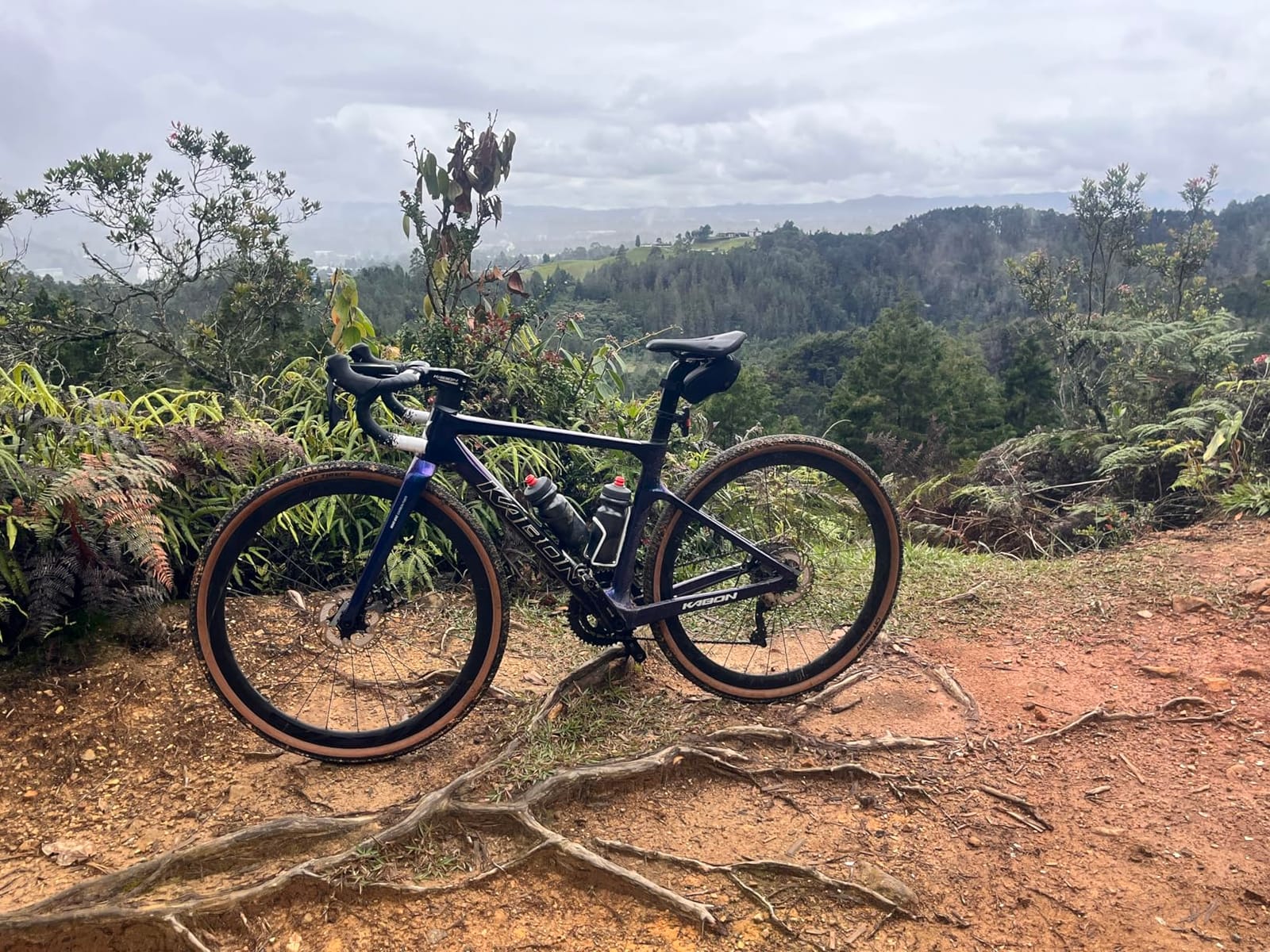
7. KABON 105 22-Speed: the longest warranty and the highest-spec drivetrain
KABON Carbon Gravel Road Bike, T800 Carbon Fiber Frame Adventure Bicycle with Shimano 105 22 Speed Disc Brake Racing Bicycle for Men and Women (Chameleon Blue, 50cm)
Full carbon build at 8.7 kg
Shimano 105 R7000 2x11 22-speed
Mechanical disc brakes
5-year frame warranty
Internal cable routing
Pros
- Shimano 105 R7000 is the highest-spec drivetrain in this roundup
- 5-year frame warranty is the longest coverage here
- 8.7 kg full-carbon build with internal cable routing
- Size range from 50 cm to 58 cm
Cons
- Only 4 reviews so the 5.0 average is a very small sample
- Mechanical discs rather than hydraulics
- Listed as intermediate skill level
- Final assembly still required
Shimano 105 R7000 is the highest-spec groupset in this roundup, a 2×11 system with a shifter lever and front and rear derailleurs giving 22 speeds. For a rider who wants a serious road-plus-gravel machine rather than a first weekend bike, that is a meaningful step up in gear quality and range.
The build is T800 carbon frame, fork, handlebar and seatpost at 8.7 kg, with fully internal cable routing and wind-tunnel contoured stays, seat post and seat tube. The routing protects cables from rust and road wear, which matters over a long ownership period.
The frame warranty runs five years, the longest coverage of any bike here, and the bike is offered from 50 cm to 58 cm across four colorways. For buyers who plan to keep a bike for years, warranty length is more than a footnote.
We need to be direct about the review data here. There are four reviews, all five stars. That is not enough to conclude anything about reliability, and we would not call this a proven bike. What it does tell you is that the buyers who already own it have not reported problems.
The bike is listed as intermediate skill level rather than beginner, which is a signal worth taking seriously. A 22-speed drivetrain, fully internal routing and a race-oriented frame shape are more than some first-time riders want to learn on. It is a good second bike as much as a first one.
Whether 22 speeds is meaningful for a beginner
More gears do not automatically mean a better bike for a new rider. The advantage of a 2×11 system is a finer gear step, so you can find a comfortable cadence on any gradient instead of grinding in one gear or spinning out in the next.
The disadvantage is more places to make a mistake. Cross-chaining, front derailleur adjustment and indexed shifting all need care, and a first-time rider who is still learning to control a bike on gravel is unlikely to exploit the extra range on the first ride.
What internal routing means for the first service
Internal cable routing is tidy and protects the cables, but it also means that a cable replacement or brake bleed is a job for a mechanic rather than a weekend afternoon. Some internal systems can be threaded by hand, others cannot.
Ask the shop what the routing path is and whether the bike uses threaded or press-fit bottom bracket fittings. On a carbon frame with hidden cables, the first service is worth budgeting for properly.
What to look for when buying your first gravel bike
1. Tyre clearance, not the tyres that come fitted. Tyre clearance is the widest tyre the frame can physically accept, and it is the number that tells you what the bike can become. Judge a frame on its clearance rather than on the rubber bolted to it at the factory. A frame that accepts 40c or more gives you room to go narrower for pavement or wider for loose dirt, and wide tyres at lower pressure are the single biggest comfort upgrade available to a new rider.
2. Gearing you can actually use. A 1x drivetrain uses one chainring and a wide cassette, which means fewer gears but no front derailleur to think about. A 2x drivetrain gives you two chainrings and finer gear steps. A triple chainring, as on the Tommaso bikes here, gives the lowest climbing gear of all but needs the most adjustment. For hilly, loose terrain a triple or a wide-range 1x wins. For smooth mixed riding a 2x is the easier system to learn.
3. Brakes that give you confidence in the wet. Hydraulic disc brakes need far less hand effort than mechanical discs and stay consistent in rain, and they are a meaningful safety difference for a new rider on gravel. Mechanical discs perform adequately once correctly adjusted, but they demand more force and more frequent servicing. Several bikes here run mechanical units, so if you can afford it, we would prioritise changing them.
4. Mount points for what you will actually carry. Rack and fender mounts determine whether the bike can become a commuter or a bikepacking bike later. Downtube storage and internal frame storage decide where a repair kit and a spare tube live. Riders who end up commuting say mount points matter far more than they expected, and this is a cheap thing to check before buying rather than an expensive one to discover afterwards.
5. Frame material and geometry. Aluminium is durable, serviceable and forgiving of knocks, which makes it the sensible first material. Carbon is lighter and absorbs vibration better, but is less tolerant of abuse. Geometry matters more for comfort than any of it: gravel-specific geometry means a slacker head angle, a taller head tube, a lower bottom bracket and longer chainstays, and an upright result that keeps you comfortable for hours.
6. Weight, and how much it actually matters. Around 23 lb is a common weight for a complete gravel bike and it is not heavy in any meaningful sense. A 20 lb bike is easy to lift onto a roof rack and noticeably less tiring over a long ride, but a heavier bike with better components and fit is a far better machine than a light one that does not fit you. Riders on forums regularly tell beginners that fit matters more than weight, and we agree.
7. Frame size and service access. A frame you can stand over with clearance, sized to your height, matters more than any spec. Look for a brand with shops or authorised service near you, because even the best complete bike arrives needing adjustment, and a bike you cannot get serviced will end up in a garage. If you are shorter or buying for someone else, prefer a bike offered in several sizes over one listed in a single size.
First upgrades worth making on a new gravel bike
In priority order, and with the reasoning that beginners should not spend money in the wrong order. If part of your training happens indoors, our picks for exercise bikes for indoor cycling and recumbent exercise bikes for low-impact cardio cover that side of the training week.
1. A fitting, or at least a proper size check. This comes before any part on the bike. Saddle height, bar reach and hood position account for most first-week discomfort, and all three are adjustable for very little. A shop fitting is the single highest-value purchase on this list.
2. A saddle you can sit on for two hours. The saddle that arrives with a complete bike is chosen to fit nobody in particular. If you feel pressure or numbness after an hour, change it before you assume the bike is wrong.
3. Tyres that suit your surface. This is the upgrade with the biggest effect on grip and comfort. Wide gravel tyres at lower pressure smooth out rough ground and feel far less nervous than the fast-rolling tyres many of these bikes come fitted with. Judge a frame on its clearance rather than on the tyres it wears out of the box.
4. Bar tape and a brake-hood position you can reach. Reaching the biggest gear should not require forcing your hand flat. A proper hood position makes the whole bike feel more controllable.
5. Pedals, a helmet and a lock. Unremarkable, but not included in most of these purchases, and they are part of the real first-purchase cost rather than an optional extra.
Where to buy and how much fitting actually matters
Most of these bikes arrive needing professional assembly before they are ride-ready, and one brand requires it before the warranty applies. That is not a warning sign, it is just a fact to plan for, and it applies whether you buy from a shop or online.
A local bike shop adds a fitting, a tune, and someone to call when a cable frays. Riders consistently praise that service, and CyclingForums advice for first-time buyers is to tell a shop your budget and how you want to ride, then try bikes. The premium over an online purchase is well spent on a first bike.
If you buy online and self-assemble, add a full tune to your plan. Bar and stem alignment, brake bleeding, derailleur indexing and cable tension are not optional, and a bike assembled with the front wheel reversed or the quick release closed incorrectly is a genuine safety problem, not a small annoyance.
Tell us how you ride
The right bike changes completely depending on three things, and they are worth answering before you buy.
What is your surface? Pavement and gravel roads point to the aluminium bikes here. Loose dirt, forest track and loaded touring point to wider tyres, more mounts and the hydraulic-brake models. What is your budget for the bike alone, before helmets, pedals, locks and a fitting? And are you ready for drop bars, or would a flat-bar bike let you start riding sooner?
If you are still unsure, a used cyclocross bike is a legitimate and inexpensive route into this category, and it is the option most often overlooked by roundups. Riders in r/cycling and the bike forums treat it as a sensible first drop-bar bike when the budget is genuinely tight, though you will need servicing and you may have to search for your size.
Frequently Asked Questions
Are gravel bikes good for beginners?
Yes, for most new riders. A gravel bike’s wide tyres, upright geometry and low gearing make it forgiving of imperfect technique and stable on loose surfaces, and one bike can cover commuting, weekend rides and short trips with luggage. It is a poor choice if you ride only smooth road, want to race, or are not comfortable learning on drop bars.
Is 23 lbs heavy for a gravel bike?
No. Around 23 lb is a normal weight for a complete gravel bike with wide tyres, hydraulic disc brakes and durable rims, and most riders never notice it. Lighter builds do exist, and the KABON bikes here are listed at 19.2 lb, but fit and component quality change your experience far more than a few pounds of weight.
Should I get a 1x or 2x gravel bike?
For a beginner, 2x is easier to learn because gear steps are finer and there is always a comfortable gear, while 1x means no front derailleur to adjust and less to think about. A triple chainring gives the lowest climbing gear of all. The Tommaso Sentiero, Siena and Sterrata use a triple, the KABON bikes use 2x, and the SAVADECK bikes use 1x and 2x wide-range setups.
Which gravel bike is best for all-around riding?
The Tommaso Sentiero is the most all-round choice here, with an upright compact geometry, a full Shimano drivetrain, 700x40c tyres and disc brakes, plus the largest owner review base at 69. If you plan to upgrade parts over time, the SAVADECK U6000 gives you a carbon frame and hydraulic brakes to build around.
What is a good starter gravel bike?
A good starter gravel bike has an aluminium or carbon frame, wide tyre clearance, a genuinely low climbing gear, disc brakes and simple components a shop can service. The Tommaso Siena and Sentiero both fit that description and are listed in the budget tier of the category. A used cyclocross bike is also a sensible low-cost first option.
What are the downsides of using a gravel bike?
The main downsides are the learning curve of drop bars and brake levers, a heavier feel than a road bike on pavement, and a higher purchase price than a flat-bar hybrid. Complete bikes also arrive needing assembly and tuning, and the tyres fitted at the factory are often chosen for the price rather than for the surface you ride.
Conclusion: the best gravel bikes for beginners in 2026
The Tommaso Sentiero is our pick for a first gravel bike. Its upright compact geometry, full Shimano drivetrain, 700x40c tyres and disc brakes remove the usual first-week friction, and at 69 owner reviews it has the largest real-world record in this group. The Tommaso Siena does almost the same job for less if your budget is the deciding factor.
If you know you will keep riding, the SAVADECK GRX400 with its gravel-specific Shimano groupset and hydraulic brakes is the better machine to own, and the KABON 105 offers the highest-spec drivetrain and the longest warranty in the roundup. All seven arrive needing setup, so budget for a proper tune and a fitting before your first ride. For short indoor sessions rather than outdoor riding, our picks for under desk bikes cover a different category entirely.