

Carbon monoxide does not have a smell, a color, or a taste, which is exactly why it kills people in their sleep. In an RV the risk is concentrated rather than spread out: a generator exhaust, a furnace, and a water heater all sit inches from a small cabin that is often poorly ventilated. Finding the best carbon monoxide detectors for RVs in 2026 means matching the alarm to how your coach is actually powered, because a detector that dies with the house battery is a paperweight, not a safety device.
We spent weeks reading the specs, alarm levels, and owner feedback on ten of the most-reviewed CO alarms sold for RV and travel use, then sorted them by the things that actually matter on the road: how they are powered, whether they show a live reading, how loudly they sound, and whether they keep working when the coach is off grid. Several of these are battery or plug-in portable alarms rather than hardwired RV-rated replacements, and we say so plainly in every review instead of pretending otherwise.
One more thing before the picks. A CO alarm does not detect propane, and a propane alarm does not detect CO. They are different gases with different weights, and they belong at different heights in your rig. Our guide to gas inverter generators for camping and RVs covers the exhaust side of the equation, which is where a surprising share of CO alarms actually originate.
Table of Contents
Top 3 Picks for RV Best Carbon Monoxide Detection in September

First Alert CO710 10-Year…
- 10-year sealed lithium battery
- Backlit CO and temperature display
- Peak level memory
- 85 dB alarm

Kidde AA Portable CO Alarm
- 2 AA batteries included
- 85 dB alarm
- Green power and red CO LEDs
- Event memory

Kidde C3010D Digital Display
- 10-year lithium battery
- CO level display updating every 15 seconds
- Green red amber LEDs
- Test and hush button
Those three cover most situations. The First Alert CO710 is the one we would put in a bunkhouse or a rear bedroom, because the backlit display tells you what the sensor is actually seeing instead of just screaming. The Kidde AA unit is the throw-it-in-the-storage-locker option, small enough to pack and powered by batteries you can swap anywhere. The Kidde C3010D sits between them with the same decade-long battery life and a readout that refreshes every 15 seconds.
Best Carbon Monoxide Detectors for RVs in 2026 at a Glance
| Product | Specs | Action |
|---|---|---|
| First Alert CO710 10-Year Display |
|
Check Latest Price |
| Kidde AA Portable CO Alarm |
|
Check Latest Price |
| Kidde C3010D Digital Display |
|
Check Latest Price |
 Kidde C3010 Worry-Free Kidde C3010 Worry-Free |
|
Check Latest Price |
 Siterwell GS828A LCD Travel Alarm Siterwell GS828A LCD Travel Alarm |
|
Check Latest Price |
 Siterlink A4602A-7 Plug-In Alarm Siterlink A4602A-7 Plug-In Alarm |
|
Check Latest Price |
 Heiman C1-S Mini Detector Heiman C1-S Mini Detector |
|
Check Latest Price |
 X-Sense SC01 Smoke and CO X-Sense SC01 Smoke and CO |
|
Check Latest Price |
 First Alert CO400FF 9V Alarm First Alert CO400FF 9V Alarm |
|
Check Latest Price |
 First Alert CO710A Display Alarm First Alert CO710A Display Alarm |
|
Check Latest Price |
1. First Alert CO710 – Editor’s Pick With the Most Useful Display
First Alert 10-Year Battery Carbon Monoxide Alarm with Digital Display
10-year sealed lithium battery
Backlit CO and temperature display
Peak level memory
85 dB alarm
Pros
- Backlit display shows CO level and temperature
- 10-year sealed battery with no replacements
- Peak level memory recalls the highest reading
- Compact 4.8 inch body suits a headboard shelf
- 85 dB alarm wakes sleepers
Cons
- Display does not show a numeric zero to confirm the sensor is live
- Not a hardwired RV replacement unit
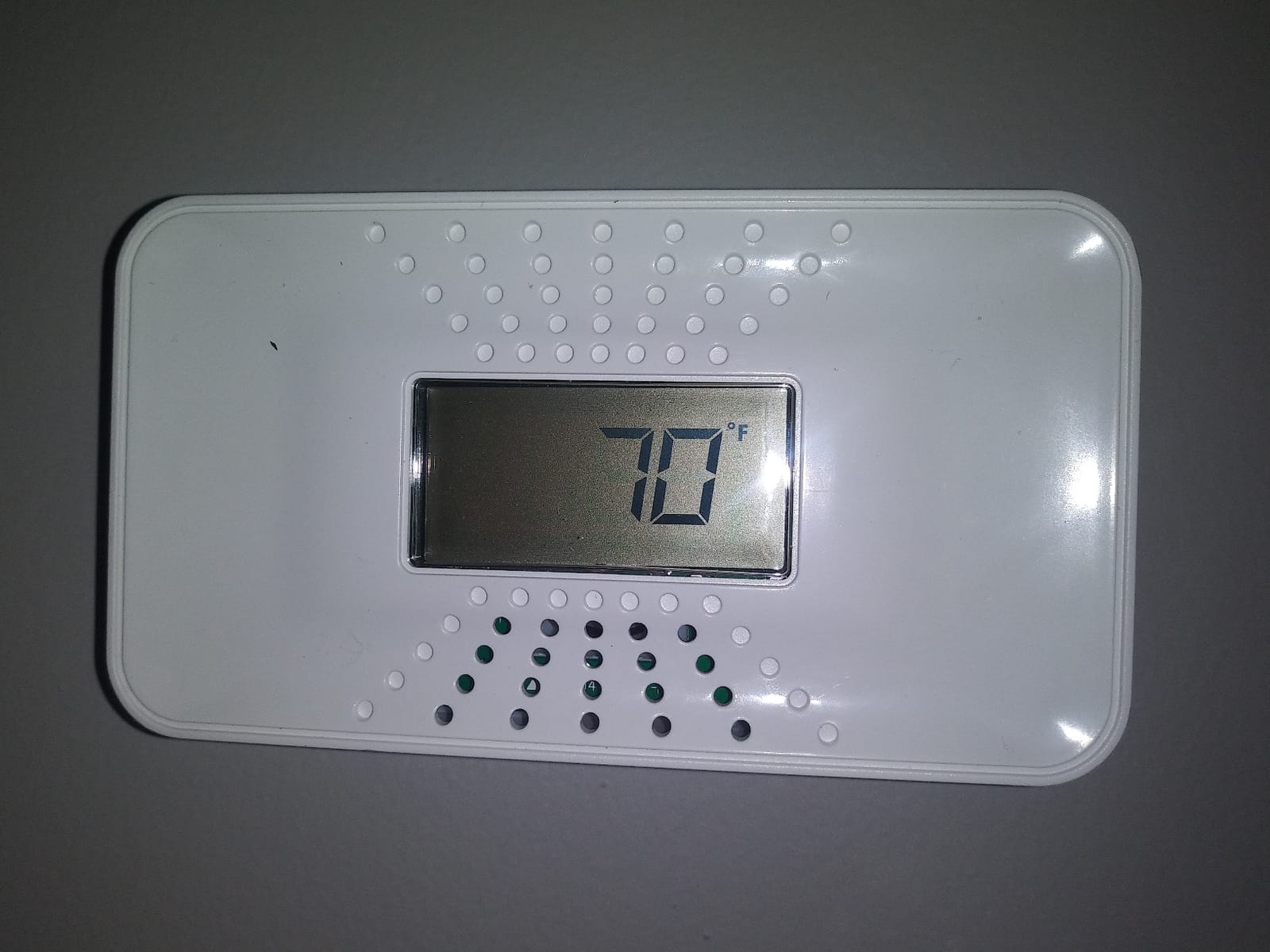
The CO710 is the alarm I keep coming back to because the display changes how you use it. Most CO alarms are binary: chirp or silence. This one shows a number, so when the furnace kicks on in a cold morning you can watch the reading climb and fall instead of guessing whether the sound is a fault or a real event.
Power is a sealed ten-year lithium cell, which removes the single most common RV complaint about portable alarms: the 3 a.m. low-battery chirp from a unit nobody remembered to check. It weighs 6.4 ounces and measures 4.8 inches wide, small enough to sit on a nightstand without looking like lab equipment.

Owner feedback on this model centres on travel use. People carry it in boats, in vacation rentals, and in hotels, and several report it alerting them overnight when they had no idea a gas appliance was running in the space next door. The 10-year limited warranty and the end-of-life chirp mean it will also tell you when it is finished rather than going quiet on you.
Technically it is a battery alarm, not a hardwired 12V replacement, and the spec sheet does not list an RV-specific listing for it. For a coach where the factory hardwired alarm is still working, that matters. For a second sleeping area, a bunkhouse, or a coach you want covered without opening a ceiling cutout, it is a clean add-on.
Who This One Fits Best
Travelers with a separate bedroom or a rear bunk who want a readable number rather than a horn-only alarm. It also works well as the second detector owners on the RV forums frequently add near a second sleeping area instead of replacing a single factory unit.
Its backlit screen also makes it easy to check in the dark, which matters when you are doing a pre-departure walk-through at dawn.
Where It Falls Short
A few owners would rather the display showed a plain zero when the air is clean, since a blank or idle-looking screen gives them less confidence that the sensor is live. The test button covers that concern, but the readout does not.
It also will not replace a coach-mounted hardwired alarm. If you are shopping for a replacement for a 12V cutout, keep reading past this list.
2. Kidde AA Portable Alarm – The Budget Pick You Can Pack Anywhere
Kidde Carbon Monoxide Detector, AA Battery Powered, Portable for Travel or Home, 85 dB Alarm, LED Status Indicators, 3rd Edition
2 AA batteries included
85 dB audible alarm
Green power and red CO LEDs
Event memory
Pros
- Weighs 3.68 ounces
- 85 dB alarm wakes sleeping campers
- Green and red LEDs show status at a glance
- Back plate allows wall mount or tabletop placement
- Event memory logs the last CO event
Cons
- No digital display of CO concentration
- Rechargeable NiMH cells trigger a constant low-battery chirp
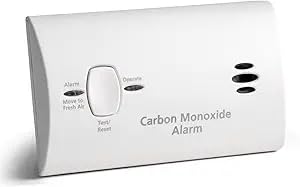
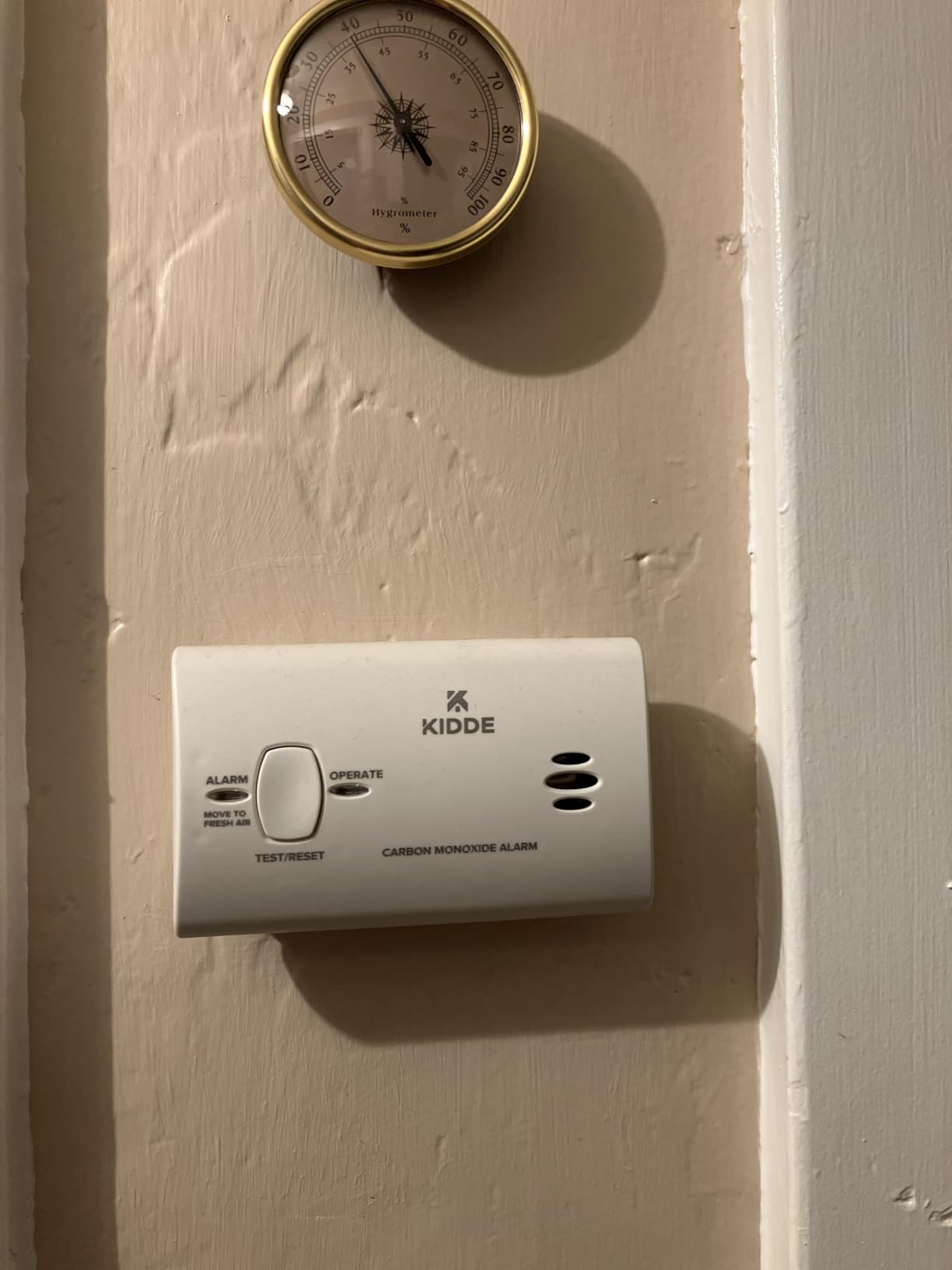
This is the unit I take when I am testing an unfamiliar campground spot for a night. It weighs 3.68 ounces, runs on two AA cells that come in the box, and the back plate lets you either stand it on a surface or screw it to a wall. Setup takes about as long as opening a laptop sleeve.
It holds a 4.7 average across more than two thousand reviews, which is why it lands so high despite being the simplest alarm here. The green LED shows power, the red LED and an 85 dB horn show CO, and an event memory records the last time the sensor saw danger or was tested.
The one real gotcha that keeps appearing in reviews is battery chemistry. Rechargeable NiMH cells drive a repeating low-battery chirp because the alarm expects alkaline voltage. Use alkaline AA and the problem disappears, which is a free fix but an annoying one to discover at midnight.
There is no readout, so when it sounds you get no concentration information. In practice that has not stopped owners from using it as a first-line portable alarm in hotels, cabins, and rental cars, and the simplicity is genuinely the selling point.
Who This One Fits Best
Boondockers and cold-weather campers who want a take-it-anywhere alarm rather than a fixed installation. It is the easiest alarm here to hand to a travelling family member or keep in a vehicle kit.
If you already have a working coach-mounted alarm, this is the low-effort second layer for a bunkhouse or a slide-out that sleeps people.
Where It Falls Short
No display means no way to see a slow, low-level rise before it becomes an event. Owners chasing chronic exposure complaints pair it with a display unit rather than trusting it alone.
Because the alarm is battery-only, it does nothing for LP leakage. If your coach runs on propane, treat this as a CO tool and not a complete life-safety package.
3. Kidde C3010D – Top Rated With a Readout That Refreshes Every 15 Seconds
Kidde Carbon Monoxide Detector, 10-Year Battery Powered, Digital Display, LED Status Indicators, 85 dB Alarm, 3rd Edition
10-year sealed lithium battery
Digital CO readout updating every 15 seconds
85 dB alarm
Test and hush button
Pros
- Digital display shows real-time CO concentration
- 10-year sealed battery survives outages quietly
- Three status LEDs plus peak level memory
- Test and hush button silences nuisance chirps
- Wall mount or tabletop placement
Cons
- Sealed battery cannot be replaced if the unit fails
- No off switch for intermittent travel use
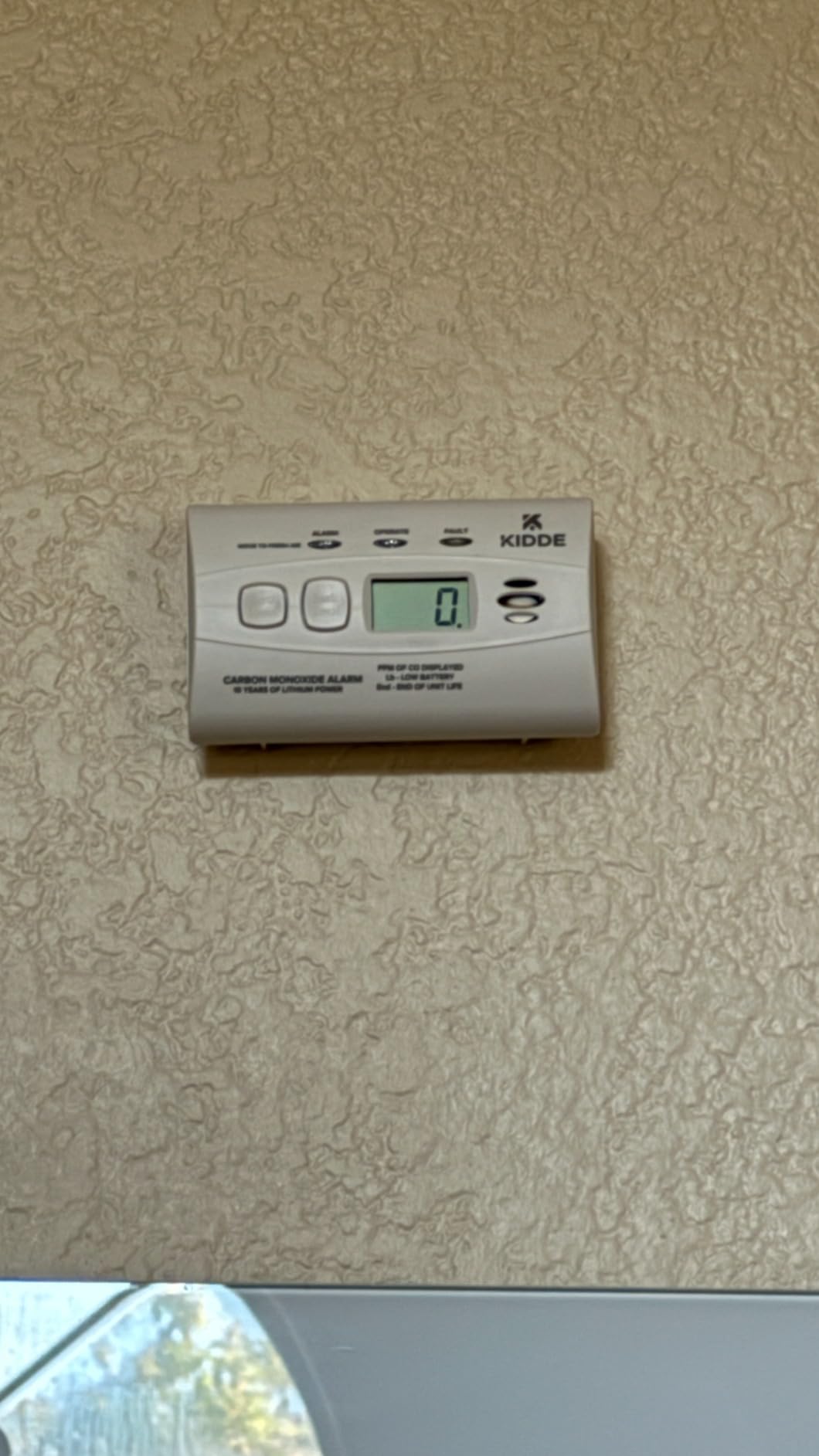
Where the CO710 flips between CO and temperature, the C3010D commits to showing the CO level and refreshing it every 15 seconds. That is the number you want to watch while a generator runs outside a wall you cannot see through, and it is why tradespeople rate this model so highly.
Three status LEDs cover the whole picture: green for normal operation, red with the 85 dB alarm for CO present, and amber telling you to replace the unit. Peak level memory stores the last CO event or test so you know something happened even if you slept through the sound.
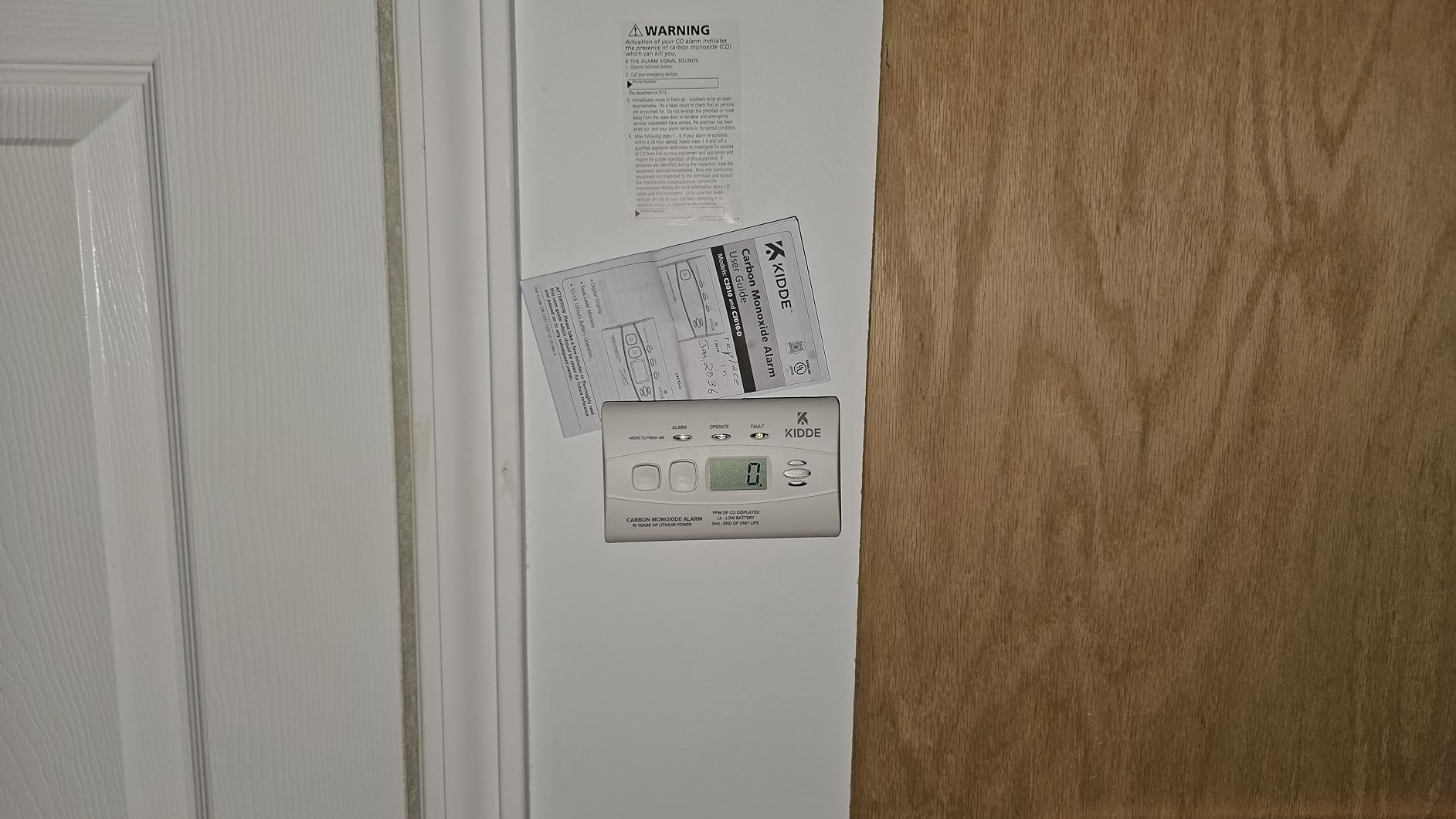
The sealed ten-year lithium pack means it keeps monitoring through a power cut with no overnight beeping, and the test and hush button lets you clear a low-battery chirp temporarily. It weighs 8 ounces and mounts on a wall or sits on a table.
One documented review described an early low-battery fault that the manufacturer resolved with a free replacement, which is a good reminder to keep the receipt. The 10-year limited warranty is generous compared with most rivals in this category.
Who This One Fits Best
Owners who want diagnostic detail rather than a passive alarm, especially anyone running an onboard generator near a campground wall or an enclosed parking bay. It is also a strong companion unit for a coach with two sleeping zones.
The amber fault LED makes it a good choice for older used RVs, where an unknown-age factory sensor is the main worry. If the light is amber, you have your answer immediately.
Where It Falls Short
The battery is sealed, so a unit failure means discarding the alarm rather than pulling a cell and moving on. There is also no off switch, which is mildly awkward for intermittent travel use.
Like the rest of this list, it is a self-contained alarm and not a flush-mount replacement for a hardwired 12V coach installation.
4. Kidde C3010 Worry-Free – Best Set-and-Forget Battery Life
Kidde Worry-Free Carbon Monoxide Detector Alarm with 10 Year Sealed Battery | Model C3010
10-year sealed lithium power
Self-activating mounting bracket
14-day event memory
Green red amber LEDs
Pros
- Ten years of maintenance-free sealed power
- Auto-activates when slid onto the bracket
- Event memory flags CO found in the past 14 days
- Fits the existing Kidde screw pattern for easy swaps
- Compact 4.5 inch body
Cons
- No digital display of CO concentration
- No off switch and the sealed battery cannot be replaced
The C3010 is the version of the same idea with the screen removed. It runs on a sealed lithium supply for the full ten years, the green LED flashes roughly every 30 seconds to confirm it is alive, and the red LED pulses a four-beep pattern when CO is present.
Its best trick is the self-activating bracket. Slide the unit onto the mount and it powers itself on, so there is no setup sequence and no chance of fitting it backwards. Repeat buyers mention that it matches the screw pattern on earlier Kidde units, which turns a swap into a five-minute job.
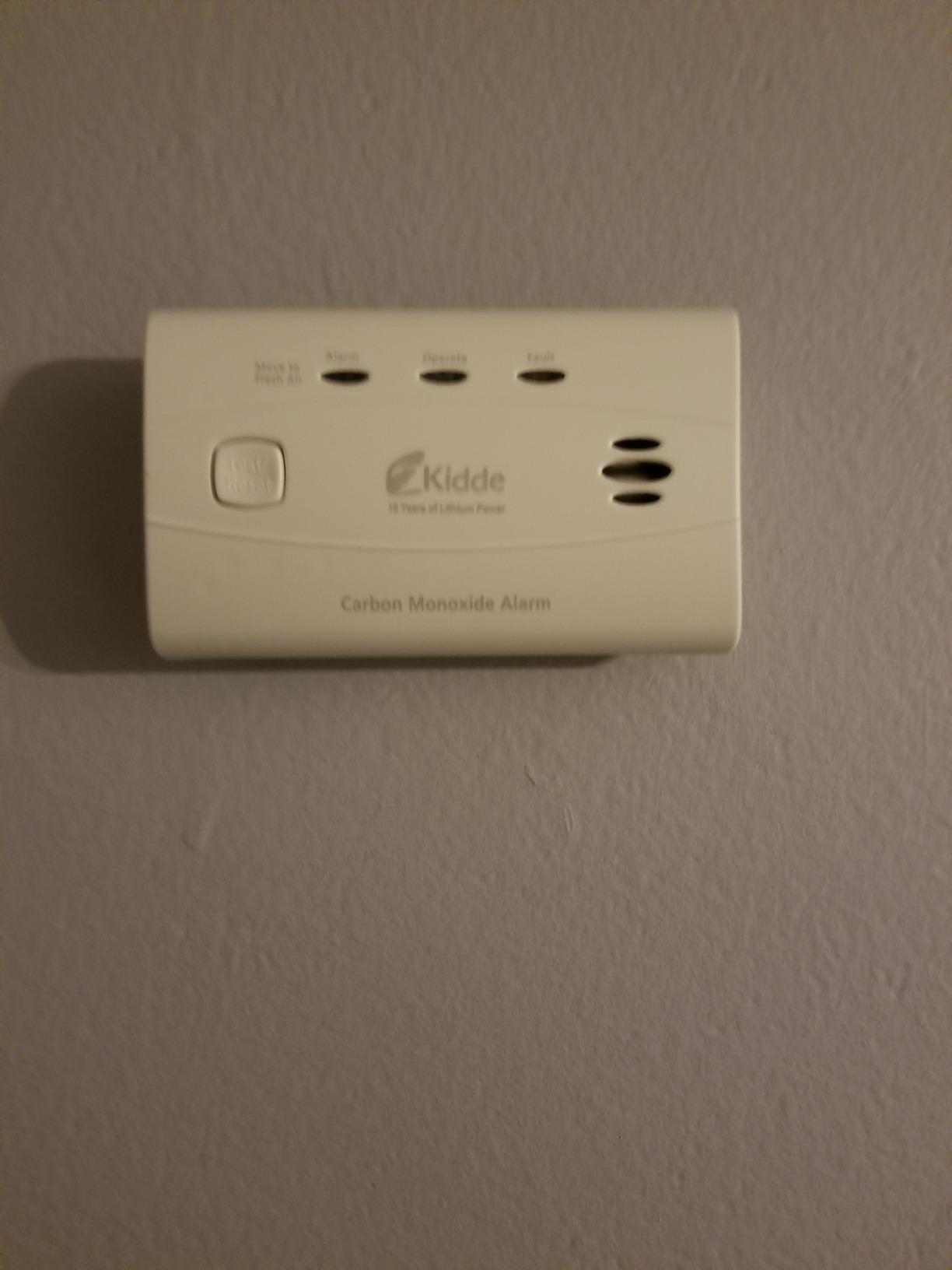
Event memory is the feature most owners notice: the red LED flashes about once a minute to tell you a high CO level was recorded within the last 14 days. That is genuinely useful after a trip, when you want to know whether the alarm ever saw something while you were asleep.
At 4 ounces it is one of the lighter alarms here, and the plastic housing is unobtrusive enough to mount near a bunk without looking like an install.
Who This One Fits Best
Anyone who wants a working alarm with zero maintenance for a decade, particularly in a coach stored for months at a time. It is a natural fit for a bunkhouse or a rear sleeping area where wiring a hardwired unit is a hassle.
Owners upgrading from an earlier Kidde installation will find the screw pattern familiar, which removes the most common install complaint in RV forums.
Where It Falls Short
There is no numeric readout, so sub-threshold buildup is invisible to you. Reviewers who want that visibility pair it with a display model rather than choosing this one alone.
Its 785 reviews put it below the middle of this group, so the long-run owner history here is thinner than the two display models above it.
5. Siterwell GS828A – Best for Confirming Readings With an LCD
Siterwell Travel Carbon Monoxide Detector 7 Year Product Life,
LCD real-time CO level display
85 dB alarm at 3 meters
2 AA alkaline powered
ETL listed sensor
Pros
- LCD shows live CO concentration not just an alarm
- ETL listed with an 85 dB alarm at 3 meters
- Runs on two AA batteries for easy field changes
- Wall-mount or free-standing placement
- Colour-coded LED for alarm power and fault
Cons
- Only a 3-year warranty
- Listing states 7-year product life while the bullets describe about 10 years with battery swaps
The GS828A is one of the few alarms here with a live numeric screen, and for RV use that is the feature that matters most. When you are deciding whether a reading is a real exhaust leak or a transient spike from a furnace startup, a number settles the argument immediately.
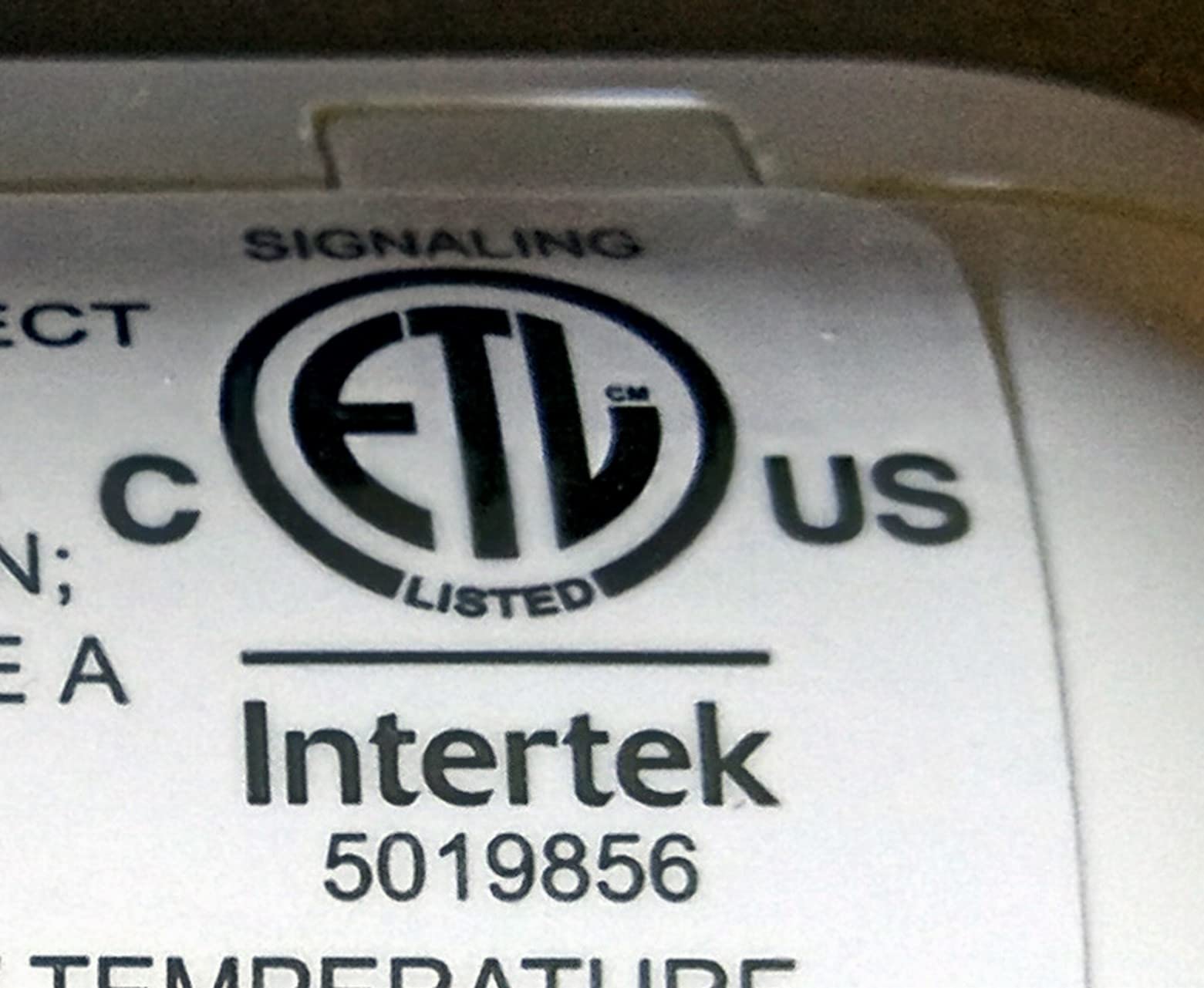
It is ETL listed with an electrochemical sensor and an alarm of at least 85 dB measured at 3 meters, and it can sit on a shelf or hang on a wall. Power comes from two AA alkaline cells, which means you can swap them in a campground store in seconds.
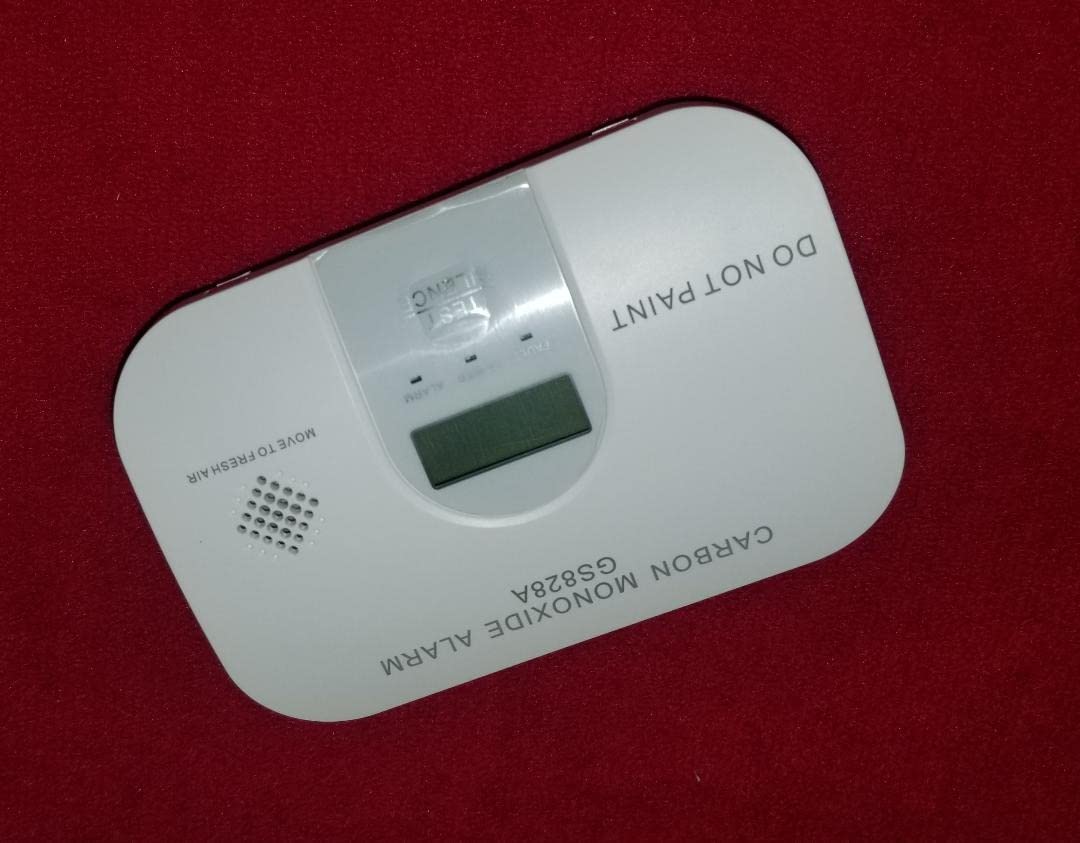
The three-color LED gives you alarm, power, and fault states at a glance, and the screen refreshes continuously rather than every 15 seconds. Buyers who run a generator close to the coach tend to be the ones who care most about this.
Two cautions. The warranty is three years, noticeably shorter than the decade-long coverage on the Kidde and First Alert alarms in this group, and the product information is inconsistent: the listing title points to a 7-year product life while the bullet points describe about ten years with routine battery changes. Treat the printed documentation as the source of truth.
Who This One Fits Best
Owners who want to see the actual concentration while the furnace, water heater, or generator is running. It is a strong choice for a coach that sleeps people in a loft or a convertible dinette area.
If you are troubleshooting a recurring alarm complaint, this is the unit that tells you whether the problem is real before you start pulling panels off a wall.
Where It Falls Short
The three-year warranty is the weakest coverage in this lineup, and the stated product life is inconsistent between the listing title and the bullet points. Buyers who want a long documented warranty should look at the ten-year units instead.
At 209 reviews it also has a thinner owner record than most of the alarms here, so you are trusting the spec sheet more than the long-term data.
6. Siterlink A4602A-7 – Best Plug-In Coverage With Battery Backup
Siterlink Carbon Monoxide Detectors Plug in,10 Year Replaceable Battery
AC plug-in with 10-year replaceable battery backup
Foldable travel-size plug
Sleep-friendly breathing status LED
Electrochemical sensor
Pros
- Plug-in design with long-life replaceable battery backup
- Foldable plug packs into luggage for hotels and RVs
- Soft breathing green light does not disturb sleep
- Sensor tuned to reduce false alarms
- No mounting hardware required
Cons
- Requires an available 120V outlet which limits placement in an RV
- No digital display of CO concentration
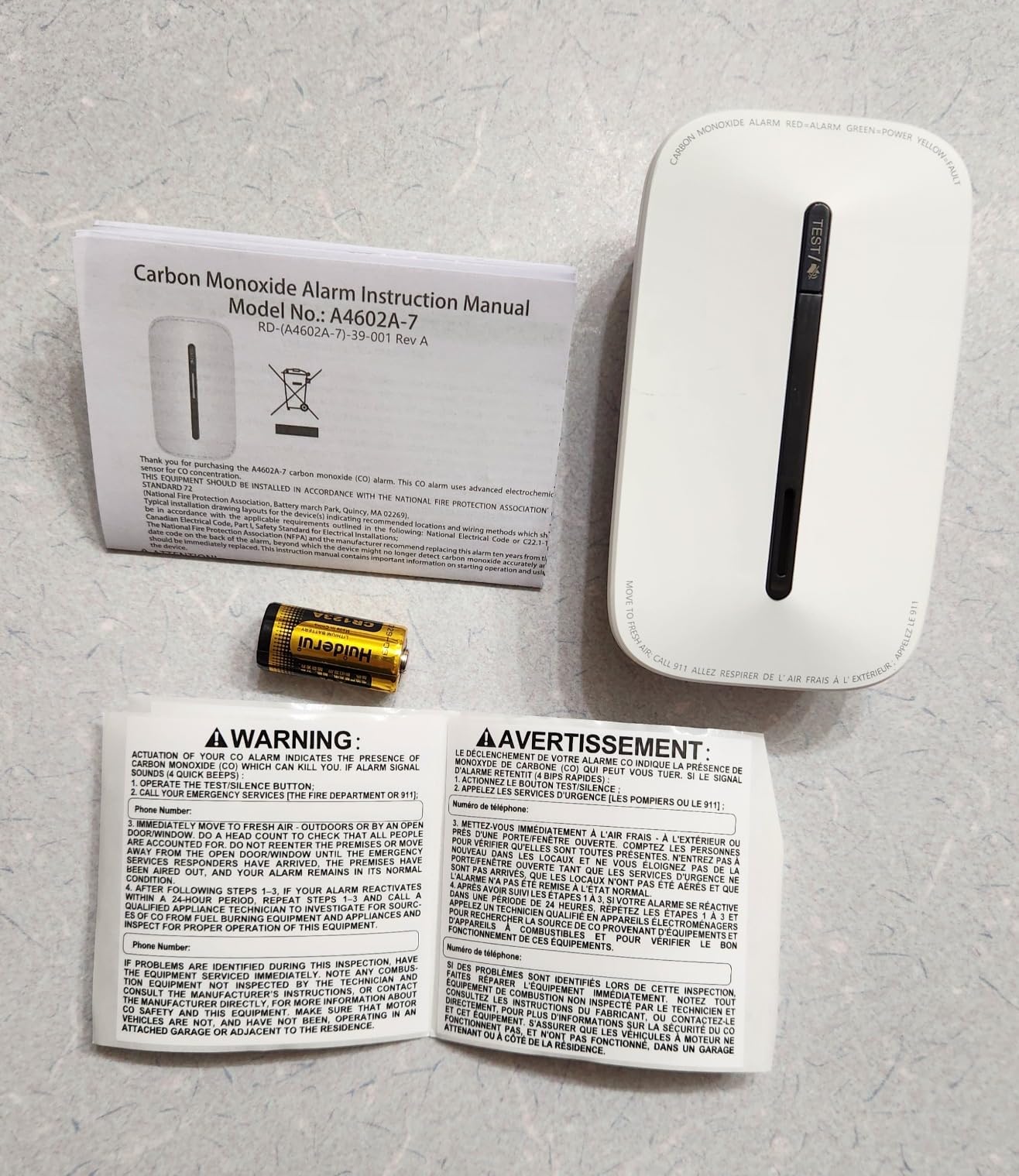
Wall-plug CO alarms have a reputation problem: when the power cuts, they chirp all night. This one is built around that complaint. It plugs into a 120V outlet for normal operation and keeps a 10-year replaceable battery in reserve, so an outage does not turn into a wake-up call at 2 a.m.
The foldable plug is the detail that makes it RV-friendly. It collapses flat and packs into a duffel, so you can bring it to a hotel, a rental, or a storage unit and put it back in a drawer when you are done.
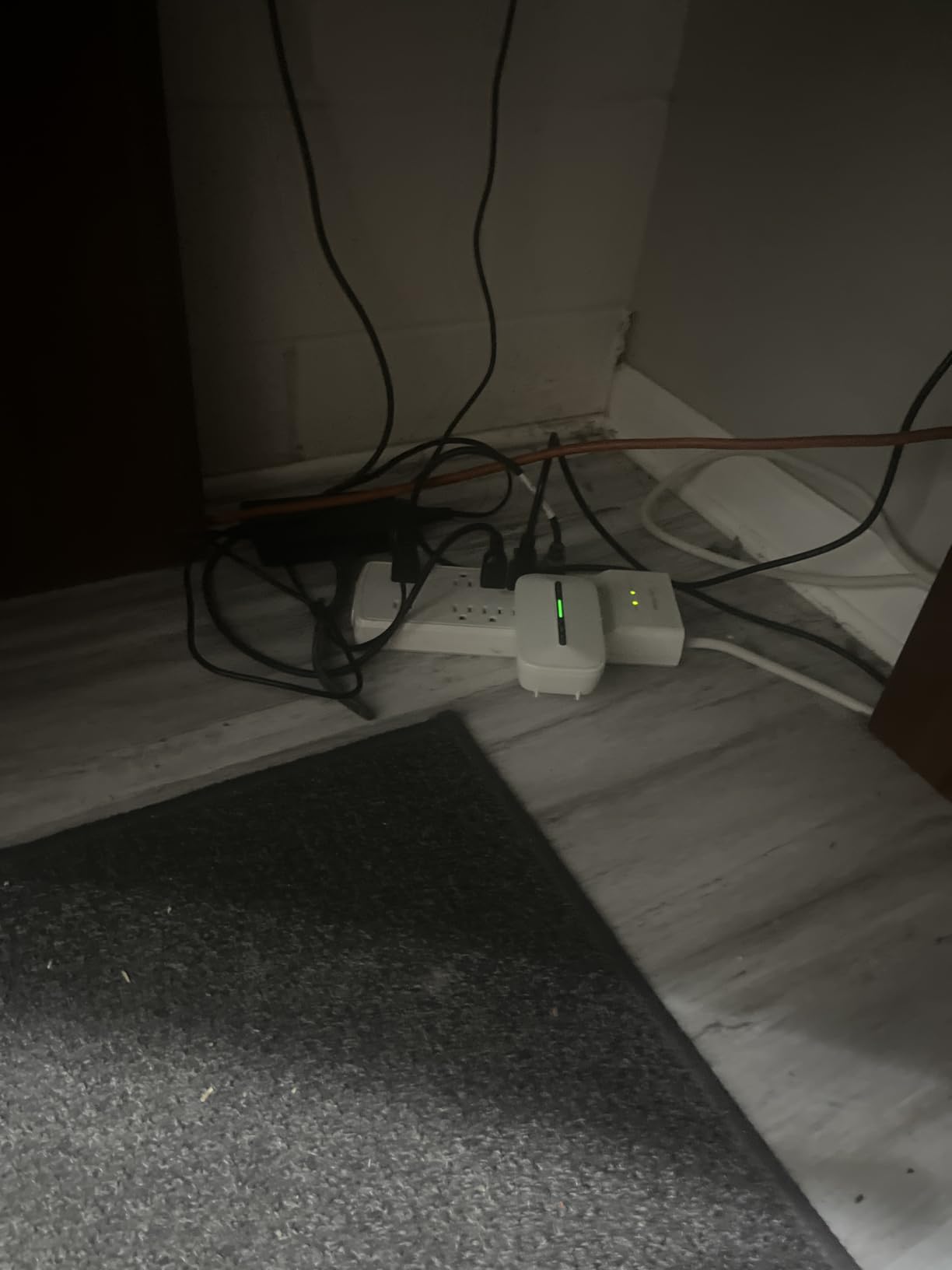
The status LED breathes softly in green rather than blinking, which the manufacturer designed specifically to avoid lighting up a sleeping compartment. That matters more than it sounds when the unit is three feet from your head.
It is a supplementary tool rather than a primary one, because placement is dictated by outlets. In a coach with limited 120V receptacles you may not be able to put it where the sleeping area requires.
Who This One Fits Best
Travelers who move between a coach, a hotel, and a rental and want one device for all three. It is also a clean addition in a coach with a reliable receptacle near a sleeping zone.
Owners tired of midnight chirps from a plug-in unit will recognise the replaceable long-life battery as the whole point of this design.
Where It Falls Short
An outlet is required, so it cannot cover a boondocking site or a slide-out with no power. It also has no display, so you get no concentration reading when something does alarm.
Because it depends on mains power in an RV, it complements a coach-mounted 12V alarm rather than replacing one.
7. Heiman C1-S – Best for Tight RV Cabinets and Cupboards
Heiman Carbon Monoxide Detectors, 10-Year Product Life CO Detector, C1-S
UL 2034 certified with CSFM approval
FIGARO electrochemical sensor
10-year lithium battery
70mm compact housing
Pros
- Smallest unit in the group at a 70mm body
- 85 dB alarm is loud for a compact housing
- 10-year lithium battery removes battery anxiety
- Mounts with two screws or adhesive or sits on a surface
- One-touch test and silence button
Cons
- No digital CO readout
- One reviewer reported no response in an improvised CO test though this was not corroborated
Size is the entire argument for the C1-S. The housing is 70mm across, so it can sit above a cabinet or inside a tight overhead where a 5.7 inch smoke alarm would struggle to fit. It weighs 3.52 ounces and comes with a sealed ten-year lithium cell.
It is UL 2034 fifth edition certified and CSFM approved, and it uses a Japan-made FIGARO electrochemical sensor. The 85 dB audio-visual alarm is loud for something this small, and a one-touch test and silence button handles monthly checks.
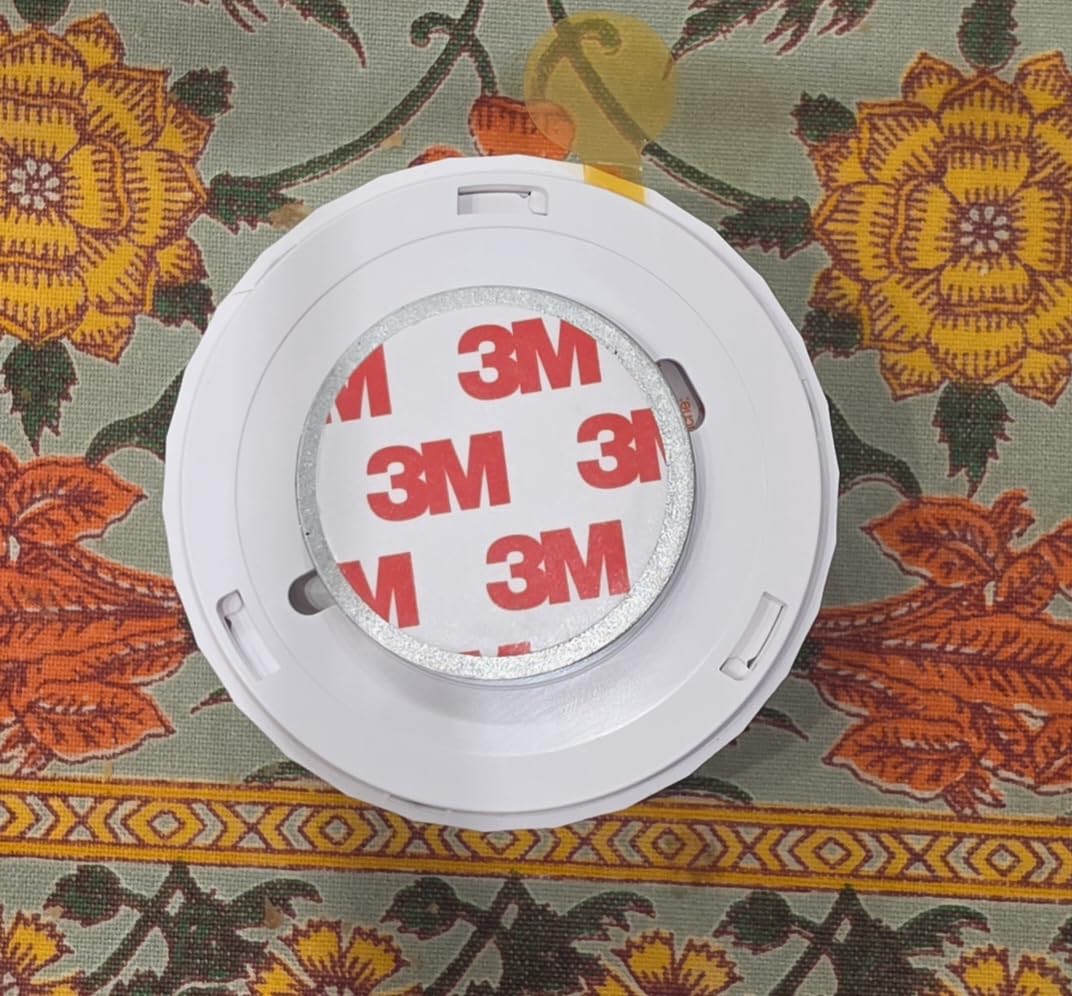
Mounting is flexible: two screws, adhesive, or simply standing it on a shelf. The housing is UL94 V-0 flame-retardant material, which is a reasonable detail in a small space with a lot of heat-producing appliances.
This unit holds the lowest average rating in the group at 4.4, based on 112 reviews. The single one-star report claimed the alarm did not respond when held in a CO-rich environment, and no other review corroborates that. It is an isolated account, but it is worth knowing about if you are relying on one alarm.

Who This One Fits Best
Owners with a cramped coach, a slide-out with no wall real estate, or a cabinet where a standard alarm would be in the way. It is the easiest alarm here to add without drilling anything.
If you want a second alarm near a sleeping area and the space is tight, the footprint is the deciding factor and this one wins on it.
Where It Falls Short
There is no digital readout, so you cannot see the concentration. With the smallest review base in the lineup at 112, the long-term reliability record is also the thinnest here.
Its 4.4 rating is the lowest average of the ten, and warranty coverage is stated at seven years rather than the decade offered by several alternatives.
8. X-Sense SC01 – Best 2-in-1 for Smoke and Carbon Monoxide
X-Sense Smoke Detector and Carbon Monoxide Detector, SC01, 1-Pack
Photoelectric smoke plus electrochemical CO
Large LCD readout
10-year sealed battery
ETL listed to UL 217 and UL 2034
Pros
- Combines smoke and CO detection in a single device
- Large LCD shows CO level battery level and status
- 10-year sealed lithium battery
- Mounts on wall or ceiling with included hardware
- ETL listed to UL 217 and UL 2034
Cons
- Deeper 5.7 inch diameter body is bulky in a small coach
- Photoelectric sensing does not cover LP or propane leakage
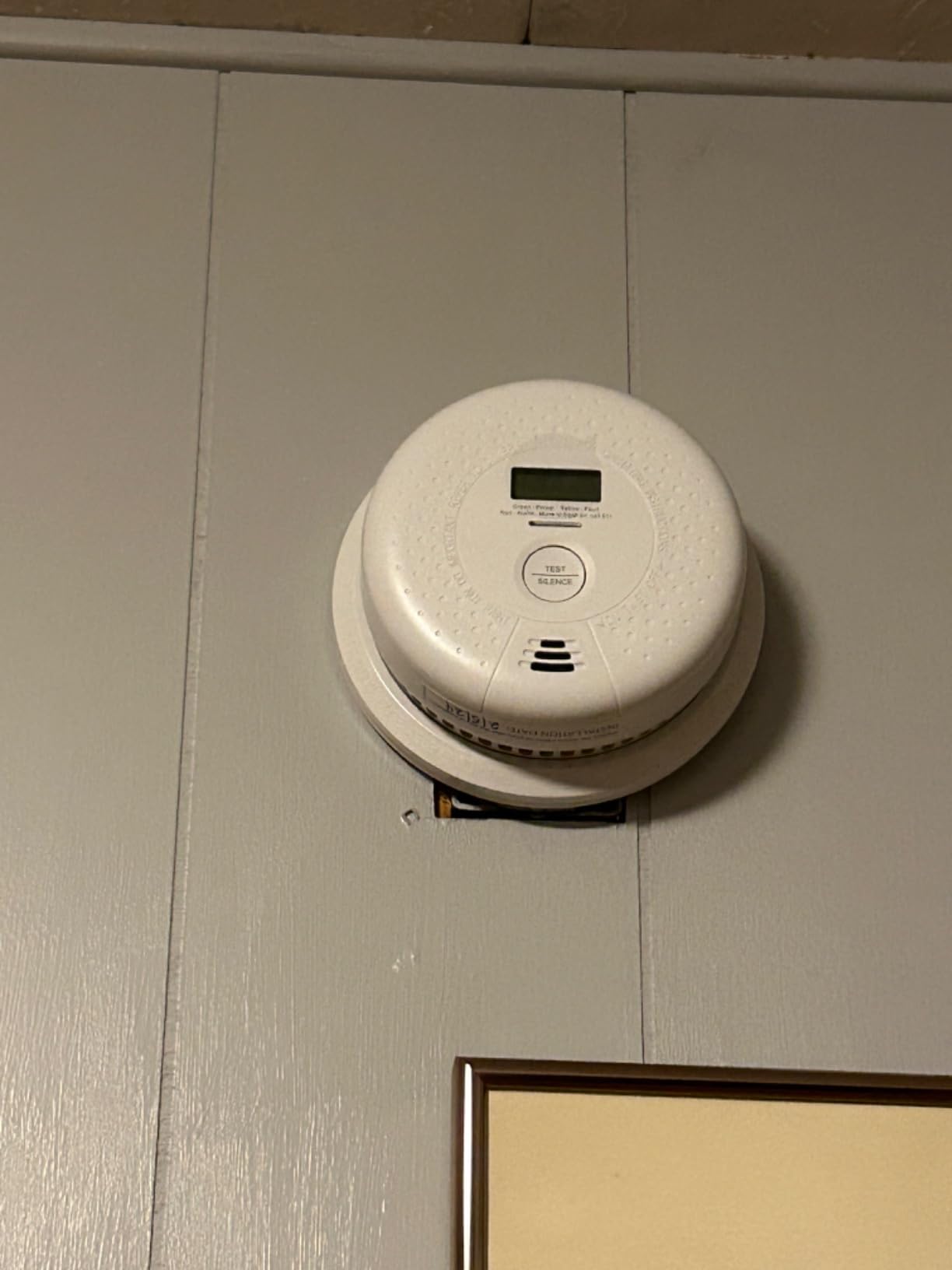
The SC01 does two jobs in one ceiling unit: a photoelectric smoke sensor and an electrochemical CO sensor, with a large LCD that shows live CO concentration, battery level, and working status. In an RV where every centimetre of ceiling is contested, collapsing two devices into one is a real saving.
It is ETL listed to UL 217 for smoke and UL 2034 for CO, powered by a sealed 10-year lithium battery, and installs on any wall or ceiling with the supplied bracket, screws, and anchor plugs. No rewiring means you can add it to a coach with no existing alarm.
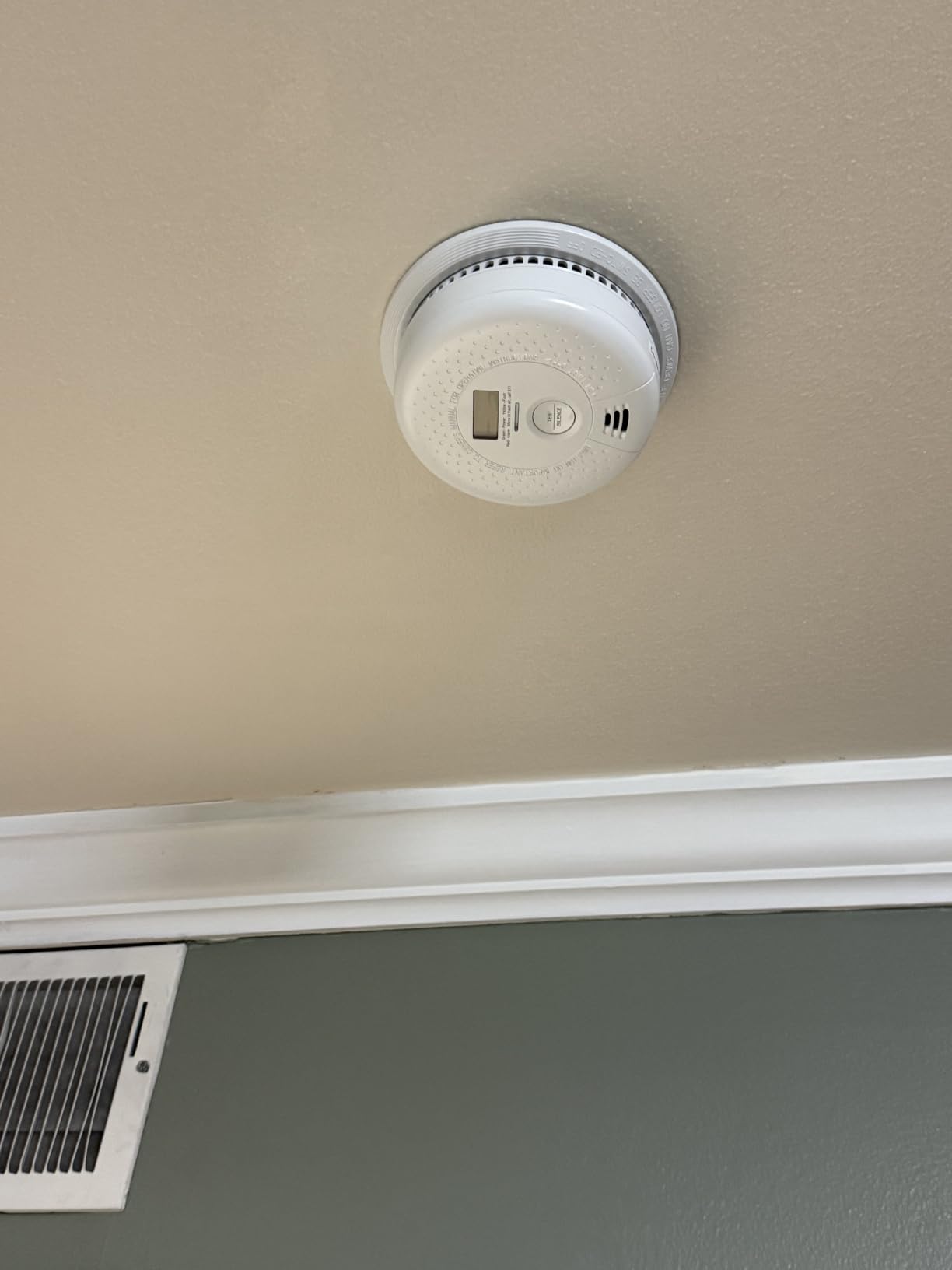
With more than two thousand reviews at 4.6, this is one of the best-proven designs in the group. Owners point to the display as the differentiator, since it shows the number and the battery level together instead of hiding status behind coloured lights.
The important limitation is propane. A photoelectric smoke sensor does nothing for an LP leak, so a combo unit like this reduces your device count without closing the propane gap. You still need LP detection if your coach runs on gas.
Who This One Fits Best
Travel trailers, pop-tops, and older coaches with limited ceiling real estate where two separate alarms will not fit. It suits anyone who wants one monthly test instead of two.
If you have already handled propane detection separately, this is an efficient way to cover both smoke and CO in a single location near the sleeping area.
Where It Falls Short
At 5.7 inches across and 2 inches deep, it is the bulkiest body in this roundup, which is a problem in the tight overheads and cabinets that characterize many RVs.
Warranty coverage is 60 days for money-back satisfaction plus a five-year quality warranty, shorter on paper than the ten-year coverage on the Kidde and First Alert battery units here.
9. First Alert CO400FF – Best for Simple 9V Replacements
First Alert Battery Carbon Monoxide Alarm
Replaceable 9V battery included
Electrochemical CO sensor
85 dB audible alarm
End-of-life warning chirp
Pros
- Replaceable 9V battery instead of discarding the alarm
- No outlet needed so placement is unrestricted
- 85 dB alarm carries across a cabin
- Simple wall mount takes under five minutes
- By far the largest review base in this group
Cons
- No digital display of CO concentration
- 9V batteries need periodic replacement and a fresh-date check
Twenty-one thousand reviews make the CO400FF by a wide margin the most-proven alarm in this roundup. Owners buy it again to replace a dead unit of the same model, which tells you how predictable its footprint and mounting pattern have been over the years.
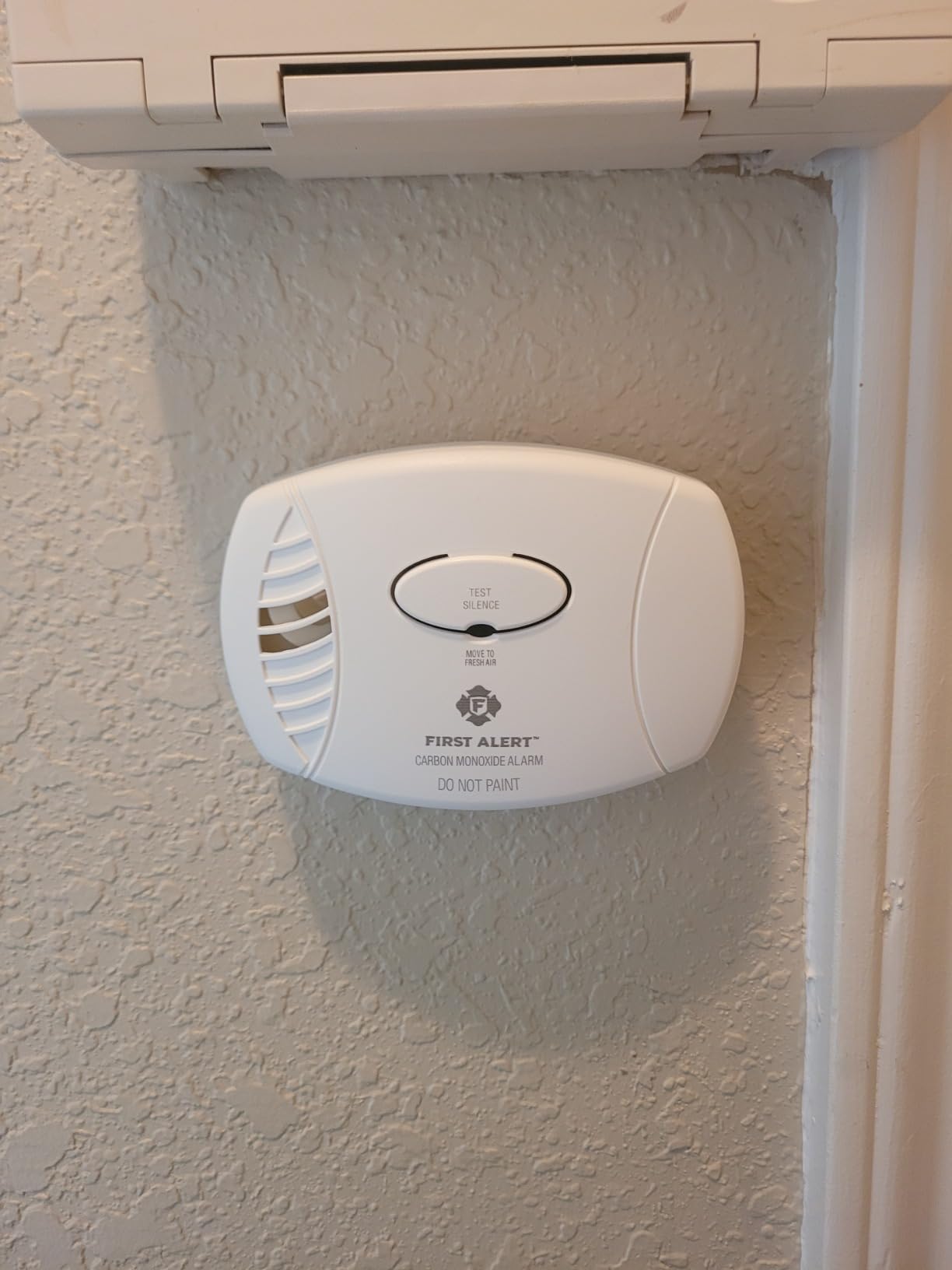
Everything about it is deliberately plain. A replaceable 9V battery means a dead cell means a two-minute swap instead of a discarded alarm. There is no outlet, so it goes wherever you need it, including a berth or a travel kit in the tow vehicle.
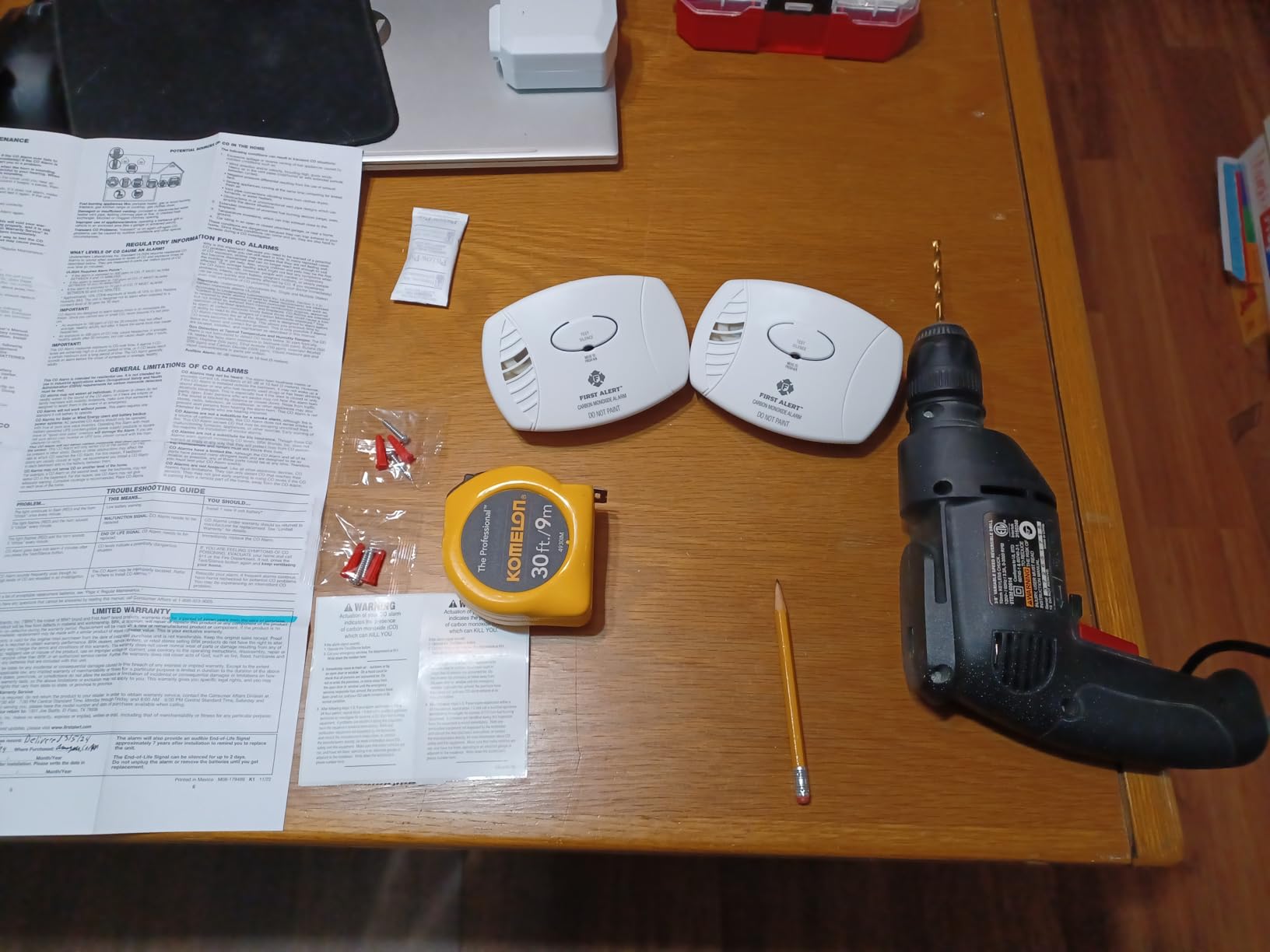
The electrochemical sensor and 85 dB horn are the core of it, and a 5-year limited warranty with an end-of-life chirp covers the replacement question. At 11.2 ounces and 5 by 3 inches it is one of the larger bodies here, but it is a simple plastic box that disappears against a ceiling.
The absence of a display is the recurring note in reviews. Owners who want a reading pair it with a display unit, and for pure alarm coverage the simplicity is often the reason they buy it a second time.
Who This One Fits Best
Owners replacing an existing alarm of the same type, anyone who wants to service a battery rather than replace a device, and anyone who wants the simplest possible monthly routine.
It is a sensible second alarm for an older used RV where the factory sensor age is unknown and you want a cheap, well-documented baseline while you work out the rest.
Where It Falls Short
No CO concentration readout, so slow low-level changes stay invisible until the alarm sounds. A 9V battery also needs a periodic date check, and an expired cell produces exactly the kind of false reassurance we are trying to avoid.
The 5-year warranty is the shortest of the ten-year coverage offered by several alternatives in this roundup.
10. First Alert CO710A – CO and Temperature on One Backlit Screen
Carbon Monoxide Detector, Temperature Display, 10-Year Battery
Backlit digital CO and temperature display
Peak level recall
10-year sealed lithium battery
Compact tabletop or wall design
Pros
- Backlit display switches between CO level and room temperature
- Peak level feature retrieves the highest reading
- Sealed ten-year lithium battery
- Compact design suits tabletop or wall mounting
Cons
- Lowest average rating in this set at 4.5
- No numeric display of CO in some reported use
- Thinner owner feedback than comparable First Alert and Kidde displays
The CO710A is the same multi-function backlit display idea as the CO710, showing CO level or ambient room temperature on demand, with a peak level feature that retrieves the highest concentration the unit ever measured. Power is a sealed ten-year lithium battery, so it keeps running through a coach power cut without complaint.
The design is compact and works equally well on a table or a wall, which makes it easy to position at eye level in a bedroom rather than tucked at floor level where a sleeping camper will not see it.
Where it differs from the CO710 is in the owner record. Its 4.5 average is the lowest of the ten here, and it carries a longer tail of negative feedback than the comparable First Alert and Kidde display models. Detailed review text was not available for this listing, so most of what we can say comes from the rating distribution and the feature set.
It is worth including because the concept is sound and the peak recall is genuinely useful after a trip. Just go in with the awareness that this specific version of the display design has a weaker track record than the models ranked above it. If you want that display format, the CO710 or the Kidde C3010D are the safer buys.
Who This One Fits Best
Owners who want a visible readout near a bed and have already covered their propane detection separately. The table placement option suits coaches where mounting height is awkward.
It also works as a shop or storage-occupant monitor for an older coach where you want a reading without wiring anything into the electrical system.
Where It Falls Short
At 4.5 it is the lowest rated alarm in this roundup, and the higher share of one-star reviews is the reason it sits at the bottom of the list despite familiar features.
Review evidence is thin compared with the other display models, so you are making a bet on the design rather than on a long owner history.
How to Choose an RV Carbon Monoxide Detector
Start with the power source, because it decides almost everything else. A hardwired 12V coach alarm draws from the house battery and disappears when you cut that battery for storage. A sealed-lithium portable alarm keeps working through a discharge, which is why we have leaned heavily on that type in the picks above. A plug-in unit needs a 120V receptacle, so it can only go where an outlet already is.
Next, decide whether you need a number. Display units cost you nothing in effort and let you see a slow rise before it becomes an alarm, which is the difference between reacting and guessing. Horn-only units are simpler and last longer between battery changes, but they tell you nothing until it is already loud.
Finally, consider how many sleeping areas you have. A motorhome with a separate bedroom, a bunkhouse, or a slide-out that opens into a sleeping space needs more than one alarm, and owners on the RV forums routinely add a second unit rather than replacing the single factory alarm.
If you also care about staying connected off grid, our picks on Starlink mounts and accessories for RVs and cell phone signal boosters for cars and RVs cover the communications side of a remote campsite, where a CO event can happen with nobody around to hear it.
RV-Rated vs Household Alarms: What UL 2034 and UL 1484 Mean
This is the single most common mistake we see, and it comes up constantly in owner forums. A residential CO alarm built to UL 2034 is a fine piece of equipment, but it is not automatically a drop-in replacement for a coach-mounted alarm. Residential units are designed for a house that has a furnace, a chimney, and a grid supply, and many of them expect a different wiring arrangement or a different cutout than an RV provides.
RV-rated alarms are listed to UL 1484, a standard written for recreational vehicles, where the enclosure has to survive vibration, humidity, and a wide temperature swing and where the alarm is expected to sit close to a sleeping area in a much smaller volume. Owners on the Jayco and Good Sam forums keep repeating the same lesson: buy a unit that is RV-rated and matches your existing wiring, or buy a self-contained portable alarm and mount it separately.
Every product in this roundup is a self-contained battery or plug-in alarm. None is presented as a replacement for a hardwired 12V coach installation, because that is not what the data supports. If your factory alarm is dead and you want a true hardwired replacement, match the RV-rated specification to your coach and verify the cutout dimensions before you order anything.
CO vs CO2 vs Propane vs Smoke: Which Sensor You Actually Need
Carbon monoxide is a combustion gas that mixes evenly into the air, so its detector belongs near the floor or, more precisely, within the sleeping area where people breathe for hours. Carbon dioxide is a different gas, produced by people and animals in a sealed space, and it is what causes the drowsiness some campers call carbon dioxide poisoning without any combustion involved. A CO alarm will not detect CO2 at all.
LP propane is heavier than air, so it settles and pools near the floor, which is why combo LP and CO units and dedicated propane detectors mount low, often no more than a few inches off the deck. A photoelectric smoke sensor is a fire detector, not a gas detector, and it is completely blind to propane leakage. That is the gap in the 2-in-1 unit we picked above, and it is why gas RVs still need LP detection covered.
In plain terms: mount CO detection at sleeping level, mount LP detection low, and keep a smoke alarm on the ceiling. If a unit claims to cover everything, check which sensors are actually inside it.
Placement, Power, and the 60-Second Test Routine
Put at least one CO alarm within 15 feet of a sleeping area, ideally on the wall or ceiling inside the sleeping space rather than in a hallway. Avoid mounting directly beside a vent, a furnace outlet, a gas range, or a wet cell, because airflow and humidity at those spots are the main cause of nuisance alarms that teach owners to ignore the device.
For combo LP and CO units, mount low, within a few inches of the floor, because the propane sensor is useless at head height. Those are two different mounting heights and getting them backwards is common.
Here is the 60-second routine I run at de-winterization. Press the test button and confirm the full four-beep alarm pattern sounds. Confirm the status LED shows normal operation, green on most of these models. Confirm the power source, whether that is a 9V or AA cell you can date, a sealed lithium pack with no date to check, or a coach supply. Read the manufacture date printed on the back and compare it to the stated service life. And check that the unit is still on the same mount it was sold with, because a loose unit on a shelf is decoration.
A status light alone does not prove the sensor works, which is a lesson owners keep rediscovering. Pressing the button is the only quick check that exercises the alarm path end to end.
Service Life, False Alarms, and Storage Power Loss
Most CO alarms in this category are rated for five to ten years from manufacture. Find the date on the back or the side of the housing, write it on the unit with a marker, and treat that as the replacement deadline rather than the purchase date. On a used RV with an unreadable or missing date, the honest move is to replace the unit.
Turn a five-year life into a real calendar. A coach that gets out for a few weekends every month is running the detector far less than one parked full time, but the sensor ages on wall-clock time regardless, so a detector sitting in a winterised rig for a year is a year closer to the end. Plan the replacement into your spring de-winterization checklist rather than waiting for an end-of-life chirp.
False alarms cluster in a few predictable places: cooking appliances, wet cells in a battery bay, a furnace during startup, and areas with high humidity. If the alarm sounds repeatedly with no change in your behaviour, move it away from the source rather than muting it. An alarm owners learn to ignore is the most dangerous object in the coach.
Storage is the sleeper issue. A hardwired 12V alarm sits dead when the house battery is disconnected for the winter, and plenty of owners assume they are still protected in the spring. Test every detector immediately after a storage period, before anything else, and replace anything that does not respond to the test button. It is also why a sealed battery unit is a genuinely better companion for a coach that spends months parked.
While you are in there, it is worth checking the other half of the life-safety kit, including the practical choices covered in our guide to portable washing machines for RVs for anyone living off grid for months at a stretch.
Frequently Asked Questions
What is the best carbon monoxide detector for a motorhome?
For most motorhomes the best choice is a sealed-lithium portable alarm with a backlit digital display, mounted within 15 feet of the sleeping area. Our top pick is the First Alert CO710, which shows CO level and temperature and keeps a peak reading. If your coach has a working hardwired 12V alarm, keep it and add the portable unit as a second layer in a rear bedroom or bunkhouse rather than replacing it.
What is the best carbon monoxide and propane detector for an RV?
A combo LP and CO unit is the efficient choice when your coach runs on propane, because it covers two hazards in one housing. The catch is mounting height: propane is heavier than air and pools near the floor, so combo and LP detectors belong low, while CO mixes evenly and belongs near sleeping level. Check that a unit you are considering actually contains both sensors, since a smoke and CO combo does not cover propane at all.
What is the best portable carbon monoxide detector for travel?
The Kidde AA portable alarm is the simplest travel option, weighing under four ounces and running on two AA batteries, so it works in a hotel, a rental car, or a campground without wiring. For trips where you want to read the actual concentration, pick a display model such as the Kidde C3010D or the First Alert CO710 instead. Avoid rechargeable NiMH cells in battery-only units, because the low-voltage warning chirps constantly.
Is there a difference between a CO2 detector and a carbon monoxide detector?
Yes, and the difference matters. A carbon monoxide detector senses a toxic combustion gas from furnaces, generators, and water heaters, and a carbon dioxide detector senses the gas people and pets exhale, which accumulates in a sealed space and causes drowsiness. A CO alarm will not detect CO2 at all. Neither replaces a propane detector, which senses heavier-than-air LP that pools at floor level.
How often should I replace an RV CO detector?
Most CO alarms are rated for five to ten years from the manufacture date printed on the housing, and that date is what starts the clock, not the day you bought it. On a used RV with an unreadable date, replace the unit rather than guessing. Plan the swap into your annual de-winterization checklist so you catch it before the end-of-life chirp, and test any hardwired 12V alarm immediately after winter storage.
Why is my RV carbon monoxide detector chirping?
A repeating chirp usually means a low battery, an expired sensor, or a fault condition rather than real carbon monoxide. On battery units, check the cell date and use alkaline rather than rechargeable cells. On units with an amber fault LED, the sensor has reached end of life and needs replacing. If the alarm sounds in bursts near a furnace, wet cell bay, or cooking appliance, move it away from that airflow before you consider muting it.
Do I need a propane detector if I have a CO detector?
You do, if your RV has an LP appliance such as a gas range, refrigerator, or furnace. Carbon monoxide is produced by incomplete combustion and mixes evenly into the air, while propane is heavier than air and pools along the floor, so the two sensors work at completely different mounting heights. A smoke and CO combo unit covers neither LP nor a genuine gas leak, so a dedicated or combo LP unit is still required.
Our Verdict on the Best Carbon Monoxide Detectors for RVs
For most coaches the First Alert CO710 is the single unit to buy, because a sealed ten-year battery plus a backlit reading solves the two problems RV owners complain about most: dead alarms after storage and alarms that give you no information. Add the Kidde AA portable unit as a second layer in a second sleeping area, and cover propane separately if your rig runs on gas.
Whichever you choose, mount it within 15 feet of where people sleep, press the test button every month, and read the manufacture date so the replacement does not surprise you three winters from now. That is the whole routine, and it is the part that actually protects people.