
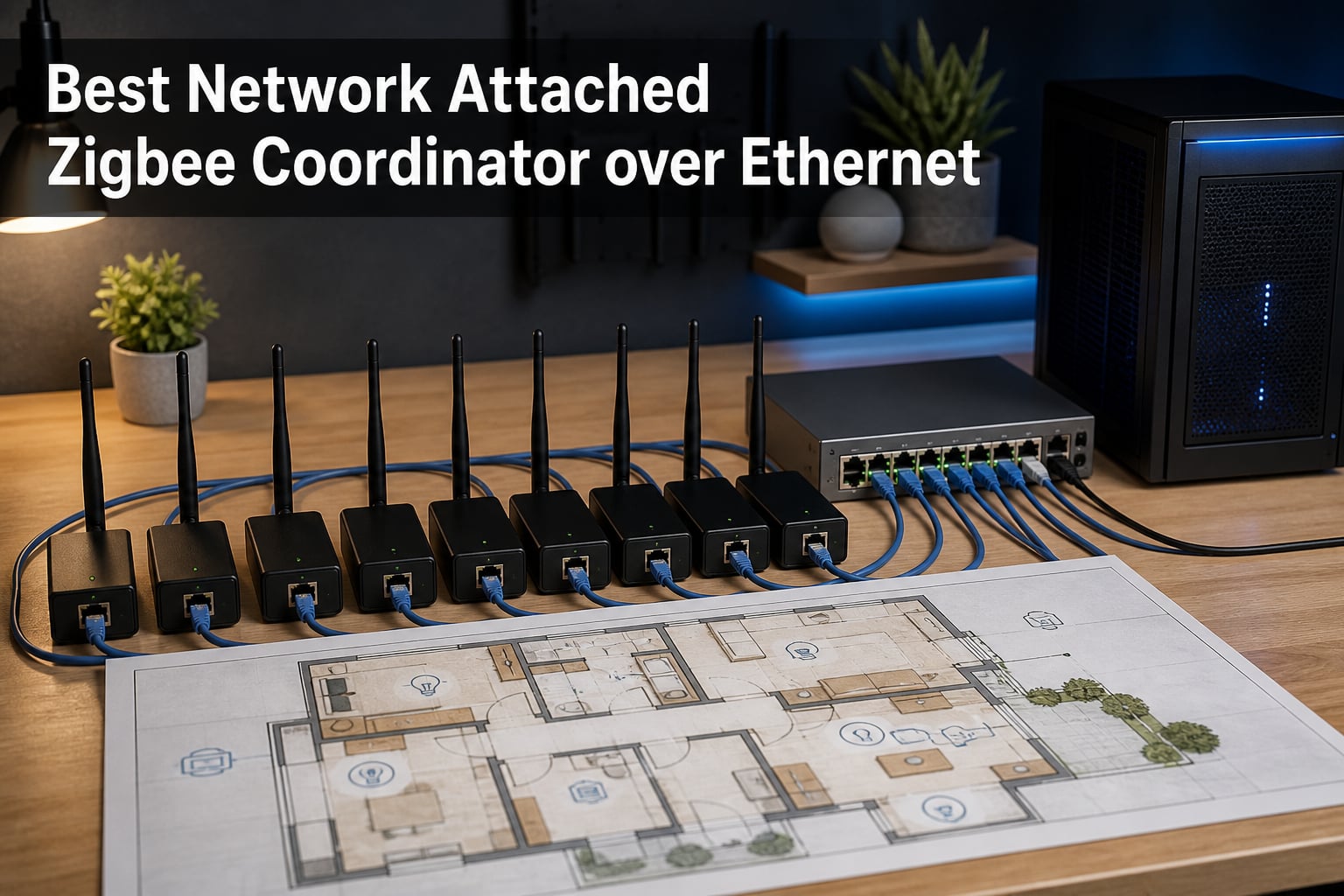
A network attached Zigbee coordinator is a Zigbee radio that connects to Home Assistant, Zigbee2MQTT, or another host over Ethernet or Wi-Fi instead of being tied to the host by USB. That simple change lets you put the radio near the center of your home, away from server cabinets, metal racks, and crowded USB ports.
I compared eight Zigbee Ethernet gateways for central placement, radio performance, software support, remote management, and firmware control. The best overall is the SMLIGHT SLZB-MR3U for its current EFR32MG24 hardware and strong Zigbee2MQTT feedback, while the SLZB-06M is the safer pick for users who want proven EFR32MG21 performance and broad compatibility.
Ethernet does not carry the Zigbee radio signal; it carries commands between your automation software and a physically separate 2.4 GHz radio. This distinction matters because a coordinator in a basement or equipment closet can still produce a weak mesh even when its wired connection is perfect.
The category remains useful in 2026. Matter may simplify parts of smart-home setup over time, but existing sensors, bulbs, switches, and automations still depend heavily on Zigbee networks. Dual-radio products also let advanced users experiment with Thread without abandoning Zigbee.
Table of Contents
Top 3 Picks for the Best Network Attached Zigbee Coordinator in October
Network Attached Zigbee Coordinator Options in 2026
| Product | Specs | Action |
|---|---|---|
 AVATTO GW90-MQTT PoE Dongle AVATTO GW90-MQTT PoE Dongle |
|
Check Latest Price |
 SONOFF Dongle-M SONOFF Dongle-M |
|
Check Latest Price |
 SMLIGHT SLZB-06U SMLIGHT SLZB-06U |
|
Check Latest Price |
 SMLIGHT SLZB-06M SMLIGHT SLZB-06M |
|
Check Latest Price |
 SMLIGHT SLZB-06MG24U SMLIGHT SLZB-06MG24U |
|
Check Latest Price |
 SMLIGHT SLZB-MR1U SMLIGHT SLZB-MR1U |
|
Check Latest Price |
 SMLIGHT SLZB-MR2U SMLIGHT SLZB-MR2U |
|
Check Latest Price |
 SMLIGHT SLZB-MR3U SMLIGHT SLZB-MR3U |
|
Check Latest Price |
1. SMLIGHT SLZB-MR3U — Best Overall for Zigbee2MQTT
SMLIGHT SLZB-MR3U(New Model) Zigbee 3.0 to Ethernet,USB,and WiFi Gateway Coordinator with PoE,Universal Gateway for Home Assistant/ Zigbee2MQTT/ZHA,Wireless Zigbee 3.0 USB Adapter
CC2652P10 + EFR32MG24
Ethernet Wi-Fi USB
PoE and Type-C
Pros
- Strong signal output
- Easy PoE setup
- Large-network support
- Thread and Matter potential
Cons
- ZHA reports
- Thin documentation
The SLZB-MR3U is my first choice when coverage, current radio hardware, and flexible networking matter more than beginner simplicity. It combines CC2652P10 and EFR32MG24 modules, offers 20 dBm or greater output with dual 5 dBi antennas, and can run over Ethernet, Wi-Fi, or USB.
In practical terms, I would place it near the center of the occupied floor rather than beside the automation server. Forum users commonly report better stability after moving a USB radio from a basement rack to a central location, and this model’s PoE installation makes that placement practical without adding a separate power cable.
Its strongest reported use is with Zigbee2MQTT. The available review data includes successful networks with more than 30 devices, plus Thread operation through OTBR, which makes the hardware attractive for users planning a mixed Zigbee and Thread environment.
Some users report that it does not work well with ZHA, so I would test it against the exact software stack before migrating a critical network. I would also save the old coordinator configuration, device mapping, channel, and network key before changing hardware.
Choose the SLZB-MR3U for network growth
This model suits a large home, dense device count, or a virtualized Home Assistant installation. Its wired connection avoids Wi-Fi congestion and USB passthrough during server maintenance.
The review record is positive but still limited, with 20 reviews. I would treat that as encouraging evidence rather than a guarantee of long-term firmware support.
Check compatibility before replacing a coordinator
Zigbee2MQTT is the best-documented route in the supplied product feedback. ZHA users should test pairing, backup, restoration, and device availability before retirement.
Its instructions are described as unclear by some users. I would budget time for learning the web interface, firmware workflow, and network mode rather than expecting a fully guided first boot.
2. SMLIGHT SLZB-06M — Best Proven EFR32MG21 Value
SMLIGHT SLZB-06M – A Zigbee 3.0 to Ethernet, USB, and WiFi Adapter with PoE Support, Works with Zigbee2MQTT, Home Assistant, ZHA
EFR32MG21
Ethernet USB Wi-Fi
PoE and Type-C
Pros
- Stable Home Assistant use
- Good mesh range
- Remote updates
- Password UI
Cons
- Less beginner-friendly
- Mode switching
- Some Ethernet reports
The SLZB-06M strikes a measured balance between current capability and established feedback. Its EFR32MG21 radio includes a +20 dB amplifier, while the included 5 dB antenna and Ethernet interface support the central-placement use case that makes a network coordinator valuable.
I would use it with Home Assistant, ZHA, or Zigbee2MQTT after checking the active firmware mode. It can work as a LAN or USB coordinator, and the web interface supports remote updates for both the EFR32MG21 and ESP32 portions.
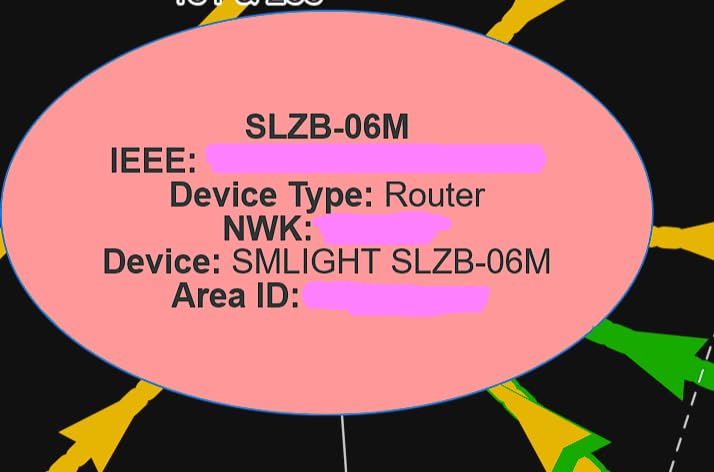
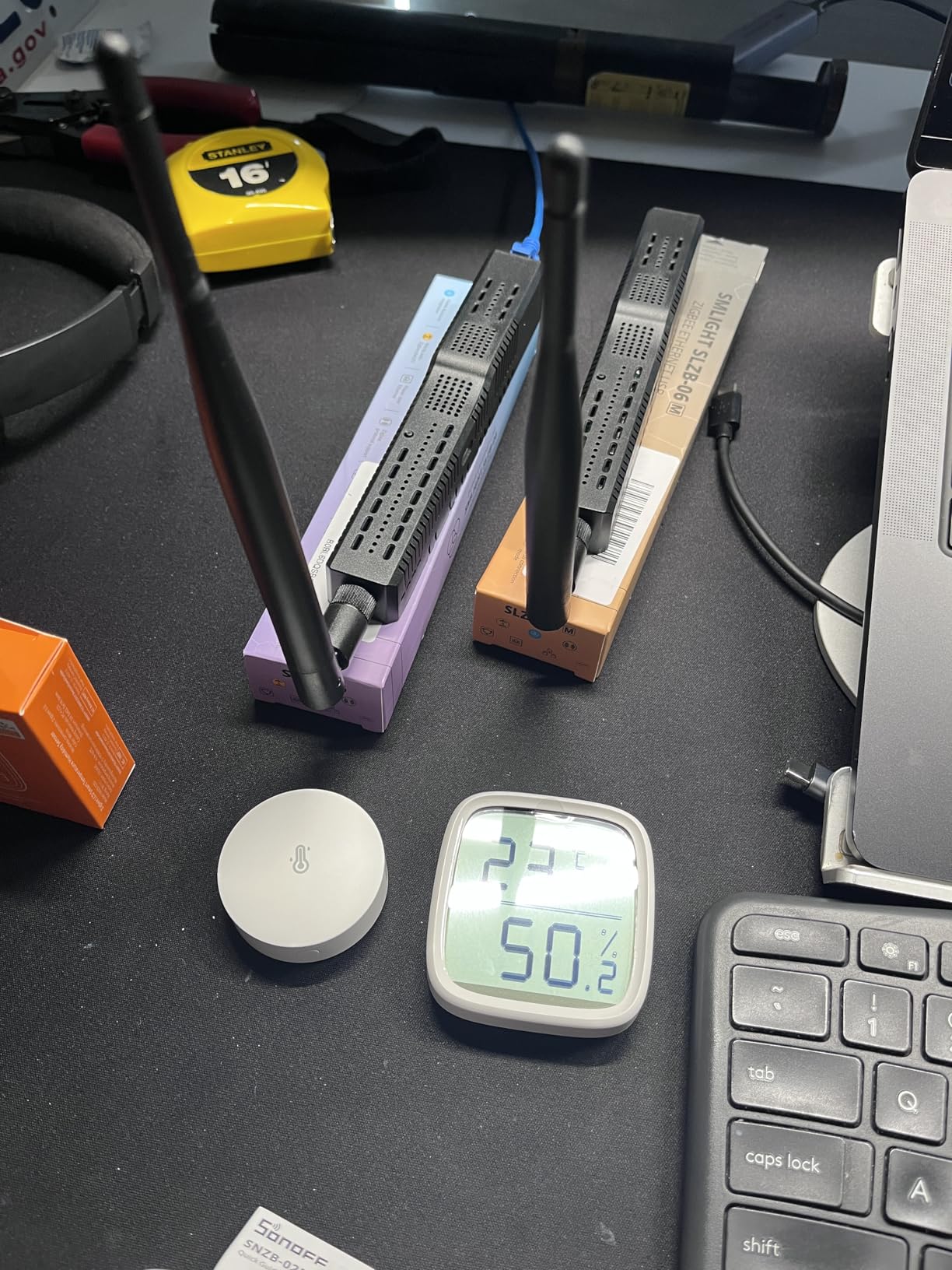
The review data specifically praises stability, range, and broad device support. A 4.6 rating across 109 reviews gives it more evidence than several newer dual-radio options, which matters when I am protecting a network with many automations.
Ethernet issues are among the reported cons, alongside web-configuration mode switching. I would assign a static DHCP reservation, confirm the local address, and keep USB recovery available until the LAN connection survives several restarts.
Choose the SLZB-06M for Home Assistant stability
This is my recommendation for a user who wants a single-radio network coordinator with strong documented performance. The extra setup effort is reasonable when the goal is better radio placement.
Its 100-megabit Ethernet connection is more than enough for coordinator traffic. The key benefit is not bandwidth but freeing the radio from a distant server and its immediate electrical environment.
Keep a recovery path during installation
Before changing modes, I would record the current firmware, protocol, channel, and network settings. USB fallback can make a bad update or configuration change much easier to recover.
The device is not completely plug-and-play for beginners. That tradeoff is acceptable for technical users who already know whether ZHA or Zigbee2MQTT will manage the network.
3. SONOFF Dongle-M — Best Budget EFR32MG24 Pick
SONOFF Zigbee/Thread PoE Dongle Max | Dongle-M
EFR32MG24 + ESP32D0WDR2
Ethernet Wi-Fi USB
PoE ready
Pros
- Large review base
- Multi-firmware support
- Metal case
- Dual antennas
Cons
- Web login reports
- Extra Wi-Fi complexity
The SONOFF Dongle-M pairs an EFR32MG24 radio with an ESP32D0WDR2 and supports Ethernet, Wi-Fi, and USB. That makes it one of the strongest choices here for users who want modern Silicon Labs hardware without paying for a second Thread-capable radio system.
I see its 528-review history as a major advantage. Community members often want LQI results, firmware history, and support reputation, and the larger feedback base gives the Dongle-M more context than products with only a handful of reviews.
The aluminum case and dual adjustable 5 dBi antennas should help it survive a central installation better than a bare USB stick. A one-meter USB extension is included, but Ethernet remains the cleaner option for a fixed location.
Reported web-interface login issues after refresh are the main software concern. I would update firmware, change the default credentials, document the assigned address, and confirm that the local console remains reachable before connecting the automation stack.
Choose the Dongle-M for flexible firmware
It supports Zigbee coordinator, router, and Thread RCP roles. That flexibility is useful for a lab, a growing smart home, or a user who wants to test Thread without replacing the Zigbee radio.
I would buy it when Ethernet reliability and long-term product familiarity matter more than having a second dedicated Zigbee radio. Its two-year warranty also adds some purchase confidence.
Use Ethernet rather than Wi-Fi when possible
Wi-Fi is convenient, but a wired link avoids local wireless congestion and keeps the data path predictable. It also makes DHCP reservations, local administration, and troubleshooting easier.
The stated 115200-baud transfer rate is not a bottleneck for typical coordinator traffic. Radio placement and interference management have much more effect on daily Zigbee performance.
4. SMLIGHT SLZB-06MG24U — Best for Channel Analysis
SMLIGHT SLZB-06MG24U(2026 Model) Zigbee 3.0 to Ethernet,USB,and WiFi Gateway Coordinator with PoE,Universal Gateway for Home Assistant/ Zigbee2MQTT/ZHA,Wireless Zigbee 3.0 USB Adapter
EFR32MG24
Ethernet Wi-Fi USB
PoE and Type-C
Pros
- Per-channel SNR graph
- 20 dB amplifier
- Internal web UI
- Three-year warranty
Cons
- Only 7 reviews
- Small evidence base
The SLZB-06MG24U is the model I would choose when diagnosing a crowded 2.4 GHz environment. Its web interface includes a per-channel SNR graph, giving you a concrete reason to change channels rather than guessing.
The hardware uses an EFR32MG24 at 80 MHz with 256 KB RAM, a +20 dB amplifier, and a +5 dB antenna. It can operate through Ethernet, Wi-Fi, or USB and supports PoE or USB power.
Forum discussions identify channel utilization above 90 percent as a recurring pain point. I would use the graph during several normal household periods, then select the quietest legal Zigbee channel and confirm that router locations support the new plan.
Its 4.6 rating is based on seven reviews, so the feedback is promising but not extensive. I would inspect firmware releases and support activity before building a large permanent installation around it.
Choose the 06MG24U for diagnosis and tuning
This is a strong fit for homes near Wi-Fi access points, neighboring Zigbee networks, or other 2.4 GHz equipment. The channel graph adds evidence to a normally invisible problem.
It is also a sensible EFR32MG24 alternative to the Dongle-M. The decision comes down to whether the richer web analysis matters more than a much larger review base.
Pair the analyzer with a placement survey
Run the survey with the radio in its intended location, not beside the server. Antenna orientation and nearby metal can change the readings dramatically.
I would repeat measurements after moving routers, adding devices, or changing channels. A clean scan is useful, but LQI and device availability during daily use still decide whether the network is healthy.
5. SMLIGHT SLZB-MR2U — Best for Thread Experimentation
SMLIGHT SLZB-MR2U (2026 Model) Zigbee 3.0 to Ethernet,USB,and WiFi Gateway Coordinator with PoE,Universal Gateway for Home Assistant/ Zigbee2MQTT/ZHA,Wireless Zigbee 3.0 USB Adapter
CC2652 + EFR32MG21
Ethernet USB Wi-Fi
PoE and Type-C
Pros
- Stable Home Assistant use
- Thread and Matter support
- Web flashing GUI
- Remote access
Cons
- Only 8 reviews
- Higher purchase tier
The SLZB-MR2U combines CC2652 and EFR32MG21 modules in a dual-antenna enclosure. It supports Zigbee and Thread, includes experimental Matter-over-Thread capability, and connects through Ethernet, Wi-Fi, or USB.
I would consider it when a user wants one managed device to host a Zigbee network and experiment with Thread. The web interface for flashing radios is a practical benefit when you need to change roles without attaching a local programmer.
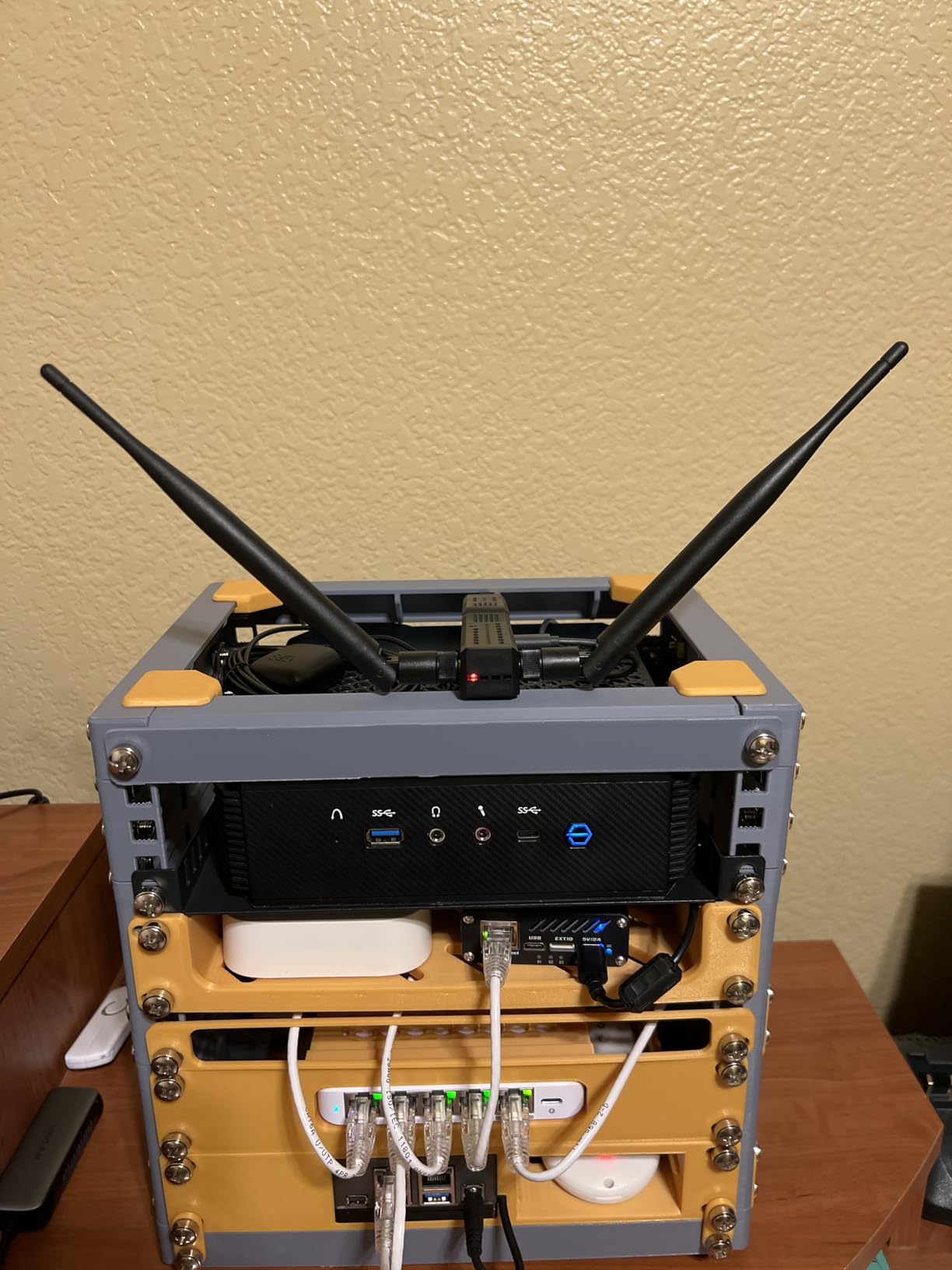
Users describe stable Home Assistant operation and easy PoE setup. The supplied data also notes a more stable experience than older USB-only coordinators, which fits the common community report that central placement can reduce offline devices.
The small eight-review sample means I would validate the firmware line before adoption. Experimental Matter-over-Thread support should also be treated as a test feature, not a reason to expect every Matter device to work on day one.
Choose the MR2U for a mixed radio lab
This model fits a technical user who wants both Zigbee and Thread in one network appliance. Its remote access and web flashing tools reduce the need to reach the unit after installation.
I would keep the software stacks separate if possible until each radio is stable. Combining experimental Thread work with a production Zigbee network can make diagnosis harder.
Confirm the active firmware and role
The included radios can serve coordinator, router, or signal-extender roles. I would record the current image and restore path before any role change.
The device carries a three-year warranty in the supplied data. That helps offset the higher purchase tier, but it does not replace checking firmware release history.
6. SMLIGHT SLZB-MR1U — Best Dual-Radio Alternative
SMLIGHT SLZB-MR1U(2026 Model)- Zigbee 3.0 to Ethernet,USB,and WiFi Gateway Coordinator with PoE,Universal Gateway for Home Assistant/ Zigbee2MQTT/ZHA,Wireless Zigbee 3.0 USB Adapter
CC2652P7 + EFR32MG21
Ethernet USB Wi-Fi
Thread and PoE
Pros
- Strong 4.8 feedback
- 20 dBm or greater output
- Dual antennas
- Remote coordinators
Cons
- Only 16 reviews
- USB-C looseness
- Learning curve
The SLZB-MR1U combines CC2652P7 and EFR32MG21 modules and supports Zigbee, Thread, Ethernet, Wi-Fi, and USB. It is a close sibling to the MR2U, with the supplied data highlighting rock-solid Home Assistant performance and 20 dBm or greater output.
I would pick it when the stronger reported rating matters more than firmware age or thread-radio generation. The 4.8 average across 16 reviews is excellent, but the sample is still much smaller than the Dongle-M’s 528 reviews.
PoE lets the unit live near the middle of the house with one cable, which addresses the most common complaint about USB coordinators in basements or server rooms. The dual antennas and power amplifiers also help in larger or multi-floor properties.
USB-C looseness and a learning curve are the practical drawbacks. I would use the Ethernet connection for normal operation and reserve USB for recovery rather than depending on a possibly loose cable.
Choose the MR1U for high output power
This model suits users who need more radio headroom and want Thread capability. The listed 5 dBi or greater gain supports that goal, although real coverage still depends on walls, interference, and antenna orientation.
I would test the highest output only as needed. More transmit power can help at the edge, but it does not fix congestion or place the coordinator behind too many dense building materials.
Separate experimental and production networks
Thread radio configuration should not be changed casually on the same device that controls essential Zigbee devices. I would keep one known-good role available for restoration.
The web interface and multiple firmware paths are strengths, but documentation is described as thin. Allow time to learn them before an outage forces you to troubleshoot.
7. SMLIGHT SLZB-06U — Best Established CC2652P Design
SMLIGHT SLZB-06U – Zigbee 3.0 to Ethernet,USB,and WiFi Gateway Coordinator with PoE, Works with Zigbee2MQTT, Home Assistant, ZHA
CC2652P
Ethernet USB Wi-Fi
PoE and Type-C
Pros
- Strong range
- Remote updates
- VPN client support
- Multiple coordinators
Cons
- Large enclosure
- ZHA limitations
- Documentation gaps
The SLZB-06U remains a practical choice for a network attached Zigbee coordinator built around the established CC2652P. It includes a +20 dB gain radio, a 5 dB antenna, 100-megabit Ethernet, Wi-Fi, USB, and PoE.
I would use it in a large home where central placement and remote updates matter. The supplied feedback specifically praises range and Ethernet connectivity, with 168 reviews providing a useful record.
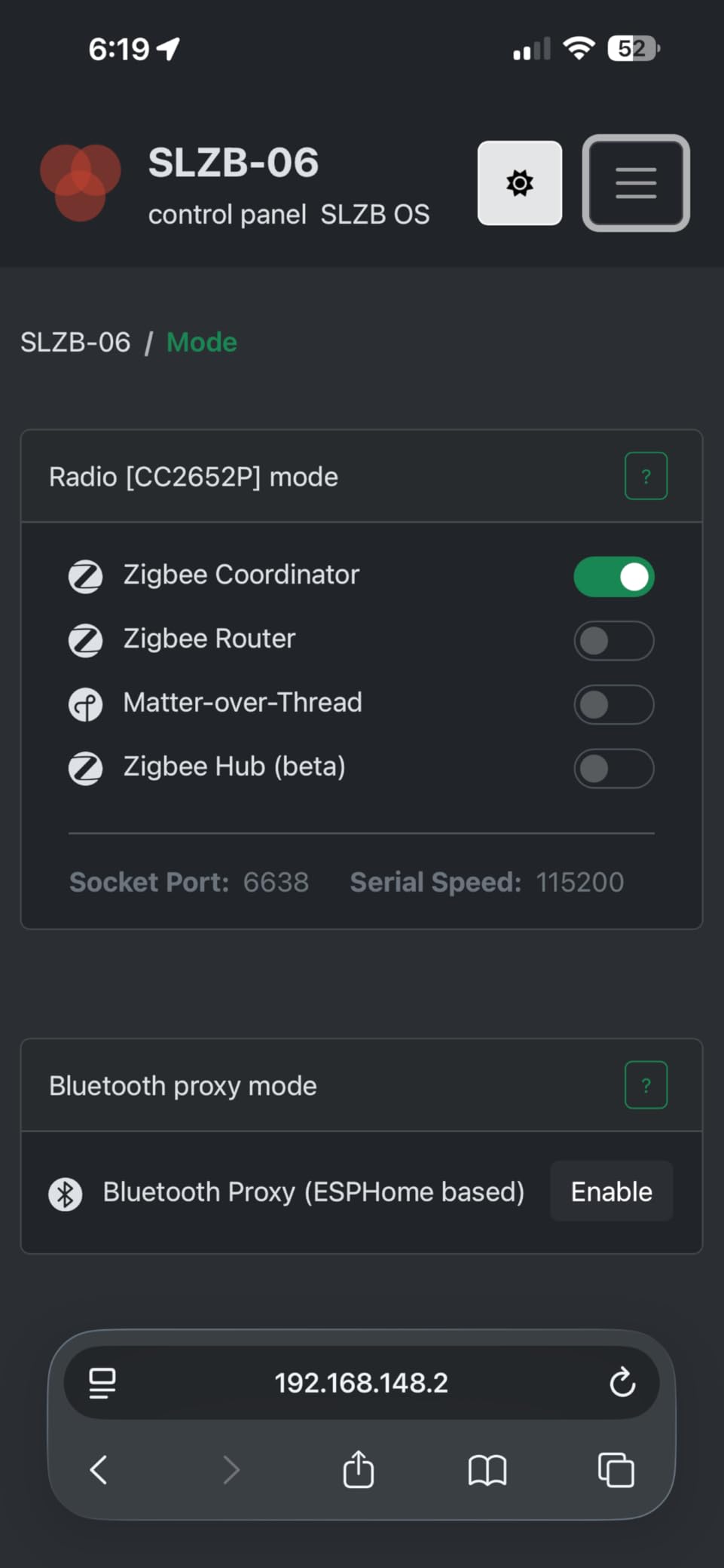

Its VPN client support can help secure remote administration, but I would still prefer a private LAN and a WireGuard tunnel managed by the router or server. A remote admin path should use strong authentication and a current certificate or key.
The enclosure is larger than newer models, and some users report ZHA limitations. I would confirm the exact ZHA workflow and device database behavior before replacing a working coordinator.
Choose the 06U for range and remote management
This is a good fit for a technically confident Home Assistant user who values an established radio and flexible connectivity. Its physical size is a small compromise for the included antenna and network hardware.
PoE reduces cable clutter to one Ethernet run. I would still mount it vertically where possible and keep both antennas clear of metal furniture or rack equipment.
Use protected remote access
The VPN client is useful for management from outside the home. I would expose only the required management route and keep coordinator ports off the public internet.
Changing the default web password is not optional. I would also disable unused radio or network modes if the interface offers that control.
8. AVATTO GW90-MQTT — Best Multi-Connection Budget Option
AVATTO Zigbee 3.0 PoE Dongle with Ethernet, USB, and Wi-Fi, ESP32+CC2652P Chip, Zigbee Coordinator/Router for Home Assistant, Zigbee2MQTT, ZHA
ESP32 + CC2652P
Ethernet USB Wi-Fi
PoE and Type-C
Pros
- Three network modes
- Dual 5 dBi antennas
- Web console
- Coordinator or router
Cons
- No factory reset
- Limited documentation
- Small review base
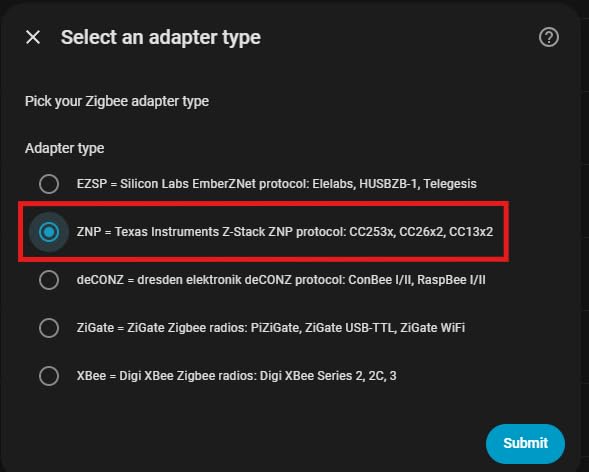
The AVATTO GW90-MQTT is the most flexible lower-cost option in this group. It supports Wi-Fi, USB, Ethernet/PoE, and Type-C power, while the ESP32 and CC2652P combination can operate as a coordinator or router.
I would use it for a smaller installation or a user who wants to test a remote network adapter without committing to a premium enclosure. The web console supports configuration and firmware updates, and the two adjustable 5 dBi antennas are promising for central placement.
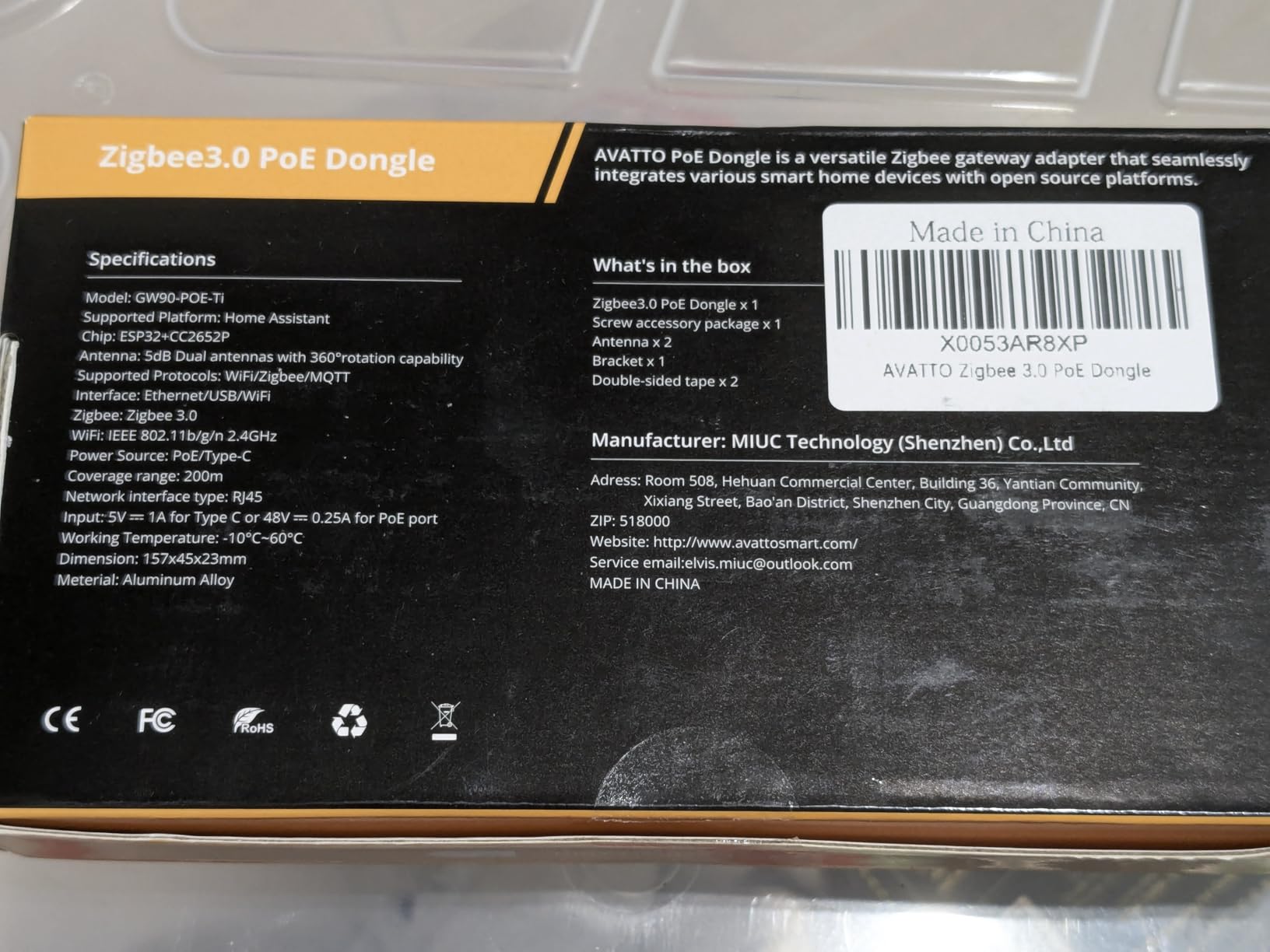
The stated indoor radius of more than 200 meters is a manufacturer-style coverage claim, not a guarantee for every house. Walls, floors, 2.4 GHz congestion, and antenna orientation will reduce real-world reach, so I would validate coverage with LQI and device availability.
There is no factory reset option, and the documentation is limited. I would make a firmware backup and keep a recovery workflow written down before changing the network role.
Choose the AVATTO for connection flexibility
This is the right pick when Wi-Fi, USB, and Ethernet all need to remain available. It is also useful for a lab where the coordinator may move between a server and a central shelf.
I would prefer Ethernet for the final location and reserve Wi-Fi for troubleshooting. A wired connection avoids the extra variable of a congested radio environment.
Keep a recovery image and network notes
Without a factory reset, a bad firmware or configuration change can be inconvenient. Save the current image, network mode, coordinator settings, and port details in a secure location.
The 10-review average is respectable but small. I would consider it a value choice, not the safest foundation for a large production network with no spare coordinator.
How to Choose the Best Network Attached Zigbee Coordinator?
Choose Ethernet or PoE for the most predictable data path
Ethernet provides a stable TCP connection between the host and the remote radio. Wi-Fi is easier to install, but it adds another wireless link to a home already carrying 2.4 GHz traffic.
PoE is the cleanest permanent installation because power and data travel over one cable. Confirm that your switch supports the required power standard and that the adapter accepts the supplied power method.
Match the radio to the software and network size
Silicon Labs EFR32MG21 and EFR32MG24 platforms are common in current coordinators and work with common ZHA and Zigbee2MQTT workflows. Texas Instruments CC2652P and CC2652P7 remain credible choices, especially when the rest of the ecosystem is already familiar with EZSP or Z-Stack tools.
I would not choose a chip by name alone. Check the firmware offered for your automation software, the web console, the update method, and the vendor’s history of fixing radio issues.
Place the coordinator where the mesh needs it
Start near the center of the occupied area, not in the basement, attic, or closed metal rack. Keep the antennas vertical, away from large metal objects, and at least a short distance from Wi-Fi routers and other 2.4 GHz transmitters.
Measure LQI and check channel energy from the proposed location. If a Zigbee channel is above 90 percent utilization, compare another legal channel and account for the network’s routers before changing it.
Plan for latency, security, and updates
Normal Ethernet latency is far below the delay that affects a human-operated Zigbee command. The more important network risks are packet loss, Wi-Fi interference, DHCP instability, and an unreliable USB passthrough path.
Put the coordinator on a private VLAN or trusted LAN, change the default password, and use WireGuard or another VPN for remote administration. Keep firmware backups and schedule updates after confirming the vendor’s release notes and recovery steps.
Migrate from USB without orphaning devices
Back up the current ZHA or Zigbee2MQTT configuration and record the channel, network key, device list, and automation dependencies. Test the new coordinator in parallel and confirm that the old radio remains available until devices are verified.
During migration, avoid changing the channel and coordinator at the same time. A staged move makes it much easier to tell whether a missing device is caused by transport settings or radio placement.
Frequently Asked Questions
Which Zigbee coordinator is best?
The SMLIGHT SLZB-MR3U is the best overall for Zigbee2MQTT because it combines an EFR32MG24 radio, Ethernet/PoE, strong output, and dual-radio Thread potential. The SLZB-06M is a better-established EFR32MG21 choice, while the SONOFF Dongle-M is the budget pick with the largest review history.
What is replacing Zigbee?
Nothing is replacing Zigbee for all existing devices. Matter can provide a higher-level application layer, while Thread is a separate low-power mesh protocol; many homes will use Zigbee, Thread, Wi-Fi, and Matter together rather than one universal replacement.
Does Zigbee have a future?
Yes. Zigbee remains supported by many sensors, bulbs, switches, and established ecosystems, and current coordinators continue to add Thread and Matter features while retaining Zigbee operation.
Can you have two Zigbee networks?
Yes. You can run separate Zigbee networks with separate channels and coordinators, or add a second coordinator to one automation host. Keep the networks on different channels when possible, test interference, and give each coordinator a stable network address.
Final Recommendation
For most technical users, the SMLIGHT SLZB-MR3U is the strongest network attached Zigbee coordinator because it combines modern EFR32MG24 hardware, wired deployment, strong signal output, and Zigbee2MQTT support. Choose the SLZB-06M if you prefer an established EFR32MG21 platform and a larger support record, or the SONOFF Dongle-M if budget and firmware flexibility matter most.
I would place any of them near the center of the home, keep the radio on Ethernet or PoE, and migrate devices with a tested backup. That approach addresses the real source of many Zigbee problems: a USB radio stuck in a poor location.