
A photoelectric smoke alarm listed to UL 217, powered by a sealed 10-year lithium battery, and paired with interconnected units down the hall is the most effective smoke detector for a bedroom. It catches slow smoldering fires in bedding and upholstery, never chirps at 3am about a dying battery, and wakes the whole house when smoke is detected elsewhere.
That single answer hides most of what makes bedroom alarms different from the rest of the house. A smoke detector in a living room can afford to be noisy and dumb. The unit above your bed has to do three things at once: wake a deep sleeper, stay quiet during a normal night, and pull its own battery and steam problems under control.
Bedrooms are also the rooms where alarms are most often removed. Owners who get woken repeatedly by nuisance chirps take the battery out, or unscrew the unit, and then a real fire in another part of the house reaches a sleeping family with no warning. Every pick below was judged first on how it behaves at night, and only second on its spec sheet.
We compared all ten of these alarms across sensor type, power source, alarm level, interconnection, certification and the maintenance each one demands over a decade of ownership. We also read through the customer photo galleries and review patterns, because the recurring complaints in bedroom installs are rarely about the sensor. They are about battery chirps, LED glare, steam from an ensuite and humidity in a poorly ventilated room.
If you are upgrading a whole property, our guides to the best smart smoke and CO detectors for home safety and the best smart smoke detectors for a local alarm system cover the connected and professionally monitored side of the market.
Table of Contents
Top 3 Best Smoke Detectors for Bedrooms in October

First Alert 9120B Hardwired
- Hardwired with 9V backup
- 85 dB siren
- Interconnectable
- UL tested
- 10-year warranty

X-Sense SD2J0AX 10-Year
- Sealed 10-year lithium battery
- Photoelectric sensor
- ETL listed to UL 217
- Self-test and hush

First Alert SMI100 Battery
- Battery powered
- Precision Detection sensing
- End-of-life warning
- Front access 9V bay
All 10 Bedroom Smoke Detectors Side by Side for 2026
This table lists every alarm in the roundup with the details that actually change the outcome in a sleeping room: what it senses, how it is powered, whether it can talk to other alarms, and the rough loudness of its siren.
| Product | Specs | Action |
|---|---|---|
| First Alert 9120B Hardwired Smoke Alarm |
|
Check Latest Price |
| X-Sense SD2J0AX 10-Year Photoelectric |
|
Check Latest Price |
| First Alert SMI100 Battery Smoke Alarm |
|
Check Latest Price |
 X-Sense SC07 Smoke and CO Combo X-Sense SC07 Smoke and CO Combo |
|
Check Latest Price |
 First Alert SMICO100 Combo Alarm First Alert SMICO100 Combo Alarm |
|
Check Latest Price |
 Kidde 10SDR Compact Photoelectric Kidde 10SDR Compact Photoelectric |
|
Check Latest Price |
 Kidde P3010L 10-Year Photoelectric Kidde P3010L 10-Year Photoelectric |
|
Check Latest Price |
 X-Sense SD19-W Interconnected Alarm X-Sense SD19-W Interconnected Alarm |
|
Check Latest Price |
 SITERWELL GS525A 10-Year Alarm SITERWELL GS525A 10-Year Alarm |
|
Check Latest Price |
 Kidde 30CUDR Smoke and CO Combo Kidde 30CUDR Smoke and CO Combo |
|
Check Latest Price |
1. First Alert 9120B Hardwired Smoke Alarm — Best Overall for Bedrooms
BRK First Alert 9120BFF/ SMI100-AC Smoke Detector, Hardwired Alarm with Battery Backup, White, 1-Pack
Ionization sensor
120V AC with 9V backup
85 dB alarm
Interconnectable
Pros
- Hardwired power with 9V backup keeps sensing through outages
- Interconnects with other BRK or First Alert units
- 85 dB siren suits a sleeping room
- Single test and silence button
- Universal mounting brackets
- 10-year limited warranty
Cons
- Ionization sensing is more exposed to cooking and humidity nuisance alarms
- Installing a hardwired unit means opening a junction box or calling an electrician
This is the unit we keep coming back to for a primary bedroom, and the reason is simple: it is the only alarm in the group that does not depend on a battery you have to remember. It runs on 120-volt AC with a 9V backup cell, so a dead backup battery is an inconvenience rather than a coverage gap.
It carries a 4.7 average across 19.4k+ reviews, by a wide margin the largest review base in this roundup, and that decade of feedback is exactly why we trust it in a room where nobody is awake to notice a problem. Owners consistently describe the install as straightforward, with the universal mounting bracket covering older box patterns.
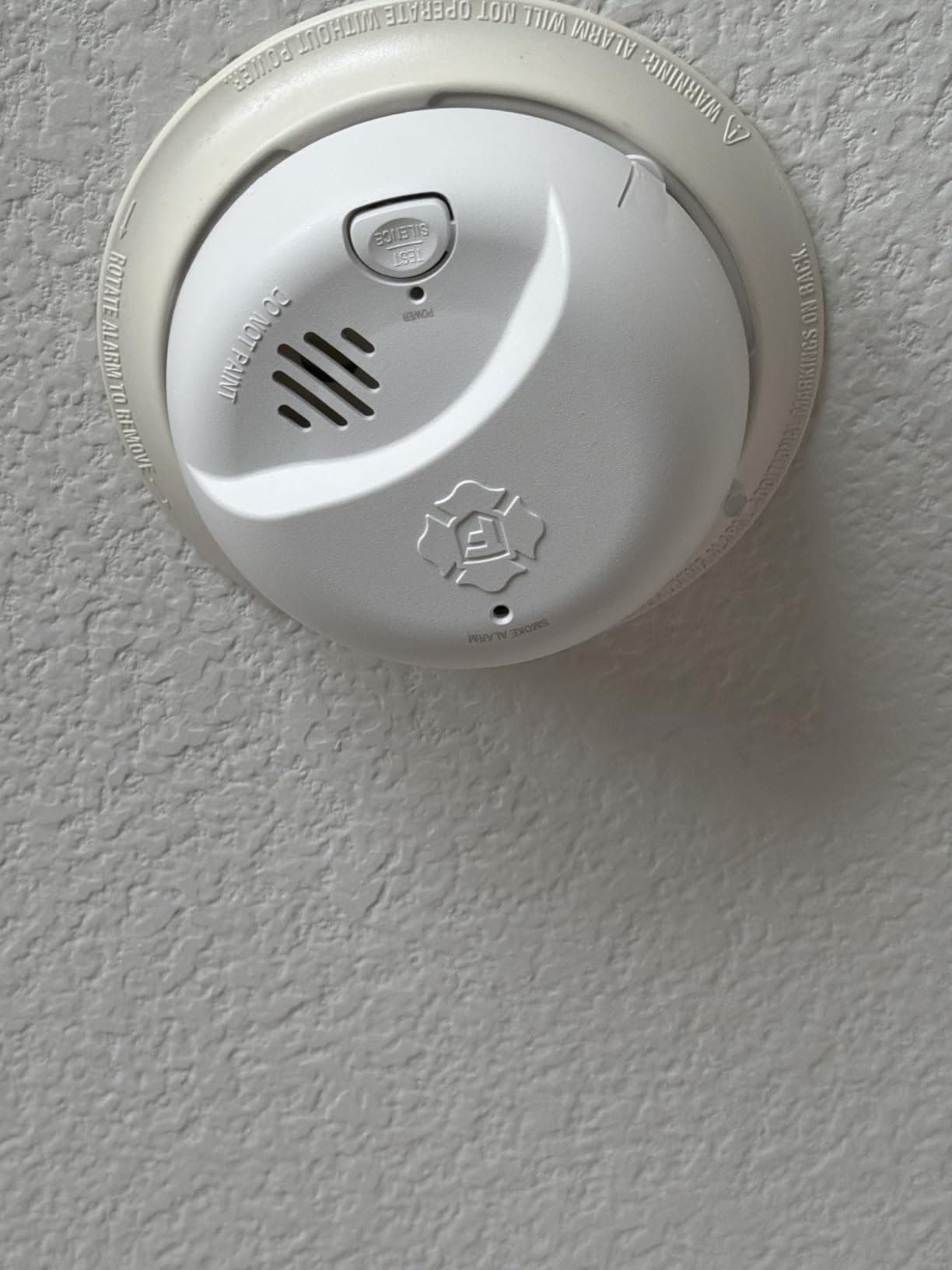
The catch is the sensor type. Ionization units respond fastest to fast-flaming fires, but they are also the ones most likely to complain about aerosol, dust and humidity. If your bedroom sits near a bathroom door or an open closet where dust settles, that is a fair trade-off to think about.
The 9V backup is the piece most people forget about. It is a small square cell that slowly loses charge, and when it finally complains it usually complains at night, which is a well-documented reason people pull batteries and stop trusting the alarm. Test yours twice a year with a real aerosol smoke can, not just the test button.
Who this bedroom alarm suits
It suits owners with access to a wiring run, whether that is an electrician on day one or a confident DIY install on an existing box. It also suits anyone who has been woken by a low-battery chirp and wants that failure mode gone entirely.
In a two-storey or three-storey home, the interconnect capability is the deciding factor. When the kitchen alarm detects smoke, every linked unit sounds, so a bedroom alarm still wakes you when the fire started somewhere you cannot see.
Who should pick a different alarm
Renters should skip it. Battery-only units can be installed and removed in minutes without touching wiring, and swapping a hardwired alarm usually means losing the existing interconnect loop.
Light sleepers bothered by cooking and steam should look at a photoelectric unit instead. Ionization sensing will give you the fastest response to a flash fire, but it is the more argumentative of the two technologies in a humid bedroom.
2. X-Sense SD2J0AX Photoelectric with 10-Year Battery — Best Value
X-Sense Smoke Detector, 10-Year Battery, UL 217 Certified, SD2J0AX, 1-Pack
Photoelectric sensor
Sealed 10-year lithium battery
ETL listed to UL 217
4.8 inch body
Pros
- Sealed lithium battery removes battery changes and night chirps
- Photoelectric sensing cuts cooking and steam false alarms
- ETL listed to the UL 217 standard
- Built-in self-test and one-button hush
- Installs with the included screws and no wiring
Cons
- Standalone only with no wireless interconnection
- Bulkier than a slim 9V model
- No carbon monoxide detection
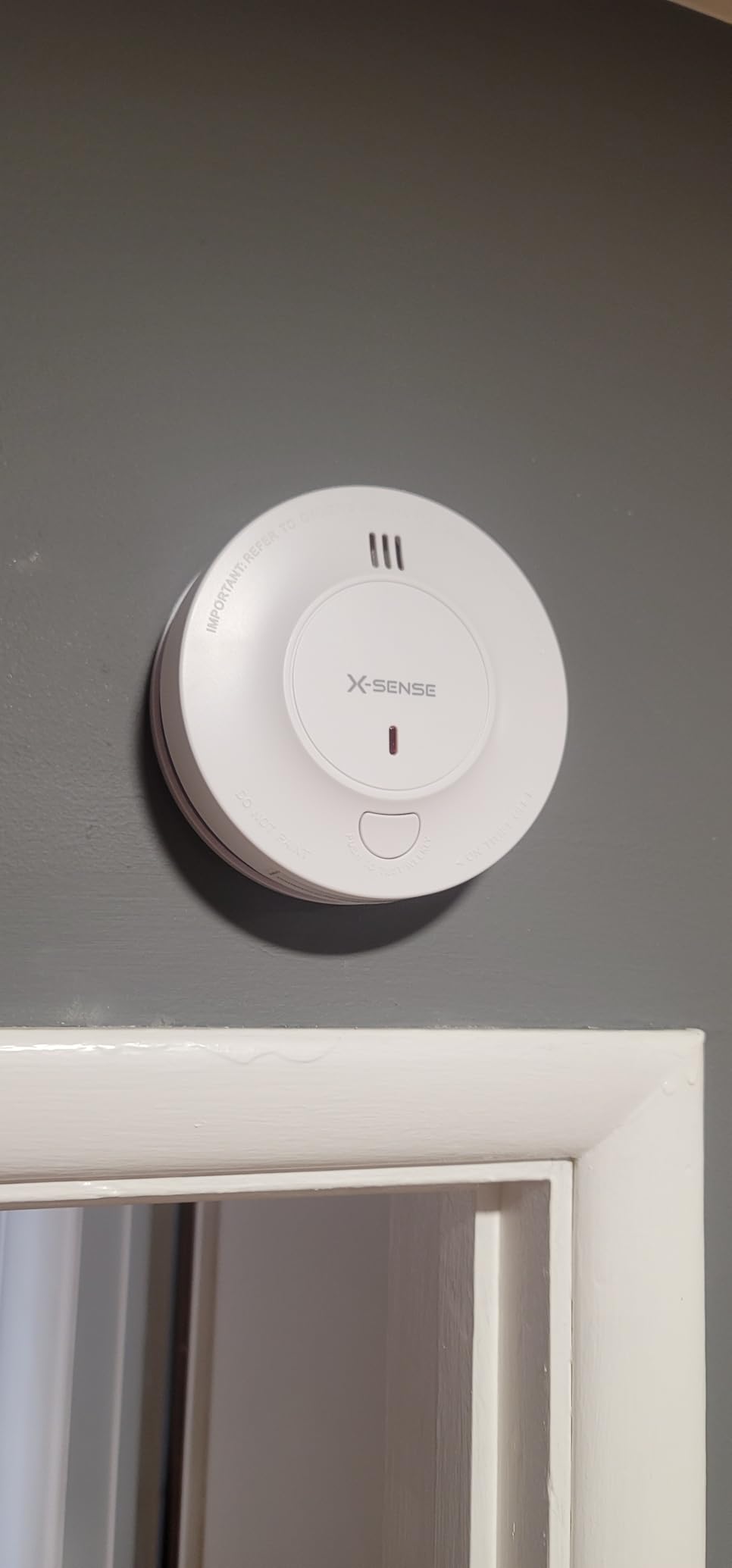
If you want the most bedrooms covered for the least ongoing attention, this is the pick. The sealed lithium pack is rated for 10 years, which lines up exactly with the service life of the alarm itself, so there is no scheduled battery swap and no 3am chirp about a cell you cannot reach without a ladder.
The photoelectric sensor is the other half of the bedroom logic. It looks for light scatter, which is what a smoldering mattress, a slow upholstery fire or a burning duvet actually produces, and it is markedly less likely to trip over cooking vapour drifting down a hallway.
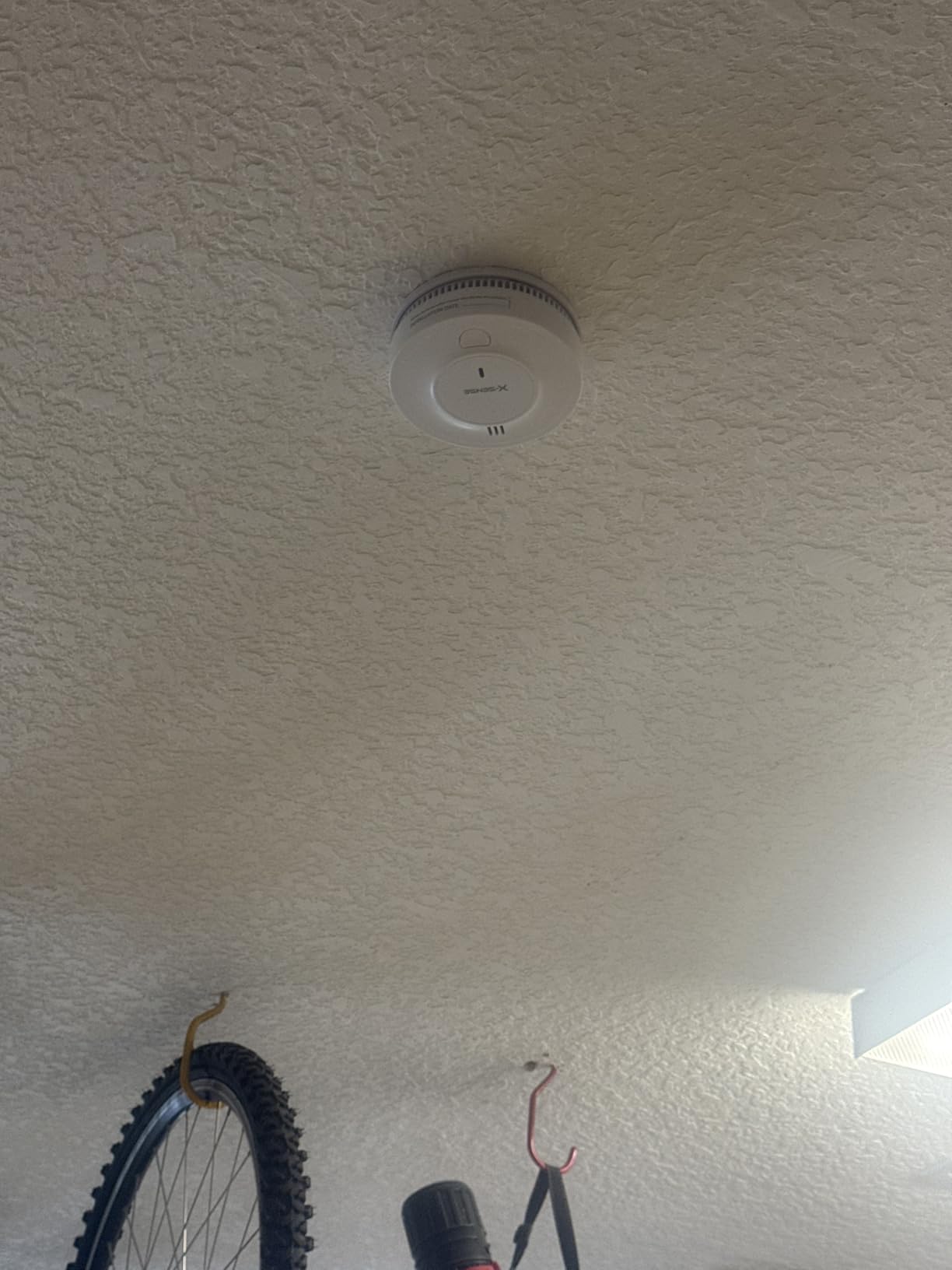
Independent listing matters here. ETL listing to UL 217 means the alarm was tested by a third-party lab rather than self-certified, and you can check the mark on the housing before you buy. For a device whose entire job is to wake you at 4am, that is worth checking.
The limitation is interconnection. This is a standalone unit, so if a fire starts in the kitchen, the alarm in your bedroom stays silent. Owners who want whole-home coverage pair this model with the interconnected version further down the list.
Who this bedroom alarm suits
It suits rentals, apartments and any bedroom where running wire is not an option. Two screws and a wall or ceiling and you are done, which makes it the model we recommend for a guest room, a childrens room or a second home nobody lives in year round.
It also suits anyone who has moved apartments repeatedly. There is nothing to restore when you leave, and the 10-year battery means you rarely touch it once it is up.
Who should pick a different alarm
Owners of a multi-level house should look at a linked system. A standalone bedroom alarm is a local device, and local is not the same as early warning.
Households with a gas appliance, a garage or an attached space that can collect carbon monoxide should add CO coverage separately or choose a combination unit. This one watches smoke only.
3. First Alert SMI100 Battery Smoke Alarm — Best Budget Pick
First Alert Battery Smoke Alarm
Ionization sensor
Replaceable 9V battery
Precision Detection sensing
End-of-life warning
Pros
- Precision Detection sensing is tuned to reduce cooking nuisance alarms
- No wiring and a quick install
- Front access battery compartment for painless swaps
- End-of-life warning tells you when to replace the unit
- Test and silence button for routine checks
Cons
- Replaceable 9V battery means recurring swaps and possible night chirps
- Ionization sensing is less suited to smoke drifting from a kitchen
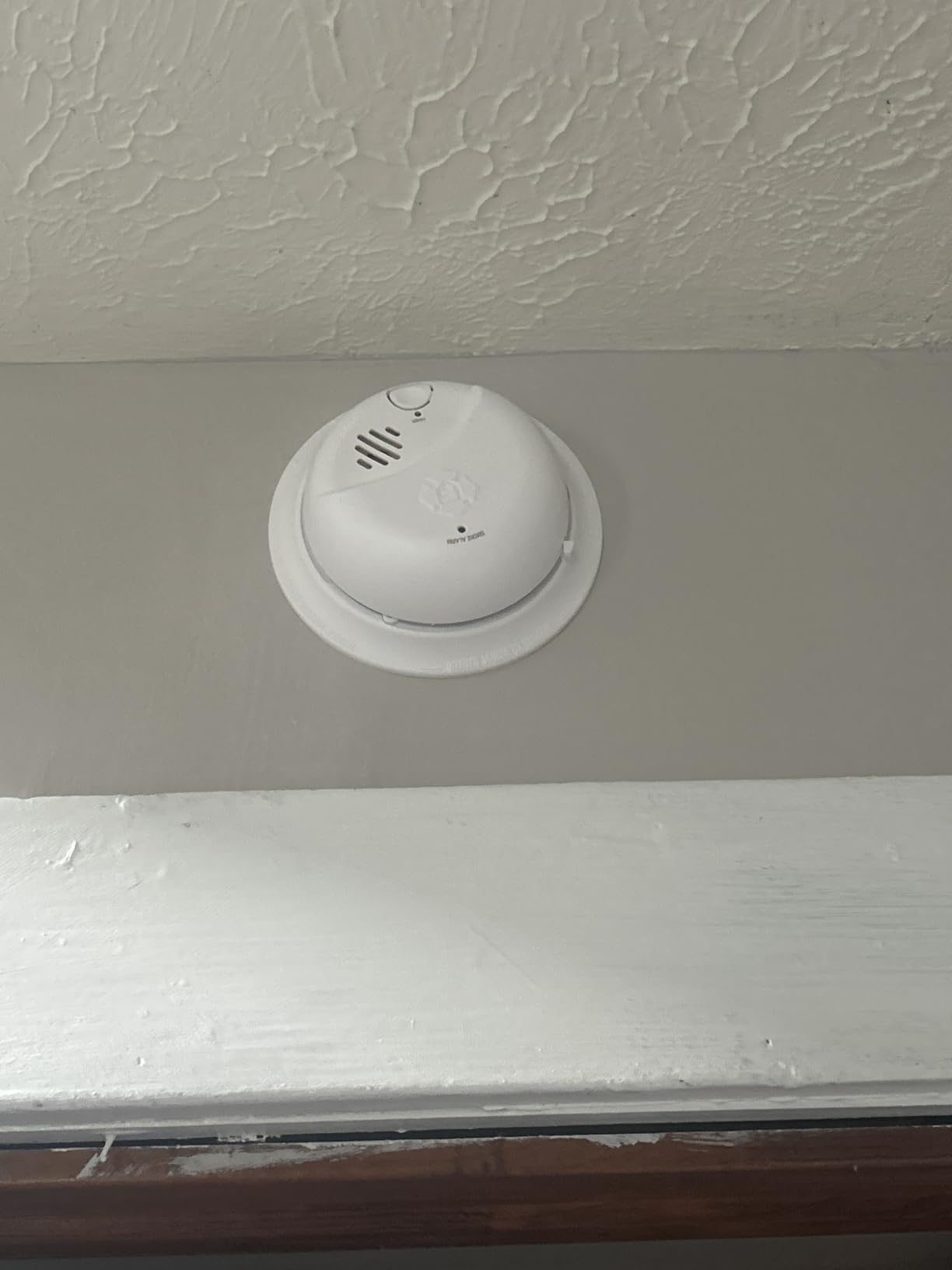
This is the simplest reliable way to put an alarm in a bedroom, and at 4.5 stars across 5.8k+ reviews it has the review depth to back that claim up. It ranks at the top of the smoke detector category, which is a reasonable signal on its own.
The manufacturer calls its sensing Precision Detection, and the practical effect is fewer nuisance alarms from cooking than older First Alert units produced. That is not marketing fluff on a bedroom, where the difference between an alarm you trust and one you disconnect decides whether it is still there in five years.
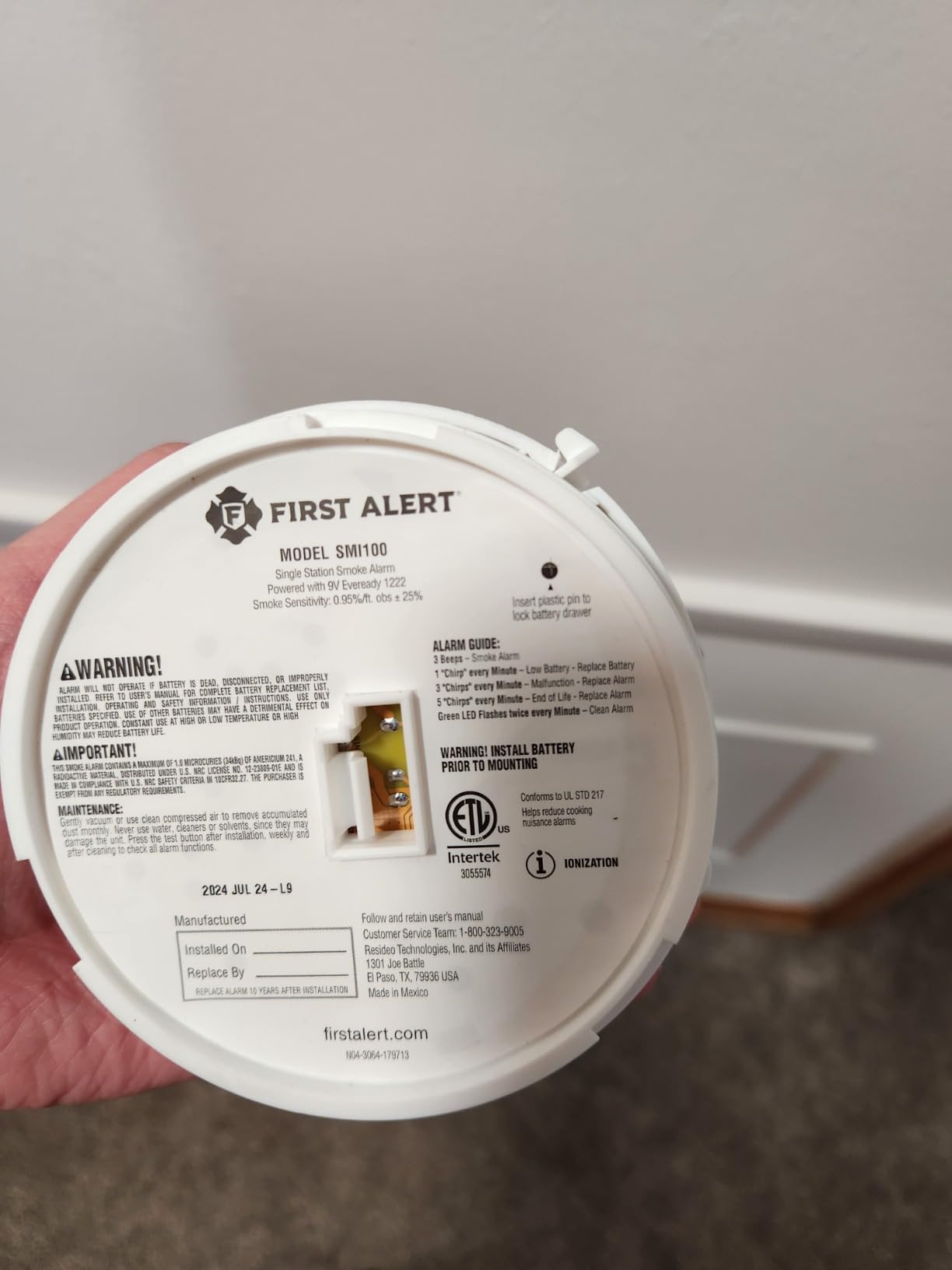
The front access battery compartment is the detail owners mention most. You can swap the 9V cell without taking the unit off the ceiling or unscrewing the base, which matters because the alternative is a hardwired install or a ladder.
The end-of-life warning is the second detail worth knowing. Rather than leaving you to guess, the alarm tells you when the sensing chamber itself has aged out and the whole unit needs replacing, not just the battery.
Who this bedroom alarm suits
It suits anyone fitting out several bedrooms on a tight budget, or a student rental and a first apartment. Two-minute install, no tools beyond a screwdriver, and a brand with an established replacement cycle.
It also suits anyone who prefers a thin replaceable cell to a sealed pack. Some people would rather top up a battery every year than commit a room to a sealed unit they cannot test the cell on.
Who should pick a different alarm
Deep sleepers in a humid room should not stop here. Ionization sensing plus a replaceable battery is the combination most likely to produce the 3am nuisance alarm that eventually gets an alarm removed.
Anyone with a garage, an attached utility space or a gas water heater should pair it with a CO alarm or move up to a combination unit, since this model senses smoke only.
4. X-Sense SC07 Smoke and Carbon Monoxide Combo — Best Two-in-One
X-Sense Smoke Detector Carbon Monoxide Detector Combo, SC07, 1-Pack
Photoelectric plus electrochemical CO
85 dB
LCD CO readout
Sealed 10-year battery
Pros
- Smoke and CO coverage in one wall-mounted unit
- Sealed 10-year lithium battery with no night chirps
- LCD shows carbon monoxide level and alarm status
- Certified to UL 217 and UL 2034
- Photoelectric sensing reduces cooking false alarms
Cons
- Standalone with no wireless interconnection or app support
- Bulkier body than a slim smoke-only unit
- Runs two sensing elements where most bedrooms need one
Bedrooms are one of the two rooms where carbon monoxide detection genuinely belongs, because people sleep in them for eight hours at a stretch. This unit covers both hazards in a single body and runs for a decade on a sealed lithium battery, so it needs no wiring and no battery service.
The LCD readout is the sleeper-friendly feature here. It shows carbon monoxide concentration and the alarm status continuously, which lets you check the room before you go to bed rather than after you wake up worried about it.
It is certified to UL 217 for smoke and UL 2034 for carbon monoxide, with the markings printed clearly enough for a landlord or an inspector to verify. Its photoelectric sensor responds faster to slow smoldering fires, which is the fire type most likely to start on a bed or a sofa.
Owners are clear about the one compromise, and the manufacturer says it plainly: this is the standalone SC07, with no wireless interconnection, no Wi-Fi and no base station. If you want a bedroom alarm that can be part of a linked network, the model below is the one to choose.
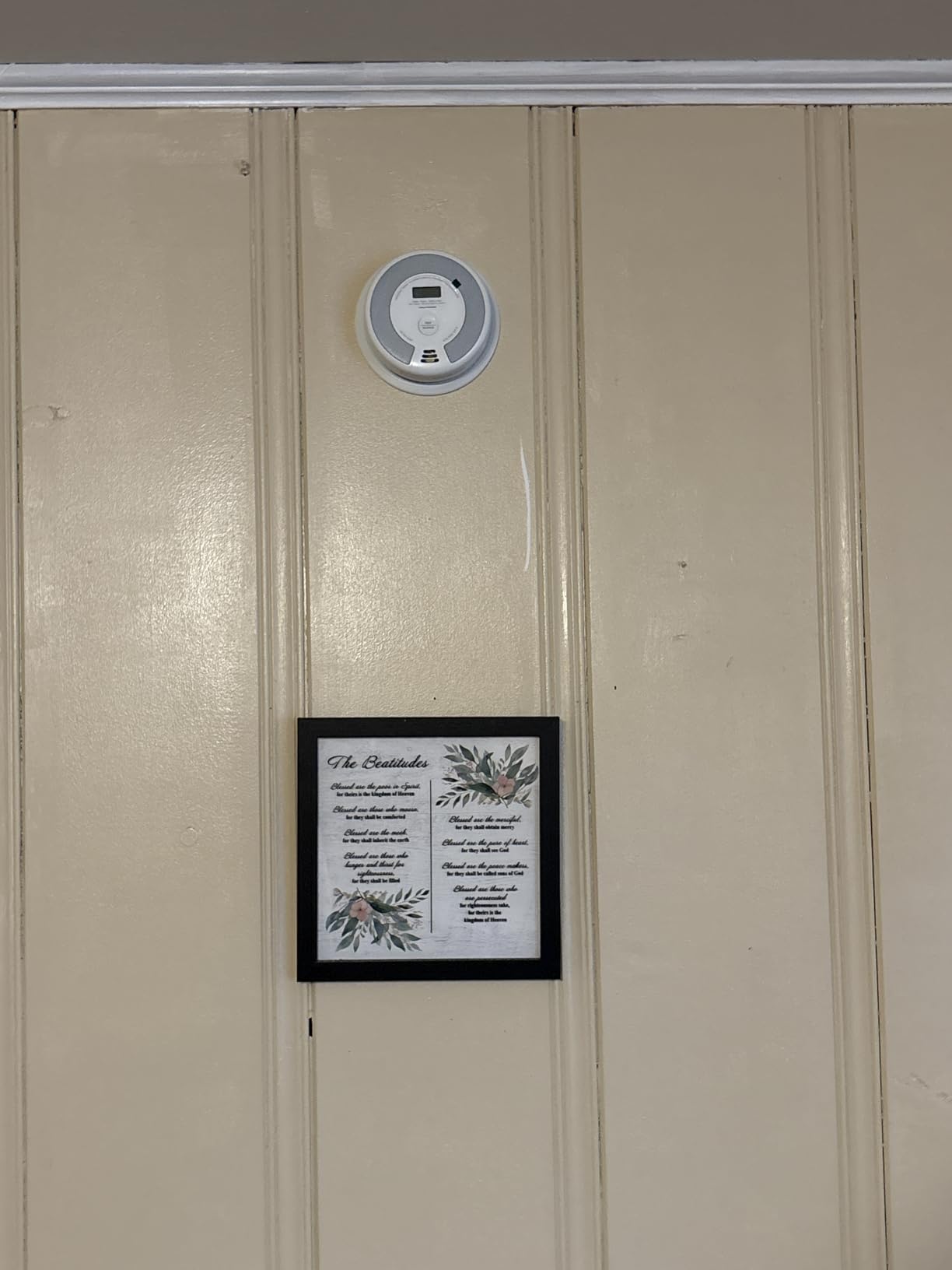
Who this bedroom alarm suits
It suits homes with a gas boiler, a gas fireplace, a gas cooktop or a garage attached to the living space, where the same wall should carry both sensors. It also suits older homes where the wiring is unreliable and a battery unit is the only realistic install.
For a childrens bedroom or a room shared with a sleeping parent, the single body covering two hazards means one device to test and one thing to listen for.
Who should pick a different alarm
If you want one bedroom alarm that fires when another room detects smoke, this standalone version will not do it. The interconnected sibling model covers that need.
Buyers who only need smoke detection may be fitting a sensor they do not need. In a house with no combustion appliances, a dedicated smoke alarm is the more sensible buy.
5. First Alert SMICO100 Combination Alarm — Best Serviceable 9V Combo
First Alert Battery Combination Smoke & Carbon Monoxide Alarm
Smoke and CO in one unit
Replaceable 9V battery
Precision Detection sensing
End-of-life warning
Pros
- Two hazards covered in one replaceable-battery unit
- Serviceable rather than sealed so the cell can be tested
- Precision Detection cuts cooking nuisance alarms
- Quick install with a clear test and silence button
Cons
- Some owners report slow response on heavy smoke before the unit alarms
- Head can sit very tight in the base on first fitting
- Will not mount on an existing First Alert ZCombo base
The argument for this model is serviceability. It runs on a replaceable 9V battery, which means the cell can be tested with a multimeter and swapped in seconds, instead of committing to a sealed pack for the next decade. For a landlord or a property manager fitting several rooms, that is the whole calculation.
It covers smoke and carbon monoxide in one housing and uses the same Precision Detection sensing as the rest of the First Alert range, which the manufacturer states complies with current industry standards for reducing cooking nuisance alarms.
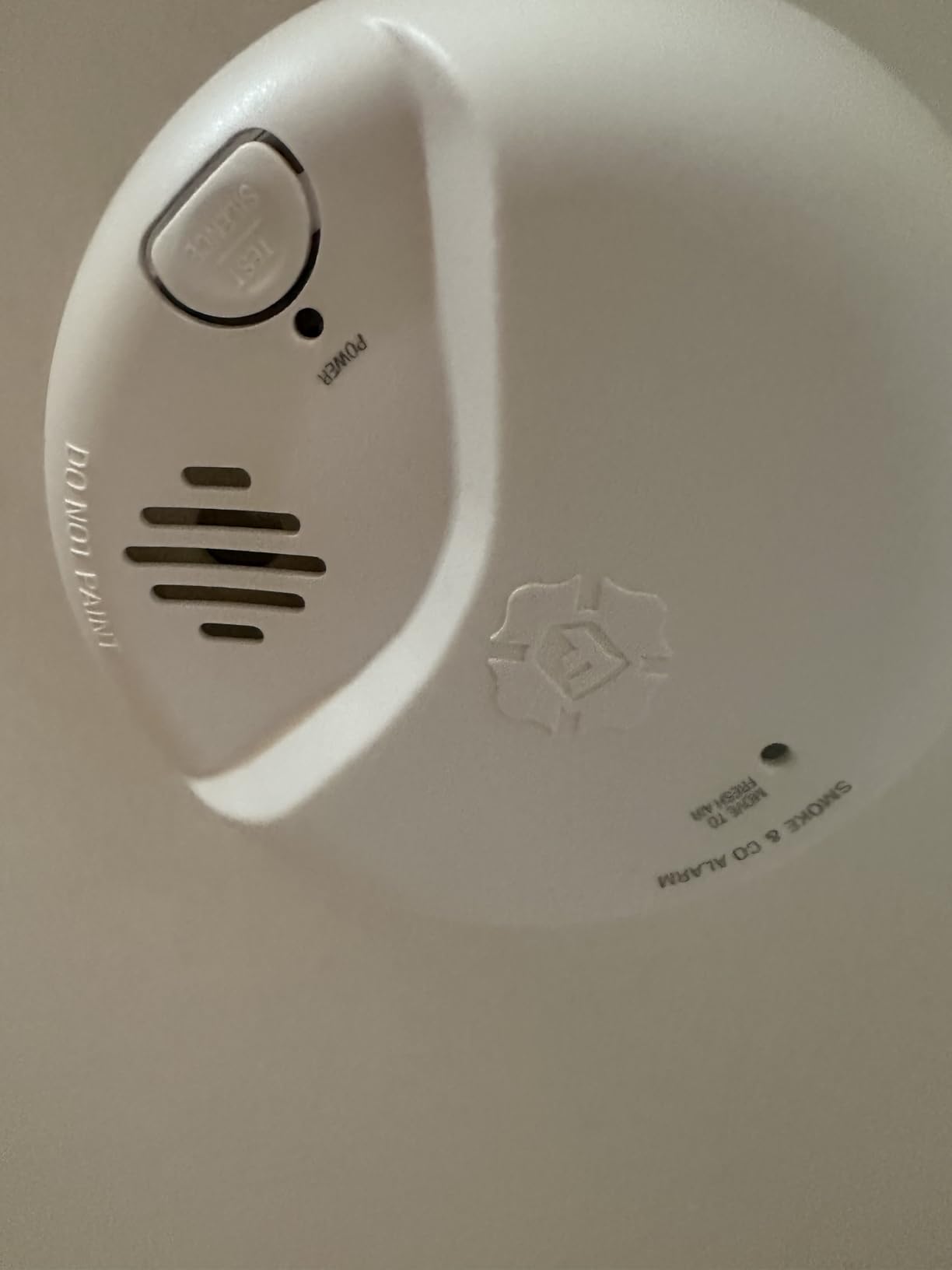
It is worth taking the less flattering feedback seriously. A small group of owners say the unit took several minutes of heavy smoke near the sensor before alarming, and some recommend testing with incense rather than relying on the test button. If you install it, smoke-test it, and know how your model behaves before you need to.
Two practical notes. The head unit can sit very tight in the base on first fitting, so take care with the mounting screws. And it will not reuse an existing First Alert ZCombo base, which matters if you are upgrading an older hardwired combo system.
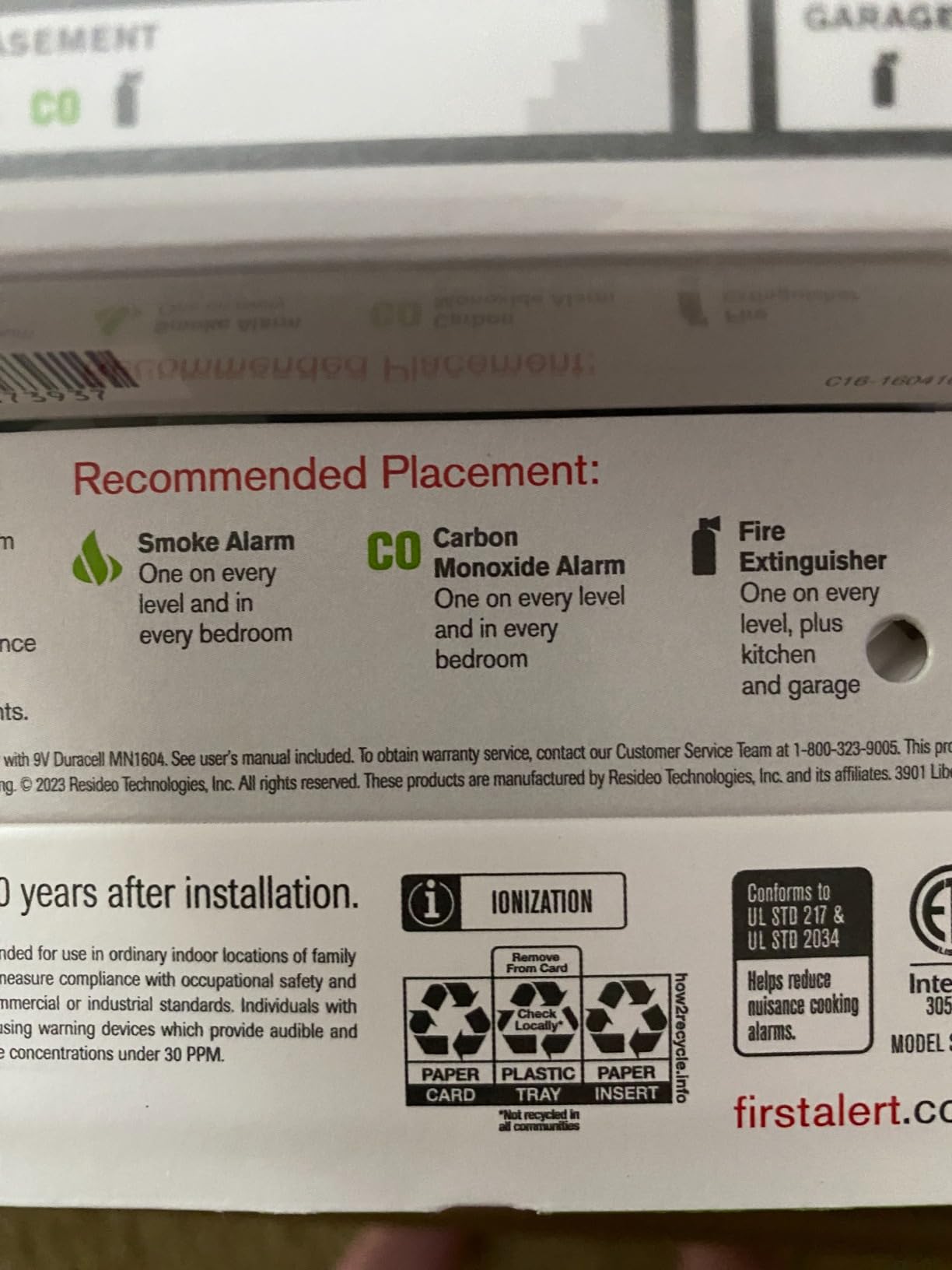
Who this bedroom alarm suits
It suits people who want combination detection without giving up the ability to check their own battery. A replaceable cell can be tested in seconds and does not hide its state of charge behind a sealed pack.
It also suits rental turnover. When a tenant leaves, you can swap the battery in under a minute and know the sensing chamber is still good.
Who should pick a different alarm
If you have been disappointed by a slow-triggering alarm before, this is not the pick. The response-time complaints are not widespread, but they are the reason this model does not carry our top badge despite solid 4.4 stars.
Owners who are done thinking about batteries should take the sealed 10-year route instead and remove the variable entirely.
6. X-Sense SD19-W Interconnected Alarm — Best for Whole-Home Linking
X-Sense Interconnected Smoke Detector, 10-Year Battery, SD19-W, 1-Pack
Photoelectric sensor
Wireless link to 18 alarms
Sealed 10-year battery
ETL listed to UL 217
Pros
- One alarm sounds and the whole network sounds with it
- Links wirelessly to up to 18 compatible alarms
- Sealed 10-year battery ends recurring low-battery chirps
- Simple pairing sequence with no wiring
- Real wireless range reported across floors and buildings
Cons
- Needs multiple units before interconnection does anything
- Add-on cost climbs for a full home
- Base hole patterns differ so older plates may need trimming
This is the model that answers the question bedroom owners actually care about, which is what happens when the fire does not start in the bedroom. Because the network is wireless, a bedside unit can sound when a detector in the kitchen, basement or hallway registers smoke.
Multi-pack buyers describe the pairing as simple and the synchronisation as reliable. The sequence is four presses on one unit, two on the next, then holding the button to test the link, and it holds up across floors in owners reports.
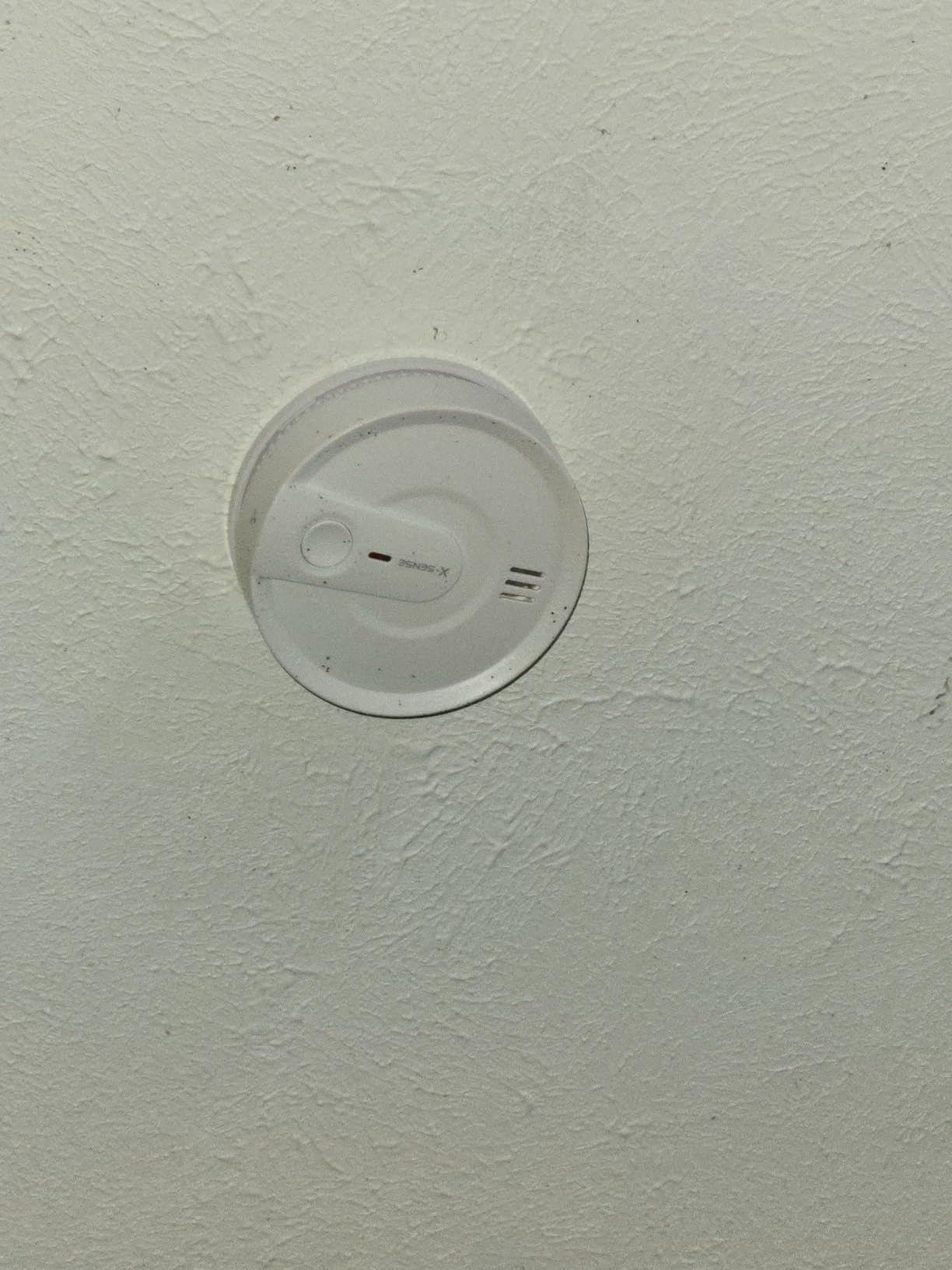
Owners also report real range well beyond expectation, including a case where alarms communicated between two separate buildings roughly 150 feet apart. That is a useful data point for a large property, a converted barn or a detached guest wing.
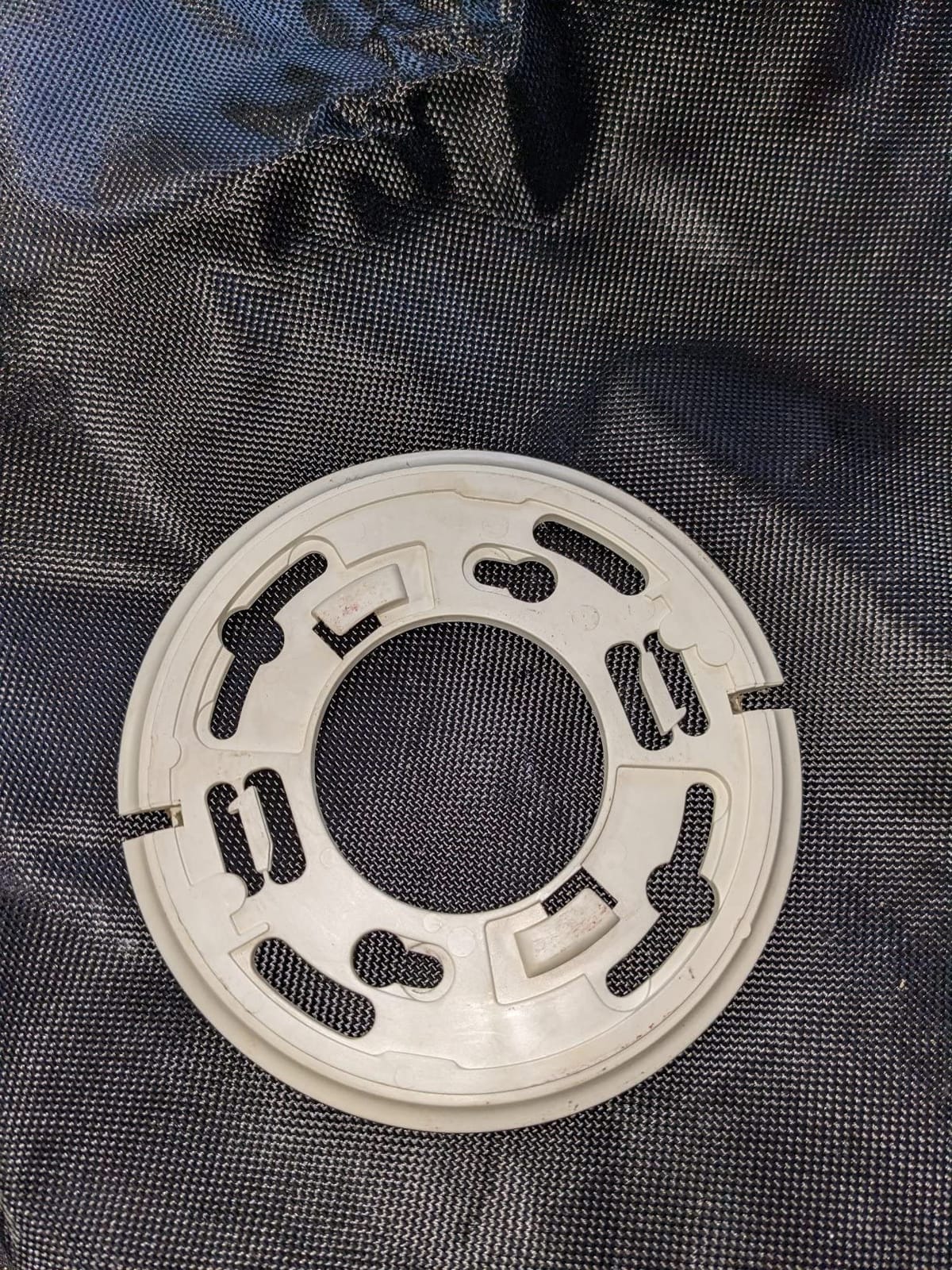
Two caveats. You need more than one unit before any of this matters, so the cost for a whole house climbs quickly. And the mounting hole pattern is not identical to some older plates, which means trimming the existing plate to cover the extra holes rather than replacing it.
Who this bedroom alarm suits
It suits owners of a multi-storey house, a home with a basement or garage conversion, or anyone who has been relying on a bedroom alarm and wants earlier warning from the rest of the house. Bedrooms at the far end of a long hallway benefit most.
Renters get the same benefit without wiring, which makes this the practical answer to why a bedroom alarm should be part of a network rather than an isolated device.
Who should pick a different alarm
If you only need to cover one room, this is more hardware than the job requires. A standalone sealed-battery photoelectric unit does the same job for that room on its own.
Owners who plan to mix brands should know the network only pairs with compatible X-Sense Link+ units. Mixing unrelated wireless alarms generally does not work, and interoperability is not a feature you should assume.
7. Kidde 30CUDR Compact Smoke and CO Detector — Best Compact Combo
Kidde Smoke & Carbon Monoxide Detector, AA Battery-Powered, 30CUDR, 1 Pack
Photoelectric plus electrochemical CO
Two AA batteries
85 dB with red LED
UL 217 and UL 2034
Pros
- Smoke and CO coverage in a compact body
- Photoelectric plus electrochemical sensing with faster smoke response
- Two AA batteries included so no wiring is needed
- Loud 85 dB alarm with red LED for visual warning
- Tested to UL 217 10th Edition and UL 2034 5th Edition
Cons
- AA batteries need periodic replacement
- No wireless interconnection or smart-home integration
- No sealed-battery option
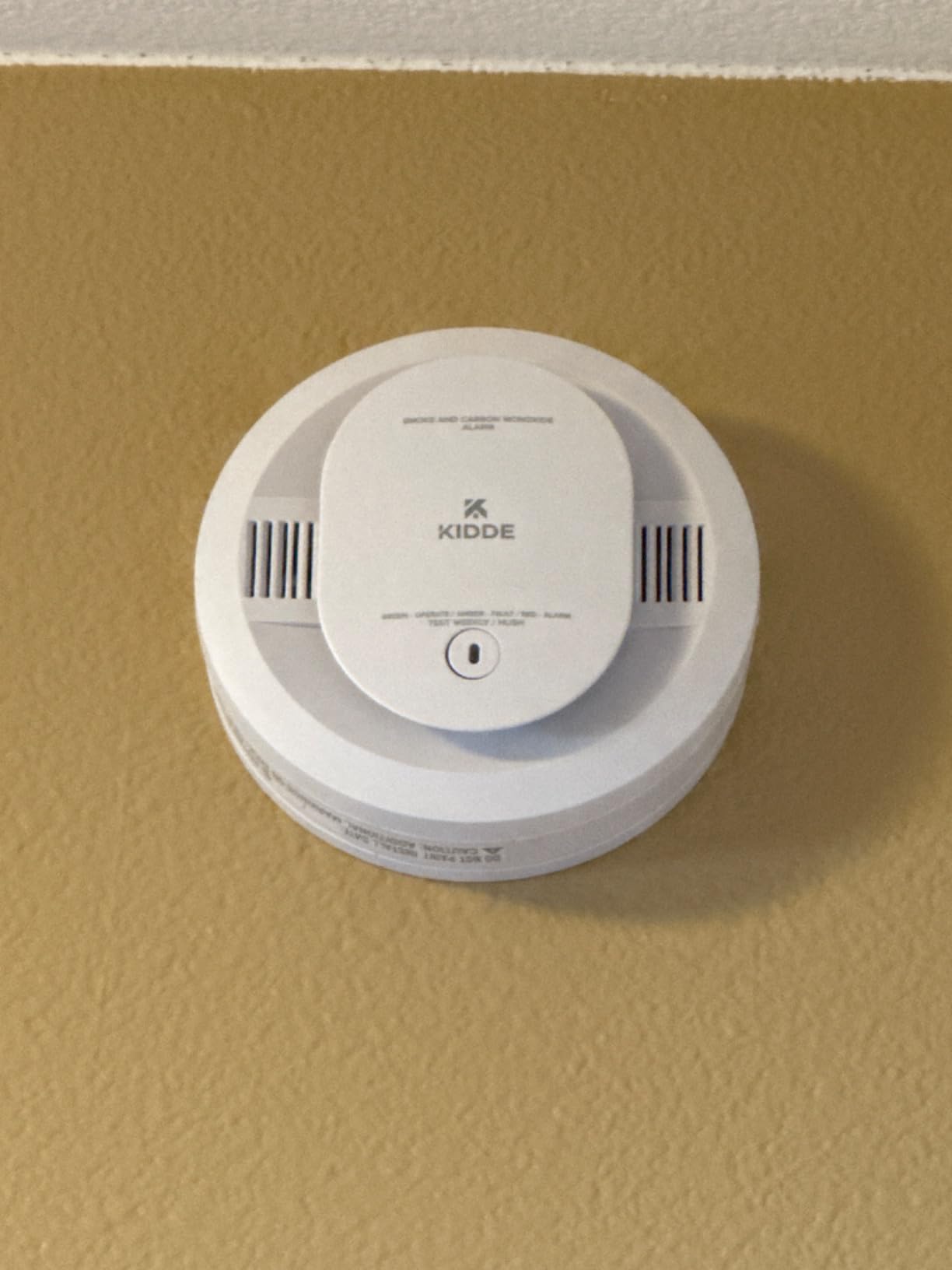
This is the combination unit for a small bedroom where a 5 inch body would crowd the ceiling. It measures 5 inches across and just under 2 inches deep, and it carries both a photoelectric smoke sensor and an electrochemical carbon monoxide sensor.
It is tested to the current editions of both standards, UL 217 10th Edition for smoke and UL 2034 5th Edition for carbon monoxide. That matters in a safety purchase, because certification editions get updated and older listings sometimes lag behind.
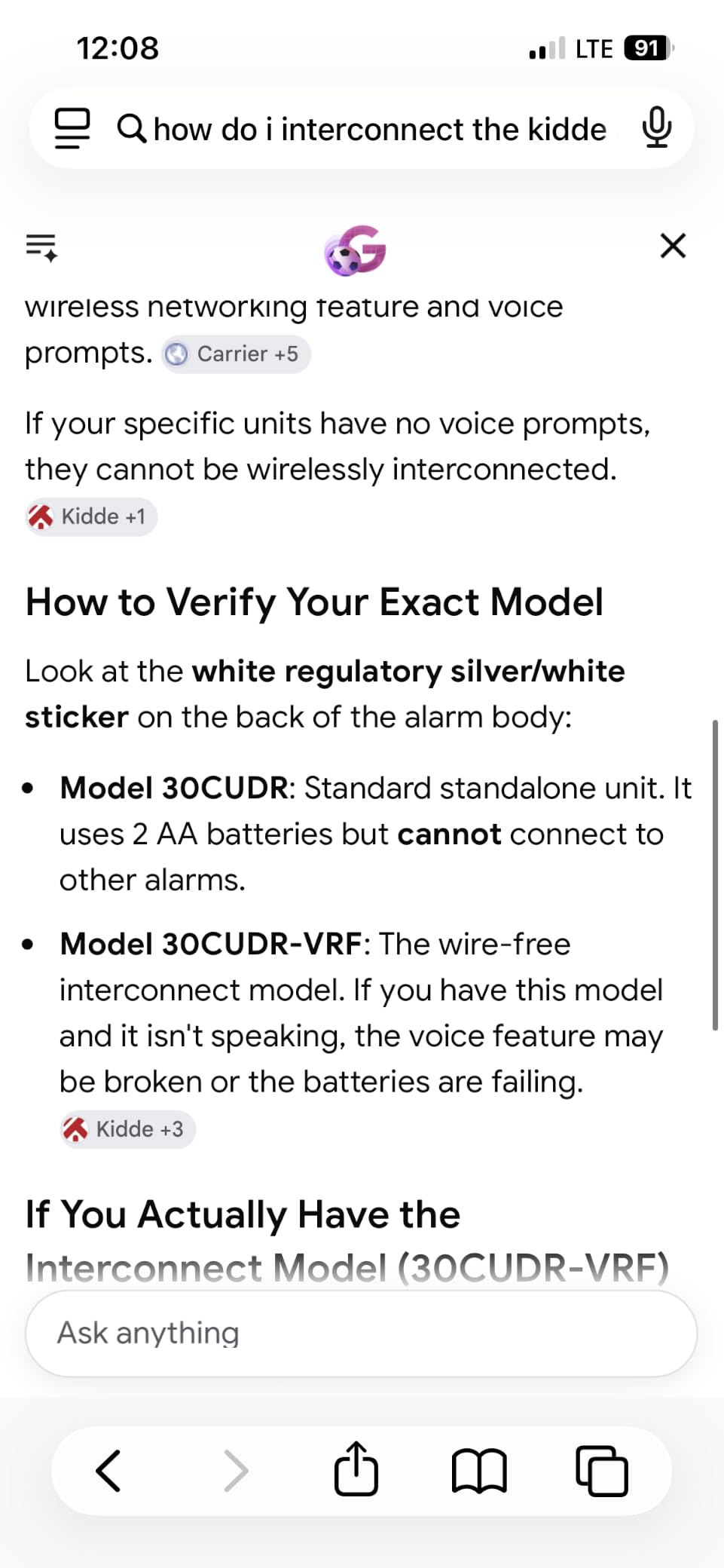
Two AA batteries come in the box, which removes the most common installation snag. The manufacturer also states sensing that responds more than 25 percent faster than its previous generation and helps tell cooking and steam apart from real smoke.
Owners like the 85 dB siren with a red LED, which gives a visual warning as well as an audible one. For a household with a hard-of-hearing sleeper, that LED alone is not enough, but it is a useful second channel.
Who this bedroom alarm suits
It suits a small childrens bedroom, a home office converted into a sleeping space, or any room where the visual footprint of the alarm matters. The compact body also sits well on a sloped or low ceiling.
It suits anyone who wants CO protection without running a wire, particularly in a house with a gas appliance or an attached garage.
Who should pick a different alarm
If battery maintenance annoys you, AA cells twice a year is a chore you do not need to take on. The sealed 10-year models remove it completely.
Owners who want phone alerts or voice alerts naming the room should look at connected detectors instead. This unit beeps and flashes; it does not tell you where the smoke is.
8. Kidde 10SDR Compact Photoelectric — Best for Small Bedrooms
Kidde Compact Smoke Detector, AA Battery-Powered, 10SDR
Photoelectric sensor
Two AA batteries included
85 dB with red LED
UL 217 10th Edition
Pros
- Compact 4 inch footprint suits small rooms and low ceilings
- Photoelectric sensing reduces cooking and steam false alarms
- Two AA batteries included with no wiring needed
- 85 dB alarm plus red LED for visual warning
- 10-year limited warranty from date of purchase
Cons
- AA batteries need periodic replacement
- Smoke only with no carbon monoxide detection
- No interconnection capability
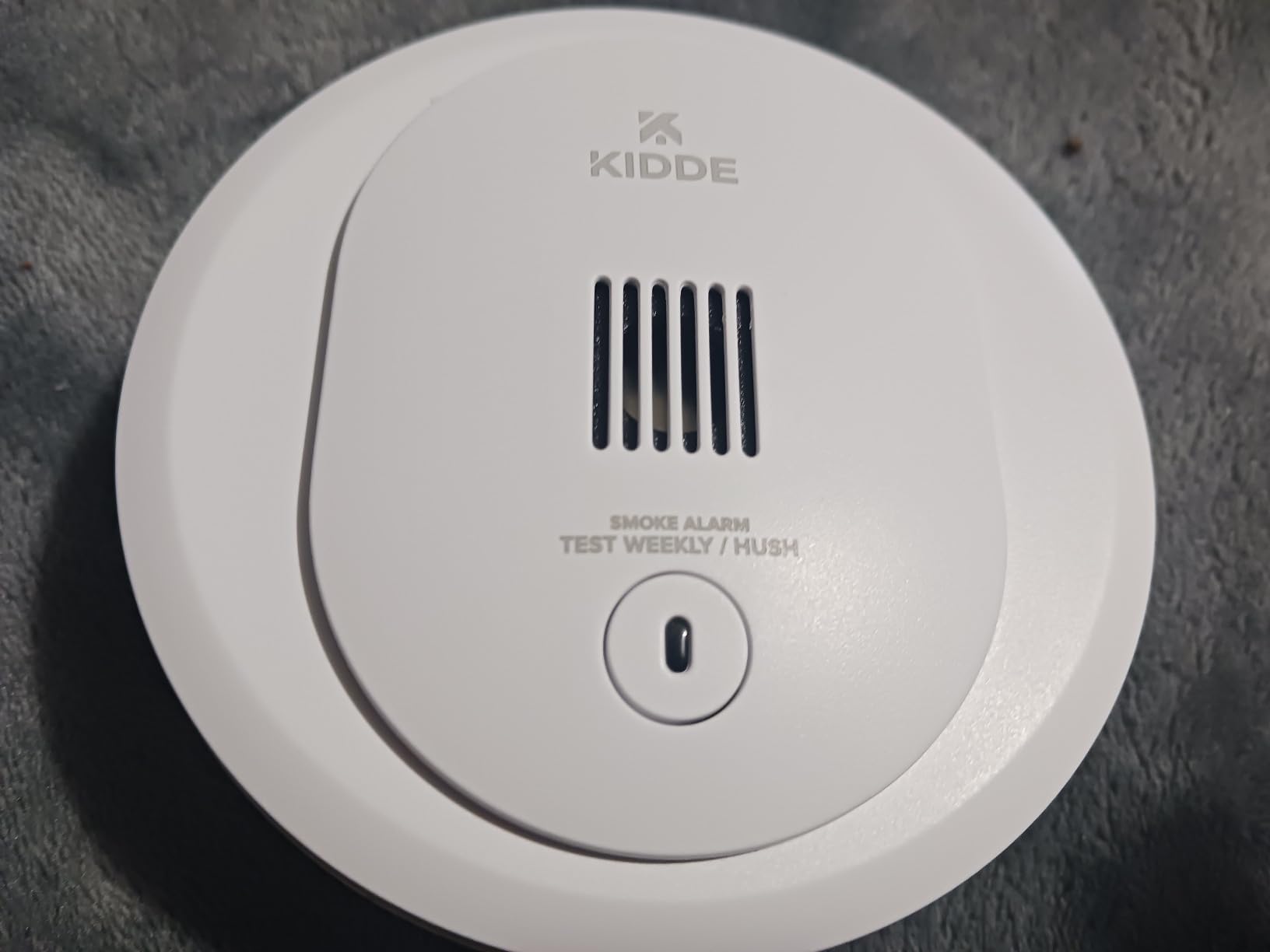
This is one of the most compact photoelectric alarms we tested, at 4 inches square and just under 2 inches deep. In a nursery, a small guest room or a bedroom with a sloped ceiling, that is the difference between an alarm that fits neatly and one that you have to think about.
The sensing is tuned to distinguish real smoke from everyday cooking and steam, and the manufacturer states more than 25 percent faster smoke detection than its prior generation. Rated to UL 217 10th Edition and FCC standards, with a 10-year limited warranty from the date of purchase.
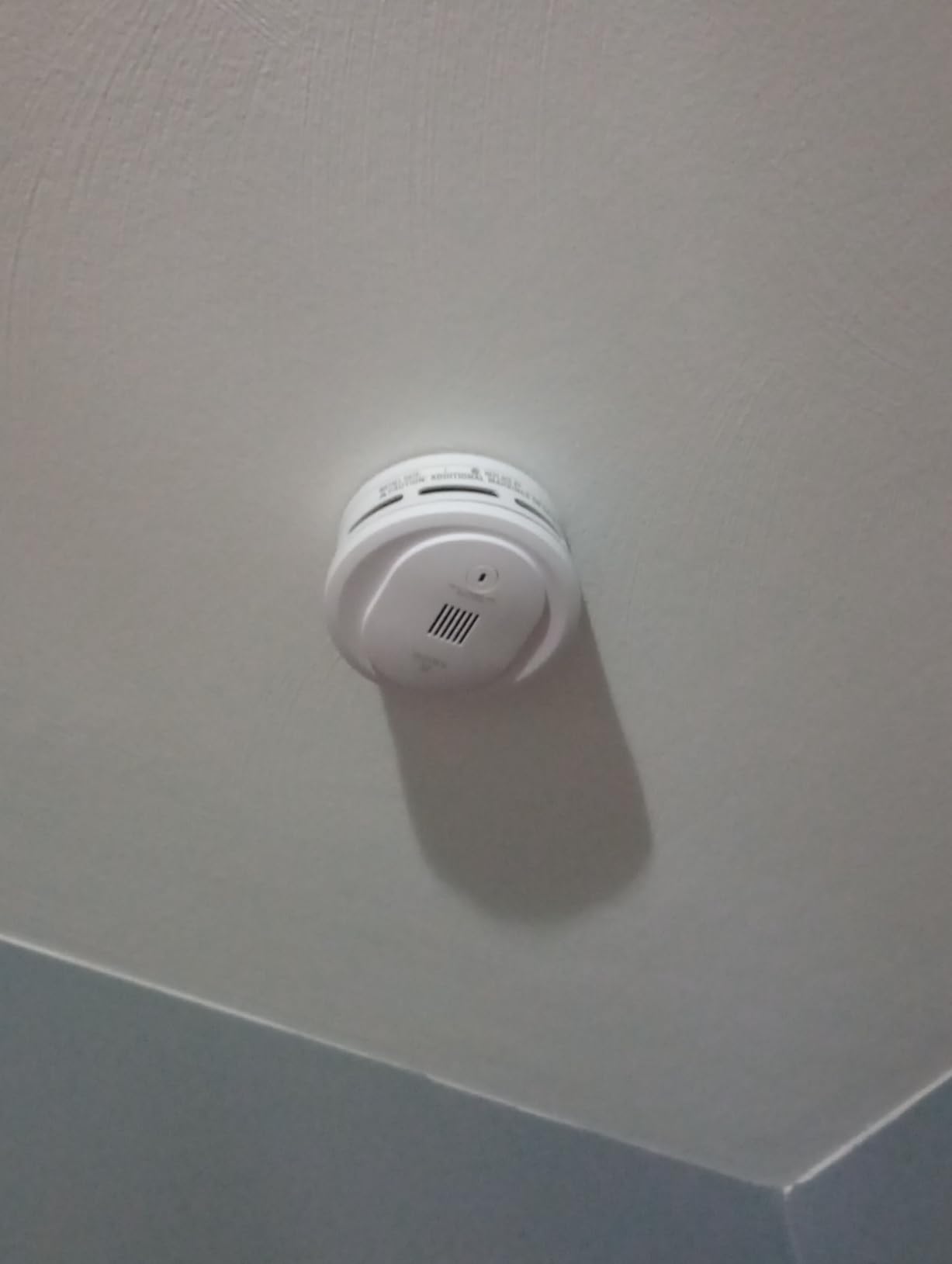
The two included AA batteries mean no wiring and no separate purchase on install day, which is the reason this model appears in so many bedroom and apartment lists. Rated for up to 95 percent relative humidity non-condensing, so it tolerates a typical bedroom in most climates.
What you give up is everything beyond smoke sensing. There is no CO sensor, no interconnection and no smart connectivity. For a single small room with no combustion appliances nearby, that is a fair set of trade-offs.
Who this bedroom alarm suits
It suits anyone equipping several small rooms quickly, or anyone who wants photoelectric sensing without a sealed battery commitment. The replaceable AA cells are cheap and easy to find.
It also suits a bedroom where the alarm has to be reachable, because swapping cells does not mean getting a ladder out.
Who should pick a different alarm
If you sleep with a gas appliance, a fireplace or a garage below you, add CO coverage. This unit will not warn you about carbon monoxide at all.
Owners who have replaced a whole alarm system and still get nuisance trips should treat the unit as only half the fix. Placement, dust and humidity account for a large share of bedroom false alarms.
9. Kidde P3010L 10-Year Photoelectric — Best Hush Button
Kidde 21010164 10 Year Battery Smoke Alarm | Photoelectric | Living Area | Model P3010L
Sealed 10-year lithium battery
Hush feature
End-of-life chirp every 30 seconds
Photoelectric sensor
Pros
- Sealed lithium battery means no night-time low-battery chirps
- Hush button silences nuisance alarms without disabling the unit
- Photoelectric sensing suits slower-burning fires
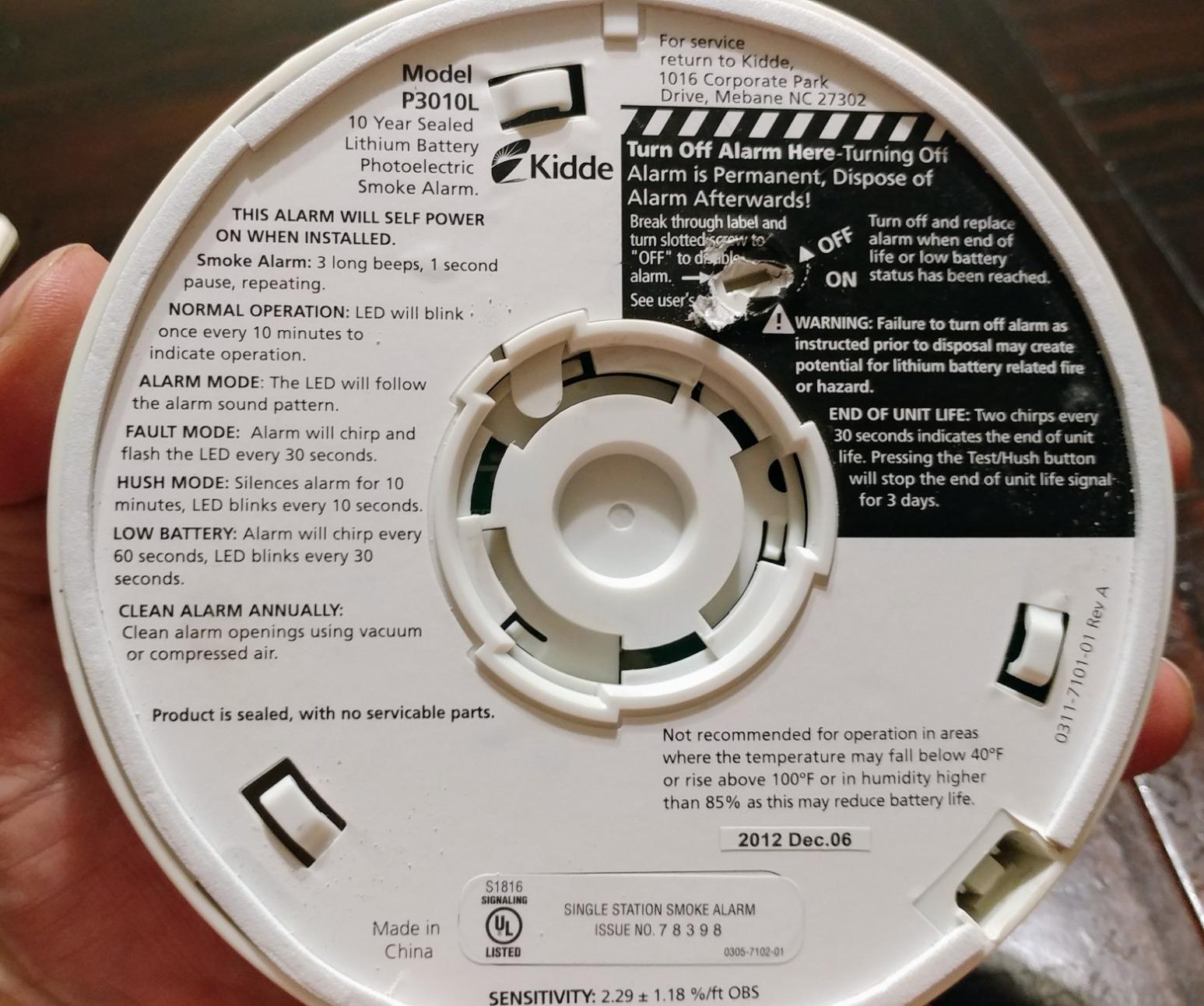
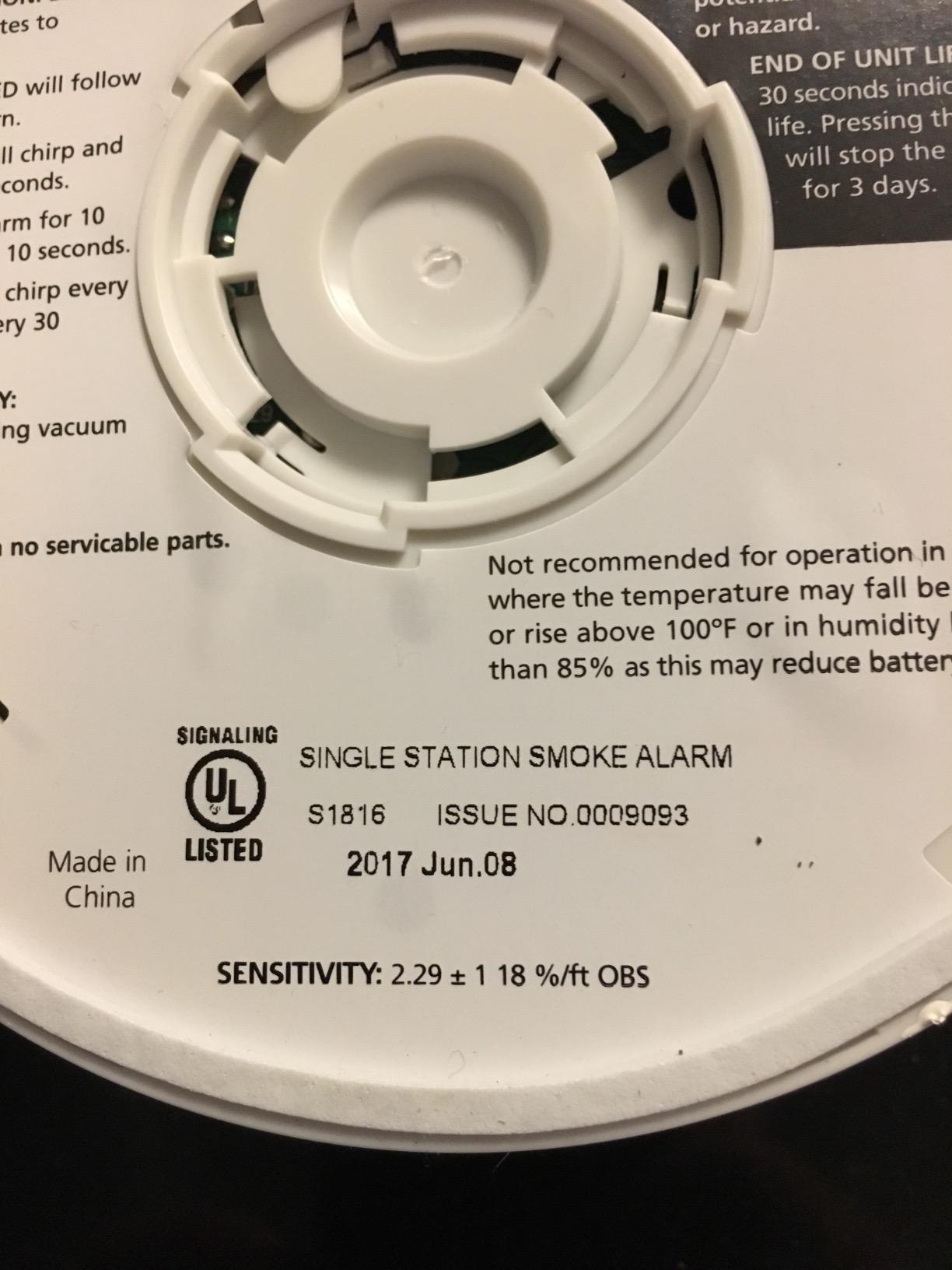
- Clear end-of-life chirp every 30 seconds signals replacement is due
- 10-year limited warranty
Cons
- Weakest average rating in this group at 4.2 stars with 391 reviews
- Living-area design lacks CO detection and interconnection
- Thin review base means less proven long-term consistency
The defining feature here is the hush button. When steam or cooking vapour trips the alarm, you press it and the siren stops for several minutes without cutting power or removing the battery, which stops the small 3am disaster where a half-asleep person decides the alarm is broken.
Like the other sealed units, it runs for the full 10 years on a lithium pack, so there is no battery-change night. Photoelectric sensing handles the slow-burning fires that typically start in a living room or on soft furnishings.
We are including it because of that hush feature, but we will not pretend to the numbers. At 4.2 stars across 391 reviews, this has the thinnest review base and the lowest average in the roundup, and owners report that unit-to-unit consistency and value are the sticking points.
It is also specified for living areas, which is not quite the same job as a bedroom. There is no CO sensor and no interconnection, so a network of these will not tell your bedroom alarm about a fire in the hallway.
Who this bedroom alarm suits
It suits light sleepers who react badly to a full siren going off for a false alarm. A hush button is the difference between waking up irritated and waking up worried, and in a bedroom that difference compounds over years.
It also suits anyone who does not want to think about batteries at all for a decade.
Who should pick a different alarm
If you want confidence backed by volume, the sealed photoelectric unit with over 4,000 reviews is a stronger bet for the same maintenance profile.
Households needing CO coverage or whole-home linking should choose a combination or interconnected model rather than adding one later.
10. SITERWELL GS525A 10-Year Photoelectric — Best Magnet Mount
SITERLINK Smoke Detectors 10 Year Battery Backup,GS525A 1 Pack
Photoelectric sensor
Sealed 10-year lithium battery
Magnets and screws included
Compact 3.93 inch body
Pros
- Sealed 10-year battery removes the battery-change chore
- Both magnets and screws included for flexible mounting
- Compact body suits small bedrooms and low ceilings
- Photoelectric sensor responds quickly to slow smoldering fires
- Available in pack sizes from 1 up to 12 units
Cons
- Much smaller review base than First Alert Kidde or X-Sense
- Smoke only with no carbon monoxide or interconnection
- Some reviewers question how much the AI environment-learning really helps over time
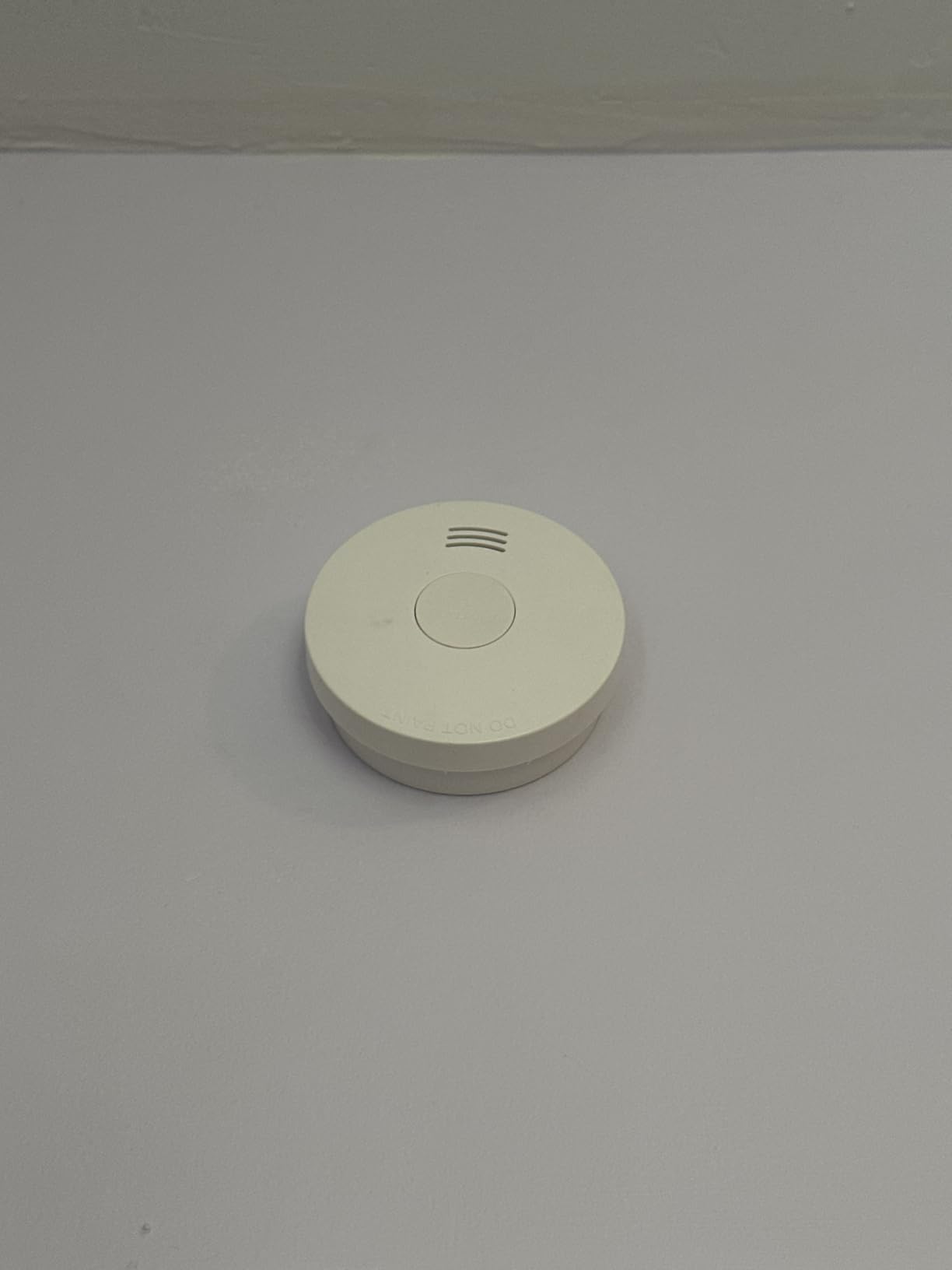
The reason this one earns a place is the mounting kit. Both magnets and screws are included, so you can stick it to a smooth ceiling for a rental, or screw it to a joist in a house you own. It is a small detail that removes the usual argument about whether an alarm belongs there.
The body is among the most compact of the sealed units, at just over 1.3 inches deep and under 4 inches across. Combined with a sealed 10-year lithium battery, it is an easy fit for a tight ceiling or a small childrens room.

The manufacturer markets AI-assisted sensing that learns the home environment to cut false alarms from dust and steam. Owners respond warmly to the idea and less warmly to the evidence, with some reviewers openly questioning how much it delivers in real service.
At 4.4 stars from 576 reviews, the feedback base is real but much thinner than the big three brands in this list. That is not disqualifying for a sealed 10-year battery, but it does mean less proven long-term field history.
Who this bedroom alarm suits
It suits renters and anyone installing several rooms quickly, since pack sizes run from 1 up to 12 and the magnet mount avoids drilling in a deposit-return property.
It suits owners who want photoelectric sensing with zero maintenance and are comfortable with a newer brand.
Who should pick a different alarm
If your priority is a long, documented service history, choose one of the models here with a review base in the thousands or tens of thousands. Lifespan matters when the unit is sealed for a decade.
Homes needing carbon monoxide or whole-home alerting need a different model, since this unit covers smoke alone and cannot join a linked network.
How to Choose a Smoke Detector for a Bedroom in 2026
Choose on sensor type, power source and night-time behaviour, in that order. Everything else, including phone apps and voice alerts, is secondary to whether the alarm is loud, responsive and still installed three years from now.
Sensor type. A photoelectric sensor detects light scatter and is tuned to slow, smoldering fires, which is the kind that starts in bedding, upholstery and clothing. An ionization sensor reacts to the airborne particles of a fast-flaming fire and usually triggers faster on a flash fire, but it is also the technology most likely to produce nuisance alarms from cooking vapour, dust and humidity.
For a bedroom specifically, we lean photoelectric. The most likely fire in a sleeping room is a slow one in soft furnishings, and an alarm that complains every time someone boils a kettle is an alarm that gets disconnected. If your home is already wired for an interconnected system and you are replacing like for like, matching the existing sensor type matters more than our preference.
Power source. Hardwired units run on 120-volt AC with a backup cell, and they are the most dependable option because a flat battery cannot silence them. Battery-only units install in minutes and suit rentals. Sealed 10-year lithium units sit between the two: no wiring at install, and no battery service for the life of the alarm.
Over a ten-year window, that difference is real. A 9V or AA alarm needs a cell replaced roughly once a year, plus the tests that tell you the cell is still good. A sealed lithium unit needs none of that, and you replace the whole alarm at the ten-year mark when the sensing chamber ages out.
Our guide to smart smoke and CO detectors for home safety covers the connected options in more detail if you want phone alerts and app hushing.
Alarm level and listening position. Every unit in this roundup produces an 85 dB alarm where the manufacturer states one. That figure is measured at 10 feet, so the practical level in your bedroom depends on where the alarm sits relative to the pillow. Ceiling placement near the head of the bed gives you more decibels at ear level than a unit above a doorway at the far end of the room.
Certifications to look for. Check for a UL 217 listing for smoke alarms and a UL 2034 listing for carbon monoxide alarms, or an ETL mark from Intertek covering the same standards. These are independent lab certifications, and the marking should be printed on the housing rather than only described on the box.
Bedroom-specific features worth paying for. A hush button lets you silence a nuisance alarm without cutting power. A status LED is useful during the day and annoying at night, so a dimmable or motion-triggered light is worth having if you are a light sleeper. Interconnection matters more in a bedroom than anywhere else, because it is the alarm you most want to sound when the fire is in another room. A sealed battery removes the most common reason people take an alarm down.
What none of the units here offer is a voice alert naming the bedroom, or a 520 Hz low-frequency pattern designed for hard-of-hearing sleepers. Those features exist in the market, and if you need them, that is a separate search from this list. Our picks are all conventional audible units.
Why Bedroom Alarms Go Off at Night and How to Stop It
Most bedroom false alarms trace back to five things, and all five are fixable. Owners in homeowner communities consistently report the same pattern: an alarm that sounds repeatedly with no fire, followed by a battery being pulled out and never replaced.
The first cause is distance from the source. An alarm inside or near a kitchen catches cooking vapour, and an alarm close to a bathroom door catches shower steam. If your bedroom shares a wall with either, move the unit or switch to photoelectric sensing.
The second is dust and humidity. Vacuum the vents monthly, keep laundry out of the corner where the alarm sits, and use a humidity-rated unit in a room that stays damp. Condensation on a cold ceiling can also accumulate on the sensing chamber and trigger an alarm.
The third is the battery. Replaceable 9V and AA cells weaken quietly, then announce it at the worst possible moment. If your alarm uses a replaceable cell, test the cell itself rather than trusting the test button, and swap it on a schedule you set rather than on a chirp.
The fourth is dust from construction or renovation, which loads a photoelectric chamber quickly. If you have had work done, check and clean the vents immediately afterwards.
The fifth is a shared test button with other alarms. If you press silence on one unit while another linked unit is still alarming, some systems re-assert the alarm, which reads as a false alarm in the middle of the night.
And the rule that matters more than all of them: never remove a battery or an alarm to stop a nuisance alert. Silencing it for ten minutes costs you nothing. Taking it out for the night costs you the warning you bought.
Where to Install a Bedroom Smoke Alarm
Install one alarm inside every bedroom, on every level of the home, and in every sleeping area, regardless of how small. Codes vary by jurisdiction, but the NFPA baseline is the same, and bedrooms are the rooms where coverage is most often skipped because the hallway alarm is close enough.
Place it on the ceiling, or on the wall near the ceiling, with at least 4 inches of clearance from the wall and ceiling junction. Smoke rises and pools along those edges first, and an alarm mounted too close to the join misses the earliest part of a fire.
Keep it at least 36 inches from the edge of a ceiling fan, and away from air returns, HVAC vents and fireplaces. Moving air from a vent can either push smoke past the sensor or blow dust into the chamber.
In a room with an ensuite, do not put the alarm directly above or beside the shower door. Steam is aerosol, and no alarm distinguishes it reliably from smoke. Place the unit on the opposite wall, or on the hall side, and use a photoelectric model.
Do not install alarms in kitchens, near a gas cooktop, in a garage, in an attic or in a bathroom itself. Each of those rooms produces exactly the conditions that create nuisance alarms, and in a garage or near a combustion appliance you want a CO alarm instead of a smoke alarm.
For a four-bedroom house, the usual baseline is one alarm inside each of the four bedrooms, one on every level including the basement, one in the kitchen area outside the cooking zone, and one in the area that serves the bedrooms from outside. Typical two-storey home is ten alarms in all.
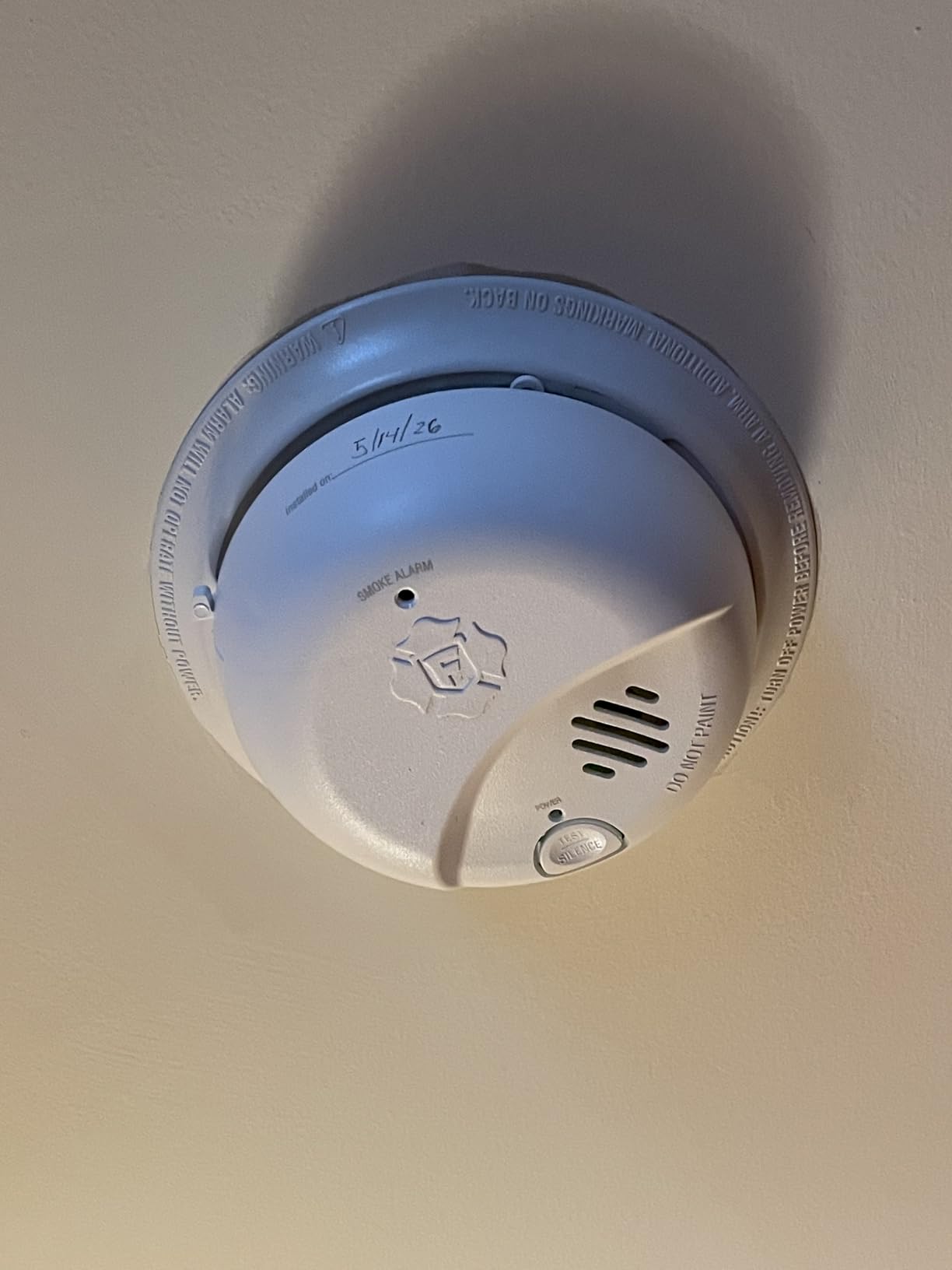
Test each unit twice a year with the test button and once with aerosol smoke, and write the date on the housing in pencil. Clean the vents monthly and replace the whole alarm at ten years, even if it still sounds fine, because the sensing chamber ages even when the battery does not.
For homes built on older wiring, or for renters covering several units, our guide to smart smoke detectors for a local alarm system covers how connected units integrate with a panel.
Frequently Asked Questions
What type of smoke detector is most effective for bedrooms?
A photoelectric smoke alarm listed to UL 217, powered by a sealed 10-year lithium battery and paired with interconnected units elsewhere in the home. Photoelectric sensing catches the slow smoldering fires that start in bedding and upholstery, while a sealed battery eliminates the low-battery chirps that wake sleepers and lead people to remove alarms. Interconnection means the bedroom alarm still sounds when a fire starts in another room.
What is the best smoke detector to avoid false alarms?
A photoelectric alarm is the most reliable choice for reducing nuisance alarms, because it responds to the light scatter from a real fire rather than to airborne particles, dust and humidity. Place it away from bathroom doors, kitchen openings and air vents, and clean the vents monthly. Sealed 10-year battery models also help, since a weak replaceable cell is a common trigger for late-night alerts.
Why is my smoke detector giving false alarms?
Five causes account for most bedroom false alarms: the unit is too close to a bathroom door, kitchen or air vent; dust has loaded the sensing chamber; humidity or condensation is present; the backup battery is weakening; or another linked alarm is still alarming after you pressed silence. Clean the vents, move the unit away from steam and cooking vapour, test the backup cell directly and check whether your alarms are interconnected before replacing anything.
Why did my hardwired fire alarm randomly go off in the middle of the night?
Hardwired alarms that sound without fire are usually reporting a problem, not inventing one. The most common causes are a failing 9V backup battery, dust or humidity on the sensing chamber, and power surges or brief outages that leave the unit in an alarm state. Clean the vents, replace the backup cell with a fresh one, and check for a latching indicator light that shows the unit has already tripped. If it keeps happening, the unit itself may be reaching end of life.
How many smoke alarms do I need in a 4 bedroom house?
The baseline for a four-bedroom house is one alarm inside each bedroom, one on every level including the basement, one outside the kitchen cooking zone, and one in the hall or area serving the sleeping rooms. That is typically ten units in a two-storey home. Codes vary by jurisdiction, so check local requirements, but bedrooms are the rooms most often left uncovered because a nearby hallway alarm seems close enough.
Our Final Verdict on the Best Smoke Detectors for Bedrooms
The best smoke detectors for bedrooms are the ones still on the ceiling in 2026. The First Alert 9120B hardwired alarm wins as our top pick, because mains power with a backup cell and interconnect capability removes both failure modes that make bedroom alarms unreliable. Where wiring is not an option, the X-Sense SD2J0AX sealed photoelectric unit is the value choice, and the First Alert SMI100 covers a single room on a budget.
Whichever you fit, test it twice a year with aerosol smoke, keep it four inches off the wall and ceiling junction, and never take the battery out to stop a nuisance alert.