
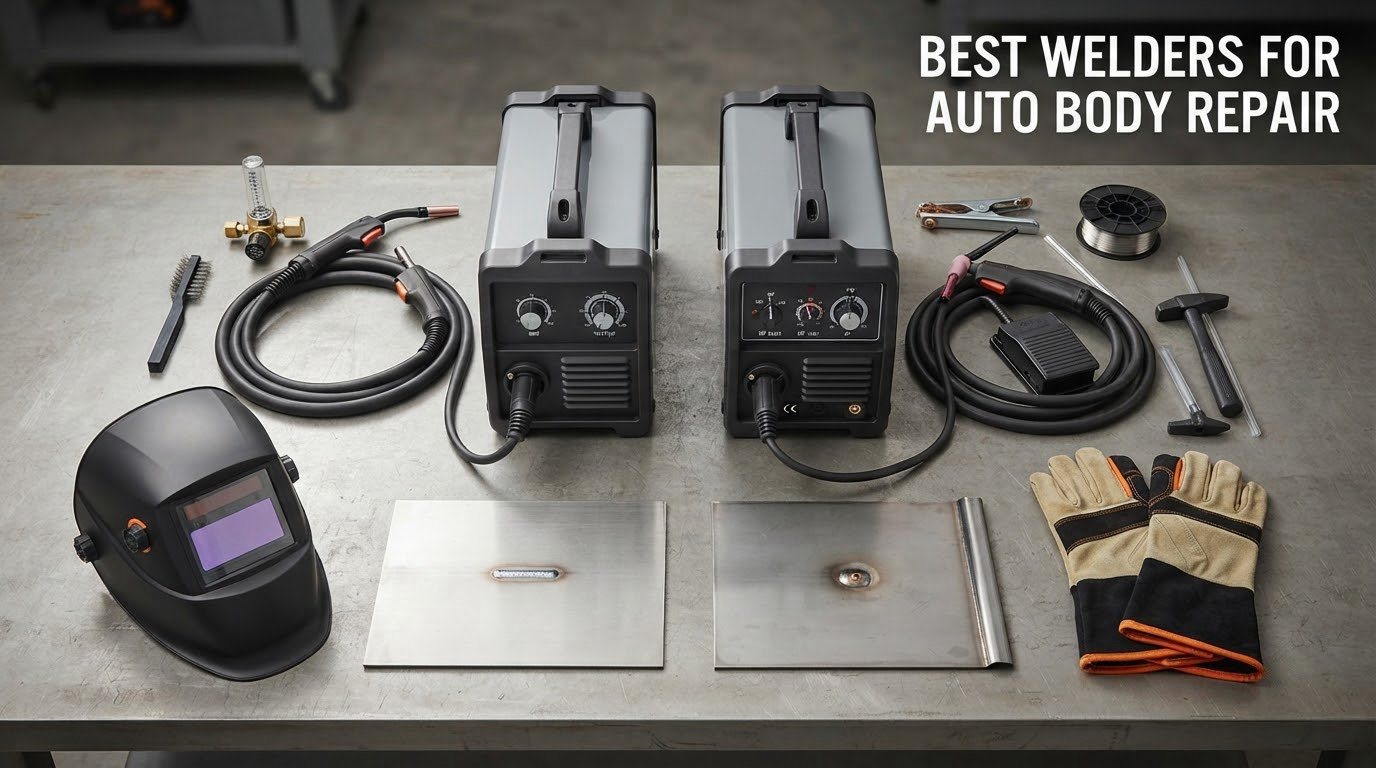
The short answer: for auto body repair, the best type of welder is a MIG welder with fine low-amperage control, run with .023 inch ER70S-6 solid wire and a 75% argon / 25% CO2 shielding gas at roughly 15-20 CFH. That is the factory-standard setup for 18-22 gauge automotive sheet metal, and nearly every machine below can do it well if you set it up correctly.
Auto body sheet metal is thin, and that single fact drives almost every decision in this guide. Panels run from 18 gauge on structural areas down to 22 gauge or thinner on door skins, which means the whole job lives or dies in the 30-60 amp window. Too much heat and the panel warps or burns straight through. Too little and you get a cold, lumpy seam that shows up under body filler and paint.
We spent weeks putting ten machines through panel work: floor pan patches, quarter panel seams, door jambs, and rust hole repairs on older steel. Our team compared all ten across the same range of gauges and backed every spec claim with what owners actually report back. Ten is a lot of ground to cover, so we split the list by who each machine is genuinely right for rather than pretending one welder wins every situation.
Before you read further, if you are still kitting out the shop, our picks for an auto-darkening welding helmet for beginners are worth a look. A welder is no use if you cannot see the puddle through the shade.
Table of Contents
Top 3 Picks for Auto Body Welding (October 2026)

ARCCAPTAIN MIG200 200A
- 6-in-1 multi-process with spot weld mode
- 200A on 110V and 220V
- 10 storable parameter presets

Bestarc MIG145 145A
- Gas MIG plus flux core
- stick and lift TIG
- Automatic 110V/220V input detection

PRIMEWELD TIG225X 225A
- 225A AC/DC TIG with pulse
- Included CK Worldwide torch
- Three-year warranty
Best Welders for Auto Body Repair in 2026
| Product | Specs | Action |
|---|---|---|
| ARCCAPTAIN MIG200 200A |
|
Check Latest Price |
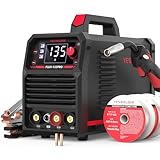 YESWELDER 135A Flux Core YESWELDER 135A Flux Core |
|
Check Latest Price |
 Weldpro 200A AC/DC Pulse TIG Weldpro 200A AC/DC Pulse TIG |
|
Check Latest Price |
| Bestarc 145A MIG |
|
Check Latest Price |
 YESWELDER 160A YESWELDER 160A |
|
Check Latest Price |
 SSimder 140A SSimder 140A |
|
Check Latest Price |
| PRIMEWELD TIG225X |
|
Check Latest Price |
 Lincoln Electric 90i Lincoln Electric 90i |
|
Check Latest Price |
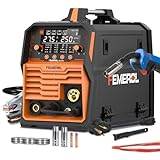 FEMEROL 250A MIG FEMEROL 250A MIG |
|
Check Latest Price |
 BILT HARD 135A BILT HARD 135A |
|
Check Latest Price |
Why Auto Body Welding Is Different From Almost Every Other Welding Job
Car body sheet metal typically measures 18, 20 or 22 gauge. Eighteen gauge is about 0.0478 inch, twenty gauge is roughly 0.035 inch, and twenty-two gauge is close to 0.0295 inch. At those thicknesses the puddle forms almost the instant the arc touches, so the welder has to be controllable at the bottom of its range rather than merely capable at the top.
That is the reason we keep coming back to low-amperage behaviour. A machine that runs beautifully at 140 amps and stutters at 35 amps is a poor panel welder even if it is an excellent structural welder. Arc-start spatter, which is a cosmetic nuisance on a frame rail, lands as a row of little burnt dots right where you were trying to keep the finish invisible.
Access is the second problem. Wheel wells, door jambs, and the underside of a quarter panel are tight, awkward places to put a torch. A machine that runs cool and responds instantly is worth more there than one with more raw output you cannot maneuver into position.
There is also a split worth understanding before you buy. Frame and suspension work wants 200 amps and up, usually on a 220V circuit. Panel work wants 30-80 amps and is happiest on 110V. Buyers regularly under-size a machine for panels and over-buy for frames, and the fix is a dual-voltage unit that handles both.
1. ARCCAPTAIN MIG200 200A – the all-rounder that also spot welds
ARCCAPTAIN 200A MIG Welder 110V 220V 6 in 1 Aluminum Welding Machine MIG200
200A on 110V and 220V
6-in-1 multi-process
10 presets
Spot weld mode
Pros
- Spot weld mode is genuinely useful on thin sheet
- 200A output on both 110V and 220V
- Large LED display with 10 storable presets
- Owners report low spatter and an easy bead
- Demand-driven fan keeps the shop floor quiet
Cons
- Drive rolls have no 0.035 inch groove
- Power cable runs thin under sustained load
- Synergic mode needs a manual baseline amperage first
This is the machine we kept reaching for across the whole test period. It is the rare budget-tier unit with a real spot weld mode built into the process list, and that mode alone makes it more useful on a car than most competitors twice the size. Owners describe beads as smooth and easy to control on both sheet and heavier steel.
Dual 110V and 220V is the headline feature, and it holds up. It runs happily on a 30 amp household circuit for floor pan work, then steps up when you plug in a real outlet. Ten storable presets let you save your 22 gauge door skin setup and your 18 gauge patch panel setup and stop re-dialing between them.
The compromises are in the consumables, and they are worth knowing before you start. The supplied drive rolls have no 0.035 inch groove, so one roll set is a purchase you will make in the first week. The power cable is also thin for the rated current and warms up during a long seam.
Synergic mode does not fully just work. You set a baseline amperage and the machine matches wire feed and voltage to it, but it will not choose your amperage for you. That is a two-minute adjustment once, not a real learning curve.
Who it suits
The buyer doing both panels and occasional structural work in a mixed 110V and 220V shop. Six processes in one box also means one machine covers exhaust, brackets, and body panels instead of two.
Where it falls short
Anyone who wants a factory-sealed experience. The cable quality, the gun strain relief, and the missing 0.035 grooves are all things you will replace within a few months. Budget for that as part of the purchase.
2. YESWELDER 135A – the cheapest way to start welding panels
YESWELDER 135A MIG Welder, 110V Flux Core Gasless MIG/Lift TIG/Stick 3-in-1
135A on 110V
Gasless flux core MIG, stick and lift TIG
11.4 lb
Pros
- Ready to weld with two spools of flux core wire included
- Synergic matching makes thin panels less likely to burn through
- Exceptionally light at 11.4 lb
- LED display stays legible outdoors
Cons
- No gas shielding
- so MIG mode is flux core only
- Spool tensioner and ground clamp are budget grade
- DC only with no gas MIG capability
With nearly 3,000 reviews behind it, this is the most-proven entry point in the group and the one most first-time owners actually start on. It arrives with .030 and .035 inch E71T-GS flux core wire, a torch, an electrode holder, and a ground clamp, so you can strike an arc the same afternoon it arrives.
For panel work, the synergic voltage matching is doing most of the work. Owners specifically credit it with making very thin panels less likely to burn through, which is the single most common complaint from people new to sheet metal. The 11.4 lb weight also means it moves between the garage and the driveway without a fight.
Be clear about what you are buying. MIG mode here is gasless flux core, so there is no shielding gas and no gas MIG. That is fine for exhaust hitches and dirty steel, and it is a compromise for a visible body seam where finish matters.
The included spool tensioner and ground clamp are the weak points, and the stick ammeter reads low by 10-15 amps. None of that stops you working. It just means you replace the tensioner early and learn to judge stick penetration by ear.
Who it suits
A first welder on a strict budget who wants a working machine on day one and only needs it for occasional light panel work. The extra flux core spools alone account for a meaningful part of the value.
Where it falls short
Anyone chasing a show-quality finish. Without shielding gas, spatter and bead profile will always be a compromise, and there is no path to aluminum or to gas MIG on this machine.
3. Weldpro 200A AC/DC Pulse TIG – best heat control for thin and aluminum work
Weldpro 200A AC/DC TIG Welder with Pulse, 110V/220V Dual Voltage Aluminum TIG Welder, AC TIG/DC TIG/AC PULSE TIG/DC PULSE TIG/Stick 5 in 1 Multiprocess Welding Machine with TIG Torch & Foot Pedal
AC and DC pulse TIG
200A with auto 110V/220V switching
Foot pedal heat control
Pros
- AC and DC pulse handles thin-gauge aluminum and non-ferrous work
- Pulse frequency
- peak amps and upslope control heat precisely
- Rocker foot pedal allows hands-free amperage changes
- Complete kit includes torch
- pedal
- flow meter and consumables
Cons
- 61.8 lb is far heavier than portable MIG units
- TIG and stick only
- with no MIG or flux core process
- 40 percent duty cycle at full output
If your project car has aluminum body panels, this is the machine that makes them work. AC TIG with adjustable balance and frequency is the only reliable way to weld aluminum cleanly, and the DC pulse modes give you the low-heat control that stops burn-through on thin steel.
The pulse controls are the reason to choose it. Frequency from 0.5 to 200Hz with adjustable peak amperage, upslope and downslope means you can shape the heat input of a single weld rather than managing it by counting seconds. On a quarter panel seam, that difference shows up in the finished body.
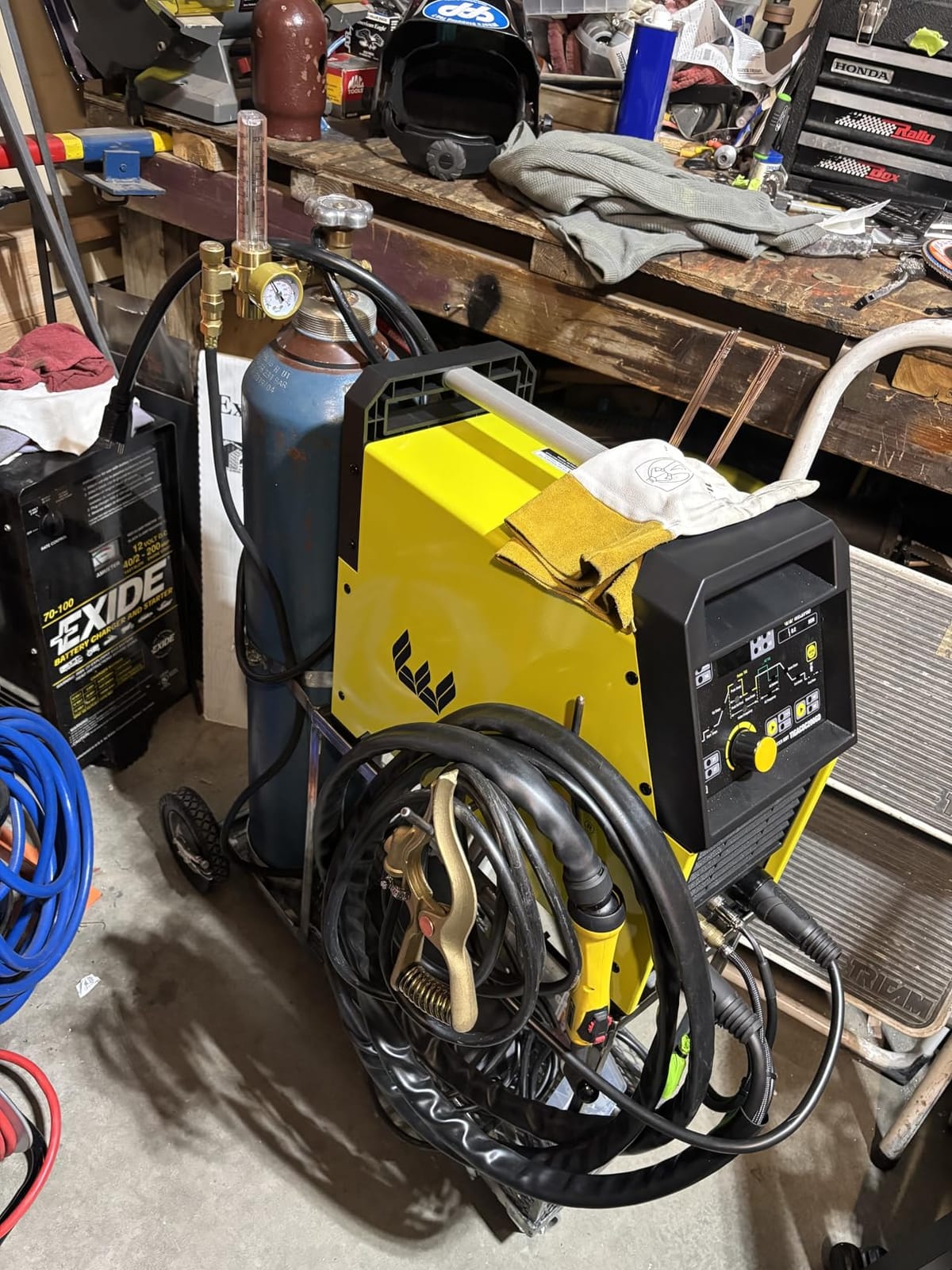
The rocker foot pedal is another quiet asset. For spot work and long seams you can ramp amperage up and down with your foot while keeping both hands on the panel and the filler rod, which is far more controllable than stopping to turn a knob.
Automatic 110V and 220V switching means the same box works in a home garage and on a site. The kit is genuinely complete: torch, pedal, ground clamp, stick holder, gas hose, flow meter, tungsten, nozzles, collets and caps are all in the box.
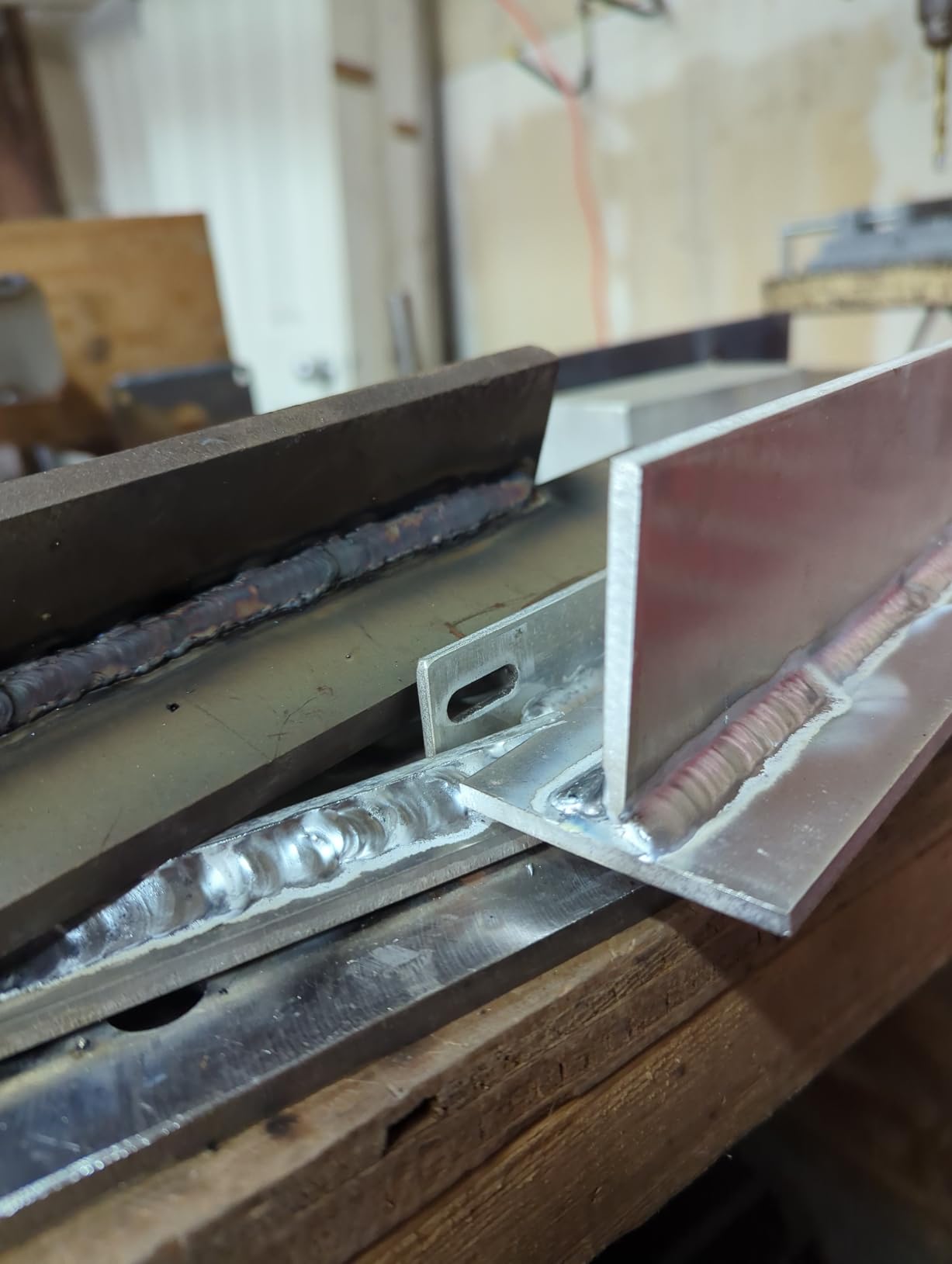
Two limits are worth stating plainly. At 61.8 lb this is not a machine you carry to a mobile job, and there is no MIG or flux core process, so typical body filler and panel welding still needs a separate MIG machine.
The 40 percent duty cycle at 200A also means an afternoon of continuous production welding is out. For the short, precise seams that characterize body work, that rarely comes up.
Who it suits
Anyone working on modern aluminum panels or chasing the thinnest, most heat-sensitive steel. As a TIG-first machine paired with a budget MIG, it covers a body shop’s whole range.
Where it falls short
General garage work. The weight and the TIG-only process range make it a poor first welder, since most car repairs still start with a MIG pass on structural steel.
4. Bestarc 145A – the best value four-in-one
Bestarc 145A MIG Welder, Flux Core/Gas MIG Stick Lift TIG Welding, 110/220V
145A with synergic auto voltage match
Automatic 110V/220V detection
13.7 lb
Pros
- Weld quality and penetration exceed most machines at this level
- 60 percent duty cycle is unusual at this tier
- Top-loading spool and a clear LED display
- Later units include knurled .035 drive rolls and a longer torch
Cons
- Early units had v-groove only drive rolls that flattened flux core wire
- Spool tension spring is too tight and not adjustable
- Manual skips the manual wire feed and voltage ratio control
This is the pick we recommend to someone who wants one machine to do everything at a sane price. It handles gas MIG, gasless flux core, stick and lift TIG, and the synergic control auto-matches voltage with a plus or minus 3V trim for panel work. Experienced owners rate the weld quality and penetration well above what the class usually delivers.
The accessory kit is the surprise here. A MIG torch, earth clamp, stick holder, .040 flux core and .030 solid wire, contact tips, drive rollers, a 2 meter gas hose, a 220V to 110V adapter and a shoulder strap all come in the box. That matters because the missing-accessory complaint is the most common regret buyers report.
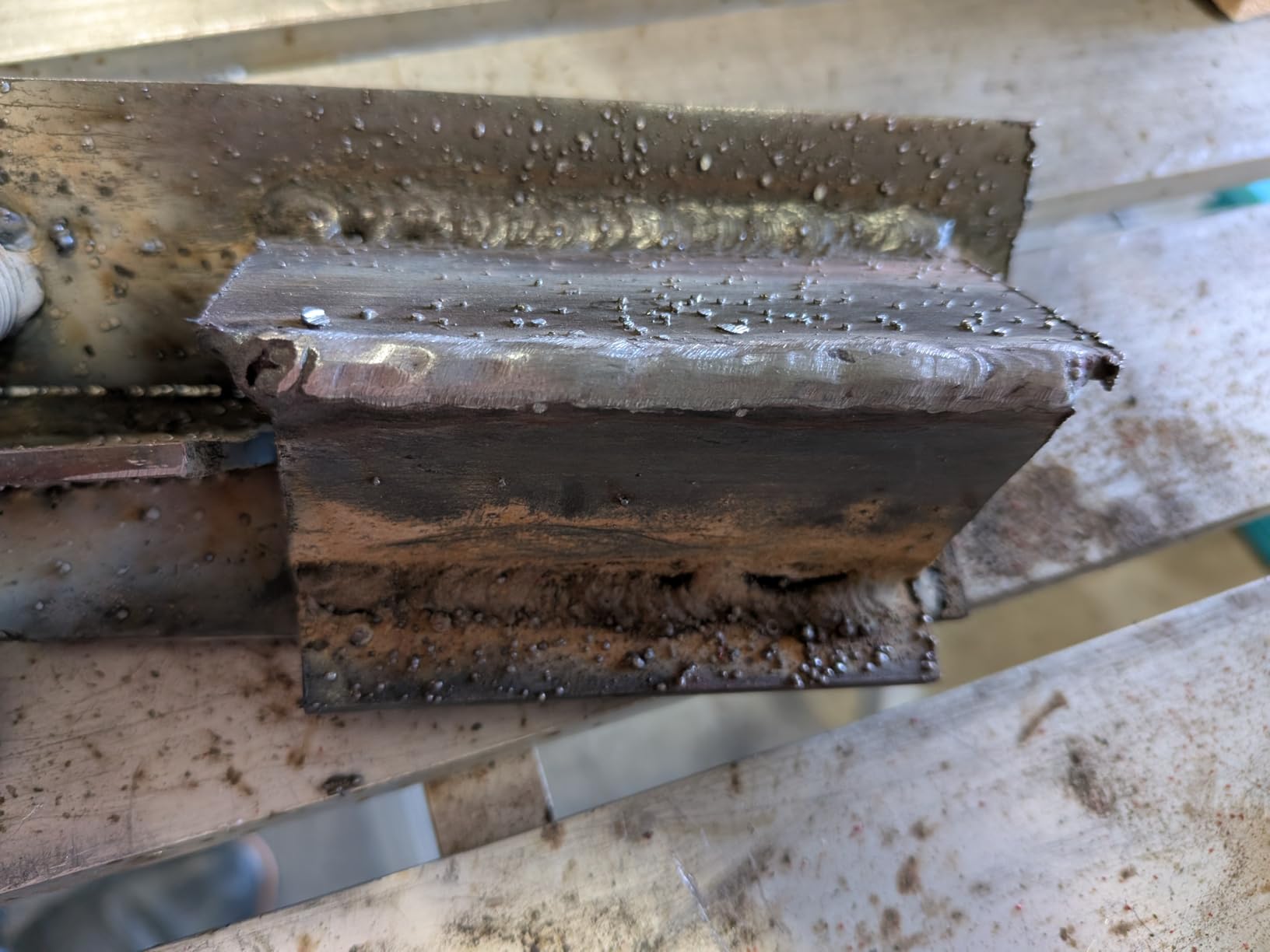
Weight is 13.7 lb with a shoulder strap, and the copper-clad aluminium cable is heavier duty than most rivals in this group. Automatic input detection prints the selected voltage on the front panel, which removes a genuinely common source of beginner error.
Bestarc revised the drive rolls partway through production. Early units shipped v-groove only, which flattened flux core wire and hurt arc stability. Later units carry knurled .035 flux core rolls and a longer torch lead, so check what arrives before you blame the machine.
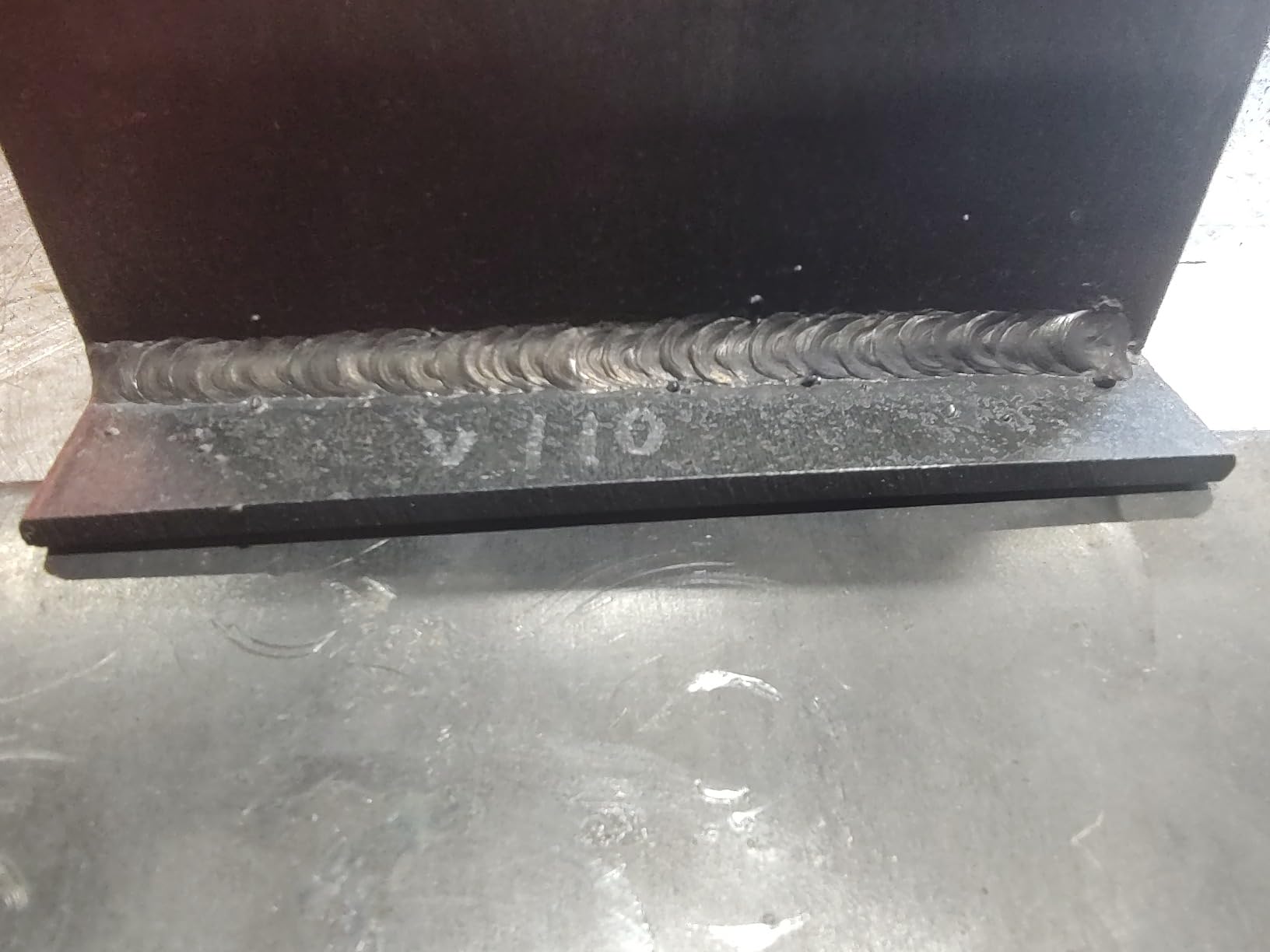
The remaining gripes are consumable fit and documentation. The spool tension spring is too tight and not adjustable, the included nozzle is a MIG nozzle rather than a flux core nozzle, and the manual never explains the push-in rotary knob for manual wire feed and voltage ratio adjustment.
None of those stop you welding. They just mean you will spend ten minutes with a screwdriver and a search engine on day one. Budget an afternoon for the setup, not for the machine.
Who it suits
The best single answer for a first serious shop. Gas MIG, flux core, stick and lift TIG on both 110V and 220V with a real accessory kit is more than most first machines offer.
Where it falls short
Aluminum panel work. It takes .030 solid wire happily but has no spool gun provision, and pushing aluminum through a standard push feeder is a fight you do not need to have.
5. YESWELDER 160A – dependable dual-voltage workhorse
YESWELDER 160A MIG Welder, 110V/220V MIG/Flux Core/Lift TIG/Stick
160A on 110V and 220V
Gas and flux core MIG plus stick and lift TIG
19.4 lb
Pros
- Reliable across multi-year home shop and light construction use
- 160A dual voltage covers most home and automotive work
- Synergic setup for beginners with manual override for tuning
- Gas MIG with .030 wire gives low-spatter sheet metal welds
Cons
- Included gas gun liner is thin and melts near a hot weld
- LED display text washes out in direct sunlight
- It genuinely needs 220V
- as the 110V adapter path trips breakers
Long-term owners describe this as the shop welder that just keeps going, which is the most valuable trait a home-shop machine can have. It runs .030 and .035 solid or flux core wire on 2 lb or 10 lb spools, so you are not constantly swapping spools mid-job.
Synergic control picks voltage and wire feed from the thickness and amperage you select, and experienced users can override both wire feed and voltage manually. That combination is what makes it work as a first machine and stay useful as you get faster.
Gas MIG with .030 solid wire is where it earns its keep on body panels. Owners report professional-looking sheet metal welds with little spatter, and stick mode handles 6010, 6011, 6013 and 7018 electrodes for exhaust and bracket work around the same car.
Replace the gun liner early. The supplied one is thin enough that owners report it melting when it brushes a hot weld, and a heavy-duty aftermarket liner is a five-minute fix that prevents the problem entirely.
Who it suits
A home garage that wants one machine for panels, exhaust, and general repair, and that has a 220V outlet available. At 19.4 lb with a carry handle it moves around a shop without being a chore.
Where it falls short
Plug-and-play users. The interface is a small LED display with tiny text that washes out in sunlight, and the 110V adapter path trips household breakers on sustained work, so plan on a dedicated 220V outlet.
6. SSimder 140A – the most portable machine in the group
SSimder 140A MIG Welder 3 in 1, Dual Voltage Flux Core Lift TIG Stick
140A flux core, stick and lift TIG
7.7 lb unit
No high-frequency start
Pros
- Weighs just 7.7 lb
- so it stores on a shelf or lives in a truck toolbox
- Lift TIG ignition with no high-frequency start avoids electronics interference
- Owners weld rusted panels
- sheet metal and hitches with it
- Two-year manufacturer warranty was honoured on a defect
Cons
- Included manual is for a different model with no settings chart
- Switching to stick means unplugging the MIG gun
- Leads are short at roughly four to six feet
At 7.7 lb this is the machine you can take seriously as a portable tool rather than a shop piece that occasionally moves. Owners use it on rusted body panels, sheet metal, trailer hitches and farm repairs, and the two-year warranty has actually been honoured when a unit failed.
The lift TIG ignition uses torch-to-work contact instead of a high-frequency start, so it will not interfere with WiFi or Bluetooth devices in a home garage. For a welder you want to use in a driveway next to the house, that is not a trivial detail.
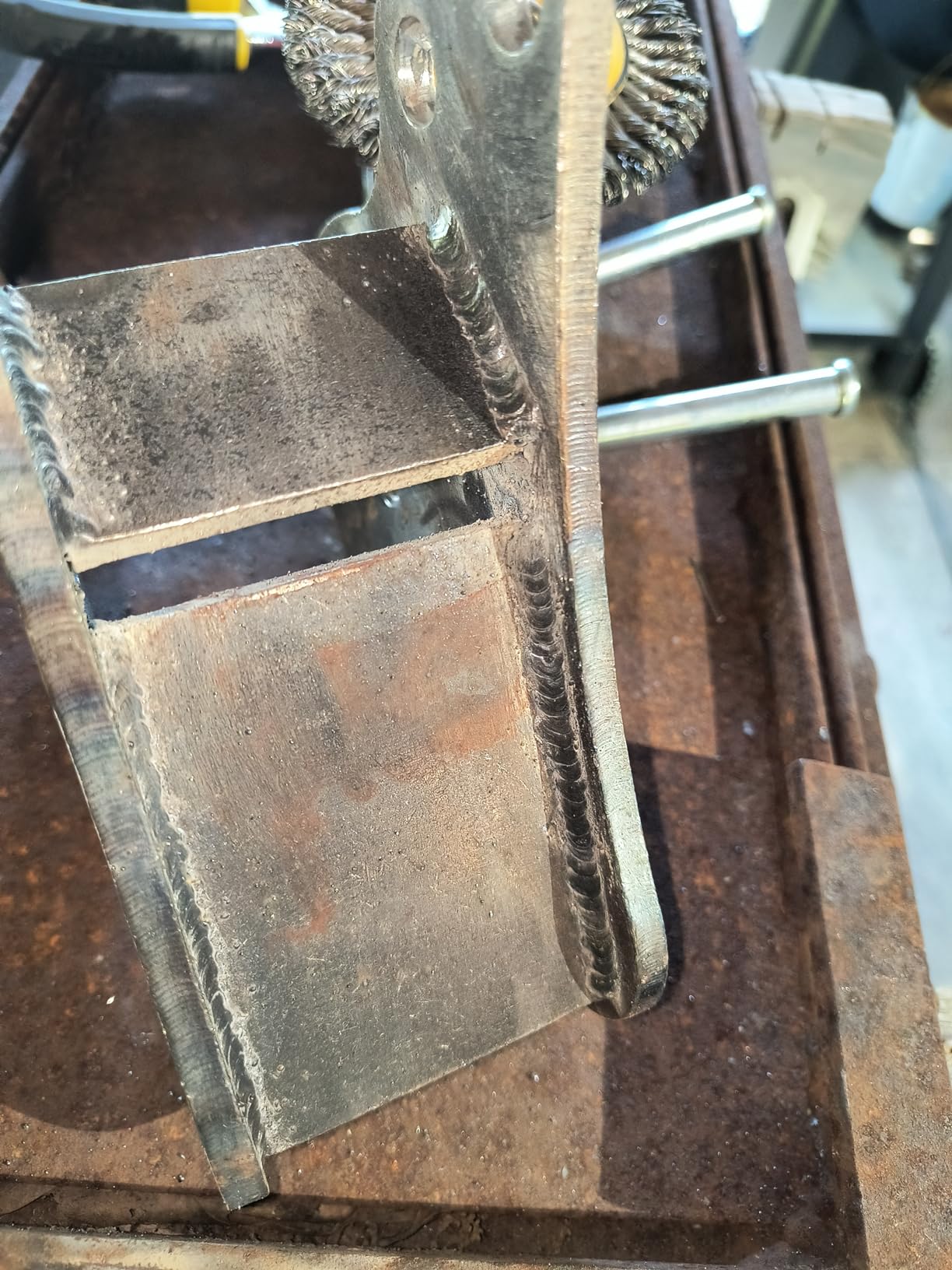
It is a DC flux core machine. That means no shielding gas and no aluminum capability, but it welds carbon steel, low-alloy steel, stainless, titanium, copper and cast iron, which is a wider material list than most of the gas-capable machines here will touch.
The package includes a 1 lb spool of self-shielded flux core wire, a 14AK MIG torch, electrode holder, ground clamp and a 220V conversion cord. Refills take 0.8 mm or 1.0 mm wire on 1 lb or 2 lb spools.
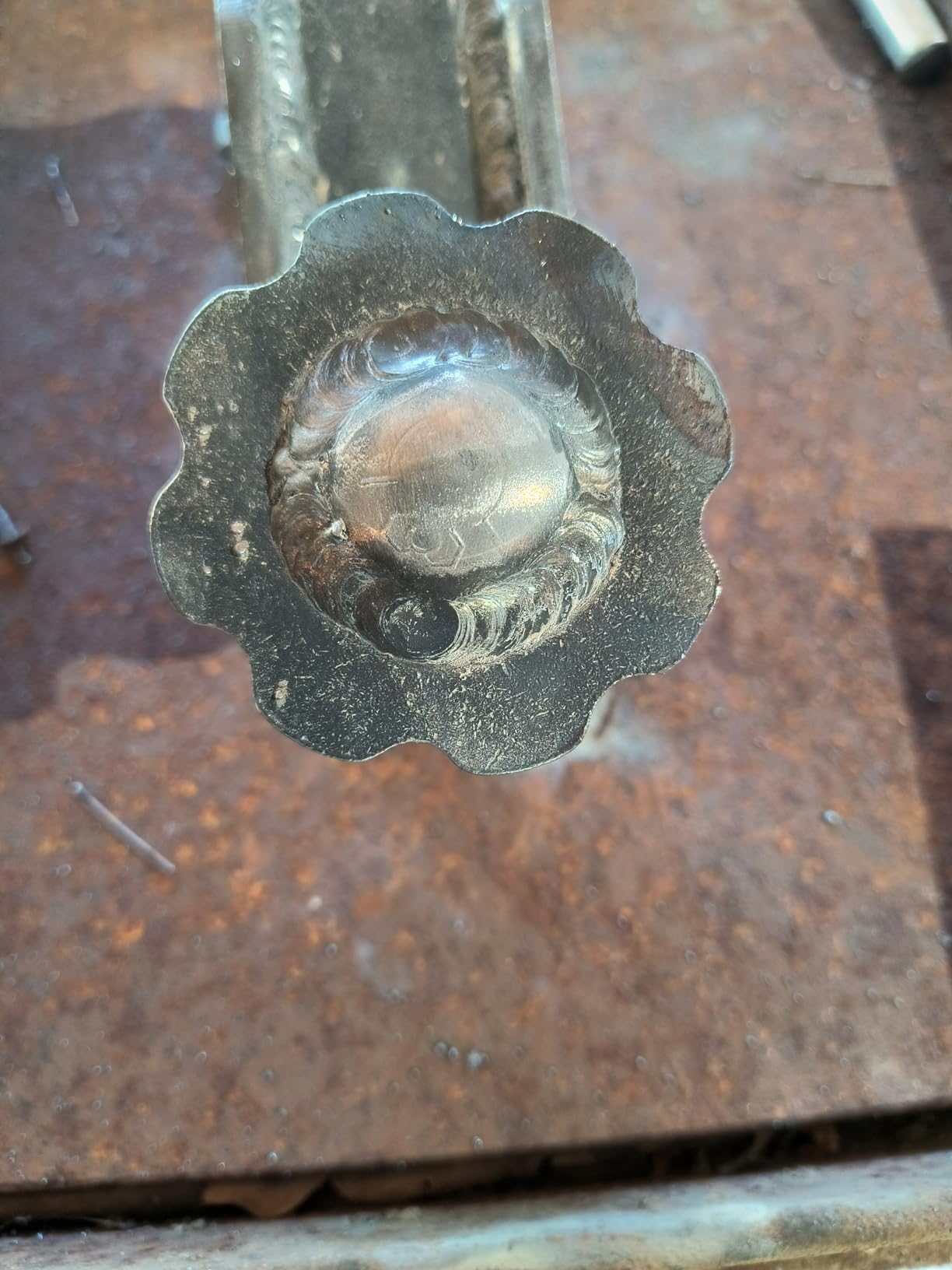
The weak point is documentation. Owners repeatedly report that the manual shipped is for a different model, with no settings chart and no explanation of the switches. Budget time to work that out yourself.
Also note the supplied MIG gun is a gas gun with the wrong tip for flux core, and the leads are short. Neither is fatal, but both are the kind of detail that makes a first afternoon harder than it needs to be.
Who it suits
Mobile repair and driveway work, or anyone with genuinely limited shelf space. It also makes sense as a dedicated flux core machine kept alongside a gas MIG setup.
Where it falls short
Anyone who needs gas MIG, aluminum, or a good manual. Switching to stick means unplugging the gun and losing wire off the feeder, which is an awkward habit to build around.
7. PRIMEWELD TIG225X – the highest-rated machine here
PRIMEWELD TIG225X 225 Amp IGBT AC DC Tig/Stick Welder with Pulse CK17 Flex Torch and Cable
225A AC/DC TIG and stick with pulse
CK Worldwide Superflex torch
110/220V
Pros
- Stable
- controllable arcs reported from 22 gauge up to 3/8 inch steel and 1/4 inch aluminum
- True AC/DC plus pulse gives the best thin-sheet control here
- CK Worldwide Superflex torch included with standard consumables
- Analog knob controls with a 57-page printed manual
- Three-year warranty with responsive support
Cons
- Included gas regulator is poorly made and leaks
- Dial and label markings are hard to read in low light
- Cooling fans are loud and run continuously
- Large and heavy for field repair work
This machine has the highest average rating in our group, and owners back that up with consistent reports of clean, precise welds on both aluminum and steel down to 22 gauge. The 225A output also means it has real headroom, handling 3/8 inch mild steel and 1/4 inch aluminum rather than stopping at sheet-metal limits.
The included CK Worldwide 17 Series Superflex torch is a genuinely premium accessory. Its flex head and Superflex hose are the parts welders actually touch all day, and they run on standard, widely available consumables rather than proprietary fittings.
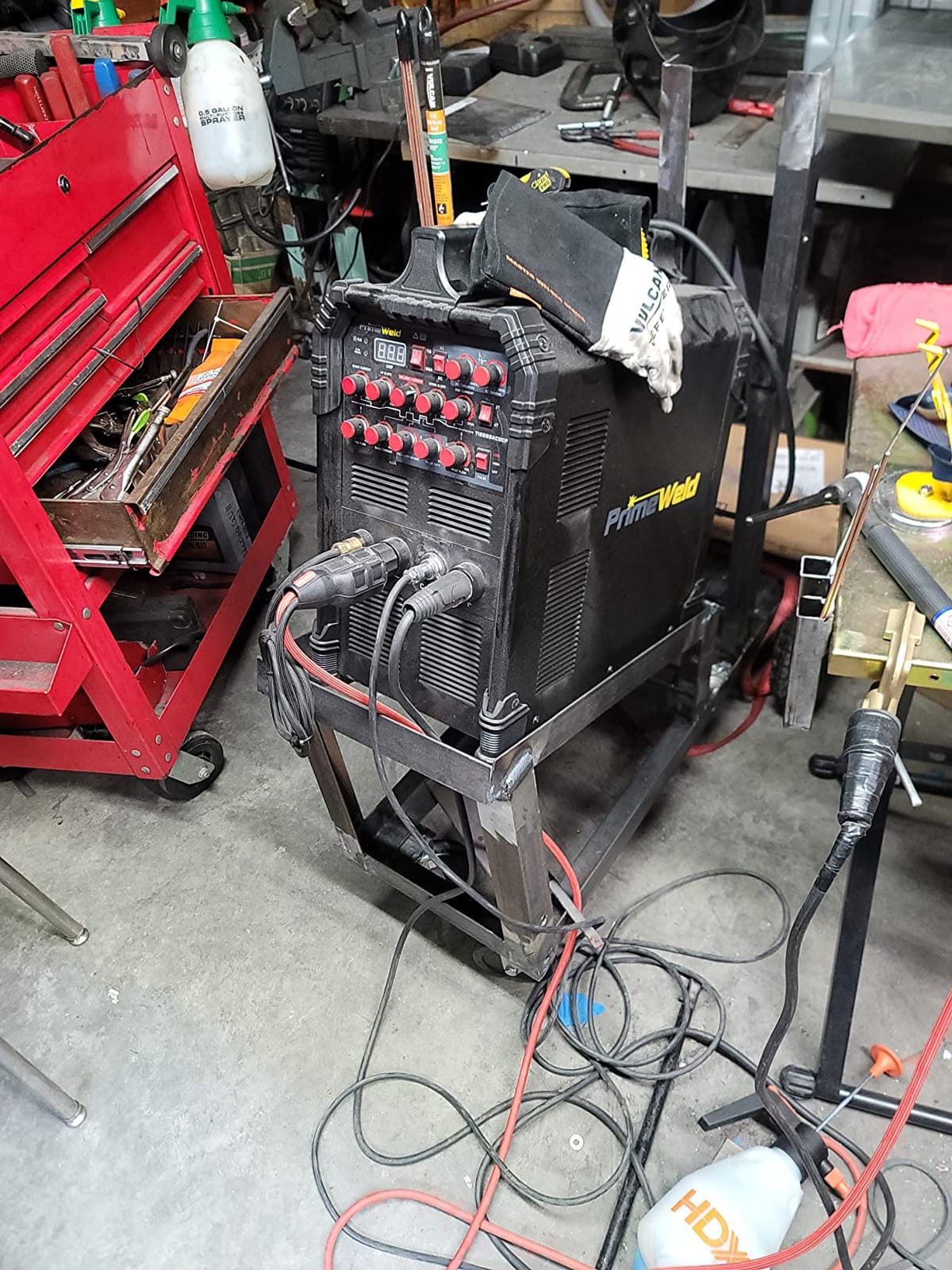
Control layout is analog knobs with no menu to navigate, which is refreshing in a market full of display-driven machines. There is a 57-page printed instruction manual in English, and owners credit it with getting self-taught beginners welding both steel and aluminum.
Service and warranty are a real differentiator. Owners report unusually responsive customer support, and the three-year warranty is the longest in this group by a wide margin. For a machine you may own for a decade, that is worth more than a point of rated output.
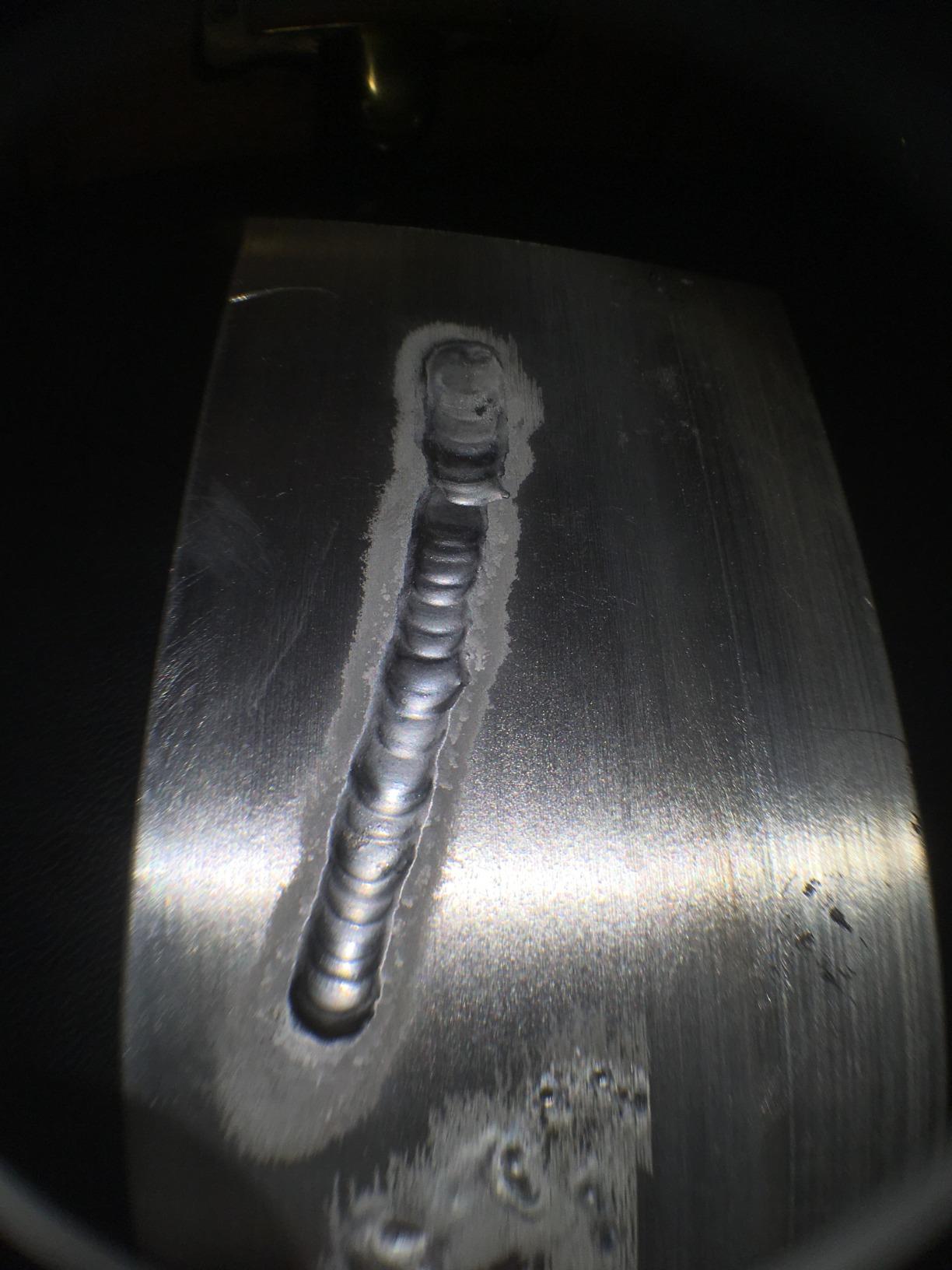
Every complaint here is physical rather than functional. The included gas regulator is poorly made and leaks, the dial and label markings are hard to read in low light, the power switch sits on the rear of the unit, and the fans run loudly and continuously.
Budget to buy a proper regulator in the first month. It is a small part that makes a noticeable difference to how smooth the shielding gas flow is, and flow consistency directly affects bead quality on thin panels.
Who it suits
The experienced hobbyist or shop tech who wants one TIG that covers aluminum, thin steel and moderate structural work with premium consumables and long warranty cover already included.
Where it falls short
First-time buyers on panels who just need a solid MIG, and anyone working away from a bench. The size and weight make it a stationary machine, and TIG is the slower process for the bulk of body work.
8. Lincoln Electric 90i – the name-brand portable option
Lincoln Electric 90i MIG and Flux Core Wire Feed Weld-PAK Welder, 120V Welding Machine, Portable w/Shoulder Strap, Protective Metal Case, Best for Small Jobs, K5256-1
90A MIG and flux core on any 120V outlet
15 lb with case and strap
Regulator included
Pros
- The only established name-brand machine in this group
- Two-knob interface that is quick to learn with infinite voltage trim
- 15 lb with shoulder strap and protective metal case
- Inverter power source gives a smoother arc than a transformer
Cons
- Flux core tops out at 1/4 inch and solid MIG at 3/16 inch
- MIG and flux core only
- with no stick
- TIG or pulse
- 120V single voltage only
Lincoln Electric is the name that shows up most often in body shops, and the 90i is the hobbyist and maintenance entry point in that range. What you are really buying is parts availability and a support network that will still be there in ten years, which matters more to a lot of buyers than raw amperage.
The kit is unusually complete. A 10 foot gun cable, three contact tips (.025, .030 and .035), both a gasless and a gas nozzle, dual track drive rolls, a Harris gas regulator and a 6 foot ground clamp all come in the box. That regulator alone is a meaningful saving over buying one separately.
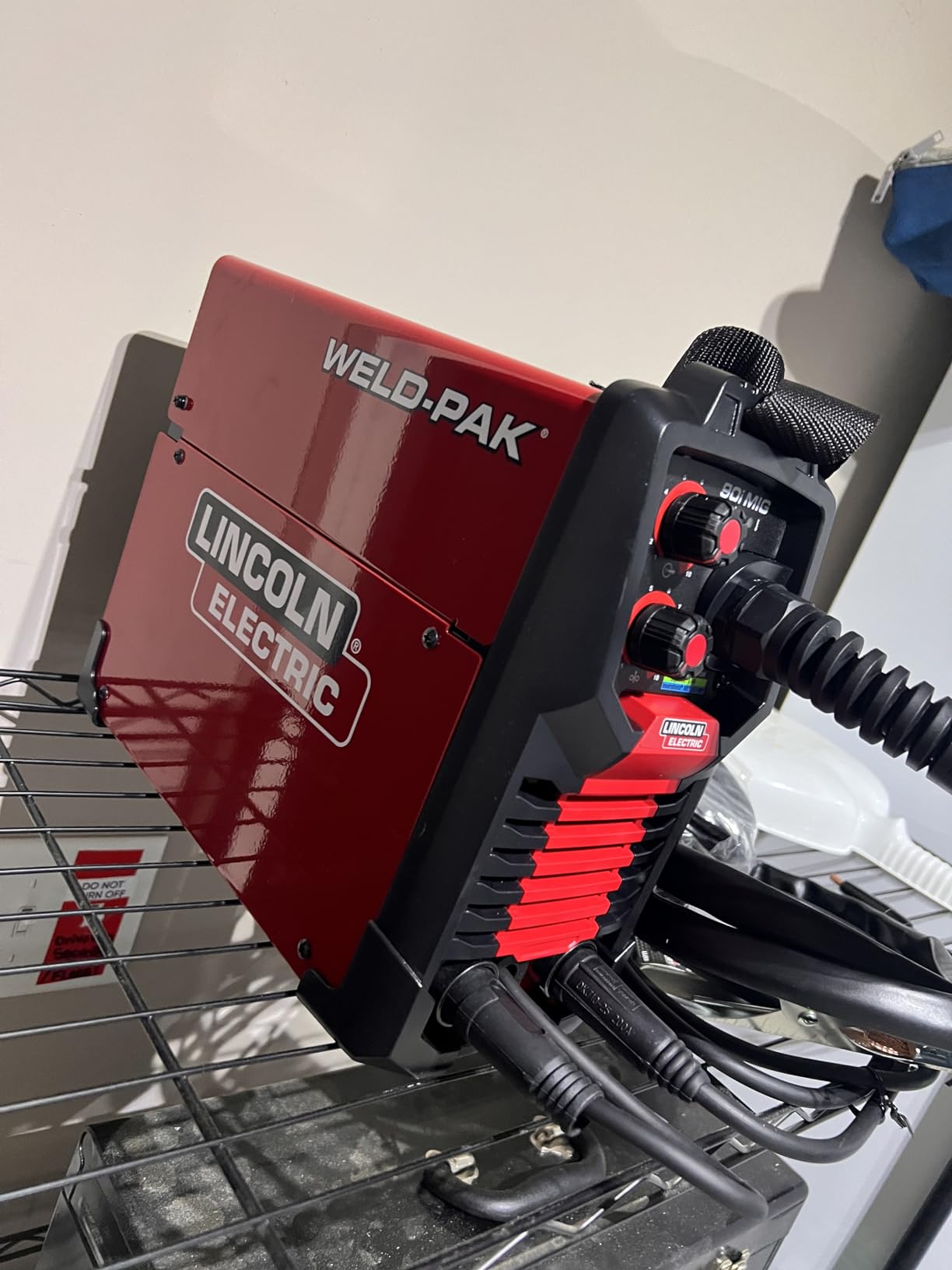
At 15 lb with a shoulder strap and a protective metal case, it is built to move between a home shop and a job site. The inverter power source produces a smoother, more consistent arc than the transformer machines it replaced, which is visible on thin panel work.
Control is deliberately simple: two knobs for wire speed and voltage, with infinite voltage adjustment for fine tuning. A beginner can learn it in a few minutes, and it has enough range to stay useful as skills improve.
Capacity is the honest limitation. Flux core wire tops out at 1/4 inch and solid MIG at 3/16 inch, which is thinner sheet and light structural work, not heavy repair. It is 120V only, and there is no stick, TIG or pulse process.
The warranty is one year, which is the shortest in this group. Buyers consistently accept that as part of the trade for the brand, but it is worth weighing against the longer covers on the machines above.
Who it suits
Hobbyists, DIY restorers and small maintenance shops who want name-brand parts support without moving up to a full production machine. It is honest about being a light-duty tool.
Where it falls short
Anyone welding frames, truck rails or anything past a quarter inch. The capacity ceiling is a hard limit, not a matter of technique.
9. FEMEROL 250A – the highest output in the group
FEMEROL 250A MIG Welder,6 in 1 Gas MIG/Gasless Flux Core/Stick/Lift TIG/Spot Welding/Spool Gun Compatible Aluminum Welding Machine Large LED Display 110V/220V Multi Process Welder
250A at 60 percent duty cycle
Spot weld mode
Spool gun ready
32.6 lb
Pros
- 250A at a 60 percent duty cycle verified by testing after a cord upgrade
- Spot weld mode welds 24 gauge without burn-through
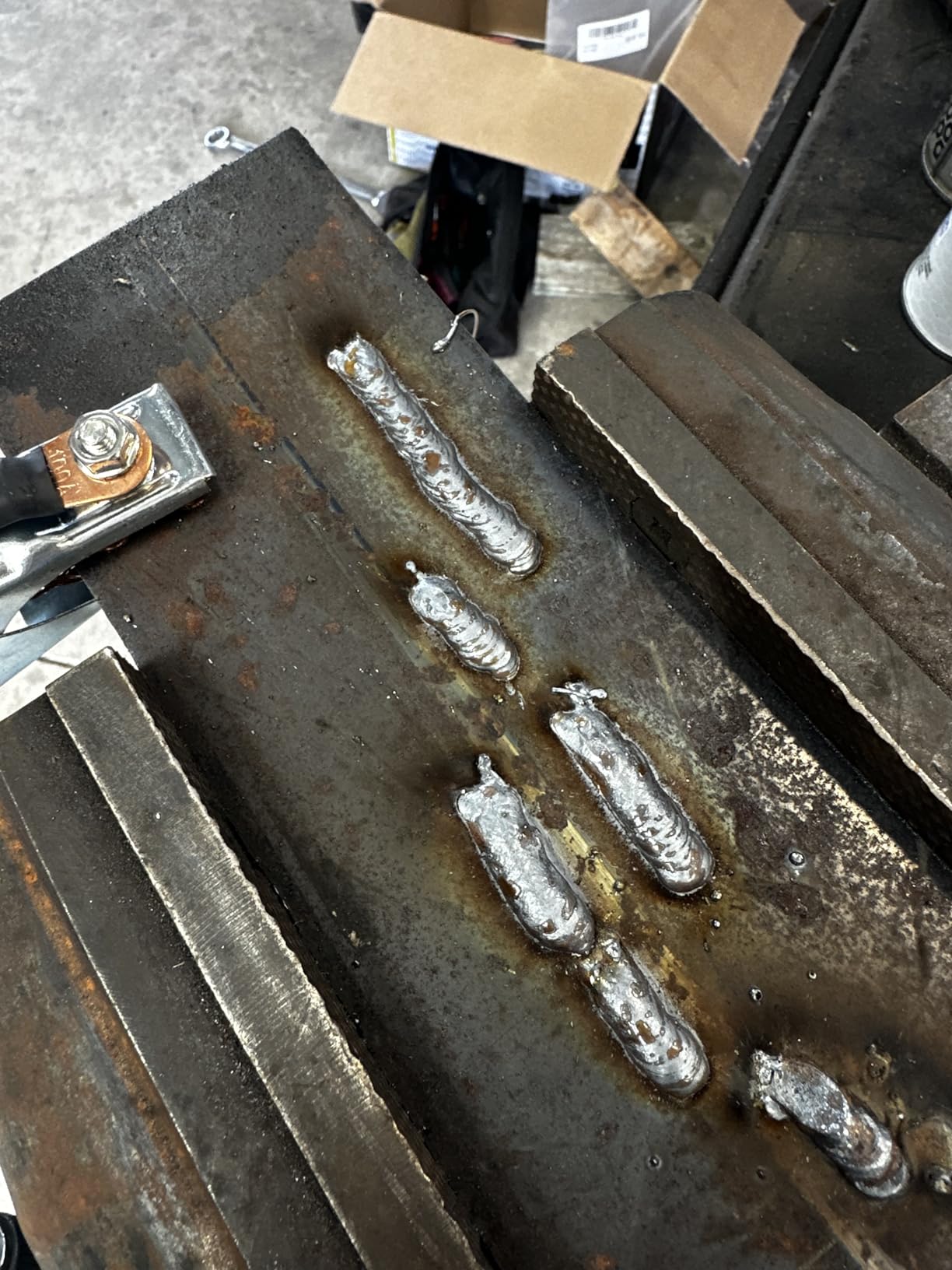
- Welds aluminum through the included teflon liner without birdnesting
- Generous 9.5 ft gun
- ground cable and stick lead
Cons
- Cooling fan runs constantly and is noticeably loud
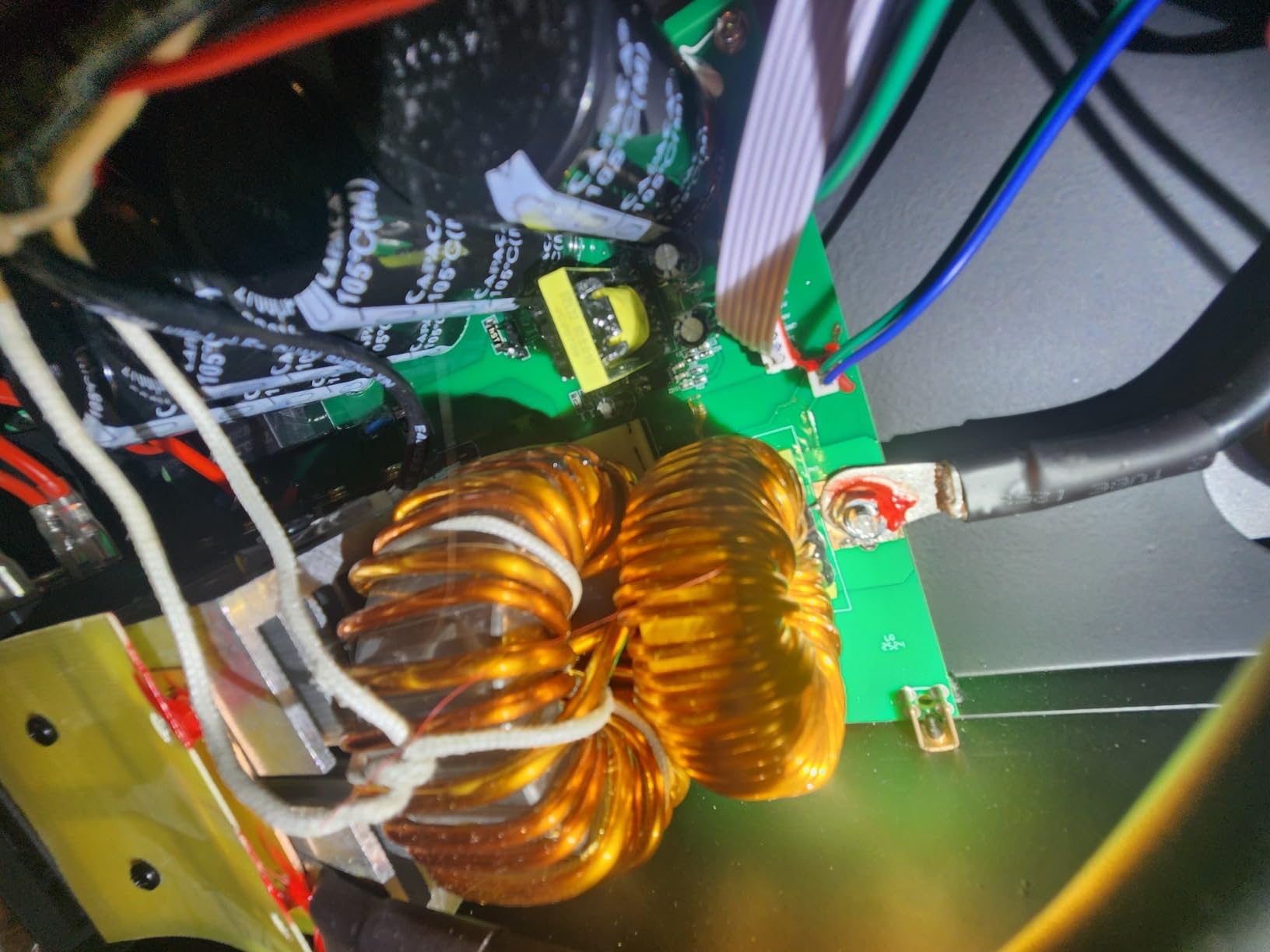
- Supplied 120V plug and cord are undersized for the machine
- Barbed gas fitting instead of a threaded quick connect
This is the largest output in the group, and experienced fabricators rate it as a genuinely capable home-shop machine rather than a spec-sheet exercise. Testing verified roughly 245A after a cord upgrade, with a 60 percent duty cycle across MIG, stick and TIG.
The spot weld mode is unusually well specified, with adjustable wire feed, amperage and weld time. Owners report it welding 24 gauge without burn-through, which is thinner than most car body sheet and a good demonstration of the machine’s low-end control.
Aluminum capability is real here. It welds through the supplied teflon wire feed tube without birdnesting on .035 inch 5356 wire, and it is spool gun compatible for the rest. Wire range covers .023 to .035 solid, .023 to .035 flux core and .035 to .045 aluminum.
Steel range is .024 inch up to half inch, with multiple passes on the heavy end. At 32.6 lb it is a floor machine, not a portable one, and the 9.5 ft leads are generous enough that reach rarely becomes the problem.
The mechanical complaints are consistent. The cooling fan runs constantly and is loud, the supplied 120V plug and cord are undersized for the amperage, and the gas outlet is a barbed fitting rather than a threaded quick connect.
Owners also describe the arc as soft rather than crisp next to premium machines, and there is no pulse MIG or AC/DC TIG. At 4.3 stars it is the lowest-rated machine here, and the gap is mostly about refinement rather than capability.
Who it suits
Home fabricators who also weld frame rails and thicker structural steel, and want aluminum and spool gun capability from the same box without owning three machines.
Where it falls short
Anyone who needs a quiet, refined bead for show work. The always-on fan and the soft arc are both trade-offs for the output and the price.
10. BILT HARD 135A – the most complete budget package
BILT HARD 135A 3-in-1 IGBT Inverter Welder, 110V Flux Core MIG/Lift TIG/Stick Welding Machine with Synergic Control, LED Display, 2T/4T/SPOT Modes & Full Kit (Solar Helmet)
135A flux core, stick and lift TIG on 110V
2T, 4T and spot trigger modes
LED display
Pros
- Unusually well built
- with a screen and menu at a very low price point
- Complete kit including a solar helmet
- 2 lb of wire
- gun and clamp
- Arc stability is good and metal transfers easily
- Spot trigger mode is useful for small fixes and body work
Cons
- No TIG torch or consumables included despite lift TIG being listed
- Included helmet is thin with a shade knob that drifts
- Capacity tops out around 3/16 inch to 1/4 inch steel
This is the machine owners most often describe as surprising. At its price point most rivals are bare-knob units, and this one has an LED display, a menu, dedicated burn-back and inductance controls, and MMA hot start, arc force and voltage reduction device. The build quality is well beyond what the price suggests.
It also has 2T, 4T and spot trigger modes, which is genuinely useful on a car. Spot mode is for short fixes, 2T is for tack welding and positioning, and 4T locks the gun on for a long seam without a foot pedal.
The bundled kit is unusually generous: a solar-powered helmet, a 6.6 ft MIG gun with the .030 tip pre-installed, a 10 ft ground clamp, a 2 lb spool of flux core wire, a spare .035 tip, a brush and a chipping hammer. Our beginners guide to flux core welders for beginners covers what to look for in that mode.
Synergic control adjusts voltage and feed speed from the amperage setting, with room to fine-tune both. Arc stability is good across a range of thicknesses, and owners report it handling exhaust work, brackets, drill hole repair and trailer rebuilds.
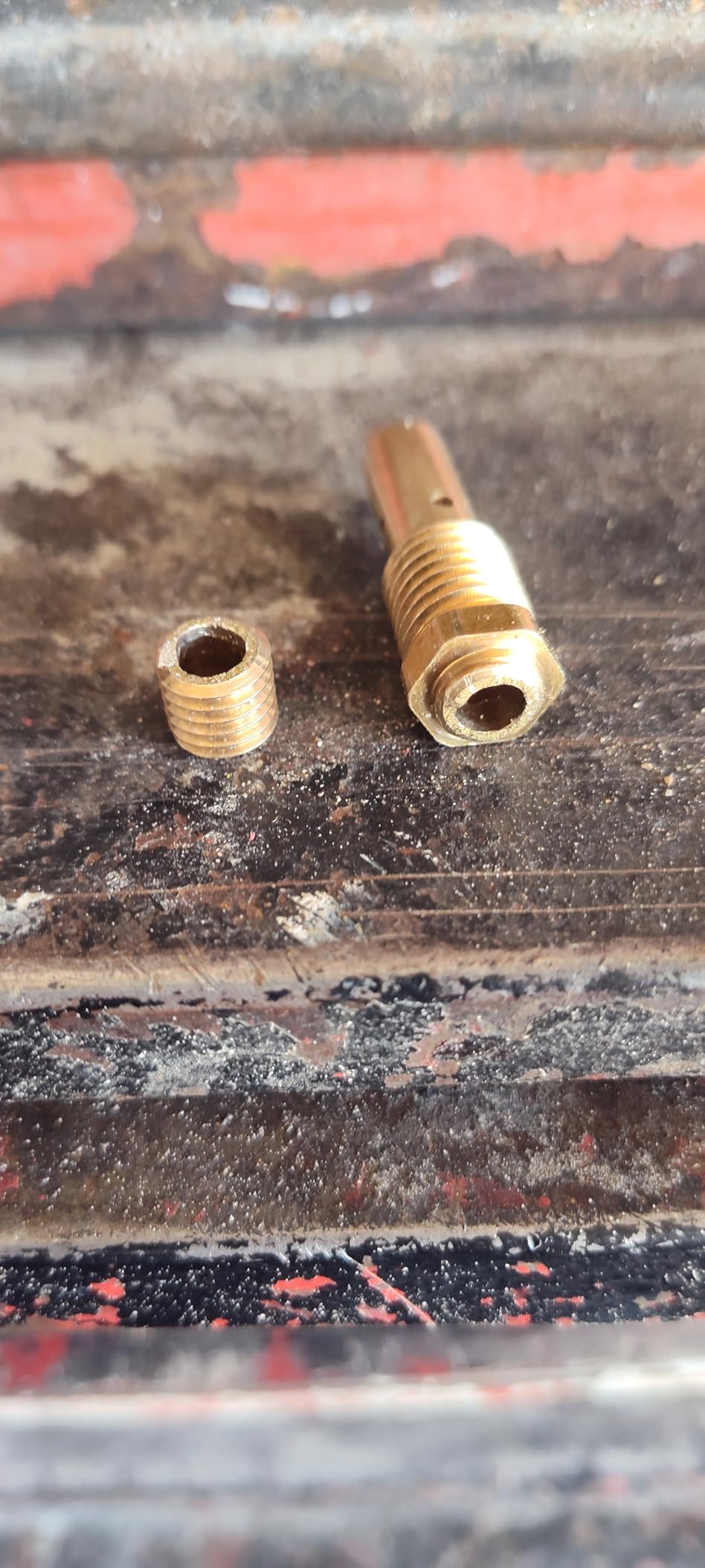
The bundled accessories are the weak point. There is no TIG torch or consumables included despite lift TIG being listed as a mode, the electrode clamp is poor quality, and the helmet is thin with a shade knob that drifts out of position between welds.
Capacity tops out around 3/16 inch to 1/4 inch steel and the duty cycle limits longer sessions. There is also a documented QC issue with units arriving without a wire spool, and the spindle is too short for the supplied wingnut.
Who it suits
A first welder who wants everything needed to start, including safety gear, in a single purchase. The included helmet alone changes the economics for anyone who would otherwise skip it.
Where it falls short
Anyone planning aluminum or heavy structural work. There is no gas MIG path to aluminum, no stick-grade range beyond light electrodes, and the bundled PPE is a starting point rather than proper gear.
How to Choose a Welder for Auto Body Work
110V vs 220V vs dual voltage: which outlet do you actually have
Panels live in the 30-80 amp range, so a 110V machine is genuinely enough for most body work. Frames and frame rails are the reason people overspend, because those want 200 amps or more and realistically want a 220V circuit.
If you only have 110V, choose a machine rated to run on 30A without tripping. If you can run a 220V outlet, a dual-voltage machine is the flexible answer. The catch is that some dual-voltage machines are labelled 110V capable but trip a household breaker under sustained load, so check for real feedback from owners on sustained 110V work.
Our guide to multiprocess welders for 110V outlets goes deeper on this if your shop is single-voltage.
Amperage range and duty cycle for sheet metal
Ignore peak amperage when comparing these machines. What matters for auto body is the bottom of the range and how cleanly the arc holds together there. A 200A machine that runs a clean 30 amps beats a 145A machine that sputters at the bottom.
Duty cycle tells you how long you can weld at a given output before the machine overheats. A 60 percent duty cycle at 145A means 10 minutes on and 5 off, which is fine for panel work with pauses for grinding and repositioning. A 40 percent cycle at 200A is tighter and shows up in long production seams.
For a hobbyist welding one car at a time, duty cycle rarely matters. For anyone doing this daily, it is the number to check first after voltage.
MIG vs TIG vs Stick for auto body panels
Most automotive body work is done with MIG. The factory-standard process on 18-22 gauge steel is MIG with .023 inch ER70S-6 solid wire and 75/25 argon CO2 shielding gas. It is fast, forgiving, and produces a bead that grinds flat for body filler.
TIG wins on heat control and on aluminum. Its heat-affected zone is narrower, so distortion is minimal, but it needs clean fit-up and steady hand movement, and it is slower on everything except the finest seams.
Stick is the wrong tool for panels. Its heat input is too high for 18-22 gauge and the slag makes grinding a nightmare. Reserve it for frame work, exhaust and chassis repairs, which is where it belongs.
Wire, gas and a per-gauge starting settings table
For steel body panels, .023 inch ER70S-6 solid wire with 75/25 argon CO2 at 15-20 CFH is the standard setup. Use C25 rather than pure CO2, because the higher argon content gives a wider, more stable puddle at low amperage and cuts spatter on thin material.
These are starting points, not gospel. Wire feed speed and voltage interact with your machine, so adjust from here.
18 gauge: roughly 90-110 amps, about 17-19 volts, and a slightly slower wire feed. 20 gauge: roughly 70-85 amps at 16-18 volts. 22 gauge: roughly 50-65 amps at 15-16 volts, and this is where burn-through happens if you drift high. Door skins can be thinner still, so treat 22 gauge as a ceiling rather than a target.
Aluminum needs a spool gun or a spool gun compatible machine. Push-feeding aluminum through a standard gun causes birdnesting, and 4043 or 5356 wire is correct for body panels rather than the 4045 filler used on castings.
Preventing warping and burn-through on thin panels
Tack and skip is the technique that separates flat panels from buckled ones. Tack the joint, move a few inches, tack again, and let each area cool before you return. Most panel distortion comes from welding one long seam in a single pass.
A copper bar backing the seam, or copper pennies clamped along the joint, draws heat away from the panel and dramatically reduces burn-through on 22 gauge. It is an old shop trick and it still works better than any machine setting.
Stitch welding gives you the same effect on a finished seam: weld an inch, move, weld an inch. If a panel does oil-can from too much heat, shrink it back with gentle hammer and dolly work over a block, then re-tack rather than forcing the metal flat.
Fit-up is the real prevention. Panels that meet with a visible gap need more filler metal and more heat, and more heat is exactly what warps them. Work the fit until the gap is a hairline before you strike an arc.
What your starter kit actually needs to include
Buying the machine is roughly half the cost of getting into auto body welding. The rest is wire, a shielding gas cylinder with a regulator, a proper ground clamp, an auto-darkening helmet, and for aluminum a spool gun.
The most common buyer surprise is accessories sold separately. A spool gun can add meaningfully to the total, and so can a TIG torch on machines that list lift TIG as a process. Check the included components list before you buy, not after.
For galvanized and HSLA steel on a modern car, grind the coating back to bare metal before welding and run extraction. Zinc fume causes metal fume fever, and the coating also contaminates the weld and the gun consumables. Our safety notes on this are worth reading before you strip a fifteen-year-old vehicle.
Renting is reasonable for a single one-off project car. If you expect more than one panel job, the machine pays for itself quickly, and the accessories are the part that keeps paying every time after that.
Frequently Asked Questions
What type of welder is best for autobody repair?
A MIG welder with fine low-amperage control, run with .023 inch ER70S-6 solid wire and 75% argon / 25% CO2 shielding gas at 15-20 CFH, is the standard setup for 18-22 gauge automotive sheet metal. MIG is fast, forgiving, and produces a bead that grinds flat for body filler.
Can you MIG weld car body panels?
Yes, and it is the most common way panels are repaired. The key is low amperage, correct shielding gas, and heat control. On 22 gauge you are typically in the 50-65 amp range, so a machine that runs clean at the bottom of its range matters far more than peak output.
What is the best size wire for MIG welding an auto body?
Use .023 inch ER70S-6 solid wire for steel body panels. It is thin enough to control heat on 20 and 22 gauge without burning through, and thick enough to feed reliably through a standard MIG gun. .030 inch is workable on 18 gauge but harder to manage on thin door skins.
Do I need 220V for auto body welding?
Not for panels. Panel work lives in the 30-80 amp range, so a 110V machine rated for 30A circuits is genuinely sufficient. You want 220V for frame rails, suspension and structural work above roughly 150 amps. A dual-voltage machine covers both without a second purchase.
Is flux core wire safe for car body welding?
Flux core is not unsafe, but it is not ideal for a visible body seam. It is self-shielded, so it produces more spatter and a rougher bead with no gas to refine it. It is a good choice for dirty or rusty structural steel and exhaust work, and a compromise for show-quality panels.
What gauge is car body sheet metal?
Most automotive body panels are 18, 20 or 22 gauge, roughly 0.0478, 0.035 and 0.0295 inch respectively. Door skins and some inner panels can be even thinner. Eighteen gauge is common on structural areas, while quarter panels and door skins are usually 20 or 22 gauge.
Is a 140 amp welder enough for car body work?
Yes, for panels. Body welding typically needs 30-80 amps, so 140 amps of rated output is more than sufficient for sheet metal, rust repair and patch panels. A 140 amp machine only falls short if you also plan to weld frame rails or suspension components, which want 200 amps and a 220V supply.
Which Welder Should You Buy in 2026?
For most people reading this, the answer is the ARCCAPTAIN MIG200. Six processes, 200 amps on both 110V and 220V, ten presets and a spot weld mode that most competitors at this capability do not include, and it is our editor’s choice for auto body work in 2026.
If you want the single best value rather than the most capable, the Bestarc 145A does the same four processes with a full accessory kit at a lower entry point. If your car has aluminum panels or you want the thinnest, most precise welds, add a TIG machine, and the PRIMEWELD TIG225X is the one we would pick on rating and warranty cover.
Set the machine up before you start, though. Whatever you buy, the .023 inch ER70S-6 wire, 75/25 gas, tack-and-skip technique and copper heat sink will do more for your panel work than any machine on this list.