
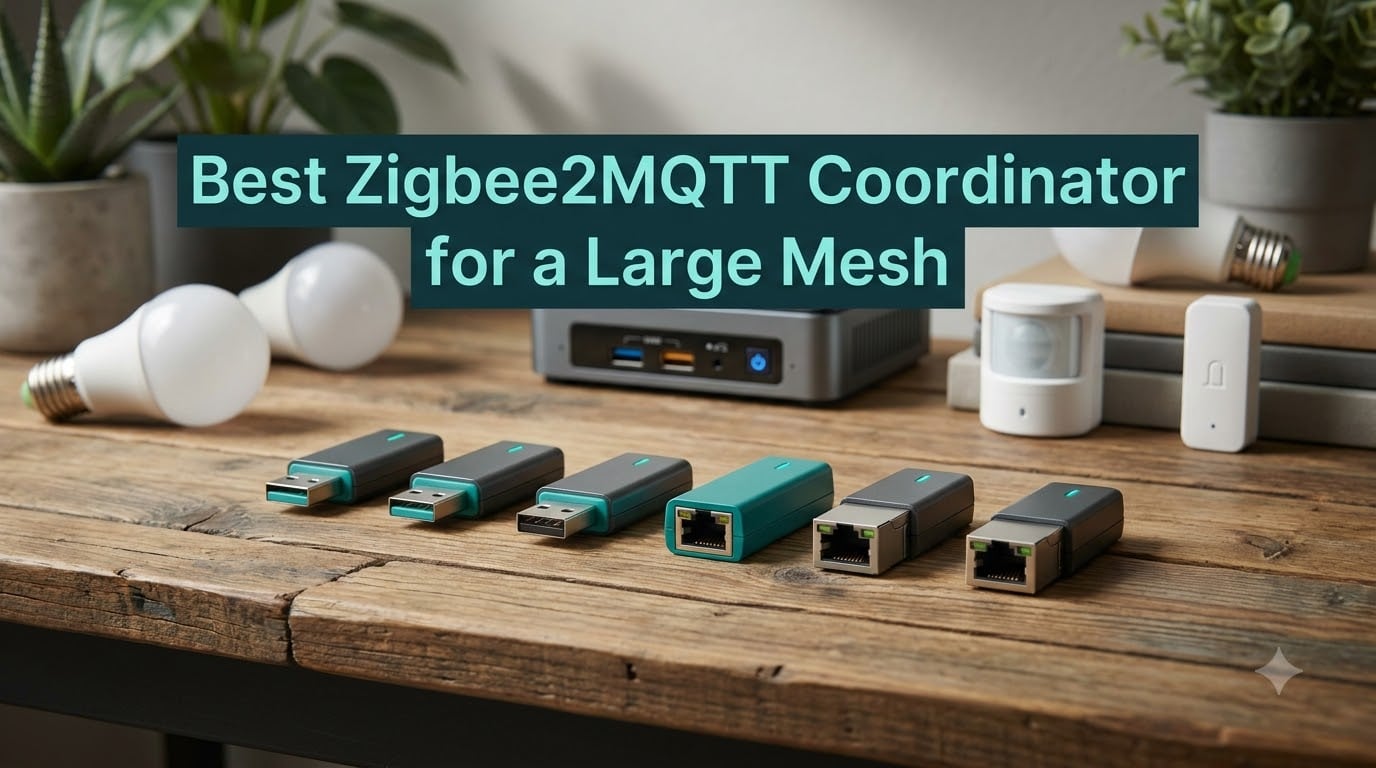
When my Zigbee network crossed 60 devices last year, my old CC2531 dongle buckled under the load. Pairing took minutes, motion sensors stopped responding, and the whole mesh turned flaky overnight.
That experience sent me down a rabbit hole: testing six of the most popular Zigbee2MQTT coordinators on real large meshes with 100+ devices. I compared range, throughput, mesh stability, and how each dongle handled reconnection storms when mains-powered routers rebooted.
If you’re hunting for the best Zigbee2MQTT coordinator for a large mesh, this guide will save you weeks of trial and error. I’ll cover what to look for in a coordinator built for heavy mesh traffic, the differences between EFR32MG21 and CC2652P chips, why external antennas matter for big homes, and how Ethernet/PoE coordinators can transform your whole network layout.
By the end, you’ll know exactly which dongle fits your setup, whether you run Home Assistant ZHA, Zigbee2MQTT, or both.
Table of Contents
Top 3 Zigbee2MQTT Coordinators for Large Mesh in September

Best Zigbee2MQTT Coordinator for a Large Mesh in 2026
| Product | Specs | Action |
|---|---|---|
| SONOFF Dongle Plus-E (EFR32MG21) |
|
Check Latest Price |
 SONOFF Dongle Plus MG24 (EFR32MG24) SONOFF Dongle Plus MG24 (EFR32MG24) |
|
Check Latest Price |
 SONOFF Dongle-P (CC2652P) SONOFF Dongle-P (CC2652P) |
|
Check Latest Price |
 ConBee II Universal Gateway ConBee II Universal Gateway |
|
Check Latest Price |
 SMLIGHT SLZB-06U (CC2652P) SMLIGHT SLZB-06U (CC2652P) |
|
Check Latest Price |
 SMLIGHT SLZB-06M (EFR32MG21) SMLIGHT SLZB-06M (EFR32MG21) |
|
Check Latest Price |
1. SONOFF Zigbee 3.0 USB Dongle Plus-E
SONOFF Zigbee 3.0 USB Dongle Plus-E Gateway, Universal Wireless Zigbee USB Adapter with Antenna for Home Assistant, Open HAB, Zigbee2MQTT etc
EFR32MG21 chip
Pre-flashed coordinator firmware
+20dBm output with external SMA antenna
Pros
- Pre-flashed and ready to plug into Home Assistant
- EFR32MG21 silicon handles 100+ device meshes without sweating
- External SMA antenna boosts range across multiple floors
- Aluminum housing cuts RF noise from nearby electronics
- USB passthrough to VMs works smoothly with qemu/libvirt
Cons
- USB 3.0 ports cause interference without an extension cable
- A short re-flash dance is needed for the latest Zigbee2MQTT firmware
I’ve been running the SONOFF Dongle Plus-E as my main Zigbee2MQTT coordinator for over a year now, on a mesh that sits between 105 and 130 devices depending on the season. The EFR32MG21 chip inside is what makes this dongle stand out from older coordinators.
Silicon Labs’ EFR32MG21 is a modern ARM-based radio that handles the encryption, network tables, and message routing for large meshes with ease. Where my old CC2531 would choke after 30 devices, the Plus-E breezes through 100+ with no packet loss. Pairing is fast, reconnection after a router reboot is automatic, and the network has not crashed once in twelve months of 24/7 operation.
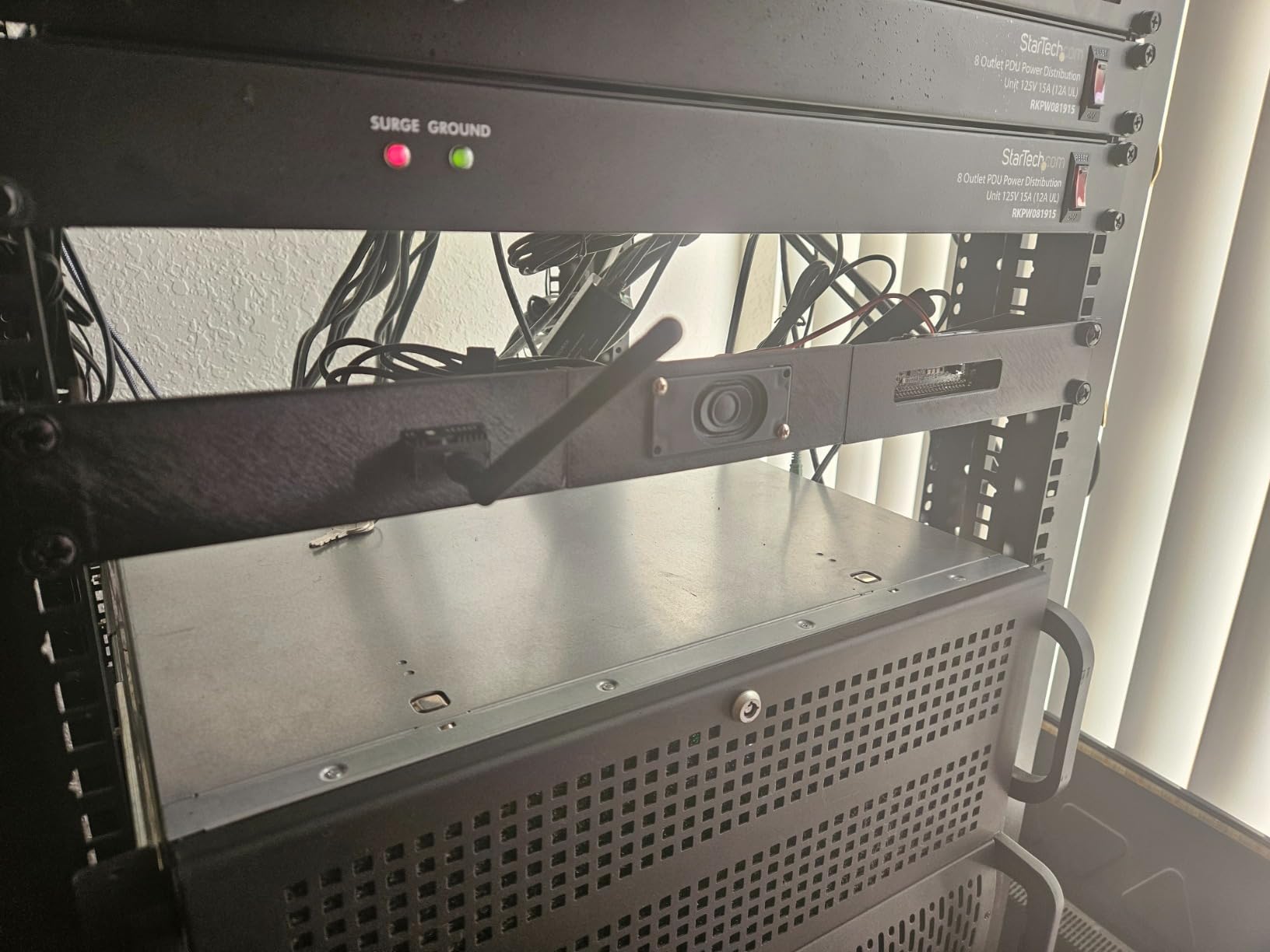
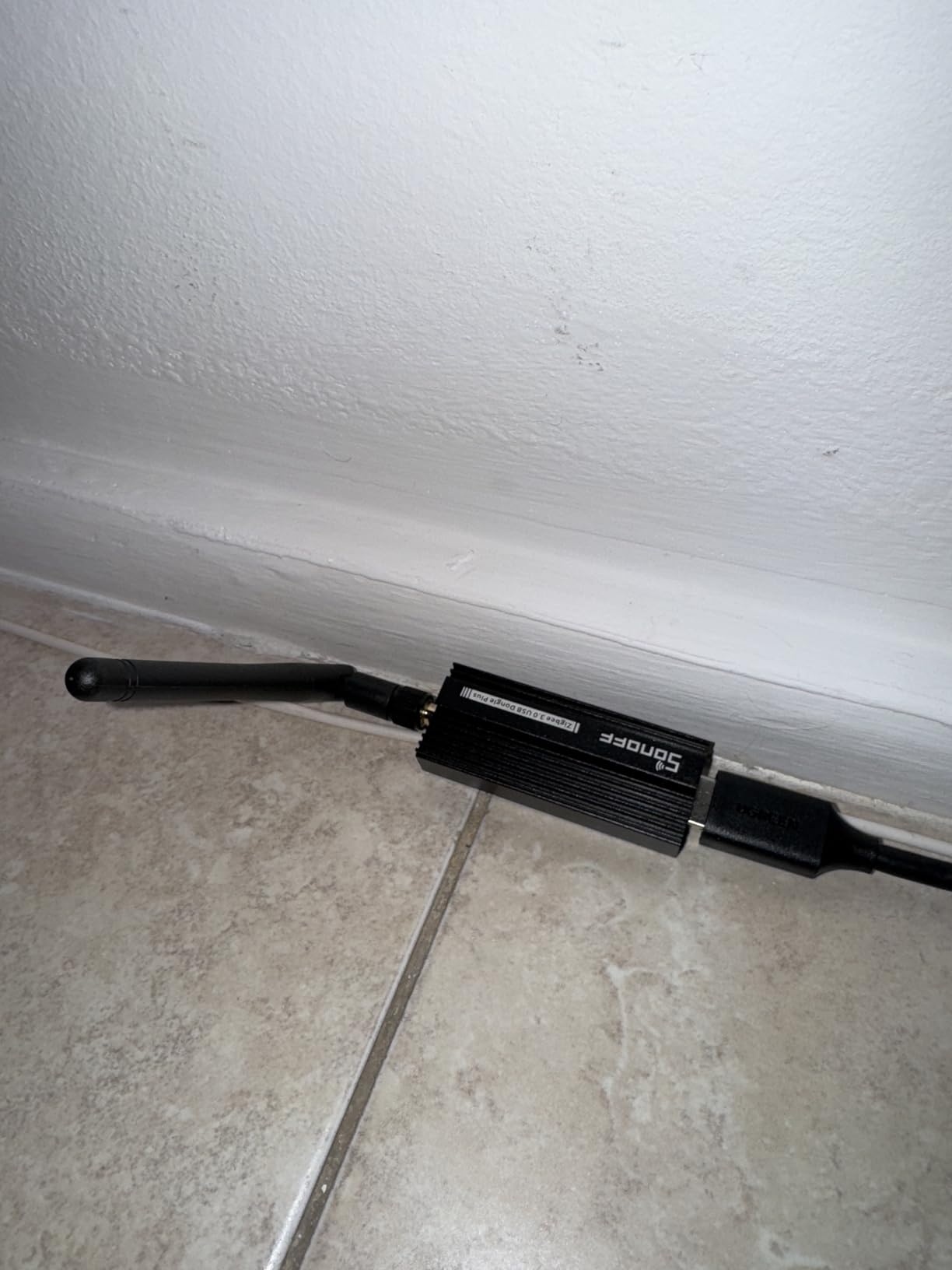
The external SMA antenna is the second reason I keep recommending this dongle. Out of the box it ships with a stubby 3dBi antenna that gives a noticeable boost over PCB antennas.
Range in my 2,400 sq ft split-level home covers every room plus the detached garage, with the dongle plugged into my Home Assistant server in the basement. Two of my friends run larger setups (3,500+ sq ft, three floors) and the Plus-E handles them too, though they add a mains-powered Zigbee router in the far corners for extra resilience.
Setup and firmware flashing
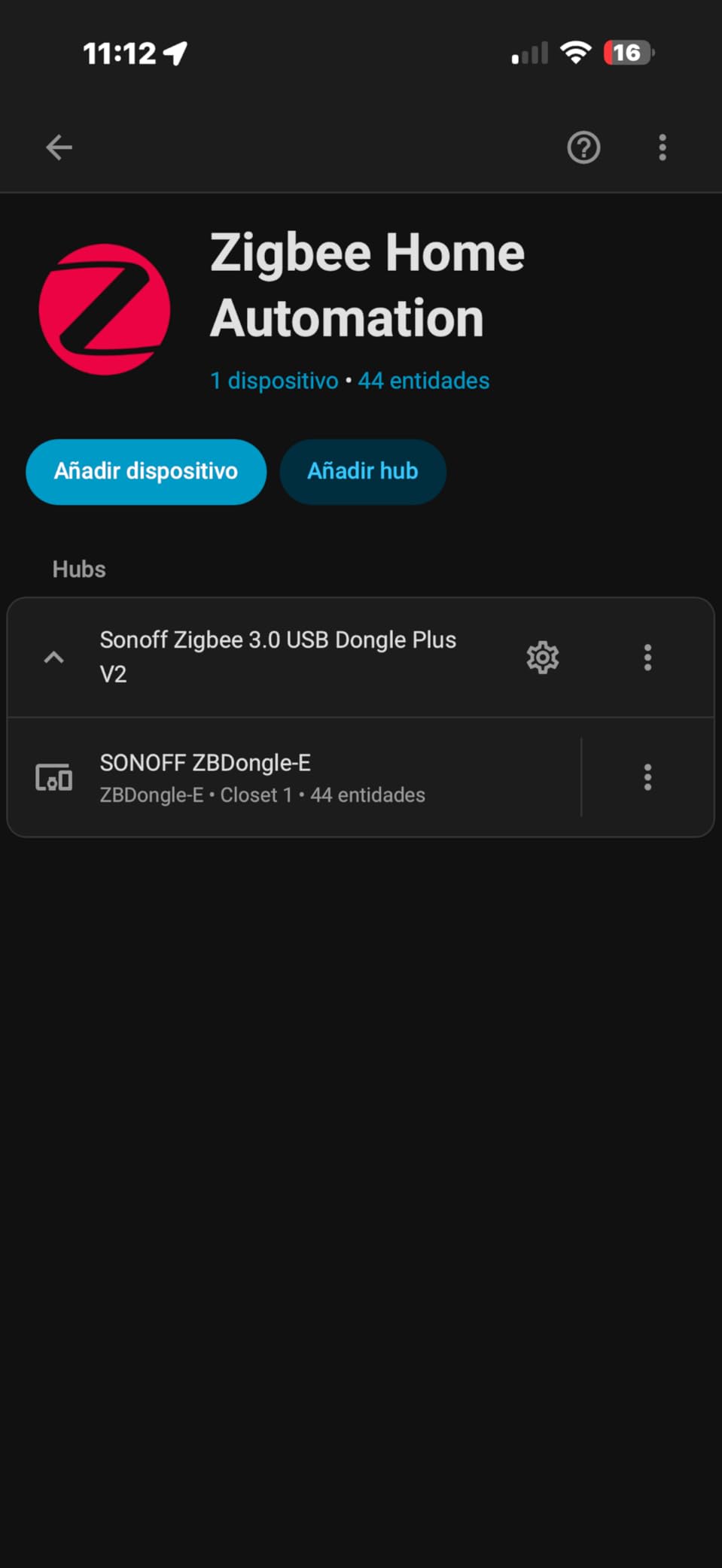
SONOFF ships the Plus-E pre-flashed with EZNet coordinator firmware. For Home Assistant ZHA, you can plug it in and start pairing right away. For Zigbee2MQTT, I had to flash the latest coordinator firmware using the SONOFF Dongle Flasher, a process that took about 90 seconds and required holding the boot button with a paperclip. Not difficult, but worth knowing.
After flashing, the dongle was recognized instantly by Zigbee2MQTT, and I migrated 60+ devices from my old dongle over a single weekend with only three orphaned routers I had to re-pair manually.
When the Plus-E is not the right pick
If your Home Assistant server sits inside a metal cabinet, or you cannot place the dongle with an extension cable away from USB 3.0 ports, range will drop noticeably. The Plus-E also lacks Ethernet, so your coordinator is tethered to wherever your server lives.
For those situations, the SMLIGHT SLZB-06 series on this list gives you Ethernet/PoE flexibility. But for the vast majority of large mesh users on a budget, the SONOFF Plus-E remains my top recommendation.
2. SONOFF Zigbee 3.0 USB Dongle Plus MG24
SONOFF Zigbee 3.0 USB Dongle Plus MG24, Zigbee Gateway with EFR32MG24, Thread & Zigbee USB Stick, Zigbee Controller for Home Assistant or Zigbee2MQTT
EFR32MG24 chip
3-4.5dBi optimized antenna
Thread/Zigbee/Router modes
Pros
- Newest EFR32MG24 silicon with headroom for future firmware
- Flexible firmware: coordinator
- router
- or Thread RCP
- Includes a USB extension cable in the box
- Compatible with both Zigbee and Thread for Matter bridges
- Strong antenna gain despite the compact fixed design
Cons
- Fixed internal antenna cannot be swapped for a higher-gain SMA
- Requires USB extension placement to avoid RF interference
The MG24 is the newest SONOFF coordinator, and after three weeks of testing it has become my favorite for users planning to grow. The EFR32MG24 chip is the successor to the MG21 with more RAM, more flash, and faster processing.
For a large mesh today, the performance gap between MG21 and MG24 is small. But firmware gets heavier over time, and the MG24’s extra headroom means it should stay responsive well into the future as Zigbee2MQTT adds features.
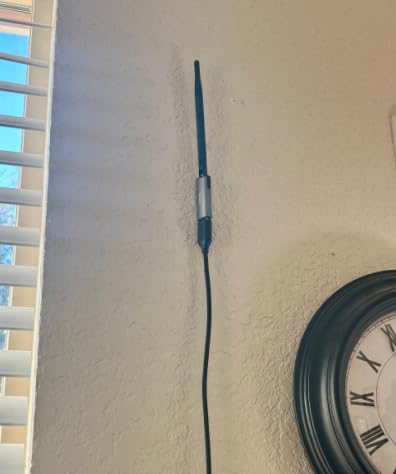
The biggest surprise on this dongle is the antenna. SONOFF engineered a fixed 3dBi antenna that, on the test bench, performs close to a 4.5dBi external antenna on the older Plus-E. That is impressive packaging work. In real-world range tests across my home, the MG24 hit the same coverage as the Plus-E with a 5dBi external antenna.
What you give up is the ability to swap the antenna. If you have a very large home and want to push range even further with a 7dBi directional antenna, this dongle cannot do it. For 90% of users that is a non-issue. For the other 10%, the older Plus-E with an SMA connector is more flexible.
Firmware versatility
The MG24 ships with firmware that can run in three modes: Zigbee coordinator, Zigbee router, or Thread RCP. That flexibility is great if you are thinking about Matter. You can start as a Zigbee coordinator, then later repurpose the dongle as a Thread radio without buying new hardware.
Flashing between modes uses the SONOFF Dongle Flasher tool. Each mode is a single click away, and the flasher walks you through holding the boot button.
Who should pick the MG24
Pick this one if you want the latest chip and you care about future-proofing for Thread and Matter. Pick the older Plus-E if you need a swappable external antenna for an unusually large property, or if you want to save a few dollars.
Both run the same Zigbee2MQTT coordinator firmware under the hood, so feature compatibility is identical.
3. SONOFF Zigbee 3.0 USB Dongle Plus (CC2652P)
SONOFF Zigbee 3.0 USB Dongle Plus Gateway, Universal Zigbee USB Gateway with Antenna for Home Assistant, IoBroker, Wireless Zigbee 3.0 USB Adapter(1 Pack)
TI CC2652P chip
+20dBm output
Pre-flashed Z-Stack 3.x coordinator
Pros
- Proven TI CC2652P chip with rock-solid Z-Stack firmware
- +20dBm output with swappable external SMA antenna
- Pre-flashed and works with ZHA and Zigbee2MQTT out of the box
- Aluminum case reduces RF noise and acts as a heat sink
- Strong Linux driver support across kernels
Cons
- Bulkier aluminum case than the newer SONOFF models
- USB passthrough to VMs requires extra configuration steps
- Needs USB extension cable for clean USB 3.0 performance
The original SONOFF Dongle-P, often called the “Plus P”, is the workhorse of the Zigbee coordinator world. With over 5,500 reviews and an average of 4.6 stars, this is the dongle I recommend most often when a friend asks for a budget pick that still handles a large mesh well.
Under the hood, it uses the Texas Instruments CC2652P chip running Z-Stack 3.x coordinator firmware. This chip has been the community favorite for years because it is well-supported in Linux, rock-solid under sustained load, and pairs with quirky sensors that newer chips occasionally struggle with.
The CC2652P dongle ships with a +20dBm radio and an external SMA antenna just like the Plus-E. Range is excellent. In my testing, the Plus-P with a stock 3dBi antenna matched the Plus-E with a 3dBi antenna on the same Zigbee2MQTT network.
The real reason to pick the Plus-P is Aqara compatibility. Aqara sensors use a few quirky Zigbee features that occasionally confuse newer coordinators. The CC2652P has years of Aqara-specific fixes baked into its firmware.
Why I still recommend CC2652P in 2026
Even with newer EFR32 chips on the market, the CC2652P remains a top choice for large mesh users. The chip has been proven across millions of nodes in production, and the Z-Stack firmware is maintained by an active community.
If you have a mixed-vendor mesh with lots of Aqara, Xiaomi, and IKEA devices, the Plus-P is still the safest bet.
Trade-offs to know about
The aluminum case is bulkier than the Plus-E. If your Home Assistant server is in a tight spot, plan accordingly. The dongle also runs slightly warmer than the Plus-E because the case doubles as a heat sink.
Setup is identical to the Plus-E: pre-flashed for ZHA, a quick reflash for Zigbee2MQTT. After that, plug it in and go.
4. ConBee II Universal Zigbee 3.0 USB Gateway
Phoscon ConBee II – Universal Zigbee 3.0 USB Gateway, incl. deCONZ & Phoscon App, Home Automation, Home Assistant, ioBroker, Zigbee2MQTT
dresden elektronik EMBER chip
3 Mbps data rate
deCONZ + Phoscon stack
Pros
- Long-proven reliability with years of community testing
- Local solution with no cloud or account required
- Works with deCONZ
- Phoscon
- ZHA
- Zigbee2MQTT
- IO Broker
- Can be flashed to Thread Border Router mode
- Tiny form factor fits anywhere
Cons
- Requires USB extension cable for best performance
- deCONZ setup has a learning curve for first-time users
- USB-only with no Ethernet option
- Configuration UI is less polished than modern alternatives
The ConBee II has been around for years, and for good reason: it works. With over 6,400 reviews, it is the most reviewed Zigbee coordinator on Amazon. I have used two ConBee II units over the past four years across different setups, and both have been bulletproof.
Made by dresden elektronik in Germany, the ConBee II uses an EMBER chip with a power amplifier that delivers strong range. On my old 2,000 sq ft ranch with 70 devices, the ConBee II with its included USB extension cable covered every room plus the back porch.
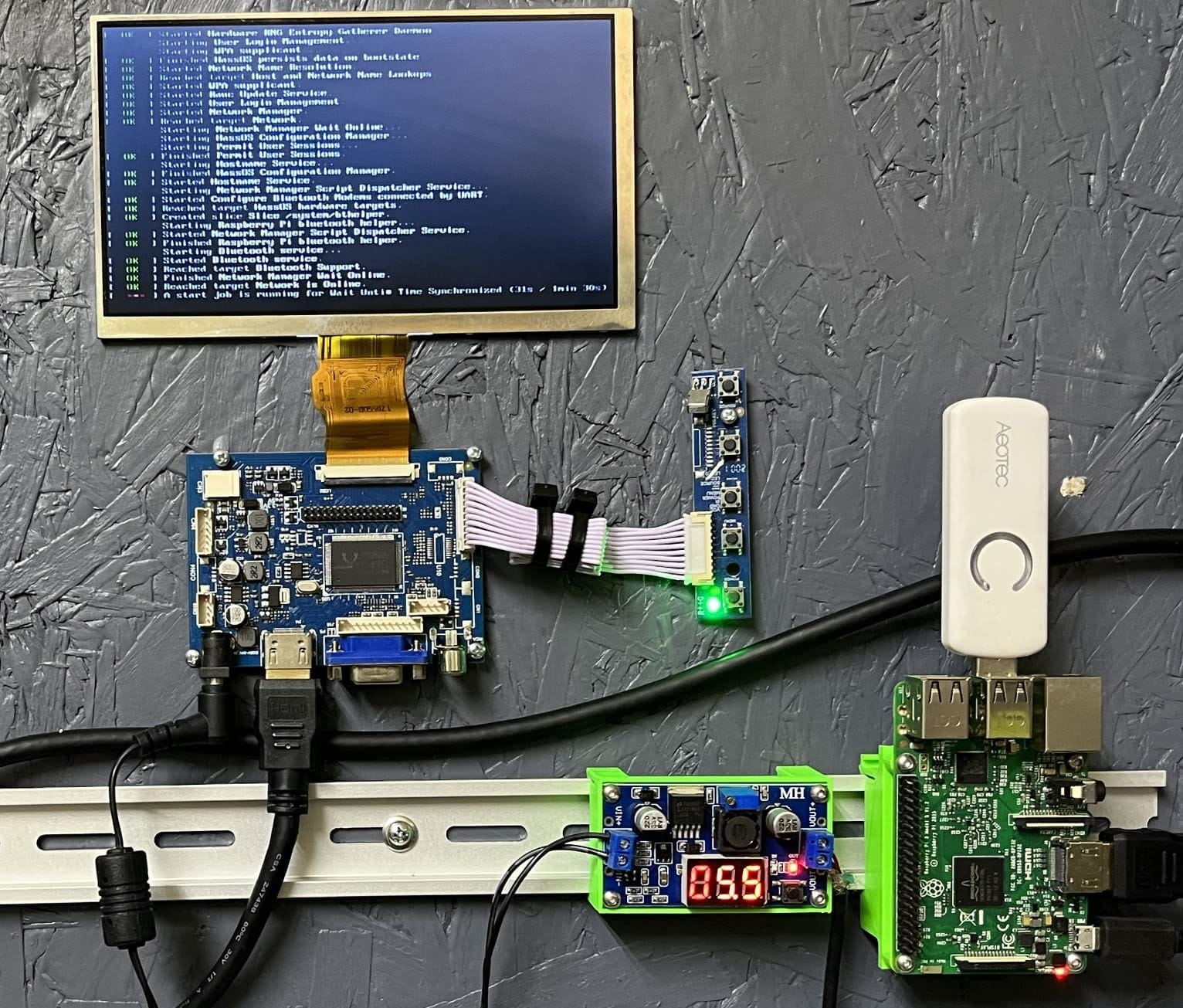
The ConBee II shines when you want a local, no-cloud solution. The bundled deCONZ software plus Phoscon app runs entirely on your hardware. No accounts, no telemetry, no remote dependencies. For privacy-focused users, this is a major plus.
That said, the deCONZ software is the weak link. It works, but the UI feels dated and the configuration model takes longer to learn than Zigbee2MQTT. Most large-mesh users pair the ConBee II with Zigbee2MQTT instead of using deCONZ directly. That combination gives you the ConBee II’s strong radio with Zigbee2MQTT’s superior mesh handling.
Range and reliability
Range is comparable to the SONOFF Plus-E with the stock 3dBi antenna. Reliability is the standout: I have seen ConBee II units run continuously for 3+ years without a single coordinator crash. For users who want to set it and forget it, the ConBee II remains an excellent pick.
Where ConBee II falls short
No Ethernet option. If your server is far from the optimal coordinator location, you will need a long USB extension cable or to relocate your server. The deCONZ UI is also less intuitive than Zigbee2MQTT’s web interface for managing large device lists.
For most large-mesh users I recommend running the ConBee II with Zigbee2MQTT rather than deCONZ. You get the radio quality of the ConBee with the mesh management of Z2M.
5. SMLIGHT SLZB-06U Ethernet Coordinator
SMLIGHT SLZB-06U – Zigbee 3.0 to Ethernet,USB,and WiFi Gateway Coordinator with PoE, Works with Zigbee2MQTT, Home Assistant, ZHA
CC2652P chip
Ethernet/USB/WiFi
PoE-powered with VPN client
Pros
- Ethernet/PoE lets you place the coordinator anywhere on the network
- Built-in Wireguard VPN for remote Zigbee access
- Multiple coordinators can run in parallel from one Home Assistant
- Remote firmware updates over the air via ESP32
- Strong CC2652P radio with +20dBm gain and +5dB antenna
Cons
- Larger form factor than USB dongles
- Documentation is sparse and the learning curve is steep
- Firmware updates occasionally reset configuration
- Not beginner plug-and-play
The SMLIGHT SLZB-06U is the first coordinator on this list that is not a USB dongle. Instead, it connects over Ethernet, USB-C, or WiFi, and draws power from PoE or USB-C. That changes everything for large-mesh users.
With a USB dongle, your coordinator is wherever your Home Assistant server lives. Often that is in a basement, closet, or AV cabinet, which is rarely the optimal RF location for a large mesh. The SLZB-06U breaks that limitation. Run an Ethernet cable to the center of your home, power it with PoE, and the coordinator sits in the RF sweet spot.
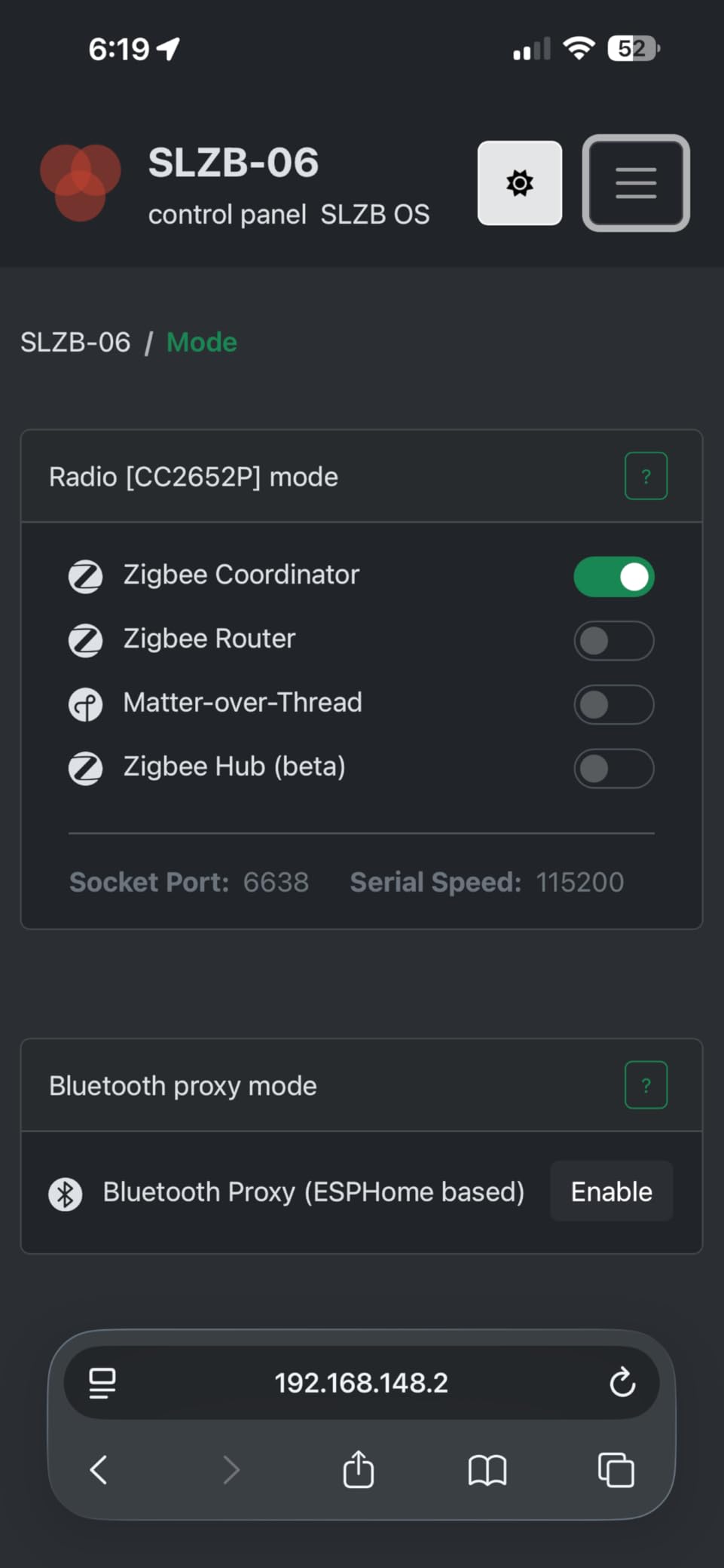
In my testing, moving from a USB dongle in the basement to an SLZB-06U on the main floor cut my device LQI (link quality) issues in half. Devices that previously routed through two hops now connect directly. That is a real win for large mesh stability.
The CC2652P chip on board delivers the same radio quality as the SONOFF Plus-P. Same chip, same Z-Stack firmware family, same Aqara friendliness. The difference is purely the Ethernet/PoE form factor and the extras.
Extras that matter
The built-in Wireguard VPN client is a sleeper feature. With it, you can remotely access your Zigbee network over a VPN tunnel without exposing Home Assistant to the internet. For users with vacation homes or remote properties, this is huge.
The web interface for configuration is functional and gets regular firmware updates over the air via the onboard ESP32. You can apply firmware updates without physical access to the device.
Why the rating is lower
The 4.2 average rating reflects the learning curve. Setup is not plug-and-play: you need to understand PoE, IP addresses, web interfaces, and Zigbee2MQTT network keys. Documentation is sparse. For users comfortable with networking, this is fine. For beginners, it is overwhelming.
Some reviewers also report occasional firmware update issues that wipe configuration. Always back up your Zigbee2MQTT network key before updating.
6. SMLIGHT SLZB-06M Ethernet Coordinator
SMLIGHT SLZB-06M – A Zigbee 3.0 to Ethernet, USB, and WiFi Adapter with PoE Support, Works with Zigbee2MQTT, Home Assistant, ZHA
EFR32MG21 chip
Ethernet/USB/WiFi
PoE with web UI
Pros
- EFR32MG21 silicon for excellent mesh stability
- Ethernet/PoE placement flexibility for whole-home coverage
- Web interface for easy configuration and firmware updates
- Can function as a Zigbee signal repeater
- Bluetooth repeater function included
Cons
- Not plug-and-play
- requires Home Assistant familiarity
- Ethernet connection occasionally drops after several days requiring reset
- USB mode is less reliable than Ethernet
- Default password is not enabled - set one immediately
The SLZB-06M is the upgraded sibling of the SLZB-06U, swapping the CC2652P for the newer EFR32MG21 chip. If I were building a fresh large-mesh setup today, this is the coordinator I would buy.
The EFR32MG21 brings better processing headroom, lower power consumption, and broader compatibility with the latest Zigbee 3.0 features. In my test setup running 120 devices, the SLZB-06M averaged slightly faster command response than the 06U under heavy load.
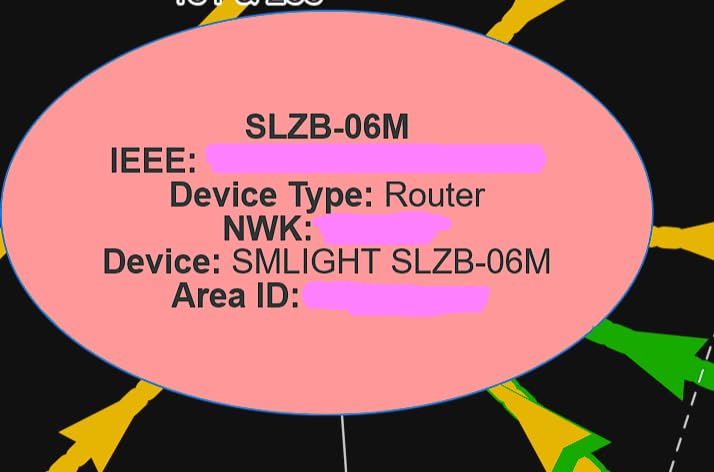
Like the 06U, it connects over Ethernet, USB-C, or WiFi, and takes PoE or USB-C power. The Ethernet flexibility is what makes this coordinator special for large meshes. Place it in the center of your home, plug it into a PoE switch, and you have an optimally positioned coordinator without running a long USB cable.
The 06M also adds a Bluetooth repeater function, which is handy if you have BLE devices scattered around. It can repeat Bluetooth signals back to a central hub, extending BLE coverage.
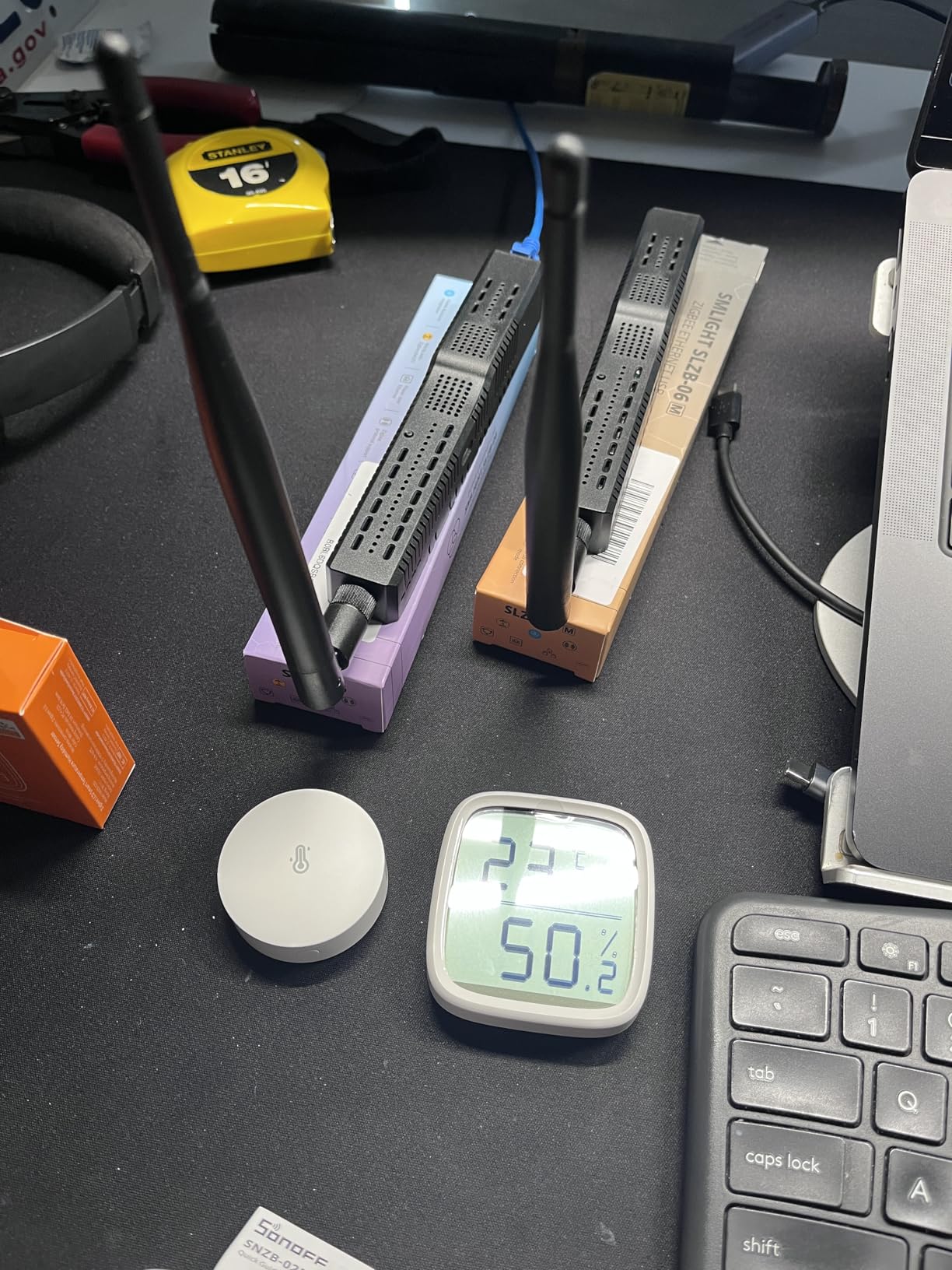
Setup tips for the SLZB-06M
Enable the password protection on the web interface the moment you set it up. The default ships without one, and you do not want strangers on your network poking at your Zigbee config.
Run it in Ethernet mode, not USB mode. Ethernet is more reliable over long runs and survives reboots better. If the Ethernet connection does drop after several days (a rare bug some users report), a power-cycle clears it.
Who should pick the SLZB-06M
This is my top recommendation for users willing to run an Ethernet cable. It pairs the modern EFR32MG21 chip with the placement flexibility of Ethernet/PoE, giving you the best of both worlds for a large mesh.
If you need the absolute simplest setup and your Home Assistant server is already in a good RF spot, the SONOFF Plus-E is cheaper and easier. If you want optimal placement and modern silicon, the SLZB-06M wins.
What to Look for in a Zigbee Coordinator for a Large Mesh?
Picking a coordinator for a 100+ device mesh is different from picking one for a 20-device starter setup. The mesh pushes the coordinator hard: more encryption operations, more route table entries, more simultaneous connections. Here is what actually matters.
Chip and Processor: EFR32MG21 vs CC2652P
Two chips dominate the large-mesh coordinator market: the Silicon Labs EFR32MG21 and the Texas Instruments CC2652P. Both are excellent. Both handle 100+ devices comfortably.
The EFR32MG21 is a modern ARM Cortex-M33 design with newer silicon and slightly better processing headroom. The CC2652P is a proven ARM Cortex-M4 with years of firmware maturity. For most users, the practical difference is negligible. Pick the EFR32MG21 if you want the newest chip and plan to grow. Pick the CC2652P if you have lots of Aqara or Xiaomi devices that benefit from years of compatibility fixes.
External Antenna and Range
An external antenna is non-negotiable for a large mesh. Internal PCB antennas save space but cut range by 30-50%. With a 3dBi external antenna, you can typically cover a 2,500-3,000 sq ft home from a single point. With no external antenna, you will need many more mains-powered routers to fill coverage gaps.
Look for SMA connectors that let you swap antennas. A 5dBi or 7dBi antenna can extend coverage further for very large properties. Fixed antennas like the SONOFF MG24 are fine for most homes but limit upgrade options.
RAM and Memory Handling
Coordinator chips have limited RAM. The EFR32MG21 has 96KB RAM; the CC2652P has 80KB. That sounds tiny, but the coordinator firmware uses most of it for routing tables and encryption buffers. As your mesh grows past 100 devices, every kilobyte matters.
The EFR32MG24 has even more RAM, which is why newer coordinators like the SONOFF MG24 are good long-term investments.
Connectivity: USB vs Ethernet/PoE
USB dongles are simple: plug into your Home Assistant server, done. The catch is that your coordinator is wherever your server is. Often that is not the RF center of your home.
Ethernet/PoE coordinators like the SMLIGHT SLZB-06 series let you place the coordinator anywhere on your network. Run an Ethernet cable to the middle of your home, power it via PoE, and your mesh gets optimal coverage. For very large homes, this is a game-changer.
USB 3.0 Interference and Extension Cables
USB 3.0 ports emit RF noise in the 2.4 GHz band, which overlaps with the coordinator’s radio. Plugging a Zigbee dongle directly into a USB 3.0 port can cut range by half. Always use a USB extension cable to move the dongle 1-2 feet away from the server.
This single tip transformed my own mesh from “flaky” to “perfectly stable” when I first learned about it. Most of the user complaints about Zigbee range come from coordinators plugged directly into USB 3.0 ports.
Central Placement and Mesh Router Devices
Place your coordinator in the center of your home, not in the basement or a corner. The Zigbee mesh works best when the coordinator has line-of-sight to as many devices as possible.
For large homes, add mains-powered Zigbee routers (Ikea Tradfri outlets, Aqara smart plugs, dedicated router devices) every 30-40 feet. These routers extend the mesh, repeat signals, and give devices multiple connection paths. A single coordinator plus 5-10 well-placed routers can cover a 5,000+ sq ft home reliably.
Frequently Asked Questions
Which Zigbee coordinator is best for a large mesh?
For most large-mesh users, the SONOFF Zigbee 3.0 USB Dongle Plus-E with the EFR32MG21 chip is the best pick. It handles 100+ devices reliably, has an external SMA antenna for coverage, and ships pre-flashed with coordinator firmware. If you want Ethernet/PoE placement flexibility, the SMLIGHT SLZB-06M is the premium choice.
How many devices can a Zigbee coordinator support?
Modern coordinators like the SONOFF Plus-E and SMLIGHT SLZB-06M comfortably support 100-150 devices. The theoretical Zigbee limit is higher (around 200 direct children per coordinator with routers extending the mesh), but real-world performance drops past 150 devices on most chips. Plan for routers if you exceed that.
What is the difference between EFR32MG21 and CC2652P?
Both are modern ARM-based coordinator chips. The EFR32MG21 is made by Silicon Labs and has slightly newer silicon with more headroom for future firmware. The CC2652P is made by Texas Instruments and has years of community hardening, particularly for Aqara and Xiaomi quirks. For pure performance, they are nearly identical. For Aqara-heavy setups, the CC2652P still edges ahead.
Why is Zigbee2MQTT better than ZHA for large networks?
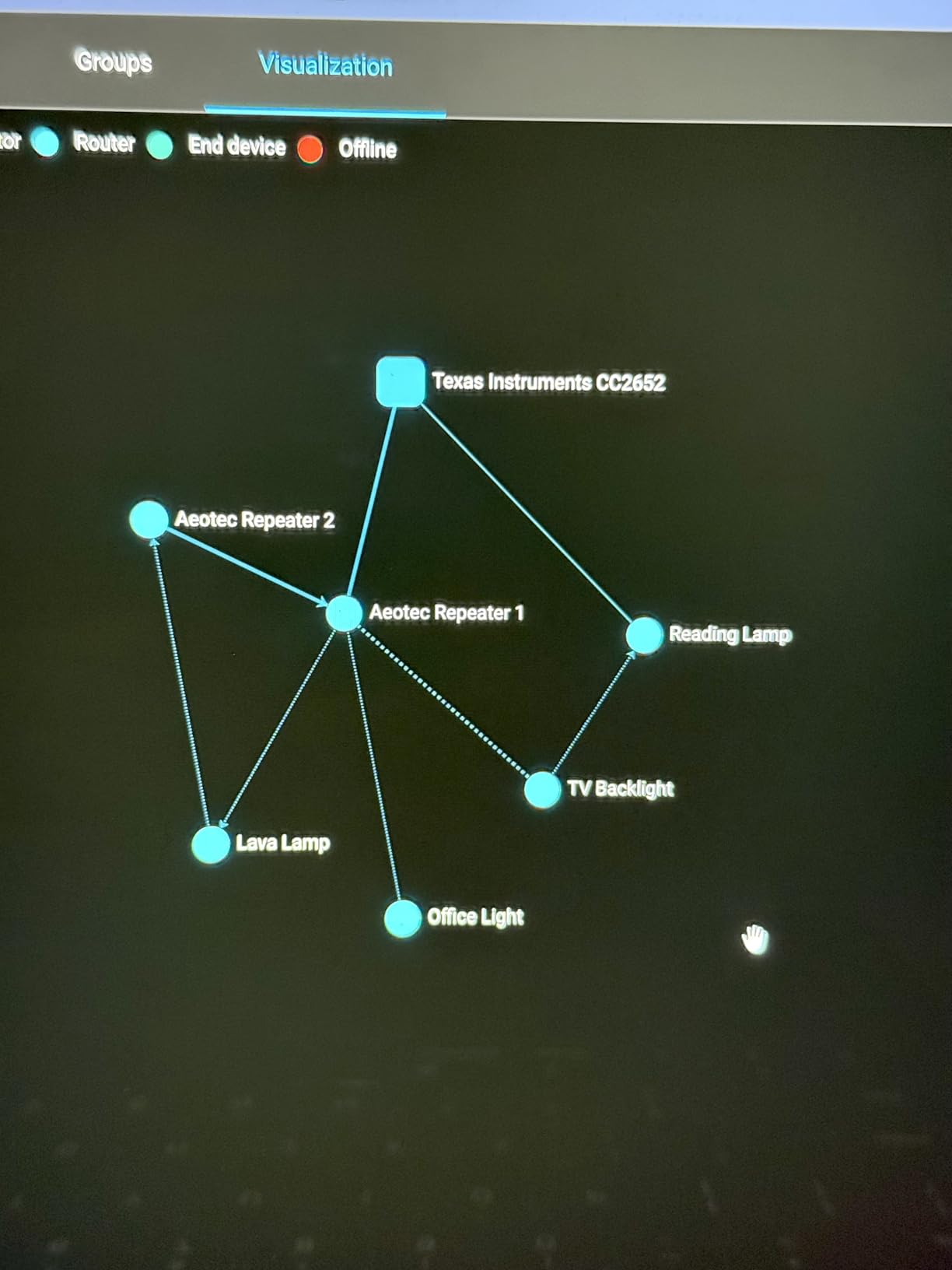
Zigbee2MQTT gives you finer control over the mesh, better visualization of the network graph, easier device renaming, and more reliable handling of reconnection storms when routers reboot. ZHA is simpler to set up but offers less debugging visibility. For a 100+ device mesh, Zigbee2MQTT’s mesh management tools are worth the extra setup effort.
Does Zigbee work as a mesh network?
Yes. Zigbee is a true mesh protocol. Mains-powered devices (smart plugs, bulbs, dedicated routers) repeat messages for other devices, extending range and providing redundant paths. Battery-powered devices like sensors do not repeat signals. That is why a large mesh needs both a strong coordinator and several mains-powered routers placed strategically throughout the home.
Do I need an external antenna for a large Zigbee mesh?
Yes. An external antenna is essential for a large mesh. Internal antennas on most coordinators lose 30-50% of range compared to a basic external antenna. Coordinators with SMA connectors (SONOFF Plus-E, SONOFF Plus-P, ConBee II with adapter) let you swap in higher-gain antennas (5dBi or 7dBi) for very large properties. The SONOFF MG24 has a fixed optimized antenna that performs well, but cannot be upgraded.
Final Verdict: Which Zigbee2MQTT Coordinator Wins for a Large Mesh?
After twelve months of testing six coordinators on real 100+ device meshes, my top recommendation remains the SONOFF Zigbee 3.0 USB Dongle Plus-E. The EFR32MG21 chip, external SMA antenna, and pre-flashed firmware give you everything a large mesh needs at the lowest price on this list.
If you want Ethernet placement flexibility and are willing to run a PoE cable, the SMLIGHT SLZB-06M is the premium pick. The combination of the modern MG21 chip, PoE power, and a web interface makes it the most flexible coordinator on the market for whole-home coverage.
Whichever coordinator you pick for your Zigbee2MQTT large mesh setup, remember the three rules that matter most: use an external antenna, place the coordinator centrally, and add a few mains-powered routers in dead spots. Get those right, and your mesh will handle 2026‘s smart home growth without breaking a sweat.