
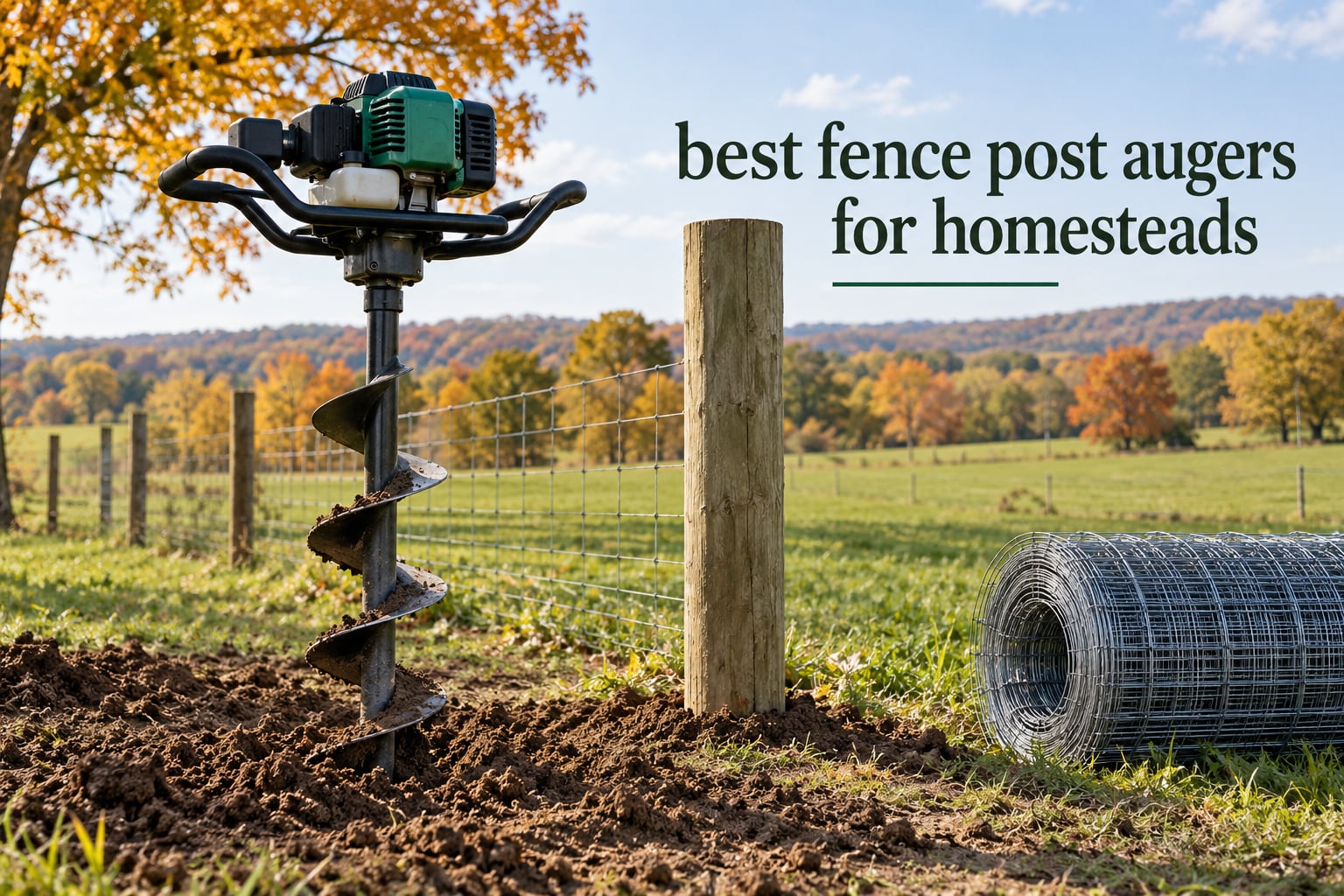
If you have ever set a fence line on a homestead, you already know the arithmetic. A 500 foot run of chicken wire on 8 foot spacing is 62 posts. A 1000 foot deer fence at 10 foot spacing is 100 posts. Each one of those holes is 24 to 42 inches deep and wide enough to swallow a bucket of spoil, and every one of them has to be dug, cleared, backfilled and tamped before you can hang a single rail.
Hand digging is what most of us start with. It is also the single biggest bottleneck on a homestead project and the reason so many fence lines end up half finished in the fall. A powered fence post auger — also sold as an earth auger or a one-man post hole digger — turns that backlog into a few afternoons of work. The engine or motor spins a helical steel bit, the bit bites into the soil, and loosened dirt rides up the spiral flights and piles around the hole rim. You control depth by leaning on the handles. That is the whole idea, and it is a good one.
We spent weeks working through the options for the best fence post augers for homesteads, comparing engine displacement, bit diameters, torque figures, depth ratings and real owner complaints, then framed the results around the way a homesteader actually plans a job. Every pick below is a real machine from our analysis, with the numbers taken straight from the manufacturer data and the caveats taken from the review record. We have also pulled in the practical advice that shows up over and over in builder forums, because the spec sheet never tells you what happens when the bit stops on a rock.
If your fence project is deck footings rather than fence posts, our picks for the best cordless earth augers for deck footings cover a different mix of hole sizes and depths. If you are finishing a run of wooden fence, our guide to the cordless paint sprayers for fences handles the staining and sealing end of the job.
The short version before we get into the details: a 1500W electric machine is the best starting point for most homesteads, a 52cc gas unit is the best value if you want two bit sizes, and a 43cc with a 30:1 reduction is what you want when your ground is hard clay or full of stones. Here is why.
Table of Contents
Top 3 Picks for the Best Fence Post Augers for Homesteads (October)

XtremepowerUS 1500W Electri…
- 1500W motor
- 90 ft-lb torque
- 270 RPM
- 6-inch manganese steel bit
- no fuel or oil

DC HOUSE 52cc Gas Auger
- 52cc EPA-certified 2-stroke
- 6 inch and 10 inch bits
- extension rods
- 21.4 lb

EARTHQUAKE E43 Powerhead
- 43cc Viper engine
- 30:1 transmission
- 36-inch bit
- five-year warranty
The electric pick wins on convenience and review volume. There is no premix to get wrong, no recoil cord to snap, and no exhaust pointed at your face on a 90 degree August afternoon. It is also the machine most owner reports describe as having paid for itself against rental charges within the first season.
The gas pick wins on versatility. Two bit diameters and a set of extension rods in the box means you can dig 6 inch holes for 4×4 posts and 10 inch holes for a mailbox post or a small tree without buying anything else. The heaviest machine in this group still weighs 21.4 pounds, which matters if you are over 40 and working alone.
The premium pick wins on drivetrain durability. A 30:1 gear reduction is what lets a 43cc engine turn slowly enough to bore into packed clay instead of just spinning on top of it, and the five-year warranty is the longest in the group. It is also the heaviest at 34 pounds, so plan the day around breaks.
Best Fence Post Augers for Homesteads in 2026
| Product | Specs | Action |
|---|---|---|
| XtremepowerUS 1500W Electric Post Hole Digger |
|
Check Latest Price |
| DC HOUSE 52cc Gas Earth Auger |
|
Check Latest Price |
| EARTHQUAKE E43 1-Person Earth Auger Powerhead |
|
Check Latest Price |
 PROYAMA 54cc Post Hole Digger PROYAMA 54cc Post Hole Digger |
|
Check Latest Price |
 XtremepowerUS 2.3HP 55cc Gas Auger XtremepowerUS 2.3HP 55cc Gas Auger |
|
Check Latest Price |
 VEVOR 43cc Gas Post Hole Digger VEVOR 43cc Gas Post Hole Digger |
|
Check Latest Price |
 GardenTrax 43cc Earth Auger Combo GardenTrax 43cc Earth Auger Combo |
|
Check Latest Price |
 Prowoo 72cc Post Hole Digger Prowoo 72cc Post Hole Digger |
|
Check Latest Price |
1. XtremepowerUS 1500W Electric Post Hole Digger – Best Overall for Most Homesteads
XtremepowerUS 1500W Electric Post Hole Digger Earth Auger Dig Hole Fence Post Hole Digging, Tree Planting with 6″ Digging Auger Bit Set, 3/4″ Shaft
1500W motor
90 ft-lb torque
270 RPM
6 in manganese steel bit
Safety lock
Pros
- 1500W motor delivers 90 ft-lb torque that cuts soil fast
- No gas oil or engine maintenance
- Simple assembly and comfortable one-person handling
- 6 inch bit suits fence posts and small trees
- Spare set of motor brushes included
Cons
- No reverse gear so a stuck bit must be worked out by hand
- Not designed to cut rocks or large roots
- Needs at least 14ga extension cord for full power
Of everything we tested and read, this is the machine we would put in the hands of most homestead owners first. The 1500W motor puts out 90 ft-lb of torque at 270 RPM, and that combination is the reason it feels nothing like the 600W drill attachments people try to dig with. It bites into compacted loam and pushes spoil up the flights without the operator having to lean their whole body into the handles.
The practical advantage over gas is not speed, it is friction. There is no fuel mixture to measure, no spark plug to gap, no carburetor to clean after a wet season, and no exhaust. On a property with a well, a garden and poultry, a machine that produces no fumes and no oily patches on the lawn is a genuine win. The safety lock also stops the kind of accidental trigger that turns a dropped tool into a problem.
Owner reviews consistently describe the same experience: fast, simple, and noticeably quicker than hand digging, with several noting the cost worked out ahead of what a rental would have been. The two anti-skid grips absorb a lot of the chatter, and the whole thing is light enough to carry between the truck and the fence line without a second trip.
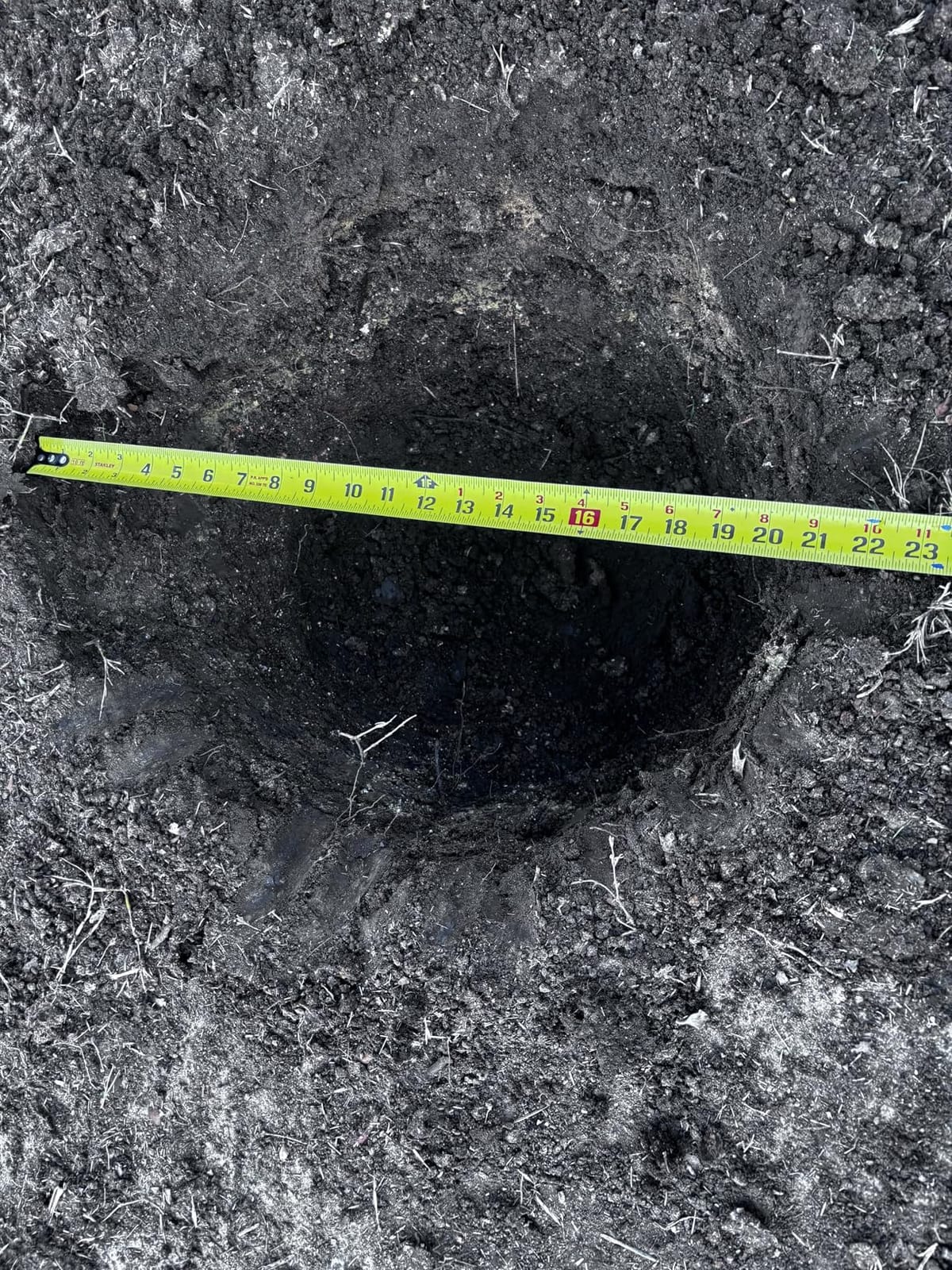
Two things to plan for. First, the extension cord has to be serious — a 14ga cord or heavier, run well back to the outlet — because a thin cord will drop voltage and the motor runs hot under load. Second, there is no reverse, so if the bit binds in a root you will be working it back and forth by hand. Set the bit in reverse by rotating the auger the other direction with the motor off before the switch goes back on.
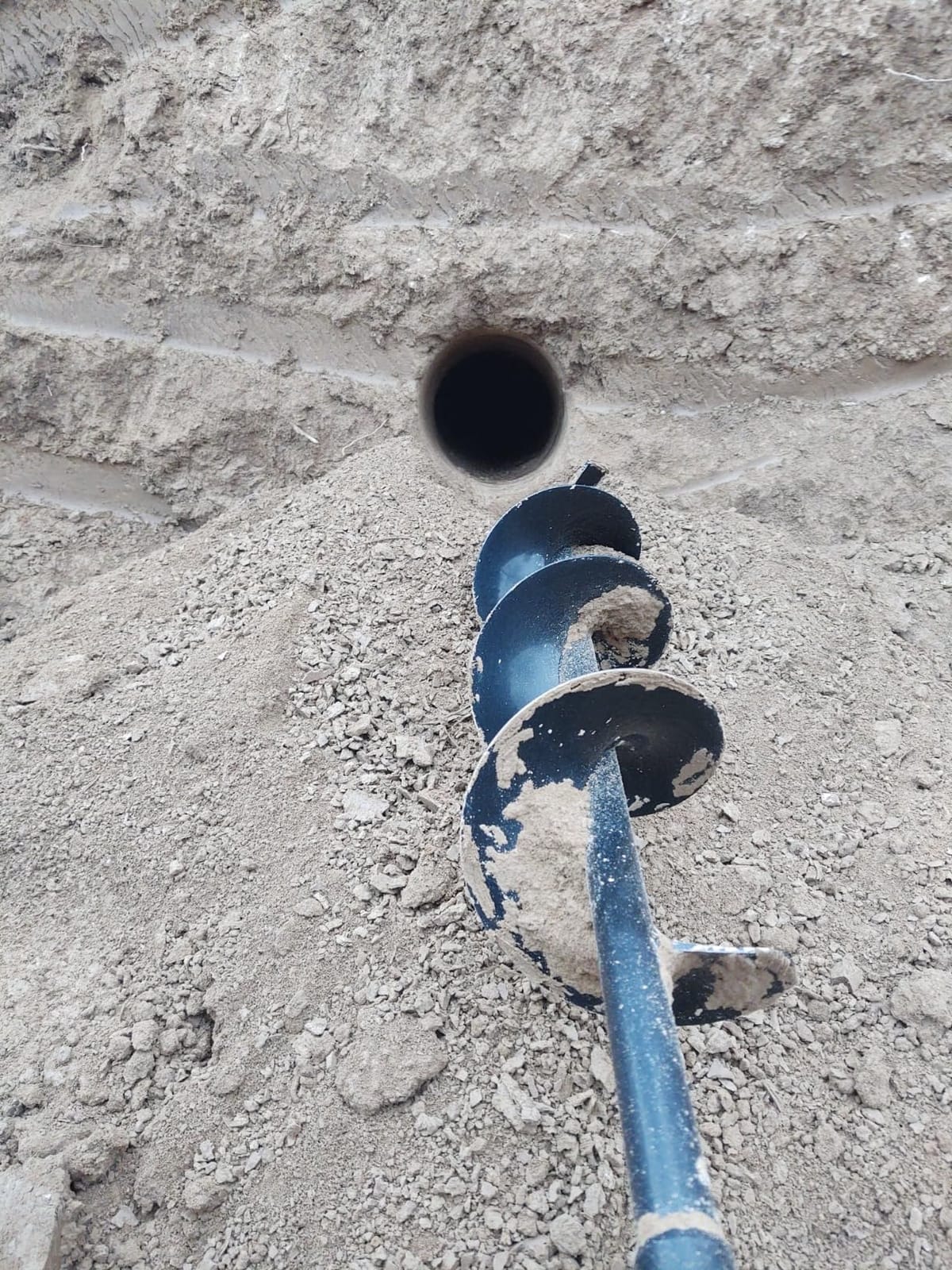
The 6 inch bit handles 4×4 posts, T-post anchors, mailbox posts and small tree planting without any fuss. The manganese steel construction with a black anti-rust finish is the right material for clay and ordinary topsoil. Just keep it away from the rocky ground described in the section below, because no amount of torque substitutes for a bit that is not designed to cut stone.
What we found when checking the electrical setup
Most failures reported for machines in this class trace back to the cord, not the motor. A 25 foot 14ga outdoor-rated extension is the minimum that preserves full power at the end of the run. Owners also report that the included spare set of motor brushes is worth knowing about, since brushes are the consumable part that eventually wears on any brushed motor.
The packaged dimensions are 17 x 33 x 13 inches, which means it is compact enough to live in a shed corner rather than claiming a dedicated shelf. The included component list is a manual and the auger bit set, so there is no mixing or assembly ritual before the first hole.
Where it is the wrong tool
If your fence line crosses old pasture with stones in it, this machine is the wrong choice. The most repeated caution across its reviews is exactly that: the bit is not designed to cut through rocks or large roots, and when it stops suddenly the momentum transfers straight to the operator. A one-person electric auger is a tool for soil you could turn with a spade, not for soil that fights back.
It is also worth noting that reviewers flag the weight when torque feedback arrives, and that two people are safer at that moment. If you are setting posts alone and you are over 40, treat that as a reason to keep the holes in ground the machine can actually cut.
2. DC HOUSE 52cc Gas Auger – Best Value for Mixed Hole Sizes
DC HOUSE Post Hole Digger, 52cc 1800W Gas Powered Earth Auger Earth Digger, Auger Post Hole Digger with Two Drill Bit 6″ & 10″ and Extension Rods, for Fence, Farmland and Garden, EPA Certified
52cc 2-stroke
1.8kW at 8000 rpm
6 in and 10 in bits
Extension rods
21.4 lb
Pros
- Powers through rocky clay-heavy soil and lifts rocks to the surface
- Extension rods allow holes well past the 2.6-foot single-bit limit
- Arrives fully assembled with all parts present
- Easy pull start once the fuel mixture is right
Cons
- Instructions unclear on choke and run settings
- Handle can bend under one-person pressure
- Exhaust is directed toward the operator
This is the kit you buy when you stop thinking of a fence project as one job. The 52cc single-cylinder two-stroke engine produces 1.8kW at 8000 rpm, and the box carries both a 6 inch and a 10 inch bit on a standard 3/4 inch shaft, plus extension rods. That covers 4×4 fence posts, deck posts and the wider holes you need for a mailbox post, a flag pole or a young tree, all from one purchase.
Owners report sessions of 30 to 80 holes, which is the range that matters when you are looking at a 500 foot run. The single-bit depth rating is 2.6 feet, and the extension rods take you past that for the freeze-line depths most of us need in a northern climate. Ball-bearing shafts and alloy gears are sensible inclusions on a machine in this class.
The 21.4 pound weight is the second lowest of the gas machines here, and that is a real advantage for a solo homesteader. Owners also point out the centrifugal clutch, which lets the engine idle without the bit turning — handy when you are repositioning between holes rather than fighting the flywheel.
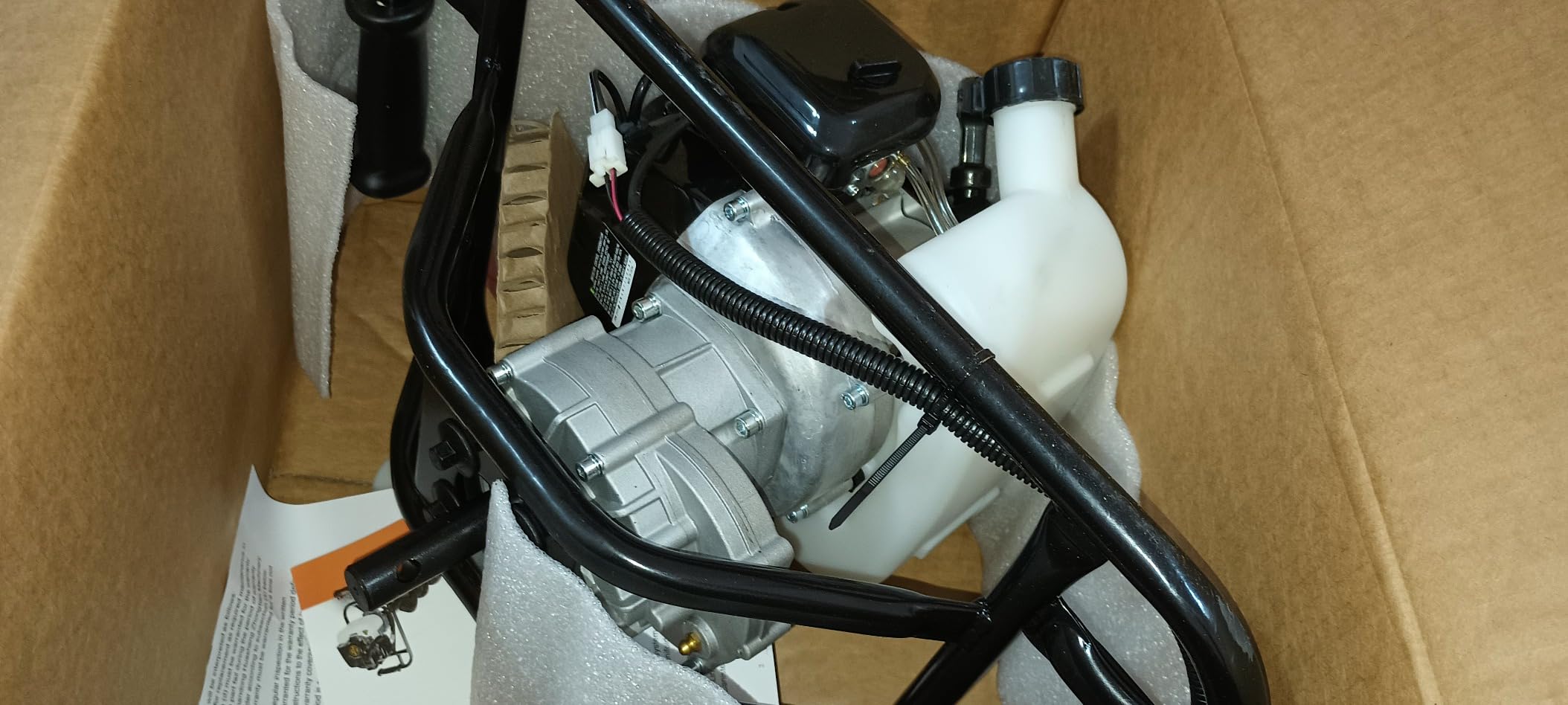
The criticisms are consistent and worth repeating. The instructions are poorly written, especially on the choke position and the on and run settings, so expect a first session spent working that out. The handle can bend if you put real one-person down pressure into it. And the exhaust is aimed toward the operator, which is uncomfortable in summer heat and worth planning your stance around.
There is no reverse on this machine either. When the bit stops on something and the engine keeps running, the same whip risk that forum builders describe with lighter machines applies here. Keep the throttle closed the moment the bit stops turning.
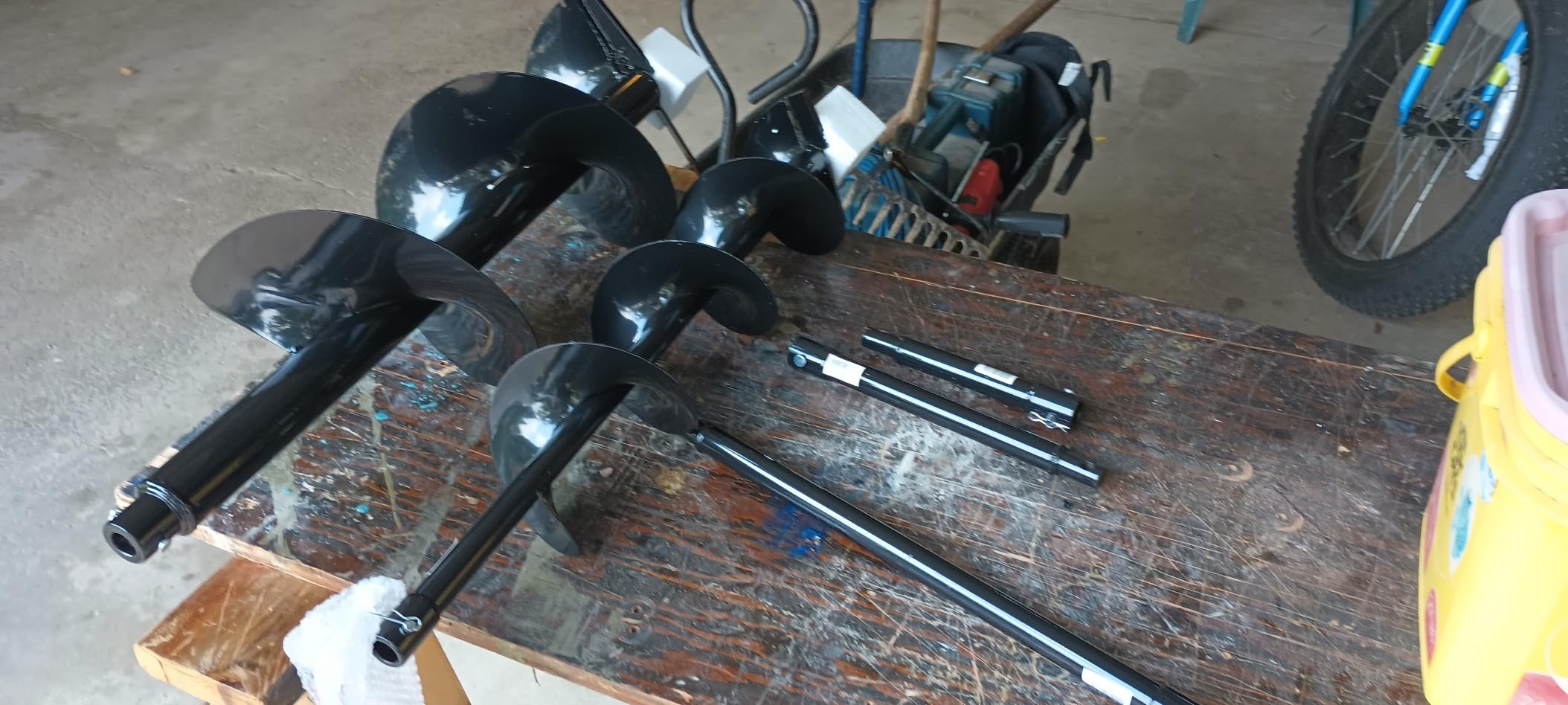
How the fuel and starting system behaves in practice
The fuel tank holds 1.2L and the mix ratio is 1:25. Owners who get the ratio right report an easy pull start almost immediately; owners who do not report a stubborn first few pulls and a sooty plug. Buy a proper mixing bottle, use the premix, and this machine starts on the first or second pull every time.
This model has been on sale long enough that owners are reporting multi-season durability rather than first impressions. That record is more useful to you than a spec sheet, because it tells you which failures to expect.
Where it is the wrong tool
The most important limitation is roots. Multiple owners report the auger will not power through finger-sized roots and can whip the operator when it stops. On a homestead, root-filled ground is the normal case along an old fence line or a property boundary that used to have a hedge. If your run goes through that, either clear the roots first with a mattock or budget for the dig-and-pull approach described later.
Also note that the 10 inch bit is genuinely heavy going for one person. Treat this as a two-person task for the larger bit, or stay in the 6 inch bit for fence work and use the 10 inch only for occasional tree holes.
3. EARTHQUAKE E43 1-Person Earth Auger Powerhead – Best Durability in Hard Ground
Earthquake E43 1-Person Earth Auger Powerhead, 43cc 2-Cycle Viper Engine, 30:1 Transmission, 5 Year Limited Warranty, Red or Black Auger Bit
43cc 2-cycle Viper engine
30:1 transmission
36 in steel bit
34 lb
Five-year warranty
Pros
- Makes quick work of hard clay and rocky soil
- Easy to start and easy to handle solo
- Auger spring absorbs shock when hitting roots and rocks
- Built in America with a five-year warranty
Cons
- Can flip or wrench the operator on a large root or rock
- Heavy at 34 pounds and tiring over long sessions
- Plastic throttle lever feels light duty
The 30:1 transmission is the number that matters on this machine. It turns the 43cc Viper engine over slowly enough that the bit has time to cut rather than spin, and that is the difference between boring a hole in packed clay and bouncing off the top of it. Owners report 24 to 36 inch post holes dug quickly, and several specifically compare it to budget one-man machines that failed within a year.
It is built in America by Ardisam and carries a five-year limited warranty, the longest in this group. That warranty is not decoration on a homestead tool. A machine that lives outside, gets loaded in a truck bed in mud, and bores through wet clay in spring has a much better chance of still running in five years with a five-year warranty behind it.
The 36-inch steel auger with fishtail point and replaceable blades is a good bit, and the Flex Coil shock absorber is designed to take the hit when you do meet a root. Replaceable blades matter over a decade of use, because sharpening a point is far cheaper than replacing a bit.
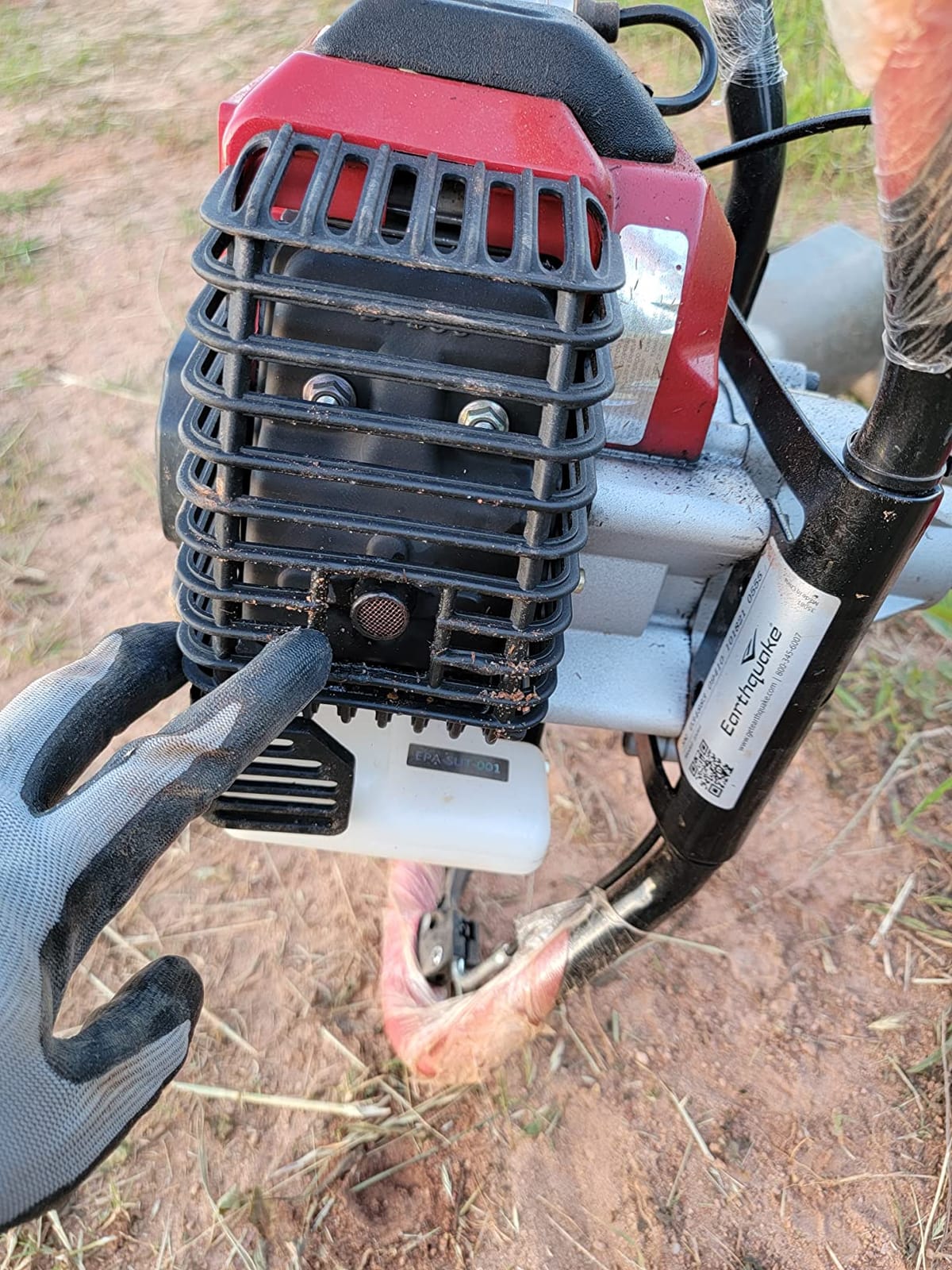
The anti-vibration foam-grip handles with a fingertip throttle are good design, and the industrial air filtration is a sensible inclusion. The 50:1 fuel mix recommendation is a little richer than some competing machines, so fill a mixing bottle and get it right from the first tank.
At 34 pounds this is the heaviest machine in the roundup, and that is the honest drawback. Owners are clear that it is tiring over long sessions, and a homesteader with any back history should plan short blocks of holes rather than a full afternoon. Two people sharing the load is the sensible answer for a long run.
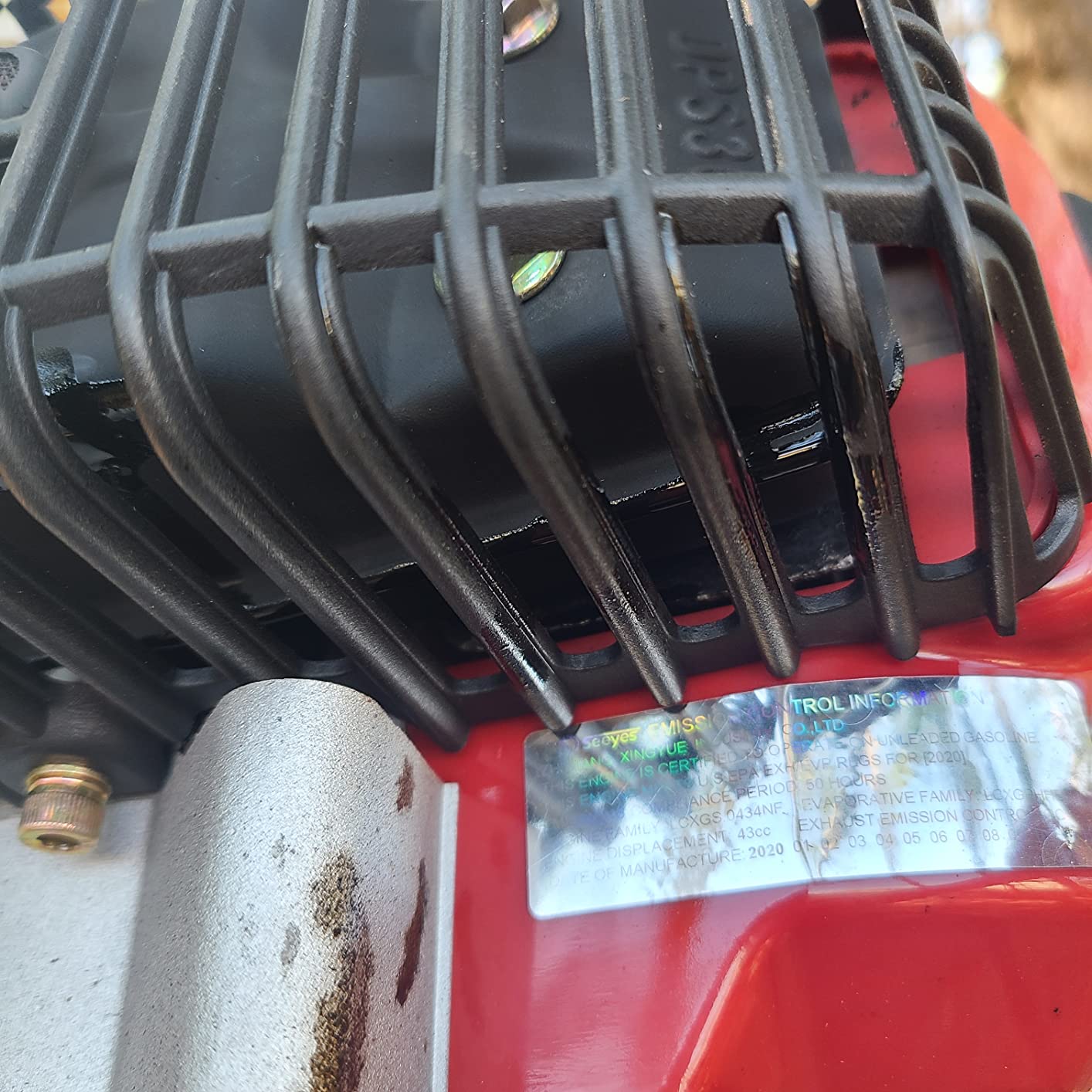
Why the gear reduction changes everything in hard soil
An auger does not cut the way a drill cuts. It wraps loose soil onto the flights and carries it upward, and that only works if the bit is turning slowly enough for the soil to load onto the spiral instead of being thrown clear. Low shaft speed is the whole point. A 30:1 reduction is what keeps the engine near its torque peak while the bit turns at a boring speed.
This is also why the machine earns its reputation in clay and rocky ground. The slow, high-torque turn lets the fishtail point work rather than skate. A fast-turning machine in the same soil will bog, then the operator will add more body weight, and then the bit will find the one stone that was always there.
Where it is the wrong tool
Owners warn repeatedly that the machine can flip or wrench the operator when it meets a large root or a rock. The 30:1 reduction does not remove that risk, it just makes the machine strong enough that the risk has real consequences. Hold the handles loosely, keep your weight centred over the bit, and never try to overpower a stopped bit with your shoulders.
Heavily packed clay also needs repeated plunging — letting the bit work a few inches, pulling it back to clear spoil, and going again. If you are not prepared to do that rhythm, a one-man machine will always feel like a fight. And there is no bubble level on this unit, so bring a small level and check plumb as you go.
4. PROYAMA 54cc Auger – Best Bit Variety in One Kit
PROYAMA 54cc Post Hole Digger, Gas Powered Easy Start Earth Auger Digger
54cc 2.4HP 1300W
4 in 6 in 8 in and 12 in bits
12 in and 20 in extension rods
24.2 lb
Pros
- Easy-start system gets the engine running with minimal effort
- Four bit diameters cover most hole sizes in one kit
- Extension rods allow deeper excavation
- Ball-bearing gearbox and alloy gears
Cons
- Some owners report difficulty getting a reliable start
- A 12 inch bit puts heavy strain on a single operator
- Included instructions are difficult to interpret
Nobody else in this group ships four bit diameters. The 4 inch, 6 inch, 8 inch and 12 inch bits cover everything from a light T-post anchor hole to a wide footing for a deck post, and the 12 inch and 20 inch extension rods handle depth. If your homestead has orchard planting, garden work and fence in the same week, that is four jobs without a second purchase.
The engine is a 54cc producing 2.4HP and 1300W, which puts it in the middle of this group. Owners report it handles soil, clay and yard work without trouble, and the heavy-duty gearbox with ball-bearing shafts and alloy gears is the right specification for the job.
At 24.2 pounds it is lighter than most of the gas machines here, and the powder-coated alloy steel bit and welded steel handle are sensible materials. The easy-start system is the feature owners mention first when they talk about the machine positively.
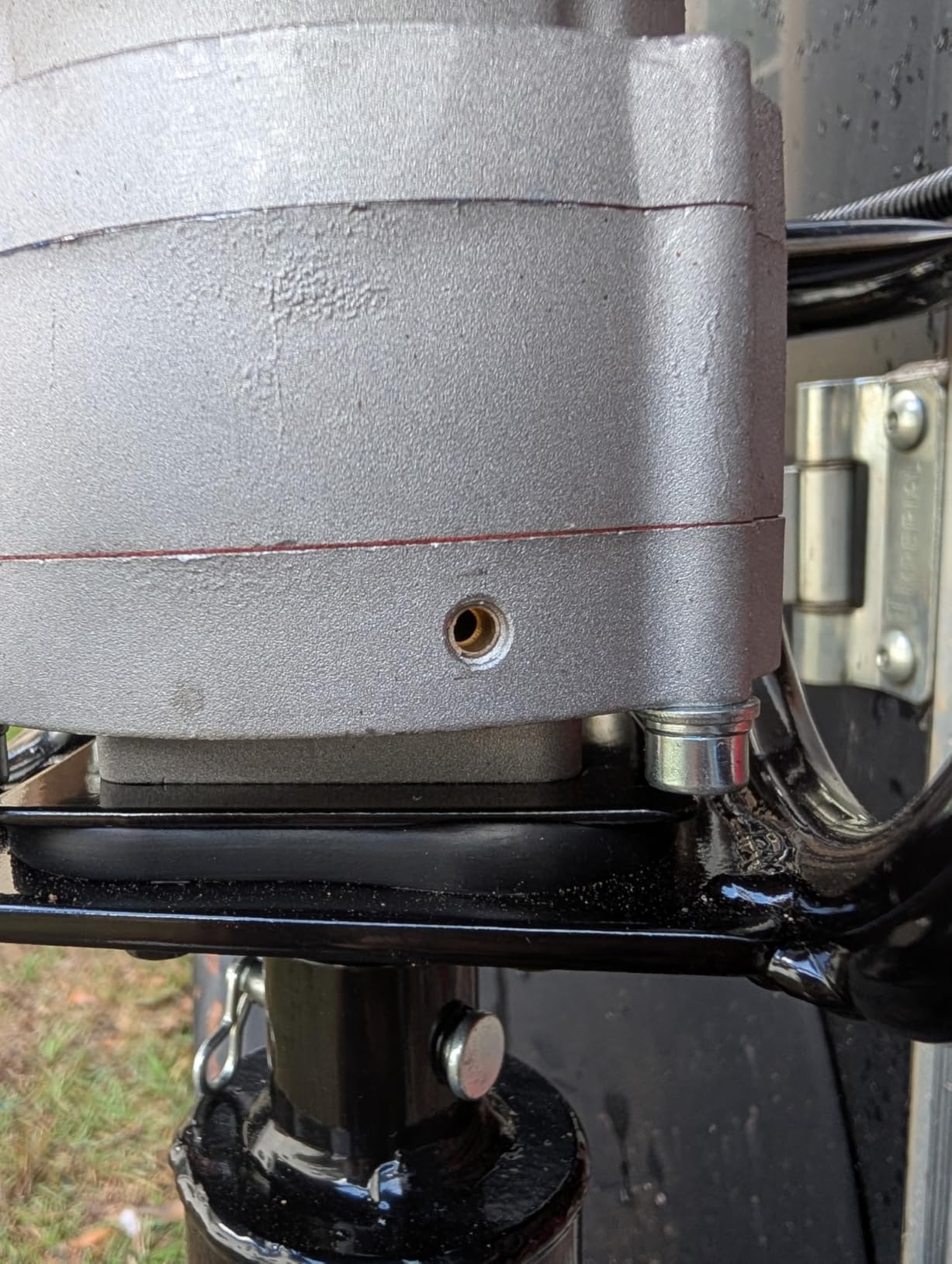
The honest drawback is starting reliability. Several owners report difficulty getting a reliable start from cold, and that is a common complaint across the two-stroke class rather than something unique to this machine. A fresh plug and a correctly mixed tank solve it most of the time, but it is worth knowing before you rely on this machine at 6am on a cold morning.
The 12 inch bit is where the single-operator story falls apart. Owners are candid that a 12 inch bit puts a lot of strain on one person, which is the down pressure problem in its most literal form. Plan a second pair of hands for the wide bits, or use them only for occasional tree and shrub holes.
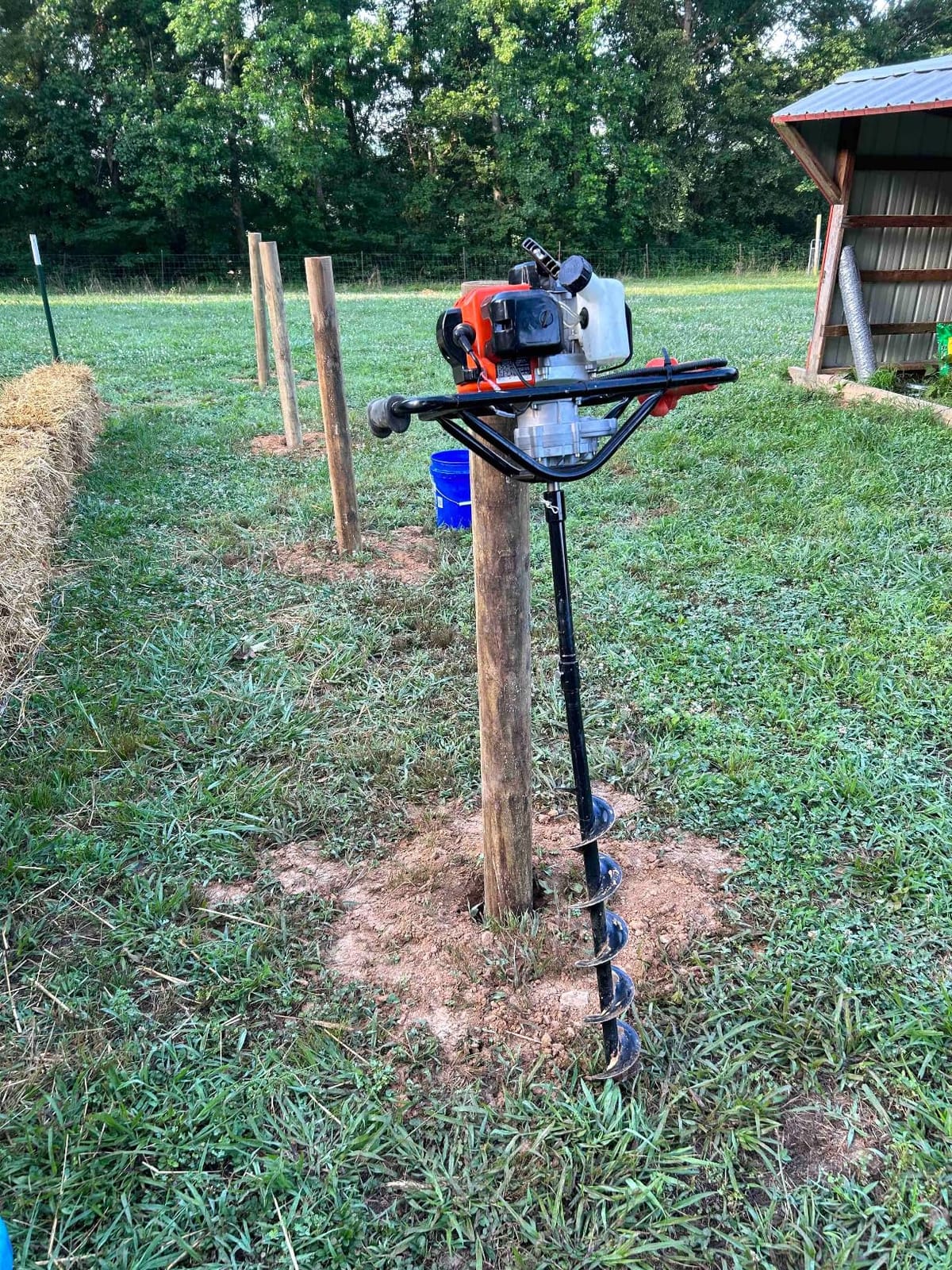
How bit diameter changes the work, not just the hole
A wider bit does not just make a wider hole. It collects more spoil per revolution, which means more torque demanded at the same engine speed, and it pushes more material sideways into the hole wall. A 12 inch bit in wet clay can genuinely stall a 54cc engine that will happily chew through a 4 inch hole all afternoon.
This is why the four-bit kit is more useful than it first appears. Match the bit to the job and the machine stays inside its envelope: 4 inch for T-post anchors, 6 inch for 4×4 posts, 8 inch for H-posts and heavier wood, 12 inch reserved for tree planting and deck footings where a helper is available.
Where it is the wrong tool
Do not buy this one for the specific job of a short list of small fence posts. Four bits and two extensions is a lot of metal to carry around if you are digging 20 six-inch holes for a chicken run. The weight and the extra steel are only worth it if you will genuinely use the range.
Also budget time for the fuel. Owners report the 2.4HP engine works hard in clay, and a hard-working two-stroke drinks premix in proportion. A 1:25 or 1:50 mix, a spare plug and a spare bit in the truck are cheap insurance over a multi-season ownership.
5. XtremepowerUS 55cc Gas Auger – Best for Low Fuel Use and Long Runs
XtremepowerUS 2.3HP Post Hole Digger with 8″ Auger Bit SetV-Type Gasoline 2-Stroke 55cc Auger Earth Fence Hole Digger Digging Drill for Fence, Farmland and Garden Digger
55cc 2-stroke
2.3HP
Ball-bearing shaft and alloy gears
25.4 lb
Finger throttle
Pros
- Plenty of torque for clay gravel and black dirt
- Quick-pull recoil start that fires readily once warm
- Very low fuel consumption
- One person can carry and operate it
Cons
- High kickback that can spin the operator when the bit stops
- No rubber on the handles
- Included auger bits are considered cheap and can bend
This 55cc single-cylinder air-cooled two-stroke is rated at 2.3HP, and the long-term owner reports are the most valuable thing in this roundup. Buyers with multiple seasons of use report that the engine holds up, starts easily, and digs holes in two to three minutes in black clay — and that fuel consumption is very low. On a 100 hole project, fuel cost is a rounding error anyway, but a machine that will not need a second fuel can overnight is worth something on a remote homestead.
The gearbox uses ball-bearing shafts and alloy gears, and the shaft is compatible with most standard auger bits, which means you can upgrade to a better bit later. The large-capacity fuel tank and the fingertip throttle and switch control mounted on the handlebar are both well judged, because you keep one hand on the controls and one on the handle.
At 25.4 pounds it sits mid-pack on weight. The dig speed far exceeds hand tools, which is the single fact that decides the purchase for most people.
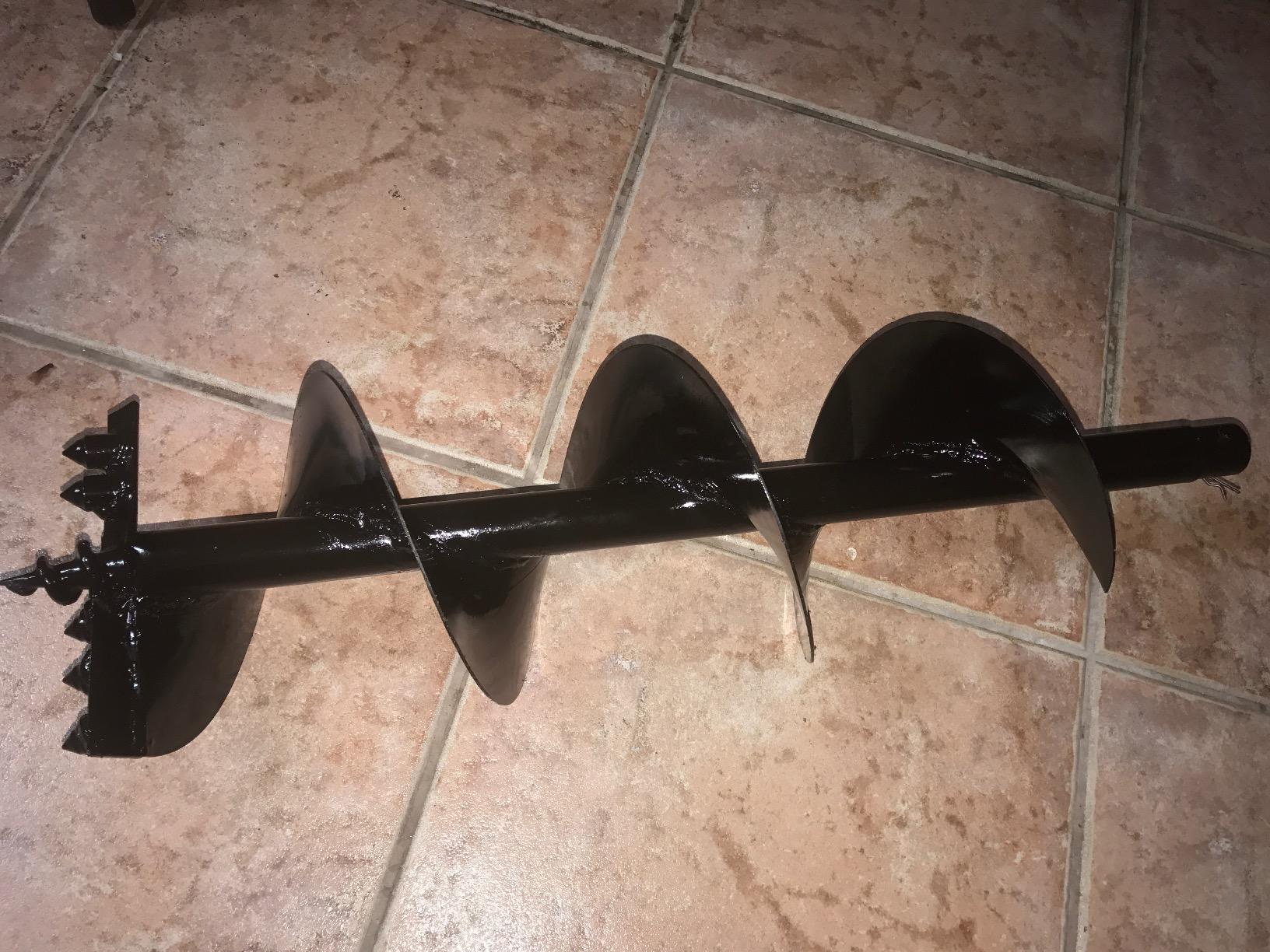
Now the cautions, and they are specific. The most repeated complaint is not about the engine at all — it is that when the bit stops while the engine keeps running, the machine whips the operator. Several owners describe being spun or having to fight the handles. This is the same failure mode that shows up in builder forums with every one-person machine.
The bare handles with no rubber are a second, smaller issue. Owners report calluses forming quickly. You can solve that with a wrap or by wearing gloves, but it is worth knowing. Third, the included bits are considered cheap and can bend, and the throttle assembly is thin plastic mounted on the edge of the handle — a part to keep a spare of if you can find one.
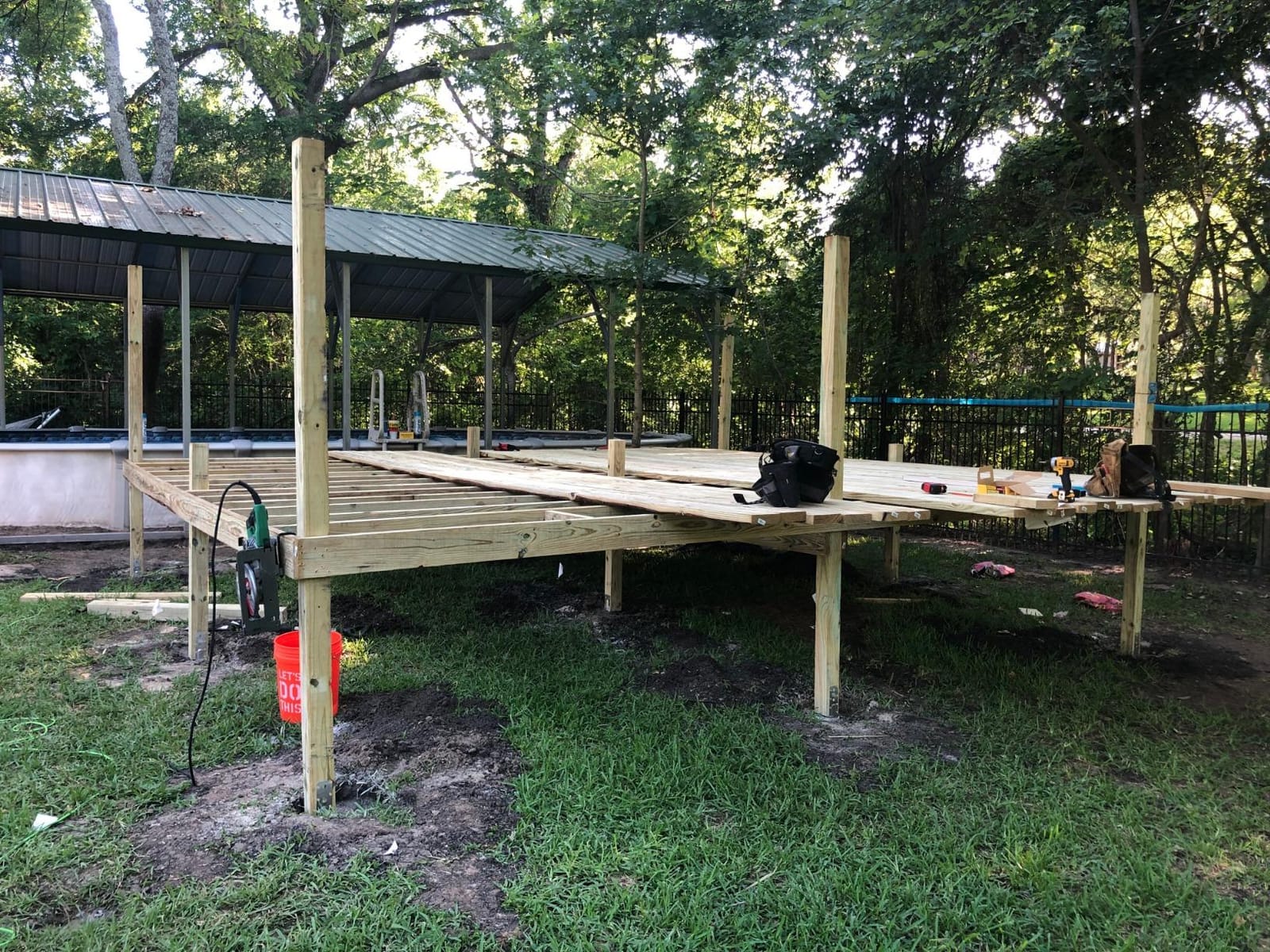
Long-run ownership notes from buyers
Reports from owners who have had this machine for years describe the 55cc engine as the part that holds up, which makes sense given the simple single-cylinder design and the air-cooled layout. There is no plastic intake manifold to crack and no electronic module to fail. The consumables are spark plug, fuel filter and the bit, and all three are replaceable with ordinary tools.
A few buyers also flagged that the unit arrives under the Stark brand name rather than XtremepowerUS. That is a labelling inconsistency, not a quality problem, but it is worth checking the serial number and documentation on arrival so you can register the warranty without friction.
Where it is the wrong tool
It is the wrong pick for rocky or root-filled ground for the same reason as the lighter machines — high torque and no reverse means a binding bit transfers straight to the operator. Several buyers flag kickback as a spin risk, and forum builders describe the same thing happening with any one-person gas machine.
Also plan on buying a better bit. The included bit is functional but cheap, and a hardened or carbide-tipped bit is the single most effective upgrade you can make to a gas one-man auger. The 3/4 inch shaft is standard, so almost any quality auger bit will fit.
6. VEVOR 43cc Post Hole Digger – Best for Drilling While Standing Upright
VEVOR Post Hole Digger, 43cc 1250W Auger Earth Digger, Gas-Powered (Fuel)
43cc 1250W
9350 RPM max
30 in alloy steel bit
1.2L tank
26.2 lb
Pros
- 43cc engine handles sand farmland and loose forest soil
- Ball-bearing shaft and alloy gear gearbox
- 30-inch bit lets you drill while standing upright
- Large tank and long pull cord reduce restarts
Cons
- Tool kit reportedly does not fit the oil fill port
- No gear oil type or quantity documented
- Assembly instructions are poorly translated
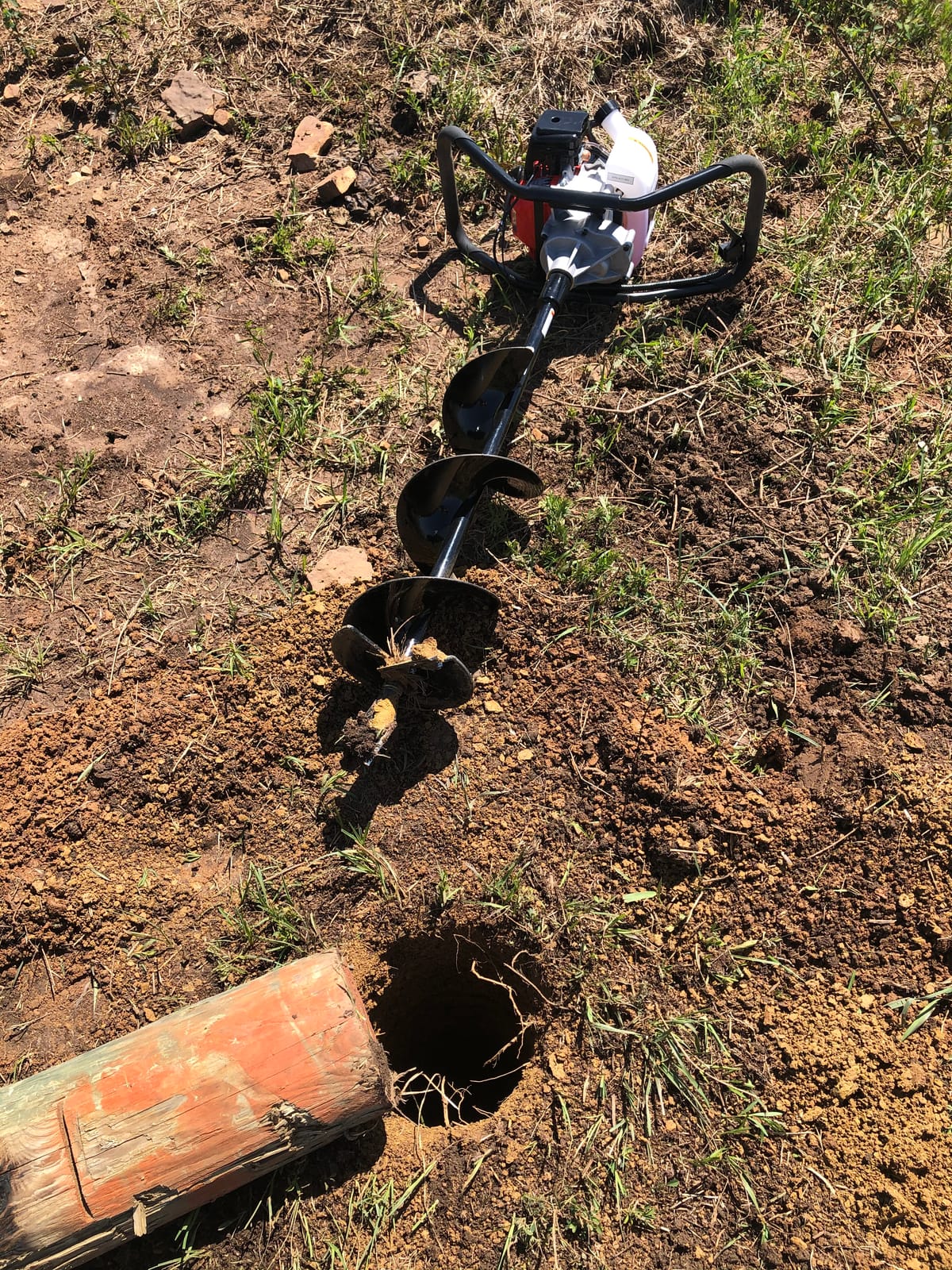
The 30-inch alloy steel bit is the reason this machine earns its place. On a long run of fence, a longer bit means you bore the full depth of the hole without repeatedly stopping to clear spoil, and — the part owners mention most — you can do it standing upright rather than bent over a 15 inch bit. For anyone with a bad back or a long list of holes, that ergonomics difference is worth more than a horsepower figure.
The engine is a 43cc gas unit rated at 1250W with a 9350 RPM maximum rotational speed, a ball-bearing shaft and an alloy gear gearbox. Owners report it handles sand, farmland soil and loose forest ground competently, and the 1.2L fuel tank with a 1.2 metre thickened pull cord means fewer restarts during a long session.
The shock-absorbing foam handle and easy-reach emergency stop are good details at this price point. The kit also arrives with an 8 inch earth auger bit, a 30 inch alloy steel auger, an oil mixing bottle, a spare spark plug and a tool kit, so a first-time owner can start the same day.
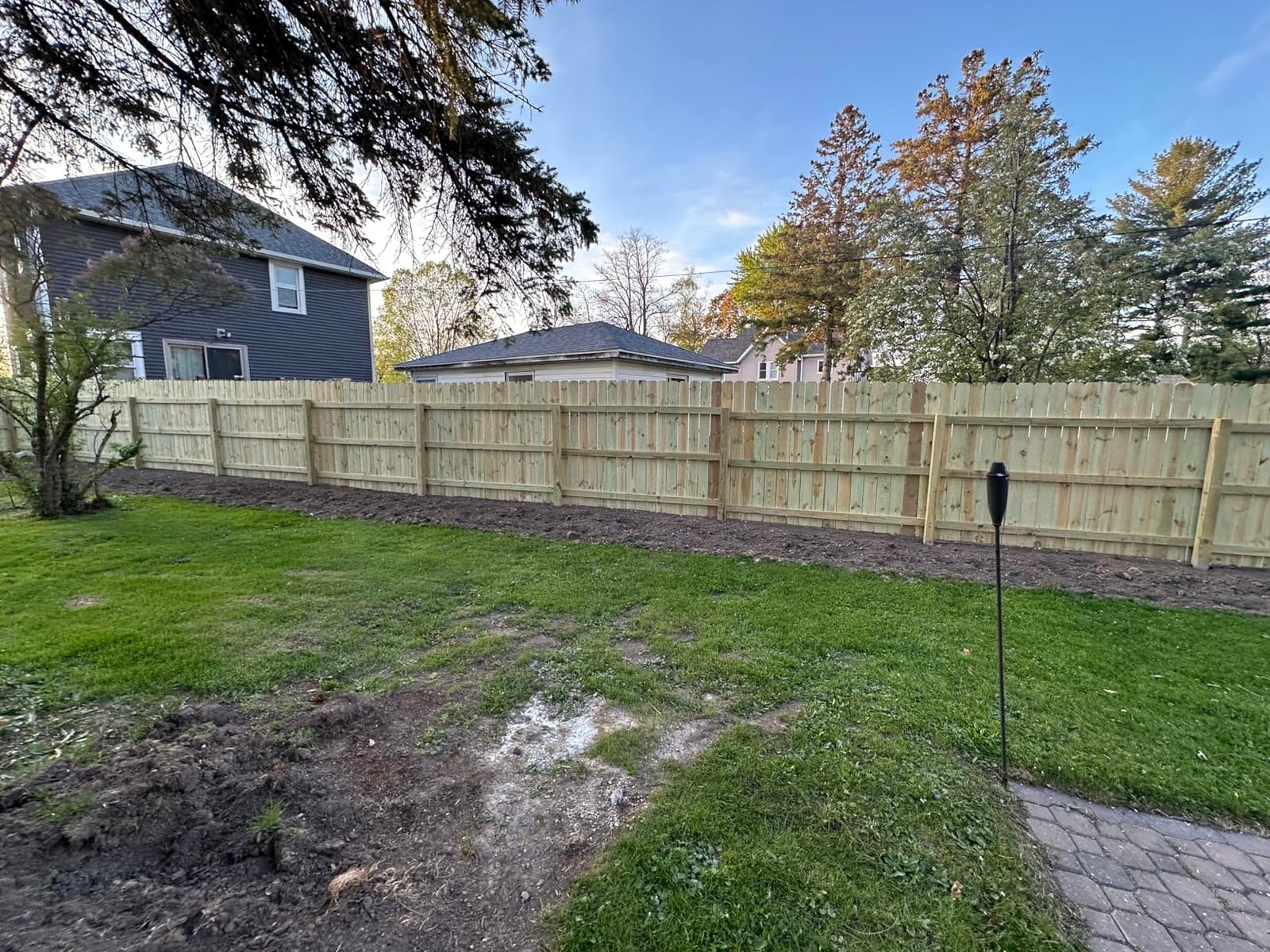
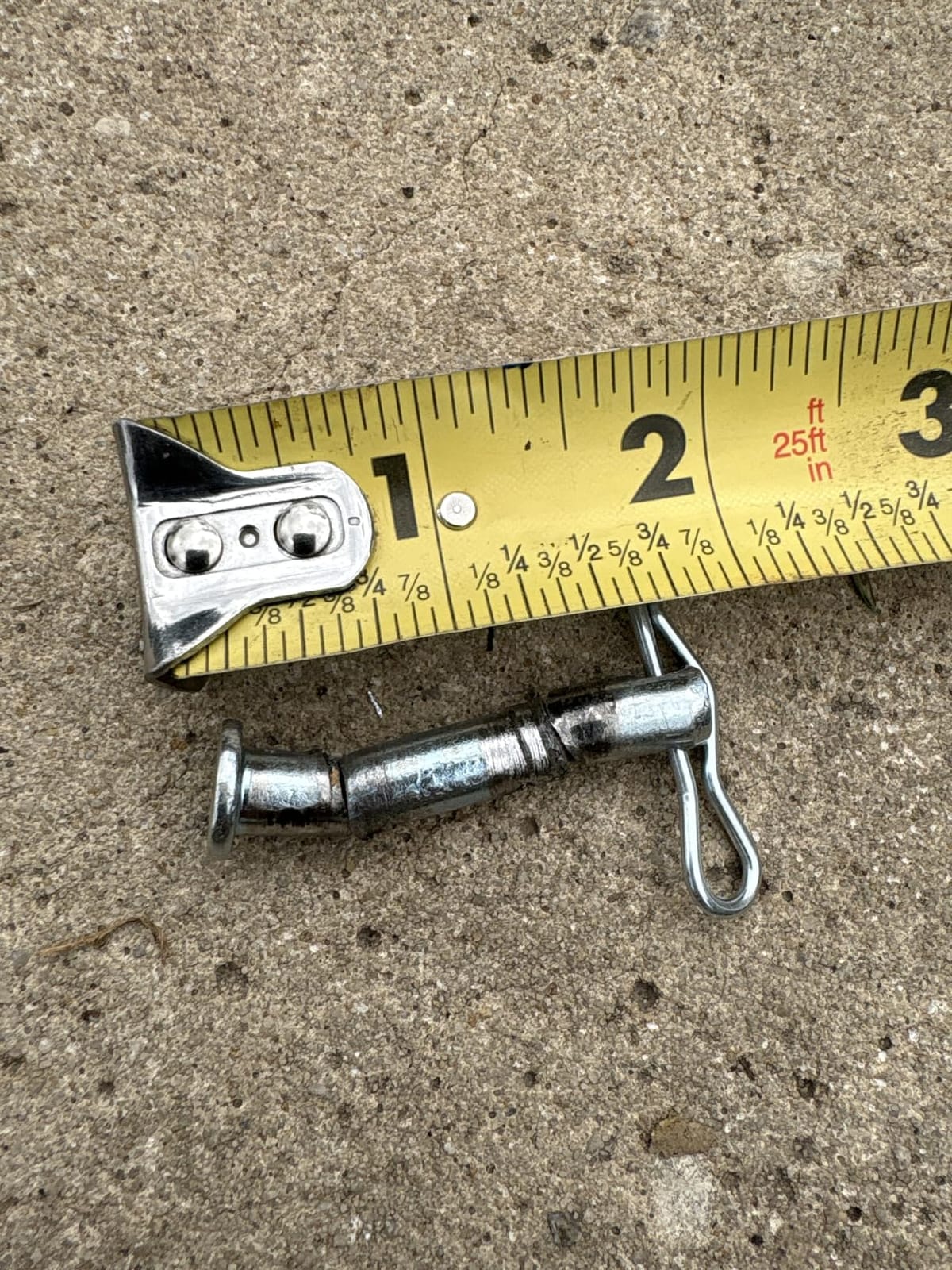
The criticism is about documentation, not the machine. Owners report the included tool kit does not fit the oil fill port, that the type, grade and quantity of gear oil is not documented anywhere, and that the assembly instructions are poorly translated. Spend ten minutes before the first use working out the fill procedure from the machine itself, and this stops being an issue.
It is also a single-speed design, which means there is no low-speed torque option. That is a real constraint in heavy ground — you get one gear, so the only way to add cutting force is down pressure, and down pressure is exactly what a solo operator has least of.
Why the long bit matters more than it sounds
Auger spoil is abrasive, and it is also the reason a short bit makes you work twice as hard. A 15 inch bit means three or four stop-and-clear cycles per hole, and every one of those cycles is a chance to lose your plumb reference and to spill soil on your boots. A 30 inch bit does the same hole in far fewer passes and keeps the operator upright the whole time.
For a homestead that means fewer sore evenings and fewer half-set posts. It also means you can work closer to where you are standing, which reduces how far you have to lift and carry a 26 pound machine on uneven ground.
Where it is the wrong tool
With one speed and no reverse, this is a soil machine rather than a rock machine. Loose forest soil, sand and tilled ground are its territory. If your fence line runs through a former tree line, old riverbed or stony pasture, the bit will stop and you will be clearing it by hand.
The 8 inch bit is also a meaningful load for one person over a long run. Treat this as a two-person job for sustained solo use, and check the bit condition often — a powder-coated alloy bit that has been through wet clay all season loses edge faster than it looks like it should.
7. GardenTrax 43cc Earth Auger Combo – Best for Low-Vibration Handling
GardenTrax Earth Auger Combo 43cc 2cycle Powerhead with 8 Inch Auger Drill Bit EPA Compliant Post Hole Digger
43cc 2-cycle powerhead
8 in x 36 in bit
7/8 in shaft
Foam grips
Two-year engine warranty
Pros
- High torque for a single-person powerhead
- Low-vibration foam grips reduce hand fatigue
- Quick pull-start ignition and a lightweight frame
- 7/8-inch shaft fits most standard auger bits
Cons
- Torque is strong enough to throw the operator on a bind
- Heavy for extended solo use
- Large auger sizes are best handled with two people
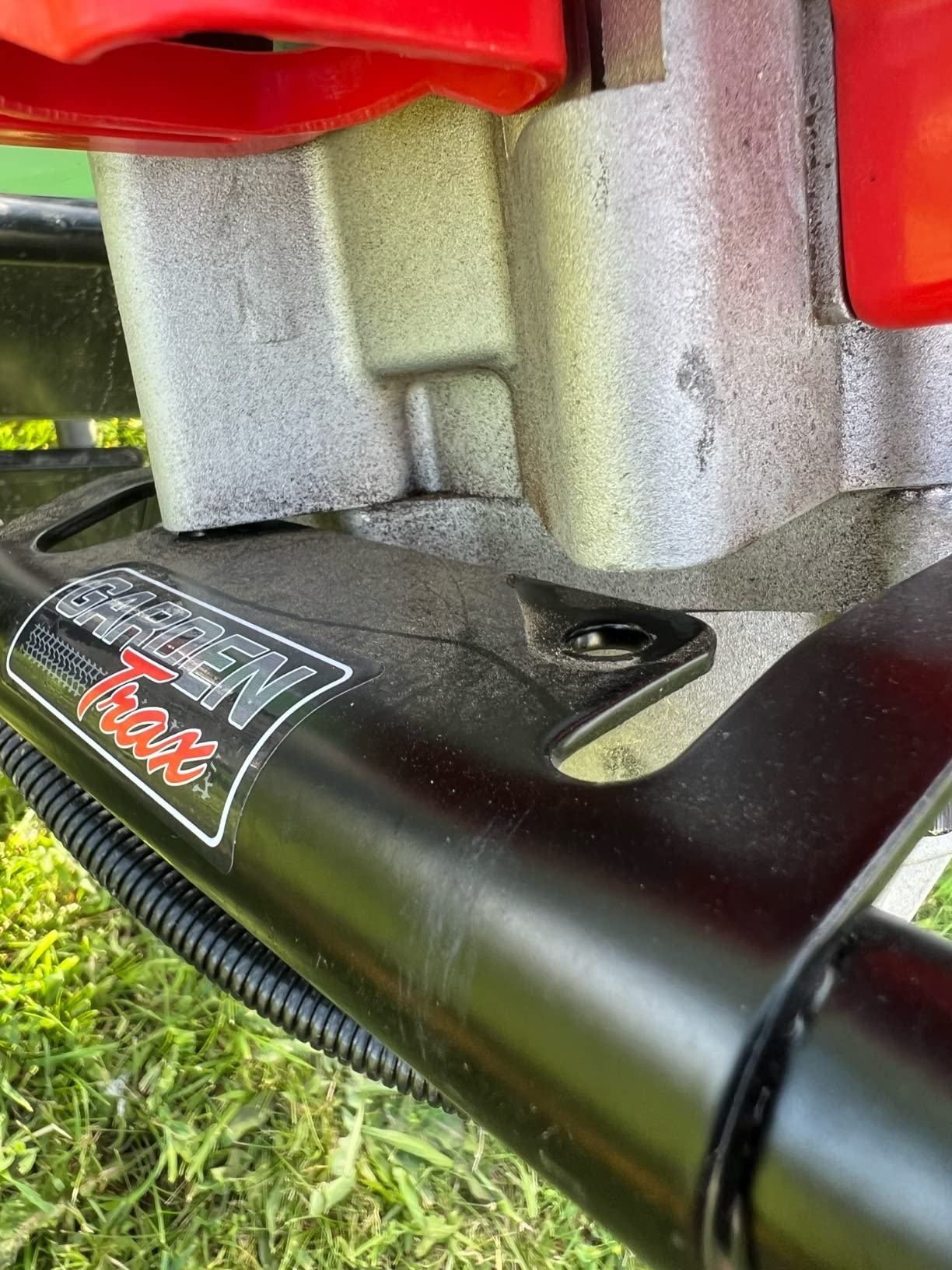
Of the eight machines here, this one has the highest average owner rating, and the reason is the handle. The full-wrap foam grips with built-in shock absorption are the single most-cited positive, because vibration is what ends a digging session early on a one-person machine. Owners report reduced hand fatigue and describe the machine as dependable, easy-starting, and comfortable in sand and clay.
The included 8 inch by 36 inch auger bit is a good default for 4×4 and heavier wood posts, and the 7/8 inch output shaft is a standard size that fits most auger bits on the market. That matters more than it sounds — it means the bit that comes with the machine is a starting point, not a lifetime commitment.
The powerhead is a 43cc two-cycle with torque aimed at one-person digging, and the heavy-duty blades with a replaceable fishtail point keep the sharpening cost low over a long life. Replacement parts being easy to find locally is a real advantage over the shipping delays that make imported machines frustrating to own.
The consistent caution is the same one you will find on every high-torque one-person machine in this roundup: when the bit binds on a root or a stone, the torque is enough to flip or twist the operator. Owners are explicit about recommending two-person operation for the larger bits. That is not a defect; it is what a single-person machine with real power does when it meets an obstruction.
At 15 kg, roughly 33 pounds, it is also on the heavy side for extended solo use. The quick pull-start ignition gets it running without fuss, which offsets the weight on cold mornings more than you might expect.
What vibration control actually changes over a full day
Fatigue from an auger is cumulative, not sudden. The 30th hole feels fine, the 45th feels heavy, and by the 60th your grip is slipping and your shoulders are taking the load the machine should be. Full-wrap foam grips spread that load across both hands and damp the sting that comes through the handles when the fishtail point meets a pebble.
That is why owners on the higher-torque machines rate vibration handling so highly. The hours you can dig before your hands give out is the metric that matters on a 60-hole run, and on that metric this machine is the clear leader in this group.
Where it is the wrong tool
High torque is a double-edged feature. If you are working alone in ground with stones, the same torque that powers through clay will throw you when the bit catches. Plan the day around short blocks, keep the bit sharp, and slow down rather than leaning into a stopping bit.
It is also the wrong pick if your only need is 20 six-inch holes for a duck run. The 8 inch bit is the focus of this machine, and you would be carrying more steel than the job requires. Match the machine to the diameter you will actually dig most often.
8. Prowoo 72cc Post Hole Digger – Best for Heavy Clay and Deep Holes
72CC Post Hole Digger Gas Powered, 2 Stroke Auger with 6″ & 8″ Bits
72cc 2-stroke
1 metre full-length 6 in and 8 in bits
60cm extension rod
Replaceable blades
Pros
- Surprisingly powerful and starts on the first pull
- Kit includes every bit extension mixing bottle and tool needed
- Both bit sizes drill 2-foot holes without difficulty
- Owners report digging 50-90 holes without issues
Cons
- Right handle bent after a few uses from pressure
- Kill switch became non-functional after about six uses
- Choke on/off sticker is reversed and misleading
This is the most powerful machine in the roundup, and for heavy wet clay the extra displacement earns its place. The 72cc two-stroke sits well above the 43cc and 52cc machines, and owners describe it as more powerful than expected and cheaper than renting. The kit is complete: 1 metre full-length 6 inch and 8 inch double-sheet bits, a 60cm extension rod, a fuel mixing bottle and an assembly tool kit.
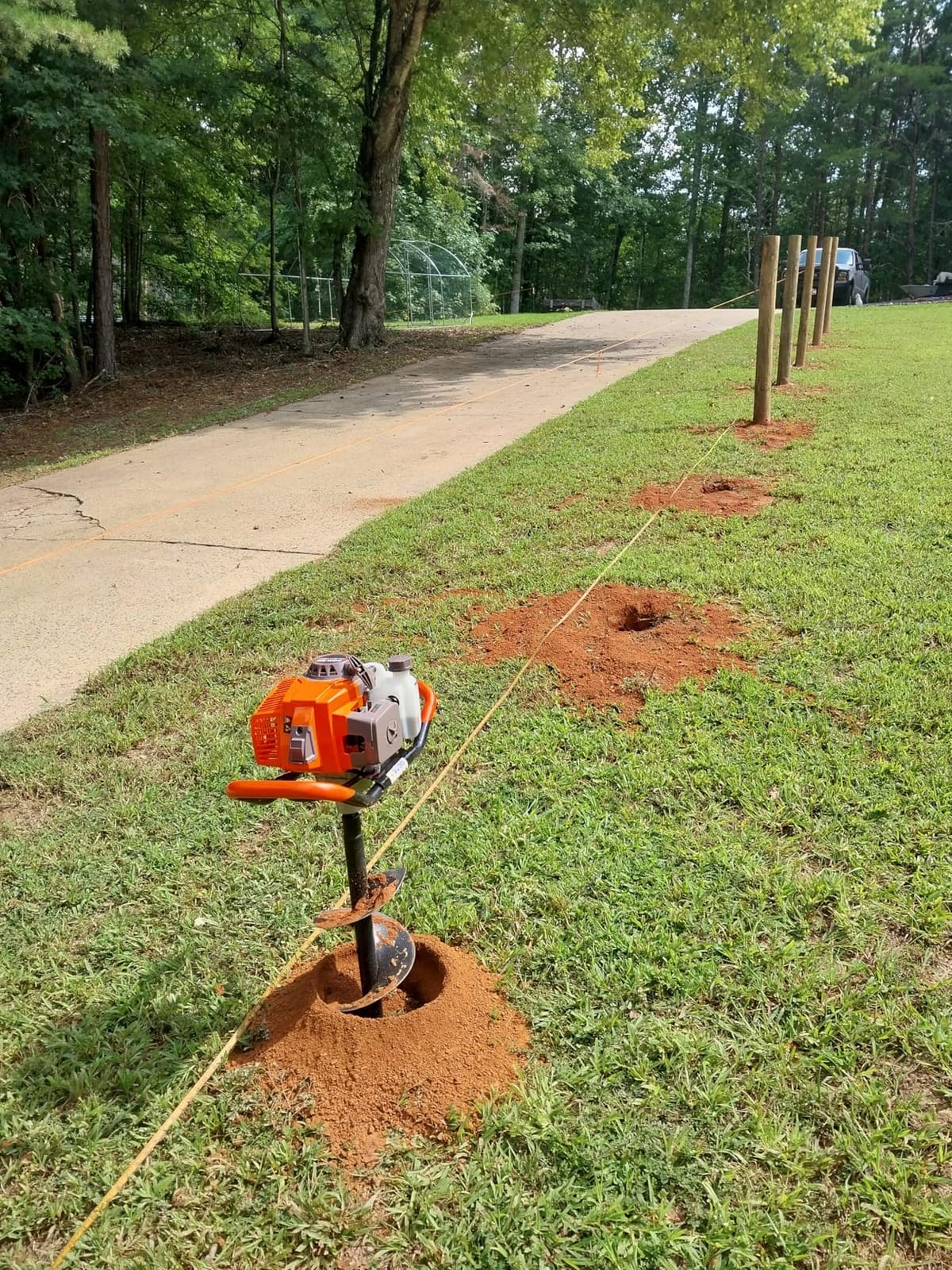
The depth story is the headline here. One owner put in 50 holes at 31 inches, and another more than 90 large holes without incident, which is the kind of endurance that makes a 1000 foot fence line realistic on a weekend. The ultra blade system can be changed, sharpened or replaced, so the cutting edge is a maintenance item rather than a consumable.
The 6 inch and 8 inch full-length bits both drill 2-foot holes without difficulty, and the replaceable blade system is a genuine advantage on clay, which dulls steel faster than most people expect.
Now the quality-control problems, which are specific and worth knowing. One owner reported the right handle bending after a few uses under pressure. Another reported the kill switch becoming non-functional after roughly six uses. Several flagged that the choke on and off sticker is applied in reverse, which is exactly the kind of detail that will have you choking the wrong way on the first start and blaming the machine.
Check all three of these on arrival: the handle for straightness, the kill switch by actually stopping the engine with it, and the choke position against the actual engine rather than the sticker.
When extra engine displacement is the right answer
Displacement matters most in soil that resists cutting rather than soil that simply moves. Wet clay, compacted glacial till and soil with a high stone fraction in the top foot are the cases where a bigger engine keeps the bit turning instead of stalling. Once the bit stops, the operator adds body weight, and that is exactly when a one-person machine becomes dangerous.
Power is also what makes the long bits practical. A one-metre bit needs the torque to keep loading soil onto the flights at depth, because down pressure from one person is limited and constant. The 72cc class covers for a weak operator, which is not a bad thing for a machine being used alone on a homestead.
Where it is the wrong tool
Torque is high enough that solo operation is not advised, according to owners. This is a two-person machine in the heavy soil it is built for. It is also physically large, and if your entire project is 25 holes for a garden fence, you will have bought far more machine than the job can use.
And the same hard truth applies to all eight machines here: more power does not help with a buried rock. On a stony line, no engine in this roundup saves you. That is the point at which you stop digging and change tools entirely.
What Size Auger Do You Need for Fence Posts?
Size the bit to the post, then add an inch. A 4×4 wood post needs a 6 inch hole, an H-post or heavier timber needs 8 or 10 inches, and a metal T-post is normally driven rather than dug. Depth should reach below your local frost line, and in most northern homesteads that means 30 to 42 inches rather than the 18 inches many people stop at.
The sizing rule is simple and the reason is structural. The hole needs to leave room for backfill on all four sides of the post, because that backfill is what holds the post plumb while the soil settles. A hole that is exactly the width of the post has nowhere to put the spoil you just removed, and the post will lean as the loose soil compacts around it.
Over-drilling is the other half of the rule and it is where beginners waste material. A 6 inch hole for a 4×4 post is a working hole. A 10 inch hole for the same post is a hole you have to fill with something you carried in, and gravel around a wood post creates a sleeve that holds water against the timber. For wood posts, loose native soil backfilled and tamped in layers is better than concrete, and better than gravel.
Match the diameter to the work you will do most. If 90 percent of your holes are for 4×4 posts, a machine whose standard bit is 6 inches will serve you for years. Only step up to 8 or 10 inch bits for the specific jobs that need them, and treat those holes as the harder work they are.
One-Man vs Two-Man Augers: What Actually Changes
A one-man auger is a single unit you hold and steer yourself. A two-man auger has handles either side of the engine and two operators, which means more weight, more power, bigger bits and a slower cycle but far more down pressure. One-man machines here run 34 to 36 inches for 4×4 posts; two-man machines handle 10 to 16 inch holes and can dig straight through ground that stops a one-man machine dead.
The practical difference on a homestead is less about the machine and more about the ground. In good loam or sand, a one-man machine is faster, because you set it up, start it and dig without coordinating with anyone. In clay, rock or root-filled soil, the two-person machine or a tractor-mounted auger wins, because down pressure is the thing one person cannot generate.
Can one person use a two-person auger? Technically yes, and experienced builders do it for short stretches, but it is genuinely awkward. You are carrying more than 80 pounds of machine in most cases, and you have no way to see the bit. Forum builders who have tried it generally report that the solo version of a two-man auger is slower and harder than a purpose-built one-man machine, which defeats the reason for owning it.
On a solo homestead, the real blocker with a two-man auger is not weight, it is finding the second person. That is the reason the entire one-man category exists, and it is the reason one-man machines are the right recommendation for most readers of this guide.
Gas vs Cordless vs Electric vs Manual: How to Choose
Manual digging wins on cost and loses on everything else once you pass about 20 holes. Hand tools are unbeatable in rocky ground, need no fuel, and are the only option that reaches a 12 inch hole in a place an auger cannot go. They are also the reason most fence lines get abandoned in the fall, and the reason one homesteader in a duck run thread said flatly that at 45, he was done with post hole diggers.
Electric is the best default for most homesteads. It needs no fuel, produces no fumes, starts instantly and is quiet enough to use near a house. The constraint is the extension cord and the fact that an electric machine is not a rock-cutting tool. If your fence line is closer to the barn than to the utility panel, this is the category to buy in.
Cordless is the growth category, and no machine in this roundup is a battery model. Cordless earth augers have their own platform problem, because battery platforms are brand-locked, so the tool you buy today determines the batteries you can use in five years. Our picks for the best cordless earth augers for deck footings walk through that decision in detail.
Gas is the answer for long runs, remote ground and anything over about 40 holes. The torque advantage over electric is real, the 6 and 8 inch bit options are wider, and the machines do not care about a 100 foot extension cord. The costs are the premix, the pull cord that eventually breaks, the maintenance, and the exhaust pointed at your face in August.
Our rule of thumb: under 20 holes, manual. Between 20 and 60 holes in good soil near power, electric. Over 60 holes, or any ground with clay or stone in it, gas. Over 150 holes on a property perimeter, a rented skid steer with an auger attachment usually beats owning anything you can carry.
Rocky Soil, Clay and Tree Roots: Where Augers Stall
Do earth augers work in rocky soil? Only until they do not. Every auger in this roundup will bore cleanly through sand, loam, silt and soft clay, and every one of them will stop dead on a stone it cannot cut. That is not a defect, it is the physics of a spiral bit, which is a digging tool rather than a cutting tool. The right expectation is that an auger makes ordinary ground easy and leaves the hard ground to you.
Clay is different from rock, and it is manageable. Packed clay demands down pressure, and one person has limited down pressure. The 72cc and 54cc machines cover the gap better than a 1500W electric unit, but the technique matters more than the engine: let the bit work a few inches, pull it back to clear the spoil, and go again. Fighting the bit downward with your shoulders is what causes both the stall and the injury.
Roots are the hardest problem for a one-person machine. Finger-sized roots will stop any of these machines, and none of them has a reverse. Experienced builders on working forums are blunt about the alternative: a hydraulic clay spade and an electric demolition hammer will get through root and rock ground that no rotary auger can. It is slower, and it is often the only thing that works.
What to do when the bit stops is a fixed sequence. Close the throttle first, always, so the engine is not turning while the bit is stuck. Then reverse the bit a quarter turn by hand to break the grip. Then rock it side to side. Then pull it out and clear the spoil. Never lean harder on a stopped bit, because the moment it breaks free it will take your weight with it.
For long runs through stony ground, the honest answer is often to stop buying machines. A skid steer with an auger attachment lets the machine generate its own down pressure with the bit in front of you, which is why it is the tool of choice for local farmers in regions with lots of posts. When a tractor-mounted auger met two rocks on a forum it stood the tractor on its hind legs, so this is a technique that needs respect too.
Finally, consider the no-dig option honestly. For wire fence on a small or medium animal run, driving T-posts with a post driver is faster, cheaper and kinder to your back than digging every one of them. Reserve the auger for wood posts, H-posts and any fence where the post is expected to carry load for decades.
Should You Rent an Auger or Buy One?
Buy when you expect more than about 40 holes a year across multiple projects, or when a single job will exceed 100 holes. Rent when it is one property line, one time. A rental covers the delivery and the risk of a machine you have never operated, and for a first-timer that is often worth more than the convenience of owning one.
The break-even is not as complicated as it looks, because the deciding factor is trips, not days. A rental is charged per period, and most people underestimate how many periods a 100 hole job takes. Forum accounts are vivid on this: one builder rented a two-man auger for three hours and took more than four hours to dig three holes in rocky ground, belling each one out to 14 to 19 inches, and concluded that the rental saved nothing.
By contrast, a skid steer with an auger attachment is charged by the day and turns 100 holes into a few hours because the machine supplies the down pressure. If your project is that scale, rent the machine, not the handheld auger. The same is true of ride-on and trailer-mounted diggers, which turn a perimeter fence into a one-day job.
Owning wins on the second project. The fuel and oil are trivial, the main costs are a spark plug, a fuel filter and sharpening the bit, and the machine will sit in a shed for months between jobs and cost nothing. The exception is a very hard homestead with no storage, where corrosion will eat a machine faster than you will use it.
How to Dig a Plumb Hole and Set a Fence Post
Mark your line first, and mark it twice. A string line with a few staples gives you straight reference points that no eyeballing will match. Then mark each hole centre with a cross that is wider than the bit, so you can see the centre after spoil starts piling up.
Dig in short bursts. Run the bit down 6 to 8 inches, pull it out and clear the spoil, then repeat. This keeps the flights loaded, keeps the bit cutting, and stops the hole from bellouting wider than the post near the surface.
Check plumb with a small level on two adjacent faces as you go, not just at the bottom. A post that is plumb at 30 inches and leaning at the surface is the most common visible fence defect, and it is entirely avoidable while the hole is still open.
Set the post to depth, then backfill in 6 to 8 inch lifts, tamping each layer. Tamping is what actually holds the post, not the friction of the soil. A hand tamper or the butt end of a 2×4 works; a few firm blows per layer beats twenty at the end.
For wood posts, use native soil and leave the top of the hole slightly proud so rain sheds off. Concrete is unnecessary for most fence posts and can trap water against the timber, speeding rot at the ground line. If you need extra holding power on a gate post, use a post anchor or a treated post rated for ground contact.
Brace the post with a temporary diagonal to a stake, plumb it, and let it sit for a day before attaching rails. A day of bracing is cheaper than re-setting a leaning post after the fence is already up.
Auger Safety on a Working Homestead
Keep both hands on the handles and both feet planted. The most serious injuries reported by one-person auger users are shoulder and back injuries, and forum discussion on the topic is blunt about one-person augers being hard on shoulders. That is a body mechanics problem, not a machine problem, and it is solved by bit diameter as much as by technique.
Expect to be thrown. One user reports a rented one-man auger spinning an operator weighing 220 pounds several feet after hitting a big root. Another was thrown over the top of the machine when the bit hit a rock. Every one of these happens at the same instant: the bit stops, the engine does not, and the stored torque releases.
The habits that prevent it are unglamorous. Close the throttle the moment the bit stops turning. Keep the handles loose so the machine can turn instead of your arms. Never reach down to clear a running bit. Never try to muscle a bound bit through with body weight.
Wear eye protection and hearing protection, and gloves for the handles. Rotary augers throw flying clay and stones, and the noise level of a gas engine at close range is high enough to matter over a full day of work.
Check the emergency stop or kill switch before you start, every time. One owner of a machine in this roundup found the kill switch had stopped working after several uses. A dead man switch you have never tested is not a safety feature.
Dig away from people and livestock, and remember that a spinning auger bit at 200 RPM throws clay further than you expect. Keep the kids and the dog well outside the working radius.
Glossary: Auger Terms Worth Knowing
Auger bit — the helical steel spiral that carries soil out of the hole. Diameter sets the hole width, length sets the depth per pass.
Point spread — the cutting point at the bottom of the bit. A fishtail point cuts aggressively and wears fast; a replaceable point is a maintenance win over a decade.
Carbide point — a hardened cutting tip that will break rock and cut through roots. This is the single most effective upgrade for hard ground.
Shaft speed — how fast the bit turns. Low speed means high torque and proper soil loading; high speed throws soil clear instead of carrying it.
Down pressure — the weight you put on the handles to force the bit down. One person has a limited amount of it, which is the whole reason two-person machines and tractors exist.
Extension rod — a rigid section added between the powerhead and the bit to reach depths beyond a single bit’s rating.
Ground apple — a small round stone shaped like an apple, formed when the surrounding soil freezes tightly around a buried rock. Common in old riverbed and glacial ground, and the classic reason an auger stops dead.
Bellout — the widening of a hole near the surface where the bit is deflected by an obstruction. Wasteful if it happens often, which means you are fighting the wrong tool for the ground.
Frost heave — the upward push on a post as freezing ground expands. It is why hole depth matters more than hole diameter for post longevity.
Frequently Asked Questions
What is the best auger for fence posts?
The best auger for most homesteads is the XtremepowerUS 1500W electric post hole digger: 90 ft-lb of torque, a 6 inch manganese steel bit, no fuel or oil and no fumes. For long runs or hard clay, the EARTHQUAKE E43 43cc powerhead with its 30:1 transmission and five-year warranty is the stronger choice. For mixed hole sizes, a gas machine that ships two bit diameters is the most useful buy.
What size auger do you need for fence posts?
Use a 6 inch bit for 4×4 wood posts, 8 to 10 inches for H-posts and heavier timber, and drive metal T-posts rather than digging them. The hole should be wider than the post by about an inch on each side so there is backfill to tamp, and deep enough to reach below your local frost line, typically 30 to 42 inches in northern climates.
What are the differences between a 2-man and a 1-man auger?
A one-man auger is a single machine you hold and steer yourself, typically drilling 6 to 8 inch holes quickly in good soil. A two-man auger has handles on both sides, needs two operators, carries more weight and power, and drills 10 to 16 inch holes in ground that would stop a one-man machine, because two people can generate down pressure. The real blocker on a solo homestead is finding the second operator, not the machine itself.
Can a one man auger dig a 12 inch hole?
Yes, a 12 inch hole is physically possible on a one-man auger, but it is the limit of what one person can control. A wide bit gathers far more spoil per revolution, so engine torque has to make up for the down pressure you cannot supply, and owners consistently report that 10 and 12 inch bits strain a single operator. For deep 12 inch holes, use a two-person machine or a tractor-mounted auger.
Do earth augers work in rocky soil?
Only until they do not. An earth auger is a digging tool, not a cutting tool, and every machine will stop dead on a stone it cannot cut. It works well in sand, loam, silt and soft clay. In rocky ground, experienced builders recommend a carbide-tipped bit, a rock bar to clear the obstruction, or switching to a hydraulic clay spade and demolition hammer, which can reach places no rotary bit can.
What are the common problems with earth augers?
The most common problems are: the bit stopping on a rock or root while the engine keeps running, which throws or twists the operator; stalling in packed clay when one person cannot supply enough down pressure; a jammed bit with no reverse gear to free it; recoil starter cords that eventually break; soil snarling on the bit and refusing to come off; and back, shoulder and arm injuries from extended one-person use. Carbide points, short bursts of digging and two-person handling for large bits address most of these.
Bottom Line: The Best Fence Post Augers for Homesteads in 2026
For most homesteads, the XtremepowerUS 1500W electric post hole digger is the right first buy. It has the largest review record in the group, the torque to handle ordinary soil, and none of the maintenance that makes gas machines annoying to own. Plug it into a 14ga cord, keep the 6 inch bit sharp, and it will dig fence posts faster than any hand method on your property.
If your ground is clay, your runs are long, or you want to dig two hole sizes, buy gas. The DC HOUSE 52cc is the best value with two bits and extension rods in the box, and the EARTHQUAKE E43 is the one to buy when you want a machine that is still working in five years and a transmission that can bore into packed soil instead of spinning on it.
And if you are planning a perimeter fence rather than a chicken run, stop shopping and rent a skid steer with an auger attachment. Nobody in the forums who has used one ever went back to hand-carrying a machine for a 100 hole job.
Whichever way you go, the discipline that matters is not the machine. Dig short bursts, keep the throttle closed the moment the bit stops, and backfill in tamped layers. That is what keeps a post standing for the twenty years you are building it for.