
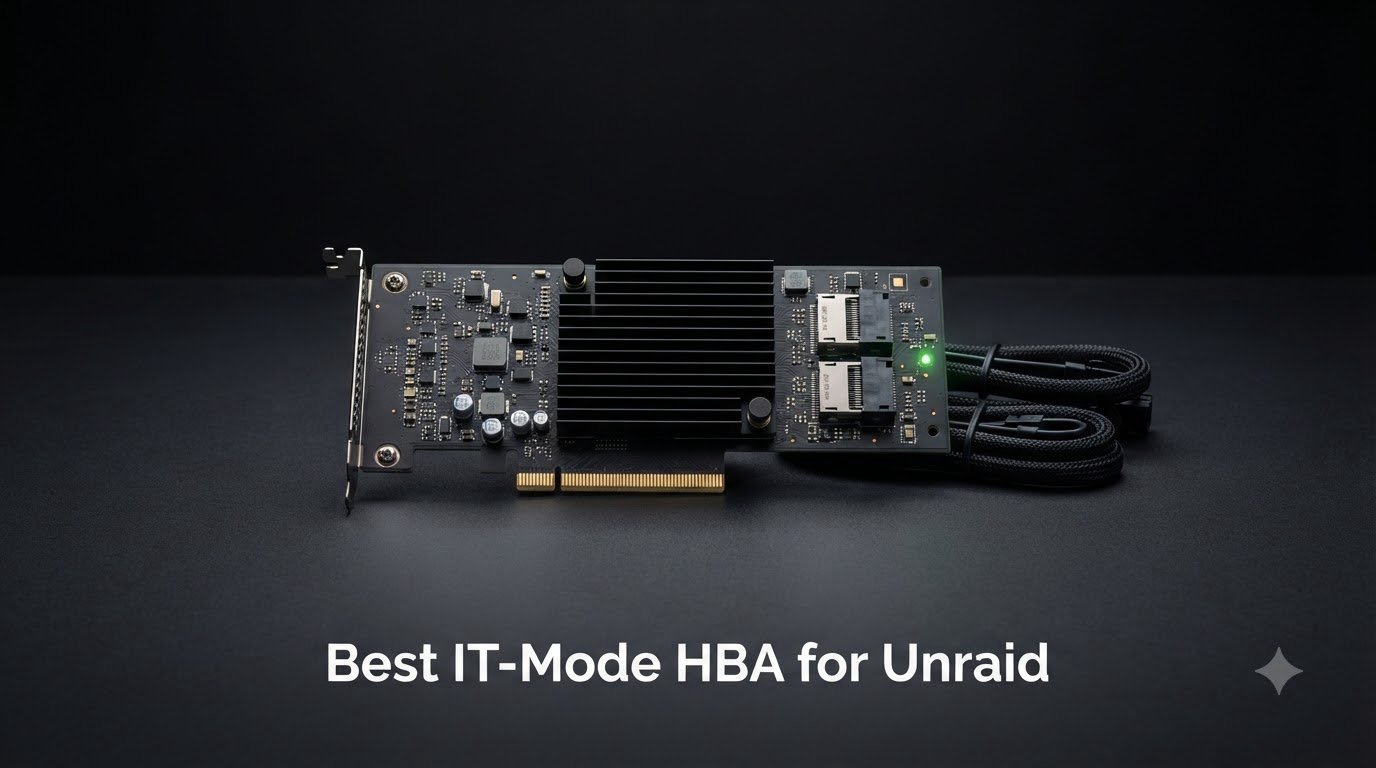
If your Unraid server has more drives than the motherboard can handle, the best IT-Mode HBA for Unraid gives Unraid direct control of every disk without hiding storage behind a hardware RAID layer. I put eight pre-flashed and ready-to-flash options through a practical comparison focused on drive support, cable choices, cooling, and everyday NAS fit.
The short answer is the LSI Logic SAS 9207-8i LSI00301 for buyers who want a genuine OEM card with strong feedback and a three-year warranty. The StorageTekPro LSI 9211-8i is the budget choice, while the LANPAN 9300-8i bundle is my value pick because it includes two breakout cables.
My comparison reflects the supplied product records rather than a claim of a shared long-term test bench. I also weighed Unraid forum experience: owners repeatedly favor 9211-8i cards for hard drives, choose 9300-class cards for SSD throughput or expanders, and advise buying pre-flashed cards when a first-time crossflash feels risky.
Table of Contents
Top 3 Picks for Best IT-Mode HBA for Unraid in 2026

Best IT-Mode HBA for Unraid in October
Every card here supports direct-drive operation, but the records differ in connector generation, cooling needs, included accessories, and vendor support. SATA drives work through the reviewed SAS controllers because SATA is electrically compatible with SAS connections.
| Product | Specs | Action |
|---|---|---|
 StorageTekPro LSI 9211-8i P20 StorageTekPro LSI 9211-8i P20 |
|
Check Latest Price |
 LANPAN 9211-8i and 9300-8i LANPAN 9211-8i and 9300-8i |
|
Check Latest Price |
 LANPAN LSI 9300-8i LANPAN LSI 9300-8i |
|
Check Latest Price |
 KCMconmey LSI 9300-8i P16 KCMconmey LSI 9300-8i P16 |
|
Check Latest Price |
 SXTAIGOOD LSI SAS3008 9300-8i SXTAIGOOD LSI SAS3008 9300-8i |
|
Check Latest Price |
 KCMconmey LSI 9207-8i P20 KCMconmey LSI 9207-8i P20 |
|
Check Latest Price |
| LSI Logic SAS 9207-8i LSI00301 |
|
Check Latest Price |
 10Gtek 12G PCIe SAS/SATA HBA 10Gtek 12G PCIe SAS/SATA HBA |
|
Check Latest Price |
1. StorageTekPro LSI 9211-8i P20 IT Mode — Budget Pick for Spinning Rust
StorageTekPro Flashed Original LSI 9211-8i P20 IT Mode for ZFS FreeNAS unRAID 6Gbps SAS HBA
LSI 9211 chipset
6Gbps SAS
8 internal ports
Pros
- Pre-flashed P20 firmware
- Works across Unraid and ZFS platforms
- Drives 12TB+ reported
Cons
- No cables included
- Reported IronWolf read errors
- One-year failure report
The StorageTekPro listing is the practical entry point for a conventional eight-drive Unraid array. Its LSI 9211 hardware, P20 IT firmware, and 6Gbps SAS support match the older SAS2008-era design that community users consider sufficient for hard drives.
I would pair it with SATA drives, an SFF-8087 breakout cable, and deliberate airflow. The supplied reviews mention broad Unraid, TrueNAS, ZFS, and Proxmox compatibility, along with immediate drive recognition and relief from PCIe AER errors seen on a previous card.
The record is less reassuring on specific IronWolf 8TB drives and long-term survival. One review reports a card failure after about a year, so this is a sensible low-cost choice rather than my first pick for an irreplaceable archive.
What drive setup fits this card?
This card suits eight or fewer mechanical drives, especially when the array mostly serves media files and backups. It still presents each disk directly to Unraid, which is the point of IT mode.
Use only one breakout per SFF-8087 port, confirm the SFF-8087 end, and budget a fan. The connector and cooling costs narrow the savings, but the included P20 firmware removes the crossflash learning curve.
Who should avoid this card?
Skip it if your server depends on an expander or a large SSD pool, because 6Gbps per port is not the forward-looking choice for that workload. Buyers using the affected IronWolf family should also be willing to test returns or validate compatibility first.
Used genuine LSI hardware can be worth considering when the seller documents its condition. That route may require more effort than this pre-flashed listing, but it can offer a stronger track record than an unbranded card.
2. LANPAN 9211-8i / 9300-8i IT Mode with SATA Cables — Best Value Bundle
Pros
- Pre-flashed IT mode
- Includes two breakout cables
- Works in x4 slots
Cons
- Runs hot
- Three-month warranty
- SATA cables only
The LANPAN card is unusual because its listing spans 9211-8i and 9300-8i compatibility, while the technical details identify the SAS3008, PCIe 3.0 x8, and two SFF-8643 connectors. In practice, confirm the exact controller printed on the card before ordering because the broad title can blur the distinction.
The bundle saves an extra step for a new SATA build. It includes two SFF-8643-to-four-SATA cables, supports eight direct-attached disks, and the reviewed user feedback reports immediate recognition in Unraid, TrueNAS, Proxmox, and FreeNAS.
That cable advantage matters only if your disks are SATA. These leads do not terminate in the keyed SAS connector needed by SAS drives, and the card’s reported 12Gbps SAS rating should not be confused with 12Gbps SATA transfer capability.
I would mount a fan over the controller because review summaries repeatedly mention heat. I would also retain the original packaging and test all eight ports early, since the record includes isolated defective units and only a three-month manufacturer warranty.
What makes the bundle easier to install?
Two included breakout cables complete the basic SATA installation and make this the friendliest first HBA in the group. A PCIe x8 electrical slot is listed, though reviewers say it works in x4 slots and drive workloads are unlikely to expose a bandwidth bottleneck.
Use the SFF-8643 side at the card and route the eight SATA ends to stable ports. I would still avoid flexing the connectors during drive changes and would add airflow before filling every bay.
Who should avoid this card?
A buyer planning SAS disks or an expander should replace the included leads rather than assume they are interchangeable. The short warranty and reported quality-control issues also make a pre-flash inspection and port test important.
This model is best for a value-focused SATA build where cable cost and installation time matter more than a long vendor warranty. A buyer who values a known OEM identity may prefer the LSI Logic 9207-8i instead.
3. LANPAN LSI 9300-8i IT Mode — Top-Rated 12Gbps Performance
SAS HBA Card Compatible with LSI 9300-8i IT Mode 8-Port with SATA Cables
LSI SAS3008 chipset
12Gbps SAS
PCIe 3.0 x8
Pros
- Pre-flashed IT mode
- Includes two SATA cables
- Works in consumer systems
Cons
- Possible BIOS boot-order issues
- SATA leads only
- One unit was not in IT mode
The LANPAN 9300-8i uses the Broadcom SAS3008 controller and a PCIe 3.0 x8 host interface. That gives Unraid eight direct disks with a faster interconnect than the 6Gbps 9211 and 9207 cards while retaining two familiar SFF-8643 connectors.
The supplied review record is strong for TrueNAS, Proxmox, and consumer systems, and it reports steady six-gigabit operation across eight drives. It also lists a #1 category rank in the captured product data, although rankings change and should not replace technical fit.
My first boot would go into the motherboard firmware rather than straight to Unraid. Some users had to enable CSM, reorder the boot list, or set the HBA option ROM to OS-only, so I would verify the HBA is the first boot device and that Unraid’s boot disk is not exposed to it.
Why choose the SAS3008 platform?
SAS3008 is a sensible baseline for SSD arrays, mixed high-speed disks, and future expander work. It does not make a SATA SSD operate above 6Gbps, but it removes the older 6Gb/s SAS ceiling from the controller side.
The card includes two SFF-8643-to-four-SATA cables, so a SATA-only array starts with all required leads. For SAS expansion, choose a forward or reverse breakout designed for the target backplane rather than reusing SATA leads.
Who should avoid this card?
This is not the simplest drop-in option if the host board has a troublesome option ROM. I would also avoid assuming every unit arrives correctly flashed because one review summary says the card was not in IT mode.
The short three-month warranty is another reason to test all eight connections before organizing a large array. It remains a capable pick when speed headroom matters and you are comfortable checking firmware at the first boot.
4. KCMconmey LSI 9300-8i P16 IT Mode — Reliable Drop-In Replacement
KCMconmey LSI 9300-8i Controller HBA Card, LSI 3008 SATA SAS Host Bus Adapter. 2 * SFF-8643 Internal 12Gbps, PCI-e 3.0 x8. IT Mode Firmware. Non RAID.
LSI SAS3008 chipset
P16 IT mode
PCIe 3.0 x8
Pros
- Pre-flashed P16 firmware
- Works across major NAS OSes
- Both bracket sizes
Cons
- Runs hot
- Cables not included
- Active cooling recommended
KCMconmey presents a straightforward 9300-8i replacement with LSI SAS3008 hardware, P16 IT firmware, two SFF-8643 internal connectors, and a PCIe 3.0 x8 interface. It supports Windows, Linux, and macOS in the supplied product record, which helps when the same card moves between systems.
The feedback emphasizes plug-and-play behavior in Unraid, TrueNAS, and Proxmox, plus recognition of both SAS and SATA disks. That broad compatibility is useful in a home lab, where one card may pass between a storage server and a virtualized host.
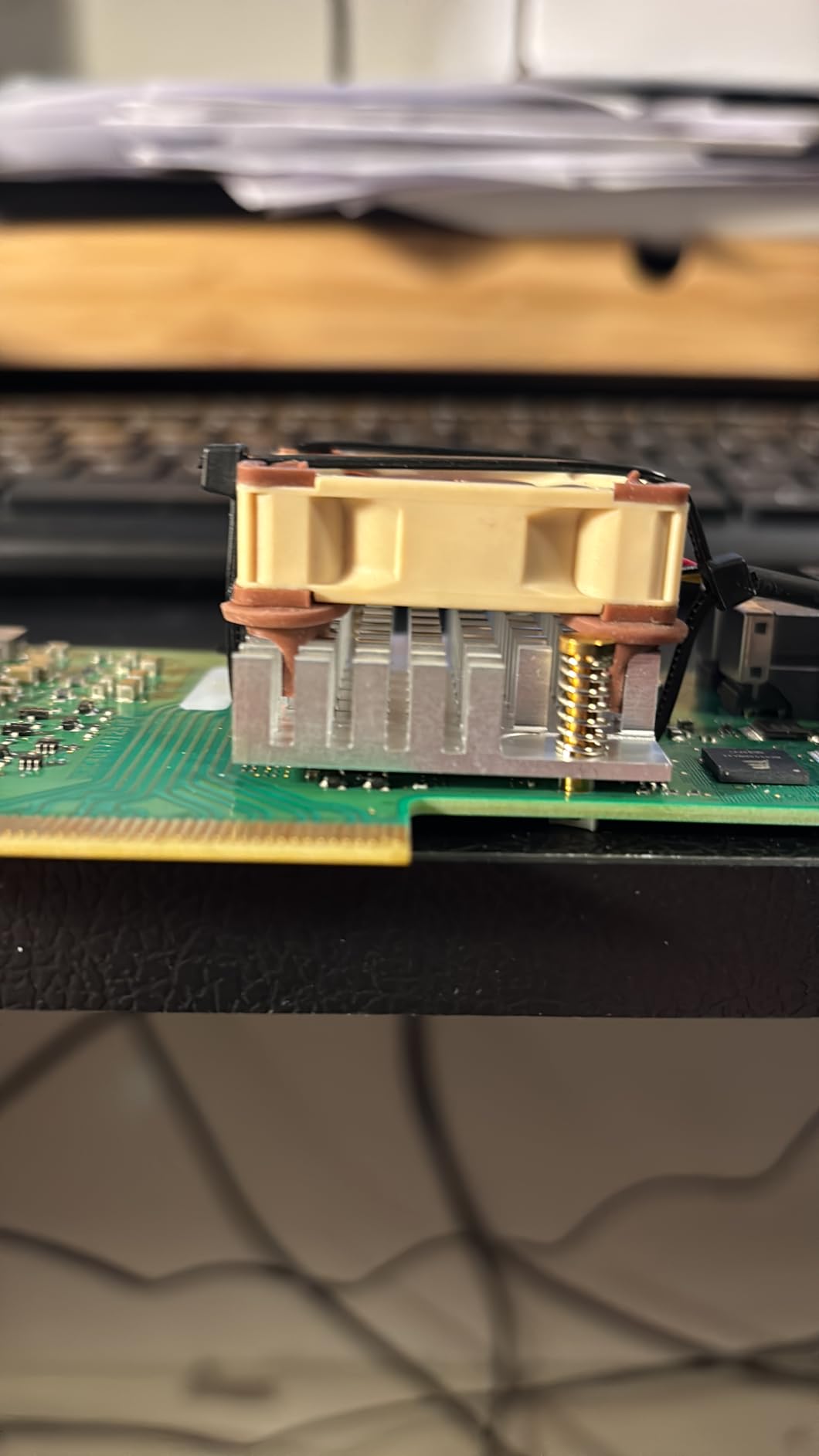
Cooling is the main operational concern. Review summaries report heatsink temperatures around 50–60 degrees Celsius without airflow and recommend a 40–60mm fan, so I would not place this card below a fully populated drive cage.
What does P16 firmware change?
The card arrives in IT mode with firmware version 16.00.14.00, so Unraid should see individual disks instead of RAID volumes. That removes the need for a first-time crossflash, although keeping a backup of the original firmware is still sensible.
The two SFF-8643 ports normally feed eight disks through breakouts or a compatible backplane. Full-height and low-profile brackets add flexibility for a tower, rack server, or compact chassis.
Who should avoid this card?
Passive cooling enthusiasts and tightly packed small-form-factor builds should choose a different card or budget for a fan. The controller’s documented heat output is the clearest recurring complaint in the supplied reviews.
Cables are also absent, so the final system cost is higher than the LANPAN bundle. I still rate it highly when you want SAS3008 performance, confirmed P16 IT mode, and a one-year warranty over the LANPAN’s shorter coverage.
5. SXTAIGOOD LSI SAS3008 9300-8i IT Mode — Best for High-Capacity Drives
LSI SAS3008 9300-8I IT-Mode HBA JBOD PCI-E 3.0 SATA/SAS 8-Port SAS3 12Gb/s ZFS FreeNAS unRAID 2* SFF-8643 SATA Cable
LSI SAS3008
12Gbps SAS3
8 SATA or SAS ports
Pros
- Pre-flashed IT mode
- High-capacity drive testing
- One-year warranty
Cons
- Cables terminate in SATA
- One defective seven-port unit
- Limited review history
The SXTAIGOOD card targets a new Unraid build around the SAS3008, 12Gbps SAS3, and eight direct SATA or SAS connections. It is preconfigured for ZFS, FreeNAS, and unRAID in the supplied technical details, and its one-year warranty is more reassuring than the three-month coverage on several alternatives.
The most useful signal in the product record is a user test with 24TB WD Ultrastar drives and steady 350–400Mbps transfers over 5GbE. That does not prove universal compatibility, but it is relevant to owners who are moving beyond smaller disks.
Before trusting it with the full array, I would test all eight physical ports and record their serial numbers. One review describes a unit that recognized only seven of eight drives, which is a manageable early failure only if the seller accepts a return quickly.
Is this card right for large disks?
The SAS3008 architecture and 24TB test make it a credible high-capacity choice. The storage protocol is not the same thing as the PCIe link, so use Unraid’s preclear and parity check functions to validate each large disk after installation.
Two SFF-8643 connectors support conventional eight-drive wiring or a compatible expander. The included cables are SATA-only, so SAS users need separate leads and a backplane that matches the connector orientation.
Who should avoid this card?
Risk-averse buyers may prefer a model with a longer review history, because this listing has only 15 reviews. The limited stock note also argues against delaying a planned build without checking availability.
It is a strong fit for a new high-capacity SATA array when the return policy is clear and cooling is planned. I would not choose it for a remote or critical server solely because the captured rating is high.
6. KCMconmey LSI 9207-8i P20 IT Mode — PCIe 3.0 on a 2308 Budget
KCMconmey LSI 9207-8i Controller HBA Card, LSI 2308 SATA SAS Host Bus Adapter. 2 * SFF-8087 Internal 6Gbps, PCI-e 3.0 x8. IT Mode Firmware. Non RAID.
LSI SAS2308 chipset
6Gbps per port
PCIe 3.0 x8
Pros
- Pre-flashed P20 IT mode
- Works with major NAS systems
- Both bracket sizes
Cons
- Can run hot
- Possible wrong firmware report
- May need ROM-Bar changes
The KCMconmey 9207-8i combines the LSI SAS2308 with a PCIe 3.0 x8 interface and two SFF-8087 internal connectors. That is a useful middle ground for a hard-drive array: it offers a modern host link without the cost or complexity of a SAS3008 build.
Its review record covers Proxmox, TrueNAS, ZFS, and Unraid, with positive comments about Linux compatibility and a drop-in replacement role. The listing includes full-height and low-profile brackets, which makes it useful in both a server and a compact desktop.
I would verify firmware and boot behavior during installation. The supplied cons mention cards arriving in RAID mode, possible ROM-Bar adjustments, and seating problems, so a slow first inspection is better than debugging the entire array later.
How does the 9207 compare with a 9211?
The LSI SAS2308 in the 9207 generally pairs with a PCIe 3.0 host interface, while the older 9211 record uses a PCIe 2.0 interface. Both provide 6Gbps-class drive connections, so normal hard disks will not automatically become faster on the 9207.
The choice is therefore about platform compatibility and future expansion rather than headline transfer speed. The 9207 is attractive when the motherboard has no spare PCIe 2.0 x8 slot or when existing 2308 drivers are already proven in your setup.
Who should avoid this card?
SSD-heavy users should move to a SAS3008 model for more headroom. The same applies to an expander-based build, where the community’s 9300 recommendation reflects the newer controller rather than a requirement imposed by Unraid.
Buyers who cannot verify the firmware should pay a little more for the genuine LSI Logic 9207-8i in the next section. That card’s three-year warranty and larger review history reduce some first-purchase risk.
7. LSI Logic SAS 9207-8i LSI00301 — Premium OEM Pick with 3-Year Warranty
LSI Logic SAS 9207-8i Storage Controller LSI00301
8 internal ports
6Gbps SAS or SATA
PCIe 3.0 x8
Pros
- Genuine LSI hardware
- Pre-flashed IT mode
- Three-year warranty
Cons
- Cables not included
- Heatsink runs hot
- Some connector fit complaints
The LSI Logic SAS 9207-8i LSI00301 is the most reassuring OEM choice in this roundup. It has eight internal 6Gbps SAS or SATA ports, PCIe 3.0 x8, a low-profile form factor, and a three-year limited warranty.
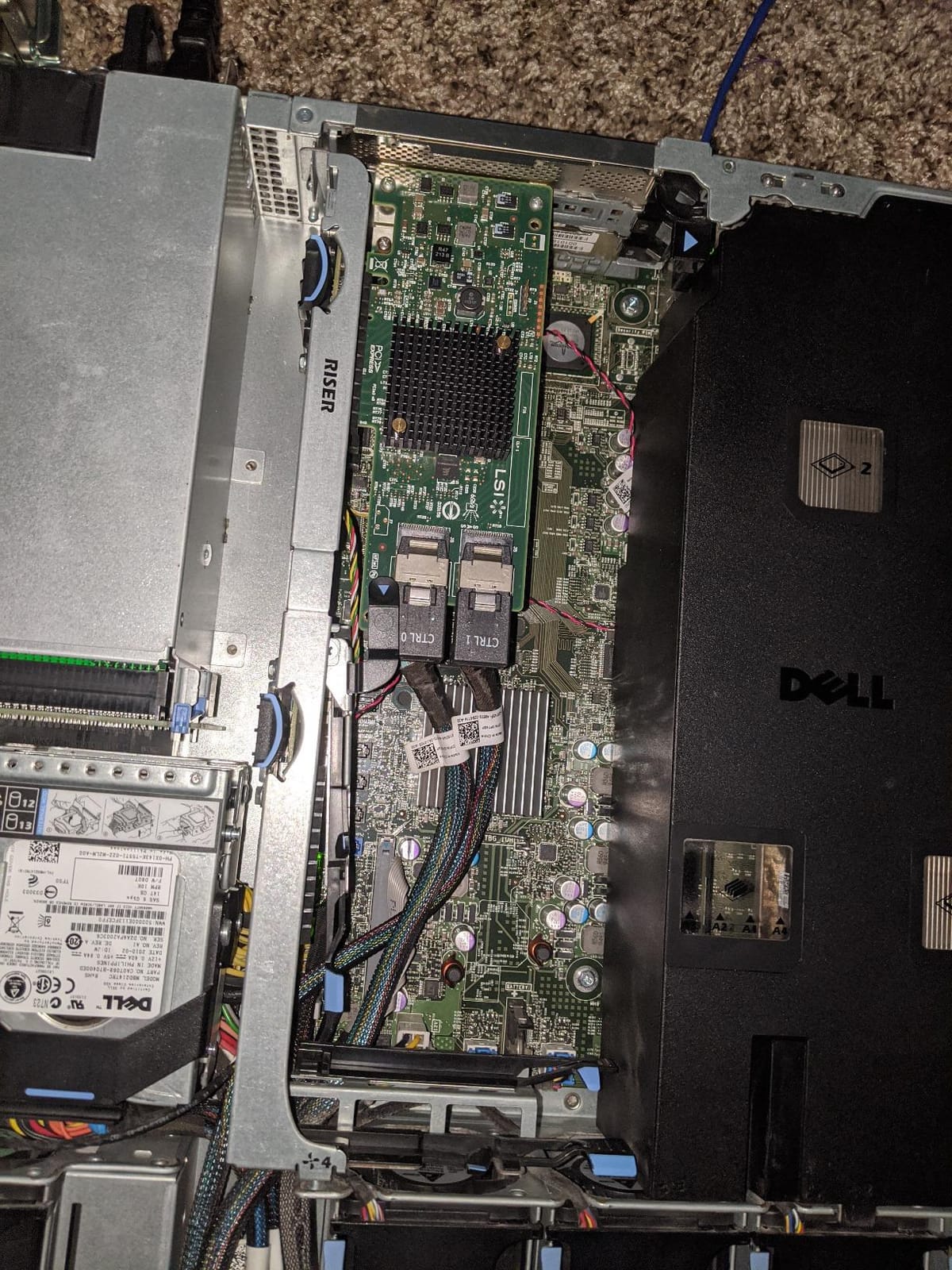
The captured reviews specifically praise Unraid compatibility, no-flash setup, Linux and ZFS use, and operation in Dell PowerEdge servers. One user reports more than 100MB/s write throughput, which is enough context to show that the card performs as a dependable storage adapter rather than a speed bottleneck.
Its six-gigabit ceiling is old by 2026 standards, but hard drives remain the sensible target. I would not buy it solely for an SSD scratch pool when a SAS3008 card is available, and I would still arrange airflow because the heatsink is reported to get hot.
The card supports up to 256 SAS or SATA end devices in the supplied specifications, although a practical Unraid direct-attach design normally stops at eight. The important number for planning is the two SFF-8087 connectors and the breakout cable you must provide.
Why is the OEM card the safest pick?
The 109-review record is substantially larger than the review counts for the other listings, and the product data identifies a three-year warranty. That combination makes it the best choice when reliability and straightforward replacement matter more than saving a few dollars.
It also arrives in IT mode according to the review summary, so there is no reason to perform a crossflash before Unraid sees the disks. Keep the original firmware package and the purchase receipt in case a system change requires a restore.
Who should avoid this card?
Do not choose it for maximum future bandwidth, SAS expanders with high-speed requirements, or a server where airflow is already limited. The older SAS2308 controller is still useful, but it is not the platform I would build around for years of SSD growth.
Connector fit is another practical concern in the supplied cons. Buy a known-compatible locking SFF-8087 breakout, secure both cables before moving the chassis, and avoid using a loose lead that can damage the port or interrupt an array.
8. 10Gtek 12G PCIe SAS/SATA HBA — Flexible SAS3008 Alternative
10Gtek 12G Internal PCIe SAS/SATA HBA Controller Card, Broadcom SAS3008 Chipset, Compatible with LSI 9300-8I
Broadcom SAS3008
12Gbps per port
PCIe 3.0 x8
Pros
- Broad driver support
- Works with Unraid and Proxmox
- Two SFF-8643 ports
Cons
- May require IT-mode flashing
- No hot-swap support
- Port and longevity reports
The 10Gtek card is a SAS3008-based 12Gbps HBA with two SFF-8643 ports and PCIe 3.0 x8. The supplied product record lists both IT and IR mode variants, so this is the option where you must read the firmware state before relying on a ready-to-use IT mode.
Users report good TrueNAS SCALE, Linux VM, Unraid, Proxmox passthrough, and Windows 11 experiences. The Broadcom driver ecosystem is a plus when the card is shared by a NAS OS and a virtualized server, but the card is listed without hot-swap support.
The main drawbacks are mixed review signals: some units arrive in IR mode despite the advertised mode, some have defective ports, and a few reviews mention reset or long-term failure. That makes an early port test non-negotiable.
I would buy this card when its specific IT-mode listing, seller return policy, and Broadcom controller match the build. If the variant is unclear, one of the cards that explicitly arrives in P16 or P20 IT mode removes an avoidable variable.
What can the SAS3008 controller do for Unraid?
It gives the host a modern 12Gbps SAS connection path and enough headroom for SSD pools, mixed drives, and an expander. SATA disks still negotiate at 6Gbps, but the controller will not hold the build to the older 6Gbps SAS platform.
Use a SFF-8643 breakout that supports the disk type and backplane you own. The product record also says the package includes a driver CD and a low-profile bracket, while hot-swap behavior is not supported by the listing.
Who should avoid this card?
First-time builders who want a guaranteed no-flash path should avoid an ambiguous IR variant. Critical deployments should also look for a clearer warranty, because no warranty duration is listed in the supplied record.
The card is still a sensible choice for an experienced Unraid user who can confirm IT mode, test every port, and install cooling. Its 88 reviews provide more feedback than most third-party SAS3008 listings, but they also make the quality-control reports worth taking seriously.
How to Choose the Best IT-Mode HBA for Your Unraid Build?
Choose an IT-Mode HBA by matching drive count, connector type, firmware state, and cooling to the server. A card can be technically capable and still be the wrong purchase if its ports cannot reach the backplane or if its option ROM takes over the boot disk.
IT mode gives Unraid direct control of every disk
IT mode means Initiator-Target mode. The HBA exposes each connected disk as an individual device, so Unraid can build its own array, parity, cache, and assignment rules instead of receiving a hidden RAID volume from controller firmware.
IR mode, or Integrated RAID mode, creates hardware-managed virtual disks and can make Unraid see one large object instead of the individual disks underneath. That is the opposite of the direct access an Unraid software storage model needs.
Unraid does not require every controller to be flashed before it can work, but IT mode is the cleanest arrangement. It also makes drive replacement and identification less dependent on proprietary controller metadata.
SAS HBAs can control SATA drives, but cables still matter
SATA drives are compatible with a SAS controller at the electrical level, and the reviewed cards support SATA as well as SAS devices. A SAS HBA does not turn a SATA port into a SAS port, so the drive connector and cable must match the physical drive type.
SFF-8087 is the older mini-SAS connector used by the 9211 and 9207 cards. SFF-8643 is the higher-density connector associated with the 9300 and 3008 family, and buying the wrong breakout is one of the most common installation complaints in the forum research.
Some cables split one mini-SAS connection into four SATA leads. Others connect a disk shelf or backplane, and reverse or forward breakout orientation can matter when the backplane’s connector arrangement does not mirror the HBA.
PCIe generation is less important than slot width for hard drives
PCIe 3.0 x8 versus PCIe 2.0 x8 changes host bandwidth, but a single mechanical hard drive cannot use the full link. That is why the 9211 remains useful for a spinning-disk array and why community guidance does not treat the 9300 as mandatory for ordinary NAS storage.
Confirm the physical slot, electrical lanes, and clearance before ordering. The cards in this roundup list x8 interfaces, but a physically x16 slot with only x4 wiring is still only x4 at the host, and a small chassis may not clear a full-height bracket.
For a PCIe 3.0 card in a PCIe 2.0 server, the slot and card should negotiate compatibly, but the available bandwidth is reduced. That is usually acceptable for SATA disks and a single 10GbE path, while a heavily populated SSD pool benefits from the newer controller.
Port count and expanders determine how far the build can grow
Two internal SFF connectors normally mean eight direct-attached SATA or SAS devices, but a backplane or expander can increase the number of targets. The LSI Logic listing says the 9207 supports up to 256 end devices, while the other cards describe eight direct disks and expander support in the supplied feature data.
Plan for the number of physical drive bays you have today, not an imaginary future array. An expander adds cost, cable length, failure points, and troubleshooting work, and it does not change the total amount of data that can pass through one HBA.
For a four-bay or six-bay server, an eight-port card leaves useful room for replacement or cache drives. For a large enclosure, the SAS3008 family and a tested expander setup are more forward-looking than treating eight ports as unlimited.
Flashing is a useful fallback, not a requirement to fear
A pre-flashed card saves time and reduces the risk of a wrong firmware image. The StorageTekPro 9211, LANPAN cards, KCMconmey cards, and SXTAIGOOD listing all identify IT mode in their supplied data, while the 10Gtek record explicitly warns that some units may arrive in IR mode.
If flashing is necessary, use the exact controller family, firmware package, boot method, and backup procedure recommended by the card vendor. Unraid community members commonly fear bricking a card, so a second machine or a proven USB recovery path is preferable to an improvised first attempt.
Do not flash while the array contains the only copy of your data. The HBA is a connection layer, not a backup, and a firmware mistake should never be allowed to put the only copies of irreplaceable files at risk.
Cooling and boot configuration are the practical failure points
Several records describe hot heatsinks, with the KCMconmey 9300 reaching a reported 50–60 degrees Celsius without airflow. A 40–60mm fan near the controller is a small addition compared with troubleshooting intermittent links or a failed port.
Option ROM behavior can also make a new HBA look broken. If a server boots into the HBA instead of the Unraid USB, check the card’s OS-only setting, CSM state, boot order, and ROM-Bar option, then disconnect the array only when you are ready to change boot devices.
Frequently Asked Questions
What is the best HBA for Unraid?
The LSI Logic SAS 9207-8i LSI00301 is the safest all-round pick because it is genuine LSI hardware, ships in IT mode, has eight internal ports, and includes a three-year warranty. The StorageTekPro 9211-8i is the lower-cost choice for mechanical drives, while a 9300-class card is better for SSD headroom or future expander use.
Which LSI SAS card is the best?
For an Unraid hard-drive array, the 9211-8i is the community budget favorite and the 9207-8i adds a PCIe 3.0 host interface. Choose a 9300-8i or other SAS3008 card for SSD performance, modern SAS connectivity, or an expander; the best model is the one whose firmware, connectors, cooling, and return policy match your server.
What is the difference between an HBA and a RAID controller?
An HBA presents individual disks to the operating system, while a RAID controller can combine disks into hardware-managed virtual disks. IT mode makes an HBA pass drives through directly, which lets Unraid manage array membership, parity, and assignments in software.
What is HBA Dell?
HBA Dell usually refers to a Dell-branded SAS host bus adapter, often sold as a lower-cost alternative to an LSI card. Compatibility and flashing depend on the exact Dell model and controller family, so verify the chipset, IT-mode firmware, connector layout, and backplane wiring before buying one for Unraid.
Final Verdict: Picking the Best IT-Mode HBA for Unraid
The best IT-Mode HBA for Unraid is the LSI Logic SAS 9207-8i LSI00301 when you value a known OEM card, no-flash operation, and a three-year warranty. For a lower-cost hard-drive build, the StorageTekPro 9211-8i is the community-style budget choice, and the LANPAN 9300-8i bundle is the easiest value setup for SATA disks because it includes two breakout cables.
My final recommendation is to buy around the workload, not the highest port number. Mechanical drives are well served by 9211 or 9207 hardware, while SSD growth, modern backplanes, and expanders point toward a tested SAS3008 card with airflow and a pre-flashed IT-mode firmware image.
Before adding disks, identify the controller, confirm IT mode, match SFF-8087 or SFF-8643 connectors, and test every port. That short checklist protects an Unraid array from the mistakes that cause the most forum frustration: wrong cables, wrong firmware, missing cooling, and a card that was never validated before it held important data.