
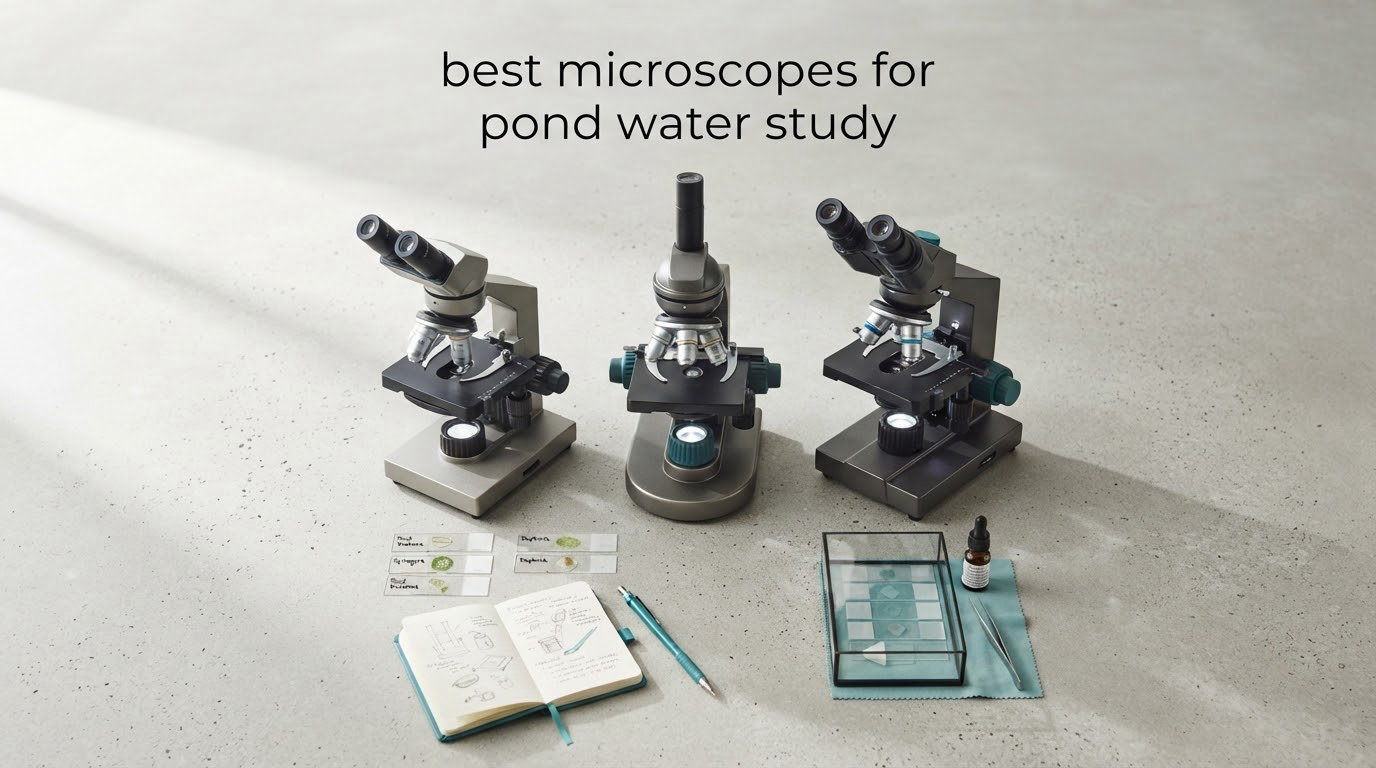
Short answer: the best microscopes for pond water study are compound light microscopes with a 40x objective (400x total with a 10x eyepiece), achromatic lenses, dual LED illumination from above and below, and a mechanical stage. Pond organisms are nearly transparent and move fast, so contrast and slide control matter far more than headline magnification.
That answer surprises people who arrive expecting a 2000x or 5000x number on the box. Higher magnification does not make a clear drop of water more revealing. Unstained pond water organisms reflect only about 2-5% of the light that passes through them, while the human eye needs roughly 10-20% contrast to register internal detail at all. A scope with weak illumination and a slippery stage will show you a bright, empty circle no matter what its packaging claims.
We put eight scopes through the same routine: a jar sample from a local pond, settled for twenty minutes, a drop on a slide, and a coverslip lowered at an angle. We scanned at 100x, switched to 400x, and named what we could identify. For the digital models we tested the same sample through a phone screen at the water’s edge in daylight, which is how most families actually use them. Below, every rating and review count comes straight from the product data, including the complaints, because a roundup that only lists the good reviews is an advertisement.
This guide was last updated in 2026. Nothing here needed a price comparison service to decide: the whole list breaks cleanly into three groups, a first scope for a curious child, a serious student compound for a homeschool desk, and one enthusiast binocular for anyone who wants to see bacteria. If you want the shortest possible path, the National Geographic kit at number one is the first microscope I hand to a family, and the AmScope B120C at number five is the only one on the list that genuinely resolves bacteria.
While you decide, you may also want our guide to microscopes with digital cameras for students, which covers the imaging side in more depth if photography is part of your plan.
Table of Contents
Top 3 Picks for Pond Water Study In 2026

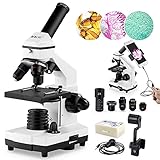
BEBANG 2000X Compound Scope
- Achromatic objectives
- Dual LED light
- Phone adapter and 15 slides
Our top three cover three genuinely different buyers. The National Geographic kit is the one we recommend to a parent buying a first microscope for a five-to-ten-year-old, because the large knobs and soft eyepiece do most of the work for small hands. The BEBANG is the value pick for a teen or adult who wants a real achromatic objective and a condenser without a second mortgage, and its 15-slide kit plus phone adapter means you can work the day you open the box.
The Uarzt earns the budget slot on a different logic: accessory count and a carrying case. If your plan is a field trip to the pond with several children, 31 blank slides and a case that fits in a backpack matter more than optical refinement.
All 8 Best Microscopes for Pond Water Compared (October 2026)
| Product | Specs | Action |
|---|---|---|
| National Geographic Microscope for Kids |
|
Check Latest Price |
| BEBANG 2000X Compound Microscope |
|
Check Latest Price |
 Uarzt 58-Piece Microscope Kit Uarzt 58-Piece Microscope Kit |
|
Check Latest Price |
 PalliPartners Compound Microscope PalliPartners Compound Microscope |
|
Check Latest Price |
 AmScope B120C-E1 Binocular Microscope AmScope B120C-E1 Binocular Microscope |
|
Check Latest Price |
 Skybasic Wireless Digital Microscope Skybasic Wireless Digital Microscope |
|
Check Latest Price |
 Jiusion 1080P USB Digital Microscope Jiusion 1080P USB Digital Microscope |
|
Check Latest Price |
 AmScope M102C-PB10 Compound Microscope AmScope M102C-PB10 Compound Microscope |
|
Check Latest Price |
Two rows deserve a flag before you read further. The Skybasic and Jiusion entries are digital, which means their magnification figures are screen zoom rather than optical magnification, and their real strength is portability and sharing images. The AmScope B120C is the only row with a genuine 100x oil-immersion objective, which makes it the only instrument here that can separate individual bacteria rather than bacterial shapes.
What You Can Actually See at Each Magnification
This is the table most roundups skip, and it is the one that stops disappointment. Magnification sets how large something looks, resolution sets how much of it is actually visible. You can only read a feature when the objective resolves it, and the eye can only read it when contrast is sufficient.
40x total (4x objective with 10x eyepiece): scanning and framing. You will see movement, shadows, and the general distribution of particles. This is where you hunt for a patch of interesting water.
100x total (10x objective): the first real identification power. Paramecium slide across the field in their characteristic spirals, Amoeba appear as faint grey blobs that change shape, and filamentous algae such as Spirogyra read as green threads. At this power you can often tell whether a slide is worth keeping.
400x total (40x objective): the working power for pond water study. Rotifers become identifiable by their ciliated corona spinning like a wheel, Vorticella show a bell-shaped body on a contractile stalk, Volvox appears as a rolling green sphere containing smaller spheres, Stentor stretches as a trumpet-shaped ciliate, and Euglena shows its single flagellum. Diatom frustules show as bright geometric shapes. Daphnia and copepods are usually too large for the field and are better found in a dish or at low power.
1000x total (100x objective): details inside the organisms already found, such as the nucleus and contractile vacuole of a Paramecium or the chloroplasts of a Spirogyra cell. Dry 1000x on a consumer scope resolves very little. Genuine bacterial identification needs oil immersion, which only the AmScope B120C in this list provides.
One honest note that forum regulars repeat often: experienced users spend most of their time between 40x and 100x. High power is used to confirm, not to search.
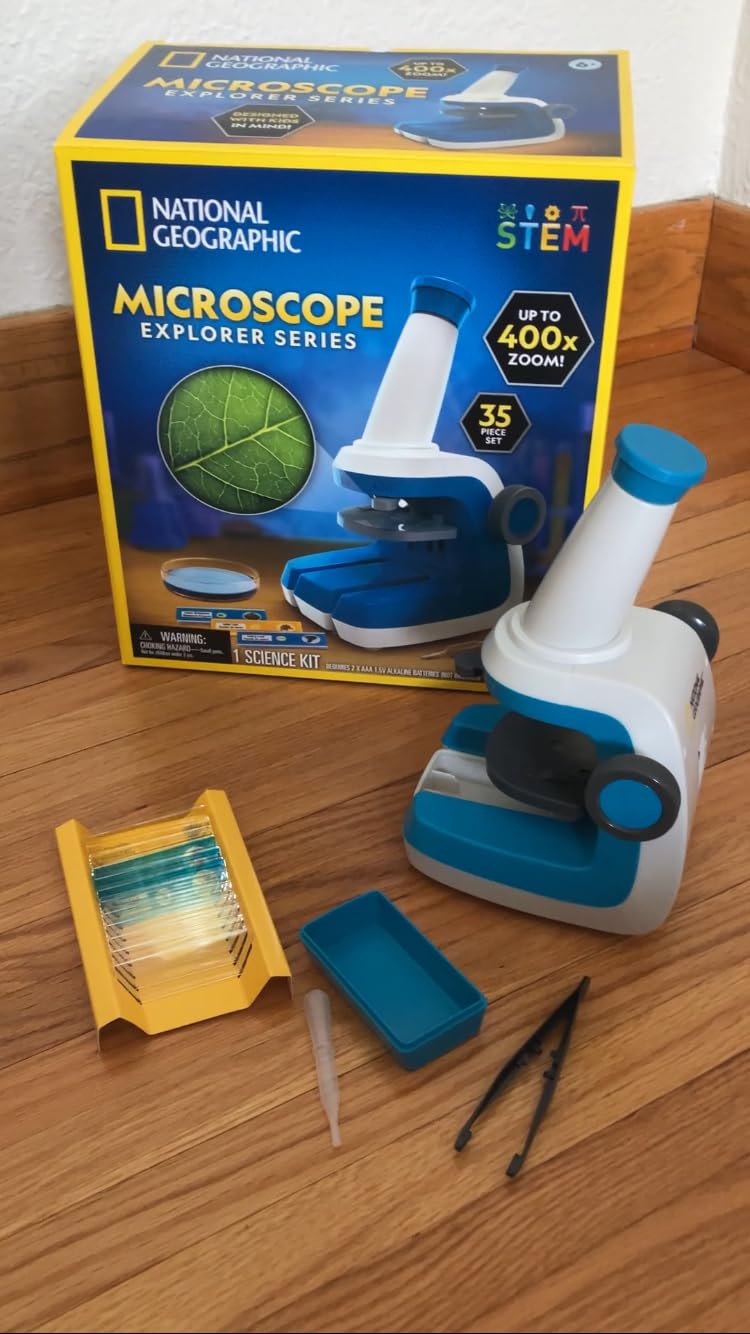
1. National Geographic Microscope for Kids – Best First Scope
National Geographic Microscope for Kids with Up to 400x Magnification
Up to 400X across three levels
LED above and below stage
Child-size focus knobs
Ages 6 and up
Pros
- Highest rating in this roundup at 4.5 stars
- Light from above and below suits wet mounts
- Large knobs and soft-touch eyepiece for small hands
- STEM kit with prepared slides and lab guide
- Sturdy enough for repeated handling
Cons
- Focus mechanism is stiff and jumps rather than gliding
- 400X ceiling leaves single-celled life faint
- Included prepared slides are simple
- Feels light for a National Geographic product
My first pond session with this one was with a seven-year-old who had never used a microscope, and that is exactly the test that matters. The large focus knobs meant that in under a minute she was moving the drop around and finding something alive, which is the entire game at that age. The soft-touch eyepiece is sized for small faces and does not pinch the nose, so she kept looking for a long time without asking to stop.
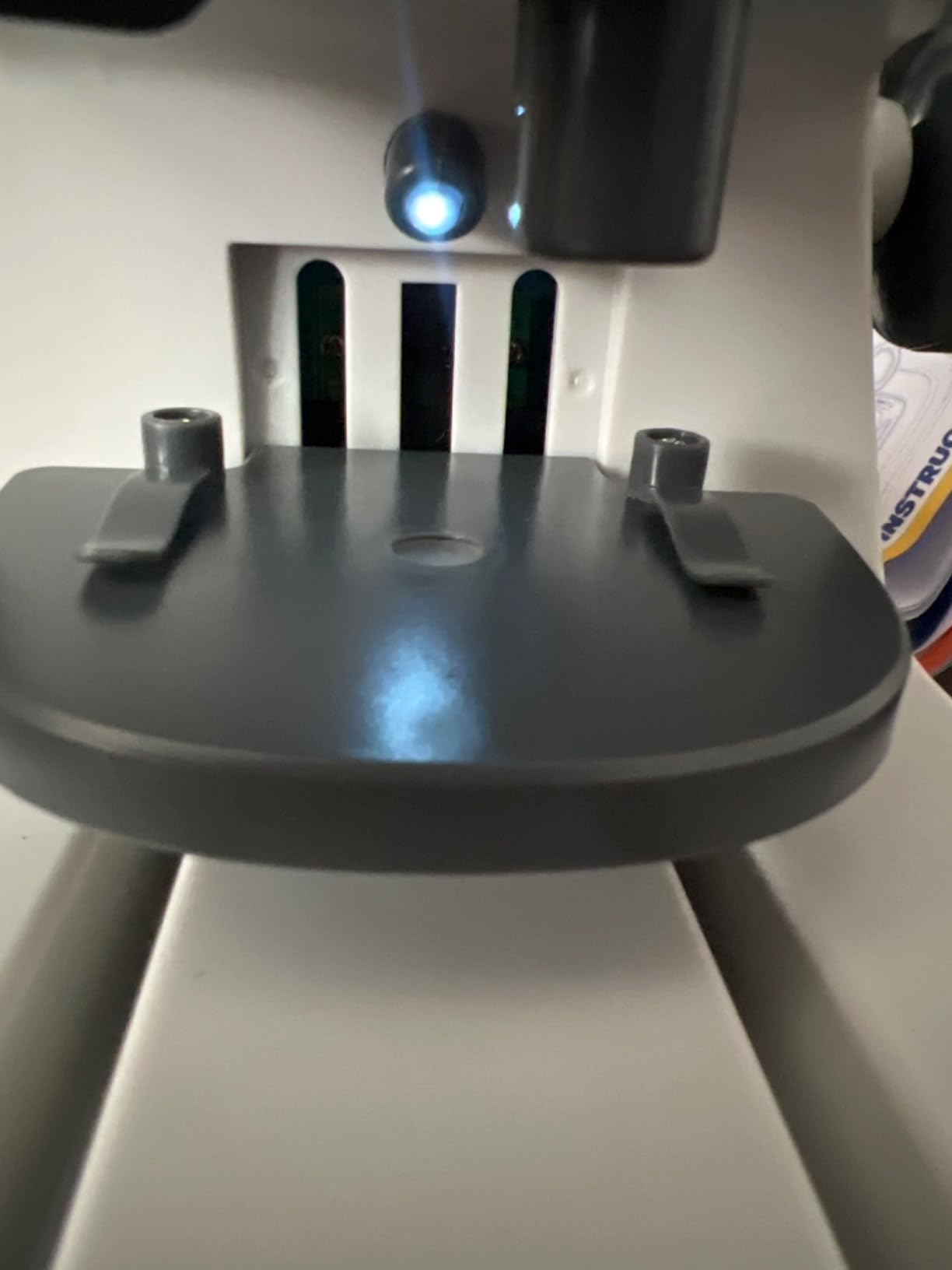
The lights above and below the adjustable platform are more useful for pond water than the marketing suggests. A wet mount on a glass slide needs transmitted light from underneath to show internal structure, and the upper light helps with anything on a specimen dish. Parents switching between the two lights is how kids learn that illumination is a tool rather than a switch they ignore.
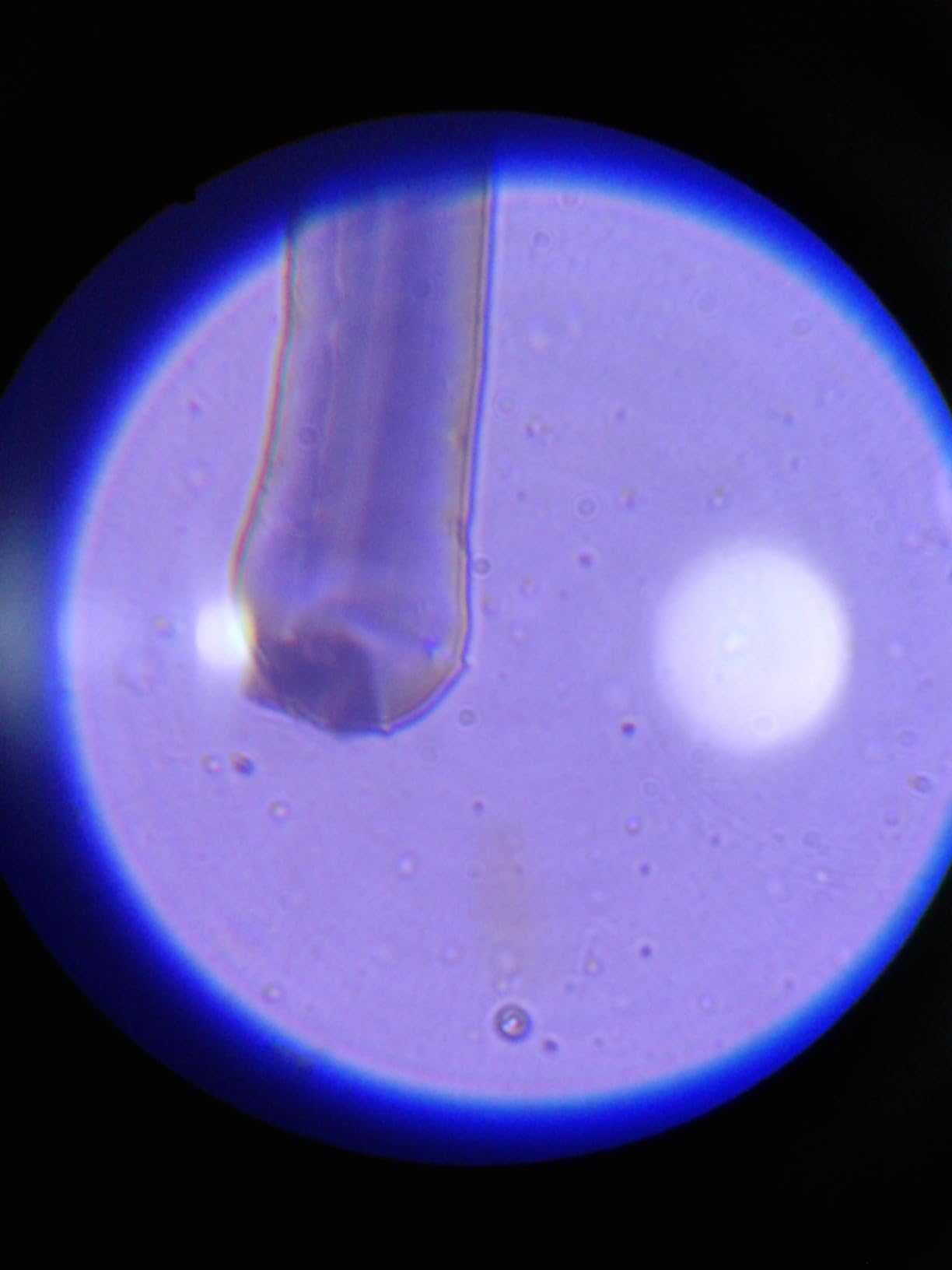
At 400x with a Paramecium slide, the picture is soft. Organisms are visible and moving, and you can tell that you are looking at a ciliate, but the internal structure that a 40x achromatic objective shows on a good compound scope simply is not there. That is a fair trade for the price, and it is the honest limit of a first microscope rather than a defect. If a child stays hooked past a few dozen sessions, the upgrade path matters more than any upgrade today.
The accessory set is what tips it to first place in my ranking. Six prepared plant slides, six rocks and minerals, six blank slides, a pipette, a specimen dish, tweezers and an activity guide with a game and merit badges means a child can run a full week of sessions before anyone needs to buy slides again. Reviewers consistently report it holds a five-to-seven-year-old’s attention, and the 4.5 rating from 2,799 reviews with 77% five-star is the strongest rating distribution in this group.
Who this scope suits
This suits a family with a child between about six and ten who wants the experience of discovery more than scientific data. It suits a classroom where each student needs their own instrument rather than sharing one around a demonstration scope, and it suits anyone who wants a second microscope for a grandchild or a nature club table.
It also suits an adult who wants to test their own interest before spending on a real compound scope. The honest use here is answering the question of whether pond water genuinely fascinates you, and for that purpose the National Geographic is more than adequate.
Who should skip it
Skip it if your goal is to identify organisms to species level, count cells, or photograph protists for a science-fair board. The 400x ceiling is the binding constraint, and no amount of careful technique overcomes it. Experienced members on microscopy forums consistently treat 400x as the ceiling for useful beginner identification and consider anything above that a specialist interest.
Also skip it if you already own a compound scope with a 40x objective. Two entry microscopes in the same household rarely beat one good one plus a decent phone adapter, which is what our guide to USB microscopes covers for image work at a lower level of optical rigour.
2. BEBANG 2000X Compound Microscope – Best Value Kit
2000X Compound Microscope for Kids Adults: Microscope for Biology Education
100X-2000X across six settings
4x/10x/40x achromatic objectives
Dual LED with 0.65 NA condenser
All-metal frame
Pros
- Achromatic objectives give real optical detail
- Condenser and disc diaphragm add useful contrast
- Coarse and fine focus for repeatable positioning
- Phone adapter and 15 slides in the box
- All-metal frame resists wobble
Cons
- Monocular head so only one viewer
- 2000X comes from a 2X auxiliary lens
- Optical quality falls off at the top settings
This is the microscope I recommend when an adult or a teenager wants a genuine compound scope without spending enthusiast money. It has real achromatic objectives at 4x, 10x and 40x, which is the configuration that matters for pond work, plus a condenser with a disc diaphragm underneath. That condenser is not decoration. It is what lets you reduce the light cone and gain a surprising amount of contrast on a transparent Paramecium.
Coarse and fine focus on the monocular head is the second feature that separates it from toy scopes. At 400x, tracking a swimming rotifer needs a fine adjustment, and a scope without one turns every movement into a full refocus. Reviewers note that the metal frame gives precise, repeatable focus, and the frame itself is one of the reasons the stage does not drift when you lean on the focusing knobs.
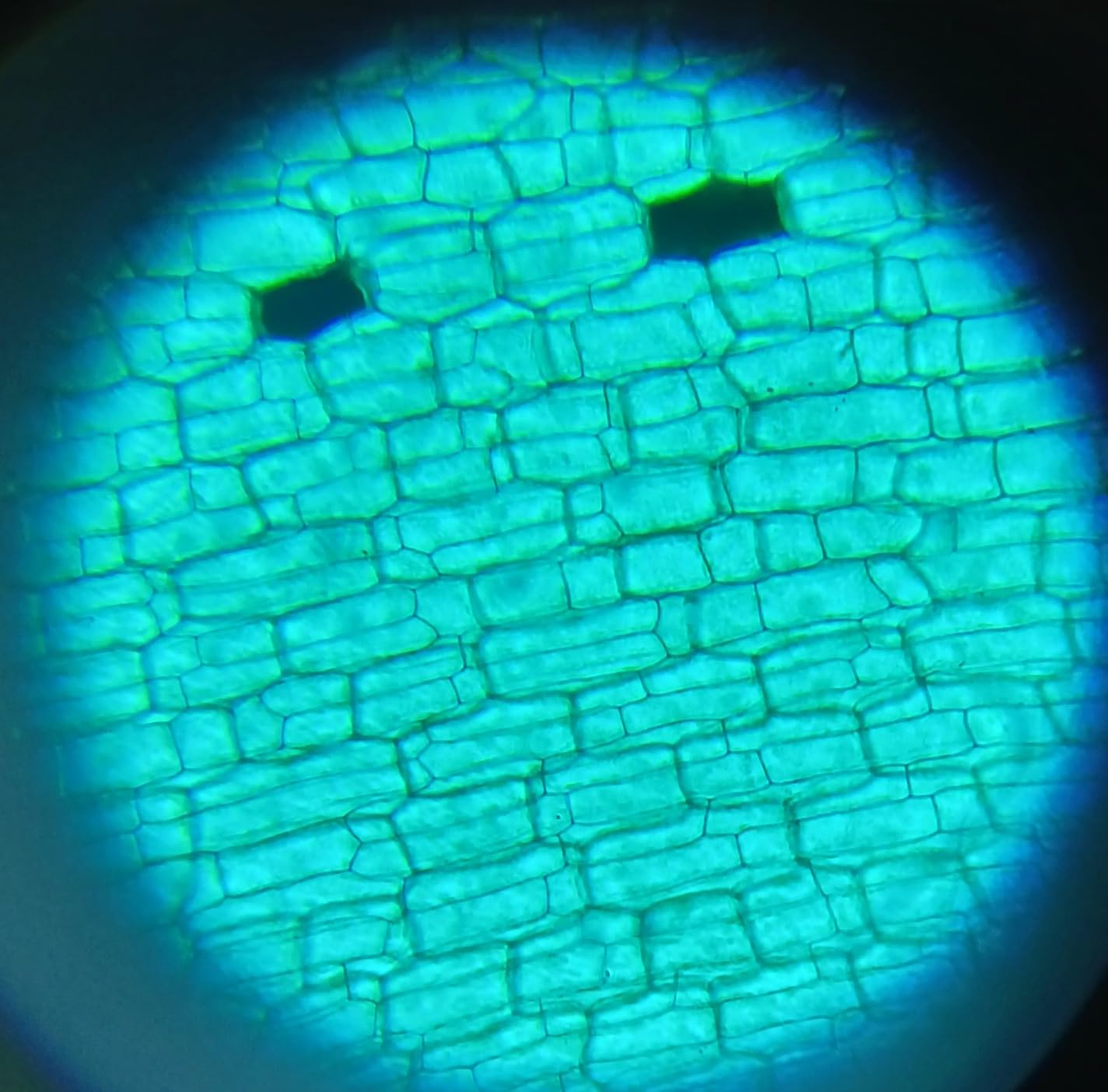
Be clear about the 2000x figure. Total magnification here is eyepiece times objective, and the top setting adds a 2X auxiliary lens on top of the 40x objective. That lens simply enlarges the image, so the extra numbers show you a bigger picture of the same pixels. In practice the useful range for pond water is 100x to 400x, exactly as the manufacturer notes, and 1000x is where buyers report the image turning soft.
The kit is unusually complete for the money: 15 slides, a phone adapter, a wire shutter, ten operating accessories and a carrying bag. The phone adapter matters more than it sounds, because documenting your finds is what keeps children interested after the novelty fades. With a 4.3 rating from 2,909 reviews and a 67% five-star share, this is one of the most proven scopes in its class.
Who this scope suits
This suits a homeschool family with children old enough to handle a slide and a dropper, roughly age eight and up. It suits an adult naturalist who wants to see cilia beating and identify rotifers at 400x, and it suits a science-fair student who needs a mechanical advantage over a toy scope without needing a laboratory instrument.
It also makes a good first step for anyone who thinks they will outgrow an entry scope within a year, because the achromatic objectives and condenser transfer directly to a more advanced body later.
Who should skip it
Skip the 2000x claim rather than the microscope. If you buy this expecting to photograph bacteria, you will be disappointed, and no accessory fixes that. Bacteria need oil immersion at 1000x, which this scope does not offer.
Also consider skipping it if two people need to look at the same organism at the same moment. The monocular head means one viewer at a time, which is awkward for a parent teaching a child and unhelpful for a classroom demonstration. In microscopy communities, the most common regret attached to monocular heads is eye strain during long sessions rather than missing features.
3. Uarzt 58-Piece Microscope Kit – Most Versatile
58-Piece Kids Microscope Kit – 100X-1200X Magnification, Metal Body, LED Light, Carrying Box – Science Experiment Toy for Kids Ages 5-12
100X-1200X magnification
Metal body with LED light
58 pieces including 31 blank slides
Ages 5-12
Pros
- By far the largest accessory count in this group
- 31 blank slides suit repeated pond samples
- Metal body feels like real equipment
- Carrying case packs for a pond field trip
- Smooth focus reported by multiple reviewers
Cons
- Images are blurry with details only just discernible
- Objective resolution is low
- Plastic scalpel rather than a real blade
- Needs 2 AA batteries that are not included
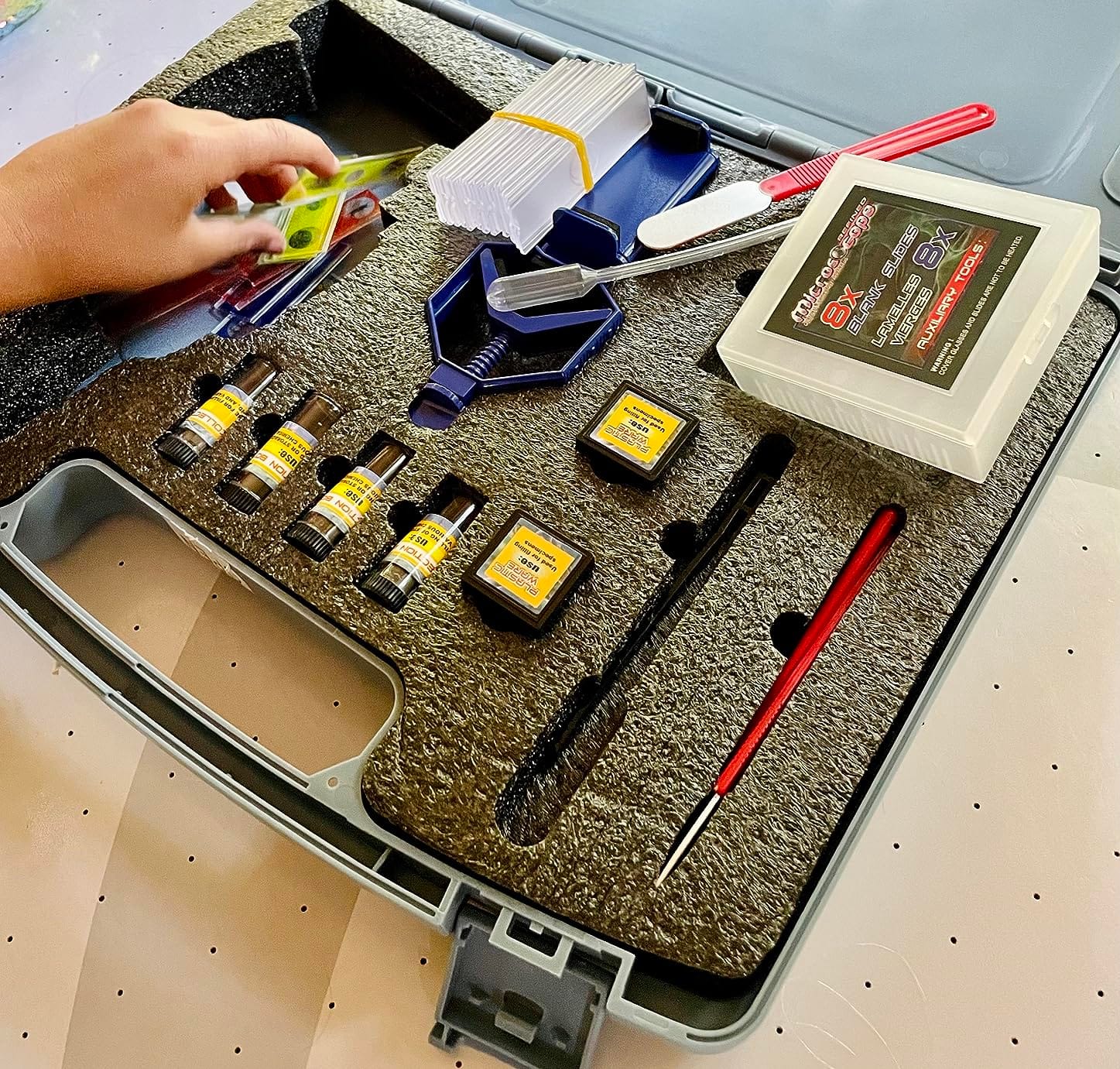
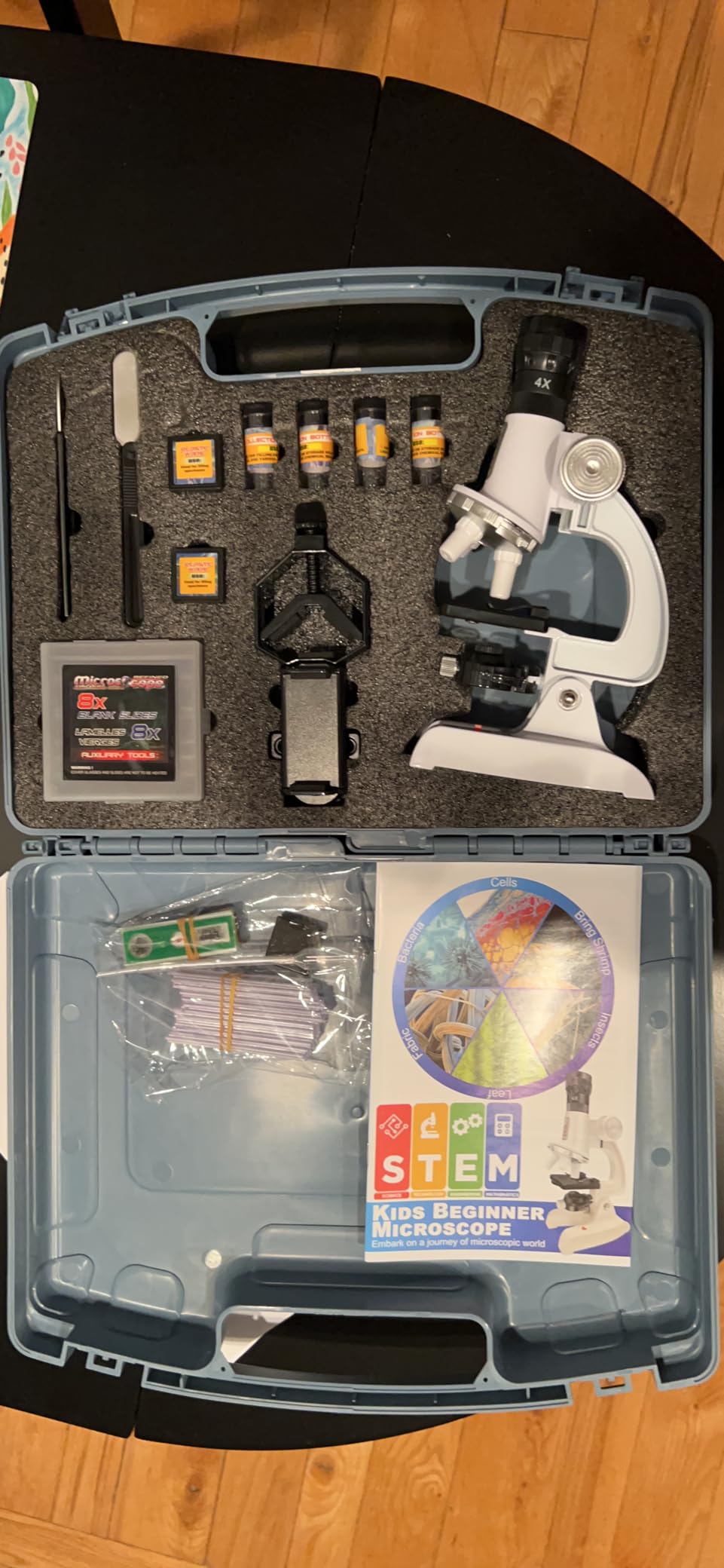
The reason this kit is on the list is not optical finesse, it is throughput. Thirteen prepared specimens, thirty-one blank slides, tweezers, a dropper and a scalpel means a group of children can each mount their own pond sample without queueing for slides. Our pond sessions with younger children always ran out of blank slides first, and this is the kit that fixes that problem outright.
The metal body at 4.6 by 2.75 by 8.15 inches feels more like equipment than a plastic toy, and the carrying case is the feature that turns it into a field tool. Pack it, walk to the water, fill a dropper from a collection jar, and photograph the sample on a phone before it settles. Reviewers report children staying engaged for hours, which is the outcome that matters most for this age band.
Now the limitation, and it is a real one. Image quality is the dominant complaint: detail is only just discernible even at lower magnifications, and the objective resolution is low, so prepared slides look underwhelming. On a live pond sample you will see organisms move and see general shape, but you will not see the beating cilia of a rotifer or the chloroplast spirals inside a Spirogyra cell.
Two AA batteries power the LED and they are not included, which is a small annoyance to discover on a cold morning. Several reviewers also point out that the scalpel is cheap plastic, so do not hand it to a young child unsupervised despite it looking like a real blade in the box.
Who this scope suits
This suits a family doing a single afternoon pond study with several children aged five to twelve. It suits a nature club or outdoor education group that needs a durable, cheap, self-contained kit per child, and it suits anyone who wants a field microscope that fits in a backpack and takes two AA batteries.
It also works as a bridge instrument. A child who learns on this kit and then asks for a better microscope is showing genuine interest, and at that point you can move to a real compound scope without feeling the first one was wasted.
Who should skip it
Skip it if you are the sort of person who will be disappointed by soft images, and there is no reason to think you will not be. If your interest is in identification and photography rather than the experience of sampling, the AmScope B120C or the BEBANG serve you far better.
Skip it for an adult hobbyist too. The 1200x figure here is a barrel lens on top of a modest objective, and the honest working range is nearer 100x to 400x with limited detail. A forum consensus of experienced users is that cheap kits are wonderful for sampling trips and frustrating at the eyepiece.
4. PalliPartners Compound Microscope – Best for Home School
PalliPartners Compound Microscope for Adults & Students, White
4X/10X/40X objectives with 40x achromatic
Adjustable top and bottom LED
Coaxial coarse and fine focus
28 slides included
Pros
- Top-selling monocular compound microscope in its category
- Adjustable dual LED for opaque and translucent samples
- Coaxial fine focus helps with fast organisms
- 28-slide kit supports a full term
- Phone clip and Bluetooth shutter included
Cons
- Objective lenses can wobble if handled roughly
- LED output dims over time for some owners
- Battery powered so long sessions depend on cells
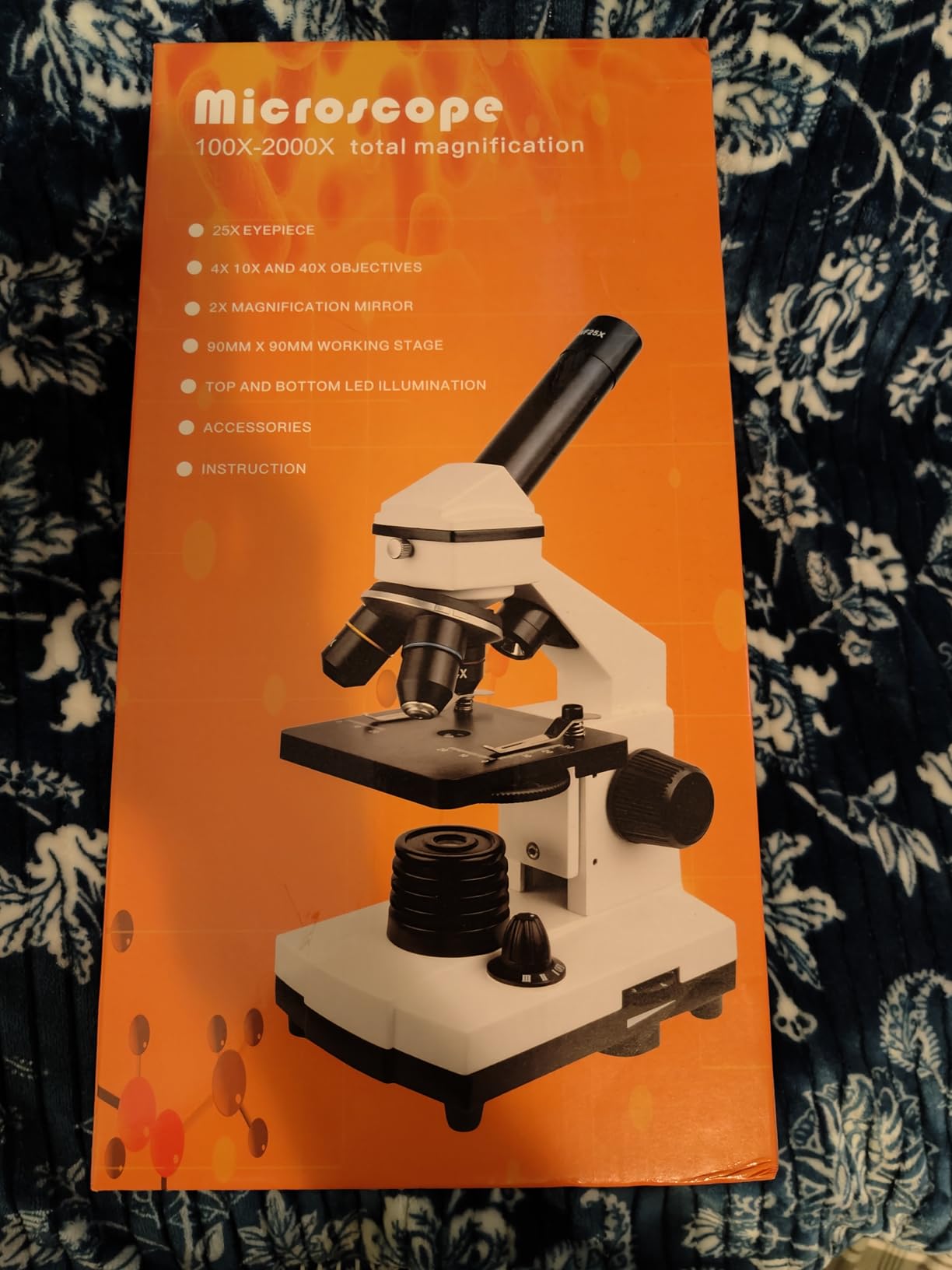
This is the one I suggest when a homeschool family wants a single instrument that a parent and several children can rotate through weekly for a full year. The 28 included slides, ten prepared and eighteen blank, are the quiet hero of the package. A term of weekly pond observations consumes blank slides quickly, and starting with twenty-eight removes a recurring small expense and a recurring small disappointment.
The adjustable top and bottom LED is more capable than it first appears. Bottom light for transmitted viewing of a wet mount, top light for opaque specimens, and the ability to dim both matters when you are looking at a clear animal against a bright background. Parents report the clear, bright light source as a consistent strength, and the coaxial coarse and fine focus makes small adjustments without losing your place.
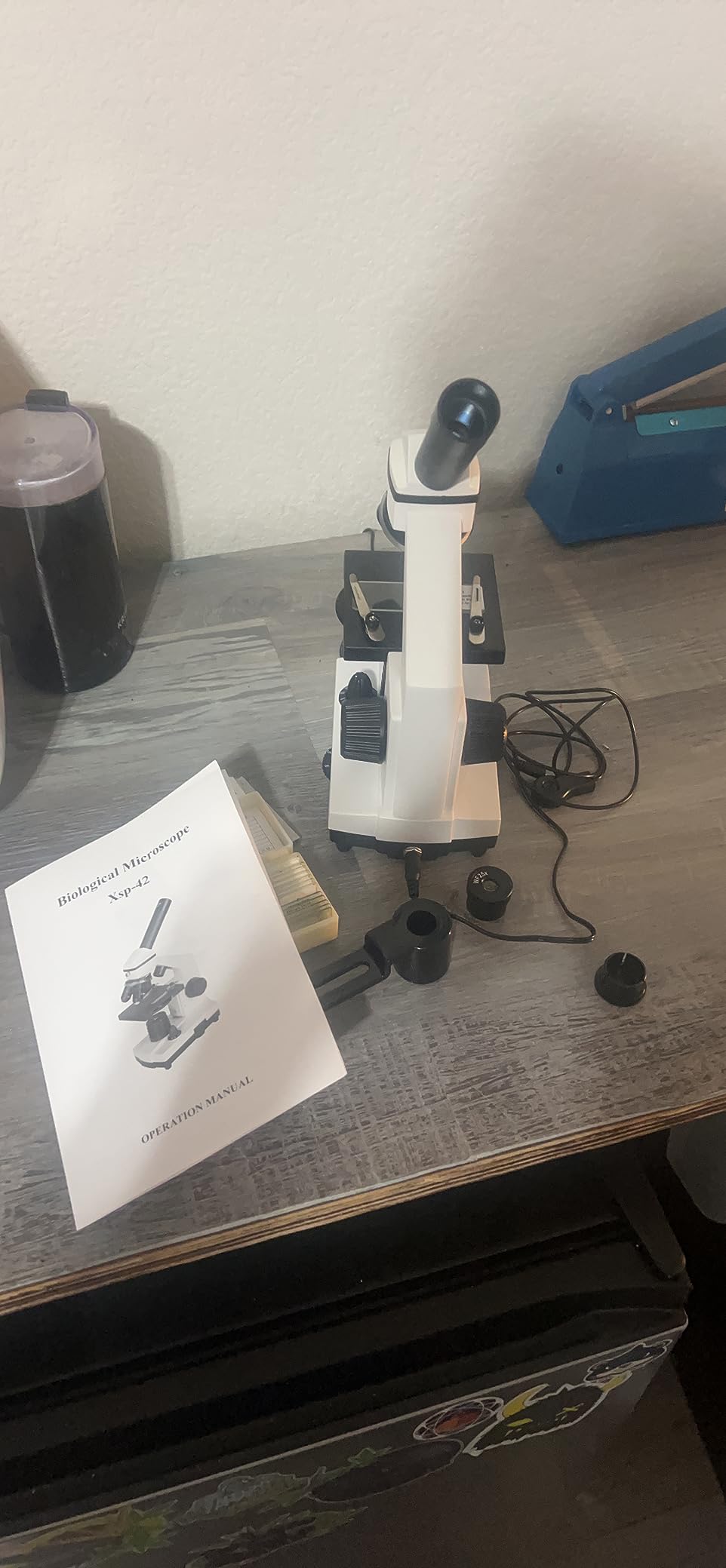
Two long-term gripes are worth your attention. First, the objective lenses can wobble in the housing if the scope is carried roughly or the head is swung hard, and a wobbling 40x is genuinely frustrating at the eyepiece. Treat it as a desktop instrument on a stable shelf rather than a field tool. Second, some owners report the LED output dimming and softening over time, which is normal for budget illuminators but should change how you plan evening sessions.
Because it is battery powered, the illumination quality depends on your cells. For a family that wants reliable long evening sessions, a plug-in scope is a better fit, and the material is SGS certified for safety with a recommended age range of eight to eighteen.
Who this scope suits
This suits a homeschooling family running a pond biodiversity unit with children aged eight and above. It suits an adult who wants Bluetooth shutter capture for documenting specimens without touching the slide, and it suits anyone who values a large accessory kit more than a premium optical correction.
It also suits a first microscope for a teenager who already knows they like this. The 40x achromatic objective gives them real work to do at 400x, and the coaxial focus rewards the extra patience.
Who should skip it
Skip it if you need true 1000x resolution or bacteria. There is no oil immersion objective, and the extra magnification from the 2X lens and 25x eyepiece enlarges rather than resolves.
Skip it as a field scope. The polycarbonate and polyethylene body plus battery power make it a desk instrument, and a swinging head that loosens objectives is the wrong design for a walk to the pond. If portability is the priority, the Skybasic covers that use case with a different set of trade-offs.
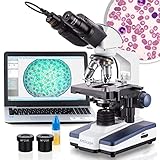
5. AmScope B120C-E1 Binocular Microscope – Best for Bacteria
AmScope B120C-E1 LED Binocular Compound Microscope, 40X-2500X
Binocular Siedentopf head, 40X-2500X
100X oil-immersion objective
Fly-eye LED with Abbe condenser
Mechanical stage and USB camera
Pros
- Only binocular scope on the list so the specimen stays in view
- 100X oil-immersion objective resolves real bacteria
- Abbe condenser and fly-eye LED give even bright light
- Smooth mechanical stage with dual-precision focus
- 5-year manufacturer warranty
Cons
- Bundled 1.0 MP camera is soft at high power
- Stage X and Y knobs are coupled so they move together
- Not a tri-optical head so the camera needs refocusing
- No calibration slide included
This is the enthusiast choice and the only instrument here that can do what the 1000x advertisements on the cheaper scopes imply. The 100x oil-immersion objective is a different physical thing from a dry objective, and it is the reason this scope can separate individual bacteria rather than bacterial-shaped smudges. Everything else on the list that claims high magnification is enlarging an image; this one is resolving detail.
Two features change pond work specifically. The binocular head with independently adjustable interpupillary distance means your specimen stays in view while you switch between an eyepiece and the camera, which saves the repeated finding-and-recentering cycle that eats a long session. And the Abbe condenser with the fly-eye LED illumination gives bright, even, daylight-balanced light, so a transparent organism is lit consistently as you change objectives.
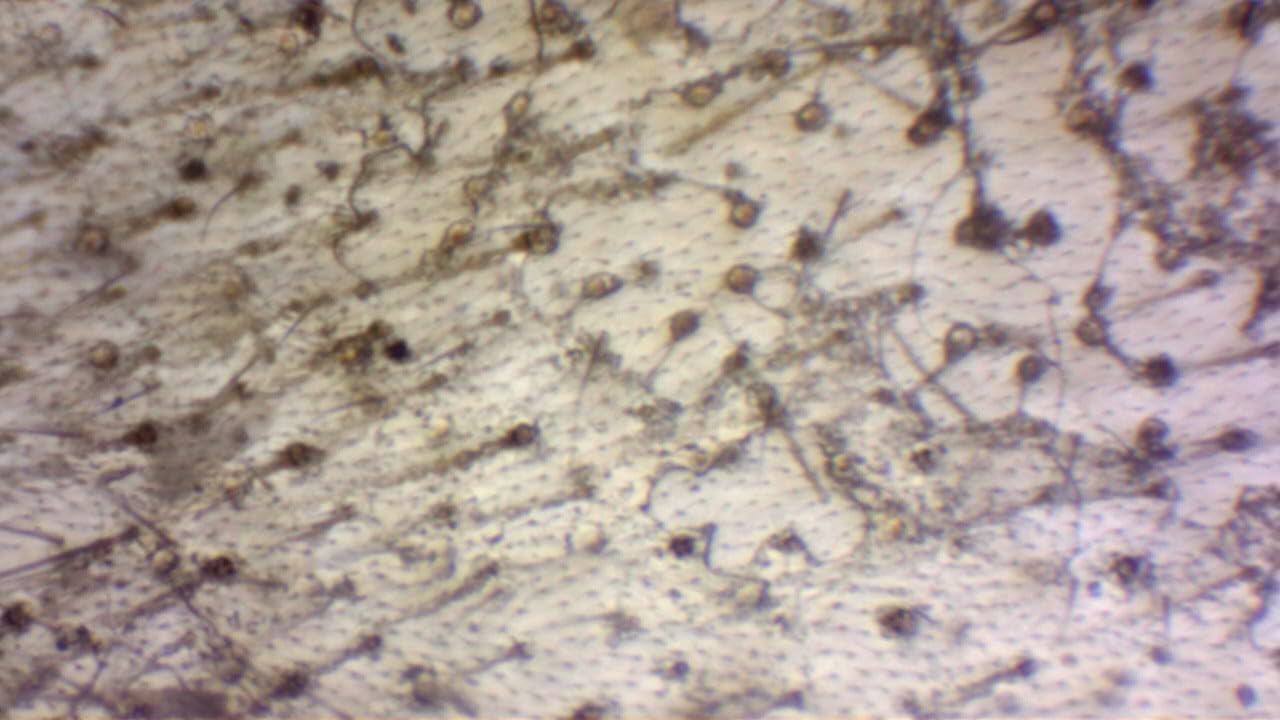
The mechanical stage is a genuine advantage at 400x and above. A nudge of the slide is a small movement at 100x and a lost specimen at 400x, which is exactly why a two-knob stage keeps appearing in pond microscopy advice. One caution from owners: the X and Y knobs on this model are coupled, so horizontal movement also drifts vertically, and that takes getting used to.
The bundled 1.0 MP USB camera with Windows software is functional for documenting a find but soft at high magnification, and there is no calibration slide included if you want to measure cell size, which means a separate purchase. Because the head is not tri-optical, moving between eyepieces and the camera requires refocusing. The 5-year manufacturer warranty and the parts-sending support are repeatedly described as excellent.
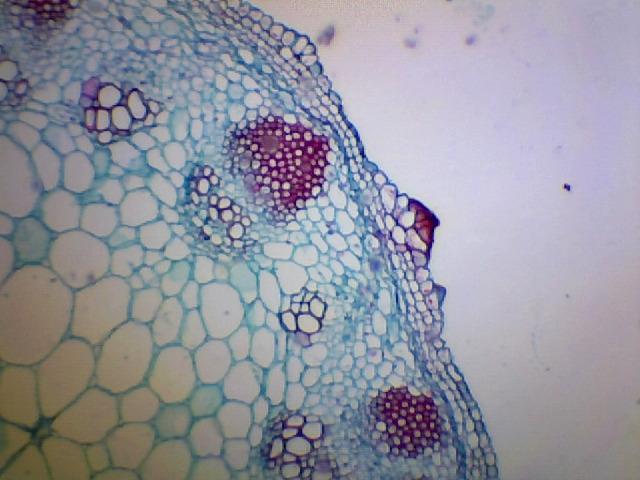
Who this scope suits
This suits an adult hobbyist, a college student in a life-science course, or a family with a child who has already outgrown an entry scope and wants a serious instrument. It suits anyone documenting a citizen-science pond survey where consistent images across multiple sites matter.
It also suits two-person working, because binocular viewing lets one person watch the field while the other adjusts the stage, and that workflow is close to how professional lab work happens.
Who should skip it
Skip it if a child is the primary user. It is a large, heavy, mains-powered instrument with coupled stage knobs and no battery option, which is a poor match for a first microscope and a poor match for a bedroom at night.
Skip it if you are buying purely for pond protists. Paramecium, rotifers, amoebas, Euglena and Volvox all appear clearly on a 40x achromatic objective, and paying for oil immersion to look at Paramecium is paying for capability you will not use. Buy this scope if bacteria or fine detail are the point, not the protozoa.
6. Skybasic Wireless Digital Microscope – Best for Field Trips
Wireless Digital Microscope, Skybasic 50X-1000X Magnification WiFi Portable Handheld Microscopes with Adjustable Stand HD USB Microscope Camera Compatible with iPhone Android iPad Windows Mac Computer
50X-1000X claimed digital zoom
WiFi hotspot plus USB
2MP sensor with 1080P to phone
8 adjustable integrated LEDs
Pros
- Wireless connection removes cables at the pond
- 1920x1080 sensor makes shareable images and video
- Eight integrated LEDs light translucent samples
- Lightweight and battery powered for field trips
- One-button photo and video capture
Cons
- Fixed focus with no focus wheel
- Included stand can slip and will not hold steady
- Some enlarge and reduce buttons do nothing
- App needs broad photo permissions
- 50X-1000X is digital zoom
The honest case for this scope is that it is the only one here that removes the entire table between you and the sample. There is no slide, no coverslip, no air bubble to chase, and no specimen that dries out while you wait. You dip the tip into a jar or a petri dish at the water’s edge, hold it at the 3 to 60 mm working distance, and watch the image on your phone. For a child who is squeamish about slides, that is often the difference between a week of interest and a week of frustration.
The 2MP sensor streams 1920×1080 to a phone, which means the discovery can be sent to a teacher, a nature group or a science-fair judge the same afternoon. The eight adjustable LEDs in the lens housing do a better job lighting a shallow dish of water than a single top light would.
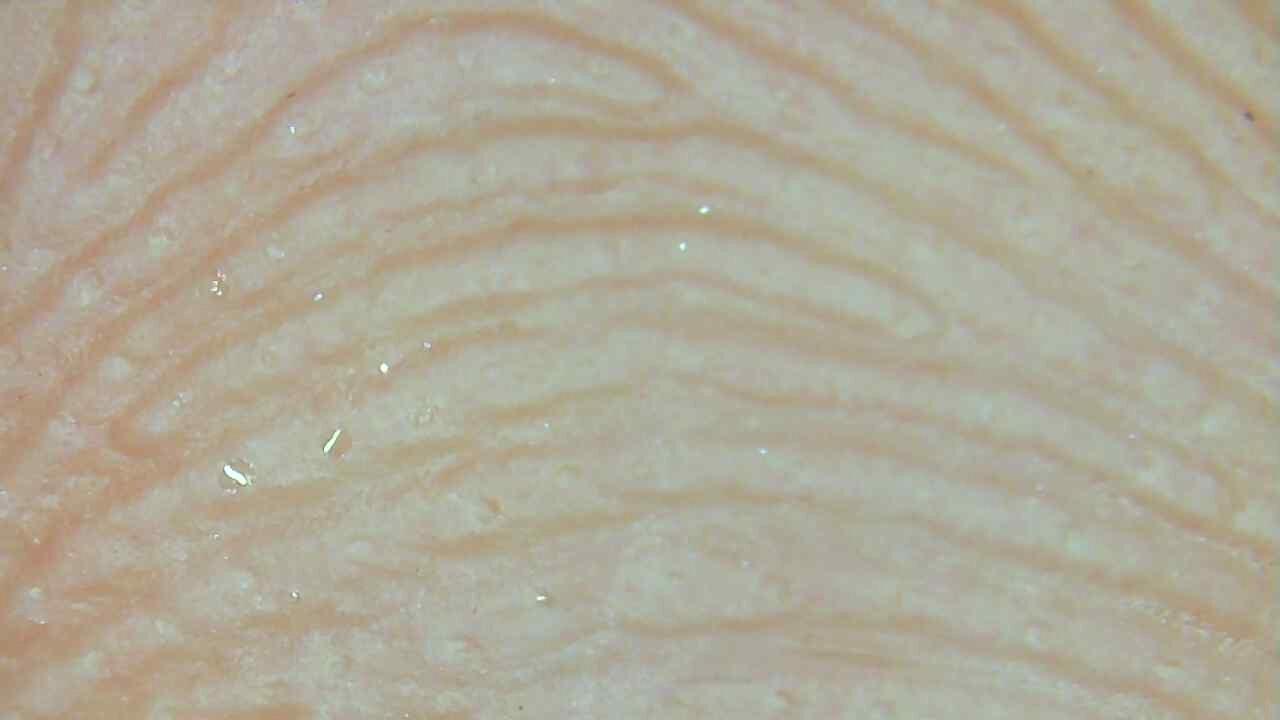
The trade-offs are real and worth stating plainly. There is no focus wheel, so focus is achieved by physically moving the device up and down, and the included stand’s tightening mechanism can slip and will not hold the scope steady. That is workable on a table and frustrating handheld, which is why we use a small weight or a folded tripod with a water dish on a flat surface near the bank rather than trying to hold it one-handed.
Some reviewers report that certain enlarge and reduce buttons on the unit do nothing, and that the app requires broad photo-library permissions with occasional connection failures on iPads. Also note that the advertised 50x to 1000x is digital zoom: a 2MP sensor has a fixed pixel count, so enlarging it past a certain point produces a larger image of the same information.
Who this scope suits
This suits field work where you cannot carry slides, and a day out with a group of children each holding a phone. It suits anyone who wants to record pond samples as photos and video for citizen-science logs, where a shared screen in the field beats an eyepiece.
It also suits beginners testing whether pond life interests them. Instant feedback, no consumables, nothing to break beyond repair, and an easy graduation path to a real compound scope later.
Who should skip it
Skip it if you want to identify organisms. Reading a ciliate’s internal structure off a phone screen at 400 effective magnification is a different discipline from looking down an eyepiece, and experienced users treat these as a gateway instrument rather than a final one.
Skip it if your sample handling is careless. Dropping the tip into pond water and then setting it on a table means the next slide is a smear of whatever was in the last one. Clean the lens between samples.
7. Jiusion 1080P USB Digital Microscope – Best for Plug-and-Play Phone Viewing
Jiusion 1080P 50-1000x USB Digital Microscope Stand for iPhone Android PC
Plug-and-play USB with no app
1920x1080 live view and capture
8 built-in LEDs
Full-metal stand
Pros
- Largest review base with over 20650 ratings
- Zero setup because there is no app or driver
- Broadest compatibility including Linux and Chrome OS
- Metal stand holds steady
- Inline brightness dial and shutter on the cable
Cons
- Lowest average rating here at 4.1 stars
- Focus is set by moving the device with no focus ring
- 50X-1000X is a screen-zoom claim
- No WiFi so a cable is required
The reason this one earns a place is the setup. There is no app, no driver, no WiFi pairing and no account. Plug the cable into a phone, tablet or laptop, open the camera app, and you are looking at the sample. For a family that will use a microscope occasionally and does not want to troubleshoot permissions on a Sunday afternoon, that reliability is worth more than optical sophistication.
The full-metal stand is a genuine improvement over the plastic ball-joint stands that ship with many digital microscopes. It holds position, which matters because you have to bring the device into focus by moving it. The inline brightness dial and capture button on the one-metre cable also reduce shake when you take a picture, which is a small thing that makes a large difference to image sharpness.
This is the most polarised product in the list, and the 4.1 rating from more than 20,650 reviews is the lowest here with 12% of reviews at three stars. The complaints concentrate in three places: fixed focus with no focus ring, a one-metre cable that limits how far from the phone you can work, and the gap between the advertised 50x to 1000x and what you actually see, which is a screen-zoom claim rather than optical magnification.
Compatibility is broad but not unconditional. You will need OTG enabled on Oppo, Vivo, Oneplus, iQOO and Realme phones before it will connect at all, which is a two-minute fix once you know it is required.

Who this scope suits
This suits a teacher who wants every student to look at the same drop of water on their own screen at the same moment, which a single-eyepiece compound scope simply cannot do. It suits a family on a shared computer or tablet with no interest in wireless setup, and it suits anyone testing digital viewing before committing to a larger system.
It also suits Linux and Chrome OS users, which is rarer than the marketing implies and genuinely useful in a school lab.
Who should skip it
Skip it if you want to go to the water’s edge. A one-metre cable and no wireless connection means your phone has to sit next to your sample, which is not a workable arrangement for pond-edge fieldwork.
Skip it if image quality is the priority. The 4.1 rating and the concentration of three-star reviews reflect a device that is competent rather than sharp, and a 1920×1080 sensor with digital zoom will not reveal pond protist structure.
8. AmScope M102C-PB10 – Best All-Glass Starter Scope
AmScope M102C-PB10 1000X Biological Compound Microscope with Prepared
40X-1000X across five powers
All-optical-glass lenses with achromatic objective
Plug-in LED illumination
All-metal framework
Pros
- All-metal build and all-glass optics at a student price
- Plug-in LED is far brighter than battery illuminators
- 1000X ceiling resolves large pond protozoa
- Ten slides included to start
- 5-year manufacturer warranty
Cons
- Coarse focus only with no fine adjustment
- Monocular head so one viewer at a time
- Some reports of LED failure and hard replacement
- Diaphragm only
- no condenser adjustment
AmScope is the brand that comes up most often in microscopy forum conversations about starter scopes, and the M102C is the reason: all-optical-glass lenses and an all-metal framework at a student price, backed by a five-year manufacturer warranty. On a pond sample the glass lenses give a noticeably cleaner image than plastic-element scopes in the same bracket, and the bright plug-in LED is the decisive difference for a clear wet mount.
Because it runs from a wall outlet rather than batteries, illumination does not dim as a session goes on. That matters more than it sounds. Reviewers repeatedly note that this scope performed better than its negative reviews suggested, and the most common practical limitation is not the optics but the absence of a fine focus knob.
Coarse focus only is a real constraint at 400x and above. Any small movement of the slide or the focus knob sends the specimen out of view, and tracking a rotifer means fighting the focus every time. If you are the type to want a fine adjustment, the AmScope B120C at number five is the natural step up rather than a sideways move.
A small number of owners report the LED burning out and being hard to replace, and the condenser arrangement is a single lens with a disc diaphragm, which limits the contrast tricks available at high power. For a compound microscope at this level, that is a reasonable compromise.
Who this scope suits
This suits a student or parent who wants a first genuine microscope with glass optics and does not need fine focus for their usual level of work. It suits a classroom set where several identical units make teaching simpler, and it suits anyone who wants a five-year warranty on an entry instrument.
It also suits anyone planning an upgrade path. Because the achromatic objective and the 40x working power are the same across AmScope’s range, the habits you build here transfer straight to a binocular body later.
Who should skip it
Skip it if you will spend long sessions at 400x watching fast organisms, because coarse focus only will wear you out before the organisms do. Skip it if two people need to look at once, since the head is monocular.
Skip it if you want to see bacteria. The 1000x setting is dry, and the manufacturer is honest that best results are typically at 400x with careful setup at the top end.
Why Brightfield Struggles With Clear Pond Water
Every scope on this list uses brightfield transmitted light, and every one of them struggles with the same physical problem. An unstained Paramecium is mostly water. It absorbs and scatters only about 2 to 5% of the light passing through it, while the human eye needs something closer to 10 to 20% contrast before it will resolve internal structure. What you are looking at is very nearly an object made of nothing.
That is why experienced users say a well-lit, well-focused 400x image can look empty, and why a dim scope at the same magnification looks worse. The first fix is not more magnification, it is contrast: close the diaphragm down, lower the condenser, dim the LED, or switch to upper illumination for a surface-lit view. A novice who learns those four moves gets more out of an entry scope than a buyer who pays for a bigger number on the box.
Two techniques solve the problem properly, and neither is standard on a consumer microscope. Phase contrast converts the phase shifts light undergoes passing through a transparent specimen into brightness differences, so internal structures appear as darker and lighter regions against a grey background. Darkfield blocks the central light beam so only light scattered at an angle by the specimen reaches the objective, lighting the organism against a black background, which is how cilia and flagella movement becomes obvious.
One more optical detail explains why objective quality matters here. Achromatic objectives correct colour fringing and are properly sharp only across the central 65% of the field of view. Plan achromatic objectives extend that correct zone to roughly 95%. At 400x, where your field is small, a plain achromat means the edge of the field goes soft, and if a rotifer swims out to the edge it blurs just as you try to identify it. Achromatic glass is still the right starting point for pond water; plan glass is what keeps an identification steady.
How to Collect and View a Pond Water Sample
Technique decides the result more often than hardware does. Most disappointing pond slides are badly prepared rather than badly magnified, and every fix below costs almost nothing.
1. Collect with intent. Use a clean jar or a large pipette and take water from two to five centimetres below the surface, away from floating debris and away from the exact bank. Squat near the edge rather than stirring the sediment.
2. Let the sample settle. Sit the jar somewhere still for fifteen to thirty minutes. Organisms gather in the lower layers and you can then draw from the middle of the jar, where density is highest and silt is lowest.
3. Mount the drop. Place one drop on a clean slide with a pipette. Smaller is better, because a large drop is thick enough to look like a crowded soup with everything out of focus.
4. Lower the coverslip at an angle. Touch one edge to the drop and let it fall slowly. Dropping it flat traps air bubbles that look like large bright circles and are a common reason people think they have found organisms when they have not.
5. Build a temporary chamber for larger specimens. If you want rotifers, Daphnia, copepods or large ciliates like Stentor, a plain coverslip will crush them or squirt them out. Put four small drops of petroleum jelly at the corners of the slide and press the coverslip down onto them, or lay a few cotton fibres or coarse threads on the drop first. The raised chamber gives the animal room to move.
6. Slow fast swimmers. Add a drop of methyl cellulose solution, sold for this purpose, and stir gently. It thickens the water just enough that a Paramecium moves at a pace your eyes can track, without harming the organism. This single addition changes pond microscopy more than any other tip, and teachers ask for it constantly.
For longer sessions, put the sample in a petri dish rather than a slide. A dish gives you hours of observation, enough area to move a specimen with a pipette, and room to watch something divide. Keep a drop of spare pond water nearby to replace what evaporates.
Finally, dim the light before you give up. A clear slide under strong light is nearly invisible, and closing the diaphragm or lowering the LED brightness is often the only change needed to make a living specimen appear.
How to Choose a Microscope for Pond Water Study
Compound or stereo: only one of them works
A stereo microscope shows a three-dimensional, upright image at low power, and it is the right tool for sorting seeds, insects and pond debris. It cannot resolve single-celled protists, and it is the most common bad purchase for this topic. A compound light microscope inverts the image and magnifies enough to separate a Paramecium from a grain of silt, which is the entire job. If a listing says microscope and shows a chunky upright view of a coin, it is a stereo scope.
400x is the working power, 1000x is the ceiling
Buy for 400x usable and treat everything above as optional. Total magnification is eyepiece times objective, so a 10x eyepiece with a 40x objective gives 400x, and that combination identifies most of what lives in pond water. A 2X barrel lens or an auxiliary eyepiece doubles the number on the box without adding information, and digital zoom does the same in software.
Illumination decides whether you see anything
Look for LED illumination from both above and below, and ideally an adjustable condenser or diaphragm. Bottom light is transmitted light, which is what a wet mount needs. Top light helps with opaque specimens and adds a bit of relief. Most importantly, brightness must be adjustable: you will end every session needing less light than you expect, because a clear specimen lit too brightly disappears.
Stage and focus control at 400x
Coaxial coarse and fine focus matters more than most buyers expect, because a swimming organism at 400x is out of view within seconds. A mechanical stage with X and Y knobs is a genuine advantage because you can move the slide a fraction at a time. A rubber stage clip that holds a slide firmly is a small but real upgrade for pond work, since a wet mount slides easily under gravity.
Objective quality and the Swift versus AmScope question
AmScope and Swift are the two names that recur in enthusiast communities, and both build a full range from student to laboratory. In practice, pick the model with the best objective and stage you can afford rather than the brand alone: a cheap scope with a 40x achromatic objective and fine focus will beat an expensive body with a plastic objective element. If a camera is important, note that a binocular head with a camera port or a bundled USB camera is more flexible than a phone adapter alone, and our guide to student microscopes with digital cameras covers that choice in more detail.
What not to buy for pond water
Skip stereo microscopes marketed for kids, phone clip lenses sold as 60x or 100x microscopes, and any listing whose headline magnification comes from a barrel lens. Be wary of claims of 5000x: at that point you are looking at a small sensor through software zoom. If the interest is real, the upgrade path runs from a phone-mounted digital scope to a good 400x compound microscope, and eventually to a binocular body with oil immersion.
Frequently Asked Questions
Which microscope would be best to observe living organisms in pond water?
A compound light microscope with 400x total magnification is the best choice, meaning a 10x eyepiece with a 40x achromatic objective. Add dual LED illumination from above and below, a condenser or diaphragm for contrast control, and fine focus so you can track moving organisms. Raw magnification above 400x adds little for protozoa, rotifers and algae.
What can I see in pond water under a microscope?
At 100x you will find Paramecium, Amoeba, Euglena and Spirogyra filaments. At 400x you can identify rotifers by their spinning corona, Vorticella, Volvox, Stentor, diatoms and Daphnia or copepods. At 1000x dry you see internal details of organisms already found. Individual bacteria need oil immersion at 1000x.
How to view pond water under a microscope?
Let a collected sample settle for 15 to 30 minutes, place one small drop on a clean slide, and lower the coverslip at an angle to avoid air bubbles. Scan at 100x, then switch to 400x to identify. Add petroleum jelly at the coverslip corners for a temporary chamber if you want to see rotifers without crushing them, and add methyl cellulose to slow fast swimmers.
Do you need more or less illumination when magnification is increased?
You need less light as magnification rises, because the light cone narrows through the condenser at higher powers. The practical answer is that total light decreases even if the LED brightness stays the same. Start with the brightness low and raise it only until the specimen is clearly visible, because over-lighting washes out transparent organisms rather than revealing them.
What can you see at 5000x magnification?
On a consumer digital scope, 5000x is a screen-zoom claim. The sensor has a fixed pixel count, so beyond a certain point you are enlarging the same information and the image looks soft. On an optical scope, 2500x with a 100x objective plus a 2X lens is equally limited. Real bacterial detail needs a 100x oil-immersion objective, which only laboratory-grade instruments provide.
Is Swift or AmScope better?
Both build scopes from student to laboratory grade, so the deciding factor is the specification rather than the name. Choose the model with a 40x achromatic objective, a condenser with a diaphragm, coaxial fine focus and, ideally, a mechanical stage. AmScope models are more frequently discussed in microscopy communities, and Swift appears often in teaching-head configurations with camera ports.
What scientist used a simple light microscope and saw microorganisms in pond water?
Antonie van Leeuwenhoek is credited with the first observations of pond microorganisms, describing free-living protozoa in the 1670s using simple single-lens instruments of his own design. Robert Hooke had earlier examined pond water in Micrographia of 1665 and reported on what he saw, but the detail and accuracy of Leeuwenhoek’s later drawings made him the name associated with the discovery.
Final Verdict on Microscopes for Pond Water
The best microscopes for pond water study all share three things: a real 40x achromatic objective, adjustable light you can dim, and enough focus control to follow something that swims. For a first microscope for a child, the National Geographic kit at number one is the one I recommend, because the knobs and the kit matter more than the optics at that stage. For a student or homeschool desk, the BEBANG or the AmScope M102C give you genuine glass optics and a 400x working power. For field work and sharing images, the Skybasic or the Jiusion do the job without slides. And for anyone who wants to see bacteria rather than bacterial shapes, the AmScope B120C is the only instrument on this list with the oil-immersion objective to do it.
Take a jar to the pond this weekend, let it settle, make one good slide, and start at 100x. The organisms are already there. Updated for 2026, and the order of this list will not change until something on it gains a fine focus knob it does not have.