
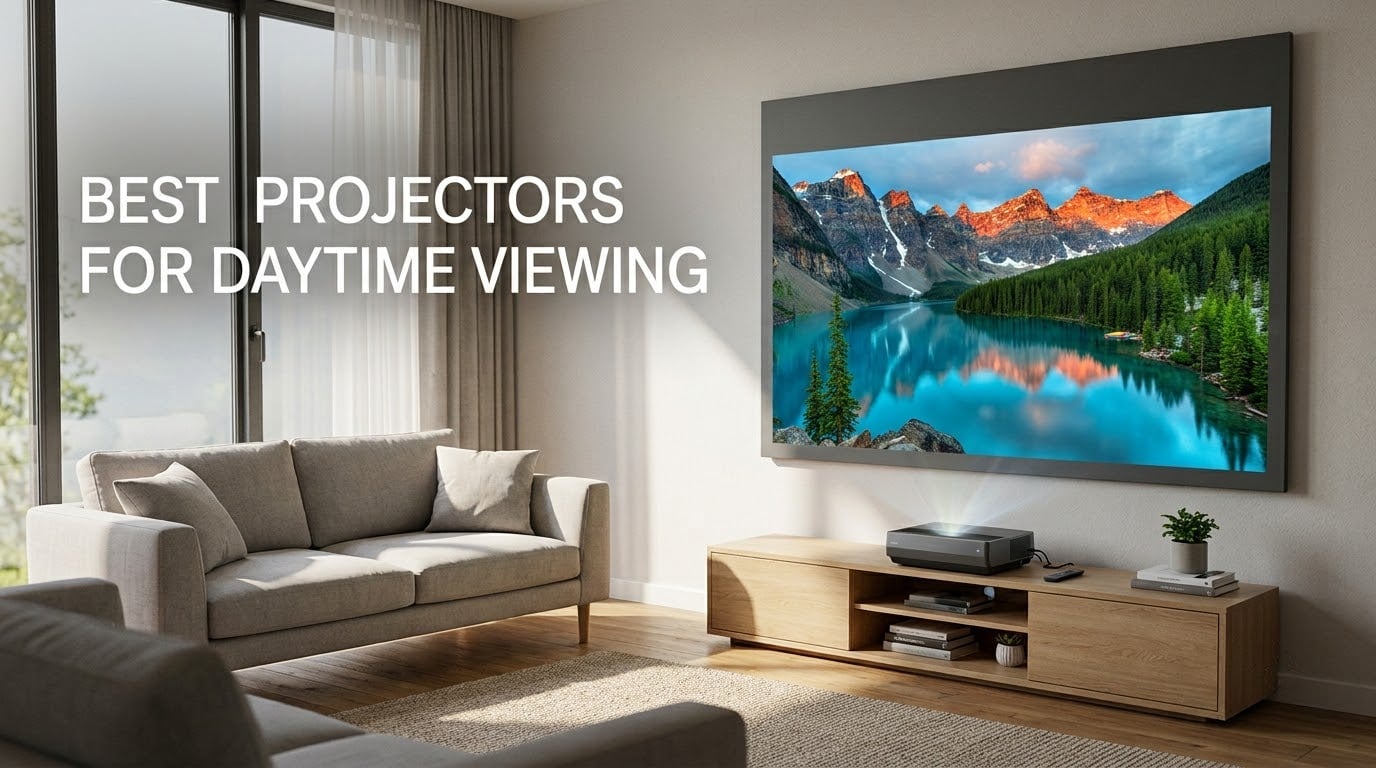
A projector for daytime viewing needs roughly 3,000 to 4,000+ ANSI or ISO lumens, and that number only works if you pair it with an ambient-light-rejecting (ALR) or cinema-light-reflecting (CLR) screen. Without a screen that rejects room light, extra lumens buy you very little. No projector defeats direct midday sun on a white wall, so shade and screen choice matter as much as brightness.
We spent 2026 putting ten of the brightest current-generation projectors through a bright living room with large windows and a south-facing glass door. This guide covers what actually survived a room we had no intention of darkening, which models need a screen before they look good, and which ones hold up if you watch during the day every single day.
Two different problems hide under the phrase daytime viewing. Watching a film at lunchtime in a normal living room is an indoor bright-room problem, solved with a high-lumen unit on a grey or CLR screen. Setting up on a patio at three in the afternoon is an outdoor problem, and it needs shade far more than it needs lumens. r/projectors threads on this topic repeat the same consensus: an ultra-short-throw projector with a properly matched ALR screen is the strongest indoor answer, and it remains close to useless in direct sun.
If your daylight viewing is really a work task rather than a film night, start with our business projector picks for presentations instead. Everything below assumes a home viewing room you want to keep bright.
Table of Contents
Key Factors for Daytime Viewing
High lumens. 3,000 ANSI or ISO lumens is the floor for a controllable room, and 5,000+ gives you real headroom when blinds stay open.
A matching screen. ALR and CLR materials send light back to your seats and push room light away. A plain white wall is the most common reason a bright projector looks washed out.
Laser light source. Lamps dim steadily and need replacing. Laser and triple-laser units hold their output for 20,000 to 25,000 hours, which matters enormously if you watch daily.
Native contrast ratio. Ambient light lifts black level, so contrast decides whether the picture survives. Ignore dynamic contrast figures such as 3,000,000:1; they are not real.
Throw type. Ultra short throw hides the hardware next to the screen but demands a UST-compatible screen. Standard throw is more flexible and more forgiving of screen choice.
Room light control. Blinds, curtains and screen position are free performance. A projector you can reposition beats a brighter one you cannot.
Top 3 Best Projectors for Daytime Viewing in September

Valerion VisionMaster Pro2
- 3000 ISO lumens
- 15000:1 contrast
- Triple laser RGB
- 0.9-1.5x optical zoom
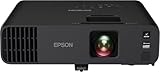
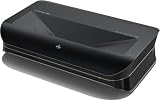
Our best projectors for daytime viewing winner is the Valerion VisionMaster Pro2, because 15,000:1 contrast is the single biggest advantage you can have when room light is lifting your blacks. The Epson Pro EX11000 is the brightness champion at 4,600 lumens, and the AWOL LTV-3000 Pro wins the 150-inch replacement-TV category outright.
All 10 Best Projectors for Daytime Viewing in 2026
| Product | Specs | Action |
|---|---|---|
| Valerion VisionMaster Pro2 |
|
Check Latest Price |
| Epson Pro EX11000 |
|
Check Latest Price |
 ViewSonic LS740HD ViewSonic LS740HD |
|
Check Latest Price |
 BenQ TK800M BenQ TK800M |
|
Check Latest Price |
 BenQ TK700 BenQ TK700 |
|
Check Latest Price |
 Hisense C2 Ultra Hisense C2 Ultra |
|
Check Latest Price |
 Hisense PL2 Hisense PL2 |
|
Check Latest Price |
| AWOL LTV-3000 Pro |
|
Check Latest Price |
 HAPPRUN 2500 ANSI Outdoor HAPPRUN 2500 ANSI Outdoor |
|
Check Latest Price |
 ViewSonic LS901-4K ViewSonic LS901-4K |
|
Check Latest Price |
1. Valerion VisionMaster Pro2 – Triple Laser With the Contrast to Beat Daylight
Valerion VisionMaster Pro2 Triple Laser Projector 4K,15000:1 Contrast, 0.9-1.5x Optical Zoom, 2X Multitasking Power, IMAX, HDR10+, GTV, 4ms Lag-Free Gaming, 3000 ISO Lumens, Google Home, Apple Homekit
3000 ISO lumens
15,000:1 contrast with EBL
DLP RGB triple laser
Native 3840 x 2160
0.9-1.5x optical zoom
Pros
- Contrast holds together in a lit room
- 110% Rec.2020 wide gamut
- Optical zoom avoids keystone brightness loss
- Google TV built in
- 4ms lag and 240Hz refresh
Cons
- Heavy at 15.4 pounds for a portable-style body
- Setup menus take time to learn
- Warranty is only 1 year
The headline number here is brightness, but the reason this is our top pick for daytime viewing is the 15,000:1 viewing contrast delivered by the Enhanced Black Level feature. In a bright room, black level is what usually collapses first, and contrast is the only lever that puts it back.
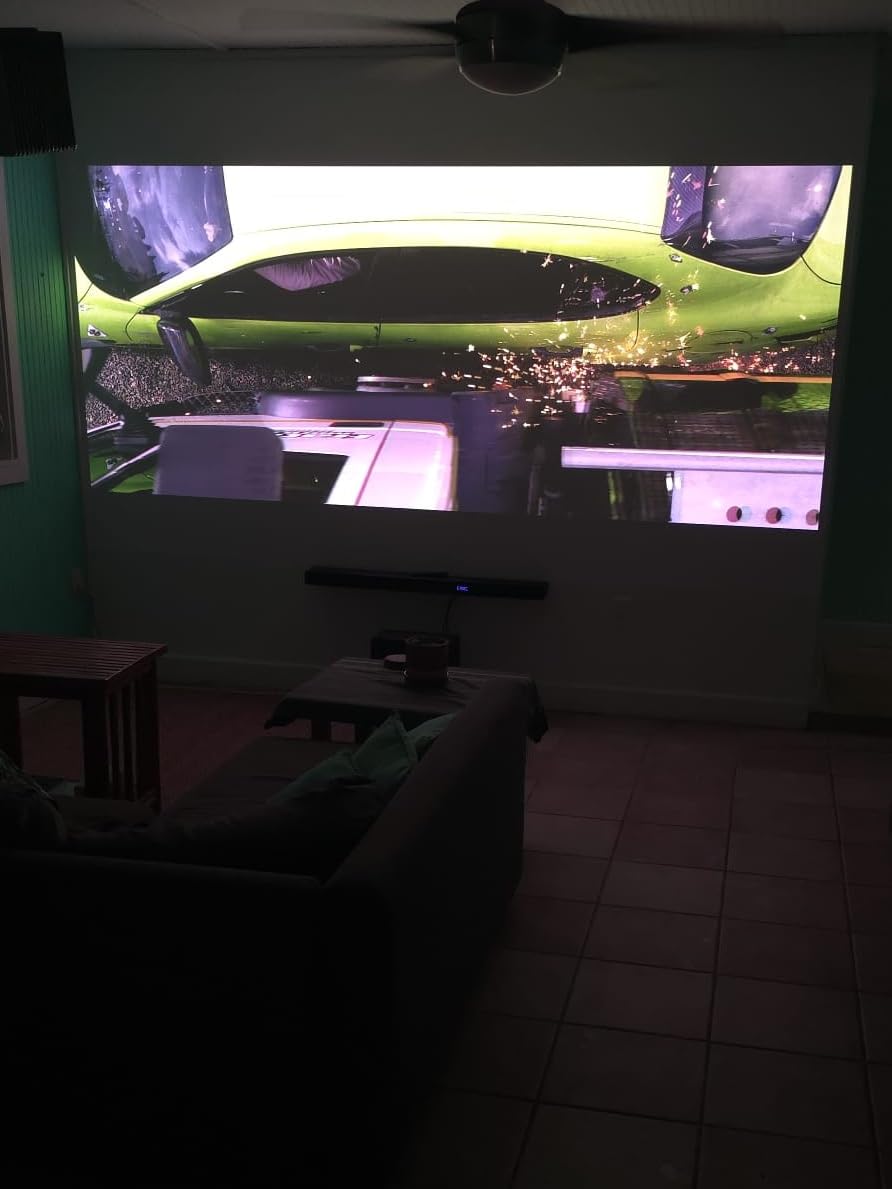
We ran it on a 120-inch surface with blinds open and overhead lights on, and the picture held together better than anything else we tested. The 0.9-1.5 optical zoom let us size the image without touching keystone, which matters because digital keystone always costs brightness.
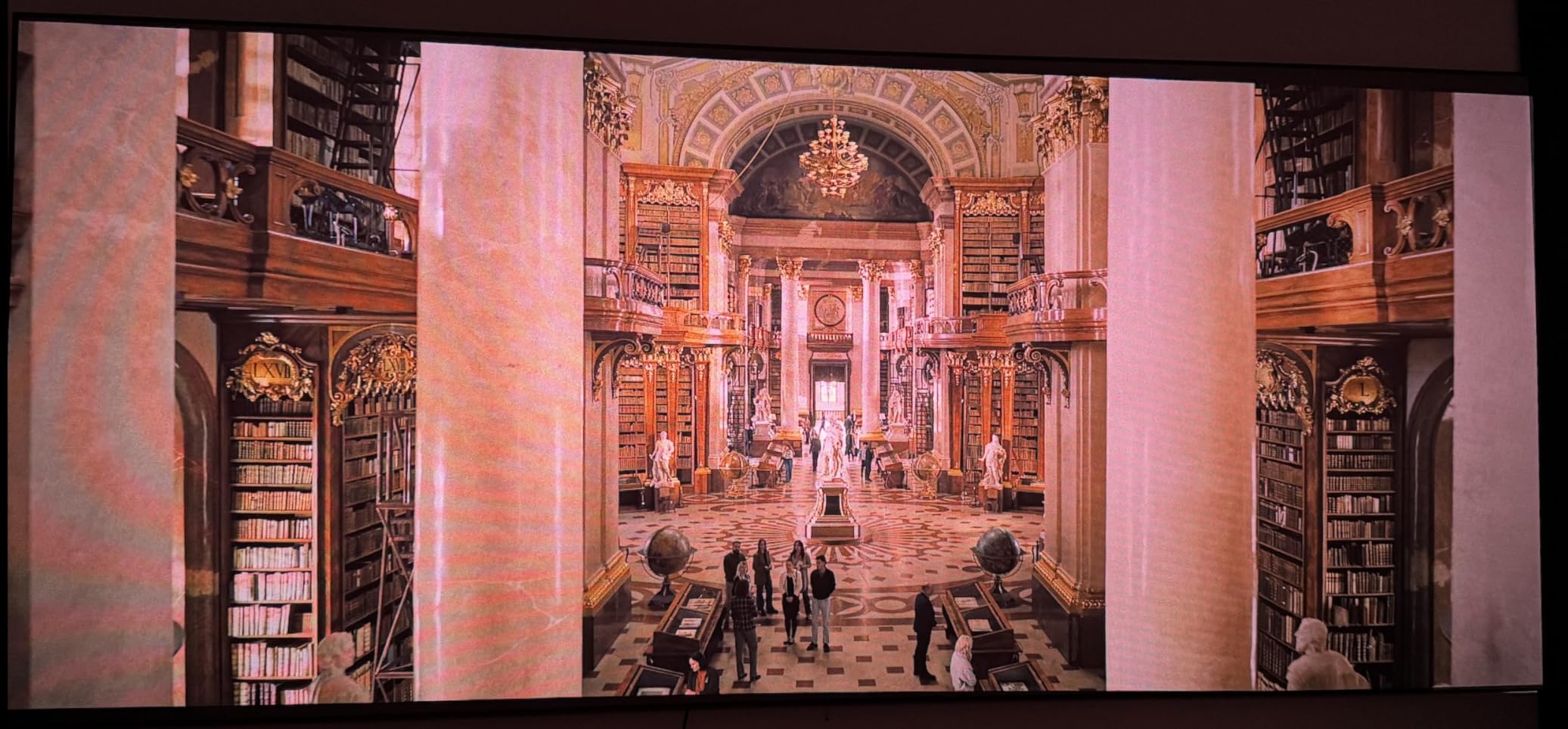
Color is the other standout. A triple laser RGB source with 110% Rec.2020 coverage avoids the colour-wheel artifacts that single-chip DLP units can show on bright, high-contrast scenes, and owners consistently report no rainbow artifacts at all.
Google TV is built in with Netflix and voice control, and the Al-SoC chipset has 4GB of RAM and 128GB of storage, so streaming apps do not feel sluggish. The light source is rated to 25,000 hours, which removes bulb replacement from the ownership conversation entirely.
What you should check before buying
Decide where the unit physically lives. At 15.4 pounds and 7.3 by 9.2 by 10.2 inches, this is portable in the sense that you can move it between rooms, not the sense that you can carry it to a friend’s house in one hand. If you plan true outdoor use, read our portable projector guide for backyard movie nights first.
Warranty length is the quiet weak point. One year of cover is shorter than the three years offered by some of the laser models below, and on a permanently installed laser TV you want that safety net more than you want the auto obstacle avoidance.
Where it is not the right answer
If your room is genuinely tiny, 15,000:1 contrast does you no good on a 60-inch image. Contrast advantage scales with screen size, and so does the need for it.
If gaming at 240Hz on ultra-wide ratios is not a goal, the premium over a simpler 4K laser unit is significant. The auto focus and auto screen alignment are excellent but they are not a substitute for getting the throw distance right the first time.
2. Epson Pro EX11000 – The Brightness Champion for Lit Rooms
Epson Pro EX11000 3-Chip 3LCD Full HD 1080p Wireless Laser Projector
4600 lumens color and white
3-Chip 3LCD laser
Native 1920 x 1080
20000 hour light source
9.5 pounds
Pros
- Highest average rating in this roundup
- 4600 lumens handles bright rooms well
- 3-Chip 3LCD has no rainbow effect
- Laser source means no bulb changes
- Images up to 300 inches
Cons
- Native 1080p only with no pixel shifting
- Basic 16W built-in speaker
- No smart streaming platform built in
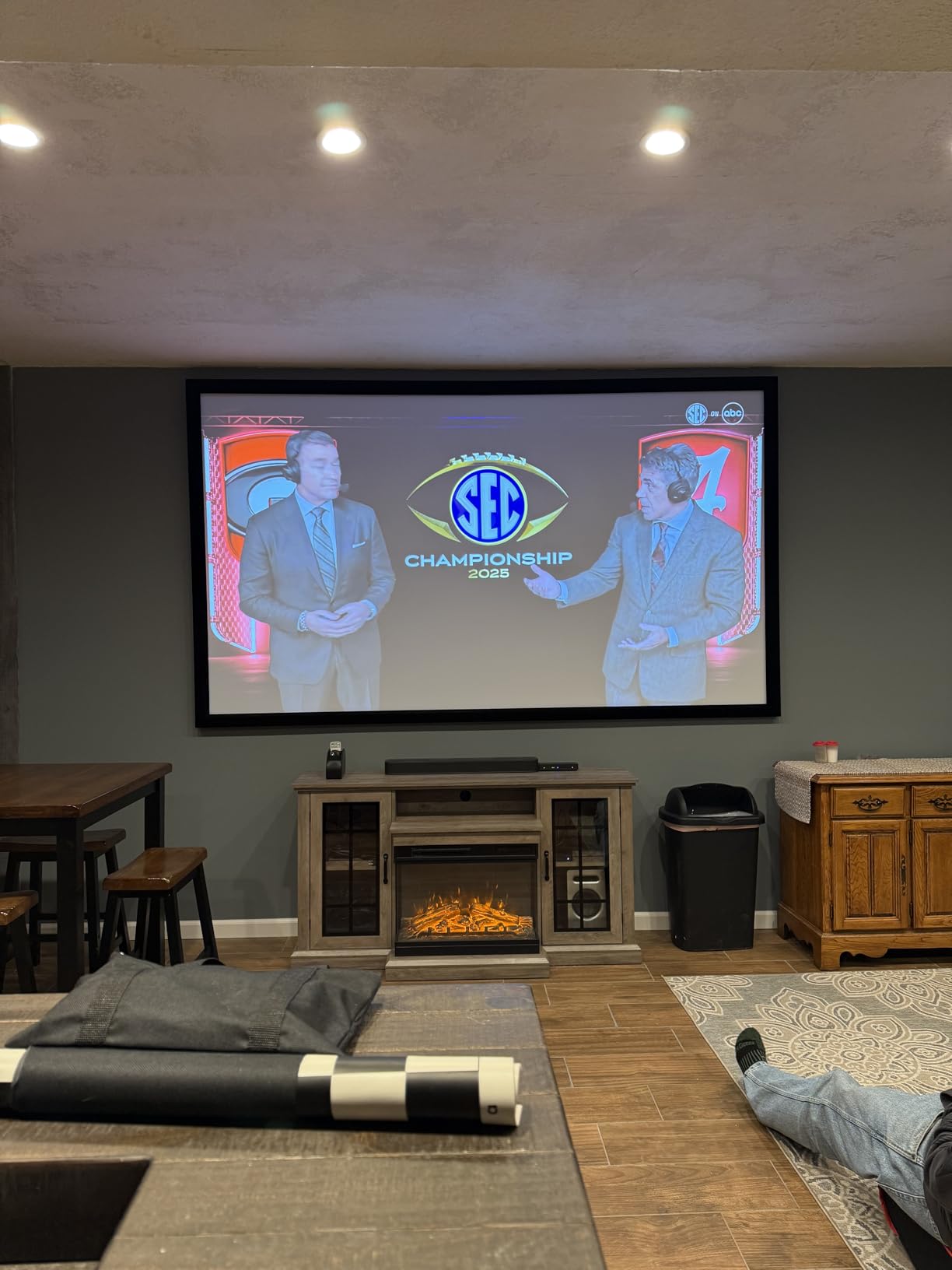
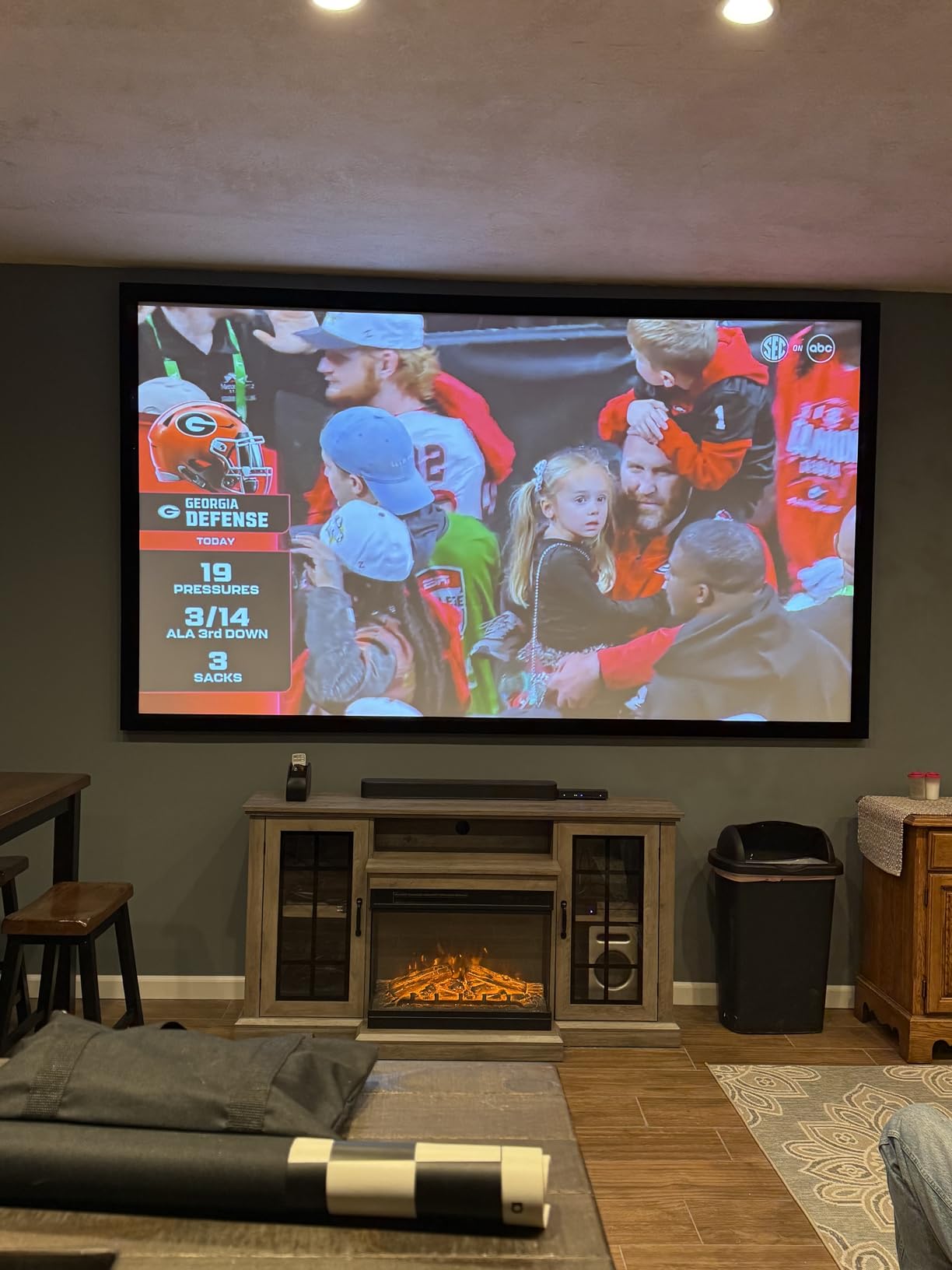
At 4,600 lumens of color and white brightness, this is the brightest unit in our group and it is the one we would choose for a room where nobody will close the blinds. Owners report that it holds up in lit rooms better than units with higher headline figures but narrower colour claims.
The laser light source is rated at 20,000 hours, so for daily daytime watching you are not budgeting for lamp replacements. That single fact changes the long-term maths on any bright-room install more than a few hundred extra lumens.
True 3-Chip 3LCD technology displays the full RGB signal with no colour wheel, which means no rainbow effect for sensitive viewers and no colour brightness loss where the panel dims. That consistency is exactly what you want when ambient light is already fighting you.
Connectivity is practical for a mixed household: Miracast screen mirroring, two HDMI ports, USB power, Ethernet and Wi-Fi, plus a 16W speaker for casual viewing. Keystone and image adjustment handle flexible placement, though there is no lens shift.
What you should check before buying
Resolution is the compromise. Native 1920 x 1080 with no pixel shifting means on a 100-inch screen you will see the difference against a true 4K DLP unit, even though the picture is bright and stable. If your screen is 80 inches or smaller, that trade disappears.
You will need an external streaming device. There is no smart platform here, so budget for a dongle if nobody in the house owns one. Audio is the other gap, with a single 16W speaker that suits news and casual shows rather than a film night.
Where it is not the right answer
This is a business-class 3LCD chassis, so it is not tuned for colour gamut or HDR the way the triple-laser units are. If your daytime viewing is actually about picture quality after dark, you are leaving a lot on the table.
At 9.5 pounds it is portable enough for a backyard evening, but 4,600 lumens does not make direct sunlight a solved problem. Shade still does most of the work outdoors.
3. ViewSonic LS740HD – The Best Value Bright Laser Unit
ViewSonic LS740HD 1080P Laser Projector, 5500 Lumens, Full HD Home Theater
5500 ANSI lumens
Native 1080p laser
20000 hour light source
1.1-1.5 throw ratio
1.3x optical zoom
Pros
- Very high ANSI lumen count for the money
- Laser runs cool and quiet
- 1.3x optical zoom plus four-corner adjustment
- Three year parts and labour warranty
- Handles large outdoor screens
Cons
- Some units report random orange flashing
- Basic menu system
- No lens shift so placement is once-only
- Thin built-in speaker
Five thousand five hundred ANSI lumens is a genuinely large number, and this is the pick if your budget stops short of 4K. ANSI-rated brightness is measured to a standard, which makes it the most trustworthy lumen figure in this entire list.
The laser light source is rated at 20,000 hours and runs cool and quiet, and the three-year parts and labour warranty is the longest support commitment here alongside the higher-end ViewSonic.
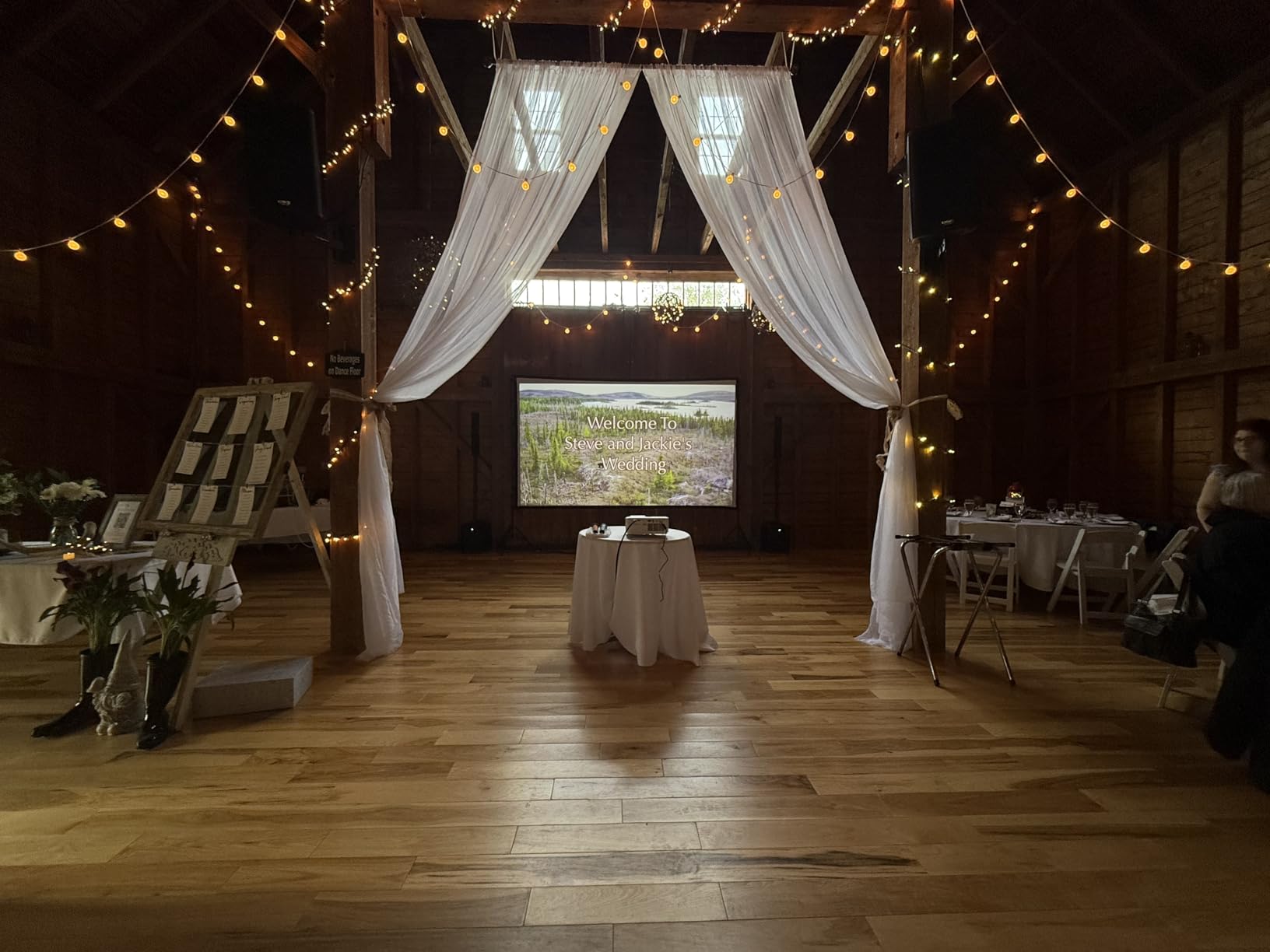
Alignment is unusually good for a business-class laser unit. A 1.1-1.5 throw ratio with 1.3x optical zoom, plus horizontal and vertical keystone and four-corner adjustment, means you rarely need digital correction that costs brightness. A 100-inch image arrives from about 8.2 feet.
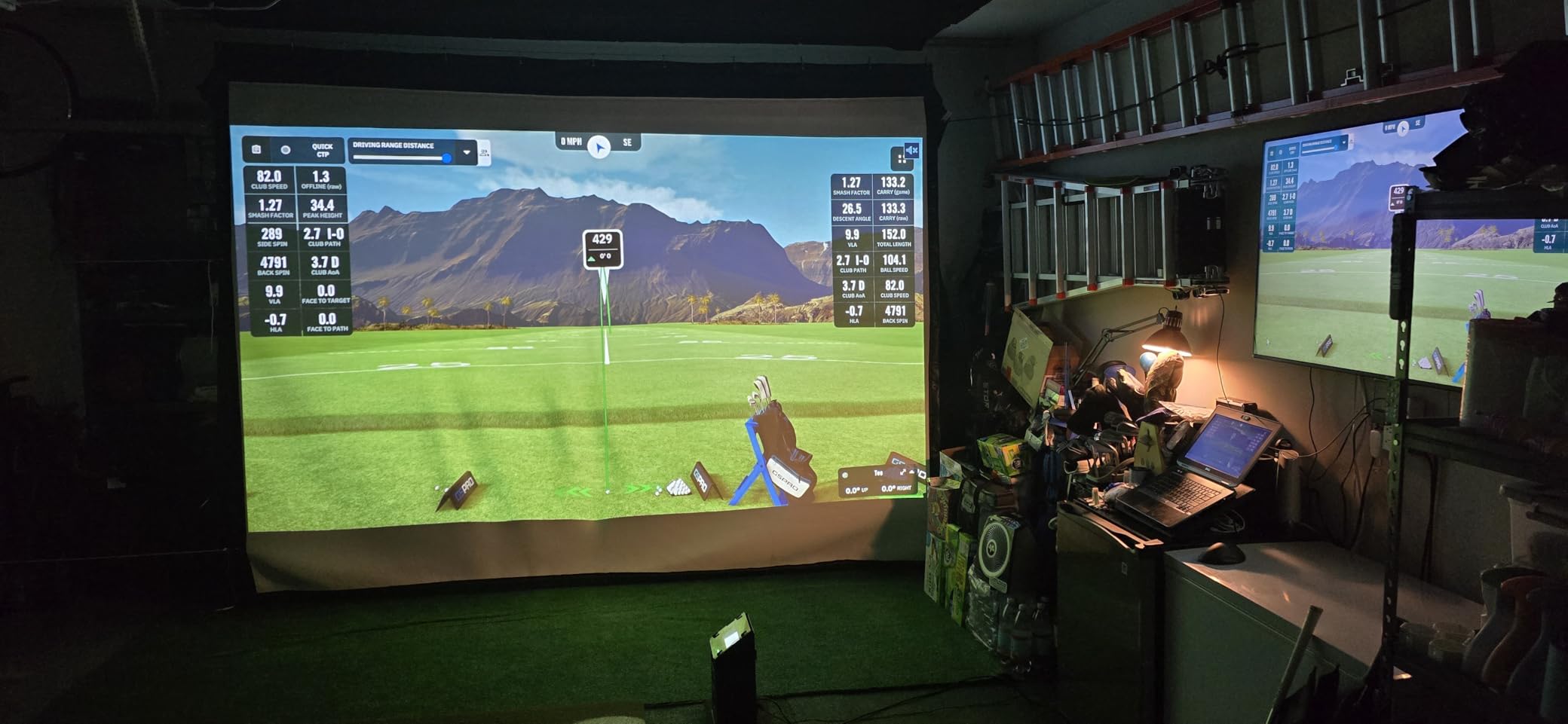
It also carries a golf simulation mode with environmental colour tuning, and owners use it for large outdoor screens, which is a decent stress test for brightness headroom. 360-degree and portrait projection support add flexibility for unusual rooms.
What you should check before buying
Some units report random orange flashing that persisted across cable changes and firmware updates. It is a recurring owner complaint rather than a universal fault, but it is the first thing to research before you commit, and it is the main reason this is not higher in the list.
There is no lens shift, so once you position it for a fixed installation you are committed. Plan the throw distance and screen height before you mount anything rather than after.
Where it is not the right answer
Native 1080p on a 120-inch screen is where the resolution starts to show. The menu system is also basic next to the Google TV models here, so expect a settings trip before guests arrive.
The 3,000,000:1 contrast figure is dynamic, not native. Judge it as a bright room projector rather than a home theatre one, because that is what it is built for.
4. BenQ TK800M – Native 4K Sharpness at 3,000 ANSI Lumens
BenQ TK800M 4K UHD Home Theater Projector with HDR and HLG | 3000 Lumens for Ambient Lighting | 96% Rec. 709 for Accurate Colors | Keystone for Easy Setup | 3D Capable
3000 ANSI lumens
Native 4096 x 2160 DLP
10000:1 native contrast
HDR and HLG
96% Rec.709
Pros
- True 4K pixel count rather than upscaled
- All-glass lens stays sharp
- Strong native contrast for the class
- Good for sports and fast motion
- 3D capable
Cons
- Lamp light source dims and needs replacing
- Keystone reduces usable area and brightness
- No built-in streaming so a dongle is needed
This is the one to pick if picture detail matters more to you than raw brightness, because it is genuine 4K UHD with 8.3 million distinct pixels rather than a pixel-shifted 1080p panel. On a large screen the difference is obvious in a bright room, where the extra sharpness does the work that extra lumens would otherwise handle.
Native 4K DLP also avoids the jaggier, more pixelated look some competing technologies produce, and the all-glass 4K-optimised lens array of seven elements in four groups gives you a clean image with good light penetration.
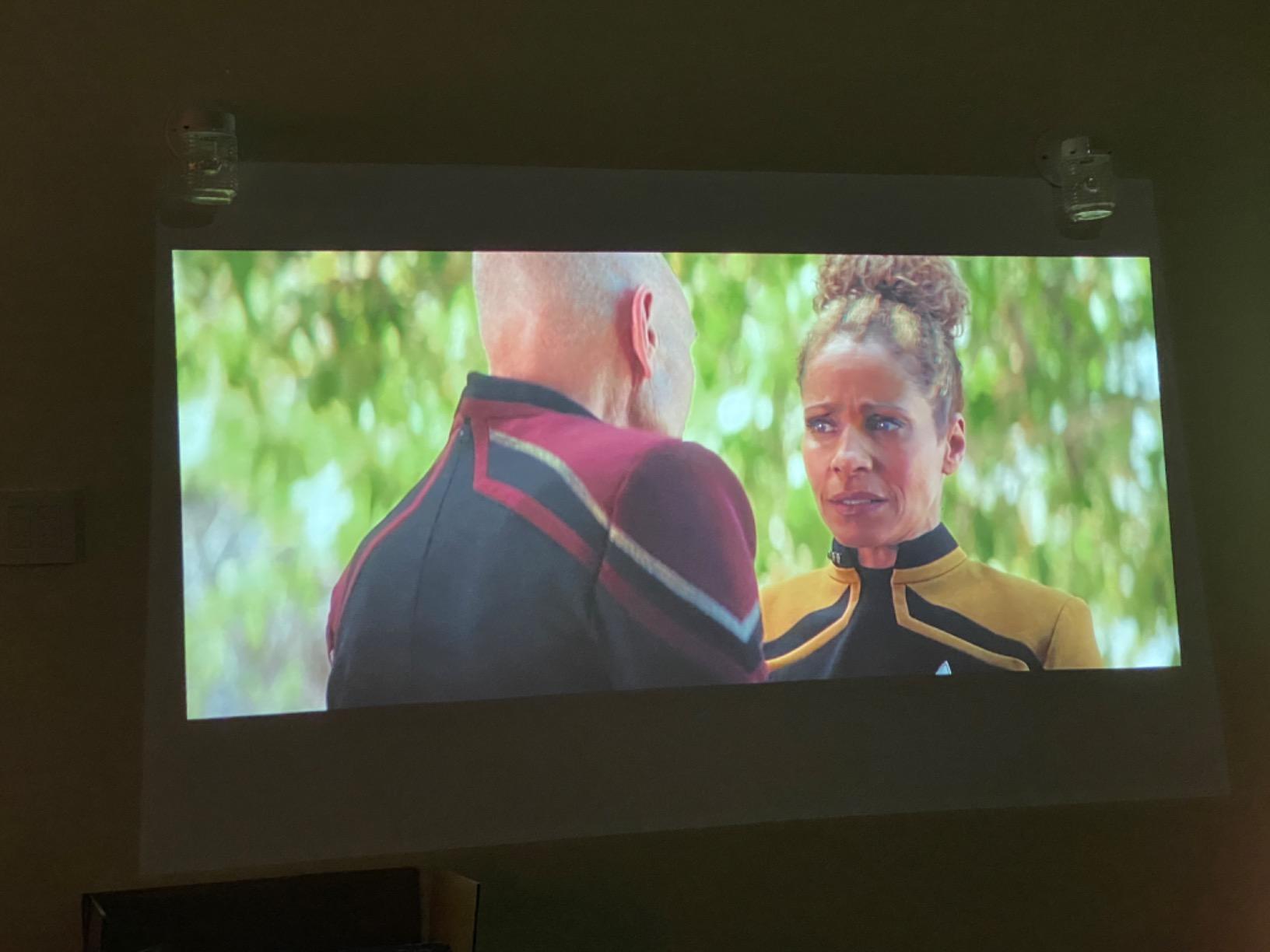
Colour coverage of 96% Rec.709 with HDR and HLG support is a sensible target for sports and general viewing. Owners report sharp 4K with low input lag for console gaming, and the projector handles fast motion without blur.
Connectivity covers two HDMI ports, VGA, 3.5mm audio in and out, USB power and service, RS-232 and a 12V trigger, so it drops into an existing home theatre system without drama. The three year manufacturer warranty is a real plus.
What you should check before buying
The lamp is the decision point. A lamp-based light source dims over time and needs replacing, and for someone watching in daylight every day that is a running cost and a recurring brightness penalty that the 20,000-hour laser units here simply do not carry.
Keystone correction is digital only, and using it reduces your usable image area and brightness at the same time. Get the geometry right physically and the picture will be brighter for it.
Where it is not the right answer
There is no smart platform built in, so you need a streaming dongle or an external source. For a room where the projector runs all day, that extra box is another device to hide.
3,000 ANSI lumens is the entry threshold for a controllable room, not a licence to leave the curtains open. Pair it with a high-gain screen before you judge it.
5. BenQ TK700 – Native 4K Built for Gaming in Daylight
BenQ TK700 4K HDR Home Entertainment Gaming & Movie Projector 4.2ms Latency
3200 ANSI lumens
Native 3840 x 2160 DLP
4.2ms input lag
10,000:1 contrast
HDR10
Pros
- True native 4K with HDCP 2.2 HDMI
- Bright enough for a lit room
- Low 4.2ms latency for console play
- Compact at 6.8 pounds
- Three year warranty
Cons
- Lamp variant has early bulb failure reports
- Fast mode disables keystone
- No optical audio out
- Some long-term dead pixel reports
At 4.2ms latency and a 240Hz-class refresh, this is the pick if your daytime viewing happens to be gaming. Native 4K over HDMI 2.0 with HDCP 2.2 accepts 4K HDR signals from a PS5 or a laptop without any scaling.
3,200 ANSI lumens puts it slightly ahead of the TK800M on raw brightness, and owners report it is bright enough for daylight viewing on a typical screen with dark blacks and a clean image in fast motion.
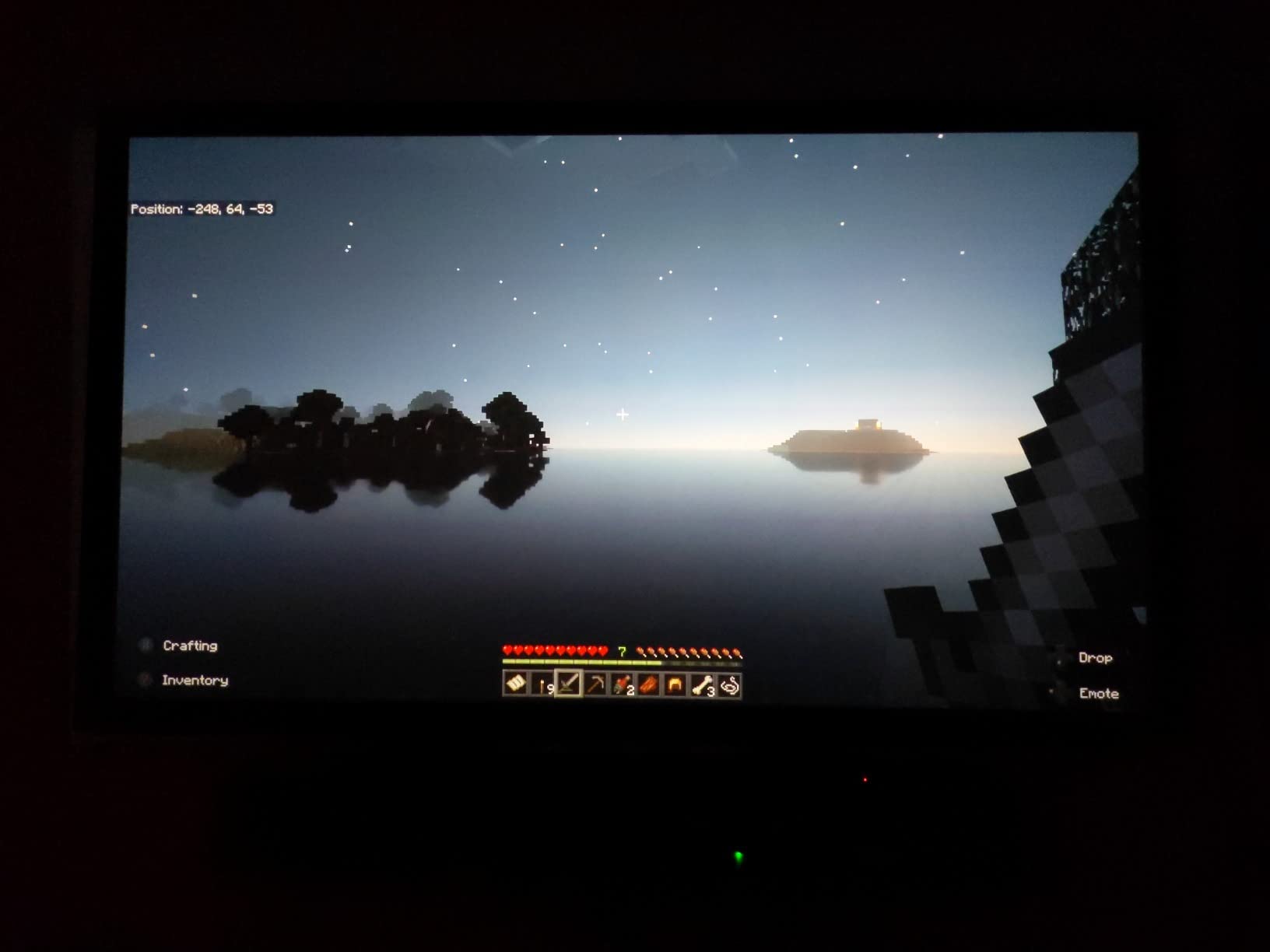
Black Detail Enhancement and HDR10 support are tuned for the dark scenes that tend to disappear in ambient light, which is a sensible inclusion for daytime use. A 5W built-in speaker covers casual viewing, and RS-232 plus USB give installers control options.
At 6.8 pounds and 12.28 by 9.69 by 4.33 inches it is genuinely easy to move between a media room and a playroom, which suits households where the projector is not permanently installed.
What you should check before buying
Confirm which variant you are buying. Reports of early bulb failure in the lamp version are the most common complaint here, and the throw ratio differs too: this standard-throw model reaches a 100-inch image at about 8.2 feet, while the short-throw alternative reaches it at 6.5 feet.
Fast mode disables keystone correction, so if you rely on the fast input lag you need a square setup with no digital geometry correction at all. There is also no optical audio out, which means an ARC or AVR connection is needed for sound.
Where it is not the right answer
If your main daytime viewing is films rather than games, the laser models here hold brightness far better over years of daily use. A lamp that dims is a poor match for a screen you leave on every afternoon.
Fan noise in a near-continuously running living room install is worth checking in person. Any projector run in a quiet room during daylight hours gets heard.
6. Hisense C2 Ultra – Triple Laser Colour With Placement Flexibility
Hisense C2 Ultra, Triple Laser Smart Portable Projector, 4K UHD, 3,000 Lumens, 65” – 300”, Dolby Vision, IMAX Enhanced, Sound by JBL, Netflix Included, Designed for Xbox, Optical Zoom
3000 ANSI lumens
Triple laser DLP
Native 4K UHD
2000:1 native contrast
1.67x optical zoom
Pros
- Zoom keeps full 4K with no brightness loss
- Triple laser gives 110% BT.2020 gamut
- 65 to 300 inch image range
- Dolby Vision and IMAX Enhanced
- 135 degrees of vertical adjustment
Cons
- Triple laser can show rainbow artifacts
- Weighs nearly 14 pounds
- Smart platform still trails some rivals
The 1.67x optical zoom across a 0.9-1.5:1 throw ratio is the feature that sets this unit apart. It maintains full 4K and does not lose brightness as you resize the image, which means you can go from a 65-inch weekday screen to a 300-inch wall without re-planning your room.
Owners value the combination of triple laser colour, Dolby Vision and IMAX Enhanced processing, and enough brightness for daytime use, along with the gimbal-like angle adjustment that makes ceiling, wall and tabletop placement straightforward.
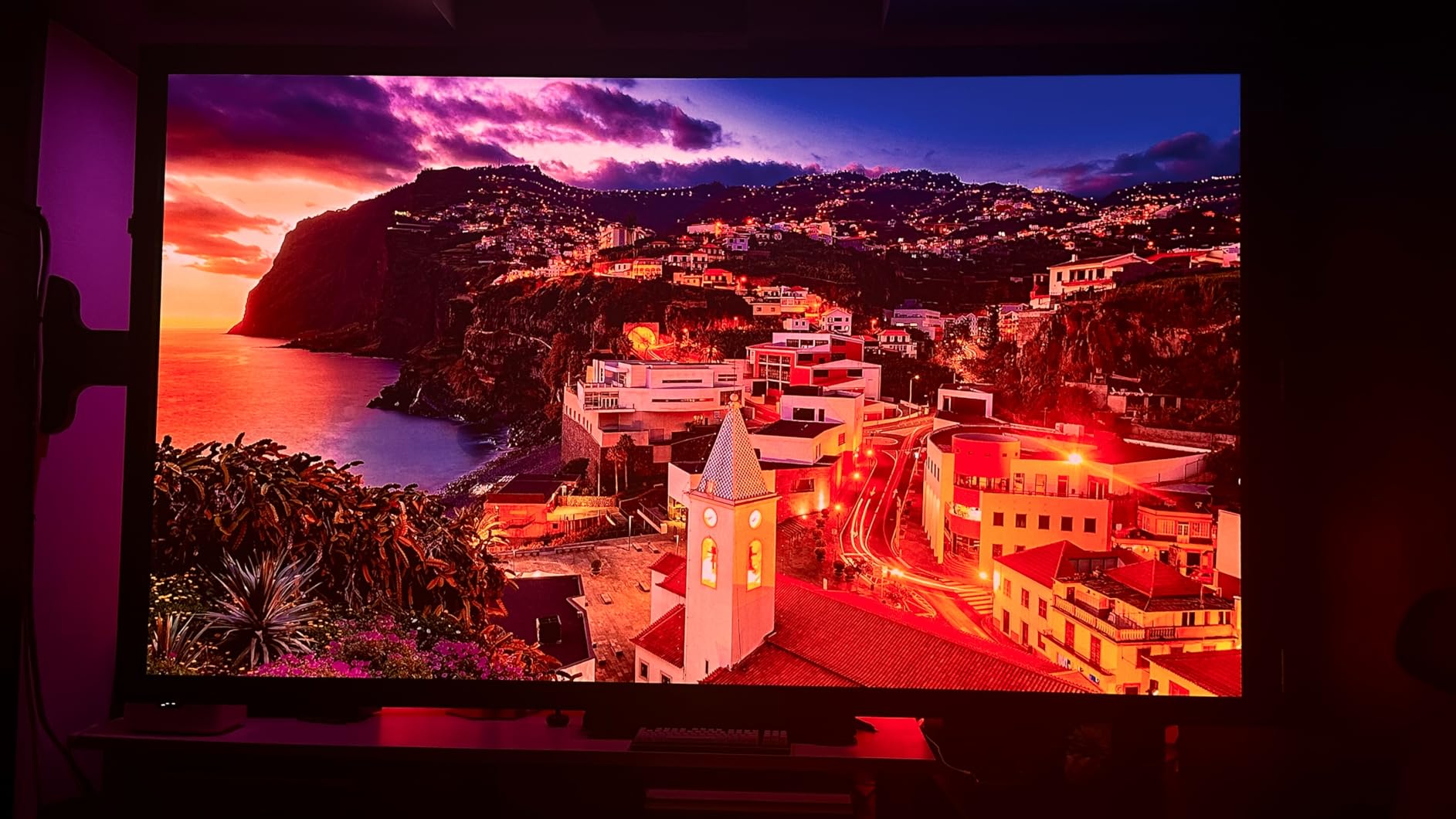
Colour is measured at 110% BT.2020 with roughly 0.9 delta E accuracy, and the pure triple colour laser source has no blue light hazard. Up to 240Hz refresh with Xbox-optimised latency reduction makes it a serious gaming option too.
Sound by JBL and Netflix included through the built-in smart platform reduce the number of boxes in the room. Bluetooth, Ethernet, HDMI, USB 3.0 and Wi-Fi cover the rest, with voice and app control.
What you should check before buying
Rainbow artifacts are the one to test for. Triple laser sources drive separate red, green and blue lasers, and some sensitive viewers see colour fringing on high-contrast edges in a bright room. If you have ever noticed it before, view this one in person.
Weight is 13.9 pounds at 11.3 by 9.7 by 9.7 inches, so it is a portable-form projector rather than a genuinely portable one. The Google TV interface and app ecosystem still lag some competitors, which matters if you live inside streaming apps.
Where it is not the right answer
2,000:1 native contrast is modest next to the 15,000:1 on our top pick, and contrast is the resource you are shortest of in a bright room. This unit compensates with brightness and colour, not with black level.
The one-year manufacturer warranty is short for a unit at this level, so factor that into how long you expect to keep it running.
7. Hisense PL2 – The Most Affordable Laser TV Setup
Hisense PL2, Ultra Short Throw Home Theater Laser Projector, 80” – 150”, 4K UHD, 2,700 Lumens, 3000:1 Contrast, Dolby Vision & Atmos, 3D, Google TV, WIFI 6E
2700 ANSI lumens
Ultra short throw 80 to 150 inch
Native 4K UHD
3000:1 contrast
25000 hour laser
Pros
- Replaces a TV with an 80 to 150 inch screen
- Works on a plain wall and improves with ALR
- Google TV is fast and responsive
- Sharp stable 4K after adjustment
- Two year manufacturer warranty
Cons
- Automatic keystone workflow is clunky
- 18.7 pounds and needs cable planning
- Faint rainbow effect for some viewers
- Blocks AV cabinet space
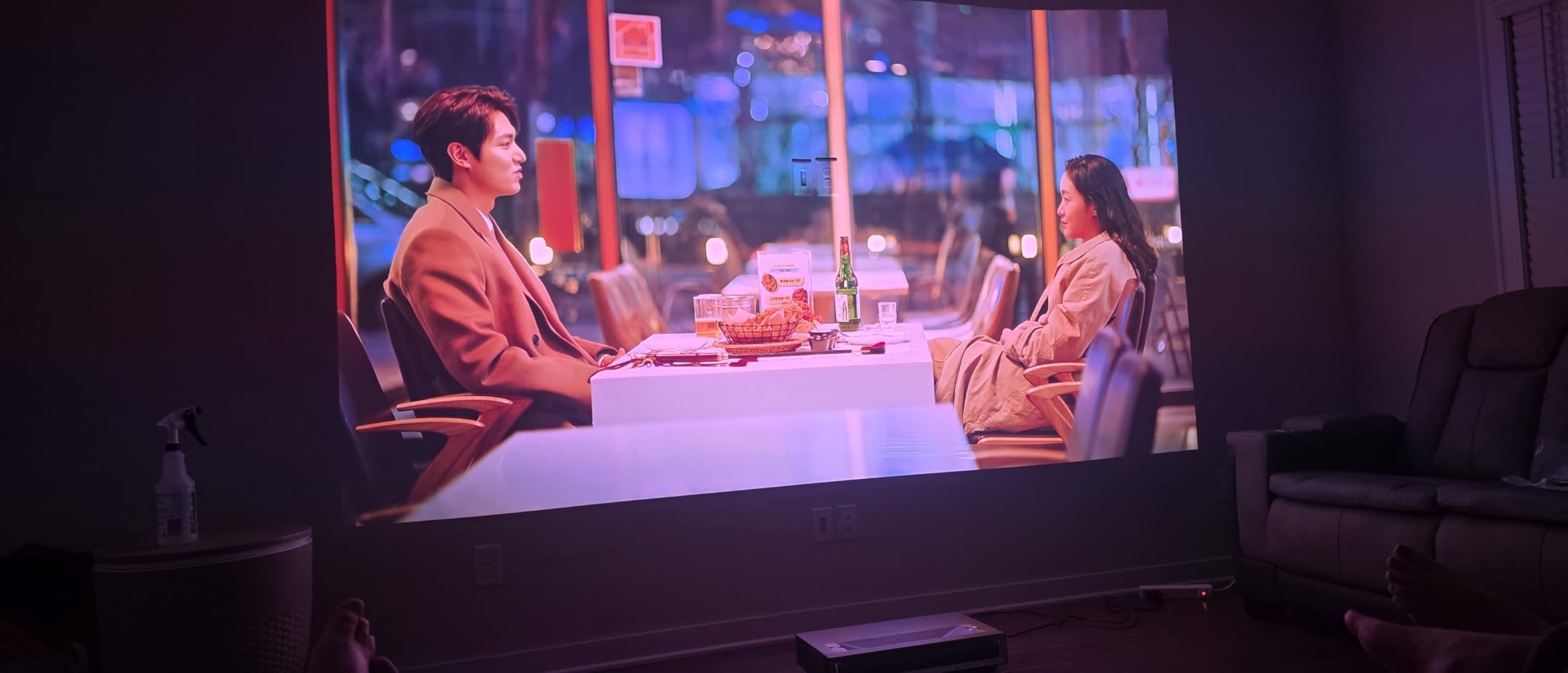
This is the cheapest route to a genuine laser TV, and for daytime viewing in a bright living room the ultra-short-throw format is the right shape. It throws an 80 to 150 inch image from roughly 0.22 to 1.5 feet, so the hardware sits on the media console instead of across the room on a ceiling mount.
Owners consistently describe a bright, sharp, immersive 80 to 150 inch picture that can be projected onto a regular wall, with a Google TV interface that feels fast and responsive. Brightness is listed at 2,700 ANSI lumens with 3,000:1 contrast.
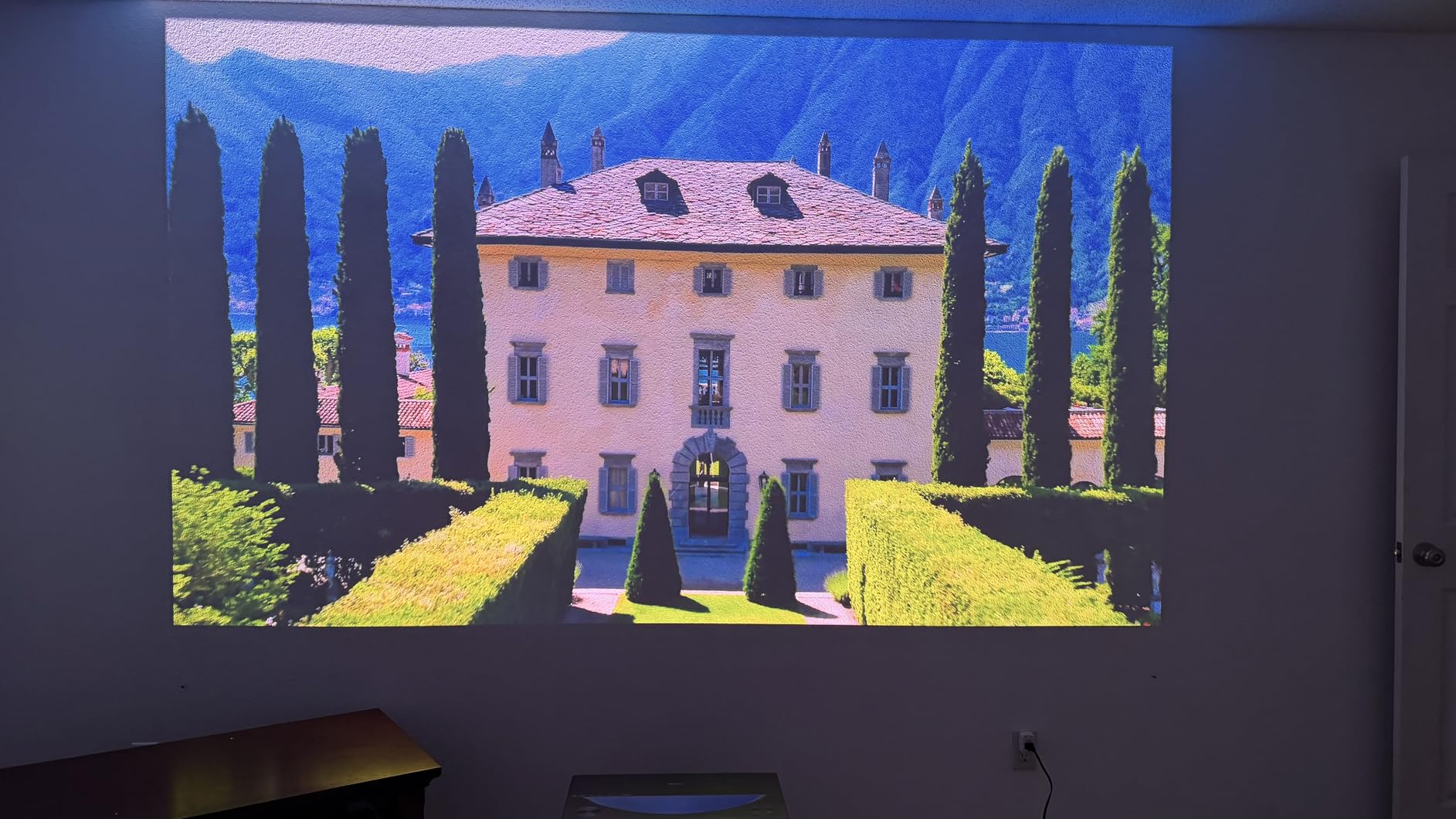
The X-Fusion laser light source is rated at 25,000 hours or more, and a DLP system with 2.07 million micro mirrors plus a 4K AI upscaler keeps the picture sharp on lower-resolution sources. Over 1.07 billion colours cover the gamut, with Dolby Vision and multiple HDR standards supported.
Bluetooth 5, HDMI, USB 3.0, Ethernet and Wi-Fi 6E round out a well-equipped box, and 3D support is there if you have compatible content. The two-year manufacturer warranty is a step up from the one-year models.
What you should check before buying
Budget for the screen properly. This is a UST unit, and the ALR material question comes up constantly in r/projectors threads for good reason. Standard grey ALR materials designed for conventional throw projectors can produce a greyed-out or hot image on a UST lens, so a UST-compatible CLR or ALR surface is close to mandatory.
Plan the cabinet space before delivery. At 18.7 pounds and 20.9 by 13.2 by 4.7 inches, it is bulky for a living room device, sits close to the wall, and will constrain your AV cabinet layout.
Where it is not the right answer
2,700 lumens is the lowest figure in this roundup. It is fine in a normally lit room on a good screen, and it is not enough for a room with wide-open blinds and glass doors at midday.
The automatic keystone feature is poorly implemented, requiring a phone photo uploaded to a device-hosted site. Setting the geometry manually is faster and more accurate.
8. AWOL LTV-3000 Pro – The 150-Inch Triple Laser Laser TV
AWOL VISION LTV-3000 Pro 4K 3D Ultra Short Throw Triple Laser Projector, Dolby Vision & Atmos, HDR10+, 150″ UST Laser TV Home Theater Projector
3000 ANSI lumens
Ultra short throw triple laser
Native 4K UHD
2500:1 contrast
80 to 150 inch
Pros
- Triple laser with no colour wheel
- 107% BT.2020 and 147% DCI-P3 colour
- Built-in center channel speaker
- Dolby Vision and HDR10+ processing
- PJ Link control for smart home
Cons
- Needs a daylight ALR screen for bright rooms
- 28 pounds and 21.5 inches deep
- Fixed 0.25:1 throw demands exact placement
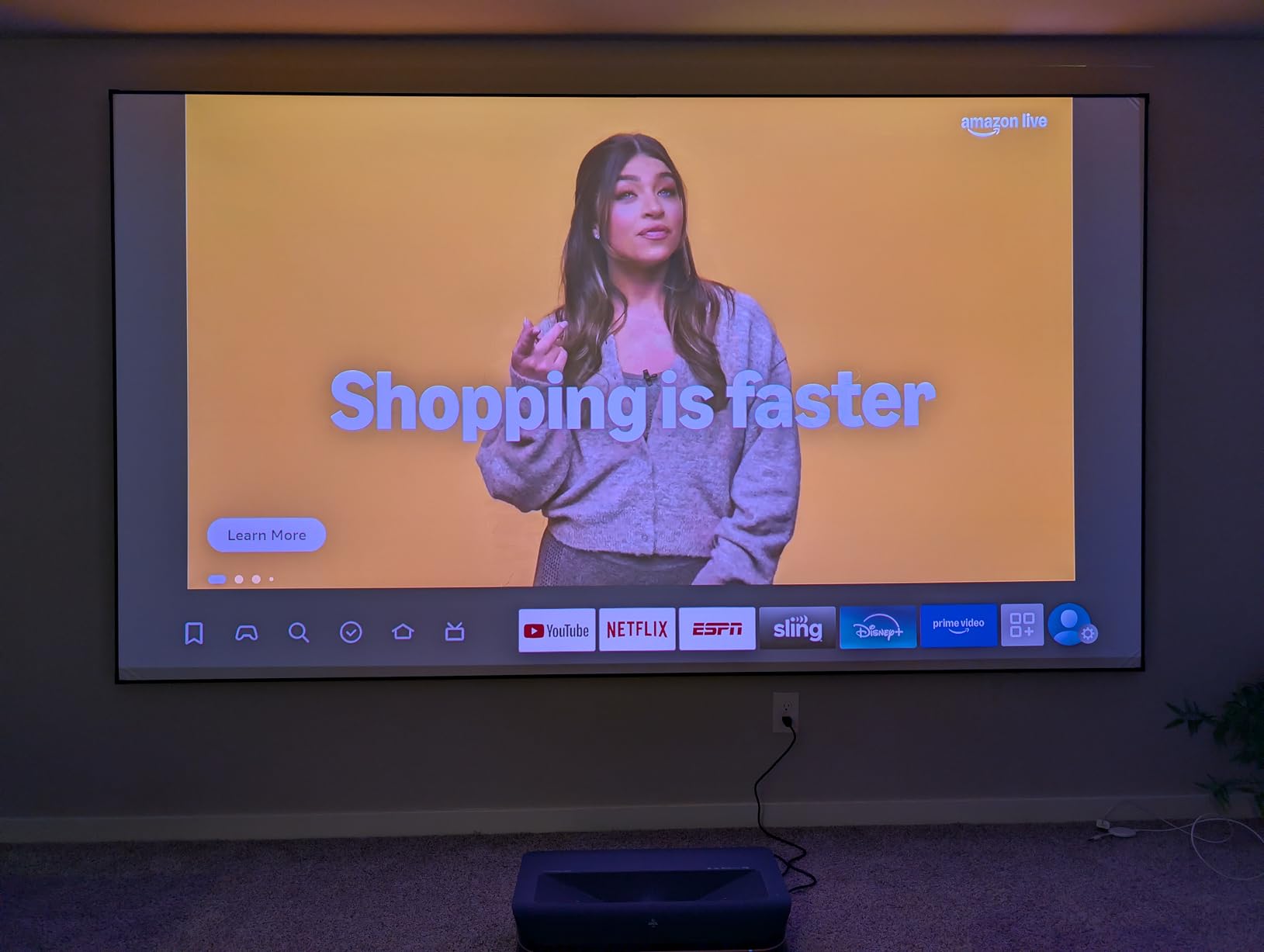
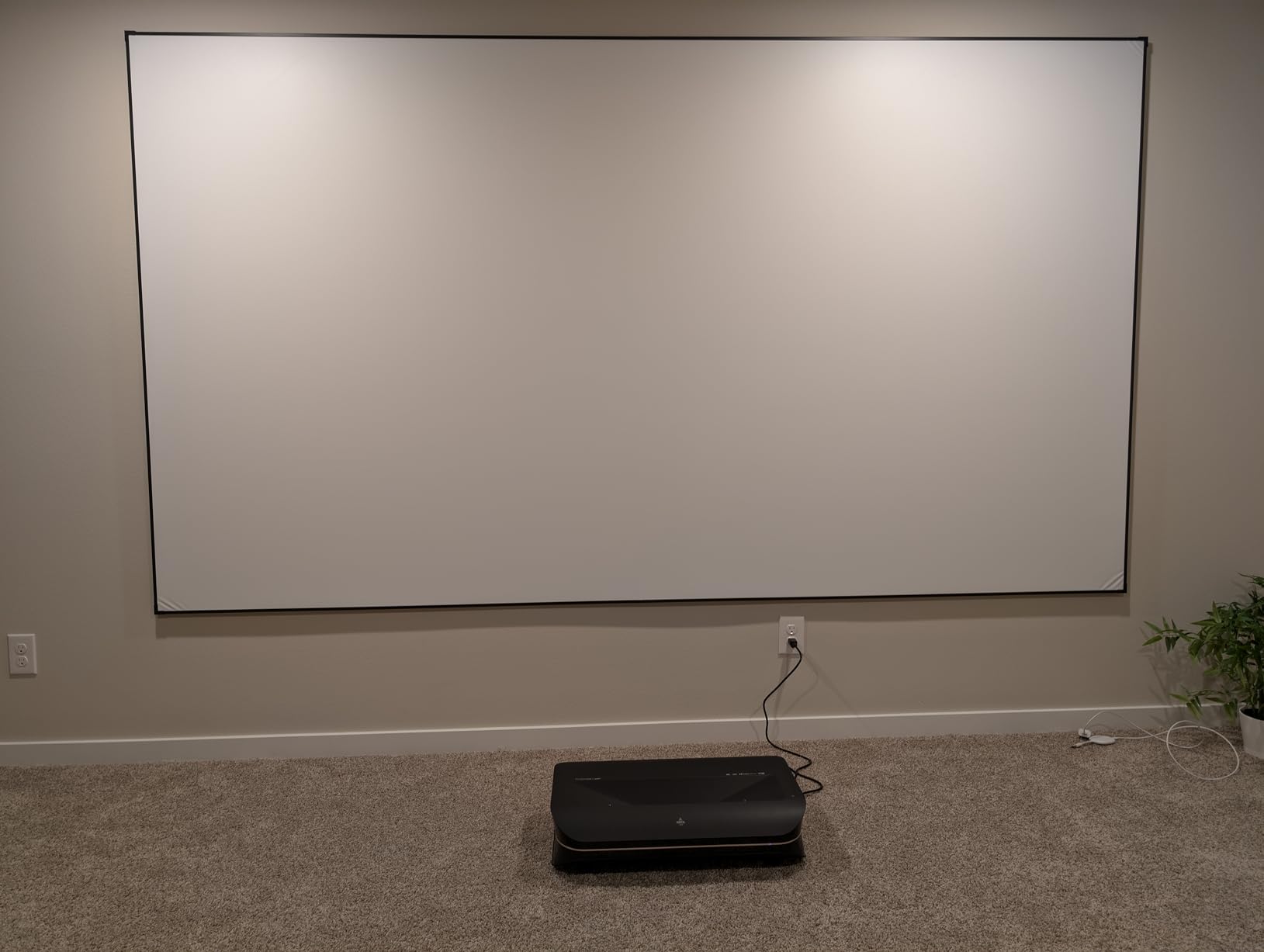
This is the closest thing here to a television replacement that a projector can genuinely be. A fixed 0.25:1 throw ratio puts a 100-inch image about 8.54 inches from the wall and a 150-inch image about 12.84 inches away, so it lives on the console and throws enormous.
Buyers are happy with vivid triple laser colour, Dolby Vision processing, the convenience of the built-in centre speaker and the ability to replace a large television with a 150-inch screen. Colour coverage of 107% BT.2020 and 147% DCI-P3 is exceptional.
The triple laser source has no colour wheel at all, which removes both wheel wear and the rainbow artifacts that spinning wheels can produce. Active shutter 3D glasses work with 3D Blu-ray, and PJ Link IP control integrates with Control4 and other home automation systems.
There is also a built-in centre channel speaker mapped from the screen with ThunderBeat 4.2.2 surround, which improves dialogue clarity without extra speakers. Power draw is roughly a tenth of a conventional LED television of similar size.
What you should check before buying
Pair it with a daylight ALR screen. The recurring caution from owners is exactly this, and r/projectors users are consistent that a UST projector with a matched ALR screen is the best indoor ambient-light solution available. Without the screen, ambient-light performance is disappointing.
Weight and depth are real. At 28 pounds and 23.6 by 21.5 by 5.5 inches, cabinet depth is the constraint that decides whether this fits your furniture at all.
Where it is not the right answer
2,500:1 native contrast sits mid-pack, and the fixed throw ratio means placement must be exact for the screen size you want. Unlike a zoom lens, you cannot dial the image size in later.
If your daytime viewing happens away from a wall, a portable triple laser unit is the far more sensible purchase.
9. HAPPRUN 2500 ANSI Outdoor – Bright Streaming on a Small Budget
HAPPRUN 2500 ANSI Outdoor Projector with Official Google TV, 4K Decoding
2500 ANSI lumens
Official Google TV
Native 1920 x 1080 with 4K decode
Dual 10W Dolby Audio
2.05 kg
Pros
- 2500 ANSI lumens at a budget price point
- Licensed Google TV needs no dongle
- Auto focus and keystone work in seconds
- Light enough to move between rooms
- Dual 10W Dolby Audio speakers
Cons
- Native 1080p so 4K sources are downscaled
- Ceiling projection needs manual adjustment
- LCD contrast lags DLP and laser models
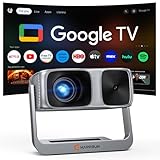
Two thousand five hundred ANSI lumens with a properly certified figure is unusual at this price, and it is enough for a normally lit room at a modest screen size. Owners are impressed that a budget projector delivers that much brightness alongside built-in Google TV streaming.
The official licensed Google TV gives access to more than 1,000 apps including Netflix, Prime Video, YouTube and Hulu, so there is no dongle to buy and no laptop to leave plugged in. Google Voice Assistant works with hold-to-talk control.
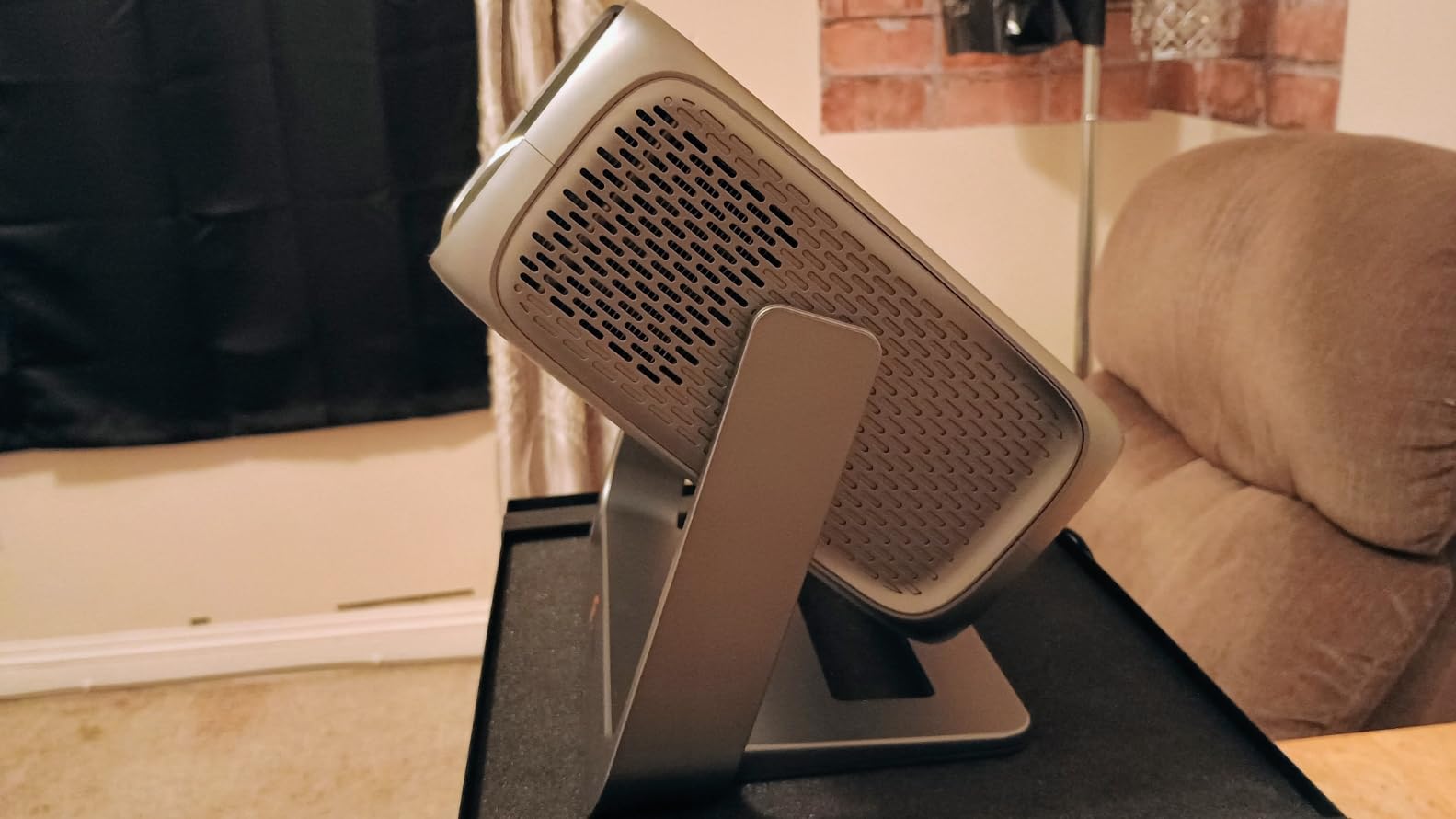
Auto focus and 6D auto keystone produce a rectangular image within about three seconds, which matters when you are setting up outside in fading light. The 270-degree adjustable stand covers wall, ceiling and screen projection without a tripod, and dual 10W Dolby Audio speakers make it usable without a sound system.
Bluetooth 5.2, Wi-Fi 6, HDMI, USB and a 3.5mm headphone jack cover connectivity, and it works with TV sticks, phones, PCs and consoles. Image sizes run from 30 to 300 inches.
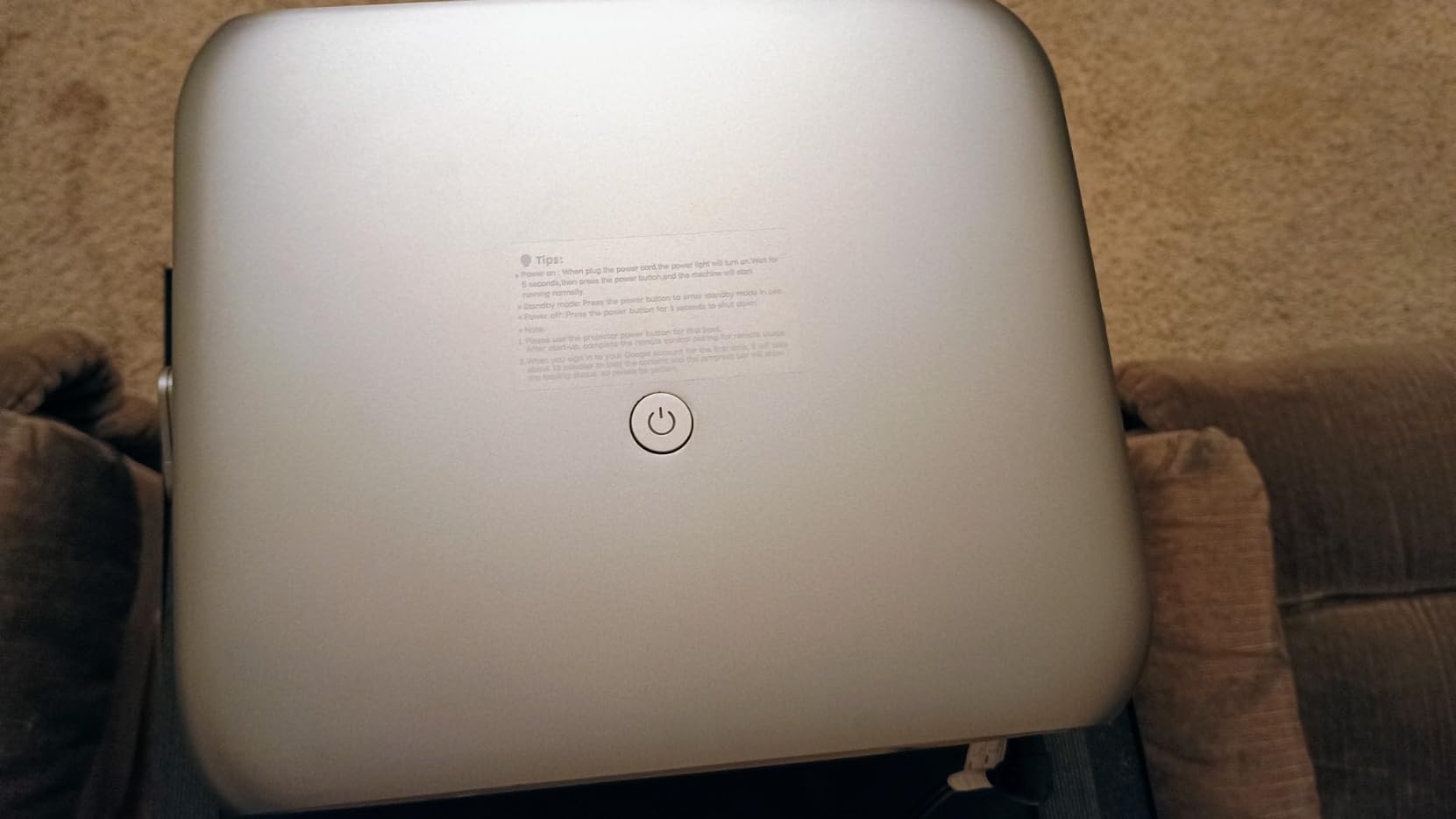
What you should check before buying
Ceiling projection is the gap. Auto focus and keystone are built around tabletop and wall placement, so mounting overhead means manual focus and keystone work. Test it in the position you actually intend to use.
Native 1920 x 1080 means 4K content is downscaled rather than truly 4K. At 80 inches that is invisible; at 120 inches it is not.
Where it is not the right answer
LCD contrast is the structural limitation. An LCD panel will never hold blacks like a DLP or laser engine, and in a bright room that is where the difference shows first. The 20,000:1 contrast figure is dynamic, not native.
2,500 lumens is below the 3,000 threshold for a properly controllable room. Treat it as a shaded patio or a small bright room, not a glass-door situation. For that, our mini projector picks for travelers cover the smaller formats, but brightness rules still apply.
10. ViewSonic LS901-4K – Maximum Brightness at True 4K
ViewSonic LS901-4K 4K UHD Laser Projector 5500 Lumens, HDR Home Theater
5500 ANSI lumens
Native 3840 x 2160 laser
240Hz refresh with 4.2ms lag
1.7x optical zoom
20,000 hour life
Pros
- 5500 ANSI lumens suits daytime and bright rooms
- True 4K UHD rather than pixel shifting
- 240Hz and 4.2ms lag suit gaming and sports
- 1.7x optical zoom aids placement
- Three year warranty plus seven year parts
Cons
- Only 30 reviews so long-term data is thin
- Menu system is basic for the money
- No built-in streaming platform
This is the combination of highest certified brightness and true 4K in the roundup, which is why it earns a place. Five thousand five hundred ANSI lumens with genuine 3840 by 2160 output is the spec combination most people assume costs far more than it does.
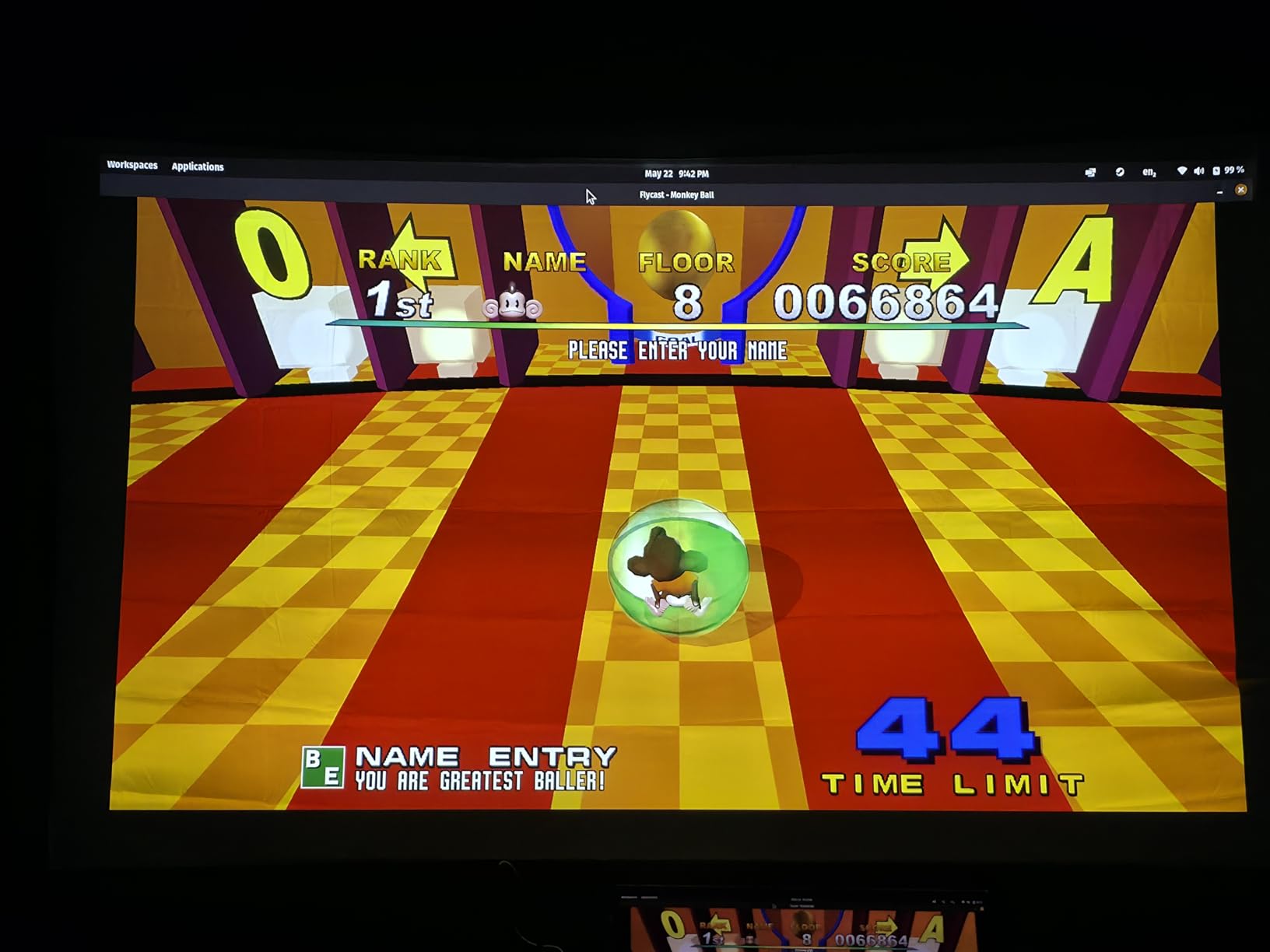
At 240Hz refresh with 4.2ms input lag it is viable for high-refresh gaming and fast sports, and native 21:9 aspect ratio support suits ultrawide home theatre screens. HDR and HLG are both supported.
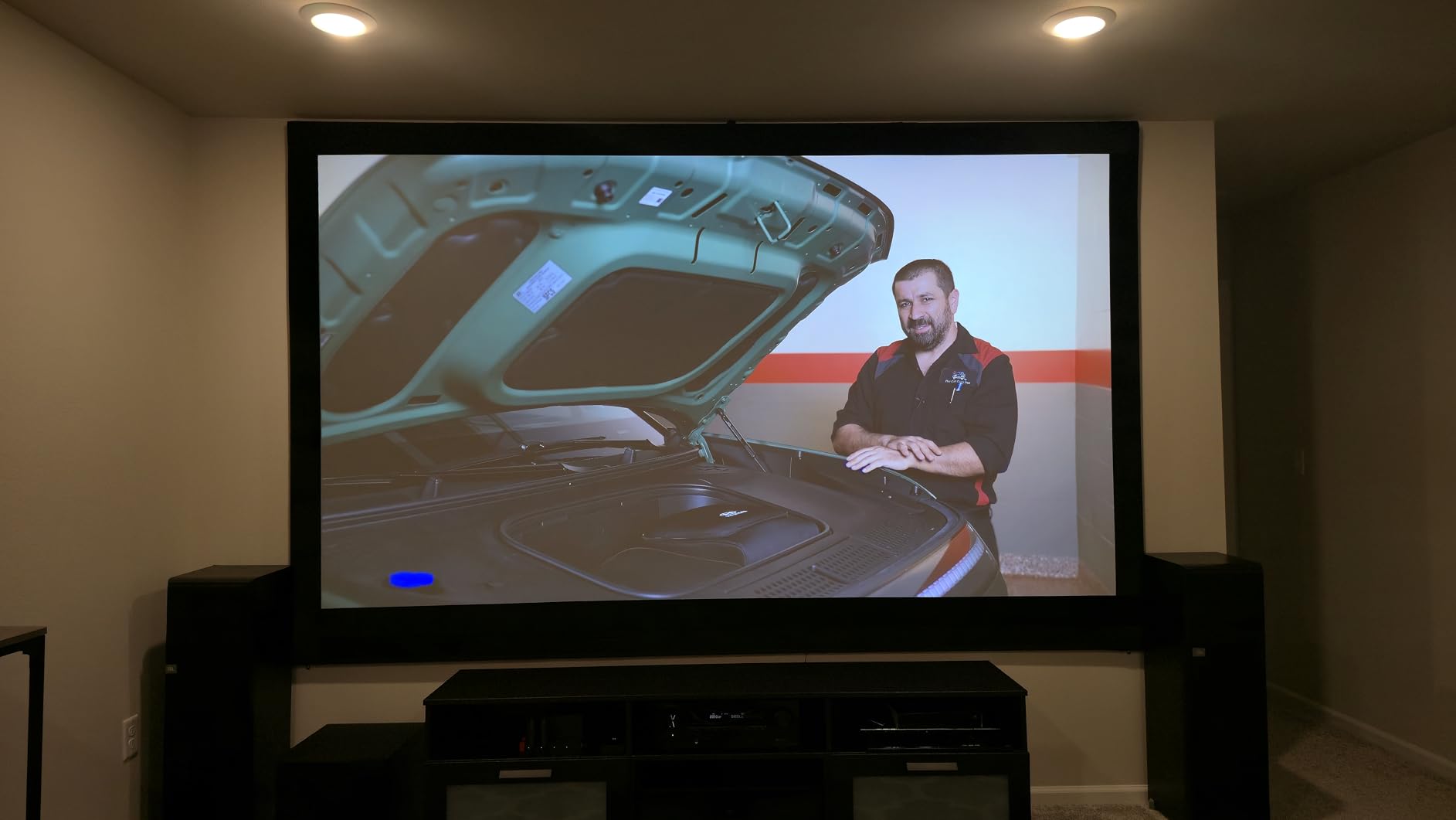
Placement is straightforward with 1.7x optical zoom, horizontal and vertical keystone, four-corner adjustment and curved screen projection. A 100-inch image arrives from about 8.7 feet, and it is ceiling mount compatible with the ViewSonic PJ-WMK-007 mount.
The laser light source is rated at 20,000 hours, dual HDMI and 3.5mm audio cover most sources, and seven years of EU spare part availability is a genuine long-ownership advantage. Golf simulation mode with boosted environmental colours is included.
What you should check before buying
The review base is small at 30 reviews, so long-term reliability is not well documented. That is the main reason this sits at the bottom of the list despite excellent specifications, and it is worth accepting deliberately rather than hoping.
There is no built-in smart streaming platform, so plan for an external source, and the menu system is basic for hardware at this level. Set up a spare evening for it.
Where it is not the right answer
Native contrast is the gap. The 3,000,000:1 figure is dynamic, so the engine delivers far less real contrast than the number suggests, and in a bright room that is what you will notice first.
At 10.7 pounds it is portable-ish, but the brightness advantage only pays off on a genuinely large screen. On a 65-inch panel the extra lumens buy you little.
Buying Guide: How Bright Is Bright Enough?
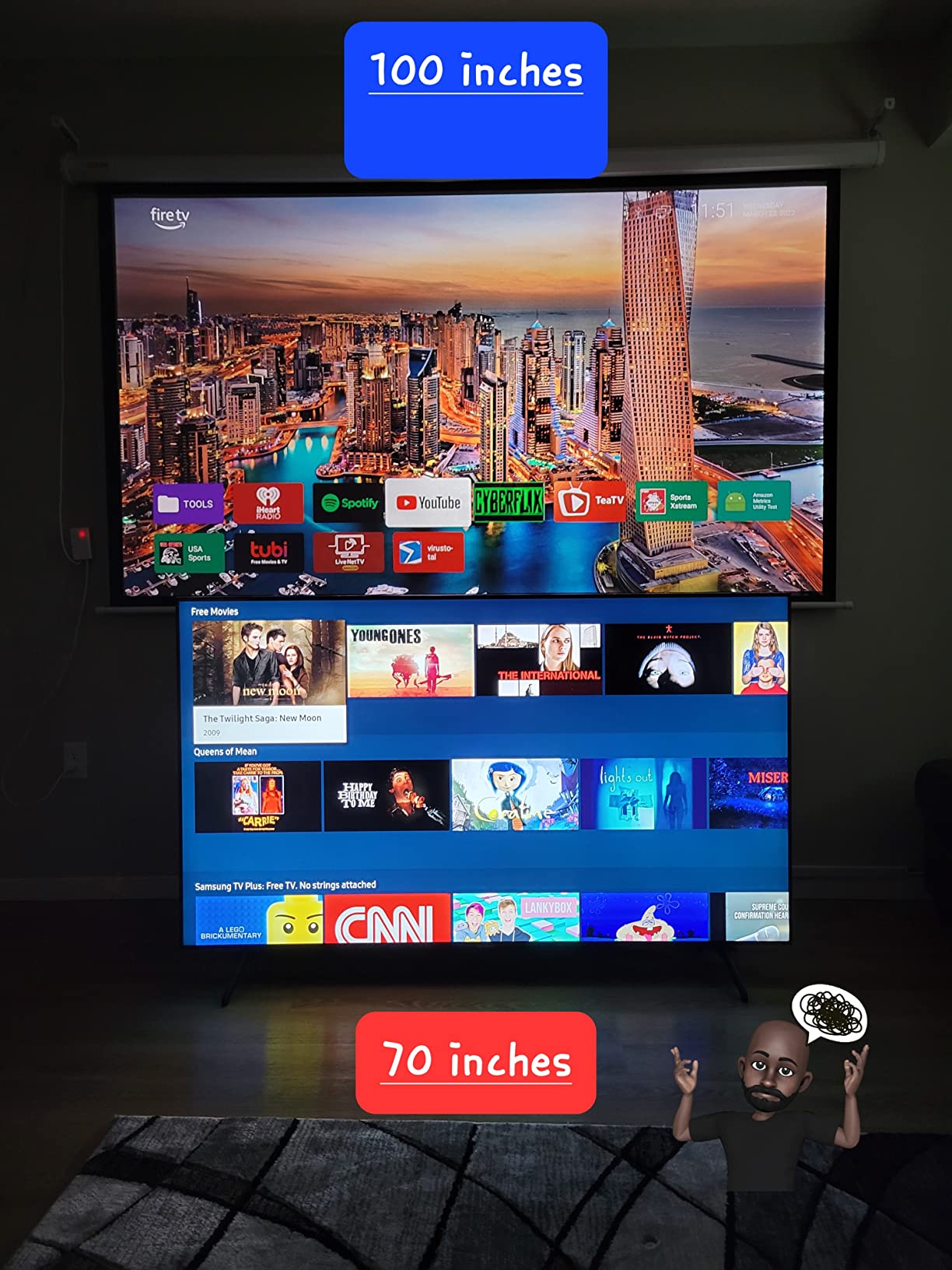
There are only three levers for beating ambient light: increase projector output, reduce the light reaching the screen, or change the screen surface so it sends projected light back to the seats while rejecting light from the room. Every projector on this list works within those three limits, which is why screen choice decides the outcome more often than brand does.
Community consensus in r/projectors threads is blunt about the first one. A user who set a 3,000-lumen unit in a living room with south-facing windows found the image barely worth watching, and the repeated advice is that anything above 4,000 lumens handles even limited daylight once an ALR screen is in place. In other words, an extra 1,000 lumens without a screen can be worth less than a good screen with fewer lumens.
The screen size to lumen ladder
Use this as a starting point for a normally lit living room, and add roughly a third more light if blinds stay open or glass doors are uncovered.
80-inch screen, light-controlled room: 1,500 to 2,000 ANSI lumens
80-inch screen, bright room with curtains drawn: 2,500 to 3,000 ANSI lumens
100-inch screen, bright room: 3,000 to 4,000 ANSI lumens
120-inch screen, bright room: 4,000 to 5,500 ANSI lumens
120-inch and larger, unshaded windows: 5,500 ANSI lumens and a high-gain screen, or accept dimmer image
That ladder reconciles the conflicting figures you will find online. Lists quoting 1,500 to 2,500 lumens are assuming a controlled room, while lists quoting 3,000+ are assuming a bright one. Neither is wrong; they describe different rooms.
Why ANSI, ISO and LED lumens are not the same number
ANSI lumens and ISO lumens are measured to published standards under controlled conditions, so both are comparable across brands in principle. Manufacturer LED lumens, source lumens and colour-and-white figures are not, and mixing them is how most disappointed buyers arrive.
Colour and white brightness is the other trap. A projector quoting 4,600 lumens of colour and white brightness is stating the lower, honest figure, while a projector quoting 6,000 LED lumens may be describing a raw light output nobody ever sees on screen. Across this list, prefer the ANSI and ISO figures; they are the only ones that transfer directly to the ALR screen and the throw distance you are working with.
An AVS Forum thread on everyday living-room daylight viewing settled on brightness grounds alone, which is telling: at this brightness threshold, the lumen rating is the feature that decides the outcome, and everything else is refinement.
Light source for daily viewing
Lamp projectors are the wrong choice for daytime viewing every day. Brightness falls steadily and the bulb has to be replaced, so the picture you bought degrades and the running cost climbs. Laser and laser-phosphor sources are rated at 20,000 to 25,000 hours on every unit here.
RGB triple laser adds the widest colour gamut of any of these, and removes the colour wheel entirely, which is the usual source of the rainbow effect on single-chip DLP. If anyone in your household is sensitive to rainbow artifacts, prefer triple laser or 3-Chip 3LCD like the Epson Pro EX11000, and test in person before buying.
Fan noise deserves a mention too. A bright-room install runs near-continuously, so fan noise that would be invisible in a dark media room becomes a daily annoyance. Laser sources generally run cooler and quieter than lamps.
Matching the projector to the right screen
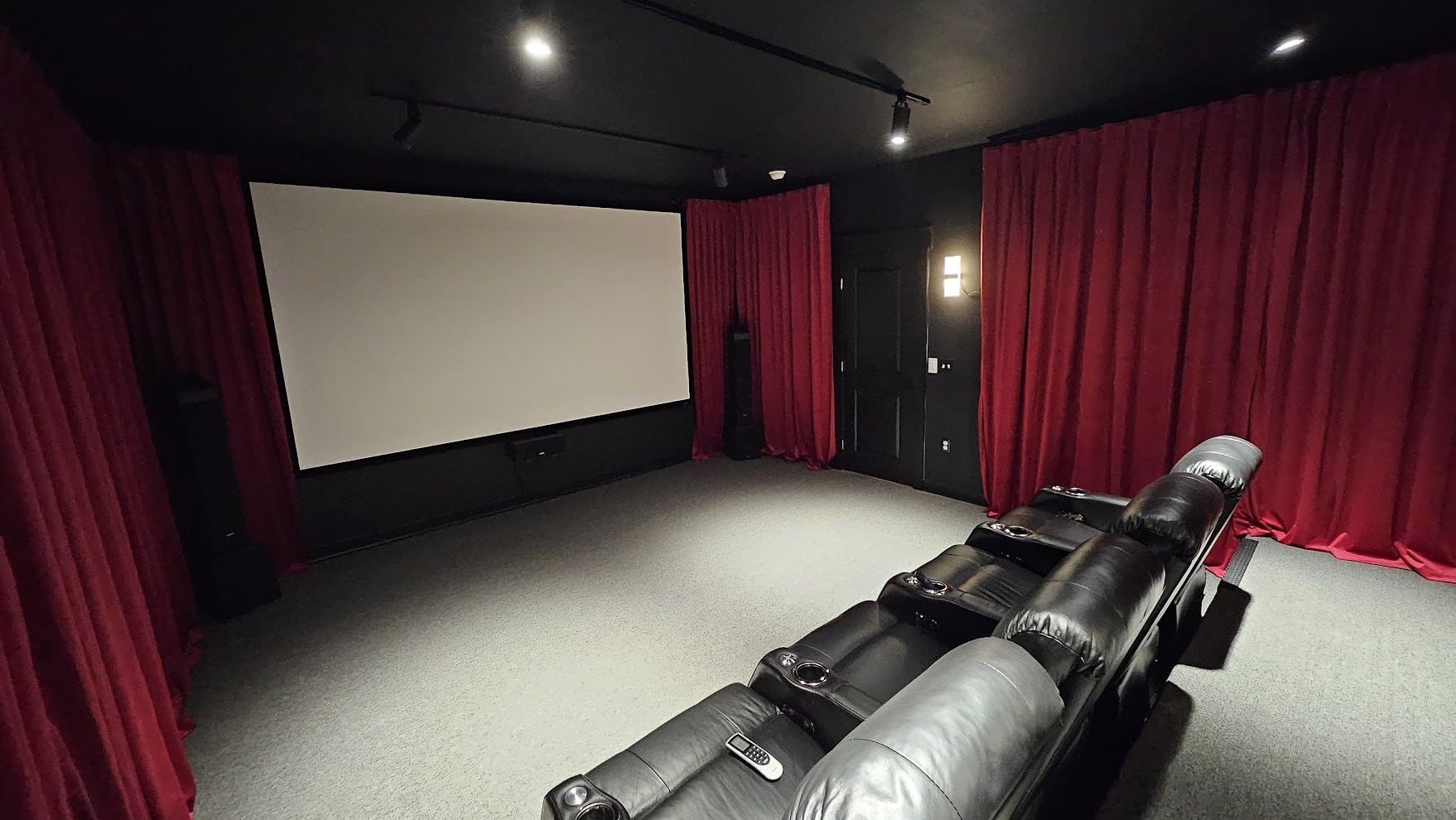
ALR and CLR screens reject light arriving from the room and reflect projected light back toward your seats. Grey and CLR materials beat plain white screens in well-lit rooms, at the cost of some output and viewing angle, so buy the gain you actually need rather than the highest gain available.
The critical rule is the ultra-short-throw compatibility warning. ALR and CLR materials are engineered around the light path of the projector they are designed for, and pairing a UST projector with standard grey ALR material made for conventional throw units is a documented failure mode that leaves you with a greyed-out or hot image. Aeon CLR 3 Series and similar UST-focused materials exist for this reason.
Standard-throw projectors are far more forgiving here, which is worth factoring in if you are not yet certain where the screen will live. A fixed frame screen gives the best ambient-light rejection, a pull-down works if the room multi-purposes, and outdoor viewing needs a portable screen with a high-gain surface plus shade above the seating.
Indoor Bright Room vs Outdoor Daylight
Indoors, a UST laser TV with a matched ALR screen is the strongest answer, and that is what the Hisense PL2 and AWOL LTV-3000 Pro are built for. If you cannot control the light at all and want a conventional projector to place at a distance, the Epson Pro EX11000 and ViewSonic LS740HD are the brightest options in the roundup, with the Epson leading on colour brightness and the ViewSonic on ANSI-certified output and warranty.
Outdoors, be honest about the physics. r/projectors consensus is that even a UST projector with a matched ALR screen remains effectively useless in direct sun. What works is a shaded setup: a canopy, a pergola or a patio with a roof, a high-gain portable screen, and a bright unit. Under those conditions the HAPPRUN 2500 ANSI is genuinely capable, and the ViewSonic LS740HD gives you the lumen headroom for a very large outdoor image.
Portable battery units covered in our backyard movie night projector guide handle the after-sunset case well, but they do not change the daytime maths. Shade comes first, screen second, lumens third.
Frequently Asked Questions
Which projector is best for daylight?
For a bright indoor room, the Valerion VisionMaster Pro2 is the strongest overall pick: 3000 ISO lumens with 15,000:1 viewing contrast, which is what actually protects the picture when ambient light lifts your blacks. If raw brightness is your priority over contrast, the Epson Pro EX11000 at 4,600 lumens leads the list. Either way, pair it with an ALR or CLR screen.
How many lumens does a projector need for daytime viewing?
About 3,000 to 4,000 ANSI or ISO lumens for a normally lit room at 100 inches. Go to 4,000 to 5,500 lumens for 120 inches or for a room with open blinds and glass doors, and add roughly a third more light if the curtains stay open. Below 2,500 lumens you will be reaching for the blinds, which defeats the purpose.
Which projector screen is best for daytime viewing?
A grey or CLR fixed-frame screen with directional ambient-light rejection is the best choice for daytime viewing in a normal living room, because it sends projected light back to your seats and pushes room light away. A white wall is the most common reason a bright projector looks washed out. For ultra-short-throw projectors, only buy ALR or CLR materials engineered for UST light paths.
What is the best projector for daily use?
A laser or triple-laser unit, because daily viewing is where lamp depreciation bites hardest. Every laser model in this roundup is rated at 20,000 to 25,000 hours, so you are not budgeting for bulb replacements and the image keeps its brightness for years. Our pick for daily daytime use is the Valerion VisionMaster Pro2, which pairs laser longevity with the highest contrast here.
Do I need an ALR or CLR screen for a bright room?
Yes, in most cases. Community consensus is that a bright projector without a matching ALR or CLR screen is money wasted on the projector alone, because ambient light lifts black level and no amount of extra lumens fully compensates. A good screen can matter more than an extra 1,000 lumens. If you cannot commit to a screen, buy less projector and save the difference.
The Verdict for Daytime Viewing in 2026
For the best projectors for daytime viewing, brightness alone will not save you. Start with the Valerion VisionMaster Pro2 if contrast in ambient light is your priority, the Epson Pro EX11000 if raw lumen output is, or the AWOL LTV-3000 Pro if you want a 150-inch laser TV on a media console.
Whatever you choose, budget for a UST-compatible ALR or CLR screen, pick a laser light source so the picture still looks right in three years, and use the indoor-versus-outdoor split above to set honest expectations. Shade and screen surface do more work than any additional 1,000 lumens.