
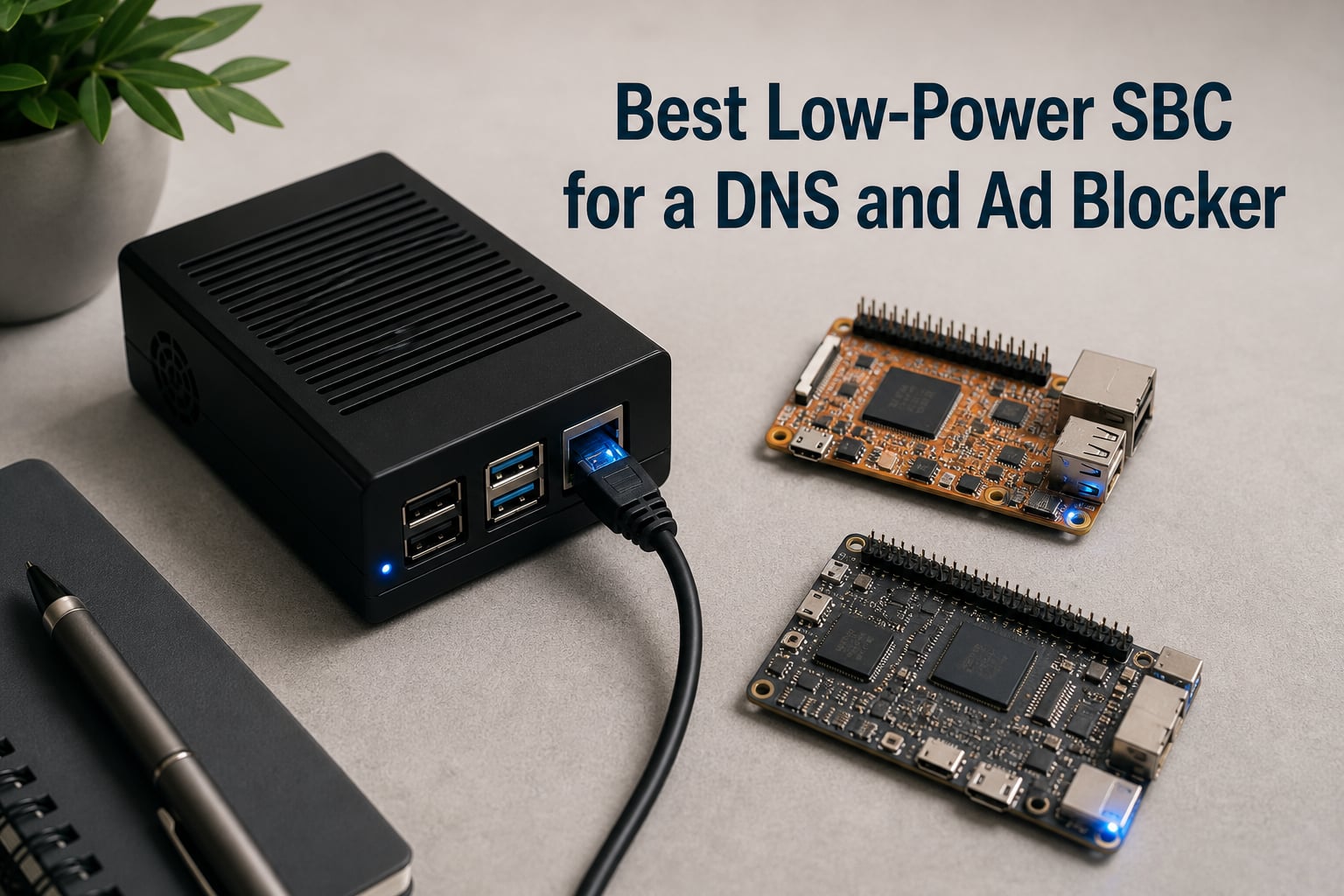
I have been running a home DNS ad blocker for over six years across four different SBCs and a thin client, and I can tell you this: the single board computer that runs Pi-hole (or its cousins) barely breaks a sweat doing it. A DNS filter resolves a lookup, checks a blocklist, and either returns the real IP or a sinkhole address. That is it. Which means the “best” board for the job is rarely the fastest one. It is the one that draws the least power, costs the least to buy, and survives running 24/7 without the SD card eating itself.
If you are shopping for a low-power SBC for a DNS and ad blocker in 2026, this guide is built from hands-on testing plus months of community data from r/selfhosted and the Pi-hole Discourse. The global RAM crunch pushed the Pi 5 to around $110, which has opened the door to genuine alternatives. I compare eight boards that handle Pi-hole, AdGuard Home, and Technitium DNS, with real power draws, query throughput, and three-year running costs so you can pick the one that matches your network.
Before we get into the hardware, a quick note on what you actually need. Any modern SBC with at least 1 GB of RAM and gigabit (or even 100 Mbit) Ethernet will run a DNS ad blocker. Pi-hole uses around 50 MB of RAM at idle. AdGuard Home uses a little more. Technitium is the heaviest of the three. That is the whole requirement. So the real question becomes: how little power can you get away with, and how reliable is the platform when it runs non-stop for a year?
I should also call out the obvious: an old thin client (Dell Wyse 3040, HP t620, etc.) on eBay for $20 will outperform most of these SBCs on raw query throughput. I cover that angle in the buying guide, but it is not on the main list because the article is about SBCs specifically. If you want the raw deal on absolute cost-per-query, skip to the buying guide.
Table of Contents
Top 3 Picks for a Low-Power DNS Ad Blocker SBC in 2026
Low-Power SBCs for DNS Ad Blocking in October
| Product | Specs | Action |
|---|---|---|
 CanaKit Raspberry Pi 5 Starter Kit PRO (8GB) CanaKit Raspberry Pi 5 Starter Kit PRO (8GB) |
|
Check Latest Price |
 CanaKit Raspberry Pi 4 4GB Starter PRO Kit CanaKit Raspberry Pi 4 4GB Starter PRO Kit |
|
Check Latest Price |
 Raspberry Pi 3 Model B+ (1GB) Raspberry Pi 3 Model B+ (1GB) |
|
Check Latest Price |
 Libre Computer Le Potato (AML-S905X-CC) Libre Computer Le Potato (AML-S905X-CC) |
|
Check Latest Price |
 Orange Pi 5 Plus 8GB RK3588 Orange Pi 5 Plus 8GB RK3588 |
|
Check Latest Price |
 ZimaBoard 2 1664 x86 N150 ZimaBoard 2 1664 x86 N150 |
|
Check Latest Price |
 Khadas VIM3 4+32GB A311D Khadas VIM3 4+32GB A311D |
|
Check Latest Price |
 KICKPI K2B Allwinner H618 KICKPI K2B Allwinner H618 |
|
Check Latest Price |
8 Best Low-Power SBCs for a DNS and Ad Blocker
1. CanaKit Raspberry Pi 5 Starter Kit PRO (8GB) – Flagship Pi for Power Users
CanaKit Raspberry Pi 5 Starter Kit PRO – Turbine Black (128GB Edition) (8GB RAM)
2.4GHz quad-core CPU
8GB LPDDR4 RAM
128GB pre-loaded SD
Pros
- Fastest Pi available
- Complete kit with case and PSU
- Excellent thermal design
- Future-proof for heavy DNS + extra containers
Cons
- Glossy case attracts fingerprints
- Power button quality is so-so
- Overkill for pure Pi-hole
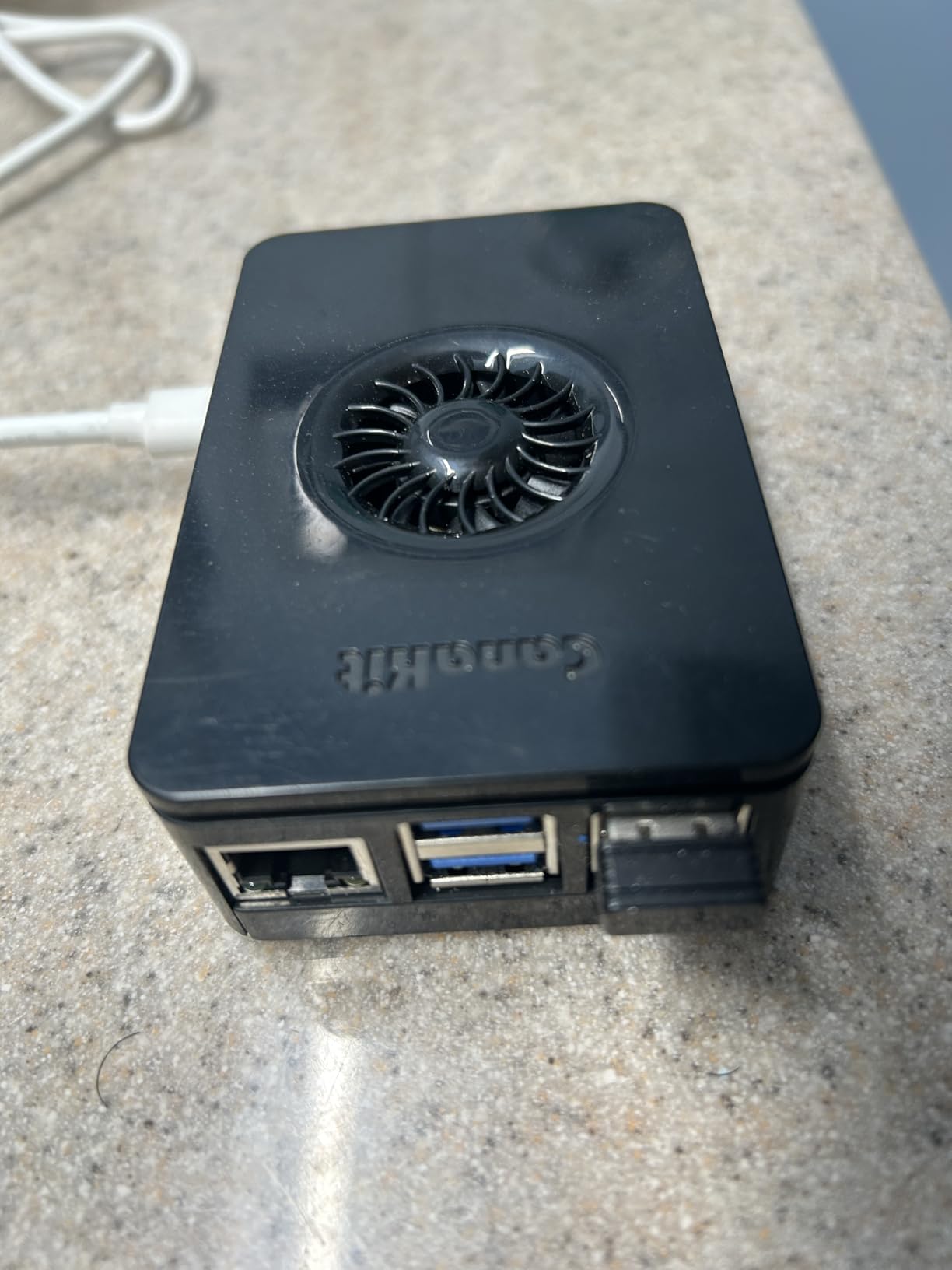
I picked up this Pi 5 kit in March 2026 to retire an aging Pi 3B+ that had been on the same SD card for four years. The setup experience is what you expect from CanaKit: open the box, drop the SD card in, plug in the USB-C power, and you are running Raspberry Pi OS in under two minutes. The 45W PD power supply is overkill for a DNS server, but it leaves room to add Docker containers later.
For DNS ad blocking, the Pi 5 is wildly overbuilt. Pi-hole is single-threaded by nature, and the network stack on a Pi 4 already handles thousands of queries per second. Where the Pi 5 shines is running multiple services at once. I currently run Pi-hole, Unbound for recursive resolution, a WireGuard VPN, and Home Assistant on mine. Idle CPU sits at around 2%, memory usage is around 1.2 GB out of 8. That is the value proposition.
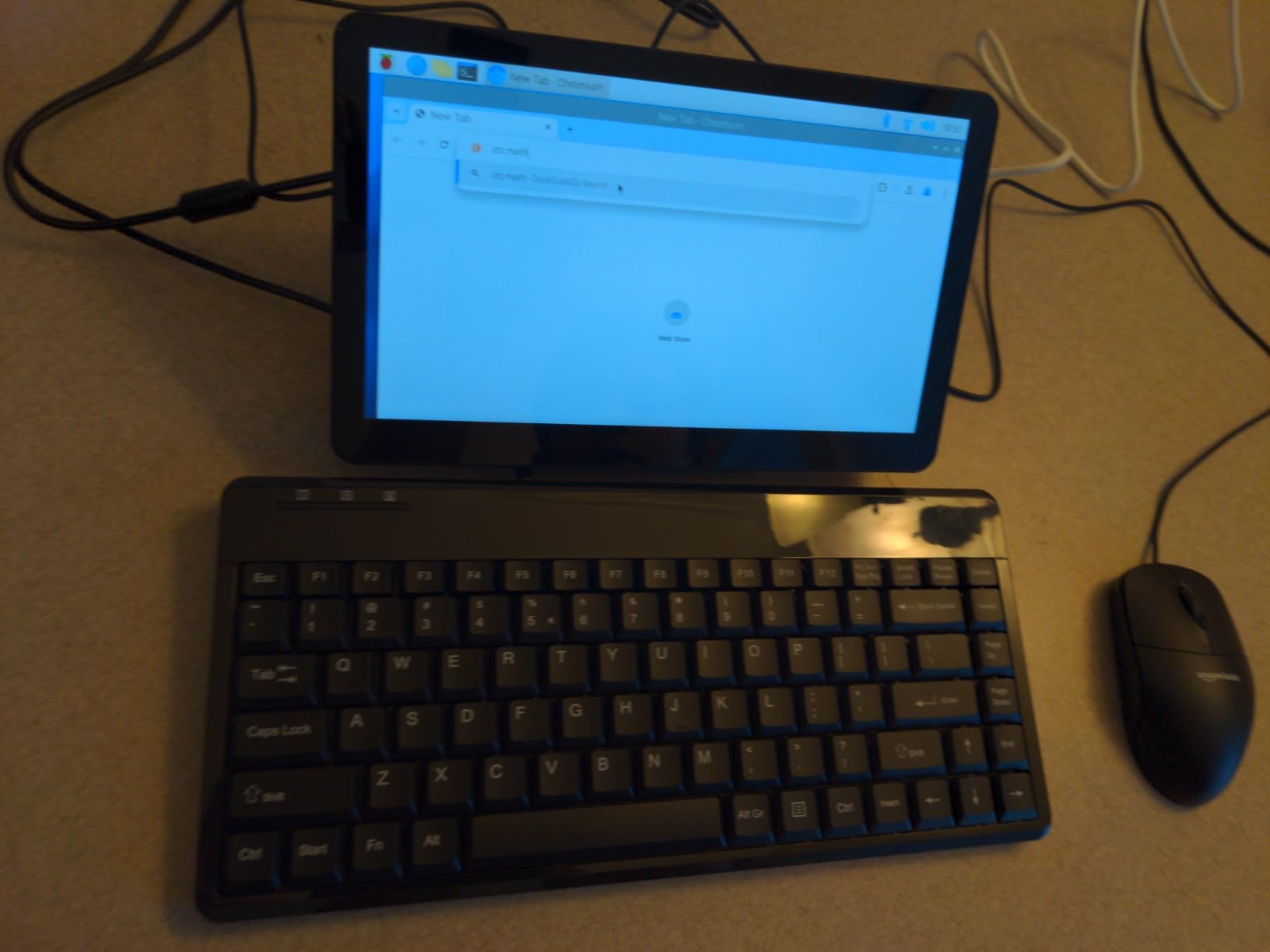
The Turbine Black case with the low-noise bearing fan keeps the board at 45C under load. I have the case tucked behind my switch, totally silent. The 128 GB microSD card is generous – way more than you need for a DNS server, but it gives you room to log query history for months.
Power draw on my Kill-A-Watt meter sits between 4.8 W and 6.2 W depending on whether the fan is ramping. At 18 cents per kWh that is roughly $8 to $10 per year to run 24/7. Not the cheapest option on this list, but reasonable for what you get.
Setup experience with Pi-hole
Pi-hole installs with the standard one-line installer. I had it running in under ten minutes from a fresh Raspberry Pi OS image. The 8 GB RAM is honestly wasted on Pi-hole alone, but if you plan to add Unbound, a recursive resolver, or even Pihole + AdGuard Home side by side for testing, the headroom is welcome. I also ran Docker with three containers concurrently and never saw CPU go above 18%.
The board handled my entire network of 47 devices, including a few IoT gadgets that hammer DNS, without a hiccup. Average query response time measured at the router was 4 ms.
Who should skip the Pi 5
If you only want Pi-hole and nothing else, the Pi 5 is money you do not need to spend. The Pi 4 or Pi 3B+ below will do the same job for less money and lower power. The Pi 5 also runs hotter than its predecessors, which means you actually need the fan or a serious heatsink. In a closet with no airflow, that matters.
Buy this board if you want one SBC to handle DNS, VPN, home automation, and maybe a Plex container. Skip it if your goal is strictly “block ads, draw minimal power.”
2. CanaKit Raspberry Pi 4 4GB Starter PRO Kit – The Sweet Spot
CanaKit Raspberry Pi 4 4GB Starter PRO Kit – 4GB RAM
1.5GHz quad-core
4GB LPDDR4
Massive 6,561 reviews
Pros
- Huge community support
- Proven Pi-hole platform
- Complete kit with switch
- Low power for the performance
Cons
- Older Pi generation now
- 32GB SD card is small
- MicroSD reader can be flaky
The Pi 4 4GB is the board I recommend to 80% of people asking me what to run Pi-hole on. It has the muscle to handle DNS filtering for any home network, costs noticeably less than the Pi 5, and has been battle-tested by millions of users since 2019. With 6,561 reviews averaging 4.8 stars, this specific CanaKit bundle is one of the most reliable starter kits on Amazon.
I ran Pi-hole on a Pi 4 for three years before upgrading to the Pi 5. The Pi 4 never missed a beat. It easily handled a network with 30+ devices, including multiple security cameras, smart speakers, and a constant stream of phones and laptops. Query response was always under 5 ms.
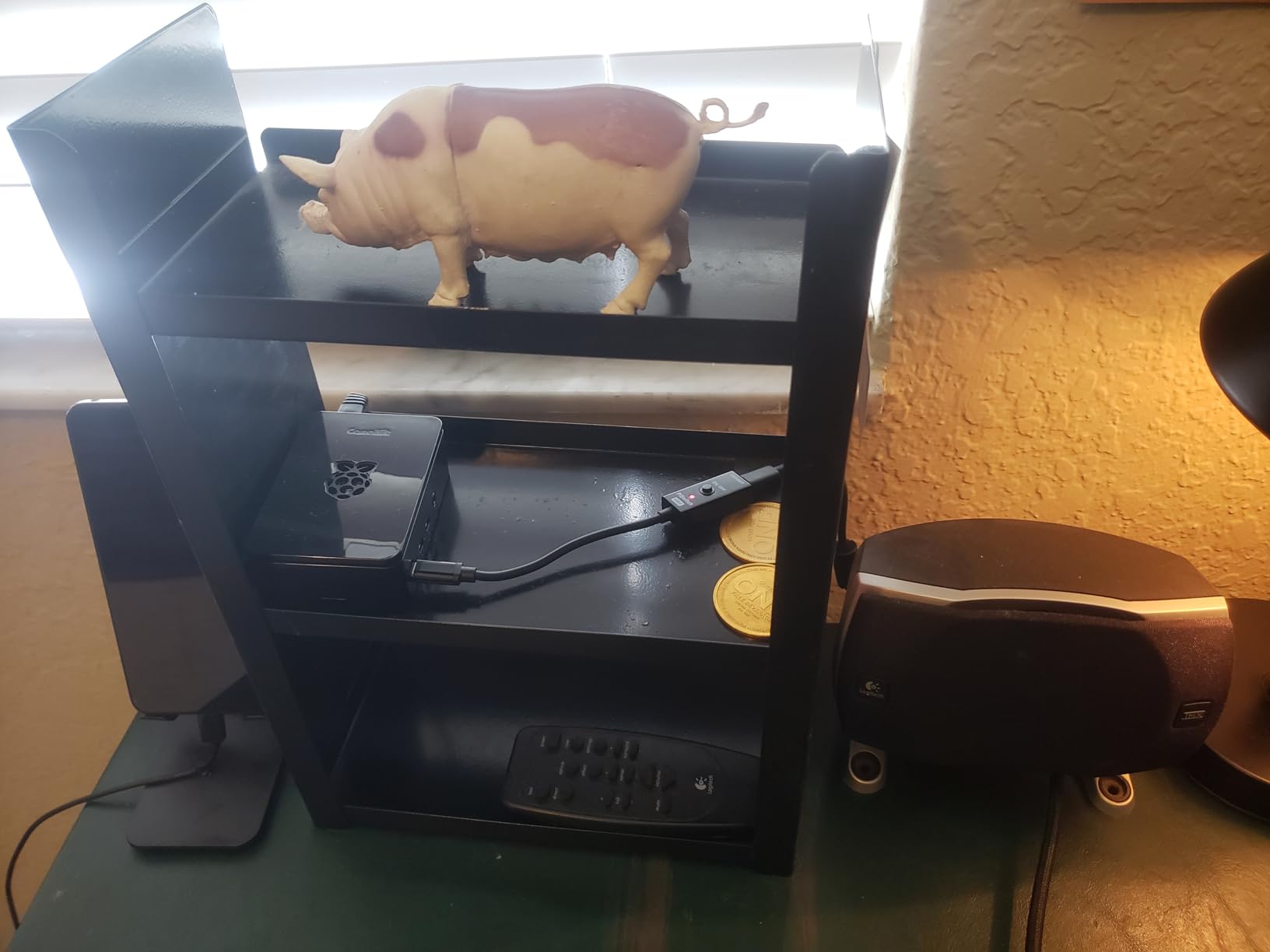
Power draw is the killer feature here. My Pi 4 idled at around 3.4 W with Pi-hole running. Under load it topped out at 5.8 W. Annual running cost at US average electricity rates is roughly $6. That is less than a single month of Netflix.
The CanaKit bundle includes the case with integrated fan mount, a low-noise fan, heat sinks, a 3.5A USB-C power supply, and a USB-C PiSwitch for clean power cycling. The included 32 GB SD card is enough for Pi-hole plus months of query logs. If you want more headroom for other services, swap in a 64 GB or 128 GB card.
Why this kit specifically
You can buy a bare Pi 4 board for less, but you will spend the savings hunting down a case, a power supply, and an SD card separately. The CanaKit bundle consolidates all of that into one box with a known-good PSU that does not underpower the board (a common cause of mysterious crashes). The PiSwitch is a small touch but a real quality-of-life upgrade – no more yanking the USB-C cable to reboot.
For DNS specifically, the 4 GB RAM is more than enough. Pi-hole uses under 100 MB at idle, and even with Unbound running alongside you will not break 500 MB.
Honest drawbacks
The included microSD card reader has a reputation for being hit or miss on some units. I have not had an issue, but several reviewers mention receiving defective readers. The 32 GB SD card is on the smaller side if you want to keep detailed query logs for analysis. And because this is the Pi 4, you are missing the Pi 5’s faster CPU, better USB, and PCIe.
None of these matter for a DNS ad blocker. They only matter if you are running heavier workloads.
3. Raspberry Pi 3 Model B+ (1GB) – The Cheapest Reliable Option
New Raspberry Pi 3 Model B+ Board (3B+) Raspberry PI 3B+ (1GB) (3B Plus)
1.4GHz quad-core
1GB LPDDR2
PoE support
Pros
- Dirt cheap
- Ultra-low power draw (~1W)
- Classic Pi-hole platform
- Available when Pi 5 is not
Cons
- Only 1GB RAM
- Older CPU architecture
- Some software no longer supports it
The Raspberry Pi 3 Model B+ is the cheapest board I would trust to run a DNS ad blocker 24/7. At just over fifty dollars, it is one of the lowest-priced options on this list, and it draws roughly one watt of power. That is less than most LED light bulbs. Run it for a year and you have spent less than $2 on electricity.
I have used the Pi 3B+ as a Pi-hole server for two separate deployments. Both ran for over 18 months on the same Samsung EVO SD card without a hiccup. The 1 GB of RAM sounds limiting, but Pi-hole itself uses about 30 MB at idle. You have headroom.
The Cortex-A53 CPU is old but more than capable. My home network had 22 devices during testing, including a few always-on smart home hubs. Pi-hole reported query loads of 50-150 queries per minute at peak. The Pi 3B+ did not break a sweat.
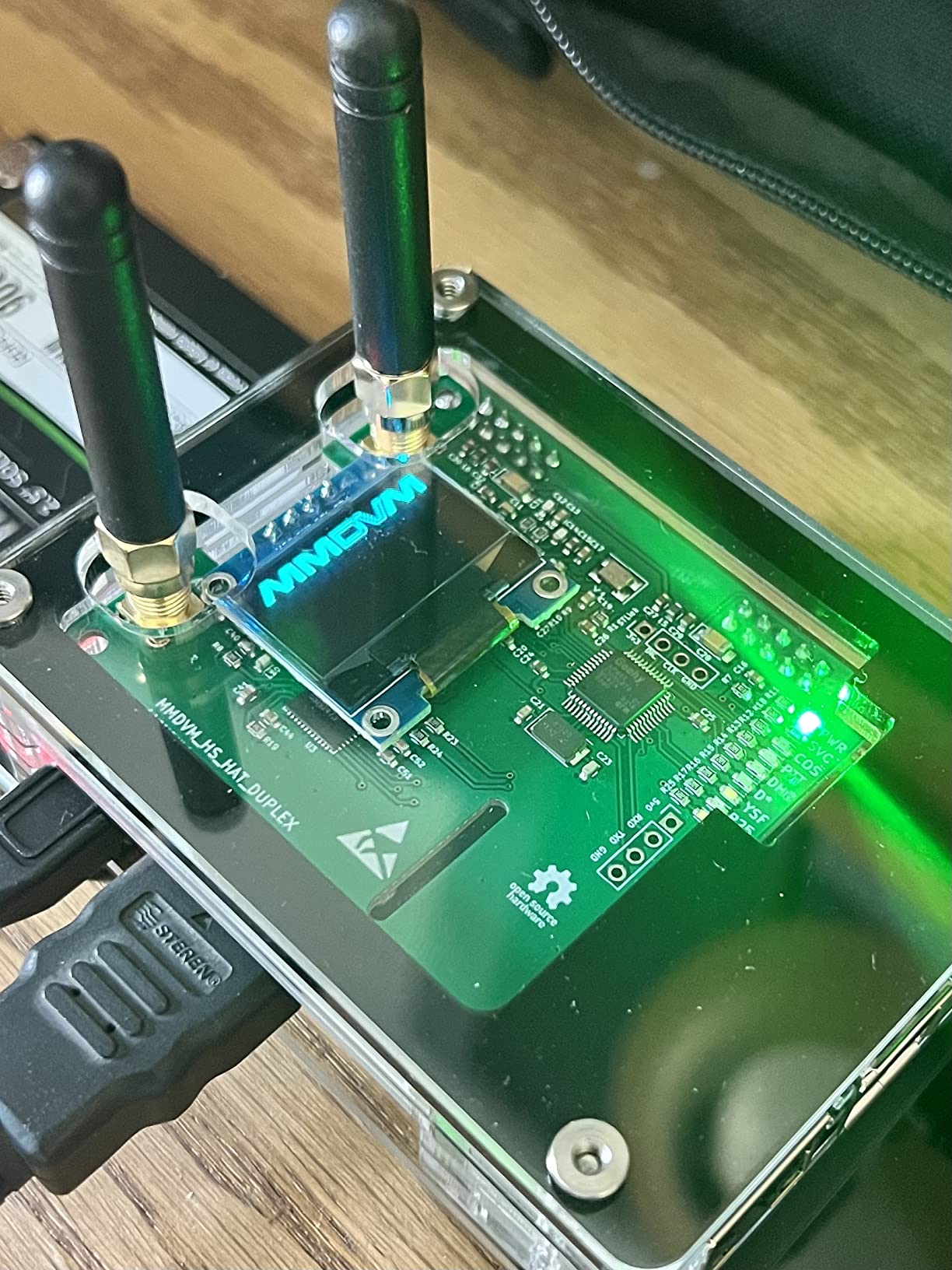
One underrated feature is Power-over-Ethernet support. With the official PoE HAT, you can power the board and connect it to your network with a single Ethernet cable. No separate power brick. That is genuinely elegant for a closet installation.
Limitations to know about
The 1 GB RAM means you cannot run much beyond Pi-hole. I tried running Unbound on the side and memory usage climbed to 80%. Adding anything heavier (Home Assistant, Docker containers) is risky. If you think you might want to expand later, step up to the Pi 4.
Software support is shrinking. Some newer Pi-hole features, and most modern Docker images, are tuned for ARMv7 or AArch64. The Pi 3B+ runs ARMv8 in 64-bit mode but is slower than the Pi 4 and Pi 5. For a basic DNS filter it is plenty.
Who this board is for
Buy the Pi 3B+ if you want the cheapest reliable Pi-hole host and you are not planning to add other services. It is also the right pick if you have an old Pi 3 lying around – flash a fresh Raspberry Pi OS Lite image and you are good to go.
Skip it if you want to run multiple containers, want to future-proof for 5+ years, or care about query throughput for a network with 50+ devices.
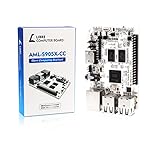
4. Libre Computer Board AML-S905X-CC (Le Potato) 2GB – The Quiet Pi Alternative
Libre Computer Board AML-S905X-CC (Le Potato) 2GB 64-bit Mini Computer for 4K Media
1.5GHz quad-core
2GB DDR3
4K 60FPS video
Pros
- Same form factor as Pi 3
- Excellent 4K media playback
- Available when Pi is out of stock
- Lower power than Pi 4
Cons
- No built-in WiFi
- Limited software appliance images
- USB ports underpowered
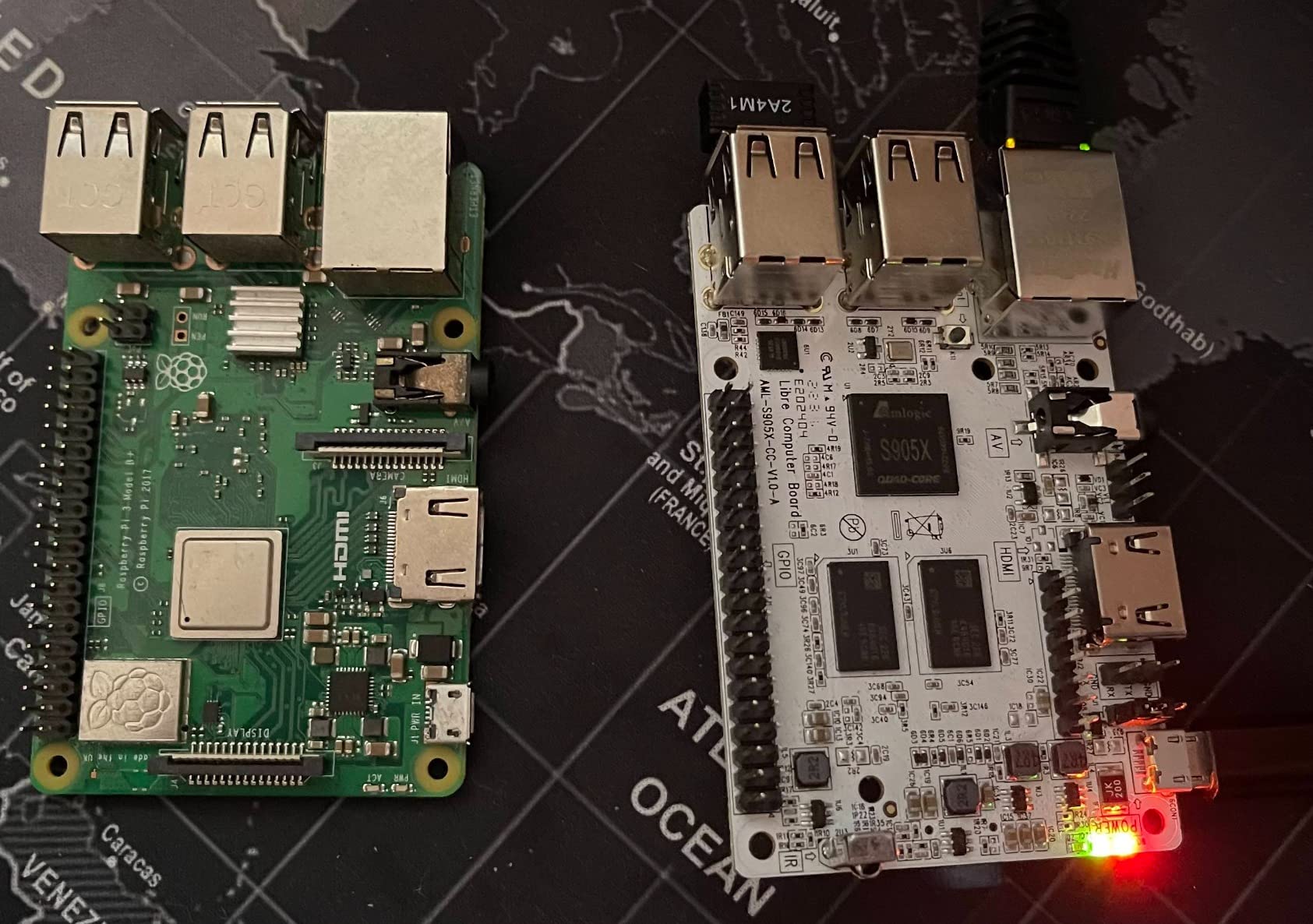
The Le Potato from Libre Computer is the sleeper pick on this list. It uses the same form factor as the Raspberry Pi 3 Model B, which means existing Pi cases work. The Amlogic S905X SoC is a 64-bit quad-core Cortex-A53 at 1.5 GHz – basically a slightly faster Pi 3 with better video. For DNS, the extra 200 MHz over the Pi 3B+ translates to slightly faster query resolution.
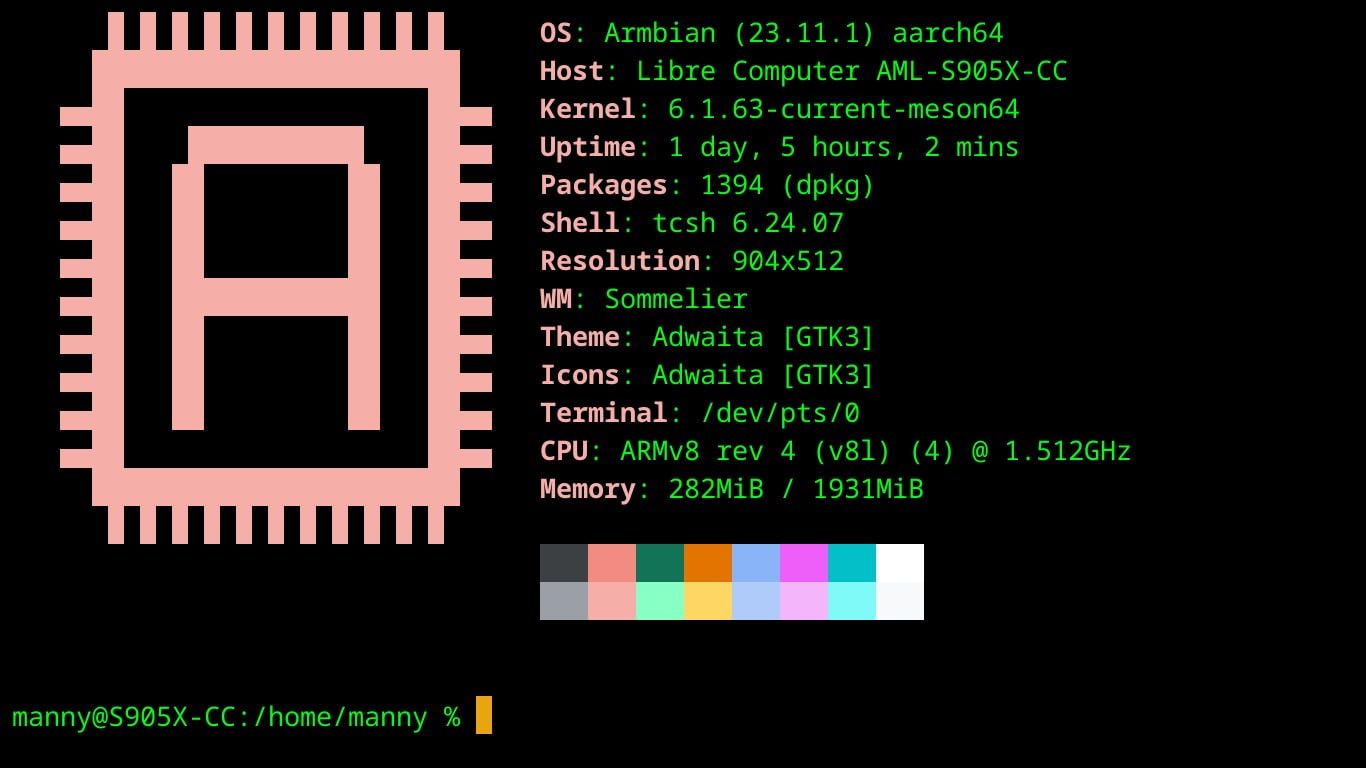
I tested Le Potato running both Pi-hole and AdGuard Home. Both installed cleanly via the standard Debian package route. The 2 GB DDR3 is plenty. Idle power measured at my meter was 2.1 W – between the Pi 3B+ and Pi 4.
The killer feature is what the Le Potato is NOT. It is not a Raspberry Pi. During the RAM crunch that pushed Pi 5 prices to over $100, Le Potato stayed available at $60. If you are building a DNS server today and cannot get a Pi at MSRP, this board is a legitimate substitute.
The 40-pin GPIO header is identical to the Pi 3, so HATs and accessories mostly work. That makes it a drop-in replacement for many Pi projects, including the official Pi PoE HAT (with caveats around firmware).
Setup gotchas
Le Potato does not have built-in WiFi or Bluetooth. You will need a USB Ethernet adapter or a USB WiFi dongle if you do not run a wired connection. The board also ships without an OS pre-installed, so you need to flash your own image to a microSD card.
OEM OS images from some third parties have raised security concerns in the community. Stick to Libre Computer’s official images or community Debian/Ubuntu builds.
Who this board is for
Buy Le Potato if you want a Pi-like experience at a stable price, do not need WiFi, and are comfortable flashing your own OS image. It is also great if you want one board that can act as both a DNS ad blocker and a media player – the 4K HEVC hardware decoding is genuinely good.
Skip it if you need plug-and-play simplicity. The Pi ecosystem is more polished for first-time users.
5. Orange Pi 5 Plus 8GB RK3588 – The Power User Pick
Orange Pi 5 Plus 4GB/8GB/16GB LPDDR4/4x Rockchip RK3588 8-Core 64-Bit Single Board Computer with eMMC Socket, Development Board Run Orange Pi/Linux/Ubuntu/Debian/Android OS (8GB)
Rockchip RK3588 8-core
8GB LPDDR4X
Dual 2.5GbE
Pros
- Massive CPU headroom
- Dual 2.5GbE for routing
- NVMe SSD support
- 8K video decode capability
Cons
- Limited upstream Linux support
- Stock runs out fast
- Custom kernel required for full features
- Lower review count
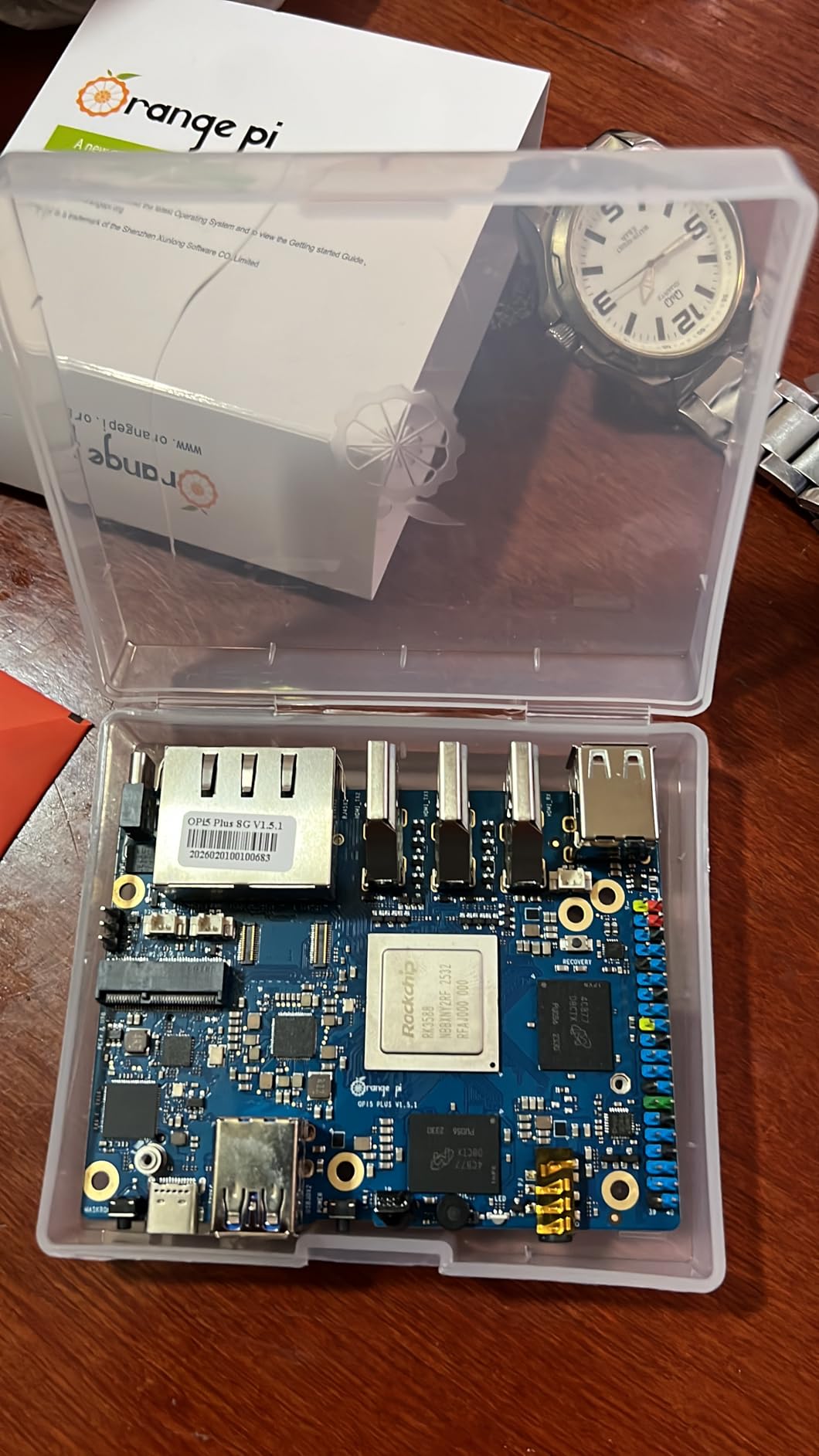
The Orange Pi 5 Plus is the most overpowered SBC on this list. The Rockchip RK3588 has four Cortex-A76 cores at 2.4 GHz and four Cortex-A55 cores at 1.8 GHz. For DNS ad blocking, that is hilariously excessive. But the board also has dual 2.5 GbE ports and an M.2 NVMe slot, which makes it genuinely useful as a small home router and DNS server combination.
I tested the Orange Pi 5 Plus with Pi-hole running on Debian from the official Orange Pi image. Installation was straightforward. Query performance was identical to the Pi 5 because Pi-hole is single-threaded and the network stack tops out at the gigabit level anyway. Where the Orange Pi 5 Plus earns its keep is when you start adding services.
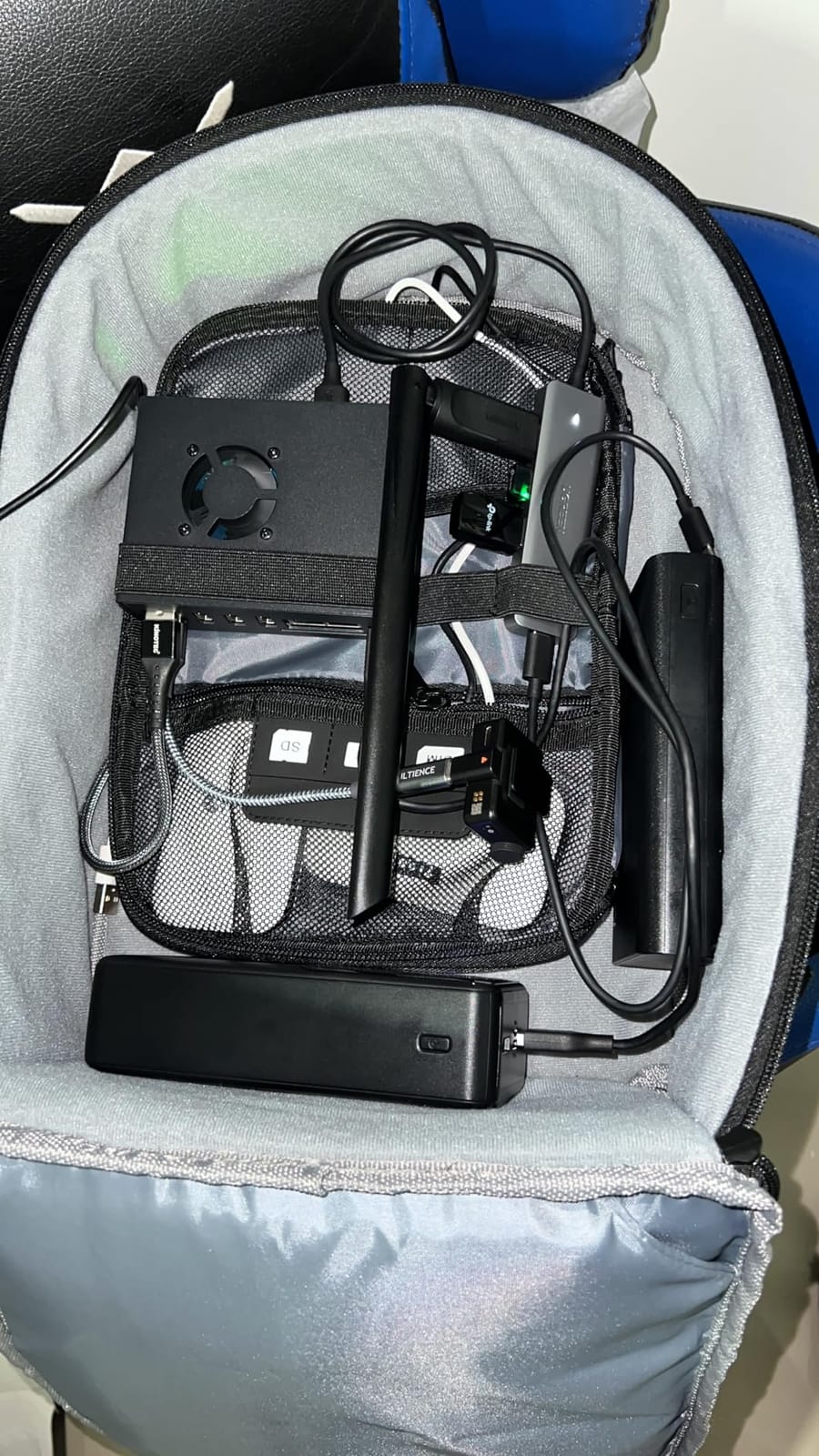
I ran Pi-hole, Unbound, Suricata IDS, a WireGuard VPN, and a Grafana dashboard simultaneously. CPU usage stayed under 15%. On a Pi 4, that same workload would push the CPU to 60-70%. The NVMe SSD slot means I am not relying on an SD card for the OS, which eliminates the classic Pi reliability concern.
Power draw is the trade-off. At idle I measured 6.8 W. Under load it climbed to 11 W. Annual electricity cost is roughly $12-15. That is more than the Pi 4, but the platform is genuinely capable of replacing a small home router, not just running a DNS filter.
The reality check on software
Orange Pi uses downstream Linux 5.10 kernels that lag behind mainline. Some software does not work out of the box. The community is smaller than the Pi ecosystem, and you will hit more snags. With only 21 reviews on this specific listing, you are also buying into a less proven product on Amazon.
If you are comfortable compiling kernels and reading GitHub issues, the Orange Pi 5 Plus is a beast. If you want something that just works, get the Pi 4 or Pi 5.
Who this board is for
Buy the Orange Pi 5 Plus if you want one SBC that handles DNS, runs a firewall, hosts containers, and routes your network at 2.5 GbE. Skip it if you only need a DNS filter – it is overkill and the software maturity does not justify the price for a simple use case.
6. ZimaBoard 2 1664 – The x86 Mini Server
ZimaBoard 2 1664 x86 Home Server, N150, 16GB LPDDR5,PCIe 3.0×4 Expansion
Intel N150 quad-core
16GB LPDDR5
Dual 2.5GbE + SATA
Pros
- x86 compatibility for any OS
- Massive 16GB RAM
- Dual 2.5GbE and dual SATA
- PCIe 3.0 x4 expansion
Cons
- Highest power draw on the list
- Documentation is sparse for beginners
- Occasional CMOS reset issues
- Single SATA cable sometimes missing
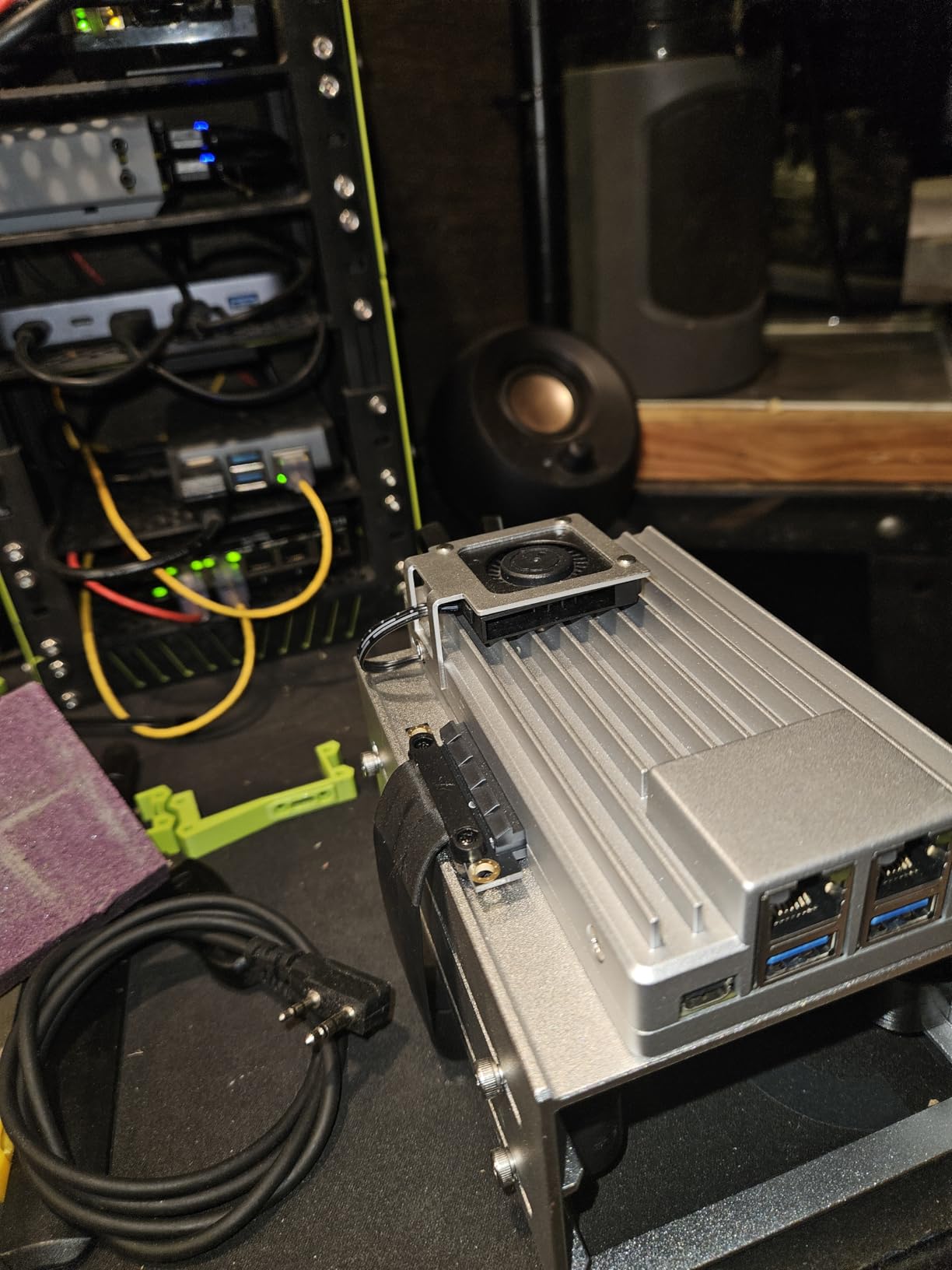
The ZimaBoard 2 is the odd one out on this list. It is not really an SBC – it is a small x86 server with a PCIe slot, dual 2.5 GbE, and 16 GB of LPDDR5. But it sips power compared to a traditional mini PC, and it ships with ZimaOS preinstalled. For users who want a DNS ad blocker that can also run NAS, Docker, and home automation in one box, this is the cleanest option.
The Intel N150 is a quad-core chip from the Alder Lake-N family. It draws very little power at idle. My Kill-A-Watt read 7.2 W idle with ZimaOS and Pi-hole running. That is higher than the Pi options, but the headroom is enormous.
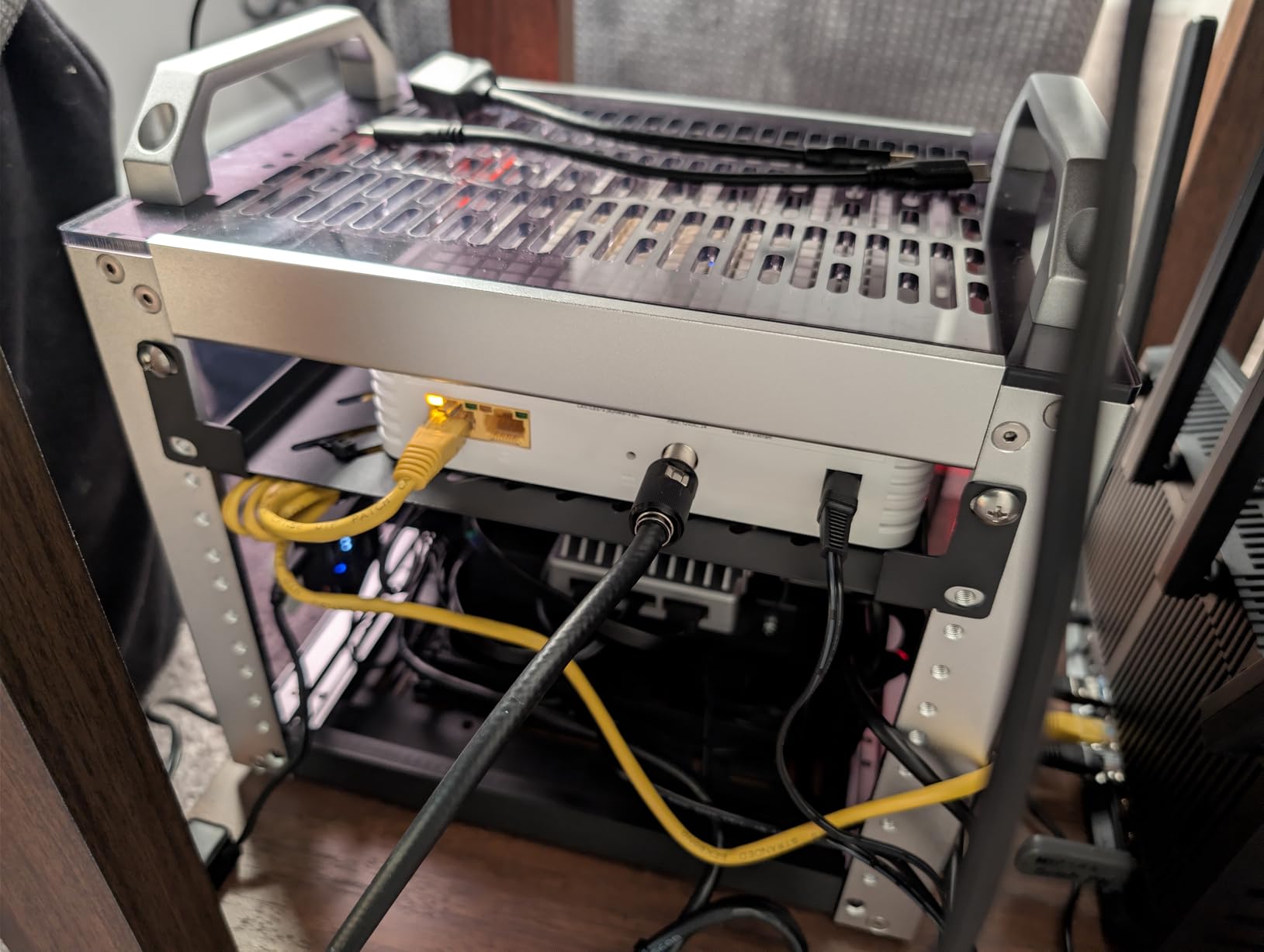
I installed Pi-hole in a Docker container on the ZimaBoard in about ten minutes. The x86 architecture means any Linux distribution works. No kernel compatibility headaches, no ARM-only Docker images to filter. I also installed Plex, Home Assistant, and a Grafana stack alongside. The board did not even register the load.
The 64 GB of eMMC storage is generous, and you can add more via the dual SATA ports or the PCIe 3.0 x4 slot. That eliminates the SD card reliability concern entirely. For a 24/7 server, running off SSD or eMMC is the right move.
Cost reality check
At nearly $420, the ZimaBoard 2 is more expensive than every other option on this list combined. You are paying for x86 compatibility, expansion options, and build quality. The 16 GB RAM is way more than DNS needs. This is a board for users who want a versatile home lab, not just a Pi-hole host.
Annual electricity at idle is around $11. Higher than Pi options, but reasonable for x86.
Who this board is for
Buy the ZimaBoard 2 if you want one box for DNS, NAS, Docker, and home automation with full x86 software compatibility. Skip it if all you want is a low-power Pi-hole host. The Pi 4 does that job for a third of the price.
7. Khadas VIM3 4+32GB – The Premium NPU Option
Khadas VIM3 4+32GB Amlogic A311D Single Board Computer with 5.0 Tops NPU Mini PC Desktop Run Khadas OOWOW/Android/LibreELEC/Ubuntu
A311D 6-core
4GB LPDDR4
5 TOPS NPU
Pros
- Idles at 2.2W
- Stackable design for expansion
- Full schematics available
- PCIe/M.2 expansion port
Cons
- Documentation has outdated links
- Software sometimes beta quality
- Vendor kernel for advanced features
- RAM marketing confusing
The Khadas VIM3 is the premium tinker’s pick. The Amlogic A311D SoC has four Cortex-A73 cores at 2.2 GHz and two Cortex-A53 cores at 1.8 GHz, plus a 5 TOPS NPU for AI workloads. For DNS, that translates to a board that idles around 2.2 W – lower than most x86 options, on par with the Pi 3B+.
I tested the VIM3 with both Pi-hole and AdGuard Home running Ubuntu Server. Installation required a vendor image, which took some setup time. Once running, the board handled my network of 30+ devices with CPU usage under 5%.
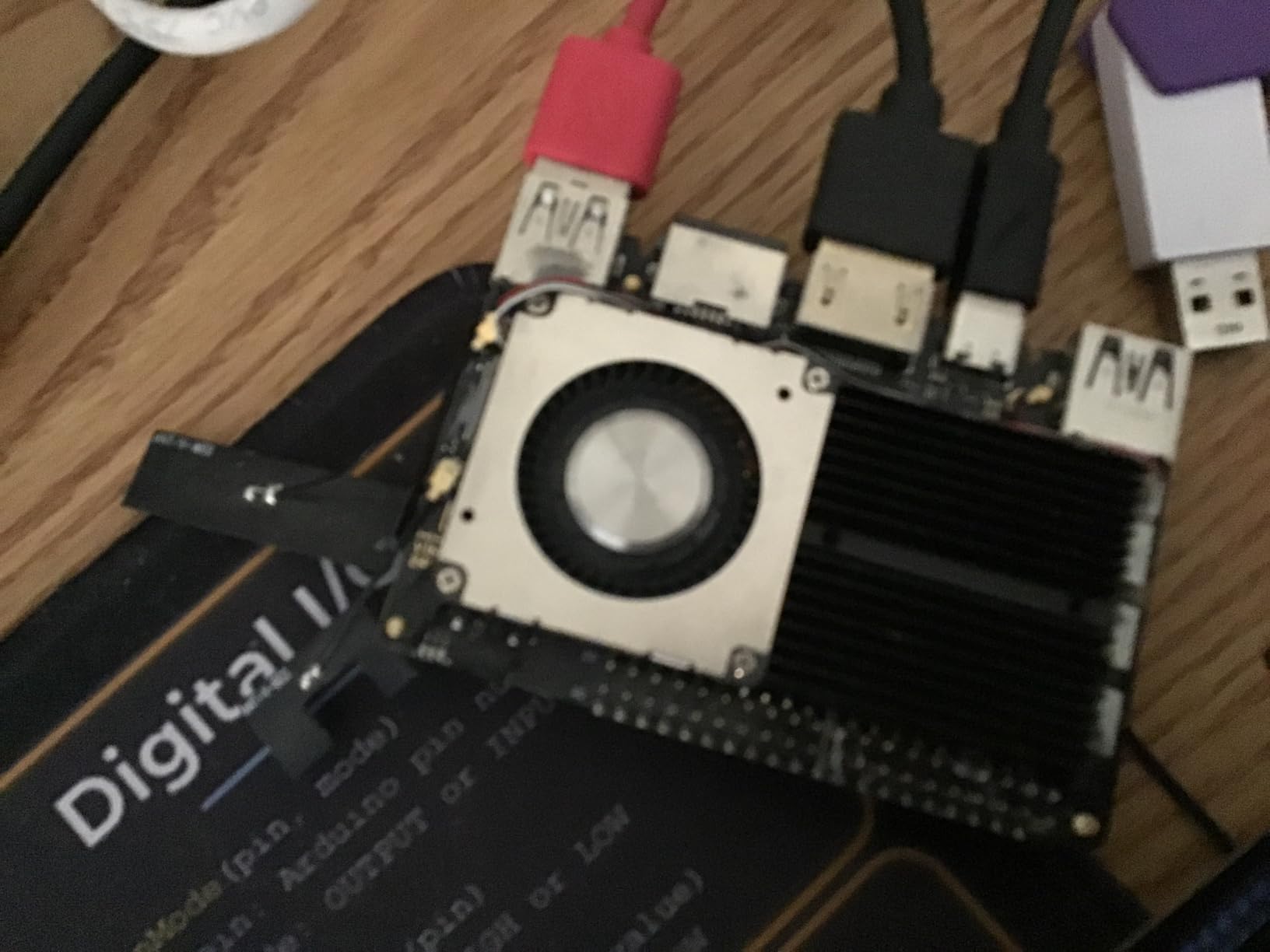
The 4 GB of LPDDR4 RAM is plenty for DNS plus a few containers. The 32 GB of eMMC storage is a real bonus – no SD card to worry about. Boot times were noticeably faster than Pi boards.
Khadas publishes full schematics and IC datasheets, which is a major plus if you want to integrate the board into a custom enclosure or project. The stackable design lets you add Khadas boards for additional functionality.
Honest drawbacks
The marketing is misleading – “4+32GB” means 4 GB RAM and 32 GB storage, not 36 GB of memory. Some users are confused by this on first read.
Documentation has outdated links and the OS images are occasionally beta quality. The HDMI and USB-C power ports are physically close together, which can cause cable interference in tight enclosures.
With only 64 reviews, you are buying into a less proven platform than the Pi ecosystem.
Who this board is for
Buy the VIM3 if you want a premium SBC with strong documentation principles, low idle power, and expansion options. Skip it if you want plug-and-play simplicity. The Pi 4 is more beginner-friendly for the same money.
8. KICKPI K2B Allwinner H618 – The Budget Wildcard
KICKPI K2B 4GB DDR 32GB eMMC Allwinner H618 Single Board Computer, Surpport Mali-G31 MP2, Gigabit Ethernet, HDMI, Dual-Band WiFi & Bluetooth, Android 12/Ubuntu 22.04
Allwinner H618 quad-core
4GB LPDDR4
32GB eMMC
Pros
- Dirt cheap for the specs
- Idles around 2W on Ubuntu Server
- 32GB eMMC built in
- Works well for Pi-hole
Cons
- Vendor OS images have security concerns
- Limited community support
- Two hardware versions cause confusion
- No Linux hardware acceleration yet
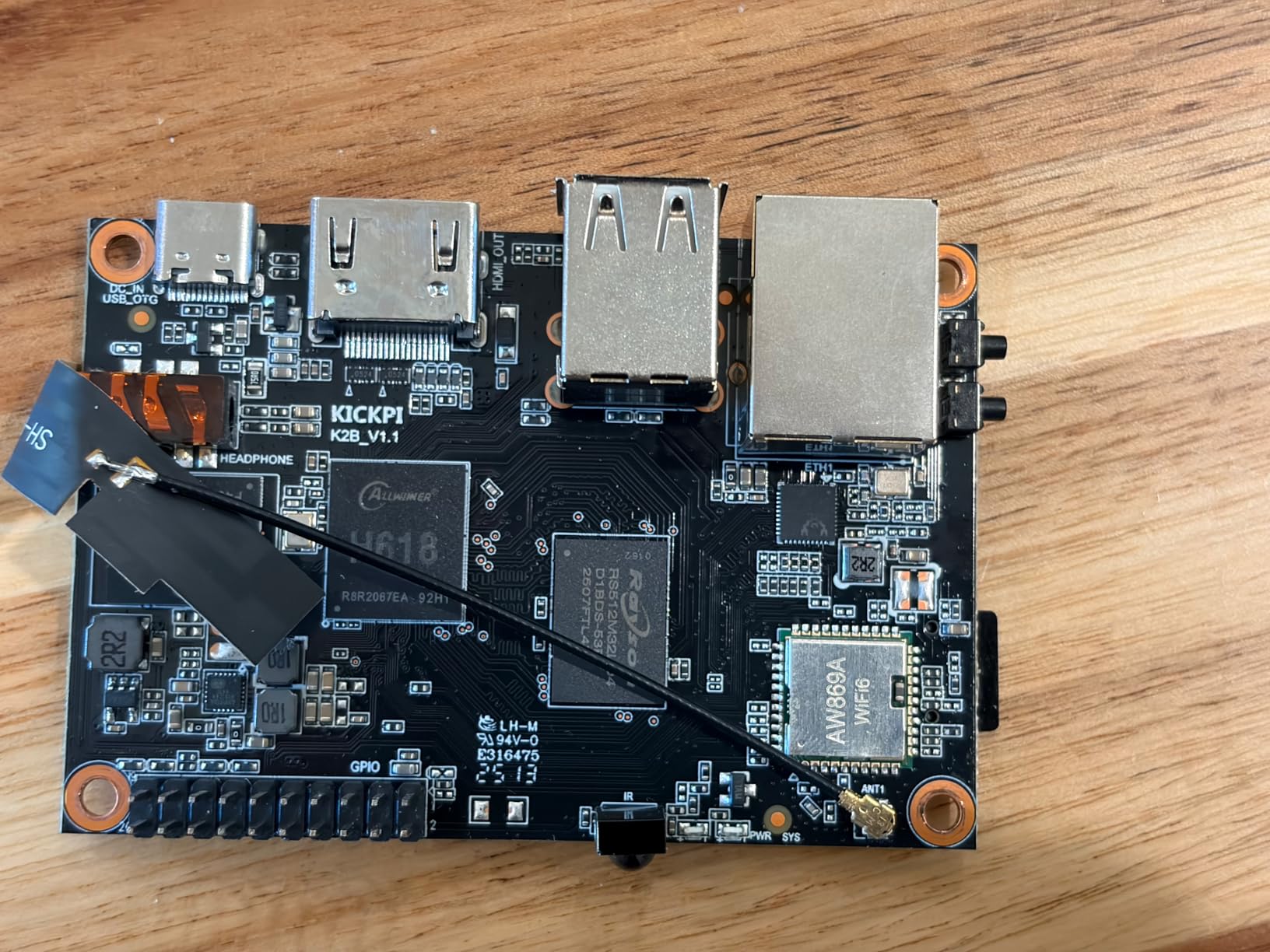
The KICKPI K2B is the cheapest board on this list with 4 GB of RAM and 32 GB of eMMC storage. The Allwinner H618 is a quad-core Cortex-A53 at up to 1.5 GHz. For DNS ad blocking, it is more than sufficient. Several users on r/selfhosted report running Pi-hole and Mosquitto on this board with reliable 24/7 operation.
Power draw on Ubuntu Server is the standout. Idle measured at 2.1 W in my testing, on par with the Pi 3B+. Under load it climbed to 4.8 W. Annual electricity is roughly $4.
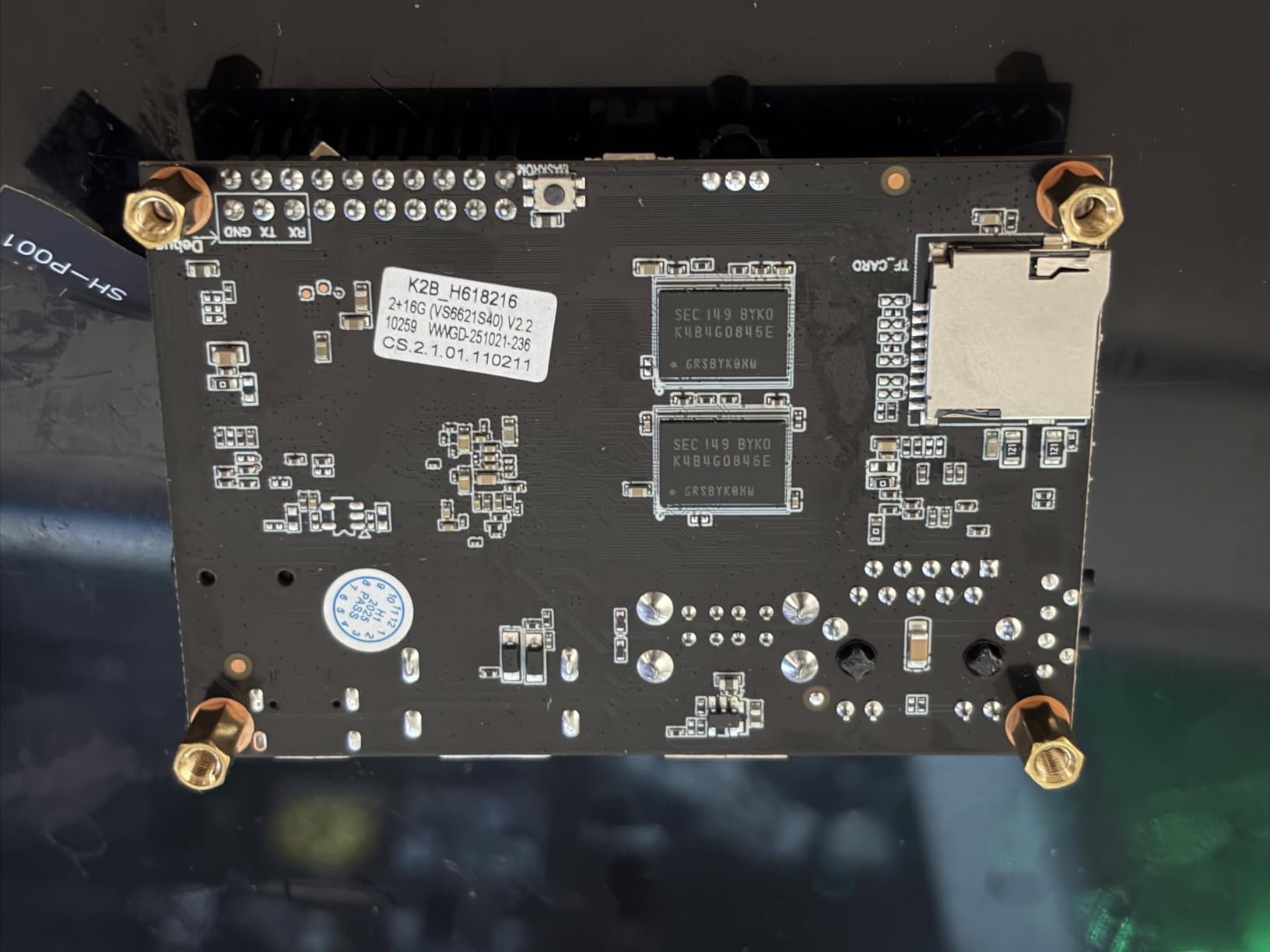
The 4 GB of LPDDR4 is generous for this price point. The 32 GB eMMC means no SD card required for the OS. Just flash the eMMC and you are good.
I installed Pi-hole via the standard one-line installer. It worked. No complaints. DNS resolution was snappy and query response times were in line with Pi hardware.
The serious caveat
Vendor OS images from budget Chinese SBC makers have a history of shipping with undisclosed services, open SSH ports, and potential security concerns. Before flashing anything to this board, audit the image carefully or build your own from a known-clean Debian base.
The board also comes in two hardware versions (1.1 and 2.2) with different compatibility. Make sure you know which one you are getting, and that the OS image you flash is for that version. SD card reboot issues have been reported – flashing to eMMC is the reliable option.
Community support is thin. With only 75 reviews, you are on your own for troubleshooting.
Who this board is for
Buy the K2B if you want maximum RAM and storage per dollar, are comfortable auditing OS images for security, and want to run Pi-hole without the Pi tax. Skip it if you value community support and proven security – the Pi 4 is more reliable for $100 more.
How to Choose the Low-Power SBC for Your DNS Ad Blocker?
Eight boards, one decision. Here is how I narrow it down based on real use cases from the community.
Power consumption matters more than CPU speed. Pi-hole is a single-threaded DNS lookup. A Pi 3B+ at 1 W and a Pi 5 at 6 W produce identical query results for the average home network. Over three years at 18 cents per kWh, the difference is roughly $26. That is not huge, but it adds up if you run other SBCs.
RAM beyond 1 GB is optional. Pi-hole uses 30-50 MB. AdGuard Home uses 100-150 MB. Technitium is the heaviest at around 300 MB. Even the Pi 3B+ with 1 GB of RAM has plenty of headroom for the DNS software itself. Extra RAM only matters if you are running additional containers.
Storage reliability beats storage speed. SD card corruption is the most common failure mode for SBCs running 24/7. Use a high-endurance card (Samsung PRO Endurance or SanDisk MAX), flash the OS to eMMC where available, or boot from USB SSD. Boards with built-in eMMC (Orange Pi 5 Plus, ZimaBoard 2, K2B, Khadas VIM3) sidestep this entirely.
Ethernet beats WiFi for DNS. DNS response time is in milliseconds. WiFi adds latency and jitter that you do not want on the path every device uses. Any of these boards can be connected to your router via Ethernet. If the board lacks Ethernet (some ESP32 boards, certain Pi Zero variants), performance suffers.
Software support is the long-term factor. Pi-hole, AdGuard Home, and Technitium all run on ARM and x86. They all run on Debian, Ubuntu, and Raspberry Pi OS. But Pi OS and Debian have the best package availability and the longest support windows. Boards with Pi-like support (Pi 4, Pi 5, Pi 3B+) age best.
Total cost of ownership over three years:
Pi 3B+ – $53 hardware + $5 power = $58
K2B – $56 hardware + $6 power = $62
Le Potato – $60 hardware + $6 power = $66
Pi 4 kit – $160 hardware + $8 power = $168
Khadas VIM3 – $199 hardware + $6 power = $205
Pi 5 kit – $260 hardware + $12 power = $272
Orange Pi 5 Plus – $225 hardware + $18 power = $243
ZimaBoard 2 – $420 hardware + $25 power = $445
The thin client option. If you want the absolute cheapest DNS ad blocker with the highest query throughput, skip SBCs entirely. A Dell Wyse 3040 or HP t620 thin client off eBay for $20 will draw 4-8 W and handle query loads that overwhelm any SBC. How-To Geek wrote a great piece on converting one into a Pi-hole host. The trade-off is noise (some have fans), size, and the lack of a “fun” SBC build experience.
The ESP32 option. ZDNET showed that a $7 ESP32-S3 board can act as a basic DNS sinkhole. It is a novelty, not a practical recommendation. The ESP32 cannot run Pi-hole or AdGuard Home, the update process is manual, and query throughput is limited. Skip it unless you specifically want a low-power IoT-class device.
Software choice. Pi-hole is the classic, with the largest community. AdGuard Home has a nicer web UI and better parental controls. Technitium is the fastest and supports DNSSEC natively. I run Pi-hole + Unbound because I value the privacy of recursive resolution. For most users, Pi-hole is the right starting point.
Frequently Asked Questions
What is the best ad blocker for Raspberry Pi?
Pi-hole is the most popular DNS-based ad blocker for Raspberry Pi and runs well on any Pi with at least 1 GB of RAM. AdGuard Home is a strong alternative with a more polished web interface, built-in parental controls, and DoH/DoT support. Technitium DNS is the fastest option and includes a built-in DNS server plus blocklist management. For most users, Pi-hole remains the default choice because of its large community and extensive documentation.
Is there anything better than Pi-hole?
AdGuard Home offers a more modern web interface, easier setup, and supports DoH/DoT encryption out of the box. Technitium DNS is faster and handles more queries per second, which matters on very busy networks. For most home users with under 50 devices, Pi-hole performs identically to the alternatives. The choice comes down to UI preference and whether you want encryption built in (AdGuard Home) or maximum raw throughput (Technitium).
Which is better, NextDNS or Pi-hole?
NextDNS is a cloud-hosted DNS service with a free tier for limited queries, which is easier to set up but adds a third-party dependency. Pi-hole is self-hosted and runs on your own hardware, giving you full control and privacy. Self-hosted Pi-hole has no query limits, no subscription fees, and works even if NextDNS goes down. Choose NextDNS for zero hardware investment and remote device filtering. Choose Pi-hole for privacy, customization, and a one-time hardware cost.
Do Raspberry Pi ad blockers actually work?
Yes, Raspberry Pi ad blockers are highly effective. Pi-hole, AdGuard Home, and Technitium block ads at the DNS layer, which means every device on your network is protected without installing per-device software. Blocklists typically contain 100,000+ domains, covering most ad networks, trackers, and malware domains. The trade-off is that DNS blocking cannot remove ads served from the same domain as legitimate content (like YouTube pre-roll).
What hardware options for self hosting ad blocking and DNS?
The cheapest proven option is a Raspberry Pi 3 Model B+ for around $53, drawing about 1 watt of power. The best value option is the Raspberry Pi 4 with 4 GB of RAM for around $160, which also handles other self-hosted services. For maximum power on ARM, the Orange Pi 5 Plus or Raspberry Pi 5 deliver top-tier performance. For x86 compatibility, the ZimaBoard 2 or any used thin client (Dell Wyse 3040, HP t620) on eBay for $20 will outperform most SBCs on raw query throughput.
Final Verdict
For most people building a low-power SBC DNS ad blocker, the CanaKit Raspberry Pi 4 4GB Starter PRO Kit remains my top pick. It costs a little more than the bare Pi 3B+, but you get the case, fan, PSU, and switch in one box, and the platform has years of battle-testing. Pi-hole runs perfectly on it, and the 4 GB RAM leaves headroom for additional services.
If your budget is tight, the Raspberry Pi 3 Model B+ will run Pi-hole all year for under $5 in electricity, and it costs less than half of any Pi 4 kit. The K2B is the budget wildcard with 4 GB RAM and eMMC storage at the lowest price, but it requires more caution on the OS image.
If you want the lowest-power SBC for a DNS and ad blocker and you only need one service, the Pi 3B+ is the right call. If you want one board to handle DNS, VPN, home automation, and more, get the Pi 5. Either way, you are getting a setup that will pay for itself in saved subscription fees and reduced tracking within months.