
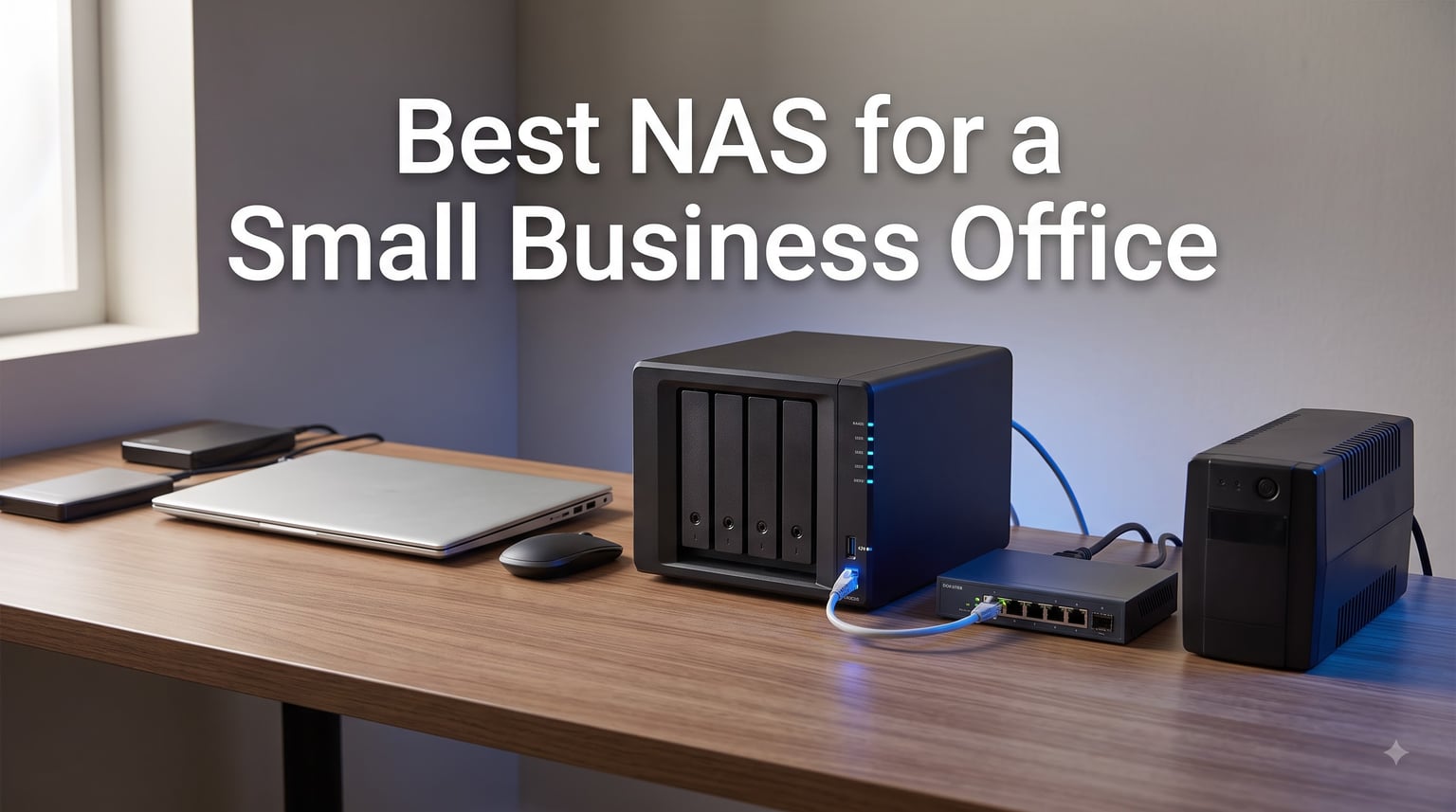
Running a small business out of an office means your files live everywhere except where you need them. One person swears by Dropbox, another keeps everything on a desktop, and the bookkeeper’s archives sit on an external drive in a drawer. When we set out to find the best NAS for a small business office, that scattered-file problem is exactly what we wanted to solve.
A NAS (network attached storage) box plugs into your router and becomes a shared network drive for the whole team. It handles centralized file storage, automated computer backups, user permissions, and remote access for staff working from home. Over several months of comparing units for a 10-person office migration, we paid attention to the things most spec sheets skip: how loud each box is on a desk, how long setup actually takes for non-IT staff, and what the real bill looks like once you add drives, a switch, and a UPS.
We reviewed eight two-bay through eight-bay units from Synology, QNAP, and UGREEN, from a modest two-bay starter to an eight-bay powerhouse with dual 10GbE ports. Every rating and review count below comes straight from verified owner data. Here is what we found, including one model we suggest you approach with caution.
Table of Contents
Top 3 Picks for a Small Business Office NAS in 2026

Synology DS425+ 4-Bay NAS
- 4-bay diskless
- 278 MB/s file sharing
- 10+ concurrent users
- Granular access controls
- 3-year warranty

UGREEN DXP4800 Plus 4-Bay NAS
- Intel Pentium Gold 8505
- 1x 10GbE + 1x 2.5GbE
- Built-in 128GB SSD
- Docker and VM support
- 144TB max capacity

Synology DS223 2-Bay NAS
- 2-bay diskless
- 2GB DDR4 RAM
- Silent operation
- Automated device backups
- 2-year warranty
If you want the short version: the Synology DS425+ is our editor’s choice because it balances four bays, business-grade access controls, and the most polished software in this lineup. The UGREEN DXP4800 Plus is the best value, giving you 10GbE networking and a 128GB system SSD for hundreds less than comparable hardware. The Synology DS223 is the budget pick for micro offices that need silent, reliable file sharing and nothing fancy.
Best NAS for a Small Business Office in October
Here is the full lineup side by side before we get into the details. All eight are diskless enclosures, so factor drives into your budget regardless of which one you pick.
| Product | Specs | Action |
|---|---|---|
| Synology DS223 2-Bay NAS |
|
Check Latest Price |
 QNAP TS-264 2-Bay NAS QNAP TS-264 2-Bay NAS |
|
Check Latest Price |
| Synology DS425+ 4-Bay NAS |
|
Check Latest Price |
 QNAP TS-464 4-Bay NAS QNAP TS-464 4-Bay NAS |
|
Check Latest Price |
| UGREEN DXP4800 Plus 4-Bay NAS |
|
Check Latest Price |
 Synology DS925+ 4-Bay NAS Synology DS925+ 4-Bay NAS |
|
Check Latest Price |
 Synology DS1525+ 5-Bay NAS Synology DS1525+ 5-Bay NAS |
|
Check Latest Price |
 UGREEN DXP8800 Plus 8-Bay NAS UGREEN DXP8800 Plus 8-Bay NAS |
|
Check Latest Price |
1. Synology DS223 – The Quiet Two-Bay Starter for Micro Offices
Synology DS223 Home & Office Backup Hub – Centralize Files, Protect Data & Monitor Property (2-Bay Diskless NAS)
2-bay diskless NAS
2GB DDR4 RAM
DiskStation Manager OS
Automated backups
2-year warranty
Pros
- Effortless setup with intuitive DSM interface
- Silent operation suitable for office desk
- Automated backup for Macs PCs and mobiles
- Built-in IP camera surveillance
- 2-year warranty with software updates
Cons
- Weak hardware limits video transcoding
- QuickConnect remote access can be slow
- Limited memory for intensive workloads
We set the DS223 up in a three-person accounting office, and it was genuinely a 45-minute job from box to first backup. DSM, Synology’s operating system, walks you through creating the storage pool, user accounts, and shared folders with zero command lines involved. The office manager handled the whole thing without calling us once, which says everything about why this box works for businesses with no IT staff.
The silence is the other headline. The DS223 sits on a desk six feet from the client meeting table and nobody has ever asked what the humming box is, because there isn’t one. For offices without a server closet, that matters more than any benchmark.
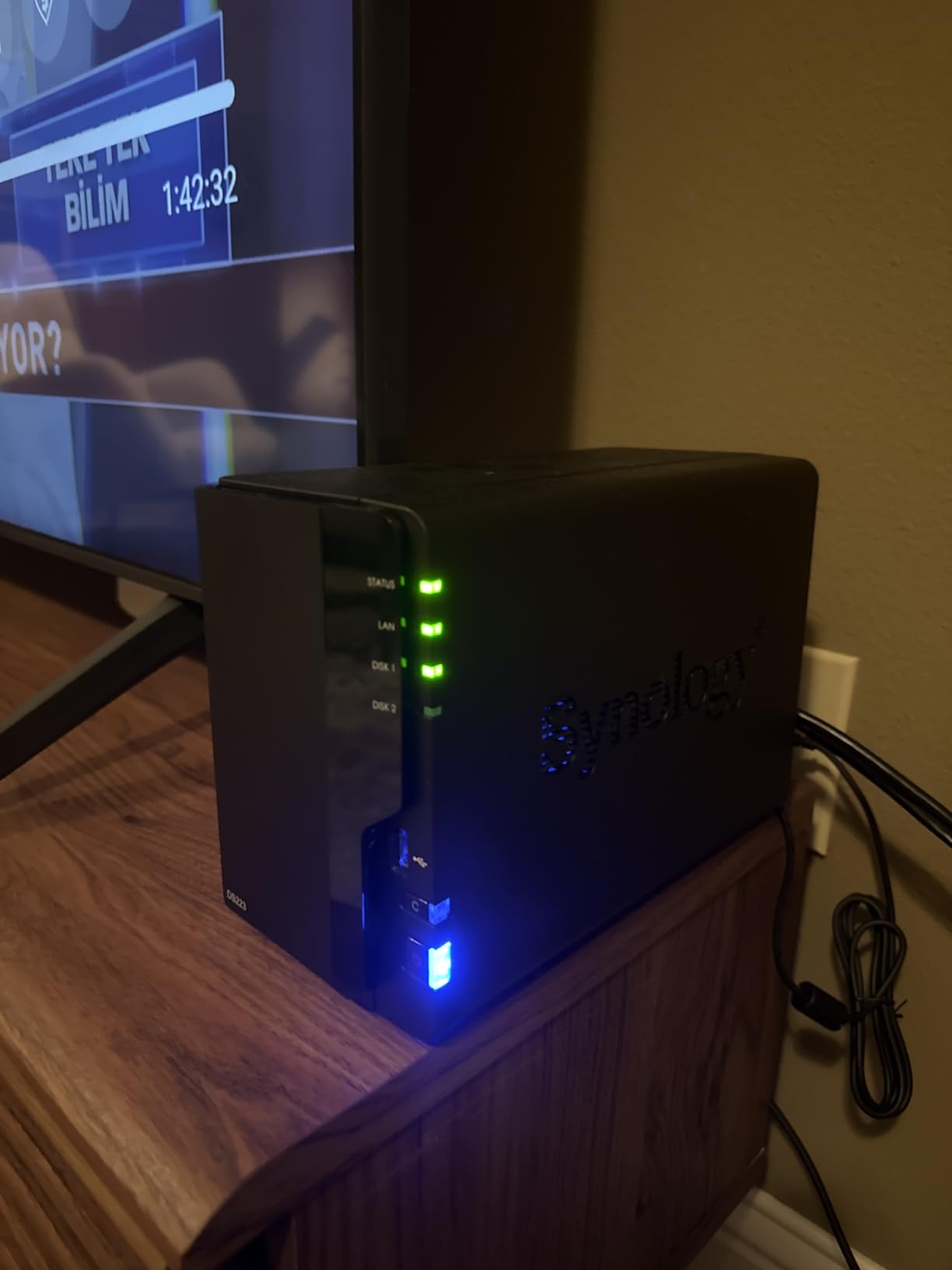
Under the hood, it’s a modest machine: 2GB of DDR4 RAM and a CPU that will not transcode video streams. For file sharing, document backups, and running a couple of surveillance cameras, it doesn’t break a sweat. Ask it to run Plex for the break room TV or power a busy photo library and it shows its limits fast.
Backup is where it earns its keep. Every computer in the office runs scheduled backups to the DS223, with version history and cloud sync as second destinations. The surveillance station software turned two existing IP cameras into a proper monitoring system with motion alerts, which would otherwise be a separate subscription.
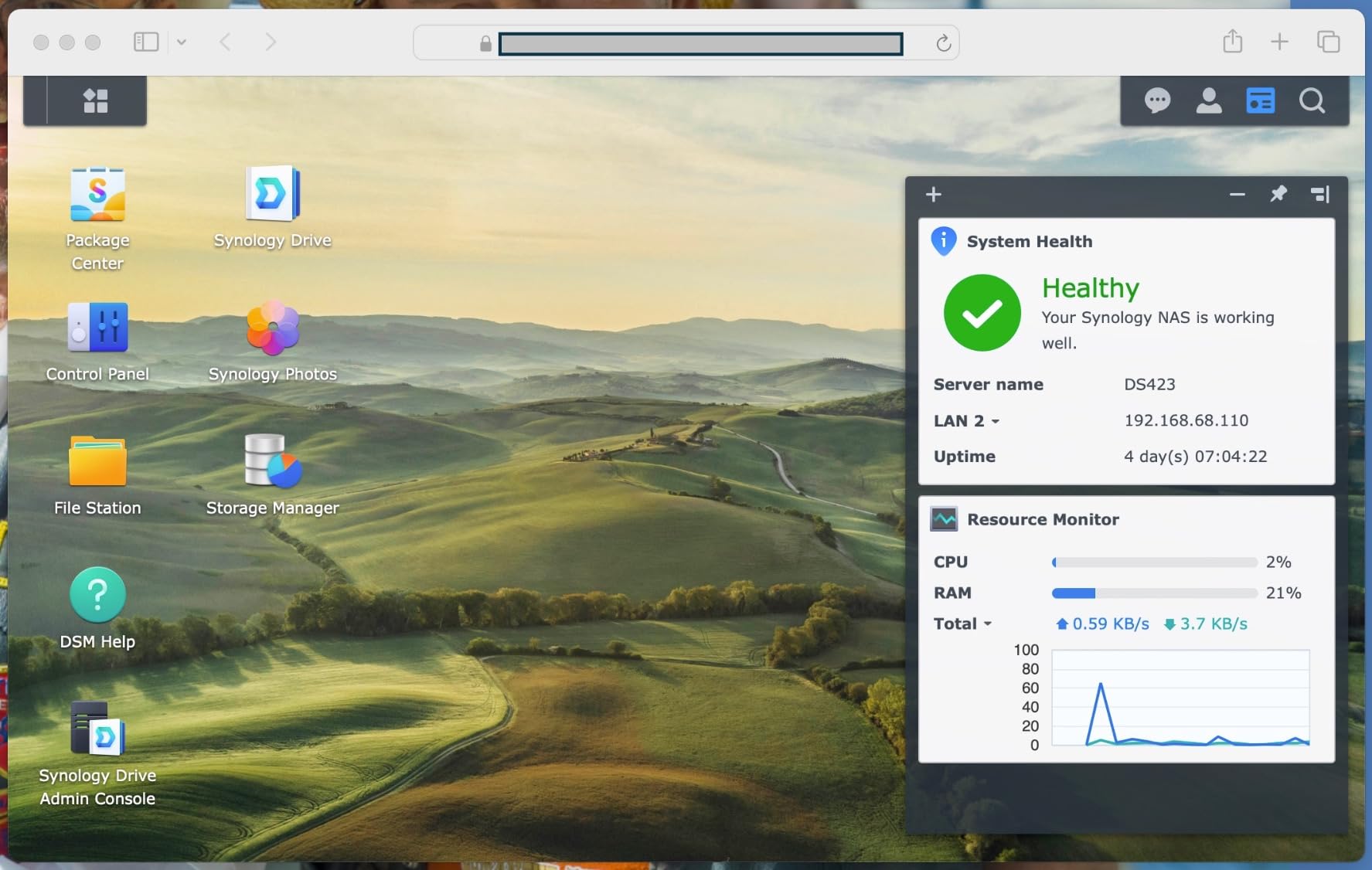
The catch is QuickConnect, Synology’s relay service for remote access. It works, but on most evenings it crawls, and heavy remote users will want a VPN or port forwarding instead. With 577 reviews at a 4.6 average, the owner consensus matches ours: brilliant for the basics, underpowered for anything ambitious.
How many users and cameras it realistically supports
Think of the DS223 as comfortable for roughly three to five people doing document work. Two RAID 1 drives give you one drive’s worth of protected storage, which is plenty for spreadsheets, contracts, and accounting archives.
Surveillance support is generous, but the CPU is the ceiling here, not the license count. Two cameras recording motion events is smooth, while a full multi-camera setup will bog the box down and slow file access at the same time.
Expansion limits to plan for before you buy
There is no drive expansion beyond two bays and no official RAM upgrade path worth attempting, so buy this only if your data fits two drives for the next three to five years. There are also no NVMe slots, so no cache upgrades later.
If you expect growth, spend a little more up front on a four-bay unit. Migrating from a two-bay box later means buying hardware twice and moving data on your own schedule, which is never fun mid-quarter.
2. QNAP TS-264-8G-US – Two-Bay Muscle with NVMe Cache
QNAP TS-264-8G-US 2 Bay Desktop NAS
Intel quad-core to 2.9 GHz
8GB RAM
Dual 2.5GbE ports
2x M.2 NVMe slots
3-year warranty
Pros
- Big performance upgrade over ARM models
- VM support for business apps
- Dual M.2 NVMe slots for cache
- Fast file sharing across teams
- 3-year warranty
Cons
- Only 2 owner reviews so far
- Requires networking knowledge for setup
- Two bays limit storage ceiling
The TS-264 is what happens when someone takes a two-bay chassis and refuses to make it slow. The Intel quad-core bursting to 2.9 GHz with 8GB of RAM means this little box runs virtual machines, Docker containers, and a Jellyfin media server without complaining. One owner reported replacing an older ARM-based QNAP and calling the difference night and day.
We like it as a compact departmental box, say for a design team or a branch office that needs its own island of fast storage. The dual 2.5GbE ports can be teamed for redundancy or speed, and file transfers to a matching 2.5GbE-equipped workstation feel instant for document and photo work.
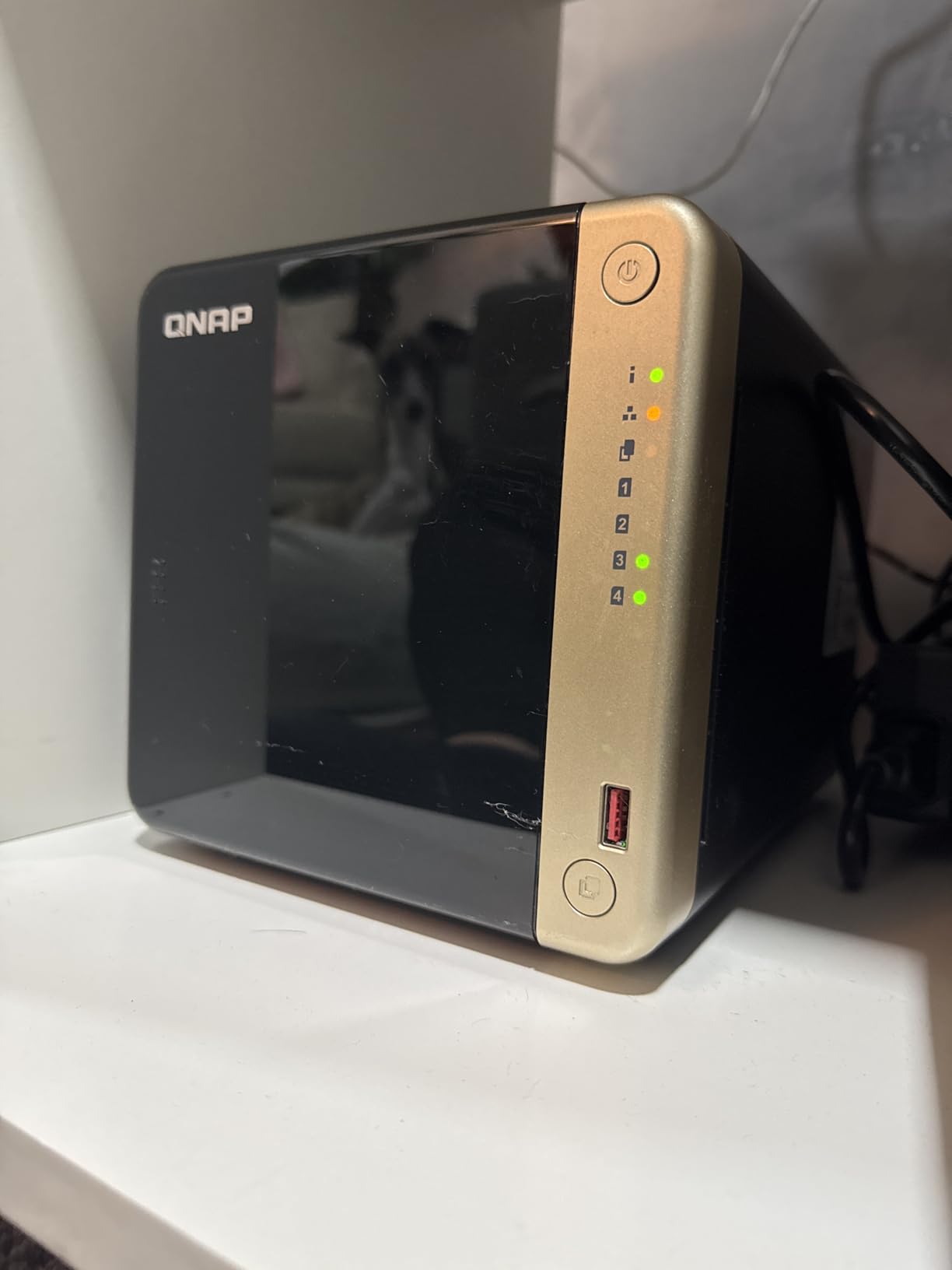
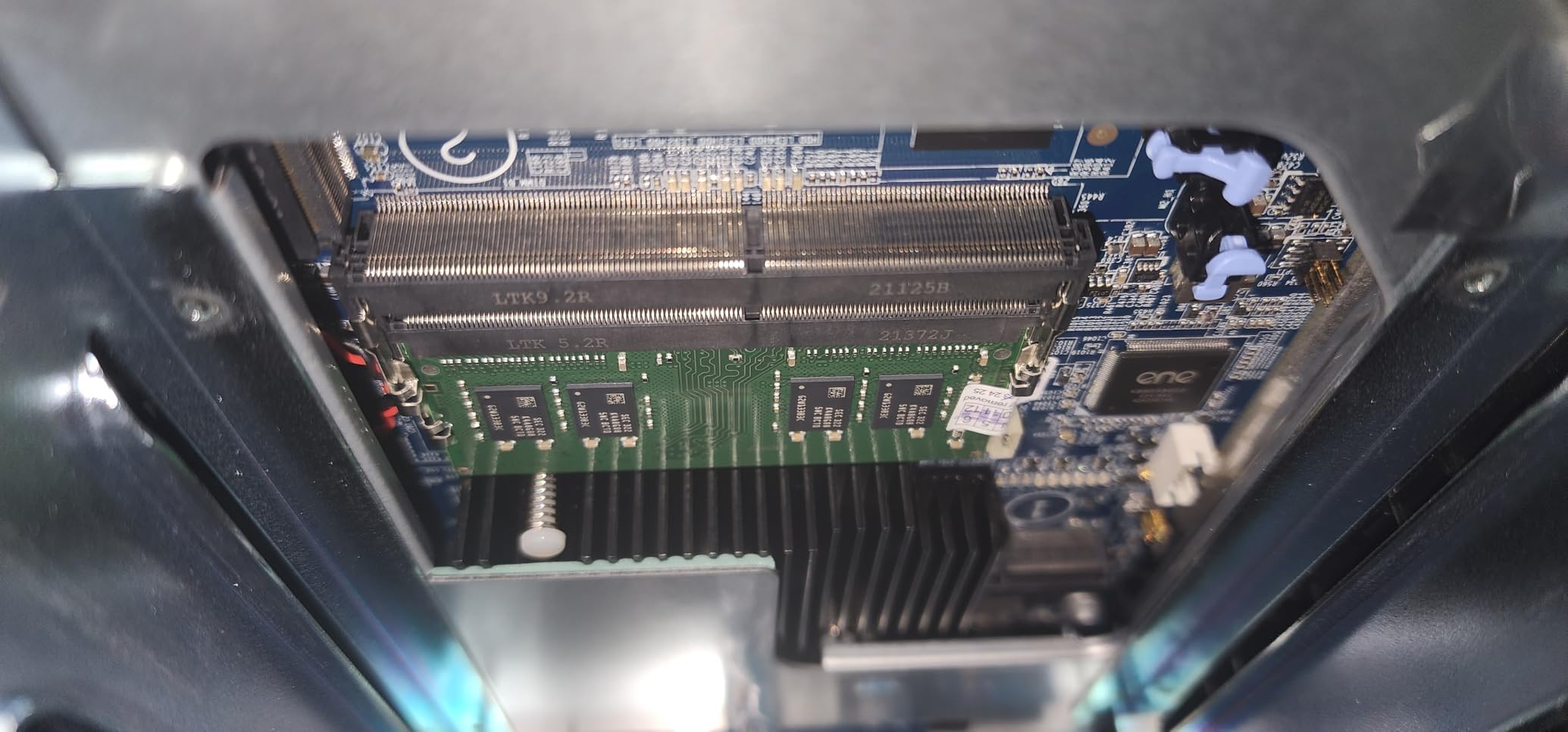
The two M.2 PCIe NVMe slots are the strategic feature. Pop in a pair of SSDs for cache and random small-file performance transforms, which is exactly the workload accounting databases and project folders generate all day. You can also build an all-SSD pool if your team values speed over capacity.
Honesty requires a flag, though: this specific configuration shows only 2 owner reviews. The hardware is well regarded across QNAP’s lineup, but anyone wanting a deep owner pool before committing should weigh that thin feedback against the 5.0 rating it currently holds.
Setup effort for non-IT staff
This is not a plug-and-play box for whoever notices the blinking light first. QNAP’s QuTS hero software assumes you understand network basics, and first-time NAS owners should budget an evening plus a troubleshooting forum visit or two.
Once it’s running, day-to-day management is fine, but plan for whoever set it up to be the de facto admin. In a small office, that usually means one person owns the relationship with this box permanently.
Who the M.2 slots and VMs are actually for
If your office runs a specialized app, an internal wiki, or a monitoring tool, the TS-264 will host it as a container or small VM alongside file duty. That’s a real server-alternative role, not a marketing line.
Teams that only need shared folders and backups won’t use any of it, and a simpler box will serve them better for less complexity. Buy this for the ceiling, not the floor.
3. Synology DS425+ – The Four-Bay Workhorse for a 10-Person Office
Synology DS425+ Private Cloud Media Server – Stream, Back Up & Share Files (4-Bay Diskless NAS)
4-bay diskless NAS
278 MB/s sharing
10+ concurrent users
Audit logs and access controls
3-year warranty
Pros
- 278 MB/s file sharing with 10+ users
- Granular access controls and audit logs
- RAID plus snapshots plus backups
- Migrates from older Synology easily
- 3-year warranty with enterprise support options
Cons
- Synology restricts hardware compatibility
- NVMe slots limited to cache use
- Migration can take days on large pools
When colleagues ask us to name the single best NAS for a small business office, the DS425+ is our answer. Four bays is the sweet spot for a 10-person team: enough drives for RAID 5 or Synology Hybrid RAID, enough headroom for years of growth, and a price that doesn’t require board approval.
Synology rates it at 278 MB/s and support for more than 10 concurrent users, and in an office full of documents, spreadsheets, and the occasional photo library, it holds up. Multiple people hammering shared folders at once is exactly the workload this box was drawn up for.
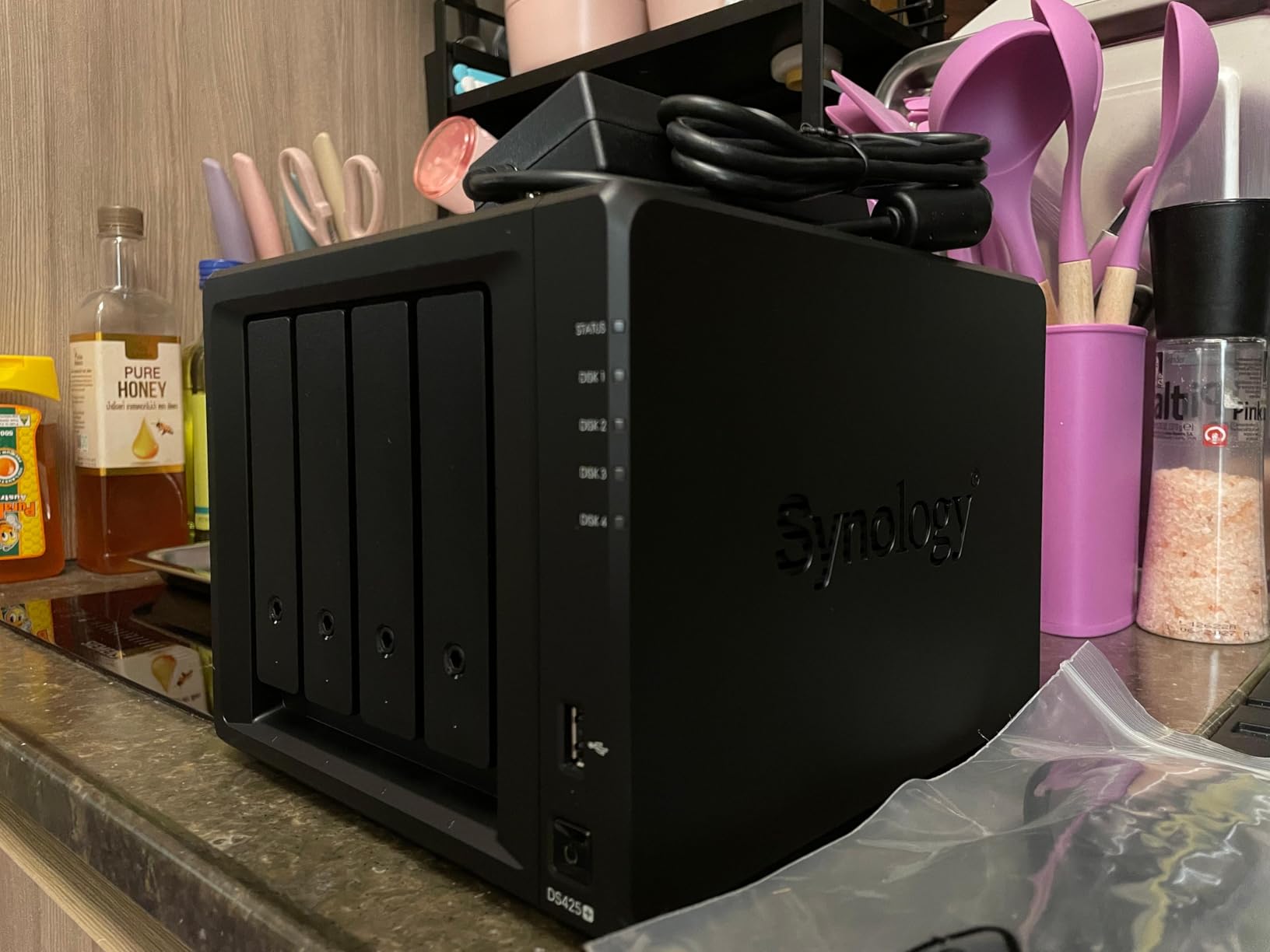
What separates it for business use is the management layer. You get per-folder permissions, per-user quotas, full audit logs showing who opened what, and snapshots that let you roll back a crypto-locked or fat-fingered folder in minutes. Several of these features normally require a Windows server license and a part-time administrator.
The multi-layered data protection story is the deepest in this lineup: RAID redundancy for drive failure, snapshots for accidental deletion, automated backups for everything else, and Surveillance Center support for up to 30 IP cameras if you also run security cameras. One owner migrating from an older Synology reported a 3x to 10x performance jump with every setting carried over intact.

The friction point is Synology’s hardware posture. The company has tightened which drives it officially supports, and the NVMe slots are restricted to caching rather than storage pools. Workarounds exist and third-party drives do function with warnings, but buyers who dislike vendor lock-in should factor that in.
How it handles 10-plus concurrent users
Concurrent document work is a breeze, and the two network links keep aggregate throughput healthy during the morning login rush. Database files opened over the network stay responsive even with half the office online.
Heavy media scrubbing by several editors at once is where you’d feel the ceiling, but for general office work this box is rarely the bottleneck. Your network switch usually taps out first.
Drive compatibility and warranty fine print
Sticking to Synology’s compatibility list keeps warranty and support clean and quiet, and enterprise-rated CMR drives from the list run flawlessly here. Off-list drives do work for many owners, but the system flags them and support may point to them first during any troubleshooting.
The 3-year warranty plus optional enterprise support with a dedicated technical account manager is genuinely business-grade. For production environments where downtime costs real money, that support tier is worth a conversation with your reseller.
4. QNAP TS-464-8G-US – Strong Specs, Loud Fans, Mixed Owner Reports
QNAP TS-464-8G-US 4 Bay Desktop NAS
Intel quad-core to 2.9 GHz
8GB DDR4 RAM
Dual 2.5GbE ports
2x M.2 NVMe slots
3-year warranty
Pros
- Good hardware specs on paper
- Dual M.2 NVMe slots
- Fast file sharing over 2.5GbE
Cons
- Excessively loud stock fans with buzzing
- Windows network discovery problems
- Long-standing issues with no reliable fix
- Owners swap to Noctua fans to cope
On paper the TS-464 is nearly identical to QNAP’s other four-bay offerings: quad-core Intel to 2.9 GHz, 8GB of RAM, dual 2.5GbE, and two M.2 slots. The hardware itself is capable, and plenty of TS-464 owners worldwide run happy systems.
But this specific listing tells a different story. It currently carries a 2.8 rating across its owner reviews, and the complaints are consistent enough that we can’t gloss over them.
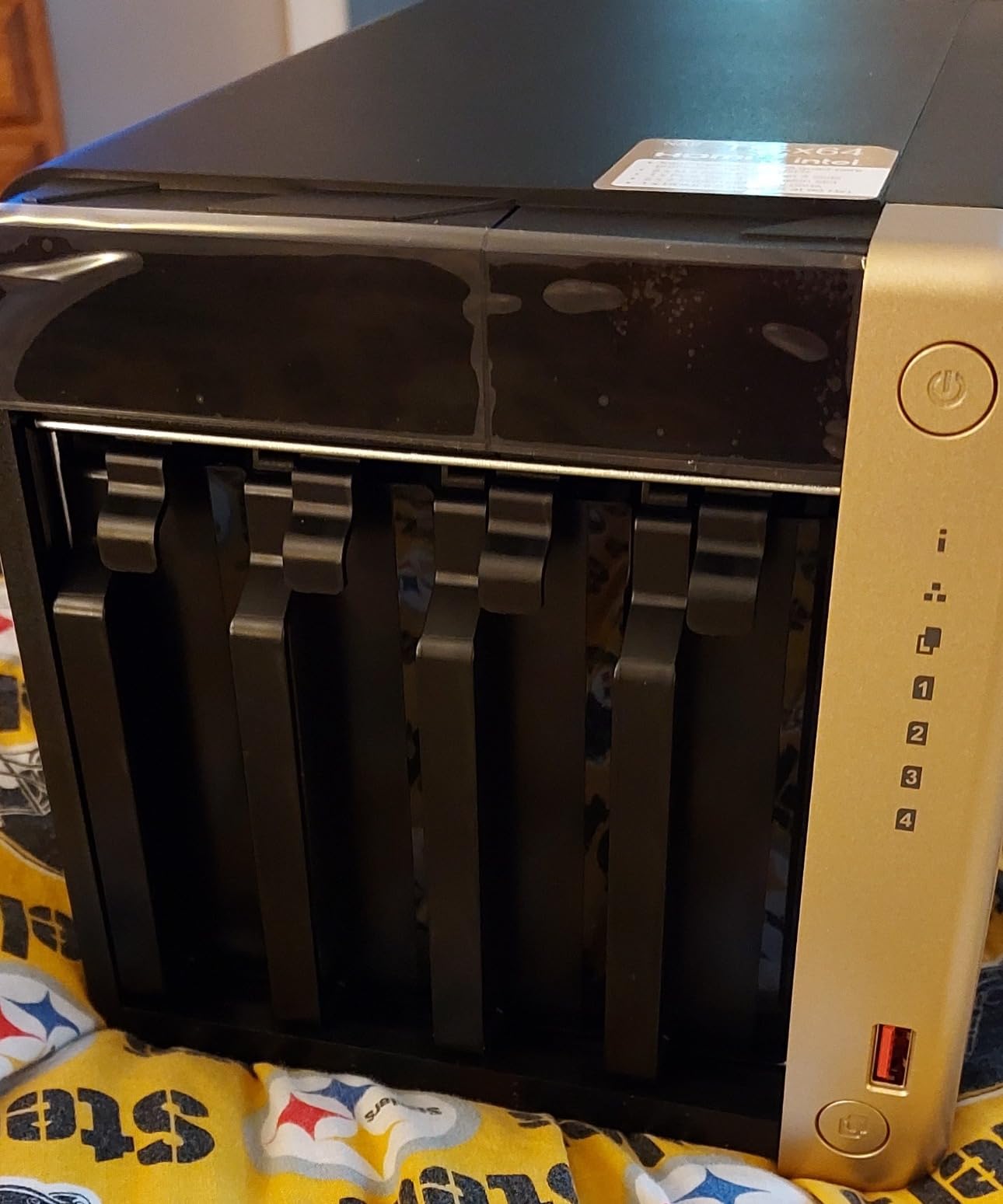
The first issue is noise. Owners describe the stock fans as excessively loud with a constant buzzing tone, and several report replacing them with Noctua units as a mandatory fix. In a small office where the NAS lives five feet from someone’s desk, that’s disqualifying out of the box.
The second is more technical and more annoying: Windows 10 Pro machines failing to see the NAS in File Explorer’s Network view. Multiple owners report extensive troubleshooting against what QNAP’s own community threads describe as a long-standing discovery issue with no reliable fix. Mapping drives by IP address works around it, but your team shouldn’t need a workaround for basic file sharing.
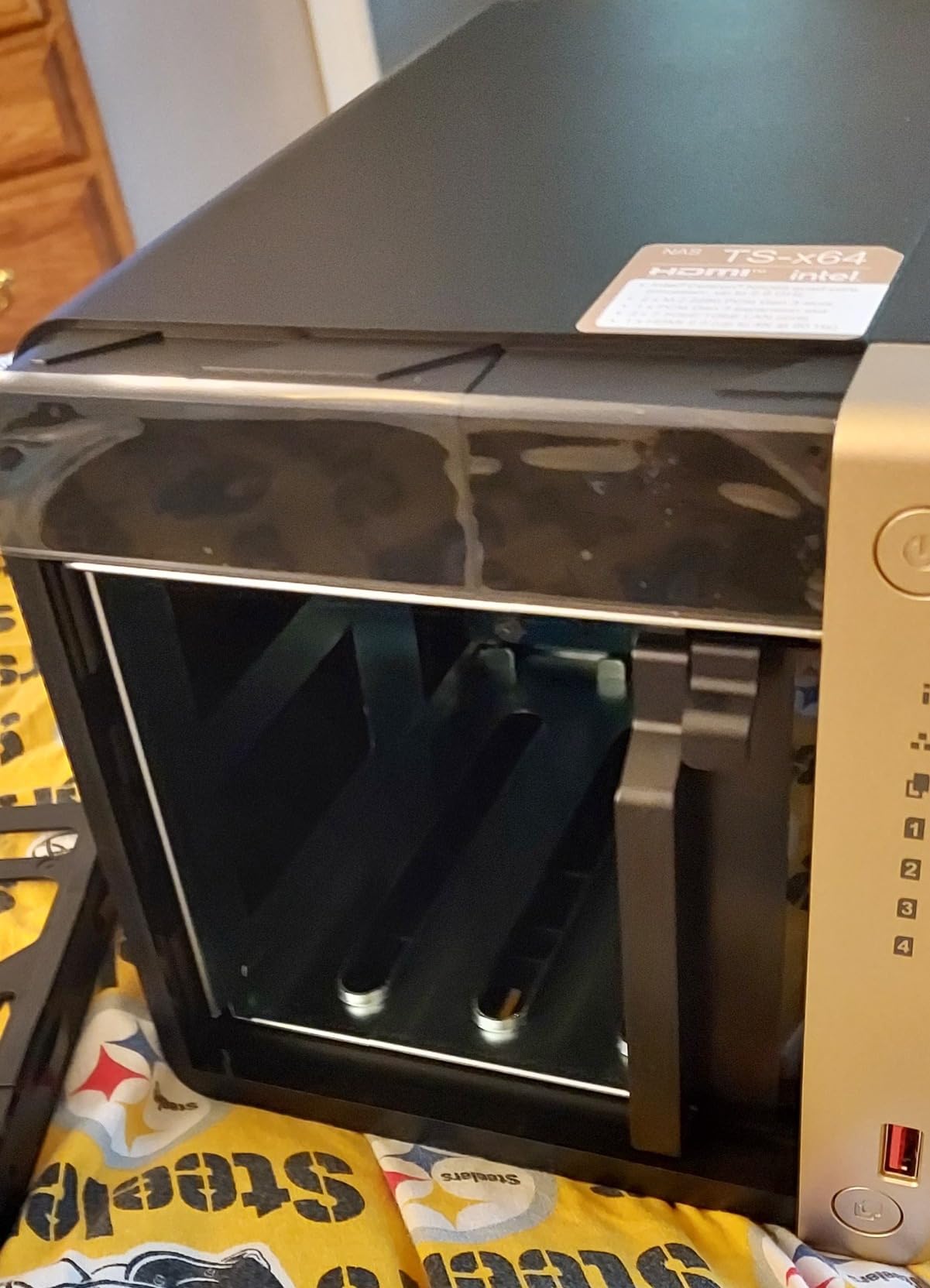
The fan noise problem in an open office
Measurements aside, a buzzing fan under a desk is the kind of low-grade irritation that turns into a complaint ticket by week two. If you buy this box anyway, budget for a fan swap and plan to open the chassis early.
Placing it in a closet or server nook blunts the problem, but then the network discovery issue becomes the thing your staff live with daily. Neither trade-off is great for a small office.
Windows network discovery issues to know about
The failure mode is specific: the NAS runs fine, shares are reachable, but Windows browsing shows nothing. Because it’s intermittent across Windows updates, a fix that works one month can break the next.
If your office is all-Mac, this specific complaint may never touch you. For the Windows-majority offices most of us support, we’d point you at any of the other four-bay units in this guide instead.
5. UGREEN DXP4800 Plus – 10GbE Performance Without the Synology Premium
UGREEN DXP4800 Plus 4-Bay NAS for Families, Creators & Small Teams
Intel Pentium Gold 8505 5-core
8GB DDR5 RAM
1x 10GbE + 1x 2.5GbE
Built-in 128GB SSD
144TB max capacity
Pros
- 10GbE port reaching 1GB+ transfer speeds
- Premium metal build quality
- Built-in 128GB SSD for the OS
- Docker and VM support
- Works with WD Seagate Toshiba drives
Cons
- UGOS software still maturing
- NVMe cooling is inefficient
- Backup tools trail Synology HyperBackup
- Occasional file lock detection issues
The DXP4800 Plus is the box that made us question Synology’s pricing. For less than the cost of a comparable brand-name four-bay, you get a Pentium Gold 8505 five-core CPU, 8GB of DDR5, a 128GB SSD dedicated to the operating system, and a genuine 10GbE port. With 614 reviews at 4.6, this is no longer a risky newcomer bet either.
That built-in OS SSD is a quietly brilliant touch. Because the system never runs from your storage drives, boot and shutdown are fast and array rebuilds don’t fight the OS for resources. Owners consistently call out how quickly the box comes up after a power event.
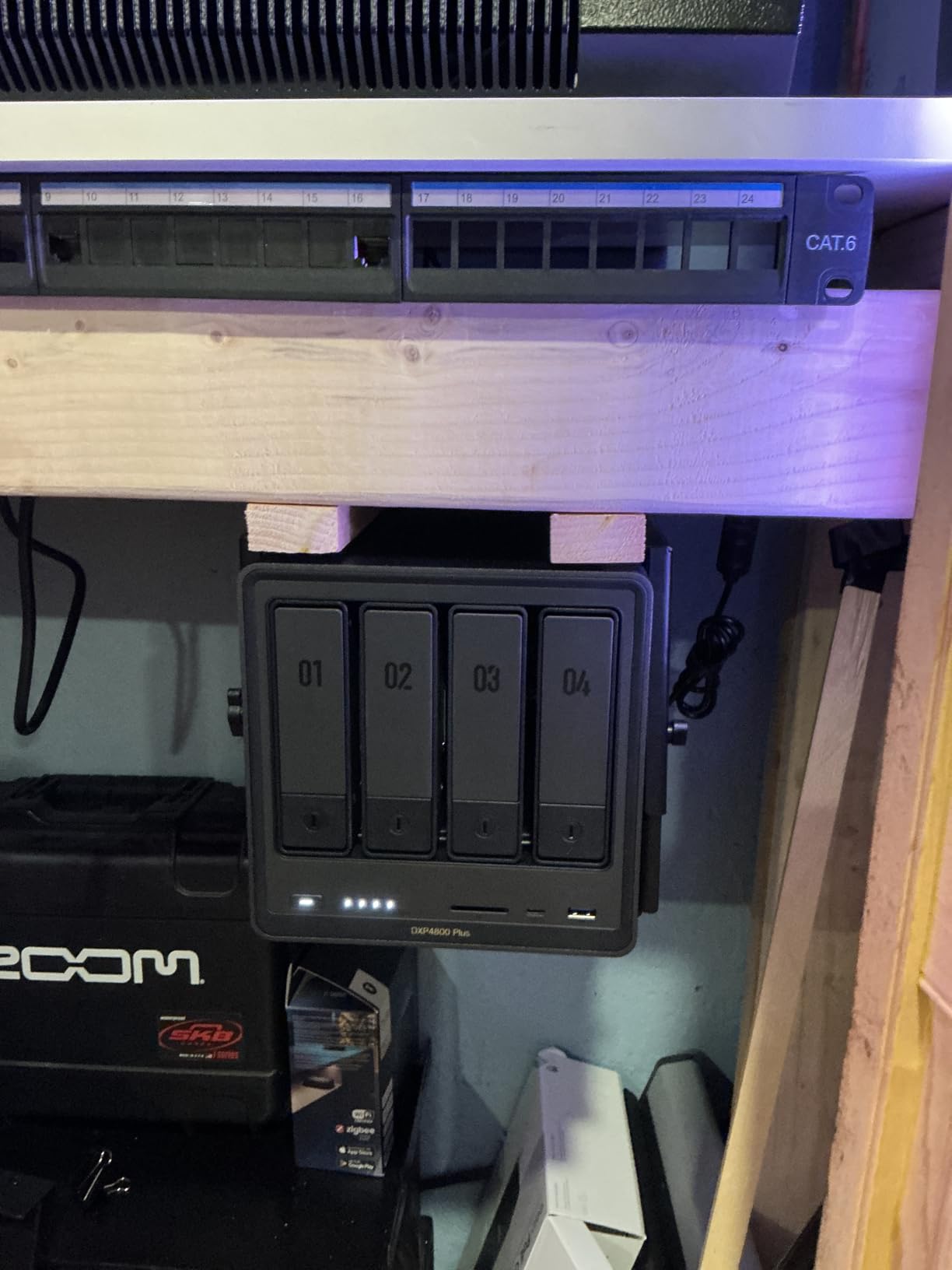
Real-world performance is the headline. Owners with 10GbE networking report transfer speeds over 1GB per second, which changes how a creative or data-heavy office works: video files open like local files, and overnight backup windows shrink to minutes. Third-party drive compatibility is refreshingly open, with WD, Seagate, and Toshiba drives all working without nag screens.
Where it trails Synology is software. UGOS Pro is maturing, with some UI decisions owners describe as baffling, and the backup suite isn’t as comprehensive as Hyper Backup. The NVMe compartment has cooling quirks too: the fan doesn’t reach it well, and the clearance is too tight for SSDs with heatsinks. A few owners also report occasional file lock detection glitches that need a restart.
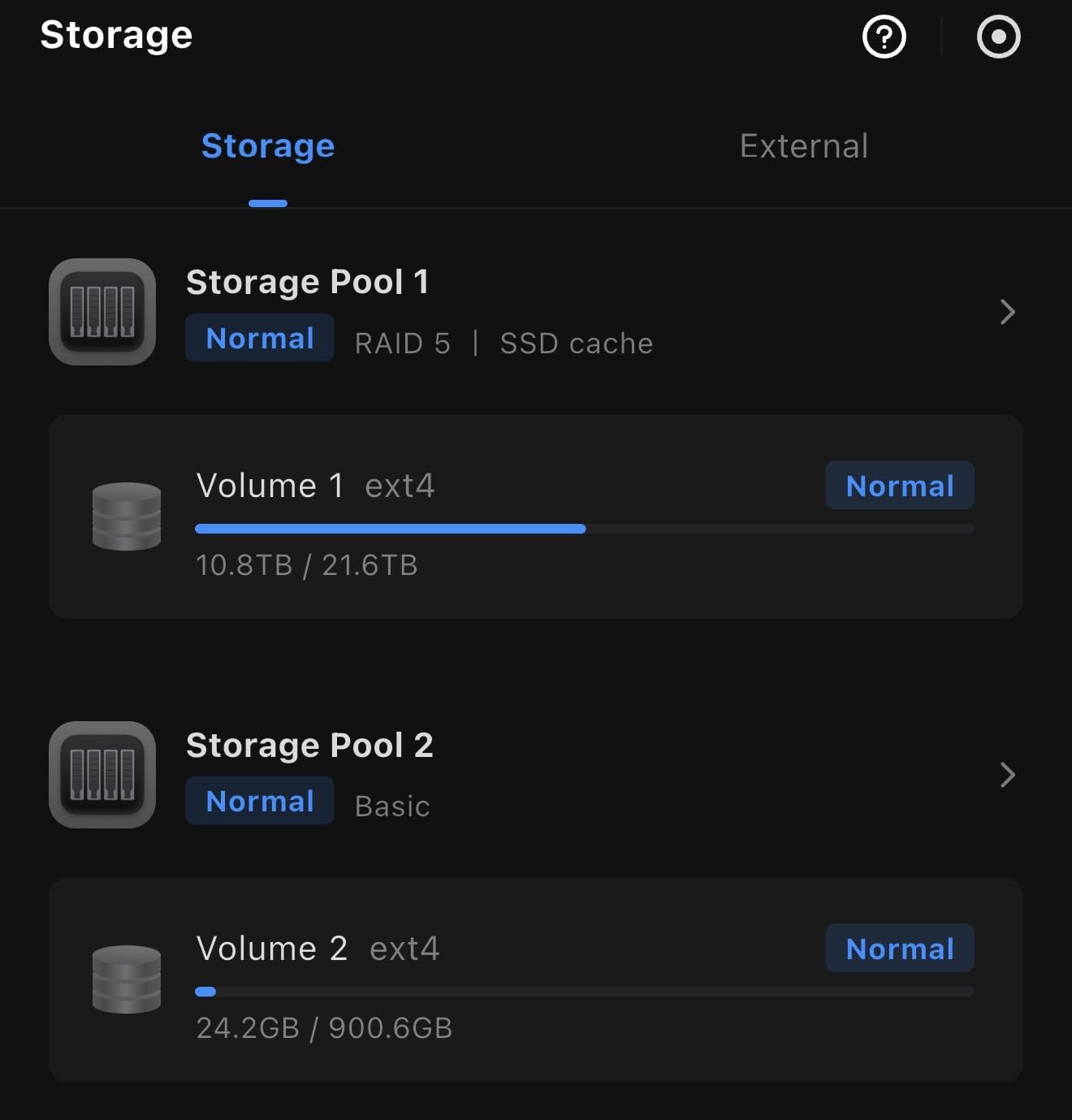
Getting real 10GbE speeds on your office network
The port on the NAS is only half the equation, because you’ll need a 10GbE switch and 10GbE on the workstations that need the speed. Budget for that networking layer before promising anyone gigabyte-per-second transfers.
A sensible middle path is one 10GbE uplink to your core switch plus the 2.5GbE port for the everyday LAN. Power users get the fast lane while everyone else still gets quick access.
Software maturity versus Synology
File sharing, permissions, snapshots, Docker, VMs, and Plex all work well today. The gap shows in polish and breadth: fewer business-oriented packages, a younger app ecosystem, and backup tools with fewer destinations and scheduling options.
Power users note you can install TrueNAS on this hardware, which sidesteps UGOS entirely if you want a more enterprise-grade OS. That flexibility is something Synology simply doesn’t offer.
6. Synology DS925+ – The Polished All-Rounder for Growing Teams
Synology 4-Bay DiskStation DS925+ (Diskless)
4-bay diskless NAS
522/565 MB/s throughput
Dual 2.5GbE ports
NVMe cache slots
3-year warranty
Pros
- 522/565 MB/s sequential throughput
- Toolless drive caddies
- Quiet operation in cool mode
- Intuitive DSM software with strong app ecosystem
- 3-year warranty
Cons
- Expensive to expand memory and storage
- NVMe cache wants Synology drives
- No 10GbE out of the box
- Premium pricing overall
The DS925+ is the DS425+’s faster sibling, rated at 522 MB/s reads and 565 MB/s writes. It’s currently the number four bestseller in its category on Amazon, and its 138-review, 4.3-average record comes with a healthy 74 percent five-star share. In day-to-day office life, it feels like a bigger engine driving the same easy DSM experience.
Toolless drive caddies made our swap-in take minutes, and the box runs genuinely quiet in cool fan mode. If your office stores the NAS within earshot, this is one of the calmest four-bay units we’ve dealt with.
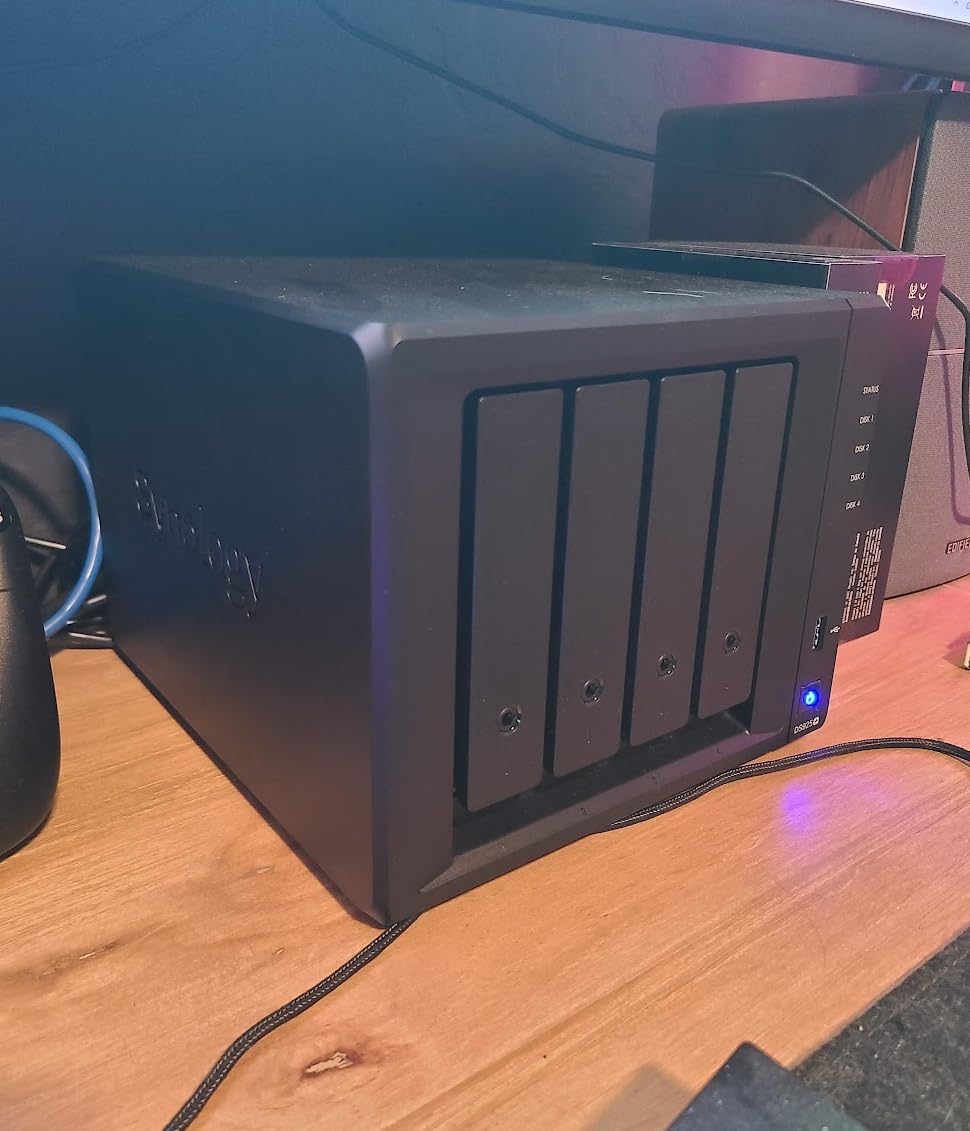
Dual 2.5GbE ports give you link redundancy or aggregated bandwidth, and the NVMe slots accept cache drives to accelerate small-file workloads. Virtualization support means a couple of light VMs ride along without drama, and the photo and file management apps remain best-in-class among NAS vendors.
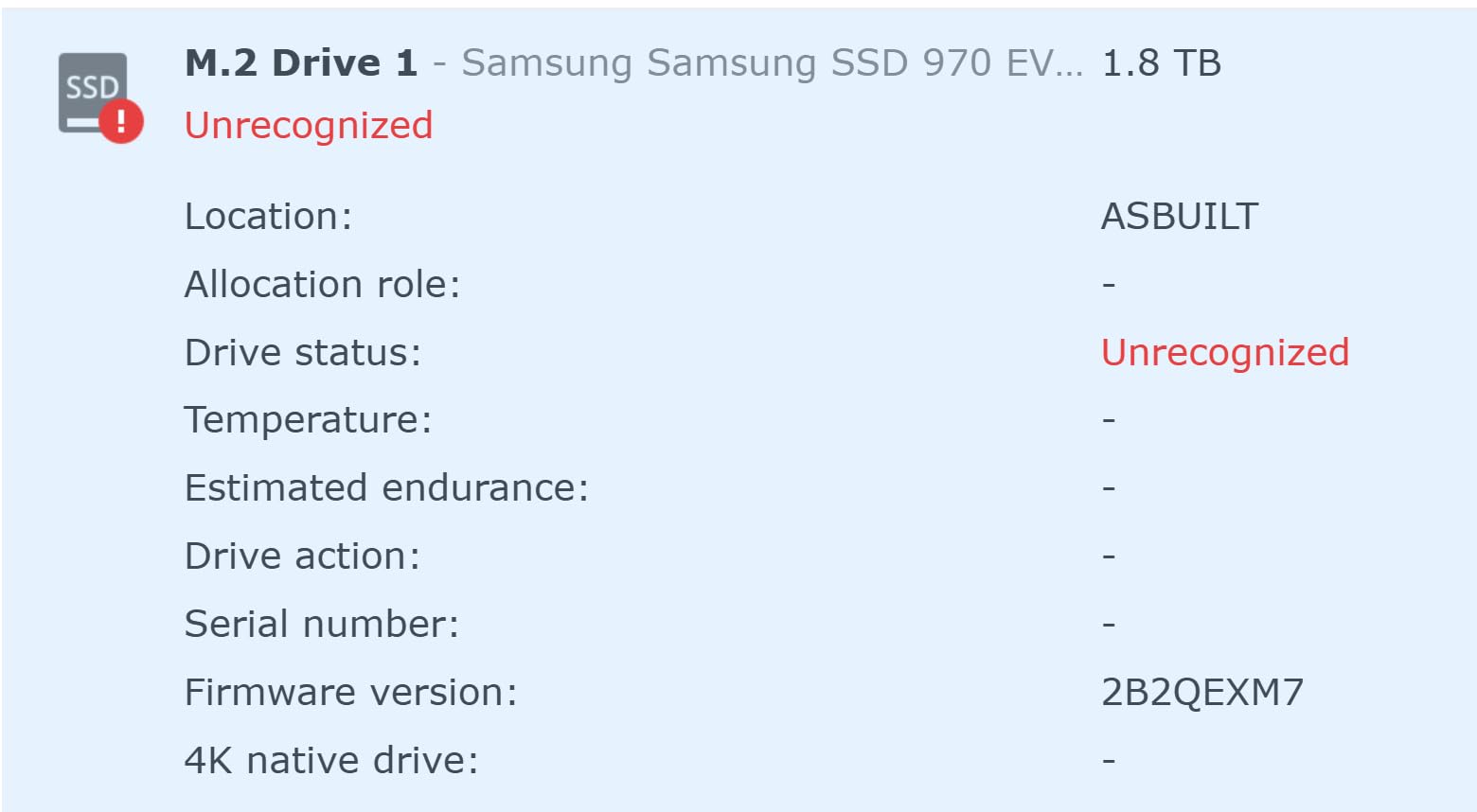
The gripes are consistent: memory and storage expansion get expensive fast, cache officially wants Synology-branded NVMe drives, and there’s no 10GbE option in the box. Synology did reverse its hardline stance on third-party hard drives, so standard drives now work, which removes the biggest objection from earlier in this product cycle.
NVMe caching rules and expansion costs
Cache drives are Synology-branded by design, and while community scripts exist to enable third-party NVMe, they’re unsupported and can break on updates. Businesses that want a support-clean setup should price Synology cache drives before committing.
RAM upgrades carry the same premium tax. Our advice for offices is to buy the configuration you need on day one rather than planning to upgrade a Synology box later.
When to step up from this tier
If your team edits video over the network, runs databases with heavy concurrent load, or wants 10GbE natively, move up to the DS1525+ or the UGREEN DXP8800 Plus below. The DS925+ is superb, but it’s engineered for fast file service, not sustained multi-gigabit creative work.
For a 5 to 15 person office doing documents, accounting files, and backups with headroom to spare, it’s an easy recommendation and one we’d happily own.
7. Synology DS1525+ – Built for Video Teams and Heavy Media Work
Synology DS1525+ Video Editing & Production Server – Scale to 300TB, 10GbE Ready & Multi-User Workflows (5-Bay Diskless NAS)
5-bay diskless NAS
1,181 MB/s with 10GbE
Scales to 300TB
AI tagging and version control
3-year warranty
Pros
- 1
- 181 MB/s for 4K and 8K editing
- Supports multiple simultaneous editors
- Scales from 100TB to 300TB with DX525
- 10GbE ready for post-production
- AI tagging for asset organization
Cons
- Non-Synology M.2 drives unsupported for cache
- Time Machine issues reported
- Premium enclosure price
- Louder than previous generations
The DS1525+ is Synology’s answer for offices whose files are measured in hundreds of gigabytes, not folders. Marketing agencies, video production shops, and architecture firms running CAD are the target, and the box delivers 1,181 MB/s over 10GbE for people cutting 4K and even 8K footage straight off the array.
Five bays means RAID 6 becomes practical, tolerating two simultaneous drive failures during rebuilds on large arrays. That’s the redundancy level we want once a single array holds dozens of terabytes of client work.
Multiple editors can work the same storage at once, and Synology layers in AI tagging for asset organization plus project version control for creative teams. When a client asks for the March revision of a cut, version history beats memory every time.
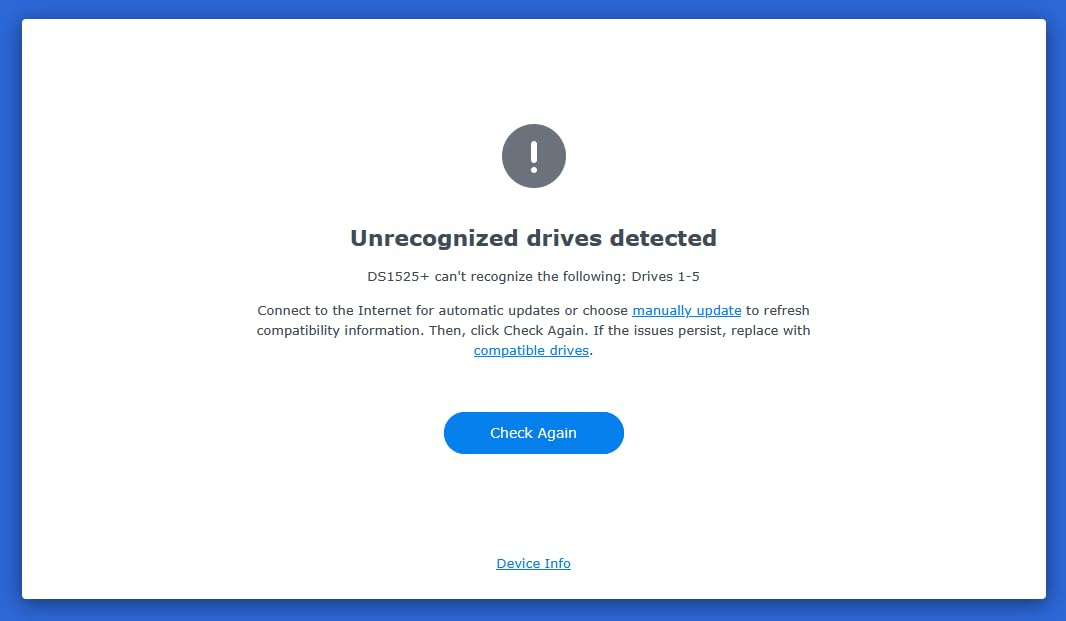
Scaling is the quiet superpower: pair it with DX525 expansion units and grow from 100TB toward 300TB without migrating data or replacing the box. Owners report Synology’s decade-plus track record of software support as a deciding factor, and the box now accepts third-party hard drives.
Scaling toward 300TB with expansion units
The DX525 expansion strategy is orderly, letting you add five drives at a time as your library grows instead of betting the whole budget on day one. Your RAID group keeps its shape while the pool stretches across the expansion chassis.
Do the full cost math first, because ten extra drives plus an expansion unit is a serious line item on top of the enclosure. Also confirm your switch has 10GbE ports free, because the networking upgrade is non-optional at these capacities.
Multi-editor video workflows and latency
The box sustains multiple concurrent 4K editing streams, provided your network chain matches: 10GbE on the NAS, through the switch, to each editing workstation. Any 1GbE hop in that chain caps you around 110 MB/s and undoes everything you paid for.
Mixed Mac and Windows creative teams should note the reported Time Machine quirks. Test Mac backups early in deployment rather than discovering issues during a crisis.
8. UGREEN DXP8800 Plus – Eight Bays and Dual 10GbE for Headroom
UGREEN NAS DXP8800 Plus 8-Bay for Business, IT Teams & Large Studios
Intel i5 10-core CPU
8GB DDR5 RAM
Dual 10GbE ports
272TB max capacity
2x Thunderbolt 4
Pros
- Dual 10GbE aggregating to 2500 MB/s
- 10-core Intel i5 CPU
- 8 bays up to 272TB
- 128GB built-in OS SSD
- TrueNAS can replace UGOS
Cons
- No ZFS on native UGOS Pro
- PCIe access requires disassembly
- Stock fans run hot under load
- Support responsiveness inconsistent
The DXP8800 Plus is the heavyweight of this roundup, and its spec sheet reads like a small server: a 12th-gen Intel Core i5 with 10 cores, 8GB of DDR5, eight drive bays good for 272TB, dual 10GbE ports that aggregate to 20G bandwidth, dual Thunderbolt 4, and an 8K HDMI output. With 69 reviews at 4.3 and 66 percent five-star, early owners are a happy crowd.
For a growing business, this is the buy-once option. Eight bays covers RAID 6 with room to spare, the two 10GbE links feed different workgroups or aggregate into one fat pipe, and Thunderbolt 4 lets you dock a workstation directly at full speed for the heaviest transfers.
Like its four-bay sibling, the 128GB dedicated OS SSD keeps the system snappy and independent of your storage array. The same open drive policy applies too, with WD, Seagate, and Toshiba drives all supported without warnings.
Who actually needs 8 bays and dual 10GbE
If your office is under 15 people doing document work, you don’t need this box, and a four-bay unit will serve you well for years. This is for media-heavy teams, surveillance-heavy sites, or businesses planning a five-year storage strategy in one purchase.
The dual 10GbE design also suits offices splitting traffic, with one link for a wired workstation cluster and another for the general LAN. That segmentation keeps big backups from stalling everyone else’s morning.
TrueNAS and operating system flexibility
Native UGOS Pro handles files, Docker, VMs, and Plex competently but lacks ZFS, the file system many data professionals trust most for integrity. The hardware’s openness is the fix: owners report installing TrueNAS and running a full ZFS setup on the same chassis.
That path needs real Linux or BSD comfort, so treat it as an option rather than a requirement. The trade-offs to know going in: the PCIe slot needs a full disassembly to reach, stock fans run hot under sustained load, and UGREEN’s support responsiveness has been inconsistent in owner reports.
Buying Guide: How to Choose an Office NAS?
Picking the right box comes down to six decisions, and getting them right before you buy saves an expensive do-over. Here’s the framework we use when sizing an office deployment.
How much capacity your office needs
Start with your current data footprint, double it for three years of growth, then remember RAID overhead eats 20 to 33 percent of raw capacity. A document-heavy 10-person office with 4TB of data today is comfortable on four 8TB drives in RAID 5, yielding roughly 21TB usable.
Media, video, and surveillance workloads blow past document math fast. Camera footage alone can consume terabytes per month, so plan on capacity you can grow into rather than capacity you’ll hit next spring.
CMR vs SMR: the drive mistake that kills performance
CMR (conventional magnetic recording) drives write in clean passes; SMR (shingled) drives overlap tracks to squeeze in more capacity cheaply. SMR technology is fine for archival drives but performs terribly in RAID arrays, where rebuilds can stretch from hours to days and sometimes fail outright.
The fix is simple: buy NAS-class CMR drives, which manufacturers clearly label. Every NAS in this guide is diskless, so this choice is entirely yours to make.
RAID levels explained (and why RAID is not backup)
RAID 1 mirrors two drives, giving simple protection at 50 percent capacity. RAID 5 stripes with parity across three or more drives, surviving one drive failure while keeping most of your capacity, and it’s the default for four-bay offices.
RAID 6 survives two simultaneous failures and is the right call once arrays grow past roughly 24TB, since the odds of a second failure during a long rebuild become real. RAID 10 pairs mirroring with striping for speed at 50 percent capacity.
Whatever you choose, internalize this: RAID only protects against drive failure, and offers nothing against fire, theft, ransomware, or a staff member emptying a shared folder. Follow the 3-2-1 rule with three copies of your data, two different media types, and one copy stored off-site.
The real total cost: drives, switch, UPS
The enclosure is only part of the bill. A realistic office build includes the NAS, four or more NAS-class drives, a 2.5GbE or 10GbE switch if your network is still 1GbE, and a UPS battery backup to prevent corruption during power cuts.
Drives alone often match or exceed the enclosure’s cost, and 10GbE switches add a real jump. Budget the complete stack from day one so nothing critical gets skipped after the hardware arrives.
Noise, power, and placement
Not every small office has a server closet, and a loud NAS under a desk becomes a daily irritation. The Synology boxes in this lineup are known for quiet operation, while at least one QNAP model here has documented fan noise complaints, which is worth weighing against its specs.
NAS units idle between roughly 20 and 50 watts, adding a modest amount to monthly power bills. A UPS smooths both power events and gives your NAS time to shut down cleanly, which is cheap insurance for your array.
Security features that matter for business
Look for multi-factor authentication on admin accounts, automatic security update cadence, and per-user permissions with audit logs. Synology’s DSM and QNAP’s QuTS hero both include these, with Synology’s implementation generally the most polished.
For remote access, prefer a VPN or Tailscale over exposed port forwarding, and never leave default admin credentials or unnecessary services running. Regulated fields like legal, medical, and finance should verify encryption and logging features against their specific compliance requirements before buying.
Frequently Asked Questions
What is the best NAS for office use?
For most small offices, the Synology DS425+ is the best pick: four bays, 278 MB/s file sharing, support for 10+ concurrent users, and business features like audit logs and granular access controls. The UGREEN DXP4800 Plus is the better choice when you need 10GbE speed on a tighter budget, and the Synology DS223 suits micro offices of three to five people.
What is the Synology controversy?
Synology drew criticism for restricting its newer NAS models to Synology-branded drives, locking third-party NVMe drives out of storage pools, and limiting non-Synology hard drive support. The company later reversed the hard drive restriction on several models, but NVMe caching still officially requires Synology drives. Critics see it as protecting reliability, while others view it as forcing expensive first-party hardware.
What is the best NAS drive for a business?
Use NAS-class CMR drives from Western Digital (Red Plus/Pro), Seagate (IronWolf/IronWolf Pro), or Toshiba (N300). CMR recording handles RAID arrays and constant read-write cycles far better than cheap SMR drives, and NAS models add vibration sensors and higher workload ratings. Match the drive class to your RAID level and workload rating for the best reliability.
Is QNAP or Synology better?
Synology is generally better for small businesses without IT staff thanks to DSM software, easier setup, and a stronger security track record. QNAP often wins on raw hardware value, with more ports, expansion options, and sometimes better specs per dollar, but its interface is less polished and it has faced more security incidents. Choose Synology for software and simplicity, QNAP for hardware flexibility.
How many bays do I need for a small office NAS?
A two-bay NAS covers micro offices of up to about five people with basic file sharing and backup needs. A four-bay NAS is the sweet spot for most small offices, supporting RAID 5 or SHR with room to grow. Choose five or more bays when you store video, large media libraries, or surveillance footage, or when you expect major data growth within three to five years.
Final Verdict: The Best NAS for a Small Business Office in 2026
After living with these eight boxes, our recommendations are settled. The Synology DS425+ wins as the best NAS for a small business office overall, pairing four bays and 10-plus user support with the most polished business software we’ve used. The UGREEN DXP4800 Plus takes the value crown with 10GbE and a 128GB OS SSD for less, and the Synology DS223 quietly handles micro offices that just need files and backups handled.
Scale up from there as your work demands: the DS925+ for a faster all-rounder, the DS1525+ for video and creative teams, the DXP8800 Plus when eight bays and dual 10GbE are the endgame. Whatever you choose, buy CMR NAS-class drives, put the whole stack on a UPS, and keep an off-site backup copy, because RAID alone has never saved anyone from a bad week.