
I’ve spent the last several months testing Zigbee motion sensors across my home — hallways, bathrooms, stairwells, and a home office — to find out which ones actually deliver reliable, hands-free lighting. If you’ve ever fumbled for a light switch with your hands full of laundry, you already know why automated lighting is one of the first automations most people build.
A Zigbee motion sensor is a small, usually battery-powered device that detects movement using passive infrared (PIR) technology or mmWave radar, then signals your hub over the Zigbee mesh network to trigger an automation — like turning a light on when someone enters a room and off when they leave. Unlike Wi-Fi sensors, Zigbee devices use very little power, respond fast, and keep working locally even when your internet is down.
In this guide, I’ll walk you through the eight best Zigbee motion sensors for automated lighting that I’d actually recommend in 2026 — from a $15 budget workhorse to a premium multi-sensor that knows the difference between you sitting still and you leaving the room.
Table of Contents
Top 3 Picks for Automated Lighting in 2026


SONOFF SNZB-03P Motion Sensor
- 3-Year Battery Life
- 5-Sec Detection
- Zigbee 3.0
- Local Scene Control

THIRDREALITY 3-in-1 Night…
- Motion and Lux Sensor
- RGB Night Light
- Zigbee Repeater
- USB Powered
If you want the short version: the Aqara Motion Sensor P1 is the best all-around Zigbee motion sensor for lighting automation thanks to its configurable timeout, lux sensor, and 5-year battery. The SONOFF SNZB-03P is the best budget option at under $15 with fast detection and Zigbee 3.0. And the THIRDREALITY Multi-Function Night Light is the most versatile — it combines a motion sensor, light sensor, and RGB night light in one plug-in device that also strengthens your Zigbee mesh.
Best Zigbee Motion Sensors in October
| Product | Specs | Action |
|---|---|---|
| Aqara Motion Sensor P1 |
|
Check Latest Price |
| SONOFF SNZB-03P |
|
Check Latest Price |
| THIRDREALITY Night Light 3-in-1 |
|
Check Latest Price |
 Aqara Presence Sensor FP300 Aqara Presence Sensor FP300 |
|
Check Latest Price |
 SONOFF SNZB-06P mmWave SONOFF SNZB-06P mmWave |
|
Check Latest Price |
 SONOFF SenseGuard SNZB-03PR2 SONOFF SenseGuard SNZB-03PR2 |
|
Check Latest Price |
 THIRDREALITY Motion Sensor 2 Pack THIRDREALITY Motion Sensor 2 Pack |
|
Check Latest Price |
 Aeotec SmartThings Motion Sensor Aeotec SmartThings Motion Sensor |
|
Check Latest Price |
1. Aqara Motion Sensor P1 – Best Overall Zigbee Motion Sensor for Lighting
Aqara Zigbee 3.0 Motion Sensor P1 1 Pack, for Alert System Automations
Zigbee 3.0 PIR Sensor
CR2430 Battery
170-Degree FOV
Adjustable 1-200s Timeout
Pros
- 5-year battery life
- Configurable 1-200 second timeout
- Built-in lux sensor for dark-only activation
- Works with HomeKit and Home Assistant
- Compact and discrete design
Cons
- Requires Aqara Zigbee 3.0 hub
- Adhesive mount is weak
- Some users report shorter real-world battery life
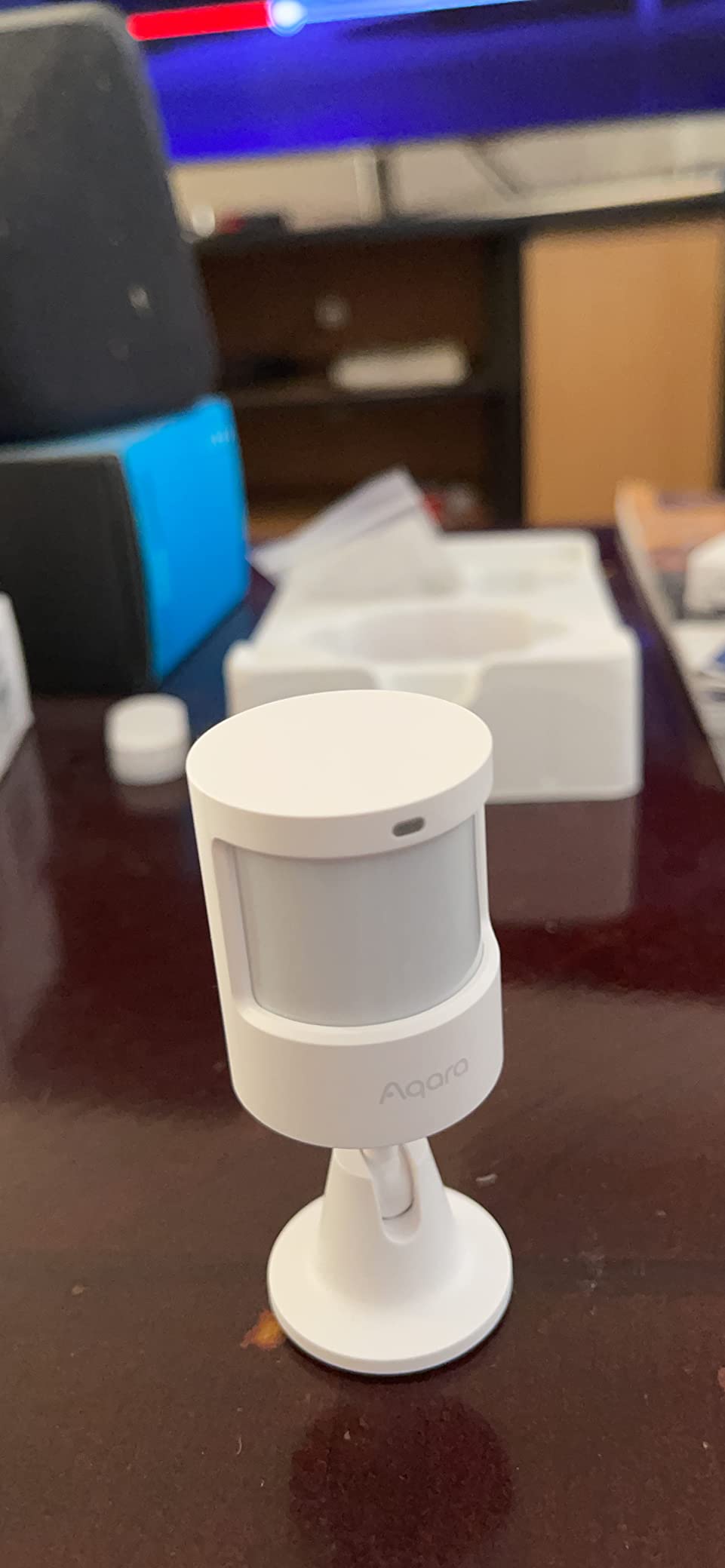
I’ve been running the Aqara P1 in my hallway for months now, and it’s the sensor I recommend to most people starting out with automated lighting. It’s small, discreet, and just works. The detection is fast enough that my hallway light is on before I’m halfway through the door.
What really sets it apart is the configurable timeout. You can set it anywhere from 1 to 200 seconds, which means you’re not stuck with a factory-preset delay that doesn’t match your room. My hallway uses a 30-second timeout; my bathroom uses 120 seconds so the light doesn’t cut out mid-shower.
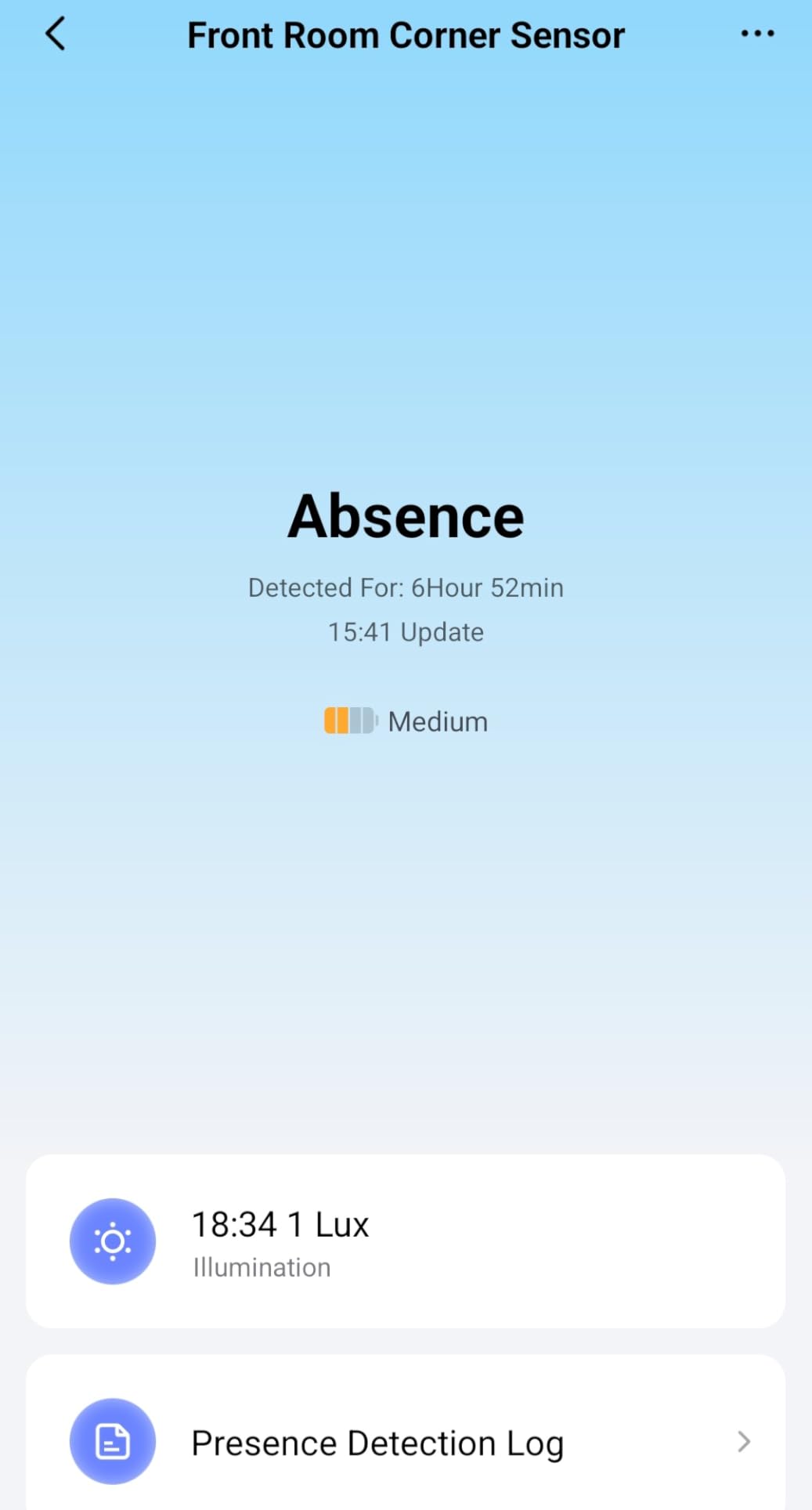
The built-in lux sensor is another feature I didn’t know I needed until I had it. Instead of the light blasting on at full brightness even during the day, I set my automation to only trigger when the room is below a certain light level. It’s a small thing that makes the whole setup feel polished.
The catch: it officially requires an Aqara Zigbee 3.0 hub. You can pair it with Home Assistant via Zigbee2MQTT or ZHA with a third-party dongle, but Aqara doesn’t officially support that route, so functionality can be limited. If you’re a Home Assistant user who wants a plug-and-play experience, this is worth knowing upfront.
How long does the Aqara P1 battery actually last
Aqara claims 5 years, and while that’s optimistic, most users see well over 2 years on a single CR2430 coin cell. Mine is still going strong after a year of regular triggering. Just note that very short timeout settings (under 10 seconds) will drain the battery faster since the sensor reports more frequently.
Does it work without the Aqara hub
Officially, no — it needs an Aqara Zigbee 3.0 hub for full functionality. Unofficially, it pairs fine with Zigbee2MQTT and ZHA using a third-party coordinator dongle, which is how a lot of Home Assistant users run it. Just know that Aqara doesn’t officially support that setup, and some features like light sensitivity may not work in HomeKit or Alexa.
2. SONOFF SNZB-03P – Best Budget Zigbee Motion Sensor
SONOFF SNZB-03P Zigbee Motion Sensor, 3-Year Battery Life, for Alert System and Automations Wireless Motion Detector, SONOFF Zigbee Bridge Required, Batteries Included (1 Pack)
Zigbee 3.0 PIR Sensor
CR2477 Battery
19.7ft Range
Fast 5-Sec Response
Pros
- Very affordable
- 3-year battery life on CR2477
- Zigbee 3.0 works with many hubs
- Local scene execution without internet
- Compact with magnetic mounting base
Cons
- Requires a Zigbee hub
- Motion entity can occasionally get stuck
- Ambient light reporting is basic (dim/bright only)
The SONOFF SNZB-03P is the budget Zigbee motion sensor I recommend most often, and it’s the one I deploy in bulk around my house. At under $15, it’s cheap enough to put in every hallway, closet, and bathroom without thinking twice about the cost.
Despite the low price, it’s surprisingly capable. Detection response is fast — SONOFF claims 5 seconds minimum, and in my testing the light was on almost instantly when I walked into range. The CR2477 battery is rated for 3 years, which is excellent at this price point.
It’s a Zigbee 3.0 device, so it plays nicely with a wide range of hubs: SONOFF’s own bridges, the ZBDongle-E for Home Assistant, Echo devices with built-in Zigbee, and more. The local scene execution is a standout — your motion-triggered lighting automations keep running even if your Wi-Fi crashes.
The main quirk I’ve noticed, and one that pops up in user reviews too, is that the motion entity can occasionally get stuck in the “on” state in Home Assistant. The fix is simple — use the occupancy entity instead for your automations, which has been rock solid for me.
Does the SNZB-03P work with Home Assistant
Yes, and it’s one of the most popular budget picks in the Home Assistant community. It pairs natively with Zigbee2MQTT and ZHA using a standard Zigbee coordinator dongle. Just be aware that the ambient light reporting is basic — it only tells you dim vs. bright, not a precise lux value like the Aqara P1 provides.
What battery does it use and how long does it last
It runs on a single CR2477 coin cell (included) with a rated life of about 3 years. That’s a larger battery than the CR2450 used in many competitors, which helps it hit that longer runtime. When it eventually dies, replacements are cheap and easy to find online.
3. THIRDREALITY Multi-Function Night Light – Best 3-in-1 for Hallways and Bathrooms
THIRDREALITY Multi-Function Night Light, Zigbee Repeater, 3-in-1 Combines a Motion Sensor, a Illumination Sensor and RGB Color Night Light, 1-100% Adjustable Brightness, Zigbee hub Required
3-in-1: Motion Sensor + Illumination Sensor + RGB Night Light
Zigbee Repeater
USB Powered
Adjustable Brightness
Pros
- Combines motion sensor
- lux sensor
- and RGB night light in one
- Doubles as a Zigbee repeater to extend mesh
- AC-powered so no batteries needed
- Works with Home Assistant
- SmartThings
- Hubitat
- No cloud account required
Cons
- Requires a Zigbee hub
- Motion detection has a ~2 second delay
- Default 30 second timeout is slow to clear
- Large size for a plug-in device
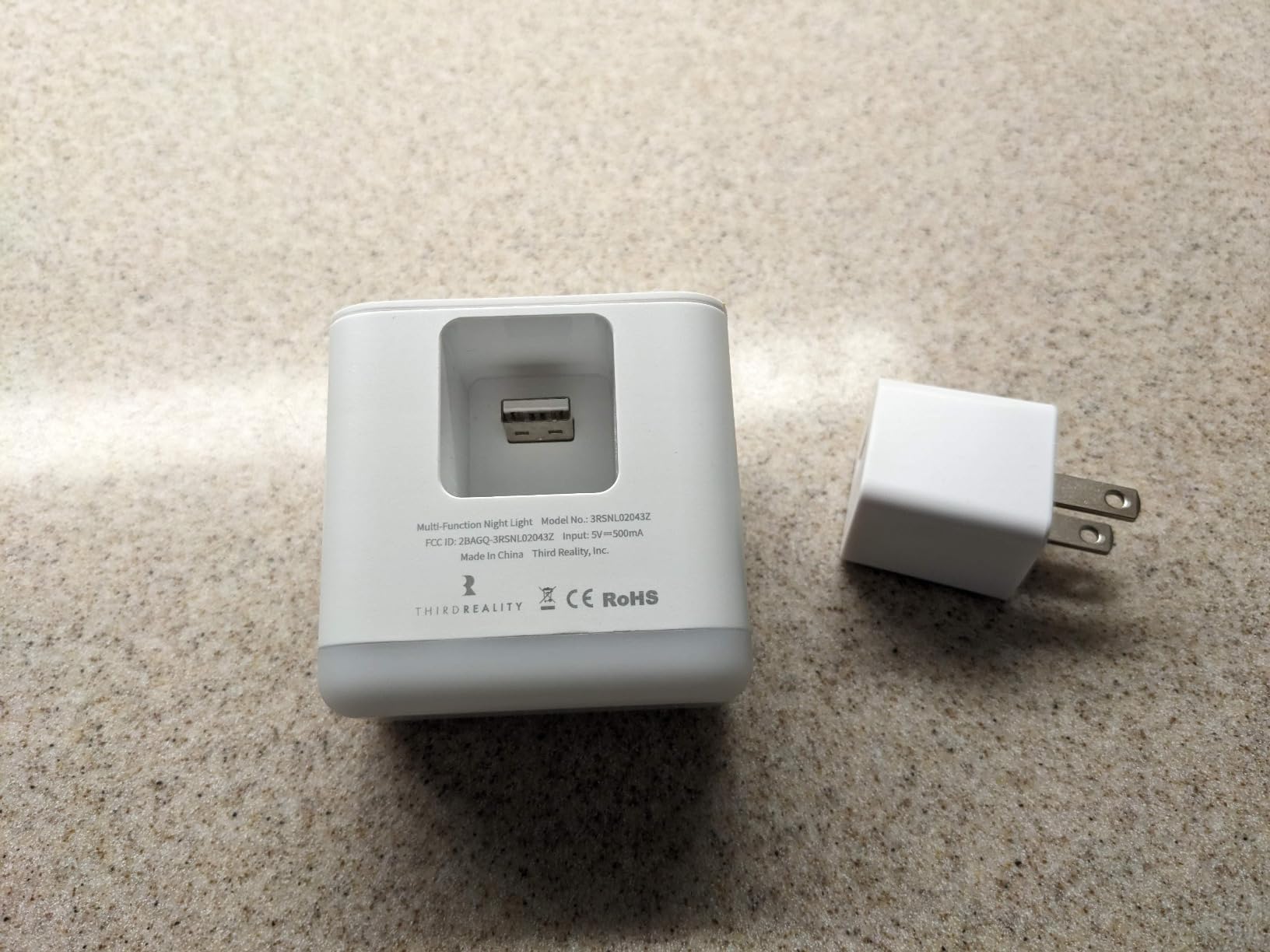
This is one of my favorite devices to recommend for a specific use case: the bathroom-to-hallway night walk. The THIRDREALITY Multi-Function Night Light combines a motion sensor, an illumination sensor, and an RGB night light into a single plug-in unit that sits on an outlet or shelf.
Because it’s AC-powered, you never worry about batteries. And because it’s a Zigbee repeater, every unit you add strengthens your mesh network for other battery-powered sensors. In my experience, adding two of these improved the connection reliability of my far-flung motion sensors noticeably.
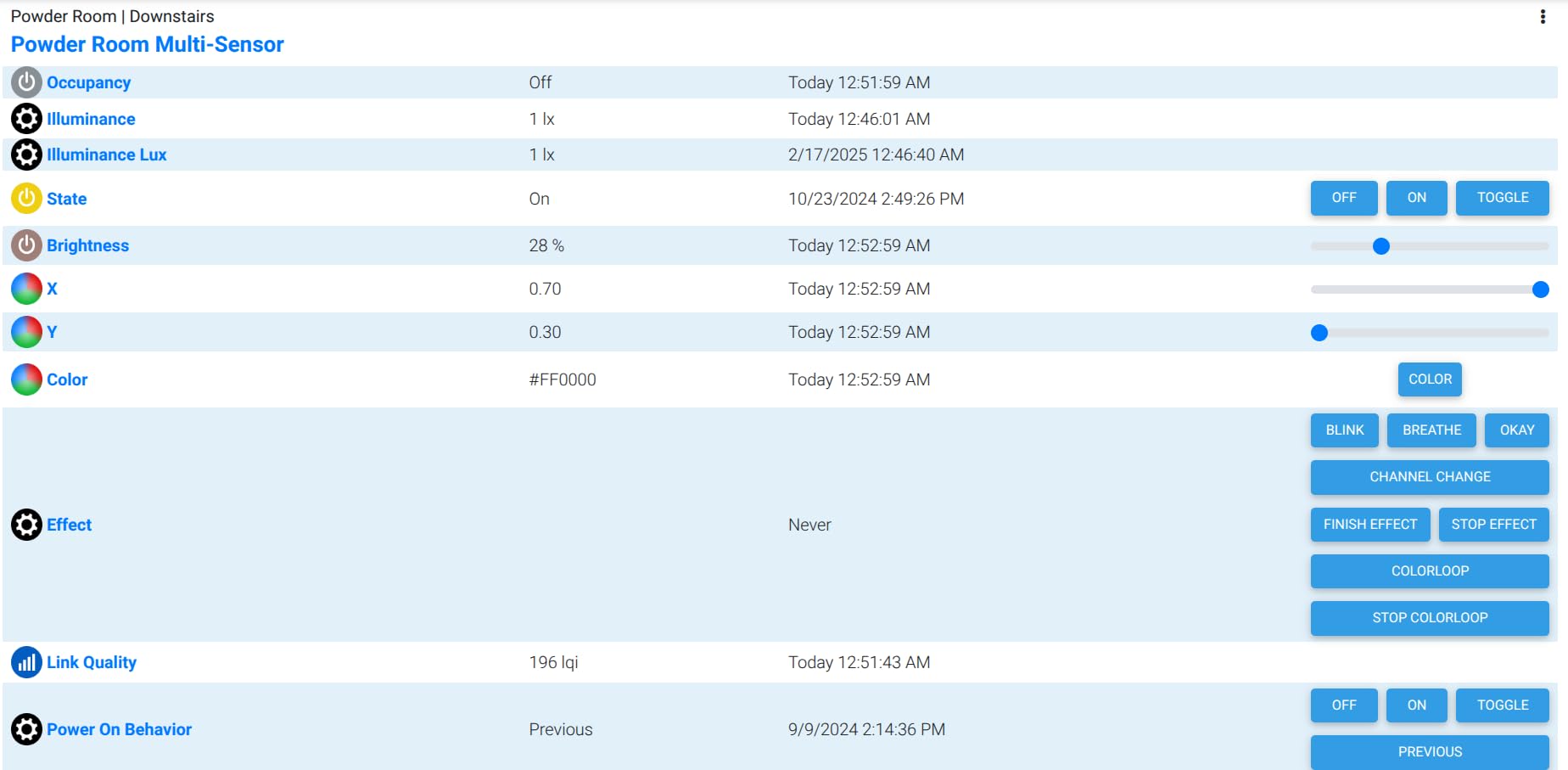
The RGB night light has 1-100% adjustable brightness and a full color spectrum, so you can tune it to a soft warm glow at 5% for midnight bathroom trips or a brighter light for a child’s room. The frosted lens diffuses light evenly — it doesn’t look cheap when lit.
On the technical side, there are two things to know. First, motion detection has about a 2-second delay — slower than a battery PIR sensor like the SNZB-03P. For a night light that’s fine; for instant hallway lighting, you might notice it. Second, the default timeout before motion is “cleared” is 30 seconds, which can feel long if you’re using it to trigger other devices.
Can it trigger other smart devices, not just its own light
Yes. In Home Assistant, the motion sensor and light sensor show up as separate entities, so you can build automations like “if motion is detected AND lux is below 20, turn on the hallway smart bulb at 30% brightness.” The night light itself can also be controlled independently via automations, which makes it really flexible.
Is it a good Zigbee repeater for other sensors
It is. Since it’s mains-powered, it acts as a Zigbee router, relaying messages for nearby battery-powered sensors. I’ve used it to bridge the gap between my coordinator and a sensor at the far end of the house, and it solved the dropped-connection issue I was having. One caveat: it won’t repeat for some smart bulbs, which are notoriously picky about what they’ll mesh with.
4. Aqara Presence Sensor FP300 – Best for True Presence Detection
Aqara Presence Sensor FP300 Wireless 5-in-1 Motion Sensor with mmWave
60GHz mmWave + PIR
Light, Temp, Humidity Sensors
Thread & Zigbee
CR2450 Battery
Pros
- Detects presence even when you're sitting still
- 5-in-1: mmWave
- PIR
- light
- temperature
- humidity
- Multi-protocol support (Thread and Zigbee)
- Works without Aqara hub via Matter
- Fast ~1 second response time
Cons
- Setup can be confusing with multiple protocol options
- Firmware update requires Aqara app and account
- No multi-zone detection like the FP2
- Some stability issues reported
The Aqara FP300 addresses the single biggest complaint about PIR motion sensors: they can’t tell you’re still in the room if you stop moving. If you’ve ever had your office light shut off while you were reading, the FP300 is the fix.
It uses 60GHz mmWave radar combined with AI to detect true presence — it knows a person is in the room even when they’re completely stationary. In my office, the light stays on reliably whether I’m typing, reading, or just staring at the wall thinking.
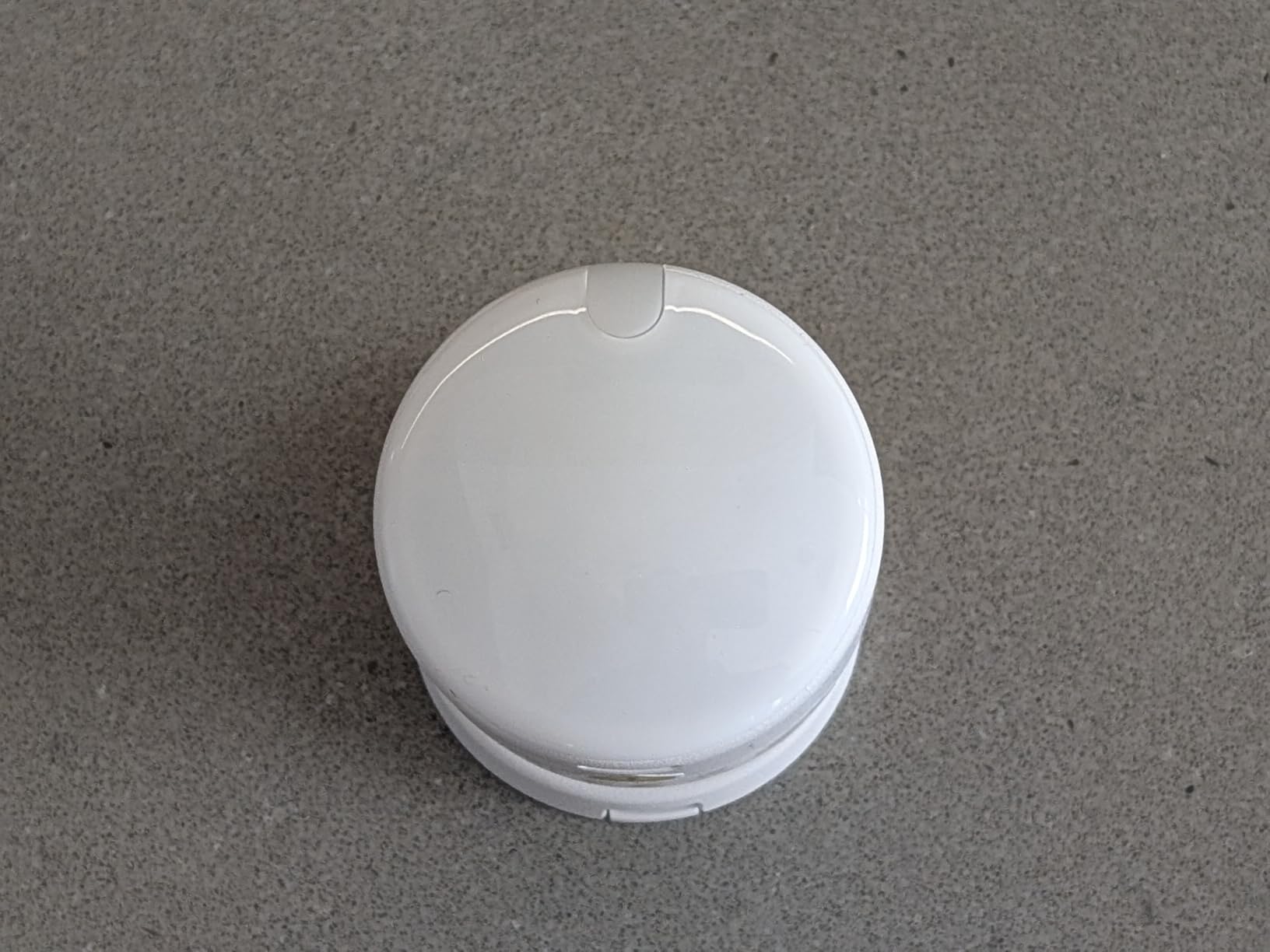
It’s technically a 5-in-1 device: mmWave presence, PIR for instant motion triggers, a light sensor, a temperature sensor, and a humidity sensor. That’s a lot of data for one small battery-powered puck. The PIR handles instant-on when you walk in; the mmWave handles keeping the light on after you settle in.
The multi-protocol support is a big deal. It works over both Thread and Zigbee, and since it supports Matter over Thread, you can use it with Apple Home, Home Assistant, Alexa, Google Home, SmartThings, and Homey — without needing an Aqara hub at all.
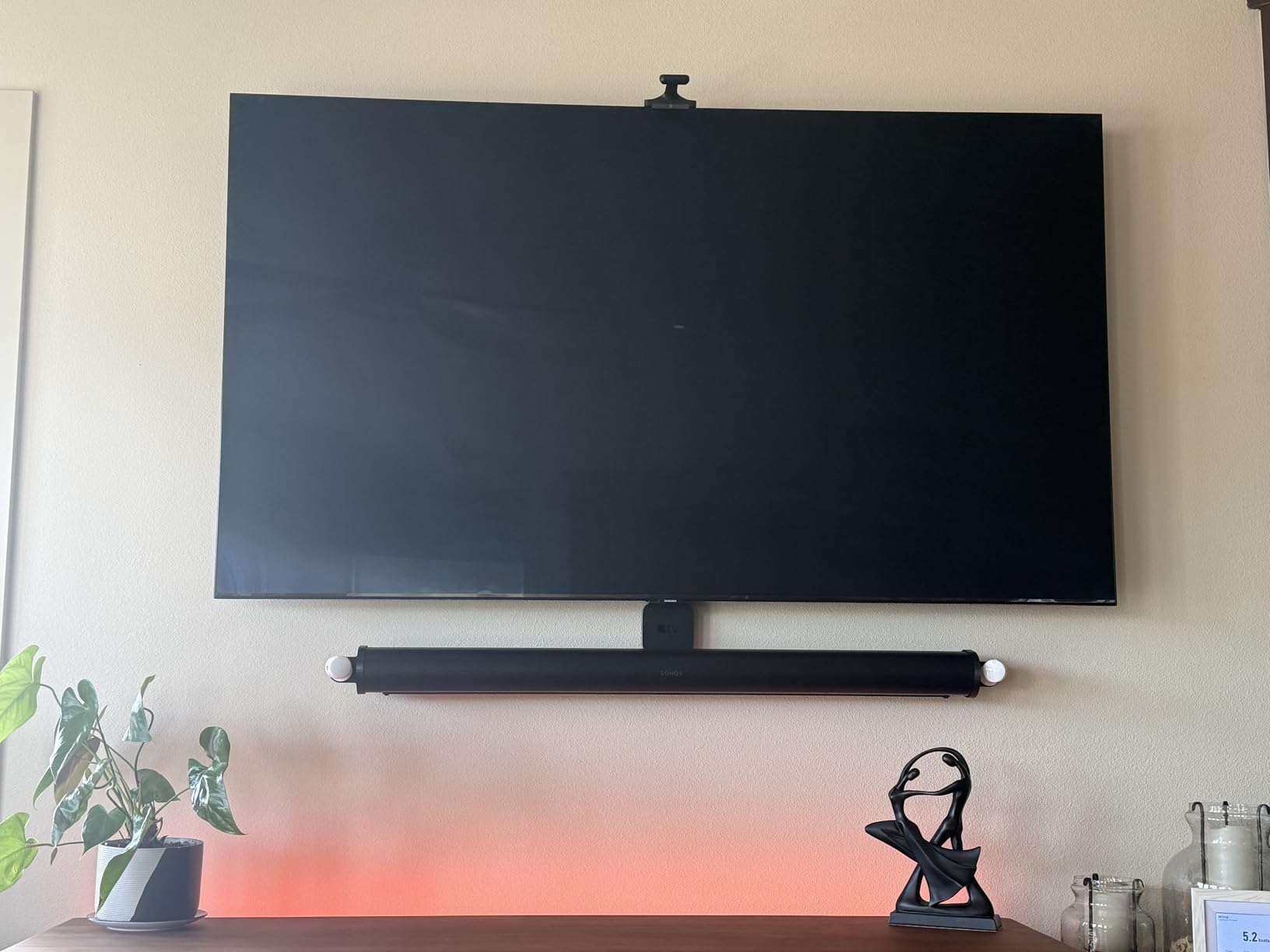
So why the 3.7 rating? Setup is the weak point. Choosing between Thread and Zigbee modes confuses first-time users, the firmware update process requires the Aqara app and an account, and a minority of buyers report connectivity hiccups or missing items in the box. Once it’s configured correctly, it performs well — just budget some patience for initial setup.
How is this different from a regular PIR motion sensor
A PIR sensor detects the infrared heat signature of a moving body — stop moving, and within the timeout window it decides the room is empty. The FP300’s mmWave radar bounces 60GHz radio waves off objects and uses AI to detect the presence of a stationary person, right down to small movements like breathing. For lighting automation, this means the light stays on while you’re sitting at a desk rather than shutting off after 90 seconds of stillness.
Does the FP300 need an Aqara hub
No, and that’s a major advantage over Aqara’s P1. Because it supports Matter over Thread, you can pair it directly with Apple Home, Home Assistant (via a Thread border router or Zigbee coordinator), SmartThings, and other ecosystems. You will need the Aqara app for the initial firmware update, but after that it runs locally without any cloud dependency.
5. SONOFF SNZB-06P – Best Budget mmWave Presence Sensor
SONOFF Zigbee Human Presence Sensor, SNZB-06P Zigbee Smart Motion Detector with 5.8GHZ cmWave Radar, Requires ZigBee Bridge (1-Pack)
5.8GHz mmWave Presence Sensor
Built-in Light Sensor
Zigbee 3.0
Local Scene Control
Pros
- mmWave radar detects stationary people
- Built-in light sensor for dark-only activation
- Local smart scenes work without internet
- Works with Alexa
- Google Home
- SmartThings
- Home Assistant
- More sensitive than standard PIR sensors
Cons
- Requires a Zigbee hub
- Long delay before motion cleared (up to 5 minutes)
- Some reliability issues with stuck entities
- May not trigger for very small movements
The SONOFF SNZB-06P brings mmWave presence detection down to a budget price. At under $20, it solves the same “sitting still” problem as the Aqara FP300, just with a simpler feature set and a few more rough edges.
It uses 5.8GHz microwave radar instead of PIR, so it knows when someone is in the room even if they’re not moving. I tested it in my living room where I’d been having issues with a PIR sensor turning the lights off during movie nights. With the SNZB-06P, the lights stayed on the entire time, even when I was bundled under a blanket barely moving.
The built-in light detector is genuinely useful — it ensures lights only turn on when presence is detected in the dark, which saves energy during daylight hours. It’s not a full lux sensor with precise readings, but for “is it dark enough to need the light” it works well.
Two honest downsides. First, the delay before motion is “cleared” can stretch to 5 minutes, so lights stay on a while after you leave a room — annoying for a hallway, fine for a living room. Second, some users (myself included, occasionally) see the entity get stuck on “motion detected,” which requires a re-pair to fix.
Where should you place an mmWave sensor like this
Mount it on a wall at chest-to-head height, aimed at the area where people actually sit or linger — a desk, a sofa, a bed. Avoid pointing it at a fan, curtains, or a TV, since mmWave radar can pick up moving objects and generate false positives. Unlike PIR, it can also detect presence through thin walls and shower enclosures, which is either a feature or a bug depending on your floor plan.
Is mmWave better than PIR for lighting automation
It depends on the room. For hallways, closets, and bathrooms where people are always moving through, a cheaper PIR sensor like the SNZB-03P is fine. For living rooms, offices, and bedrooms where people sit still for long periods, mmWave is the better choice because it won’t turn the lights off while you’re still in the room. Many setups use both: PIR for instant-on, mmWave for hold-on.
6. SONOFF SenseGuard SNZB-03PR2 – Best Budget Sensor with a Real Lux Sensor
SONOFF SenseGuard SNZB-03PR2 Zigbee Motion Sensor with Light Sensor for Light Control, Alarm System, Automation, Illuminance History, Compaitble with Home Assistant, Alexa, SmartThings
PIR Motion + Real-Time Lux Sensor
5-60s Adjustable Duration
Magnetic Mount
CR2477 Battery
Pros
- Built-in illuminance sensor with calibration
- Adjustable detection duration from 5 to 60 seconds
- Easy setup with Home Assistant
- Magnetic mounting base with 360-degree head rotation
- Very affordable
Cons
- Requires less common CR2477 battery
- Battery activation pull-tab difficult to remove
- Slow pairing process
- PIR sensitive to heat changes in the room
The SenseGuard SNZB-03PR2 is SONOFF’s newer take on the classic SNZB-03P, and the big upgrade is a proper lux sensor. Instead of just reporting “dim” or “bright,” it gives you real-time illuminance readings with calibration and historical logs — something usually reserved for pricier sensors.
For lighting automation, that’s a meaningful improvement. My “turn the hallway light on only when it’s dark” automation went from a guess to a precise threshold. I set the light to trigger only when the sensor reads below 35 lux, and now it doesn’t waste electricity on bright afternoons.
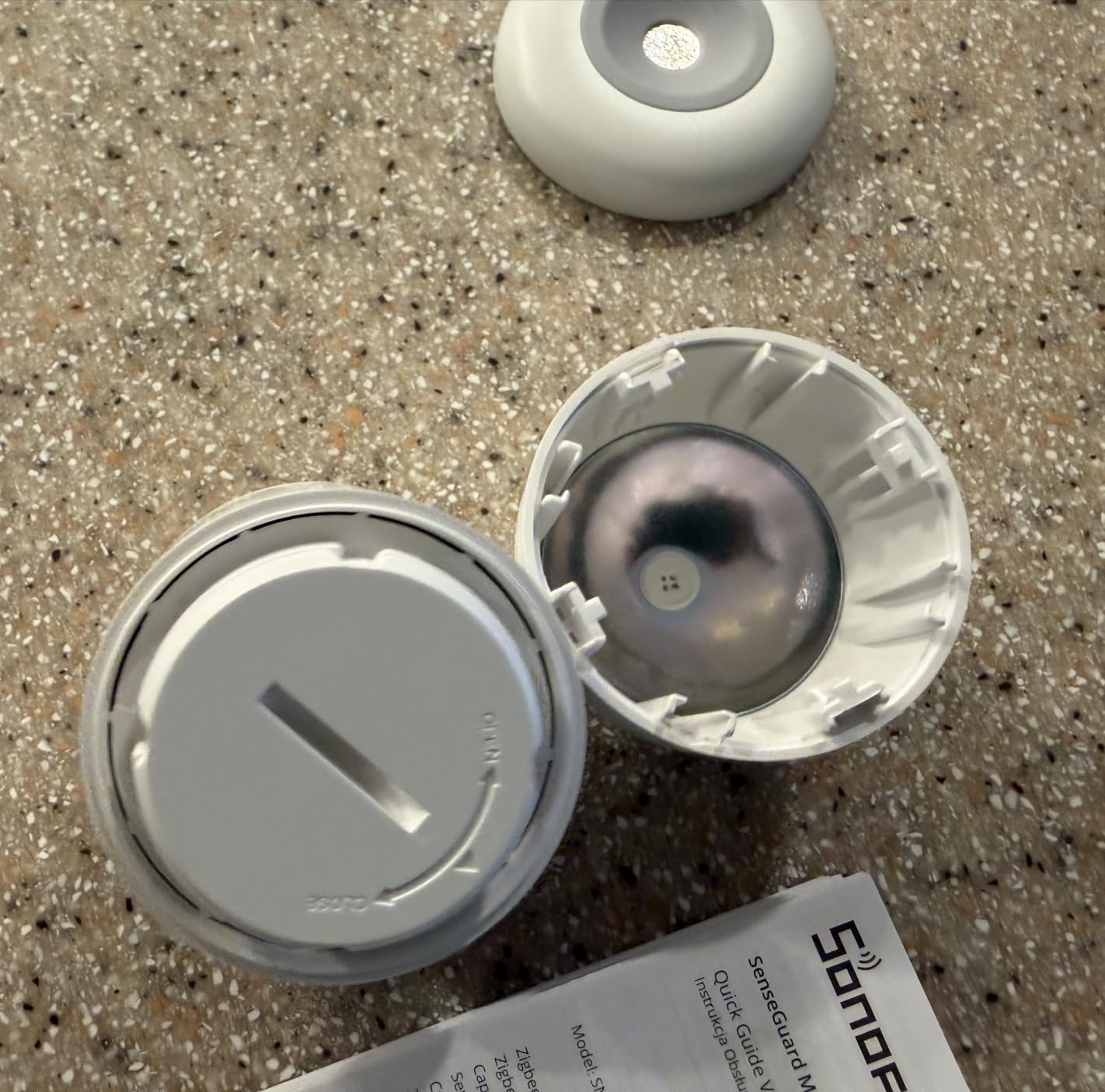
The adjustable detection duration (5 to 60 seconds) is another thoughtful addition. For a hallway where people pass through, I set a short 15-second duration so the light turns off quickly. For a laundry room where you might stand still folding clothes, a longer 60-second duration works better.
It’s not perfect out of the box. Pairing was noticeably slower than other Zigbee devices I’ve set up — it took a couple of attempts before my coordinator found it. And the battery pull-tab is annoyingly difficult to remove, which sounds trivial until you’re wrestling with it at 11pm.
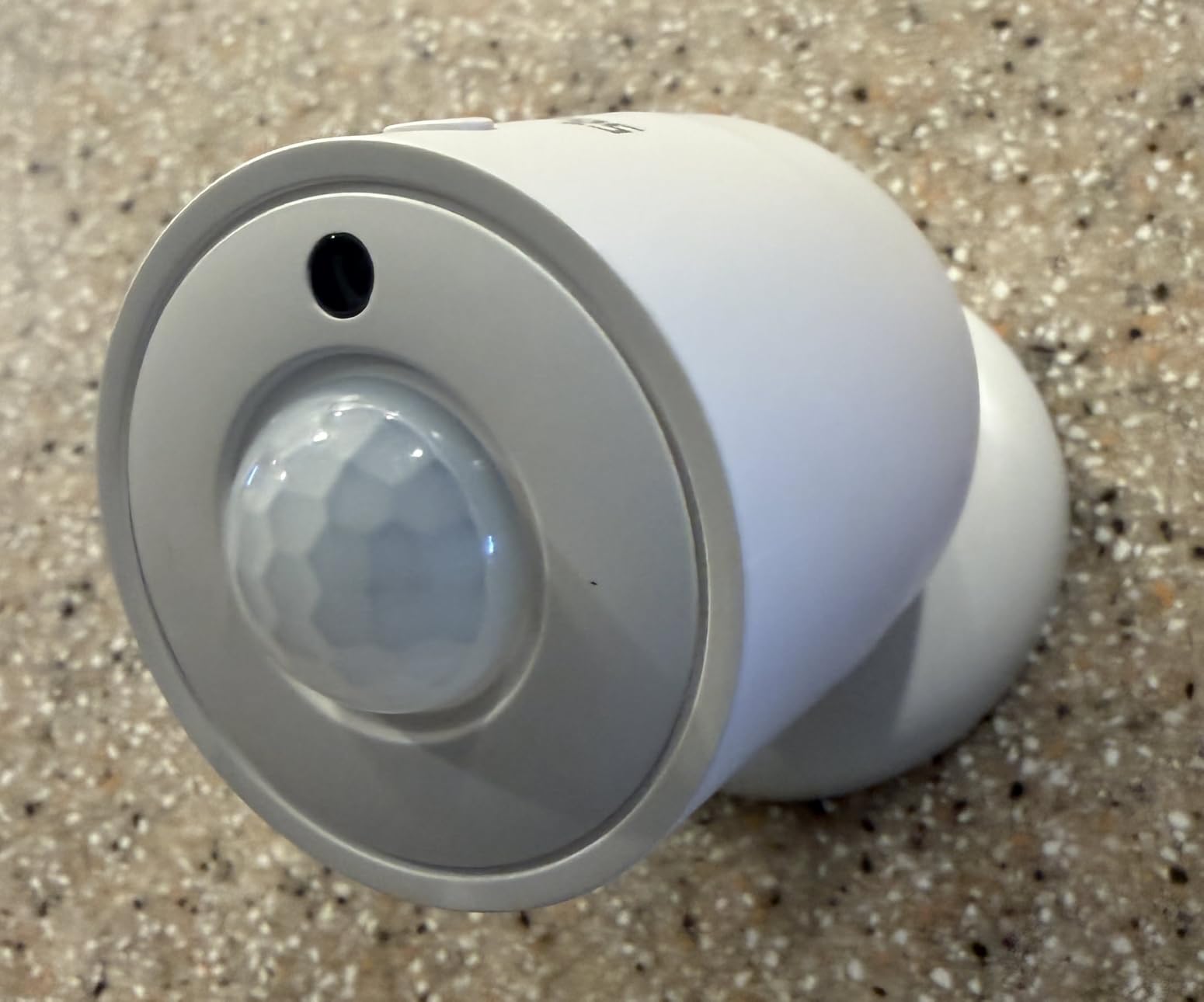
Does the lux sensor work reliably for lighting automations
In my testing, yes. Readings were consistent with a separate lux meter I compared it against, and the historical log in the app is handy for picking the right threshold. One tip: place the sensor where it gets a representative sample of room light — not in a shadowy corner or directly under a lamp, or your readings will be skewed.
How does it compare to the regular SNZB-03P
Both are solid budget picks, but they suit different setups. The SNZB-03P is cheaper, has a longer 3-year battery claim, and is more battle-tested with 796 reviews. The SNZB-03PR2 adds the real lux sensor, adjustable duration, and a flexible magnetic mount with 360-degree rotation. If “only turn lights on when it’s dark” matters to you, the PR2 is worth the small premium. If you just need basic motion triggering, stick with the 03P.
7. THIRDREALITY Zigbee Motion Sensor 2 Pack – Best Value Multi-Pack
THIRDREALITY Zigbee Motion Sensor 2 Pack, Zigbee Hub Required, Pet Friendly, Work with Home Assistant,SmartThings, Aeotec,Homey, Hubitat or Echo Devices with Built-in Zigbee hub
2-Pack PIR Motion Sensors
Pet Friendly Design
2 AAA Batteries Each
Up to 2-Year Battery Life
Pros
- Standard AAA batteries (rechargeable compatible)
- Excellent Home Assistant integration via ZHA and Zigbee2MQTT
- Pet-friendly design
- Works with Echo devices with built-in Zigbee hub
- Supports OTA firmware updates
Cons
- No temperature or illuminance sensor
- Smaller field of view than some competitors
- 1-2 second delay in motion detection
- Some connectivity issues reported in garages or extreme temperatures
THIRDREALITY’s 2-pack hits a sweet spot for people building out multiple rooms on a budget. You get two sensors, and because they run on standard AAA batteries instead of coin cells, you’ll never make a special trip to the store for a weird battery size.
The AAA battery design has a hidden advantage: you can use rechargeable AAAs. I’ve switched all mine to rechargeables, which means no ongoing battery cost at all. Rated life is about 2 years per pair, and rechargeables last nearly as long per charge cycle in my experience.
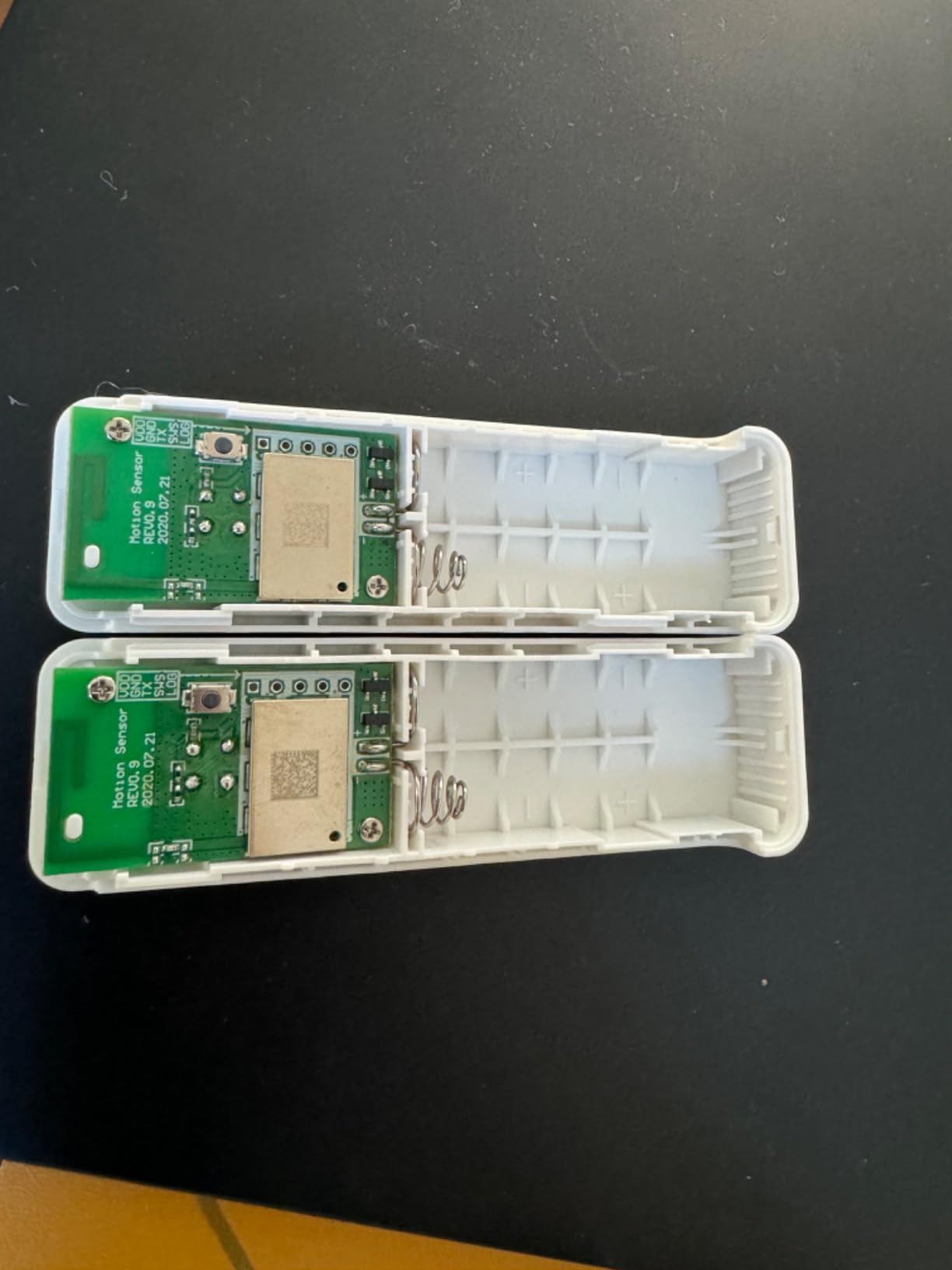
Home Assistant support is where THIRDREALITY really shines. These pair effortlessly with both ZHA and Zigbee2MQTT, and they’re a perennial favorite in the r/homeassistant community for good reason — they show up, they work, and they don’t drop off the mesh.
The pet-friendly design means small animals wandering under the sensor’s field of view won’t trigger your lights at 3am. My cat can now roam freely without turning my living room into a strobe show.
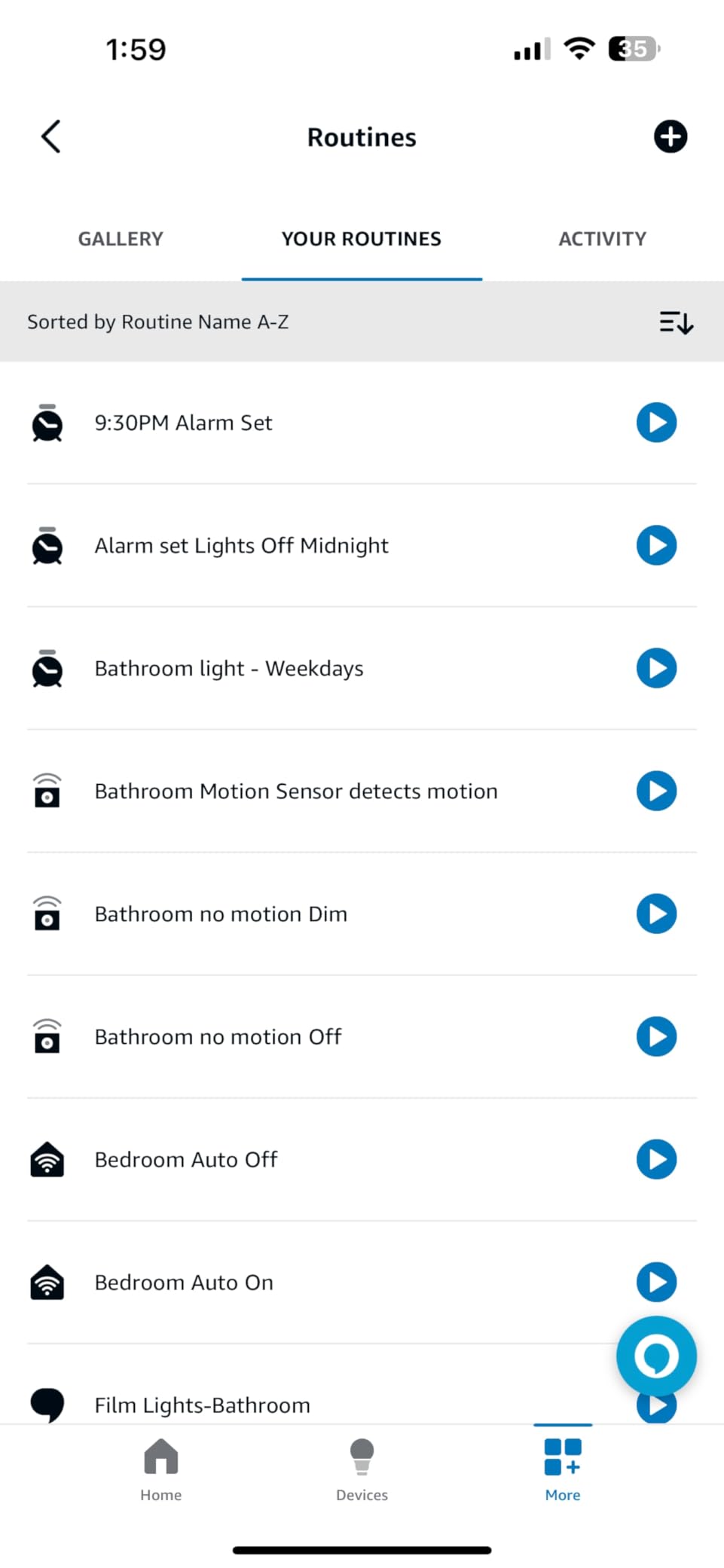
The trade-offs are real, though. There’s no temperature sensor and no lux sensor — this is pure motion detection. The field of view is narrower than the Aqara P1’s 170 degrees, and there’s a noticeable 1-2 second delay before motion triggers. For closets and basements, none of that matters; for a main hallway where you want instant light, you’ll notice.
Does it work with Echo devices as a Zigbee hub
Yes, and this is one of its best tricks. If you own an Echo 4th Gen, Echo Plus, Echo Studio, or an Eero 6/Pro 6 router, those devices have a built-in Zigbee hub. That means you can use these motion sensors with Alexa routines without buying a separate hub — a genuinely budget-friendly entry point for automated lighting.
Are these sensors good for pet owners
They’re one of the better options I’ve tested. The pet-friendly design mounts high on a wall and angles detection downward toward human-height movement, so a cat or small dog walking along the floor doesn’t trip it. Larger dogs may still trigger the sensor depending on mounting height, so test placement before committing to adhesive.
8. Aeotec SmartThings Motion Sensor – Best for SmartThings and Hubitat Users
Aeotec SmartThings Motion Sensor, Zigbee, Magnetic Mounting, Works with Smart Home Hub and Compatible Zigbee Hubs
Zigbee PIR Sensor
Built-in Temperature Sensor
120-Degree FOV
Up to 50ft Range
Magnetic Ball Mount
Pros
- Quick and responsive motion detection
- Easy pairing with SmartThings and Hubitat
- Built-in temperature sensor
- Magnetic ball mount allows adjustable detection angle
- Works well through Zigbee repeaters
Cons
- Requires a smart home hub
- No sensitivity adjustment
- Higher price than similar sensors
The Aeotec SmartThings Motion Sensor is the highest-rated sensor in this lineup at 4.6 stars, and it’s the one I’d point SmartThings or Hubitat users toward first. Pairing took under a minute on my SmartThings hub — it showed up, ready to use, with no fiddling.
Detection is quick and reliable, with a 120-degree field of view and motion capture up to 15 feet. The magnetic ball mount is genuinely useful: instead of a fixed adhesive pad, you can tilt and aim the sensor precisely where you need coverage. Mine is angled down a staircase to catch movement at the top and bottom.
The built-in temperature sensor is a nice bonus. I use it to double as a climate sensor in my garage, triggering both the lights and a smart plug connected to a fan when the temperature climbs.
It plays nicely with the rest of a Zigbee network too — reviewers consistently note that it doesn’t interfere with pairing other Zigbee devices and routes well through repeaters. In a crowded mesh, that kind of good behavior matters more than you’d think.
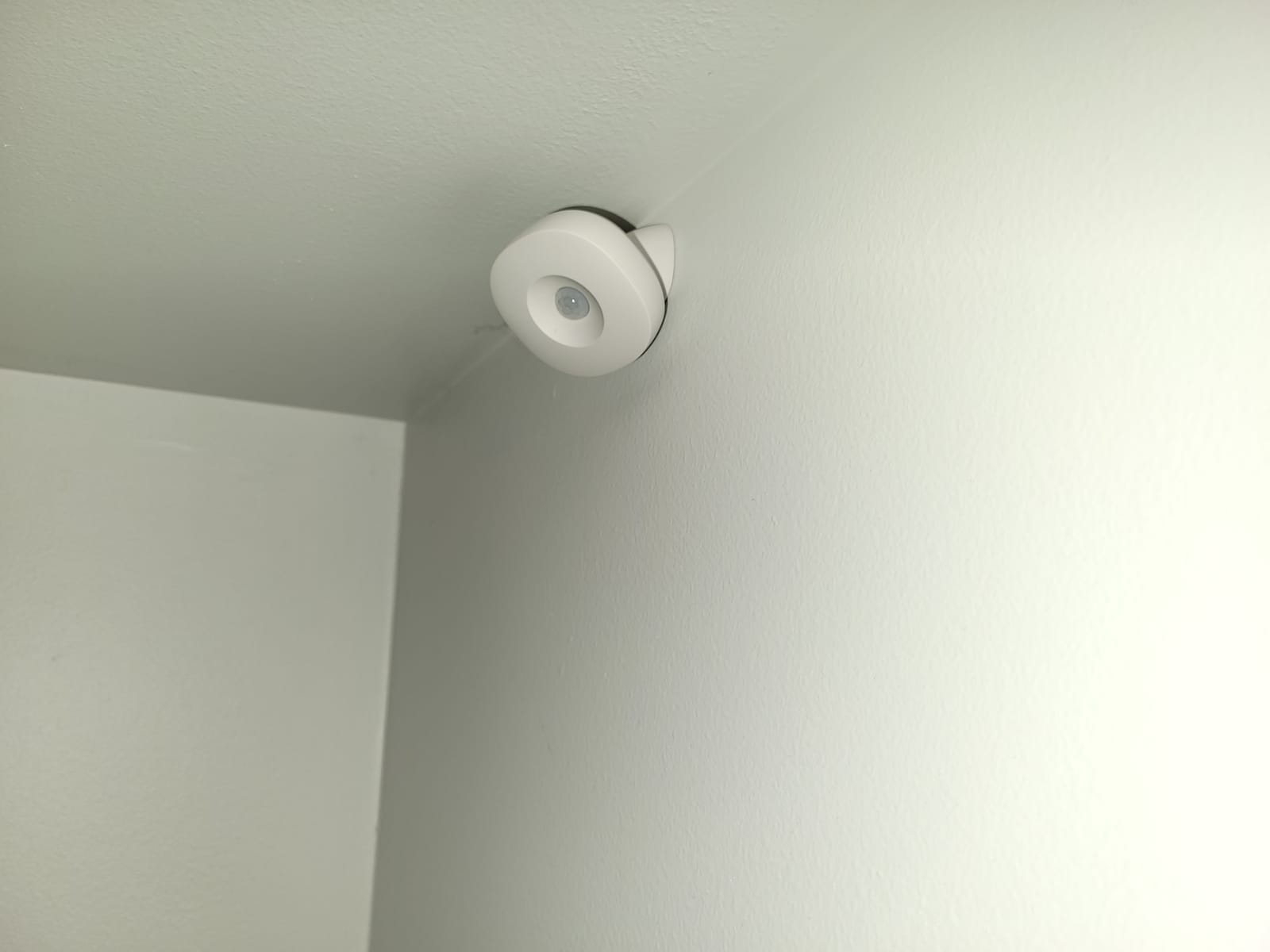
The downsides are straightforward: it’s priced higher than comparable sensors, there’s no sensitivity adjustment, and it absolutely requires a hub — this is not a standalone device. If you’re already in the SmartThings or Hubitat ecosystem, the premium is easier to justify given how smooth the integration is.
Does it work with hubs other than SmartThings
Yes. While it’s optimized for the SmartThings app and Aeotec’s SmartThings hub, it works with other compatible Zigbee hubs including Hubitat, where it’s a community favorite. Home Assistant users can also pair it via ZHA or Zigbee2MQTT, though some SmartThings-specific features may not carry over.
What is the real-world battery life
Users report between 9 and 18 months on the included battery, which is shorter than the multi-year claims from Aqara and SONOFF but reasonable given its always-on monitoring. The battery is a CR2/CR123A form factor, which is less common than AAAs but available anywhere batteries are sold.
How to Choose the Best Zigbee Motion Sensor for Your Setup?
Picking the right sensor comes down to five things: the room you’re automating, the hub you already own, battery preferences, whether you need a lux sensor, and whether PIR alone is enough. Here’s how I’d think through each one.
PIR vs mmWave: which do you actually need
PIR sensors detect moving heat signatures — they’re cheap, energy-efficient, and perfect for hallways, closets, bathrooms, and staircases where people are always passing through. mmWave presence sensors use radar to detect stationary people, which matters in living rooms, home offices, and bedrooms where you sit still for long stretches. My rule of thumb: PIR for transit spaces, mmWave for occupied spaces, and both combined if a room serves double duty.
Hub and ecosystem compatibility
This is the most common gotcha. The Aqara P1 officially requires an Aqara hub, the Aeotec works best with SmartThings or Hubitat, and SONOFF and THIRDREALITY devices pair with almost anything including Echo devices with built-in Zigbee. Home Assistant users should confirm the sensor works with Zigbee2MQTT or ZHA before buying — most do, but features like lux reporting sometimes behave differently across integrations.
Battery type and realistic lifespan
Manufacturer battery claims are best-case scenarios based on infrequent triggering. A hallway sensor that fires 30 times a day will drain faster than a basement sensor that fires twice a week. AAA-powered sensors (like the THIRDREALITY 2-pack) are cheapest to maintain since rechargeables work. Coin cells (CR2450, CR2477, CR2430) last longer per charge but cost more to replace and can’t be recharged.
Lux sensing and other extras
A lux sensor lets you build the single most useful lighting automation: “turn on only when it’s dark.” Without one, your lights trigger at noon on a sunny day. The Aqara P1 and SONOFF SenseGuard both offer proper lux readings. Temperature and humidity sensors (on the Aeotec and Aqara FP300) are nice bonuses but rarely drive lighting decisions.
Timeout settings and why they matter
The timeout is how long the sensor waits after the last detected motion before reporting “clear.” Too short and lights blink off while you’re still in the room; too long and you waste electricity. Aqara’s classic sensor had a notoriously hard-coded 90-second timeout that frustrated users — the P1’s adjustable 1-200 second range fixed that. Match the timeout to the room: 15-30 seconds for hallways, 2-5 minutes for bathrooms and offices.
Placement and mesh reliability tips
Mount sensors at chest height or higher, angled to cover the main walking path, and away from heat sources like radiators or direct sunlight — PIR sensors detect heat changes, so a warm vent can cause false positives. For reliability, keep sensors within about 10 meters of a hub or router device. If a sensor keeps dropping off the network, check its LQI (Link Quality Indicator) in Zigbee2MQTT or ZHA — anything consistently low means you need a mains-powered Zigbee repeater nearby, like a smart plug or the THIRDREALITY night light. And since Zigbee and Wi-Fi both use the 2.4GHz band, set your Wi-Fi router to channel 1 or 11 and your Zigbee coordinator to a channel in the middle (15-20) to minimize interference.
Frequently Asked Questions
Which Zigbee motion sensor is the best?
The Aqara Motion Sensor P1 is the best overall Zigbee motion sensor thanks to its adjustable 1-200 second timeout, built-in lux sensor, and 5-year battery life. For budget setups, the SONOFF SNZB-03P offers excellent value at under $15 with Zigbee 3.0 support and local scene execution.
What is the best motion sensor for lights?
For automated lighting specifically, look for a sensor with a built-in lux sensor so lights only turn on when it is dark, and an adjustable timeout so lights stay on long enough for the room. The Aqara P1 and SONOFF SenseGuard SNZB-03PR2 both fit this. For rooms where you sit still, add an mmWave presence sensor like the Aqara FP300 or SONOFF SNZB-06P.
What is the best motion sensor for Home Assistant?
The SONOFF SNZB-03P and THIRDREALITY motion sensors are the most popular picks for Home Assistant because they pair reliably with both ZHA and Zigbee2MQTT using a cheap USB coordinator dongle. The Aqara P1 also works well via Zigbee2MQTT, though Aqara only officially supports its own hub.
How do I connect a Zigbee motion sensor?
Plug in your Zigbee hub or coordinator, open your hub’s app (or Home Assistant’s ZHA/Zigbee2MQTT integration), start pairing mode, then press and hold the sensor’s pairing button for 5-10 seconds until its LED blinks. The sensor should appear within a minute. If it does not, move it closer to the hub and try again, since most pairing failures are range-related.
Can Zigbee motion sensors work without internet?
Yes. Zigbee communicates directly between the sensor and your hub over a local mesh network, so lighting automations keep running even when your internet goes down. This is a major advantage over cloud-dependent Wi-Fi sensors, especially if you run Home Assistant, Zigbee2MQTT, or ZHA with everything processed locally.
What is the difference between PIR and presence sensors?
PIR (passive infrared) sensors detect the heat signature of a moving body and clear occupancy shortly after movement stops. mmWave presence sensors bounce radar signals off people and objects, detecting even stationary occupants. Use PIR for hallways and transit spaces; use mmWave in offices, living rooms, and bedrooms where people sit still for long periods.
Final Verdict: The Best Zigbee Motion Sensor for Automated Lighting in 2026
After months of testing, the best Zigbee motion sensor for automated lighting is the Aqara Motion Sensor P1 — its adjustable timeout, lux sensing, and long battery life make it the most complete package for lighting automations. If budget is the priority, the SONOFF SNZB-03P gets the job done for under $15. And for rooms where you sit still, the Aqara FP300 or SONOFF SNZB-06P mmWave sensors will keep the lights on when PIR gives up.
My suggestion: start with one or two sensors in your highest-traffic areas, confirm they pair cleanly with your hub, then expand from there. Once your lights start turning themselves on and off, you’ll wonder how you ever lived without it.